Phones
Xiaomi 14 Ultra
The Xiaomi 14 Ultra pairs a Leica quad camera with a 1-inch main sensor and variable aperture, a Snapdragon 8 Gen 3, a 6.73-inch 120Hz LTPO display and 90W wired and 80W wireless charging.
Key figures at a glance
Gallery

Specifications
- Display
- 6.73" WQHD+ LTPO AMOLED, 3200x1440, 522 ppi, 1-120Hz, 3000 nits peak brightness, 12-bit, 1920Hz PWM dimming
- Chipset
- Snapdragon 8 Gen 3 (4nm), Adreno GPU
- RAM
- 16GB
- Storage
- 512GB
- Rear Camera
- 50MP main (Sony LYT-900 1-inch type, f/1.63-f/4.0 variable aperture, OIS) + 50MP ultrawide (12mm, f/1.8, 122 degrees) + 50MP telephoto (75mm, f/1.8, OIS) + 50MP periscope (120mm, f/2.5, OIS)
- Front Camera
- 32MP in-display selfie camera
- Battery
- 5000 mAh (typical), 90W wired HyperCharge, 80W wireless HyperCharge, reverse wireless charging
- OS
- Xiaomi HyperOS
- Dimensions
- 161.4 x 75.3 x 9.20 mm, 219.8 g
- Water resistance
- IP68
- Connectivity
- 5G, Wi-Fi 7, Bluetooth 5.4, NFC, dual nano SIM (DSDA), USB-C 3.2 Gen 2
- Video
- 8K at 30 fps, 4K up to 120 fps, Dolby Vision HDR recording, 10-bit LOG
- Colors
- Black, White
The Xiaomi 14 Ultra is a camera-first flagship built around a 1-inch-type main sensor, a variable aperture lens and a four-camera Leica system, wrapped in a body that deliberately looks like a compact camera. Under the glass sits a Snapdragon 8 Gen 3, 16GB of RAM and 512GB of storage in the configuration Xiaomi lists on its global product page. This overview is based on the published specifications and manufacturer information. It explains where the phone fits in the Ultra line, what the hardware does, and which of Xiaomi's statements are lab claims that depend on conditions.
Place in the lineup
Xiaomi's Ultra phones are the top of its numbered series and the models where the company spends the most on imaging. The 14 Ultra succeeds the 13 Ultra and is itself followed by the Xiaomi 15 Ultra and later the Xiaomi 17 Ultra. Compared with the plain Xiaomi 15, an Ultra costs more and trades some pocketability for larger sensors and longer lenses. If you want to see how much changed in one generation, the Xiaomi 14 Ultra vs Xiaomi 15 Ultra comparison puts both spec sheets next to each other.
Xiaomi's page does not list a price, and the global range was priced differently from country to country, so no US list price is given here. The release date shown on this site is the launch date used for the global introduction; the product page itself does not print a date.
Design and display
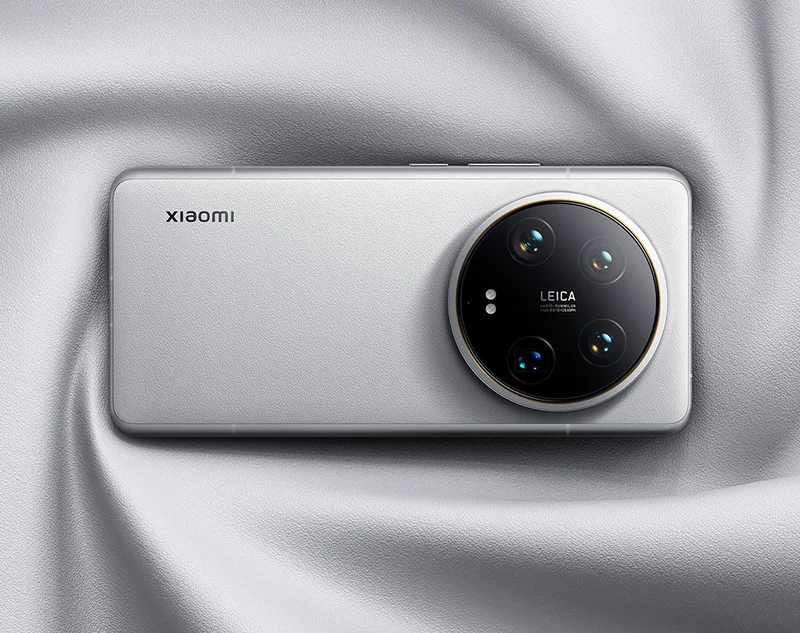
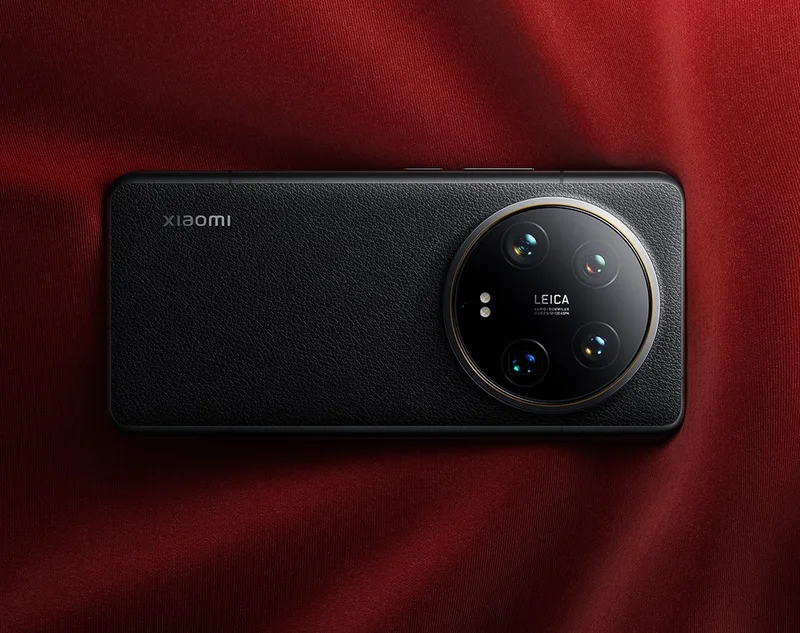
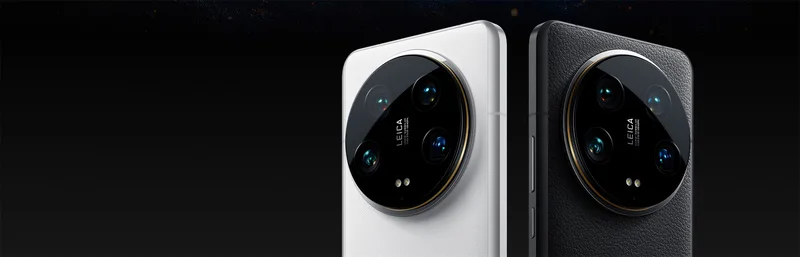
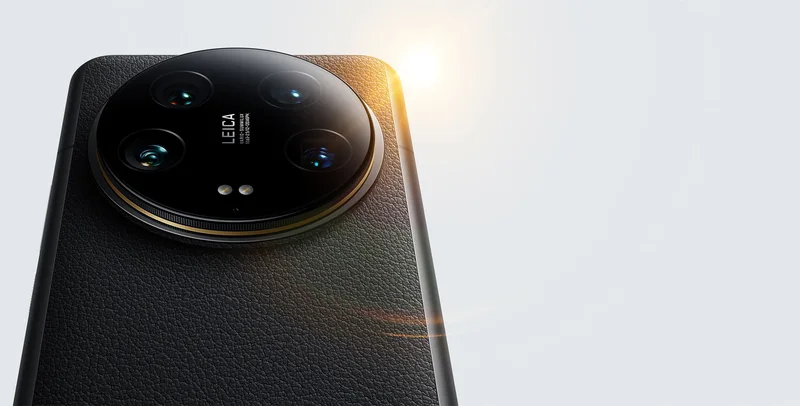
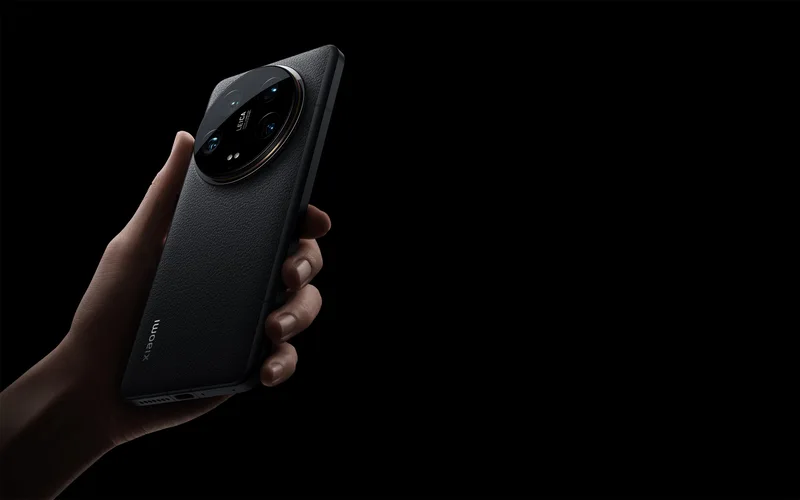
The back is dominated by a large circular camera island with a gold-tinted ring, and the body is covered in what Xiaomi calls nano-tech vegan leather. Xiaomi offers two finishes, black and white, and says the design nods to the Leica M10-P rangefinder. The frame is a 6M42 aluminium alloy that, according to Xiaomi, extends into the back of the body, and the front glass is Xiaomi Shield Glass. Xiaomi's strength and drop figures are measured in its own labs against the 13 series, so treat the multipliers (such as 10 times better drop resistance than the 13 Ultra) as relative claims rather than independent tests. The phone measures 161.4 x 75.3 x 9.20 mm and weighs 219.8 g, which is heavy but not extreme for a phone with this much glass in the camera.
The screen is a 6.73-inch LTPO AMOLED with a 3200 x 1440 resolution, which works out to 522 ppi. Refresh rate adapts between 1Hz and 120Hz. Xiaomi quotes 3000 nits of peak brightness, 12-bit colour depth, a DCI-P3 gamut and 68 billion colours, along with 1920Hz PWM dimming and several TUV Rheinland eye-care certifications. The panel curves around all four edges, which Xiaomi markets as the All Around Liquid Display. In-screen fingerprint recognition and a 32MP selfie camera sit under or inside the front glass. HDR10+ and Dolby Vision playback are supported, and touch sampling reaches up to 240Hz.
Performance and software
The processor is the Snapdragon 8 Gen 3, built on a 4nm process, with one 3.3GHz Cortex-X4 core, five performance cores and two efficiency cores. Xiaomi pairs it with LPDDR5X memory running at 8533Mbps and UFS 4.0 storage, and lists the 16GB RAM and 512GB combination. Other memory options may exist in some regions, but they are not printed on the page used here, so this overview treats 16GB and 512GB as the documented configuration. Xiaomi quotes gains over the previous generation of 32 percent for CPU and 34 percent for GPU, which are lab numbers, but the headline fact is simpler: this is the same flagship platform that many 2024 rivals use, so sustained performance is determined mostly by cooling. Xiaomi adds a liquid-cooling loop and, unusually, a second thermal loop dedicated to the camera.
The operating system is Xiaomi HyperOS. The product page does not state an Android version, so none is claimed here. Connectivity is thorough: Wi-Fi 7, Bluetooth 5.4, NFC, 5G with dual nano SIM and DSDA support (both SIMs active at the same time on supported bands), plus a USB-C port that supports USB 3.2 Gen 2 speeds of up to 10Gbps in theory. Stereo speakers support Dolby Atmos, and Xiaomi lists Hi-Res and LDAC, LHDC 5.0 and aptX codec support.
Camera system
This is the reason the phone exists. The main camera uses Sony's LYT-900 sensor in a 1-inch type format with a 3.2 micrometre 4-in-1 super pixel and an f/1.63 to f/4.0 variable aperture that moves in continuous steps. Xiaomi says the aperture blades, a 12-bit actuator and a six-blade shape allow natural background blur at wide apertures and starburst effects when stopped down. The main lens is equivalent to 23mm, and it is joined by three further 50MP cameras: a 12mm-equivalent ultrawide (f/1.8, 122-degree field of view with 5cm macro), a 75mm-equivalent floating telephoto (f/1.8, OIS, 10cm macro) and a 120mm-equivalent periscope telephoto (f/2.5, OIS, 30cm macro). Together the four lenses cover roughly 12mm to 240mm in six focal lengths, with the longest being extended digitally.
The processing side is handled by what Xiaomi calls its AISP platform, with 60 TOPS of claimed compute and modes such as FusionLM, ToneLM and Master Portrait. Leica Authentic Look and Leica Vibrant Look are the two colour styles, and the street photography mode offers fixed focal lengths of 23, 28, 35, 50, 85 and 135mm with a rangefinder-style frame. For video, the page lists 8K at 30fps, 4K at up to 120fps, Dolby Vision HDR recording up to 4K, 10-bit LOG and a four-microphone array with directional audio. A separate photography kit with a grip and a 67mm filter adapter is sold on its own; it is not included in the box.
As with any such system, picture quality depends on software tuning, light and how the images are processed, none of which can be judged from a specification sheet. What the spec sheet does show is breadth: four 50MP cameras, large apertures and optical stabilisation on three of them.
Battery and charging
Xiaomi lists a typical battery capacity of 5000 mAh. That is smaller than the cells in several rivals, including phones with silicon-carbon batteries, but charging speed is a strength: 90W wired HyperCharge and 80W wireless HyperCharge, and reverse wireless charging as well. Xiaomi's lab figures are 33 minutes to full on wired charging and 46 minutes on wireless in boost mode, but these require Xiaomi's own 90W charger and compatible wireless charger, and the wireless charger is sold separately. A footnote on the page says no power adapter is included in the box in Thailand and that the charger and cable are sold separately there, so check the box contents where you buy. A claimed 14.5 hours of constant use comes from Xiaomi's lab, not from a standard test.
IP68 dust and water resistance is listed, tested for static freshwater up to 1.5 metres for 30 minutes. As usual, Xiaomi warns that the resistance can decline with wear and that liquid damage is not covered by warranty.
Who it is for
The 14 Ultra suits people who want a phone camera that behaves like a serious photography tool: four useful focal lengths, manual control, RAW capture and a physical accessory ecosystem. It also suits heavy video users who want 8K, log and Dolby Vision options, and anyone who wants fast charging with both cable and wireless. Compared with a Galaxy S25 Ultra, it offers a larger main sensor with a mechanical variable aperture, though without the same long-term software promise documented on the Samsung side; Xiaomi's page does not state an update period, so that point cannot be compared on paper.
Compromises
- Size and weight: at 219.8 g and 9.20 mm thick, with a large raised camera ring, it is not a one-hand phone and does not slide neatly into tight pockets.
- Battery capacity: 5000 mAh is modest next to some contemporaries; charging speed offsets this but endurance is not a headline strength.
- Telephoto reach: the 120mm periscope is strong, but anything beyond roughly 240mm equivalent relies on digital zoom.
- Accessories: the photography kit, wireless charger and, in some regions, the charging adapter (at least in some markets) are extra purchases.
- Software promises: the product page used for this overview does not state how long updates will be delivered, and the HyperOS version is not specified.
- Availability: the Ultra was sold in selected markets only, and US availability is not documented on the page used here.
Overall, the Xiaomi 14 Ultra is best read as a specialist: the imaging hardware is the clearest reason to choose it, while battery size and weight are the clearest reasons to look elsewhere. For a broader view of where it stands among current devices, see the phone rankings.
Where it ranks
Compare Xiaomi 14 Ultra with similar devices
More from Xiaomi
Frequently asked questions
When was the Xiaomi 14 Ultra released?
The Xiaomi 14 Ultra was released on 2024-02-25, according to the manufacturer’s published information.
What are the main specs of the Xiaomi 14 Ultra?
Headline figures for the Xiaomi 14 Ultra: Battery: 5,000 mAh, Refresh rate: 920 Hz, Main camera: 50 MP, RAM: 16 GB. The full specification table is further up this page.
Is the Xiaomi 14 Ultra worth buying?
That depends on your priorities. Use the editorial review on this page for our view, check the rankings above to see where the device stands on battery, display and camera, and compare it directly with similar models before you decide.


