Phones
vivo V29e
vivo's 2023 slim mid-ranger: a 6.67-inch 120Hz AMOLED screen, Snapdragon 695, 64MP OIS main camera, 50MP autofocus selfie camera and a 4,800 mAh battery with 44W charging.

Key figures at a glance
Gallery
Specifications
- Display
- 6.67" AMOLED, 120Hz, 394 ppi, 1150 nits peak, 1200Hz touch sampling
- Chipset
- Qualcomm Snapdragon 695 5G
- RAM
- 8GB
- Storage
- 256GB
- Rear Camera
- 64MP main (OIS) + 8MP ultrawide
- Front Camera
- 50MP autofocus (f/2.0, 92-degree field of view)
- Battery
- 4,800 mAh (typical), 44W wired
- OS
- Android 13, Funtouch OS 13
- Dimensions
- 7.69 mm thick, 190 g (Indonesian edition)
- Durability
- IP54
- Connectivity
- 5G, NFC
The vivo V29e is a mid-range 5G phone that vivo introduced in late August 2023 as a slimmer, more affordable companion to the V29 series. It pairs a 6.67-inch 120 Hz AMOLED display with a Snapdragon 695 chip, a 64MP main camera with optical stabilisation and a 50MP autofocus selfie camera, and it puts a large 4,800 mAh battery with 44W charging into a body of about 7.7 mm. This article is based on the published specifications and manufacturer information, mainly from vivo's regional product pages. It explains what the phone offers, which statements are vivo's own claims and where a buyer should be careful.
Where the V29e sits in the lineup
The V series is vivo's design-and-camera line, and the V29e is the entry point of the 2023 generation. Above it sits the vivo V29 Pro, which adds a faster processor and a more advanced camera setup, while the V29e concentrates on the features most buyers notice first: a slim body, a bright screen, a portrait-oriented camera and a big battery. The phone was sold mainly in Asian markets, and it did not have an official United States price, so the entry price in this database is empty. Its natural competitors are other mid-range phones with similar chips, such as the Galaxy A56, and the table vivo V29e vs Galaxy A56 shows how much has changed in this price band since 2023.
Design and colours
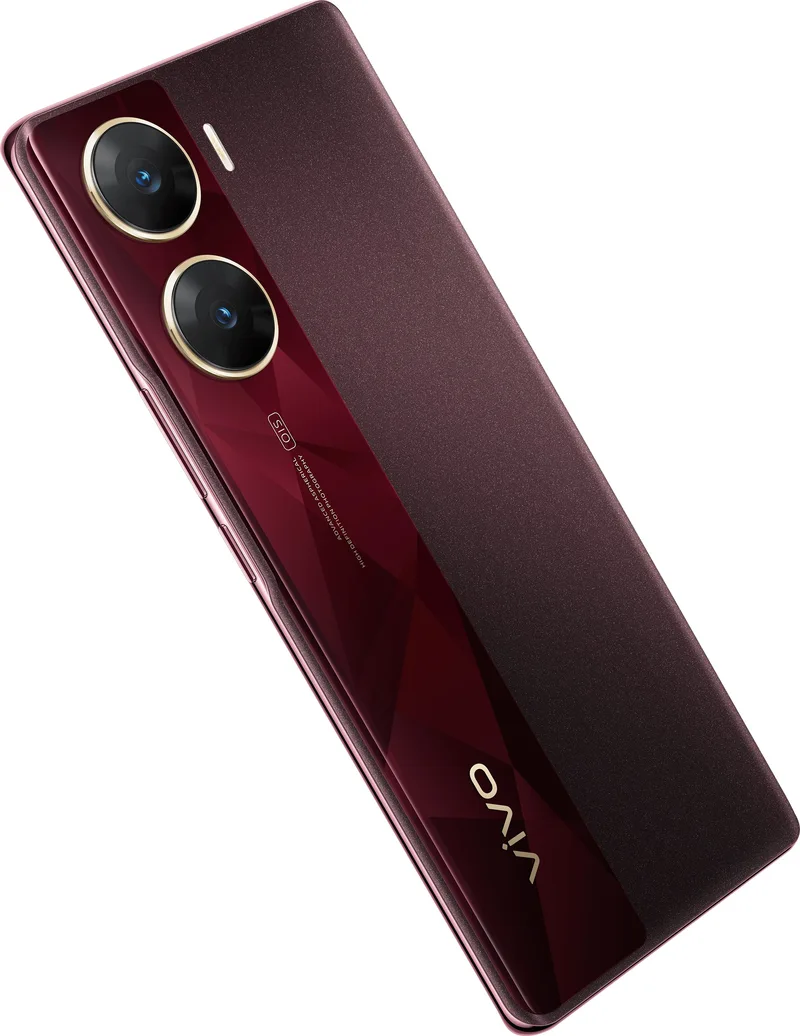
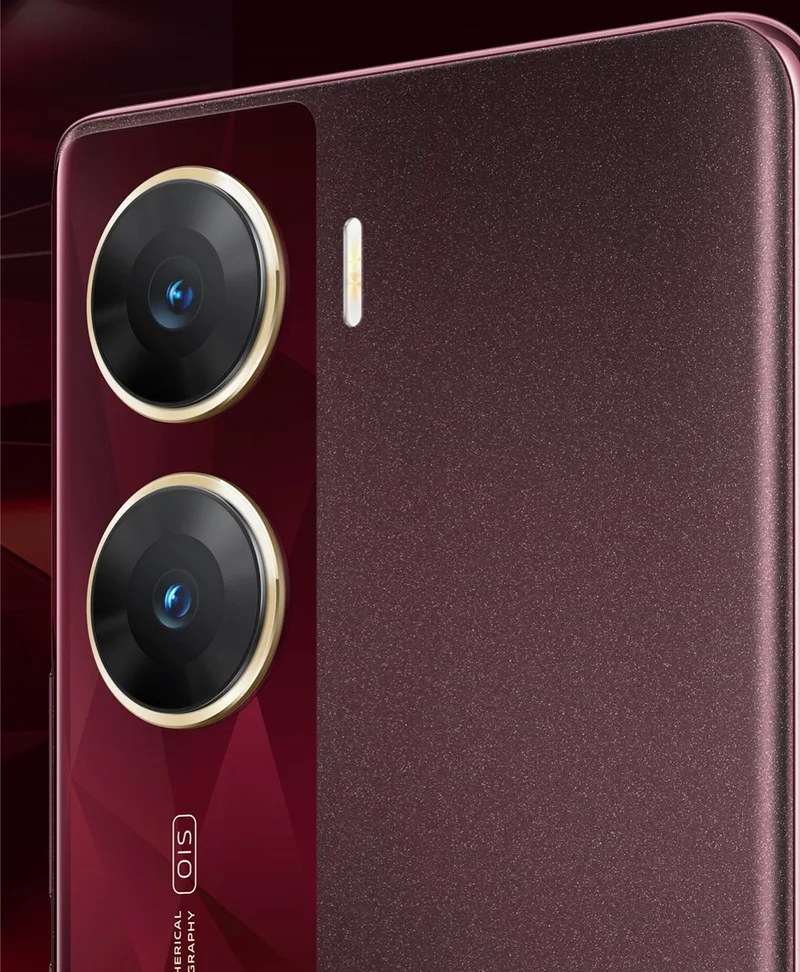
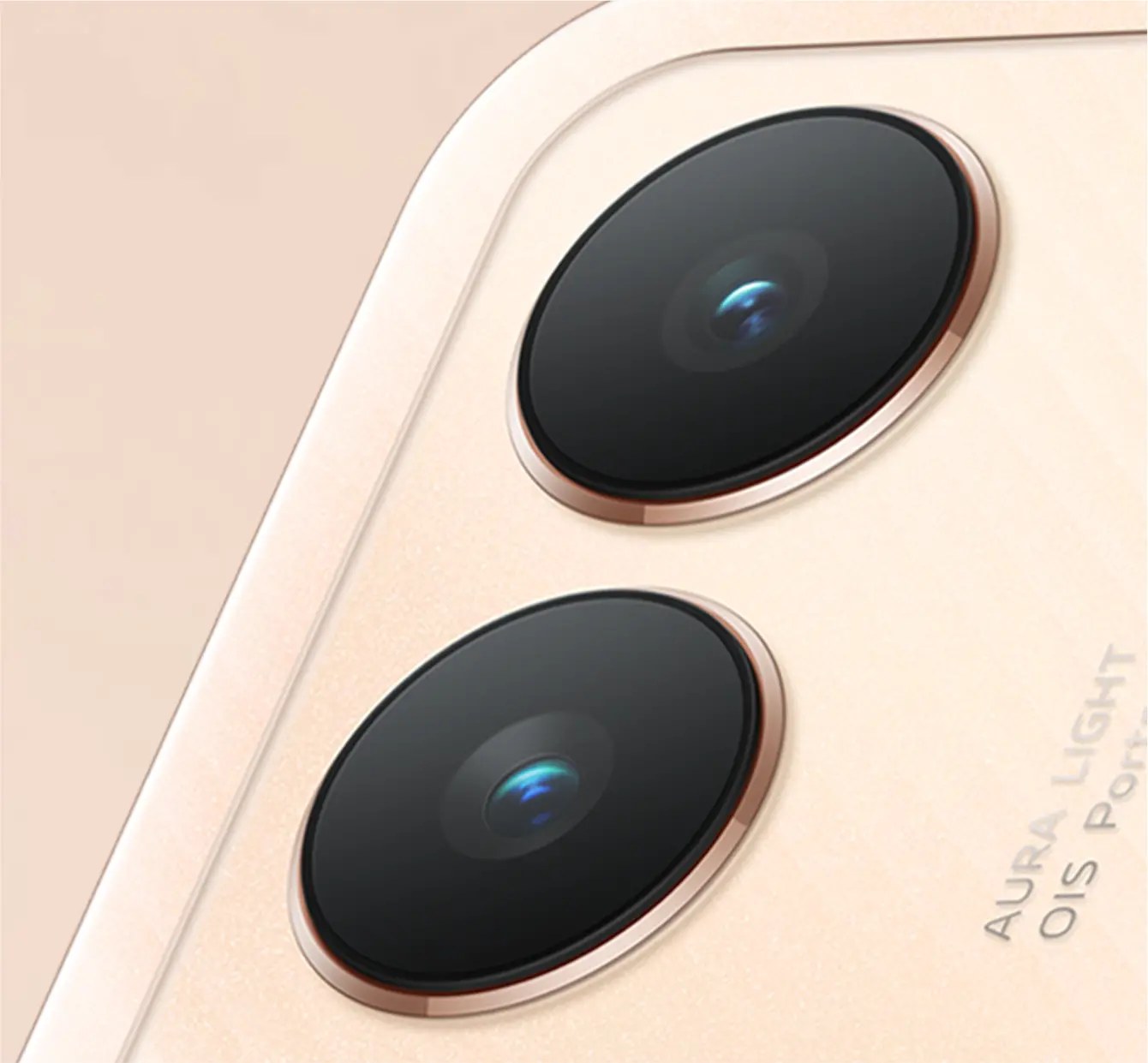
Vivo quotes a thickness of 7.69 mm and a weight of 190 g on its Indonesian page, where it also points out that dimensions and weight may differ slightly depending on process and materials. On the Indian page the headline figure is 0.757 cm, so you will see regional variations in the numbers; this is common for vivo, which publishes slightly different figures for different editions. The back uses a one-piece design in which the camera module is coloured to match the frame. The Indonesian page lists Rose Gold, which uses what vivo calls Fluorite AG glass treatment for a fingerprint-resistant finish, Forest Black and Crystal Blue. The Indian edition is presented with a red and a blue glass back, so the colour names and finishes depend on the market where you buy it.
The phone is rated IP54, which means protection against dust ingress to a limited degree and against splashes of water. It is not a waterproof phone, and vivo itself notes in the fine print that it is not a professional water-resistant device and that protection may diminish with daily wear. Do not charge it when wet. Vivo adds that it ran durability tests including more than 100 drop tests, 1,000 sitting-pressure tests and 10,000 plug-and-unplug cycles, though these are laboratory numbers from the manufacturer.
Display
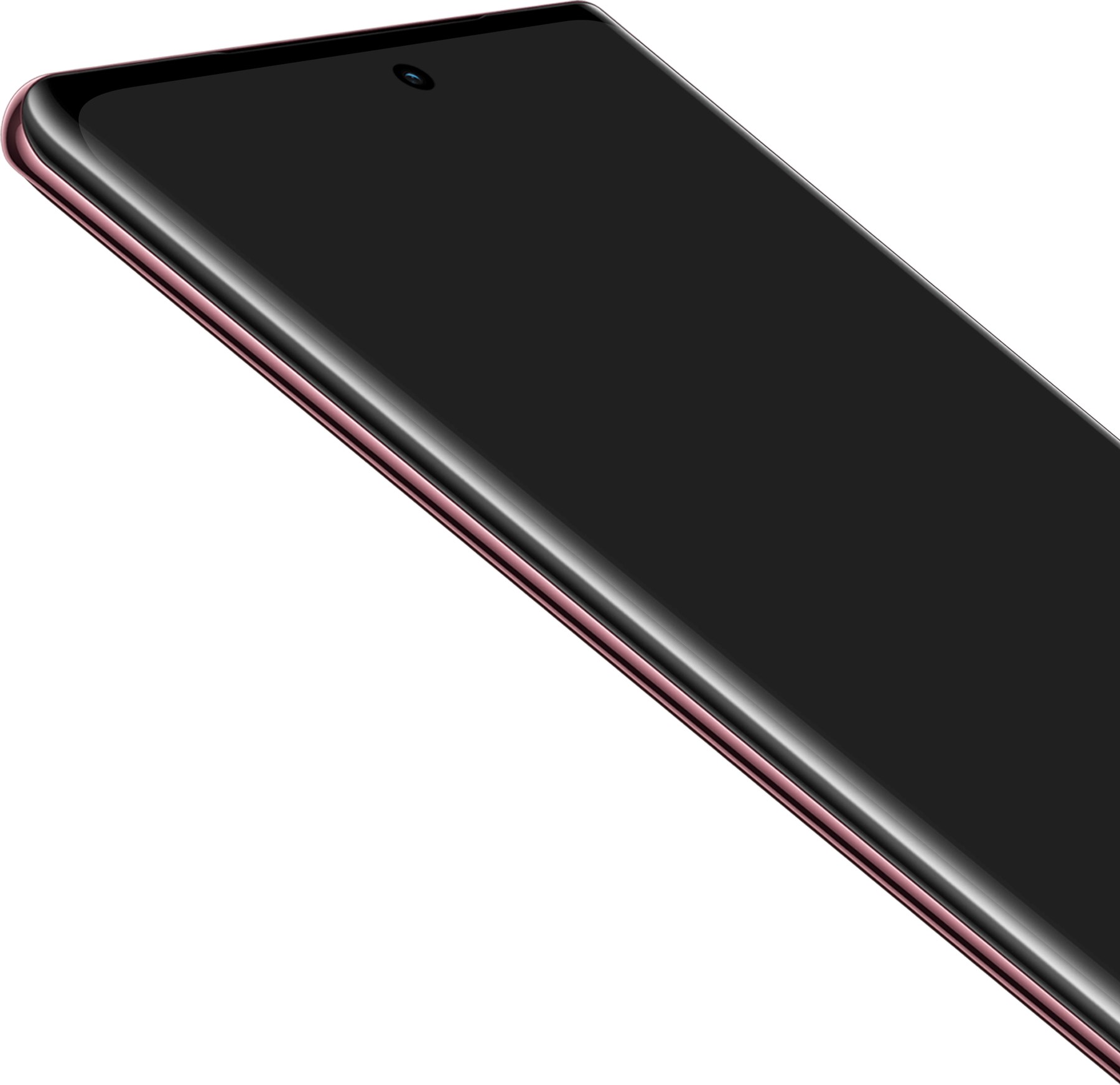
The screen is a 6.67-inch AMOLED panel with a 120 Hz refresh rate, a pixel density of 394 ppi and 16.7 million colours. Vivo states a peak brightness of 1,150 nits and a touch-sampling rate of 1,200 Hz, a number that is meant to help in games. The 120 Hz rate is supported by some apps and games rather than by everything, as vivo notes. The company also says the display uses what it calls E4 luminous material and carries an SGS certification for low blue-light emission. AMOLED panels at this price level are a strong selling point, because they give deep blacks and good outdoor visibility, and a 120 Hz refresh rate makes scrolling look smoother.
For audio, vivo mentions a dedicated speaker tuning called Audio Booster, aimed at gaming and video, but it does not give a power rating, and there is no way to compare it with other phones from the specification alone. The phone supports NFC for contactless payments and for pairing with some accessories.
Performance and software
The processor is the Qualcomm Snapdragon 695, a 5G mid-range chip with eight cores. Memory is 8GB of RAM, which can be extended by 8GB using storage space, and the Indonesian page lists 256GB of storage. Vivo says the Extended RAM feature lets the 8GB edition keep up to 27 apps alive in the background, and that a feature called RAM Saver frees up to 600MB of memory. It also describes an App Retainer that resumes apps that were closed by the system without reloading them. These are software tricks; extended RAM uses slower storage, so it helps with background apps more than with raw speed.
The Snapdragon 695 is an efficient chip that suits everyday use, social media, video and casual gaming, but it is not meant for demanding games at high settings. Vivo describes an efficient cooling system and a Game Boost mode, along with motion control and four-dimensional vibration for some titles. The phone ships with Funtouch OS 13, built on Android 13. Vivo's pages do not state how many years of updates it promises, so treat the update policy as unknown rather than assuming it is long.
Cameras
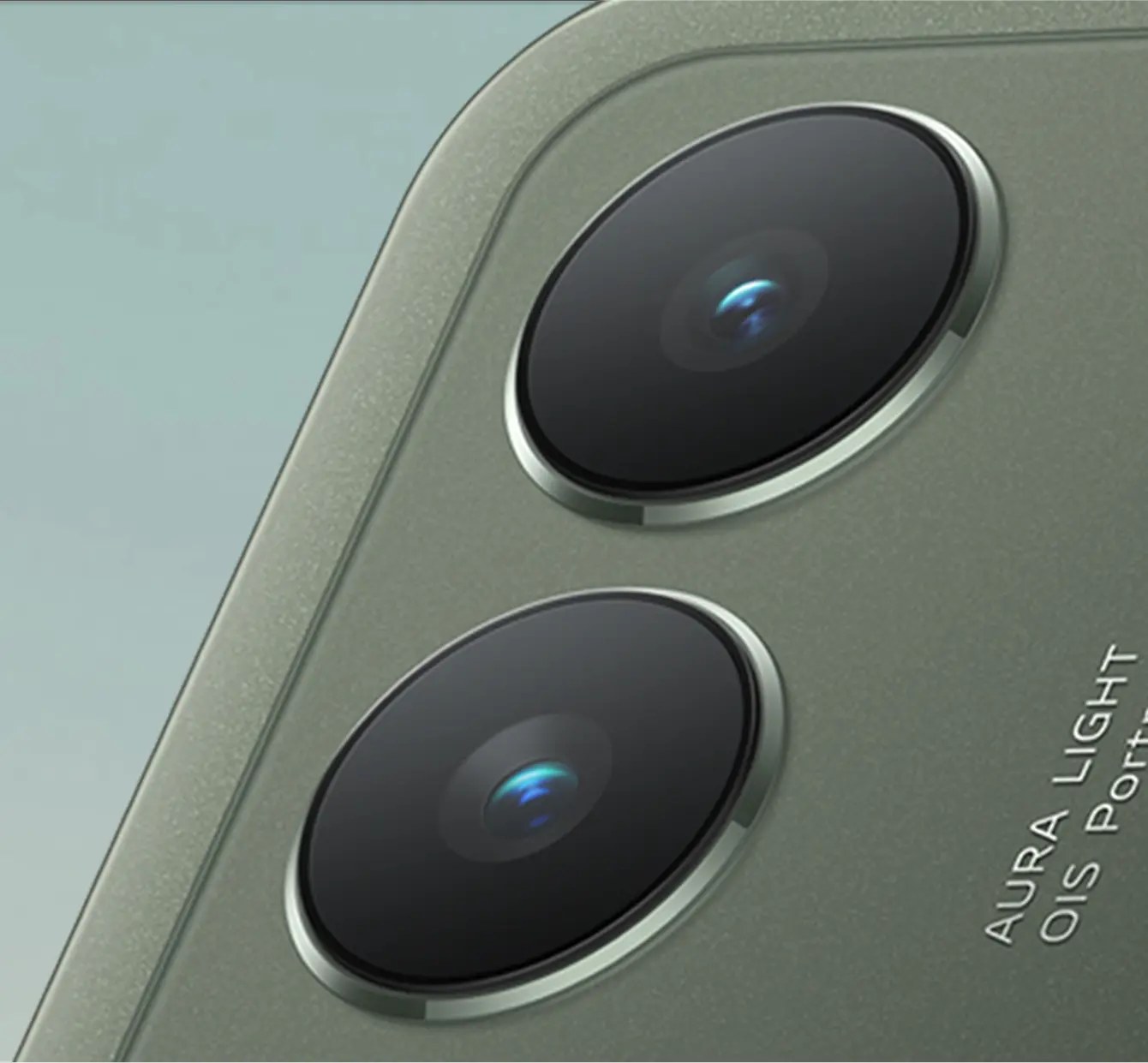
The main rear camera is a 64MP sensor with optical image stabilisation, which vivo markets as a night camera; it works with an 8MP wide-angle camera, so there is no telephoto or macro camera listed. The headline feature is on the front: a 50MP selfie camera with autofocus, an f/2.0 aperture and a 92-degree field of view (90 degrees after distortion correction) for group shots. Vivo also puts a lot of weight on its Aura Light, a flash that vivo says lights the subject evenly through 360 degrees, with a light area 6.8 times wider and 60 percent higher brightness than the V27 series, based on its own laboratory tests.
Other features include a portrait mode with natural bokeh and half-body portraits, a Supermoon mode for shooting the Moon and a Vlog Movie Creator that automates preparation, shooting and editing of short videos. Since these are processing features, the final quality depends on software and light. The OIS on the main camera is a real advantage in low light compared with many phones in this class, which often lack stabilisation, but the missing telephoto lens limits flexibility.
Battery and charging
The battery has a typical capacity of 4,800 mAh, and vivo gives a rated capacity of 4,700 mAh in the fine print. Charging is up to 44W with the standard vivo charger in the box, and vivo notes that the real power varies dynamically depending on use. The company claims up to 175 percent longer usage time, a figure based on laboratory tests whose baseline is not described on the page, plus a 96.85 percent peak energy conversion efficiency and 24-dimension charging protection. No wireless charging is listed, which is typical for this class.
Who it is for and where it compromises
The V29e is for buyers who want a slim, attractive phone with a good selfie camera, an AMOLED screen and a large battery with fast charging, and who do not need flagship performance. The compromises are a mid-range chip, IP54 rather than IP68, no telephoto camera, uncertain software support and regional differences in finish and dimensions. Because it was sold in only some markets, check the exact edition, memory and warranty where you buy. You can browse the phones category and the rankings to compare it with newer alternatives.
Where it ranks
Compare vivo V29e with similar devices
More from vivo
Frequently asked questions
When was the vivo V29e released?
The vivo V29e was released on 2023-08-28, according to the manufacturer’s published information.
What are the main specs of the vivo V29e?
Headline figures for the vivo V29e: Battery: 4,800 mAh, Refresh rate: 200 Hz, Main camera: 64 MP, RAM: 8 GB. The full specification table is further up this page.
Is the vivo V29e worth buying?
That depends on your priorities. Use the editorial review on this page for our view, check the rankings above to see where the device stands on battery, display and camera, and compare it directly with similar models before you decide.