Phones
vivo X300 Ultra
vivo's imaging flagship pairs three ZEISS prime lenses with two 200MP sensors, a 6.82-inch 2K 144Hz display, Snapdragon 8 Elite Gen 5 and a 6600 mAh battery with 100W charging.
Key figures at a glance
Gallery
Specifications
- Display
- 6.82" 2K AMOLED, 3168x1440, 1-144Hz, 4500 nits local peak, 510 ppi
- Chipset
- Snapdragon 8 Elite Gen 5 (3nm), 2x 4.6GHz + 6x 3.62GHz
- RAM
- 16GB
- Storage
- 512GB / 1TB (UFS 4.1, no expansion)
- Rear Camera
- 200MP main (35mm, Sony LYTIA 901, f/1.85) + 50MP ultrawide (14mm, f/2.0) + 200MP telephoto (85mm, f/2.67) + 5MP color-sensing camera
- Front Camera
- 50MP (f/2.45)
- Battery
- 6,600 mAh (typical), 100W wired FlashCharge, wireless charging
- OS
- OriginOS 6 (Android 16), 5 years of OS upgrades and 7 years of security maintenance
- Body
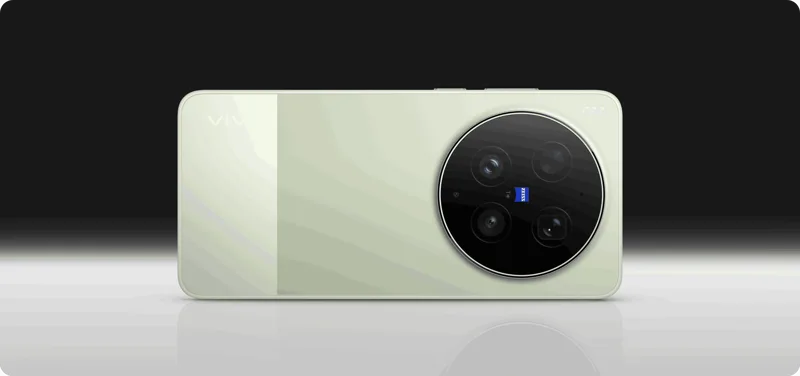
- 162.98 x 76.81 x 8.19 mm, 232 g (Shutter Black, glass); 8.49 mm, 237 g (Film Green, glass fiber)
- Durability
- IP68 and IP69
- Connectivity
- 5G, dual SIM / eSIM, Wi-Fi 7, Bluetooth 6, NFC, USB 3.2
- Accessories
- ZEISS Telephoto Extender Gen 2 Ultra (400mm equivalent) and imaging grip kit, sold separately
- Colors
- Film Green, Shutter Black
The vivo X300 Ultra is the most camera-focused phone in vivo's X300 generation. It combines a 6.82-inch 2K display, the Snapdragon 8 Elite Gen 5 chip, a 6600 mAh battery with 100W wired and wireless charging, and a camera system built around three ZEISS prime lenses at 14 mm, 35 mm and 85 mm equivalent focal lengths, two of them with 200MP sensors. This page is based on the published specifications and manufacturer information from vivo's Indonesian product and parameter pages, which are the pages used here, and it marks vivo's performance and imaging statements as claims.
Place in the lineup
The X300 Ultra sits above the vivo X300 Pro and continues the line of vivo's imaging flagships that began with models such as the vivo X200 Pro. Where the X300 Pro uses a MediaTek Dimensity chip and one large telephoto sensor, the Ultra moves to Qualcomm's Snapdragon 8 Elite Gen 5 and adds 200MP sensors for both the main and the telephoto camera, a bigger display and a larger battery. vivo also sells a separate telephoto extender and an imaging grip kit for this model, both described below. The vivo X300 Ultra vs. vivo X300 Pro table lines up the two phones in numbers.
The Indonesian pages list two versions: 16GB of RAM with 512GB of storage in Film Green or Shutter Black, and 16GB with 1TB in Shutter Black only, with local prices of Rp25,999,000 and Rp29,999,000. vivo does not sell its phones through US carriers and the pages give no US price, so none is given here. The release date used for this entry (1 April 2026) comes from the announcement information given for it and is not printed on the pages used, so treat it as approximate; vivo's regional launches followed at different times.
Design and display
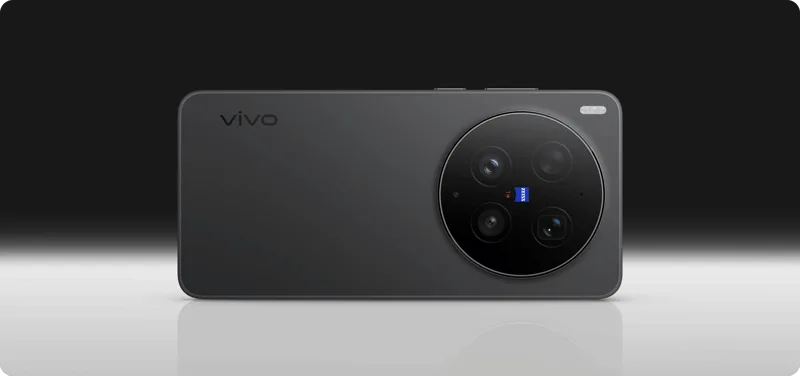
vivo describes a classic camera-inspired design with a metal "biscuit-style" camera module, a knurled texture inspired by professional camera controls and a two-tone split design. The page lists two finishes. Shutter Black has a glass back and measures 162.98 x 76.81 x 8.19 mm at 232 g, while Film Green has a glass-fibre back and measures 8.49 mm thick at 237 g. The phone is rated IP68 and IP69, which vivo says it tested in laboratory conditions according to IEC 60529, and it has a USB 3.2 port with speeds of up to 10 Gbps. There are dual stereo speakers, an X-axis linear motor and a 3D ultrasonic fingerprint sensor.
The screen is a 6.82-inch AMOLED panel with a 2K resolution of 3168 x 1440 pixels, about 510 pixels per inch, and an adaptive refresh rate of 1 to 144Hz, although the 144Hz rate is available only in apps and games that support it. vivo quotes 4500 nits of local peak brightness, measured with HDR video under 100,000 lux of ambient light in its own laboratory, 100 percent P3 colour coverage and 1.07 billion colours. The panel carries ZEISS colour tuning, a circular polarizer to cut reflections and a set of eye-comfort features, including TÜV Rheinland flicker-free and low-blue-light certification. These are manufacturer claims, and real-world brightness depends on the content.
Performance and software
The Snapdragon 8 Elite Gen 5 is built on a 3nm process and has eight cores: two at 4.6GHz and six at 3.62GHz. vivo claims gains of 20 percent in CPU performance and 23 percent in GPU performance, together with lower power consumption, based on its own data. Memory is 16GB of LPDDR5X "Ultra Pro" RAM, with an extended RAM capacity of 16GB listed as well, and storage is UFS 4.1 with no expansion slot. For cooling vivo uses a liquid-cooled vapor chamber with an area of 5800 mm², and it says the phone can record 4K 120fps 10-bit Log video for 3 hours and 53 minutes in its test setup.
The phone runs OriginOS 6 based on Android 16. vivo promises 5 years of OS upgrades and 7 years of security maintenance, and it markets a "5-year smooth experience" while admitting that this does not mean the absence of lag. Connectivity covers 5G with dual SIM and eSIM combinations, Wi-Fi 7, Bluetooth 6 and cross-device features such as one-tap transfer and Shake and Share with iOS devices, which need a recent iOS version and vivo's EasyShare app. The software also includes vivo's Smart Sync features for tablets and computers, and a "Snap-Up Engine" for ticket purchasing and a network booster for concerts and stadiums.
Camera
The camera is the reason to buy this phone. The rear system has three ZEISS prime lenses and a colour sensor. The 14 mm ultrawide camera has a 50MP Sony LYTIA 818 sensor of 1/1.28 inch, an f/2.0 aperture and optical stabilisation rated at CIPA 6.0. The 35 mm "documentary" camera, which acts as the main camera, uses a 200MP Sony LYTIA 901 sensor of 1/1.12 inch with an f/1.85 aperture and CIPA 6.5 stabilisation. The 85 mm telephoto uses a 200MP vivo sensor called HP0 with a 1/1.4-inch size, f/2.67 aperture, 3° gimbal-grade stabilisation rated at CIPA 7.0 and 60fps autofocus tracking in Snapshot mode. A 5MP colour-sensing camera with 12 channels supports white balance, and the front camera is a 50MP unit at f/2.45.
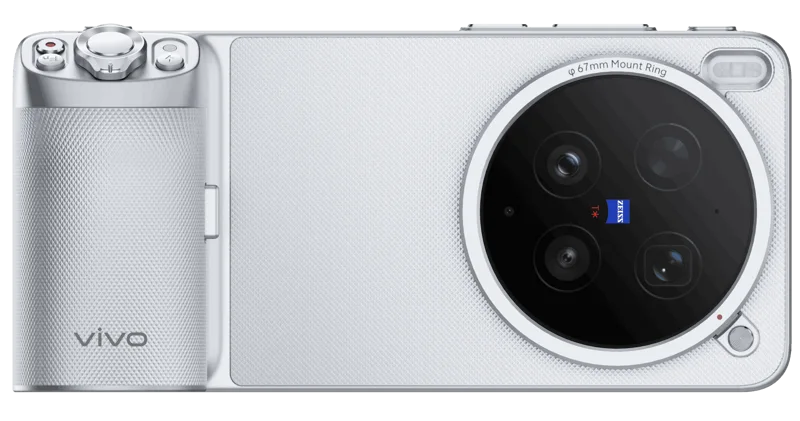
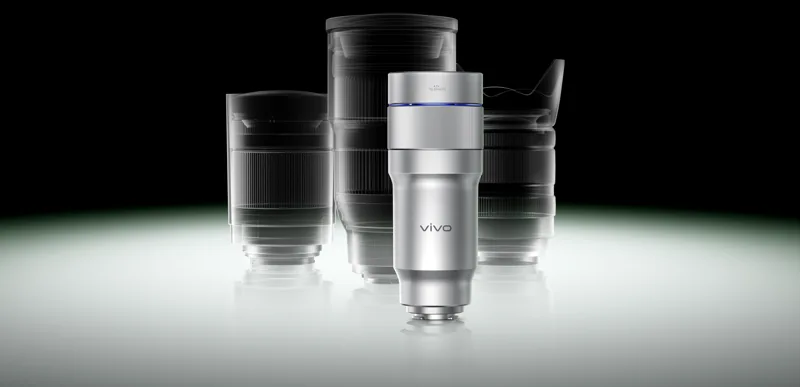
vivo also sells a ZEISS Telephoto Extender Gen 2 Ultra that clips onto the phone and gives a 4.7x magnification, an equivalent focal length of 400 mm and, according to vivo, a reach of up to 1600 mm. It weighs 248 g, has 14 lens elements and is sold separately. For video, vivo lists 4K 120fps recording on all focal lengths with 10-bit Log, Dolby Vision and slow motion, an APV codec with ACES integration, a Pro Video mode, a quad-microphone system with six audio modes and film-style colour looks. The Pro Imaging Chip VS1+ is built on a 6nm process and processes RAW data before it reaches the main chip, with vivo quoting 80 trillion operations per second. A separate imaging grip kit with a built-in 2300 mAh battery is also sold separately and is not included in the box.
These figures describe capabilities, not results, and they come from vivo. The extender and the grip are separate purchases, so the 400 mm and 1600 mm headlines apply only to buyers who add the accessory. Independent tests will show how the large sensors and the heavy processing perform in everyday photos, and rivals such as the Xiaomi 15 Ultra and the Galaxy S26 Ultra are the obvious comparisons.
Battery and charging
The battery has a typical capacity of 6600 mAh in a single-cell design. The parameter page lists a rated capacity of 6375 mAh, while the overview page footnote gives 6395 mAh, so vivo's own pages disagree slightly on that figure. Charging is 100W wired (vivo calls it FlashCharge) plus wireless charging, for which the pages give no wattage. vivo claims 38.8 hours of YouTube playback in its laboratory, and the usual caveats about real use apply. The box contains the phone, a standard vivo charger (20V/5A) that supports up to 100W, a USB cable, a SIM ejector, a protective case, a pre-applied screen film and the documents, according to the parameter page. NFC and an infrared blaster are listed as well.
Who it is for
The X300 Ultra is built for photography and video enthusiasts who want one pocketable device with three very different focal lengths, high-end video options and a large battery, and who are willing to pay for the accessories to reach its full potential. It also suits users who value a long update promise and a bright, high-resolution screen. People who mostly share pictures on social media may find that a simpler phone gives similar results for much less money.
Compromises
- The 400 mm and 1600 mm figures depend on a separate extender, and the grip kit is an additional purchase too.
- The phone is large and heavy (232 to 237 g and up to 8.49 mm), and the pages give no US price or availability.
- Many headline numbers (brightness, battery hours, recording time, performance gains) come from vivo's own lab tests.
- The two vivo pages disagree on the rated battery capacity (6375 and 6395 mAh), and the wireless charging power is not stated.
- Some features such as advanced grip controls and Shake and Share are delivered by later updates and depend on region and device version.
To see how it compares with other current models, check our phone rankings.
Where it ranks
Compare vivo X300 Ultra with similar devices
More from vivo
Frequently asked questions
When was the vivo X300 Ultra released?
The vivo X300 Ultra was released on 2026-04-01, according to the manufacturer’s published information.
What are the main specs of the vivo X300 Ultra?
Headline figures for the vivo X300 Ultra: Battery: 6,600 mAh, Refresh rate: 144 Hz, Main camera: 200 MP, RAM: 16 GB. The full specification table is further up this page.
Is the vivo X300 Ultra worth buying?
That depends on your priorities. Use the editorial review on this page for our view, check the rankings above to see where the device stands on battery, display and camera, and compare it directly with similar models before you decide.


