Phones
vivo X300 FE
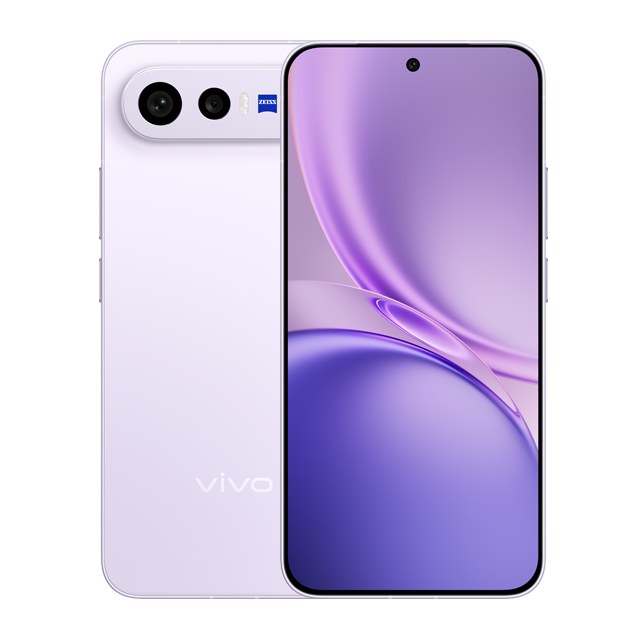
vivo's compact flagship-class phone pairs a 6.31-inch 120Hz AMOLED screen, Snapdragon 8 Gen 5, a 50MP periscope telephoto and a 6500 mAh battery with 90W charging in a 7.99 mm body.
Key figures at a glance
Gallery

Specifications
- Display
- 6.31" AMOLED, 2640x1216, 460 PPI, 1-120Hz, 5000 nits local peak, 2160Hz PWM dimming, P3 wide color gamut
- Chipset
- Snapdragon 8 Gen 5 (3nm)
- RAM
- 12GB
- Extended RAM
- Up to 12GB (virtual, from storage)
- Storage
- 256GB / 512GB (UFS 4.1)
- Rear Camera
- 50MP main (Sony IMX921, f/1.57) + 8MP ultrawide (f/2.2, 110°) + 50MP periscope telephoto (Sony IMX882, 1/1.95", f/2.65, 3x optical)
- Front Camera
- 50MP (f/2.0, 92° wide-angle)
- Battery
- 6500 mAh (typical; 6350 mAh rated), 90W wired, 40W wireless
- OS
- Android 16, OriginOS 6
- Body
- 150.83 x 71.76 x 7.99 mm, 191 g; glass back, metal frame; IP68 and IP69
- Connectivity
- Wi-Fi 7, Bluetooth 6.0, NFC, USB 2.0, dual nano-SIM, infrared blaster
- Colors
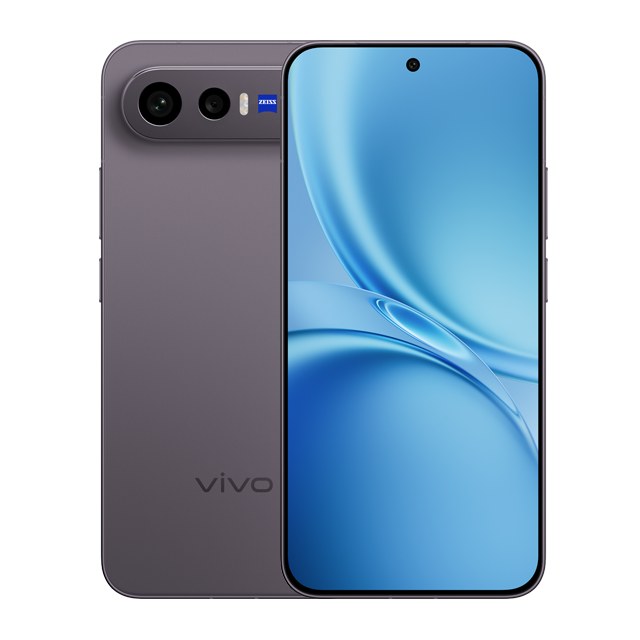
- Mist Purple, Luxe Black
The vivo X300 FE is a compact, flagship-class phone built around a 6.31-inch flat AMOLED screen, a Snapdragon 8 Gen 5 processor, a 6500 mAh battery and a camera system whose headline feature is a 50MP periscope telephoto lens. It weighs 191 g and is 7.99 mm thick, which is unusual for a phone with a battery of this size. This page goes through what vivo publishes about the device, how it sits next to the larger X300 models, and where the trade-offs are. It is based on the published specifications and manufacturer information, not on hands-on lab measurements, so every performance figure below is a claim by vivo unless stated otherwise.
Where it sits in the lineup
The X300 FE belongs to vivo's X300 family and is the smaller, more pocketable member. The bigger models, the vivo X300 Pro and the vivo X300 Ultra, aim at maximum camera hardware and larger screens. The FE keeps several traits of that family: the ZEISS-branded camera system, the 7.99 mm body, the metal frame and glass back, the OriginOS 6 software on top of Android 16 and the same family of fast-charging technology. What changes is the scale. The screen measures 6.31 inches diagonally, the body is 150.83 x 71.76 mm, and the phone is meant to be used one-handed more often than the Pro or Ultra models.
The official page I used lists two colours, Mist Purple and Luxe Black, and two memory configurations: 12 GB of RAM with either 256 GB or 512 GB of UFS 4.1 storage. vivo does not publish a US list price on that page, so none is given here. Availability and pricing differ by country.
Design, build and display
vivo describes the shape as a "natural-grip flat design": a flat screen, thin bezels and rounded corners, with a precision metal frame and a glass back that has an anti-glare finish. At 191 g, the phone is not feather-light, but the weight is spread over a small footprint. Compared with the big-screen competition, such as the Galaxy S26 Ultra, it is a much easier phone to hold and to slip into a pocket.
Durability is a strong point on paper. The phone carries both IP68 and IP69 ratings. IP68 covers dust and immersion in fresh water at 1.5 metres for up to 30 minutes, while the IP69 test uses high-pressure, 80 °C water jets from several angles. vivo also quotes a five-star SGS drop-resistance certificate. As always, these are laboratory results with conditions stated in the fine print, and vivo itself says the phone is not a professional waterproof device and that liquid damage is not covered by warranty.
The display is an AMOLED panel with a resolution of 2640 x 1216 pixels, roughly 460 pixels per inch, and an adaptive refresh rate from 1 to 120 Hz. vivo quotes a local peak brightness of 5000 nits, 2160 Hz PWM dimming, a P3 wide colour gamut and 1.07 billion colours. The company brands it a "ZEISS Master Color Display" and notes in its footnotes that this label refers to colour performance only and does not include eye-comfort features. That is a useful clarification: the 2160 Hz dimming is the figure to look at for flicker sensitivity, not the ZEISS branding. The panel has a punch-hole camera at the top and an ultrasonic fingerprint sensor under the glass.
Performance and software
The chip is the Snapdragon 8 Gen 5 on a 3 nm process, with eight cores: two at up to 3.80 GHz and six at up to 3.32 GHz. It is paired with LPDDR5X memory and UFS 4.1 storage. vivo cites improvements of 36 percent in CPU performance, 11 percent in GPU performance and 46 percent in NPU performance, and an AnTuTu v11 score of 3,161,598 from its own laboratory. The page does not state the baseline for the percentage gains, and a vendor-run benchmark score depends on the exact memory version and test conditions, so treat these as marketing indicators rather than independent results. The practical takeaway is simple: this is a current top-tier Qualcomm chip, which puts it in the same performance class as the larger flagships from other brands, such as the OnePlus 15.
The specification sheet also lists up to 12 GB of expandable RAM, which means storage space used as virtual memory. That is separate from the physical 12 GB of RAM and should not be read as 24 GB of real memory. Software is OriginOS 6 on Android 16. vivo advertises features such as Origin Island, which shows live status information, a private space for isolated apps, Gemini Live, AI search and writing tools, and cross-device functions. The cross-device features include sending files to a Windows PC or Mac with the vivo Office Kit, handing tasks to a Mac or iPad, and connecting AirPods. On longevity, vivo promises five years of OS upgrades and seven years of security maintenance, which is a long commitment by Android standards, although the page does not say how the first-party AI features will be maintained over that period.
Camera
The rear camera has three sensors. The main camera is a 50MP Sony IMX921 sensor with an f/1.57 lens. The ultrawide is an 8MP camera with a 110-degree field of view. The telephoto is a 50MP periscope camera using a Sony IMX882 sensor of 1/1.95 inch with f/2.65 optics, 3x optical zoom and a claimed maximum of 100x. A 50MP front camera with an f/2.0 lens and a 92-degree wide-angle view handles selfies and video calls, with a 0.8x to 2x zoom range.
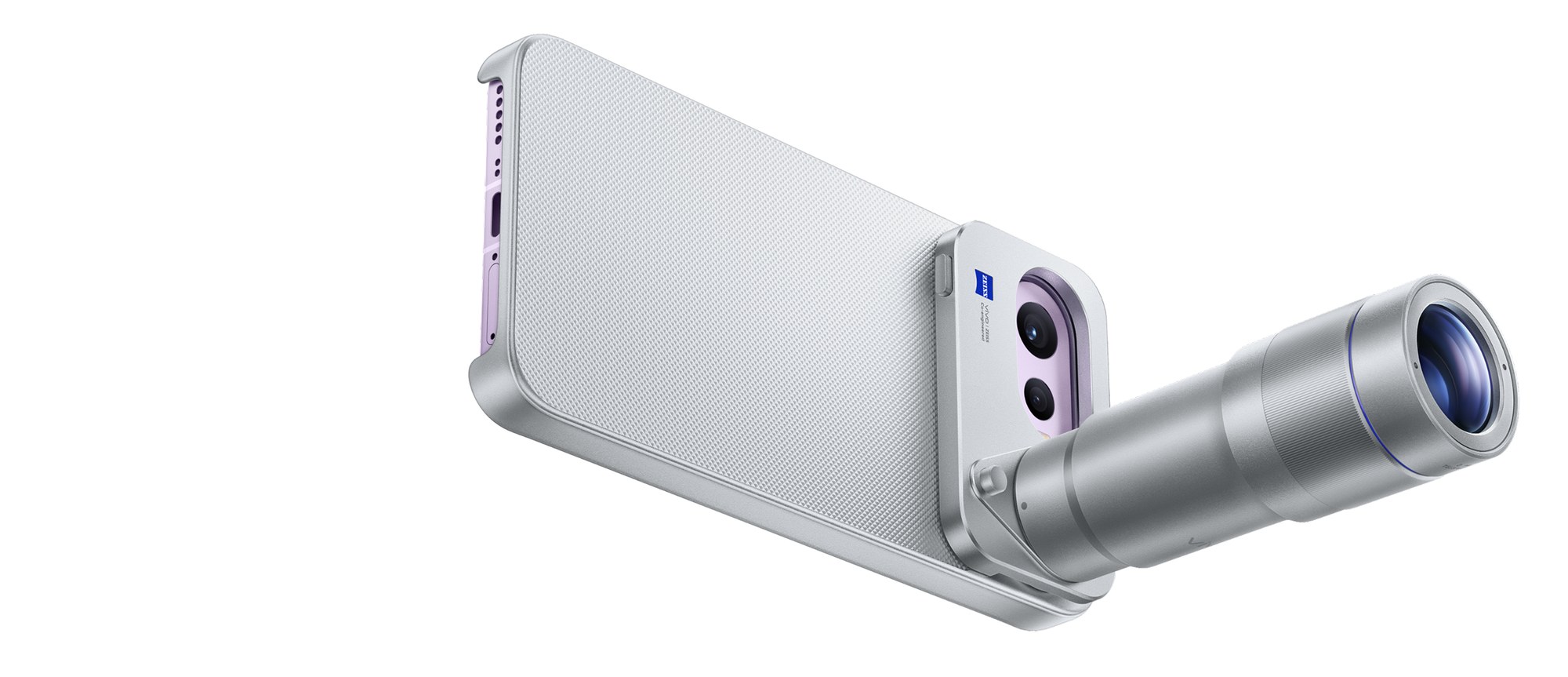
The telephoto is the reason this phone exists. A large-sensor periscope lens in a phone this small is unusual, and vivo pushes it further with an optional accessory, the vivo ZEISS Telephoto Extender Gen 2. It is a 153 g aluminium-alloy lens that attaches to the back and reaches a 200 mm equivalent, with the page showing 400 mm for stage photography when combined with the phone's own optics. It is sold separately, so the base phone's reach is the 3x telephoto and the digital steps above it.
The software side adds a multifocal flash that adapts coverage for five portrait focal lengths from 23 mm to 100 mm, a Stage Mode for concerts, a Street Photography mode with film-like grain and black-and-white styles, and dual-view video that records a wide view and a close-up together. The spec sheet lists 4K and 8K video recording, but it does not say which cameras or frame rates support 8K. The ultrawide is only 8MP, so it is the weakest part of the set. Anyone who shoots a lot of wide landscapes or architecture will notice that the resolution gap to the main camera is large.
Battery and charging
The battery is a single-cell 6500 mAh unit (typical capacity; the rated capacity is 6350 mAh), which is large for a 6.31-inch phone. Charging is 90W wired and 40W wireless, with the wireless speed tied to the included charger and compatible vivo wireless chargers. vivo adds bypass charging, overheating protection and a battery life extender. The company quotes 10.45 hours of always-on navigation and 38.4 hours of YouTube streaming from its own tests. Those numbers are useful for comparison with other vivo claims but are not a replacement for independent endurance tests, which depend heavily on brightness, signal and settings. What the capacity does tell you is that a small body does not have to mean a small battery: the 6500 mAh figure is comparable to what the POCO F8 Ultra offers in a much larger phone.
Who it is for
The X300 FE suits people who want flagship hardware without a 6.8-inch slab. It makes the most sense for someone who values telephoto photography, concerts, travel and portraits, who wants a battery that lasts a full day and who prefers a flat screen. It is also a sensible choice for people who use Windows or Mac computers and like integrated file transfer. If you are deciding between vivo models, the side-by-side table vivo X300 FE vs vivo X300 Pro shows how much you give up in screen size and camera hardware, and the page for the X300 Pro covers the larger alternative. For a different ecosystem, compare it with the iPhone 17.
Compromises and open questions
- Ultrawide resolution: 8MP is low next to the 50MP main and telephoto cameras.
- USB 2.0: The listed USB standard is 2.0, so wired file transfer and video output are slower than on phones with USB 3 ports.
- Accessory cost: The telephoto extender is sold separately, and its price is not listed on the page.
- Regional differences: AI features, network bands and some software functions depend on country and language, and some AI effects are described as arriving in phases through updates.
- Vendor benchmarks: The AnTuTu score, battery runtimes and percentage gains come from vivo's own tests.
- Price: No US price is published, so value comparisons depend on the market where you shop.
In short, the vivo X300 FE is a deliberate attempt to give a small phone the hardware that is normally reserved for big ones. The telephoto camera, the large battery and the long update promise are its strongest arguments, while the 8MP ultrawide, the USB 2.0 port and the optional accessory are the main points where it asks for compromises. See the rankings to see how it fares against other phones in the database.
Where it ranks
Compare vivo X300 FE with similar devices
More from vivo
Frequently asked questions
When was the vivo X300 FE released?
The vivo X300 FE was released on 2026-05-06, according to the manufacturer’s published information.
What are the main specs of the vivo X300 FE?
Headline figures for the vivo X300 FE: Battery: 6,500 mAh, Refresh rate: 160 Hz, Main camera: 50 MP, RAM: 12 GB. The full specification table is further up this page.
Is the vivo X300 FE worth buying?
That depends on your priorities. Use the editorial review on this page for our view, check the rankings above to see where the device stands on battery, display and camera, and compare it directly with similar models before you decide.


