Phones
Xiaomi POCO X8
POCO's value model offers a Snapdragon 6s Gen 4, a large 6.83-inch 120Hz AMOLED screen, an 8340 mAh battery with 67W charging and IP68/IP69 ratings, but only a basic camera pair.
Key figures at a glance
Gallery
Specifications
- Display
- 6.83" 1.5K AMOLED, 2772x1280, 447 ppi, up to 120Hz, 3500 nits peak, Gorilla Glass Victus 2
- Chipset
- Qualcomm Snapdragon 6s Gen 4 (4nm)
- RAM
- 12GB
- Storage
- 128GB / 256GB
- Rear Camera
- 50MP main (f/1.8, OIS) + 2MP depth
- Front Camera
- 16MP
- Battery
- 8340 mAh (typical, silicon-carbon), 67W wired, 22.5W wired reverse charging
- OS
- Xiaomi HyperOS 3
- Body
- 163.45 x 78.27 x 8.6 mm, 223 g; IP66 / IP68 / IP69 / IP69K
- Memory type
- LPDDR4X RAM, UFS 3.1 (256GB) or UFS 2.2 (128GB) storage
- Connectivity
- 5G, Wi-Fi 5, Bluetooth 5.1, NFC, dual nano SIM
- Colors
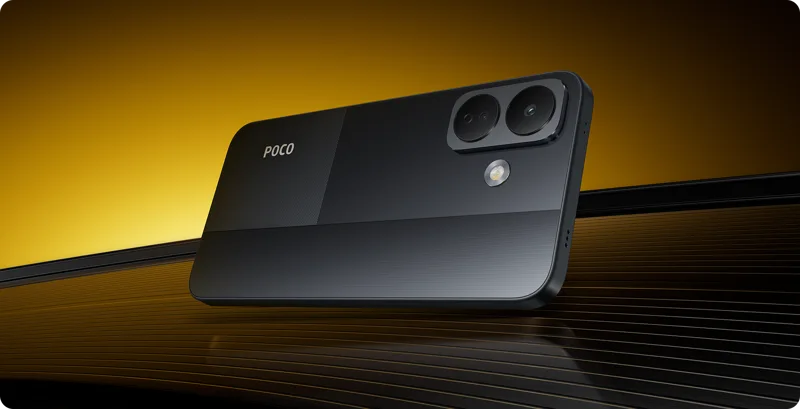
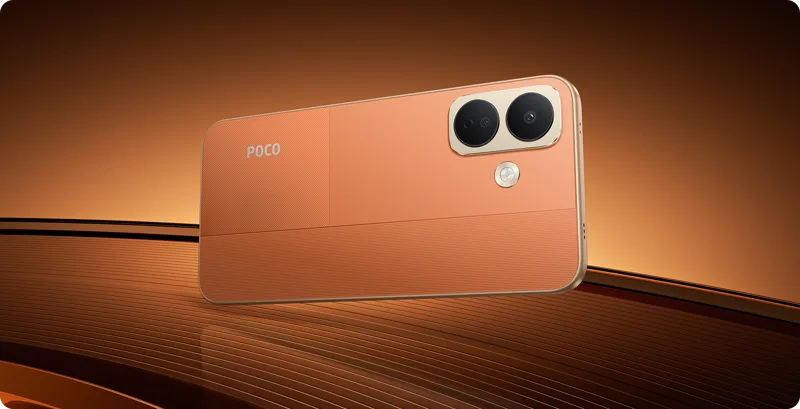
- Black, White, Orange
The POCO X8 is the entry model of POCO's X8 series, and it makes a clear bet: spend the money on the screen, the battery and the durability, and keep the processor and cameras modest. It pairs a Snapdragon 6s Gen 4 chip with a 6.83-inch 120Hz AMOLED display, a typical 8340 mAh silicon-carbon battery, 67W charging and an unusually long list of dust and water ratings. This page is based on the published specifications and manufacturer information from Xiaomi's global POCO X8 overview and specification pages, and it treats all laboratory numbers, from battery endurance to benchmark scores, as claims made by the manufacturer.
Place in the lineup
The X8 family has three members. This one is the starting point, the POCO X8 Pro is the performance-oriented middle model, and the POCO X8 Pro Max tops the range with a flagship chip. The global pages list three memory options for the X8: 6GB with 128GB, 8GB with 256GB and 12GB with 256GB, and three colours (black, white and orange). They state neither a global sale date nor a US price. POCO phones are normally sold online and through regional partners rather than US carriers, so no US list price is given here, and the date used for this entry, 17 March 2026, is the announced launch date rather than one printed on the product page, so treat it as approximate. For a direct look at the step up, the table for POCO X8 vs. POCO X8 Pro lists the numbers next to each other.
Design and display
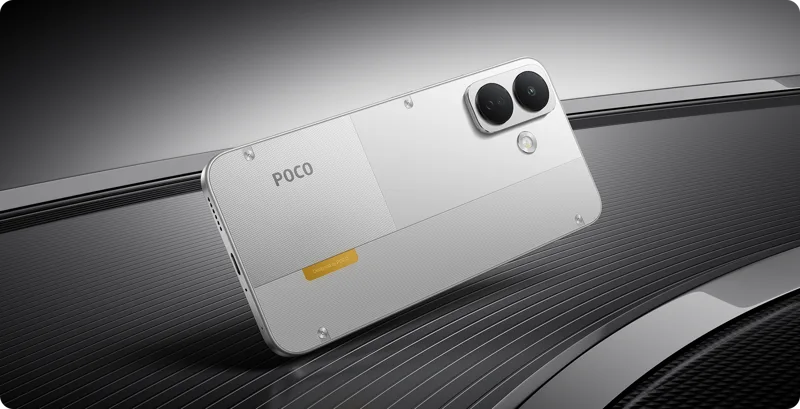
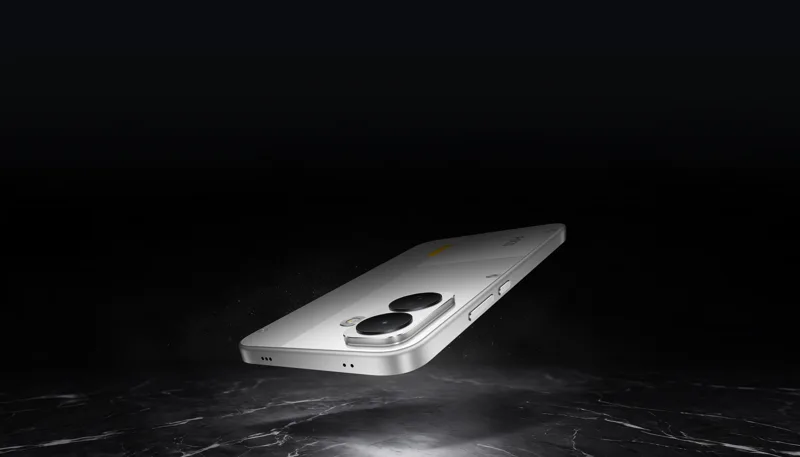
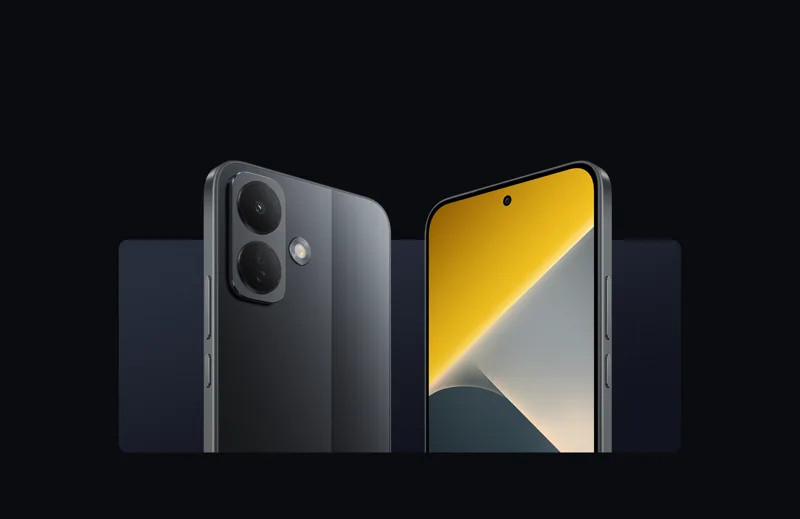
POCO describes a "segmented pattern" back with geometric split lines and an industrial texture, combined with large rounded corners and symmetrical bezels. The size is 163.45 x 78.27 x 8.6 mm and the weight is 223 g, so this is a big and fairly heavy phone, a consequence of the large battery. Durability is a main selling point. The specification page lists IP66, IP68, IP69 and IP69K, with the usual laboratory conditions: static fresh water up to 2 metres for 30 minutes for IP68, and hot-water jets at 80 degrees Celsius for the IP69 classes. POCO adds that the phone passed a TÜV SÜD five-star test of 2 metres for 72 hours, and that SGS certified it for drops from up to 3 metres onto granite. Both are manufacturer-commissioned certificates measured under controlled conditions, and the company repeats that liquid damage outside the test conditions is not covered by the warranty. An underwater camera mode is promised through a software update later.
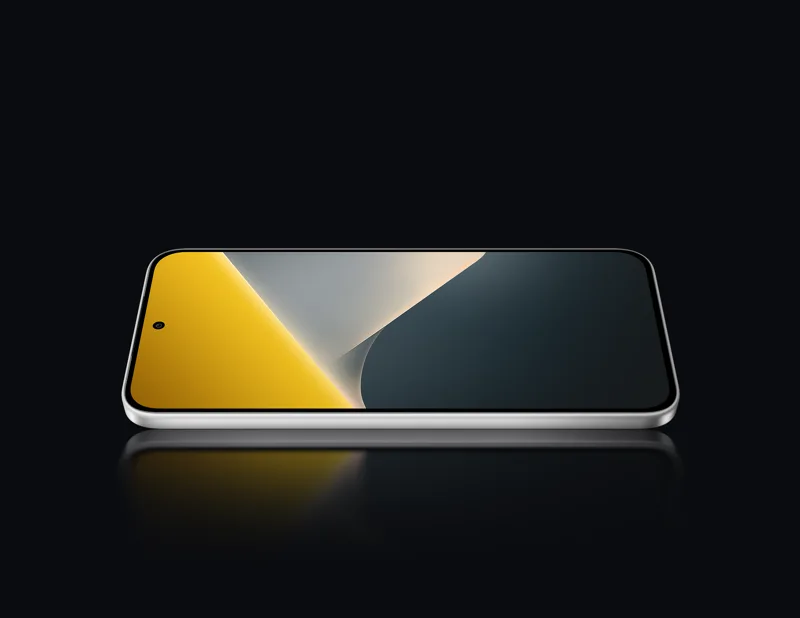
The screen is a 6.83-inch AMOLED panel at 1.5K resolution (2772 x 1280 pixels, 447 ppi) with a refresh rate of up to 120Hz, protected by Corning Gorilla Glass Victus 2. Peak brightness is claimed at 3500 nits, measured on a small part of the screen, with 1060 nits typical. The panel supports 12-bit colour and a wide DCI-P3 gamut, uses 3840Hz PWM plus DC dimming, can go down to 1 nit and carries the same three TÜV Rheinland eye-comfort certificates as the more expensive models. Touch sampling is 240Hz, with an instant rate of 3200Hz that works only in Game Turbo mode. POCO says the display material cuts display power use by up to 11.4 percent compared with the previous generation's material, a lab comparison.
Performance and software
The Snapdragon 6s Gen 4 is a 4nm octa-core chip with a top clock of 2.4GHz and Adreno graphics. POCO quotes an AnTuTu score of 946,548 from its own lab, far below the 3,085,998 that the company states for the Pro Max. Memory is LPDDR4X, and storage is UFS 3.1 on the 256GB versions and UFS 2.2 on the 128GB version, a difference that matters for app loading and file copying. The page advertises up to 24GB of RAM when memory extension is used, which borrows storage space and is not a substitute for real RAM. The phone ships with Xiaomi HyperOS 3, and POCO claims a "60-month like-new" software experience based on an internal ageing test; this is not the same as a promise of updates, and no update period is given.
The software list includes Google Gemini with Gemini Live, image creation, video tools and Circle to Search, Xiaomi HyperIsland for live information, dual video recording and several AI photo-editing tools such as glare removal and erase. Availability depends on region and language. The page also mentions limited-eligibility offers, such as trials of Spotify Premium, YouTube Premium and Google One, which depend on terms and conditions.
Camera
This is where the saving is most visible. The rear camera is a 50MP main sensor with an f/1.8 lens and optical image stabilisation, accompanied only by a 2MP depth camera at f/2.4. There is no ultrawide lens and no telephoto lens. The front camera has 16MP. Video recording is listed at 1080p and 720p at 30 frames per second, with no 4K video. The camera app offers Live moment, HDR, portrait, underwater mode, Ultra HD mode, panorama, documents and a pro mode. For snapshots in daylight this is a normal budget camera, but it offers much less flexibility than phones with a second real camera. Anyone who films often should note the lack of 4K.
Battery and charging
The battery is the strongest feature: 8340 mAh typical capacity with a silicon-carbon design. POCO claims more than two days of use, based on a simulated mixed-use test, and a 60-hour endurance certification from TÜV SÜD. Charging is 67W, and wired reverse charging reaches 22.5W. The documentation is a little inconsistent about the charger: the specification list mentions a 67W in-box charger, while the footnote says no power adapter is included and recommends a 67W adapter. Check the retailer's listing before buying. The battery is rated to keep at least 80 percent of its capacity after 1,600 charge cycles, around six years of normal use by POCO's calculation. Wireless charging is not listed.
Connectivity
Connectivity is basic: 5G, Wi-Fi 5 (802.11 a/b/g/n/ac), Bluetooth 5.1, NFC and dual nano SIM. An eSIM is not listed, Wi-Fi 6 or newer is not mentioned, and the satellite positioning list is shorter than on the Pro Max. An optical fingerprint sensor sits under the display, there is an infrared blaster, and the speakers are dual, with a claimed 300 percent volume boost over the baseline, with Dolby Atmos and Hi-Res labels.
Who it is for and trade-offs
The POCO X8 suits people who value battery life, a large bright screen and a robust body over camera range and raw speed: commuters, students, field workers and anyone who treats a phone roughly. Its trade-offs are the single useful camera without ultrawide or 4K video, the older Wi-Fi and Bluetooth versions, slower storage on the 128GB model, a weight of 223 g and an unstated update promise. Buyers who play demanding games or take many photos should compare it with the POCO X8 Pro or the POCO X8 Pro Max, and the phone rankings show where it stands among all listed models.
Where it ranks
Compare Xiaomi POCO X8 with similar devices
More from Xiaomi
Frequently asked questions
When was the Xiaomi POCO X8 released?
The Xiaomi POCO X8 was released on 2026-03-17, according to the manufacturer’s published information.
What are the main specs of the Xiaomi POCO X8?
Headline figures for the Xiaomi POCO X8: Battery: 8,340 mAh, Refresh rate: 120 Hz, Main camera: 50 MP, RAM: 12 GB. The full specification table is further up this page.
Is the Xiaomi POCO X8 worth buying?
That depends on your priorities. Use the editorial review on this page for our view, check the rankings above to see where the device stands on battery, display and camera, and compare it directly with similar models before you decide.


