Phones
Xiaomi POCO X8 Pro
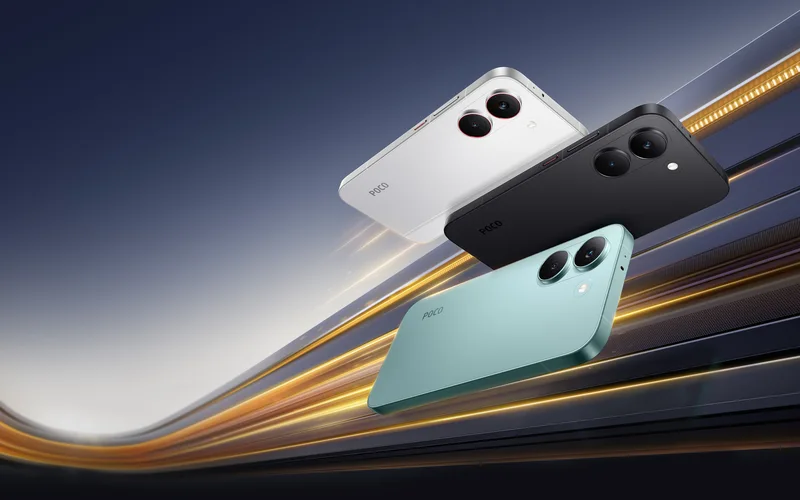
POCO's performance mid-ranger pairs a Dimensity 8500-Ultra, a 120Hz 1.5K AMOLED screen and a 6500 mAh battery with 100W charging and IP68, but keeps a two-camera setup.
Key figures at a glance
Gallery
Specifications
- Display
- 6.59" 1.5K AMOLED, 2756x1268, 460 ppi, up to 120Hz, 3500 nits peak
- Chipset
- MediaTek Dimensity 8500-Ultra (4nm)
- RAM
- 12GB
- Storage
- 256GB / 512GB
- Rear Camera
- 50MP main (Sony IMX882, f/1.5, OIS) + 8MP ultrawide
- Front Camera
- 20MP
- Battery
- 6500 mAh (typical, silicon-carbon), 100W wired, 27W wired reverse charging
- OS
- Xiaomi HyperOS 3
- Body
- 157.53 x 75.19 x 8.38 mm, 201.47 g; metal frame, glass back; IP68
- Memory type
- LPDDR5X RAM, UFS 4.1 storage
- Connectivity
- 5G, Wi-Fi 6, Bluetooth 6.0, NFC, dual SIM
- Colors
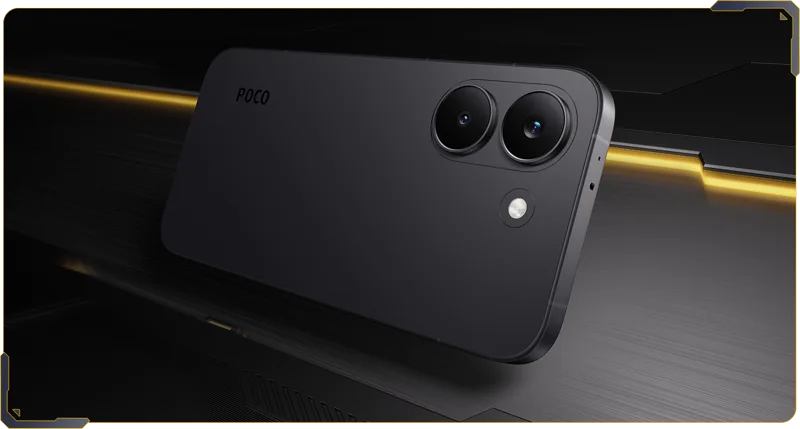
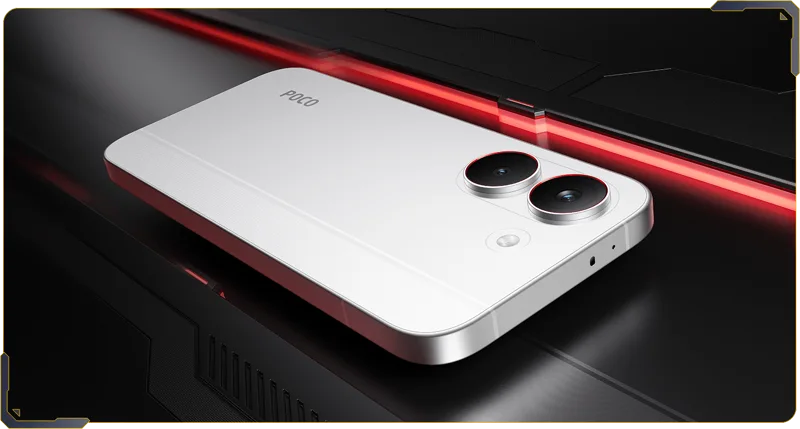
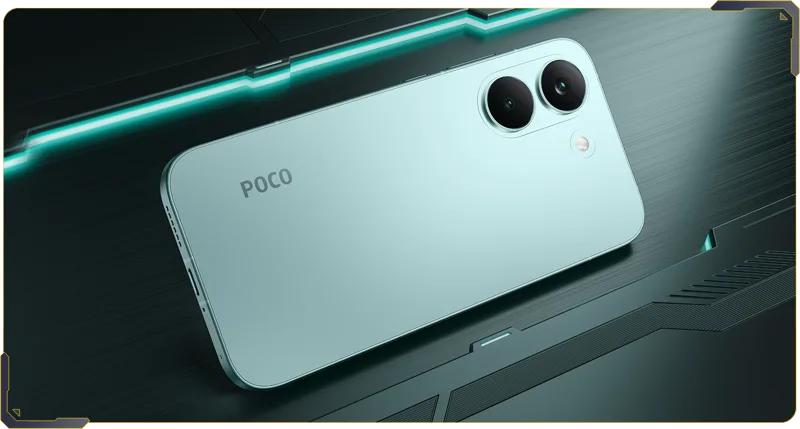
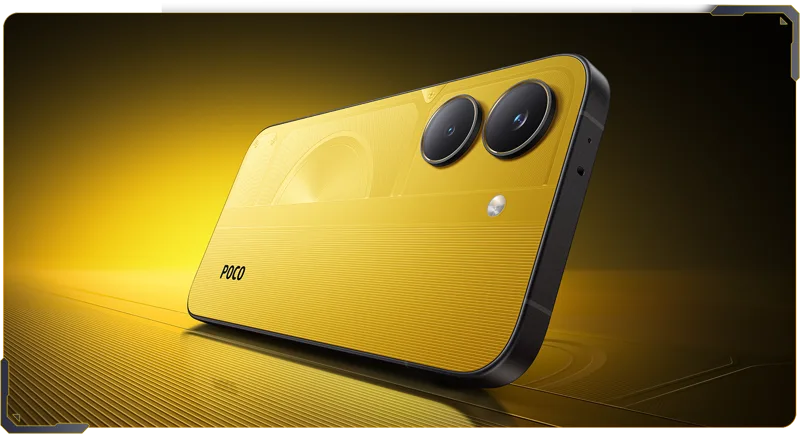
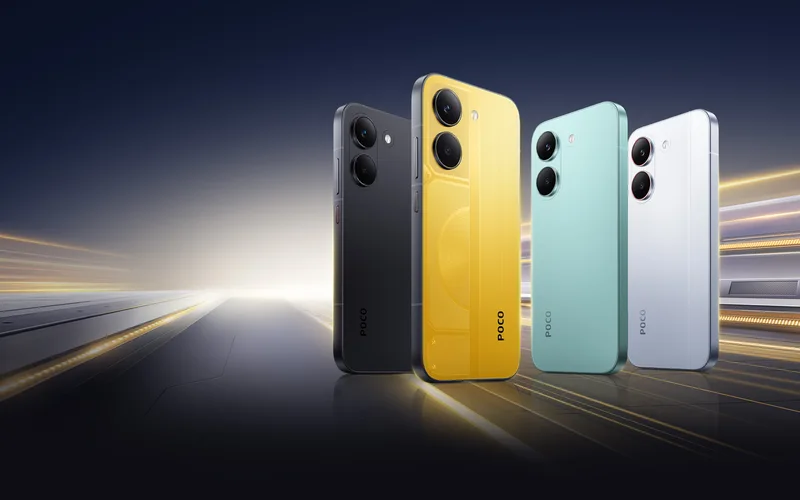
- Black, Mint Green, White, Yellow
The POCO X8 Pro is the performance-first mid-range phone from POCO, the value brand of Xiaomi. It pairs a MediaTek Dimensity 8500-Ultra chip with a 6.59-inch 1.5K AMOLED screen, a large 6500 mAh silicon-carbon battery, 100W charging and an IP68 rating, all in a body that POCO describes as built to "flagship standards". This page is based on the published specifications and manufacturer information from Xiaomi's global POCO X8 Pro product and specification pages, and it marks every performance, battery and brightness figure that comes from POCO's own laboratory as a manufacturer claim.
Place in the lineup
POCO sells its X series as the "performance for the money" line. The X8 Pro is the main model in the family, and the global product page lists three memory configurations: 8GB with 256GB, 8GB with 512GB and 12GB with 512GB. Four colours are named (Black, Mint Green, White and Yellow), and a Marvel-themed Iron Man Edition is shown as a limited variant whose availability depends on the market. The page does not state a global launch date or a US price, and POCO phones are normally sold through online shops and regional partners rather than US carriers, so no US list price is given here. The launch date used for this entry (17 March 2026) comes from the announced launch event, not from a date printed on the product page, so treat it as approximate.
Within the Xiaomi ecosystem the closest neighbours are the camera-focused Xiaomi 15T Pro and the flagship Xiaomi 15 Ultra, both of which cost more and aim at photography. If you want to see how a performance-oriented mid-range phone lines up against a premium camera phone from the same company, the table for POCO X8 Pro vs. Xiaomi 15T Pro puts the numbers side by side.
Design and display
The X8 Pro combines a metal middle frame with a glass back. The listed dimensions are 157.53 x 75.19 x 8.38 mm and the weight is 201.47 g, figures that POCO says come from its own lab measurements. The phone is rated IP68 against dust and water, which the footnotes describe as submersion in still fresh water up to 1.5 metres for up to 30 minutes under laboratory conditions. As usual, the maker warns that the rating is not guaranteed in everyday conditions and that the warranty does not cover liquid damage outside the test parameters. The white version has a racing-stripe pattern on the back, and the rear also carries a programmable RGB light that can flash in eight colours for calls and notifications, or pulse with games and music.
The screen is a 6.59-inch AMOLED panel with a resolution of 2756 x 1268 pixels, about 460 pixels per inch, and a refresh rate of up to 120Hz. POCO notes that the 120Hz setting applies to supported apps. The panel supports 12-bit colour with 68 billion colours, DCI-P3, HDR10+ and Dolby Vision. POCO quotes a typical brightness of 800 nits, 2000 nits in high-brightness mode and a peak of 3500 nits over 25 percent of the screen, plus 3840Hz PWM dimming, with TÜV Rheinland certificates for low blue light, flicker-free operation and circadian friendliness. Touch sampling is stated as up to 480Hz, and 2560Hz "instant" sampling is available in Game Turbo mode. The bezels are narrow, 1.7 mm at the bottom and 1.5 mm elsewhere, for a screen-to-body ratio of 94.1 percent. The cover glass is Corning Gorilla Glass 7i, which is a mid-range grade rather than the newest Victus family.
Performance and software
The Dimensity 8500-Ultra is built on a 4nm process and uses an all-big-core CPU layout with a top clock of 3.4GHz, paired with a Mali-G720 MC8 graphics unit. Memory is LPDDR5X and storage is UFS 4.1. POCO states an AnTuTu v11 score of 2,283,558 from its internal lab, and says that CPU performance is up 7 percent and GPU performance up 25 percent over the previous generation, with data supplied by MediaTek. These are manufacturer claims and independent results can differ with temperature and software version. Cooling relies on what POCO calls a 3D dual-layer IceLoop system with a 5300 mm² area, which the company says lowers SoC temperature by up to 3°C.
The phone runs Xiaomi HyperOS 3. Google Gemini and Circle to Search are included, along with Xiaomi's own tools for AI writing, speech recognition, interpretation and search, although POCO points out that availability varies by region and language. Gaming features include WildBoost optimisation, a "24x super resolution touch" mode under Game Turbo, and two features, 1.5K super resolution and 90FPS smart frame rate, that are delivered through an update from March 2026 and work only in selected games. Connectivity covers 5G, Wi-Fi 6, Bluetooth 6.0 with LDAC and LC3 support, NFC and dual SIM, and the phone also has an infrared blaster, stereo speakers with Dolby Atmos and an in-screen fingerprint sensor. The product page does not state the Android version or the length of the software support period, so those details are left out of the specifications.
Camera
The main camera is a 50MP Sony IMX882 sensor with a 1/1.95-inch size, an f/1.5 aperture, a six-element lens and optical image stabilisation. It is joined by an 8MP ultrawide camera at f/2.2, and there is no telephoto or macro lens on the spec page. The front camera has 20MP, and POCO says it switches to a 0.8x wider view for group selfies. Video goes up to 4K at 30 or 60 frames per second on the rear camera, with slow motion at 720p or 1080p up to 960fps. Software features include a document mode, motion tracking focus, a "UltraSnap" burst that can capture up to 120 photos, film-style filters and the usual HyperAI tools such as AI cutouts, reflection removal and beautify.
This is a camera setup that aims at good everyday results from one strong main sensor, not at zoom flexibility. A two-camera system without a telephoto lens means that zoomed shots rely on digital cropping, and users who care most about camera quality are better served by the models linked above. For the price class, the combination of a large aperture, a fairly big sensor and OIS is a sensible choice, but POCO provides no sample benchmarks, so image quality should be judged from independent tests once they are available.
Battery and charging
The battery is the headline feature. POCO lists 6500 mAh (typical) with a silicon-carbon design, stating a silicon content of around 10 percent. Charging is at 100W through USB-C with support for PD 3.0, PD 2.0 and PPS chargers, and POCO claims 48 minutes from 1 to 100 percent with the in-box charger in a "Top speed" mode with the display off. The company also states usage figures from its lab, namely more than 9 hours of gaming, more than 12 hours of video calls and more than 20 hours of social media. Wired reverse charging of up to 27W lets the phone act as a power bank, and POCO says the battery keeps at least 80 percent of its capacity after 1,600 cycles. Wireless charging is not listed. The box contents differ by region: the specification page lists an adapter, a cable, a protective case and a SIM tool, but the overview page asks buyers to check with the local seller whether the adapter is included.
Who it is for
The POCO X8 Pro suits people who want strong gaming and everyday performance, a bright 120Hz screen and a very large battery without paying flagship money. Heavy users who often reach the end of the day with a low battery are the clearest target, and the 100W charger also suits those who like short top-ups. Mobile gamers will like the cooling system, the touch-sampling options and the RGB notification light. Anyone who wants a dependable, simple phone for social media, video and navigation gets a long list of features for the segment.
Compromises
- The camera system has only a main and an ultrawide lens, with no optical zoom, so it will not match premium camera phones.
- Wireless charging is not listed, and the weight of about 201 g is on the high side because of the large battery.
- Several gaming features are update-dependent or limited to selected titles, and many of the headline numbers are lab data from POCO itself.
- The page does not state the Android version, the update policy or an official US price, so long-term support is unclear.
- The cover glass is Gorilla Glass 7i, and the IP68 rating does not cover liquid damage outside the stated test conditions.
Compared with a camera-led device such as the Xiaomi 15T Pro, the POCO X8 Pro trades photography depth for battery size and raw performance per dollar, and our phone rankings show where it sits among current models.
Where it ranks
Compare Xiaomi POCO X8 Pro with similar devices
More from Xiaomi
Frequently asked questions
When was the Xiaomi POCO X8 Pro released?
The Xiaomi POCO X8 Pro was released on 2026-03-17, according to the manufacturer’s published information.
What are the main specs of the Xiaomi POCO X8 Pro?
Headline figures for the Xiaomi POCO X8 Pro: Battery: 6,500 mAh, Refresh rate: 120 Hz, Main camera: 50 MP, RAM: 12 GB. The full specification table is further up this page.
Is the Xiaomi POCO X8 Pro worth buying?
That depends on your priorities. Use the editorial review on this page for our view, check the rankings above to see where the device stands on battery, display and camera, and compare it directly with similar models before you decide.


