Phones
Xiaomi 15
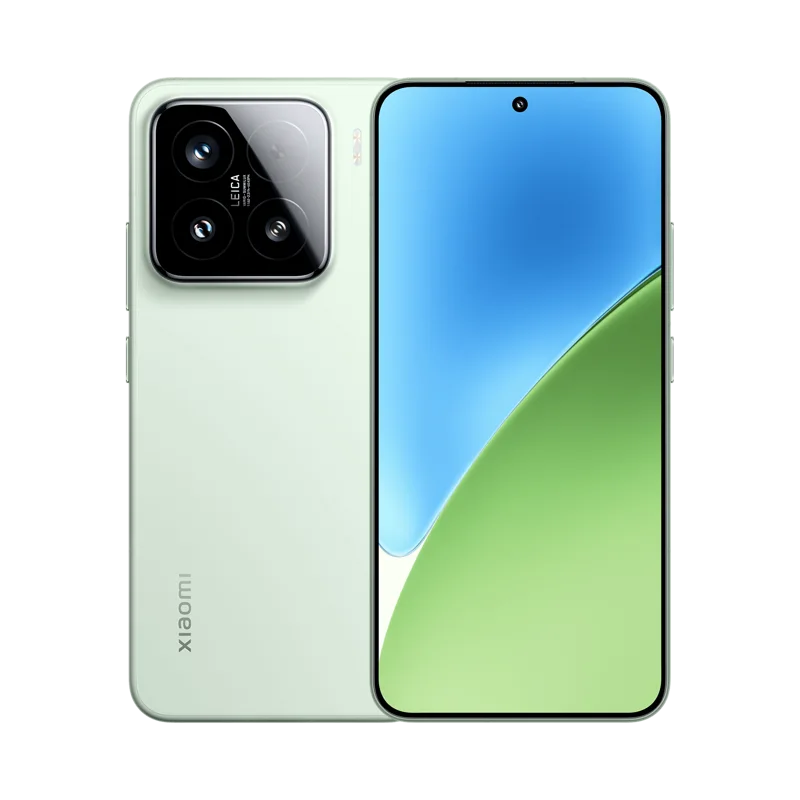
Xiaomi's compact 2025 flagship packs a 6.36-inch 1-120Hz AMOLED, Snapdragon 8 Elite, a Leica triple 50MP camera and a 5,240 mAh battery with 90W charging.
Key figures at a glance
Gallery
Specifications
- Display
- 6.36" CrystalRes AMOLED, 2670x1200, 1-120Hz, 3200 nits peak
- Chipset
- Snapdragon 8 Elite (3nm)
- RAM
- 12GB
- Storage
- 256GB / 512GB
- Rear Camera
- 50MP main (Leica Summilux, OIS) + 50MP telephoto 60mm (OIS) + 50MP ultrawide
- Front Camera
- 32MP
- Battery
- 5,240 mAh, 90W wired, 50W wireless
- OS
- Xiaomi HyperOS 2
- Dimensions
- 152.3 x 71.2 x 8.08 mm, 191 g
- Water resistance
- IP68
- Connectivity
- Wi-Fi 7, Bluetooth 6.0, NFC, dual SIM (nano SIM / eSIM)
The Xiaomi 15 is the compact member of Xiaomi's 2025 flagship family. While many rivals have pushed their top phones towards 6.7 inches and beyond, Xiaomi kept this one to a 6.36-inch display, put the Snapdragon 8 Elite inside, and still fitted a 5,240 mAh battery. This page is based on the published specifications and manufacturer information, and it looks at where the phone sits in the range, what the hardware promises, and which trade-offs a buyer should weigh.
Place in the lineup
Xiaomi describes the Xiaomi 15 as a "flagship compact" phone, and that is a fair summary of its role. It is the smaller, lighter sibling to the camera-focused Xiaomi 15 Ultra, which swaps this phone's triple 50MP layout for a much larger camera system and a bigger body. The release date used on this page, 2 March 2025, is a reference date rather than a manufacturer-stated on-sale date, because Xiaomi's product pages do not give one; local availability and launch timing can differ by country. The company has also continued the family with later models, for example the Xiaomi 15T Pro, so this is best seen as one of several options rather than the newest Xiaomi design.
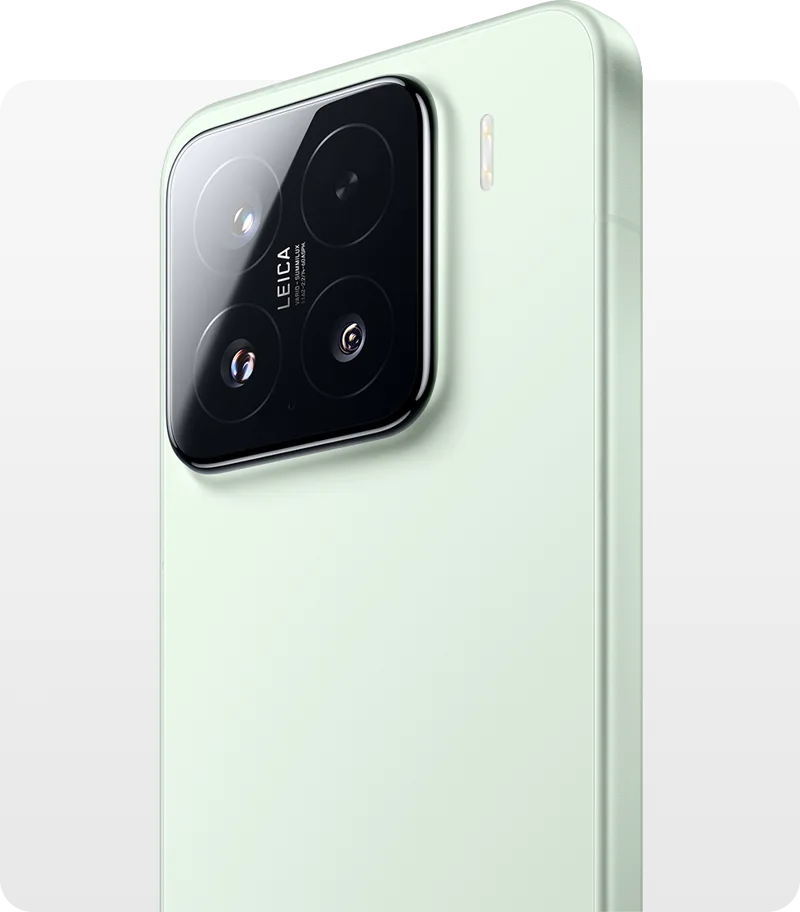
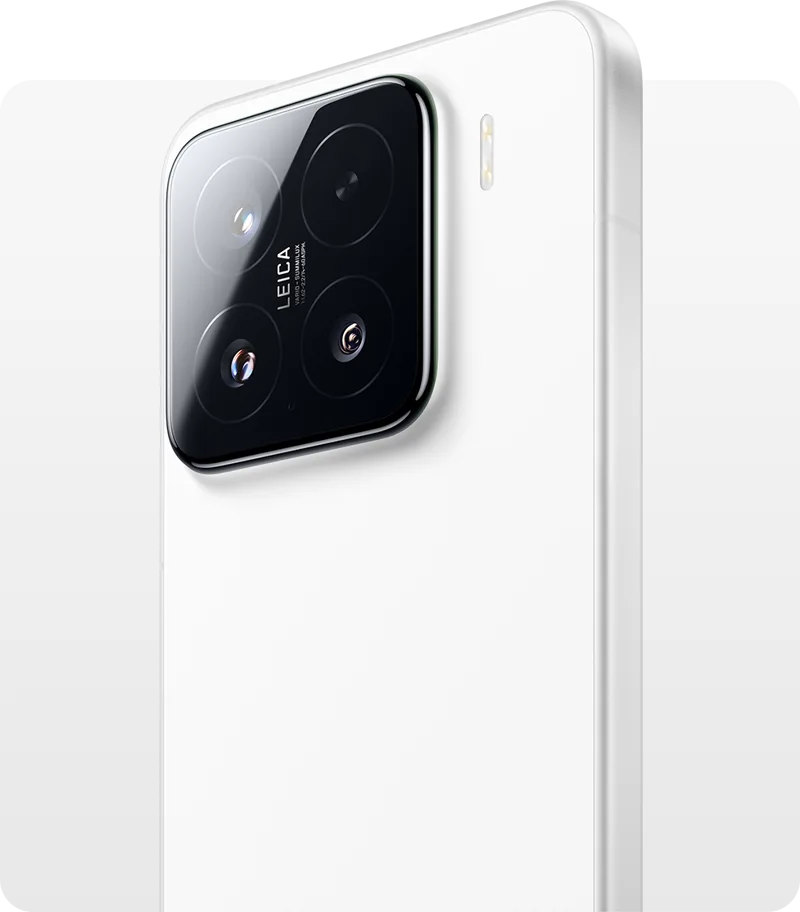
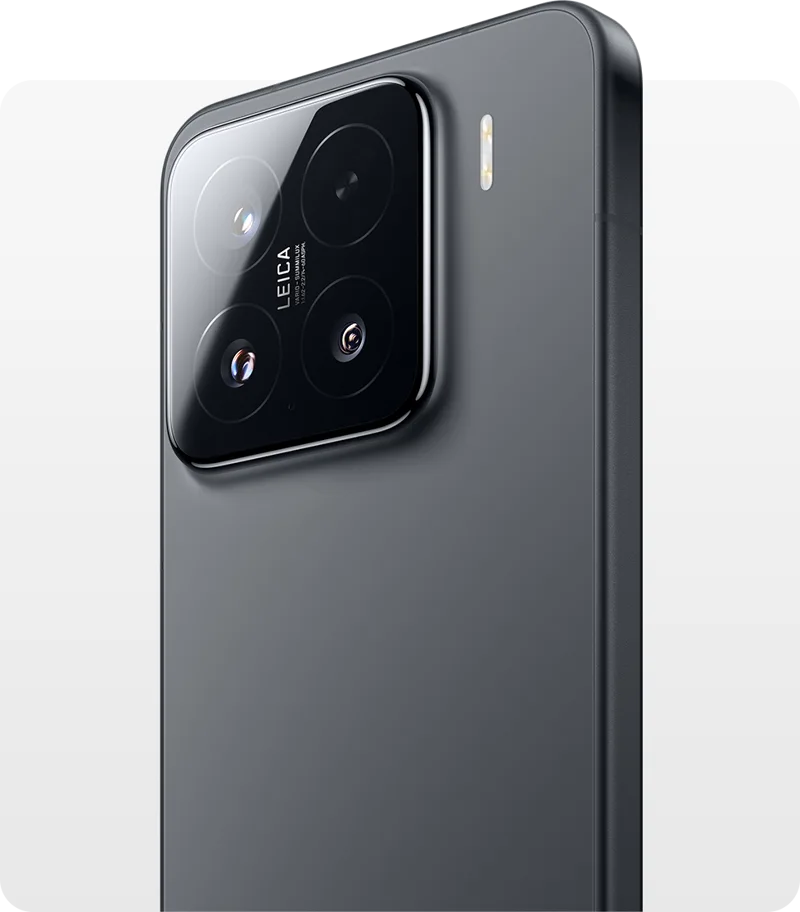
The phone is offered in four colours according to the specification page: Liquid Silver, White, Black and Green. Two configurations are listed, 12GB of RAM with either 256GB or 512GB of storage. The memory is LPDDR5X and the storage is UFS 4.0, a pairing normally reserved for the top of the market.
Design and display
Xiaomi calls the styling an "all-around fluid design". In practice that means a micro-curved aluminium frame and a flat-looking front with very thin bezels; Xiaomi quotes 1.38mm on all four sides and credits a packaging technique it calls LIPO for narrowing the bottom border by up to 20 percent. The phone measures 152.3 x 71.2 x 8.08 mm and weighs 191g in Black, White and Green. The Liquid Silver version is slightly thicker at 8.48mm and 192g. Those figures make it noticeably easier to hold one-handed than most 2025 flagships, and that is arguably the phone's main selling point.
The screen is a 6.36-inch CrystalRes AMOLED with a resolution of 2670 x 1200 pixels, which Xiaomi puts at 460 ppi. The refresh rate is adaptive from 1Hz to 120Hz, touch sampling is quoted as up to 300Hz, and the panel supports HDR10, HDR10+ and Dolby Vision. Xiaomi states a peak brightness of 3200 nits, but it specifies that this figure applies when only 25 percent of the screen area is lit, so it describes small bright highlights rather than a full-screen number. The display also carries TÜV Rheinland certifications for low blue light, flicker-free operation and circadian friendliness, and it includes an always-active mode that can drop to 1Hz. The cover is Xiaomi Shield Glass; Xiaomi claims a tenfold durability improvement over the Xiaomi 14, a figure taken from its internal lab tests.
The phone is rated IP68. Xiaomi lists the test conditions as static fresh water at 1.5 metres for up to 30 minutes and recommends not testing it yourself.
Performance and software
The chipset is the Snapdragon 8 Elite on a 3nm process, with two prime cores up to 4.32GHz and six performance cores up to 3.53GHz. Xiaomi pairs it with a cooling design it calls the Wing-type IceLoop system. Xiaomi's lab comparisons against the Snapdragon 8 Gen 3 claim 45 percent higher multi-core CPU performance and 44 percent higher GPU performance; as with any manufacturer benchmark, treat these as directional rather than as something you will see in everyday use.
The software is Xiaomi HyperOS 2. Xiaomi's HyperAI suite brings writing assistance, speech recognition, an interpreter and image tools such as AI Erase Pro and image expansion, and Google's Gemini and Circle to Search are included on the specification list. Xiaomi notes that availability of the AI features varies by region and language, so check what your market actually receives.
Connectivity is up to date: Wi-Fi 7 capability (regional), Bluetooth 6.0 with the usual high-quality codecs including LDAC and aptX Adaptive, dual-band GPS, NFC and dual SIM support that includes eSIM. An ultrasonic in-screen fingerprint sensor handles unlocking, and an infrared blaster remains for controlling appliances.
Camera
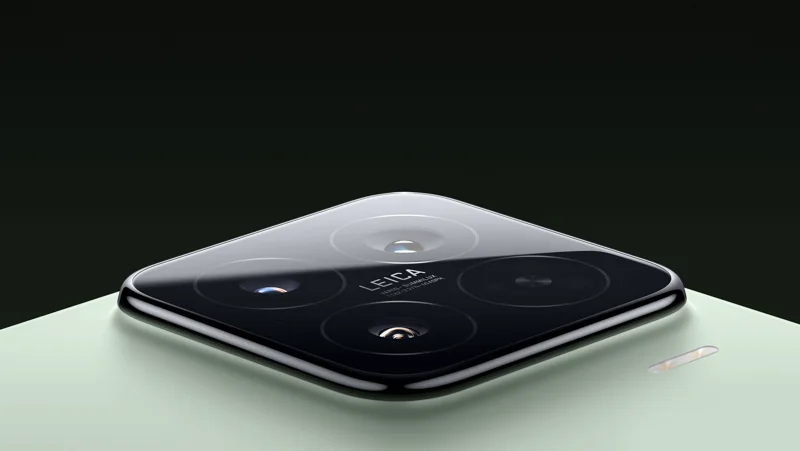
The camera system is built around Leica and uses three 50MP sensors. The main camera uses Xiaomi's Light Fusion 900 sensor (a 1/1.31-inch type, according to Xiaomi) behind an f/1.62 lens with optical stabilisation, equivalent to 23mm. A floating 60mm telephoto camera with f/2.0 and optical stabilisation doubles as a close-focus camera that Xiaomi says focuses from 10cm to infinity. The 14mm ultrawide camera is f/2.2 with a 115-degree field of view. The front camera is 32MP with an f/2.0 lens.
Video is a strength on paper: 8K at 24 or 30fps, 4K up to 60fps, Dolby Vision recording across the focal lengths, and 10-bit log recording on the main camera, according to Xiaomi. The phone also offers two Leica photographic styles (Authentic and Vibrant), a Master Portrait mode with focal lengths from 23mm to 75mm, and a street photography mode. A 60mm telephoto is a useful portrait length, but it is a modest zoom, and Xiaomi quotes digital zoom up to 60x rather than long optical reach. Buyers who want more reach should look at the Ultra model or at competitors with 3x to 5x periscope lenses, such as the Galaxy S25 with its 3x telephoto.
Battery and charging
The 5,240 mAh typical-capacity cell is large for a phone of this size, and Xiaomi says it is 630 mAh more than in the Xiaomi 14. The company's lab figure for video playback is up to 25 hours. Wired charging is 90W and wireless charging is 50W, with a note that wireless chargers are sold separately and that the package contents vary by region. Xiaomi's battery-management chips are credited with keeping about 80 percent capacity after 1,600 charge cycles, again a manufacturer claim. Fast wired charging at this power level is a real advantage over the 25W to 45W common on rivals, although the benefit depends on using Xiaomi's own charger.
Who it is for
The Xiaomi 15 suits people who want a high-end Android phone without the bulk, who value a bright and sharp display, and who care about charging speed. It is also a good fit for those who prefer a Leica-tuned camera style and a flat, compact body. Photographers who need strong optical zoom, and anyone who wants the biggest possible screen, will be better served by other models in this price class.
If you are comparing with other compact flagships, the quickest way is to look at the numbers side by side; the page Xiaomi 15 vs Galaxy S25 does this for one obvious rival, and the rankings show how it fares overall across displays, batteries and cameras.
Compromises
There are some things to keep in mind. The 3200-nit headline brightness applies to a small area of the screen. The telephoto is a single 60mm unit rather than a periscope design. The IP68 rating covers dust and water immersion but does not cover impacts, and Xiaomi's own advice is not to test it. The wired and wireless charging figures are lab values and need the right accessories, which may not be in the box in every market. AI features and some services depend on region and language. Finally, Xiaomi does not publish an on-sale date or a price on the product pages used here, so confirm both with a local retailer before buying.
Overall, the Xiaomi 15 is a well-specified compact flagship whose strengths are its size, display, charging speed and battery capacity relative to its dimensions, and whose weaknesses are a modest zoom range and regional variation in software features.
Where it ranks
Compare Xiaomi 15 with similar devices
More from Xiaomi
Frequently asked questions
When was the Xiaomi 15 released?
The Xiaomi 15 was released on 2025-03-02, according to the manufacturer’s published information.
What are the main specs of the Xiaomi 15?
Headline figures for the Xiaomi 15: Battery: 5,240 mAh, Refresh rate: 120 Hz, Main camera: 50 MP, RAM: 12 GB. The full specification table is further up this page.
Is the Xiaomi 15 worth buying?
That depends on your priorities. Use the editorial review on this page for our view, check the rankings above to see where the device stands on battery, display and camera, and compare it directly with similar models before you decide.


