Phones
Samsung Galaxy S25 Ultra
Samsung's 2025 top model keeps the S Pen and the 200MP camera, but rounds its corners, adds Gorilla Armor 2 glass and moves the whole family to one Snapdragon chip.
Key figures at a glance
Gallery
Specifications
- Display
- 6.9" Dynamic LTPO AMOLED 2X, 3120x1440, 1-120Hz, 2600 nits
- Chipset
- Snapdragon 8 Elite (3nm)
- RAM
- 12GB
- Storage
- 256GB / 512GB / 1TB
- Rear Camera
- 200MP main + 50MP ultrawide + 10MP telephoto 3x + 50MP periscope 5x
- Front Camera
- 12MP
- Battery
- 5,000 mAh, 45W wired, 15W Qi2 wireless
- OS
- Android 15, One UI 7
The Galaxy S25 Ultra is the largest and most complete phone in Samsung's 2025 Galaxy S family. It carries a titanium frame, a 6.9-inch screen, a four-camera system and the only built-in stylus in the range. For anyone who found earlier Ultra phones angular and heavy to hold, it also brings the biggest shape change in several years: the corners are rounded. This page covers what the phone contains, how it differs from the rest of the S25 line, and where Samsung made trade-offs.
Where it sits in the line-up
Samsung revealed the Galaxy S25, S25+ and S25 Ultra at a Galaxy Unpacked event in San Jose, California, on 22 January 2025, and all three went on sale on 7 February 2025. Two more models followed: the very thin Galaxy S25 Edge in May 2025 and the more affordable Galaxy S25 FE in September 2025. On 25 February 2026 Samsung announced the successor series, the Galaxy S26. The Ultra is built in Vietnam and India, and Samsung also began assembling it in Egypt for sale in the local market, from where it was exported to Gulf and North African countries. If you want the compact sibling, see the Galaxy S25 page, and the Galaxy S25 vs Galaxy S25 Ultra table shows the differences side by side.
Design and materials
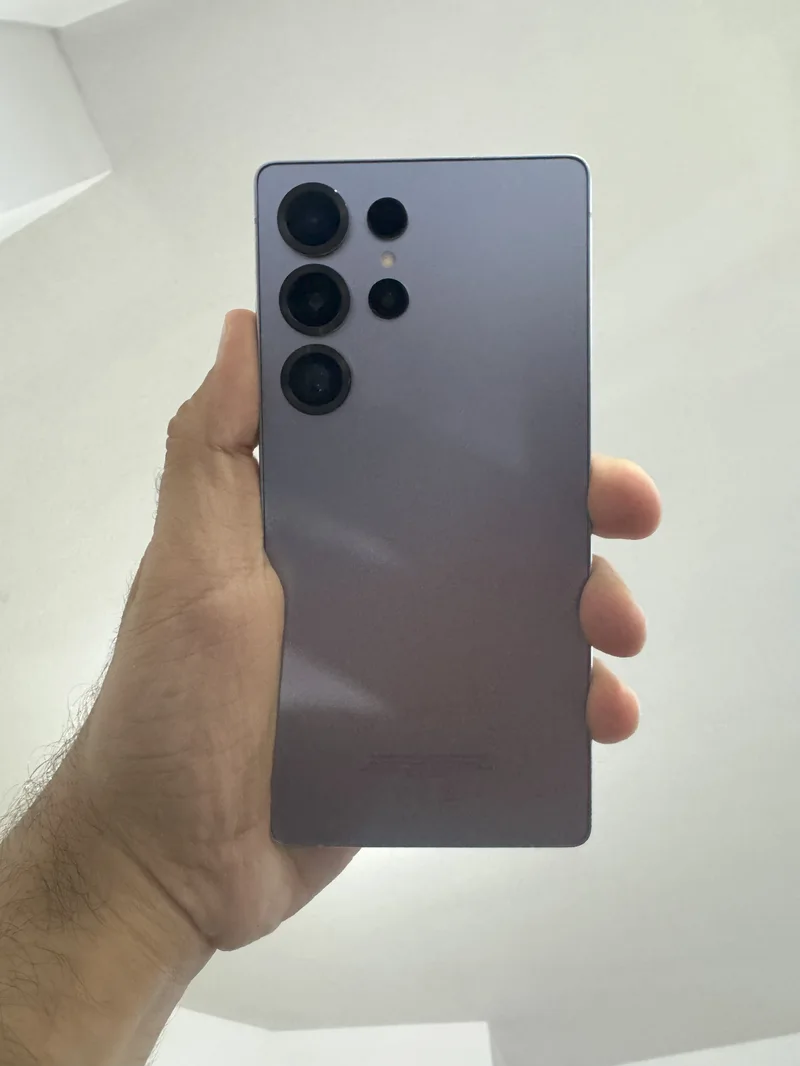
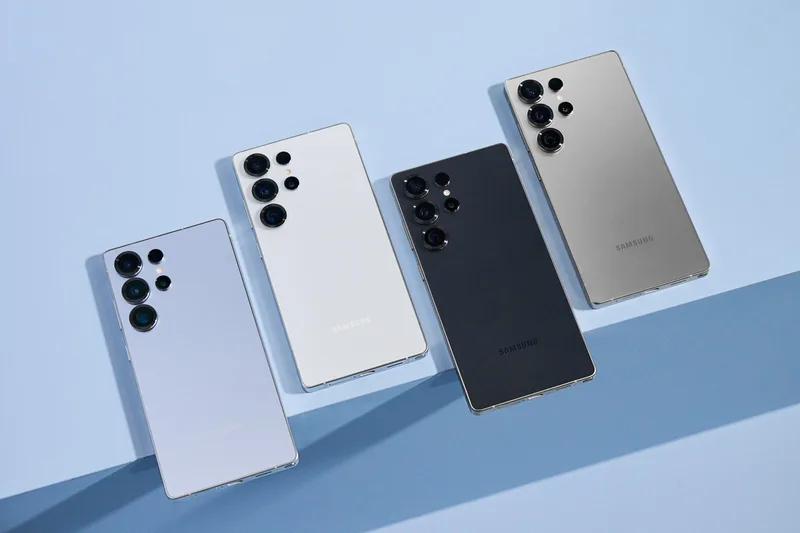
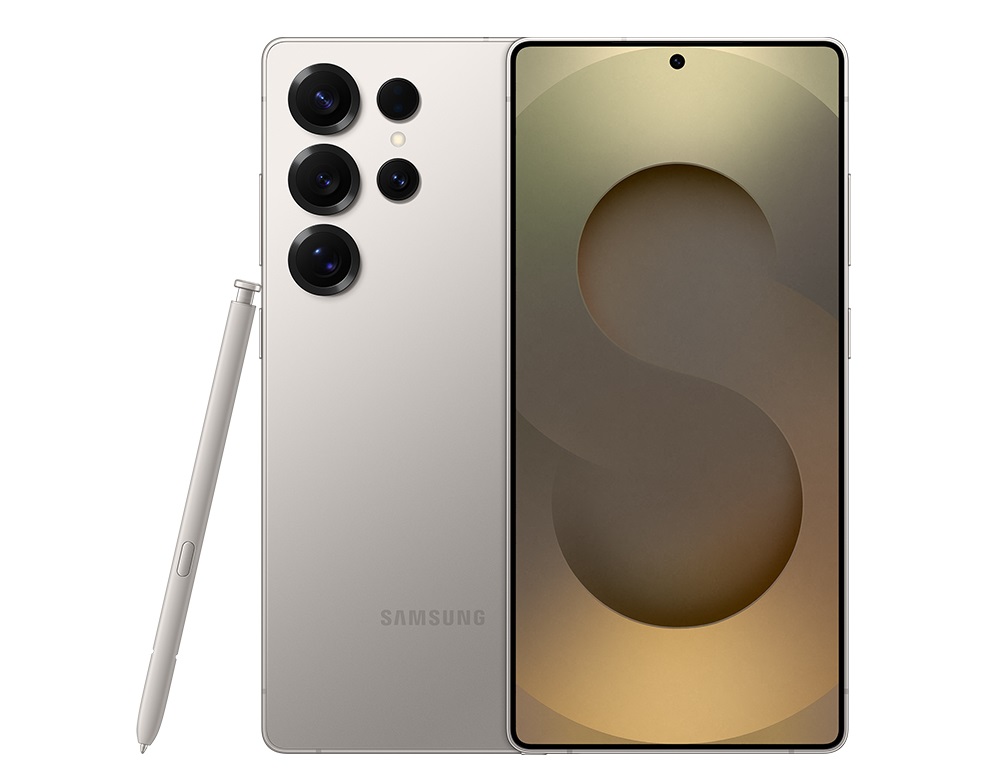
The Ultra has a titanium frame and a glass back, like its predecessor the Galaxy S24 family, but the corners are now rounded where the previous Ultra had square ones, bringing it closer to the rest of the S line. The phone measures 162.8 x 77.6 x 8.2 mm and weighs 218 g, which makes it the heaviest and thickest phone in the range. For its front and back panels Samsung uses Corning Gorilla Armor 2, a glass that Corning says has over four times the scratch resistance of conventional aluminosilicate cover glass and reduces glare through anti-reflective properties. In laboratory drop tests the material survived falls from 2.2 metres onto a surface that simulates concrete, while comparable glass-ceramic materials failed from about a metre. Standard colours are Titanium Silver Blue, Titanium Black, Titanium White Silver and Titanium Grey, with Titanium Jet Black added later because of demand, and Titanium Jade Green and Titanium Pink Gold sold only through Samsung's online store. The phone is rated IP68, good for 1.5 metres of water for 30 minutes.
Display
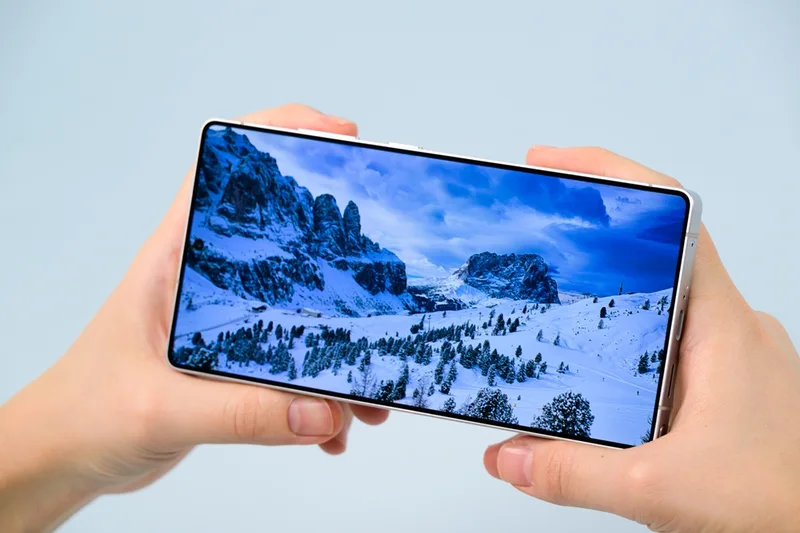
The screen is a 6.9-inch Dynamic LTPO AMOLED 2X panel at 3120 x 1440 pixels, about 498 pixels per inch, in a 19.5:9 shape. The refresh rate adapts from 1 to 120 Hz, HDR10+ is supported, and peak brightness reaches 2,600 nits. An ultrasonic fingerprint sensor sits under the glass. The Ultra also has ProScaler, an AI-based upscaling technology that improves how lower-resolution content looks on the high-resolution panel; it is tuned for the QHD+ resolution because that is where the extra pixel density gives the upscaler consistent results.
Snapdragon 8 Elite and cooling
Every S25 model except the FE uses the Snapdragon 8 Elite, and for the first time in the S-series it is the same chip in every region, ending years in which some countries received Samsung's own Exynos processor while others received a Snapdragon. The chip is built on a 3 nm process, with two Oryon performance cores at up to 4.47 GHz and six efficiency cores at 3.53 GHz, plus an Adreno 830 graphics unit. Samsung enlarged the vapour-chamber cooling in all models, and in the Ultra it is about 40 percent larger than before, with additional heat-spreading layers. Memory is 12 GB of LPDDR5X across the range, with a 16 GB variant for the 1 TB model in South Korea, China, Hong Kong and Taiwan. Storage is 256 GB, 512 GB or 1 TB of UFS 4.0, and there is no memory card slot.
The four-lens camera
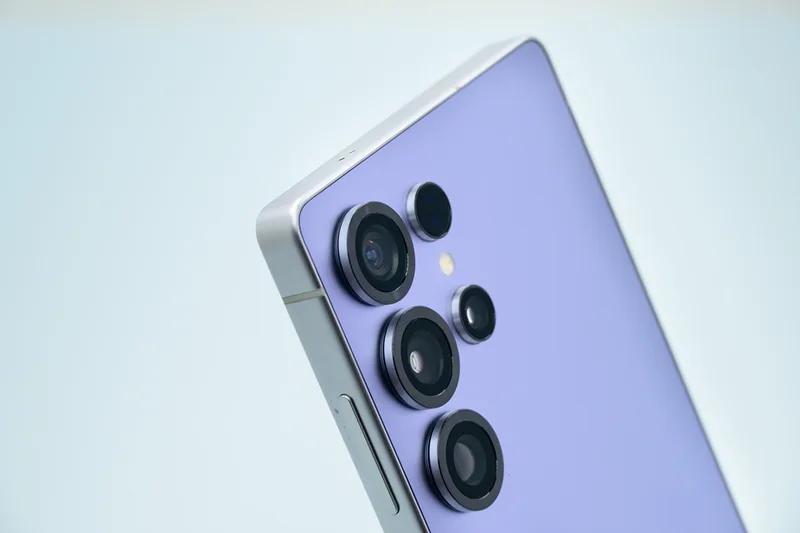
The camera system is what defines the Ultra. The main camera is a 200 MP sensor (f/1.7, 24 mm, 1/1.3-inch) with optical stabilisation. Next to it are a 50 MP ultrawide (f/1.9, 120 degree view), a 10 MP telephoto with 3x optical zoom and a 50 MP periscope telephoto with 5x optical zoom (f/3.4, 111 mm). Together they form what Samsung calls a Quad Tele System, giving four distinct optical zoom levels of 2x, 3x, 5x and 10x. The processing is handled by the ProVisual Engine, which adds adaptive scene optimisation and noise reduction. The front camera is a 12 MP (f/2.2) unit. All models in the line record video up to 8K at 30 frames per second and include a Super Steady mode for stabilisation.
Battery and charging
The Ultra carries a 5,000 mAh battery. Wired charging goes up to 45 W, and Samsung states that a 45 W adapter reaches around 65 percent in roughly 30 minutes. Wireless charging follows the Qi2 standard at up to 15 W, and the phone can also share power with other Qi devices from its own battery, at 4.5 W in reverse. Connectivity includes 5G, Wi-Fi 7, Bluetooth 5.4, NFC, ultra-wideband and USB-C 3.2. International models take dual Nano SIMs plus dual eSIM profiles, US models use a single Nano SIM with dual eSIM, and Chinese models keep two physical SIM slots without eSIM.
Software, AI and support
The phone shipped with Android 15 and One UI 7, a redesigned version of Samsung's interface. Samsung promises seven years of operating system and security updates, running into 2032. The phone comes with Galaxy AI, Samsung's suite of AI features, whose capabilities were expanded in this generation. As a new technology, reviewers attached some caveats to the AI, but the overall verdict on the S25 family was that it was a well-balanced, iterative generation and one of the best phones of 2025.
The S Pen change
One decision drew criticism. With the S25 Ultra, Samsung removed the Bluetooth functionality from the S Pen, a feature introduced with the Galaxy Note 9 in 2018. Samsung said the feature was used by fewer than 1 percent of users and called the removal a cost-saving step. As a result, functions such as remote camera control, Air Actions and several in-app controls for programs like PowerPoint or the Gallery no longer work. Writing and drawing with the stylus are unaffected. If you relied on the remote shutter or slide control, this is the point to consider.
Known issue
After the July 2026 security update, many owners reported battery drain and overheating. The problem was traced to a backup process in a messaging app that became stuck during the installation of the update. Software fixes for issues of this kind are normally delivered through later updates, so check the current version before drawing conclusions about battery life.
Who it is for
The Galaxy S25 Ultra is aimed at people who want the widest camera range in the family, a large bright display, a stylus and a long update promise, and who accept the size and weight that come with it. For a more compact option, look at the Galaxy S25. You can also browse the whole phones category, read our reviews for hands-on notes, or see the FAQ for how we source and verify specifications.
Where it ranks
Compare Samsung Galaxy S25 Ultra with similar devices
More from Samsung
Frequently asked questions
When was the Samsung Galaxy S25 Ultra released?
The Samsung Galaxy S25 Ultra was released on 2025-02-07, according to the manufacturer’s published information.
What are the main specs of the Samsung Galaxy S25 Ultra?
Headline figures for the Samsung Galaxy S25 Ultra: Battery: 5,000 mAh, Refresh rate: 120 Hz, Main camera: 200 MP, RAM: 12 GB. The full specification table is further up this page.
Is the Samsung Galaxy S25 Ultra worth buying?
That depends on your priorities. Use the editorial review on this page for our view, check the rankings above to see where the device stands on battery, display and camera, and compare it directly with similar models before you decide.


