Phones
Xiaomi POCO F7 Pro
POCO's F7 Pro offers the Snapdragon 8 Gen 3, a 6.67-inch 2K 120Hz AMOLED, a 6,000 mAh battery with 90W charging and a 50MP main camera with OIS, rated IP68.
Key figures at a glance
Gallery


Specifications
- Display
- 6.67" WQHD+ Flow AMOLED, 3200x1440, 526 ppi, up to 120Hz, 3,200 nits peak (25% area), 1,800 nits HBM, up to 2,560Hz instant touch sampling, Corning Gorilla Glass 7i
- Chipset
- Snapdragon 8 Gen 3 (4nm), 1 x Prime up to 3.3GHz + 3 x 3.2GHz + 2 x 3.0GHz + 2 x Efficiency up to 2.3GHz, Adreno GPU
- RAM
- 12GB
- Storage
- 256GB / 512GB (UFS 4.1)
- Rear Camera
- 50MP main (Light Fusion 800, 1/1.55", f/1.6, OIS) + 8MP ultrawide (f/2.2)
- Front Camera
- 20MP
- Battery
- 6,000 mAh (typical), 90W wired HyperCharge
- OS
- Xiaomi HyperOS 2
- Dimensions
- 160.26 x 74.95 x 8.12 mm, 206 g
- Durability
- IP68 dust and water resistance
- Connectivity
- 5G, Wi-Fi 7, Bluetooth 5.4, NFC, dual SIM, IR blaster, ultrasonic in-display fingerprint sensor
- Audio
- Stereo speakers, 3-mic array, Dolby Atmos, Hi-Res certified
- Colors
- Blue, Silver, Black
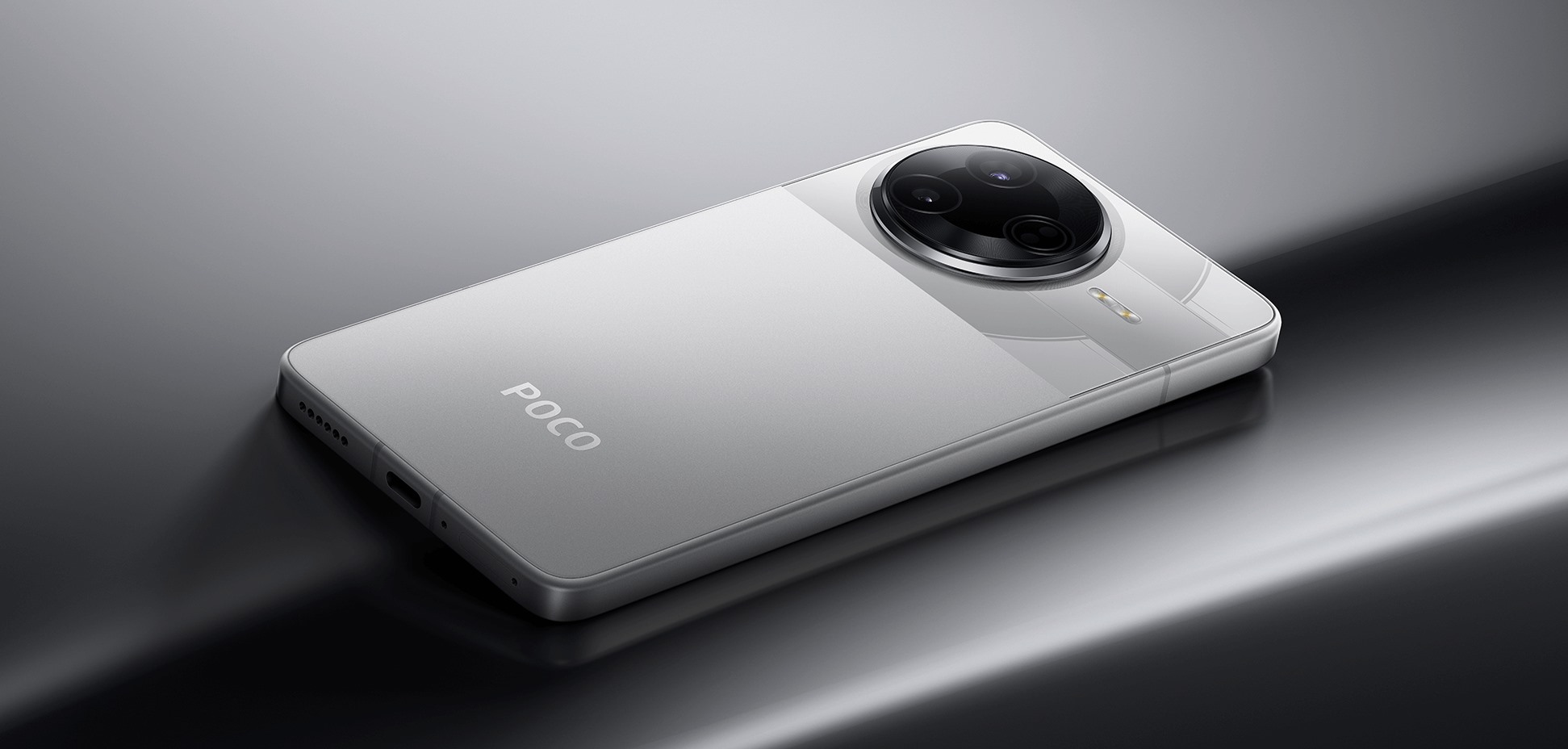
If the POCO F7 line has a sensible middle, it is the POCO F7 Pro. Announced on 27 March 2025 alongside the Ultra, it keeps the big 2K display and the IP68 body of its more expensive sibling but swaps in the older Snapdragon 8 Gen 3, a simpler dual camera and a 6,000 mAh battery. This page is a review based on the published specifications and manufacturer information. The official global page does not give a US price, so none is stated; the interesting question is therefore less about cost and more about which compromises POCO made and whether they suit you.
A flagship chip from the previous cycle
The F7 Pro is the model for buyers who care about the fundamentals and are happy to leave the very newest silicon aside. The processor is the Snapdragon 8 Gen 3 on a 4nm TSMC process, in a 1+5+2 layout: one Prime core based on the X4 design at up to 3.3GHz, three performance cores up to 3.2GHz, two more performance cores up to 3.0GHz and two efficiency cores up to 2.3GHz. POCO's own lab figure for AnTuTu v10.4.4 is 2,093,203, which is a manufacturer measurement. Memory is LPDDR5X at 12GB, with 256GB or 512GB of UFS 4.1 storage. Just above it, the POCO F7 Ultra uses the Snapdragon 8 Elite, and just below it the POCO F7 uses a newer-numbered but lower-tier chip, so the Pro occupies an unusual spot: more raw capability than the base model, less than the Ultra. For a side-by-side view of the standard and Pro models, read POCO F7 Pro vs POCO F7, and for a rival from outside the brand there is POCO F7 Pro vs Pixel 9. The rankings page shows where the phone lands overall.
On the software side the phone runs Xiaomi HyperOS 2. POCO's WildBoost Optimization 4.0 is an AI-driven scheduler that the company says keeps frame rates stable and trims power use during long gaming sessions; its own example is a 30-minute heavy RPG test that draws 5.56W with the feature against 6.15W without. Smart Frame Rate of up to 120FPS and 2K super resolution are described as available in supported games only, and super resolution rendering currently works with Genshin Impact according to the note on the page. Cooling relies on a 3D dual-channel IceLoop system covering 5,400 mm² with 12 temperature sensors, which POCO says lowers SoC temperature by up to 3°C.
The screen is not where the money was saved
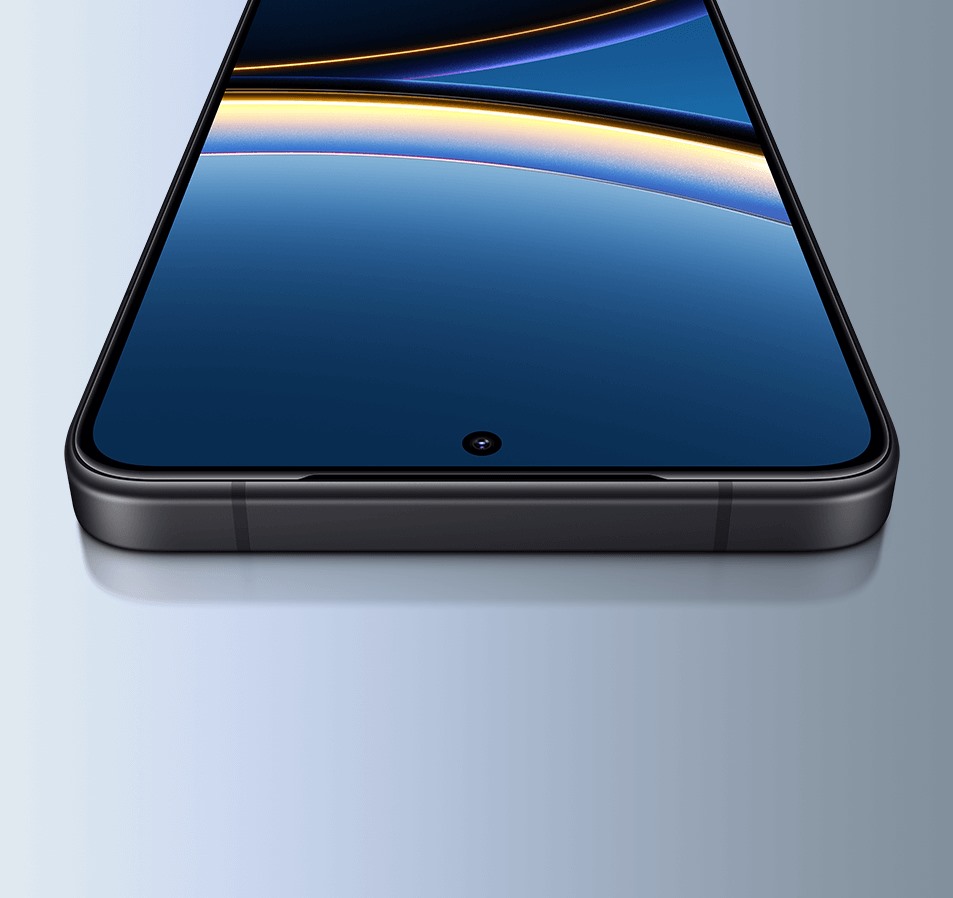
Here the Pro matches the Ultra on paper. The 6.67-inch Flow AMOLED has a 3200 x 1440 resolution at 526 ppi, a 120Hz maximum refresh rate, a 3,200 nit peak over a quarter of the screen and 1,800 nits in high-brightness mode. It supports HDR10+ and Dolby Vision, uses 12-bit colour and is certified by TÜV Rheinland for low blue light, flicker-free operation and circadian friendliness. Touch sampling is up to 480Hz, with 2,560Hz instant sampling when Game Turbo is active, and dimming reaches 3,840Hz PWM. What differs is the protection: the Pro uses Corning Gorilla Glass 7i, while the Ultra has POCO's own Shield Glass, which POCO compares to the Pro to claim a 20-fold improvement in drop resistance. The bottom bezel on the Pro is given as 1.9mm.
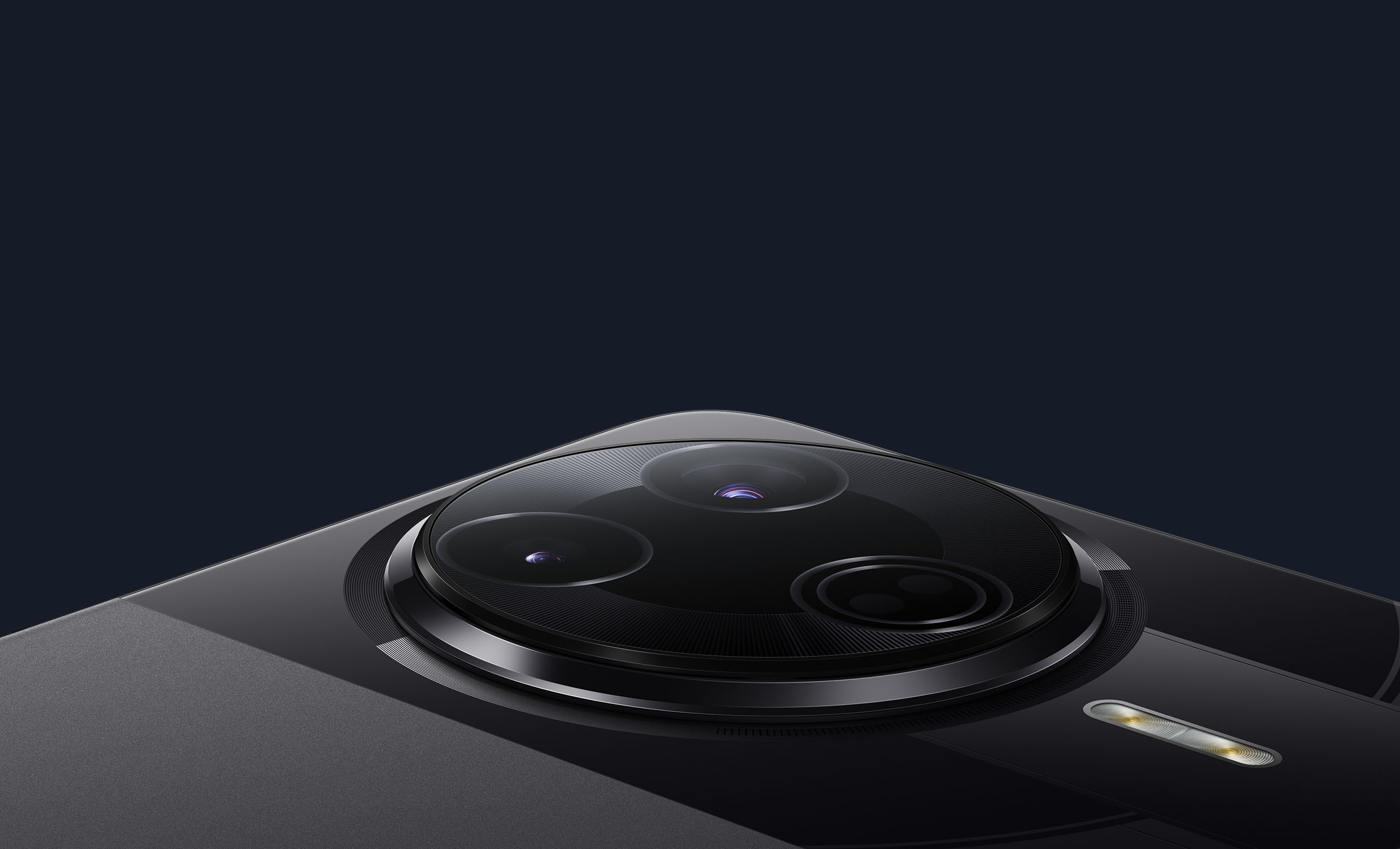
The body is 160.26 mm by 74.95 mm and 8.12 mm thick, at 206 g, and it is thinner and lighter than both the Ultra (8.39 mm, 212 g) and the standard F7 (8.2 mm, 215.7 g). It comes in Blue, Silver and Black, has a glass back with a metal frame and the same off-centre round camera module design as the family. IP68 means submersion in static fresh water to 2.5 metres for up to 30 minutes in laboratory conditions, and POCO advises against testing it yourself.
Cameras: a good main sensor, a basic ultrawide
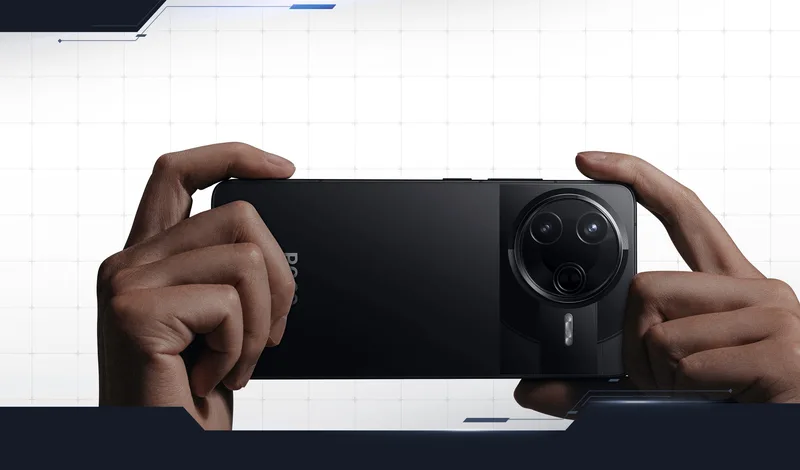
The camera setup is the clearest sign of where the Pro sits. A 50MP Light Fusion 800 main sensor (1/1.55-inch, f/1.6, with optical stabilisation) is paired with an 8MP ultrawide at f/2.2. There is no telephoto. POCO's marketing describes five focal lengths between 15mm and 48mm, but the 35mm and 48mm views (1.5x and 2x) are derived from the main sensor, with the 48mm one described as in-sensor zoom. The claimed 13.2EV dynamic range belongs to the main camera, and POCO notes an UltraSnap mode that applies the full processing pipeline even across bursts of up to 150 frames. The front camera is a 20MP unit, and video recording reaches 8K at 24fps and 4K at up to 60fps. For buyers who often shoot distant subjects, the extra optics of the Ultra are the reason to pay more; for people who mostly take everyday photos and short videos, the main camera is the one that matters.
Battery: the real selling point
The battery is a 6,000 mAh typical-capacity cell, 1,000 mAh more than the previous generation according to POCO, with an energy density of 742Wh/L, a 10.5 percent gain on its older cell. Claimed endurance is 15 hours of continuous use, more than 16 hours of video playback and over 11 hours of navigation. Charging is 90W wired only; the specification sheet lists no wireless charging. POCO says a full charge takes 37 minutes from 1 percent with the in-box 90W charger in Top Speed mode with the screen off, which is a best-case laboratory scenario. The page states that no power adapter is included in the box and recommends a 90W PD-capable or Xiaomi 120W charger, while the charging-time footnote mentions an in-box 90W charger, so check what is supplied locally. Capacity retention is stated to be at least 80 percent after 1,600 cycles.
Other hardware
The phone supports 5G with a long band list, dual nano-SIM, Wi-Fi with 2x2 MIMO and the Wi-Fi 7 protocol where regionally available, Bluetooth 5.4, NFC and an IR blaster. Audio comes from stereo speakers with Dolby Atmos and Hi-Res certifications. Biometrics are an ultrasonic in-display fingerprint scanner, which POCO says unlocks 40 percent faster with the screen off than the previous F6 Pro, and AI face unlock.
Who it is for
The F7 Pro suits people who want a large, sharp, bright screen, strong day-to-day performance and a battery that outlasts most rivals, and who do not need a telephoto or wireless charging. It is also a sensible pick for those who find the Ultra's higher tier unnecessary but want more than the standard model's chip class.
Compromises to weigh
- No telephoto: only a main and an 8MP ultrawide camera.
- No wireless charging: wired 90W only.
- Older chip: the Snapdragon 8 Gen 3 is a generation behind the Ultra's Snapdragon 8 Elite.
- Bluetooth and glass: Bluetooth 5.4 and Gorilla Glass 7i are a step behind the Ultra's Bluetooth 6.0 and Shield Glass.
- Charger and claims: the box contents regarding the charger are unclear on the official page, and endurance figures come from POCO's lab.
In short, the F7 Pro trades cameras and wireless charging for a bigger battery and a calmer price tier, and that trade makes sense for many buyers.
Where it ranks
Compare Xiaomi POCO F7 Pro with similar devices
More from Xiaomi
Frequently asked questions
When was the Xiaomi POCO F7 Pro released?
The Xiaomi POCO F7 Pro was released on 2025-03-27, according to the manufacturer’s published information.
What are the main specs of the Xiaomi POCO F7 Pro?
Headline figures for the Xiaomi POCO F7 Pro: Battery: 6,000 mAh, Refresh rate: 560 Hz, Main camera: 50 MP, RAM: 12 GB. The full specification table is further up this page.
Is the Xiaomi POCO F7 Pro worth buying?
That depends on your priorities. Use the editorial review on this page for our view, check the rankings above to see where the device stands on battery, display and camera, and compare it directly with similar models before you decide.


