Phones
Xiaomi POCO F7
Xiaomi's POCO F7 (2025) pairs a Snapdragon 8s Gen 4 with a 6.83-inch 120Hz AMOLED screen, a 6,500 mAh battery with 90W charging, 12GB of RAM and IP68 protection.
Key figures at a glance
Gallery
Specifications
- Display
- 6.83" 1.5K AMOLED, 2772x1280, 447 ppi, up to 120Hz, 3,200 nits peak (25% area), Gorilla Glass 7i
- Chipset
- Snapdragon 8s Gen 4 (TSMC 4nm), Adreno 825
- RAM
- 12GB
- Storage
- 256GB / 512GB (UFS 4.1)
- Rear Camera
- 50MP main (Sony IMX882, f/1.5, OIS) + 8MP ultrawide
- Front Camera
- 20MP
- Battery
- 6,500 mAh (typical), 90W wired, 22.5W wired reverse charging
- OS
- Xiaomi HyperOS 2
- Dimensions
- 163.1 x 77.9 x 8.2 mm, 215.7 g
- Durability
- IP68 dust and water resistance
- Colors
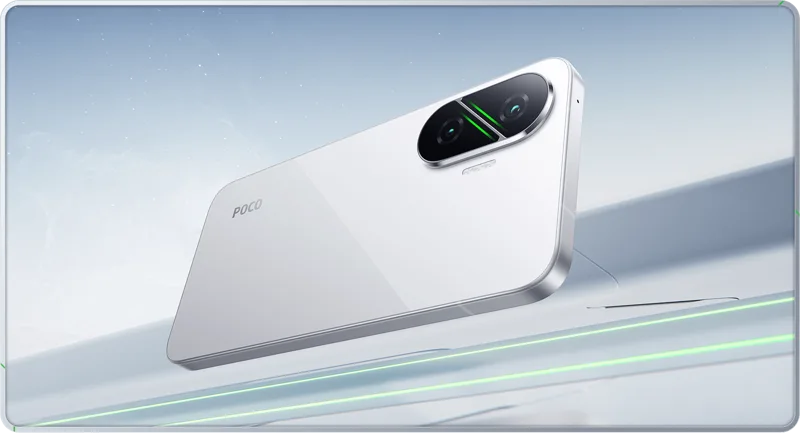
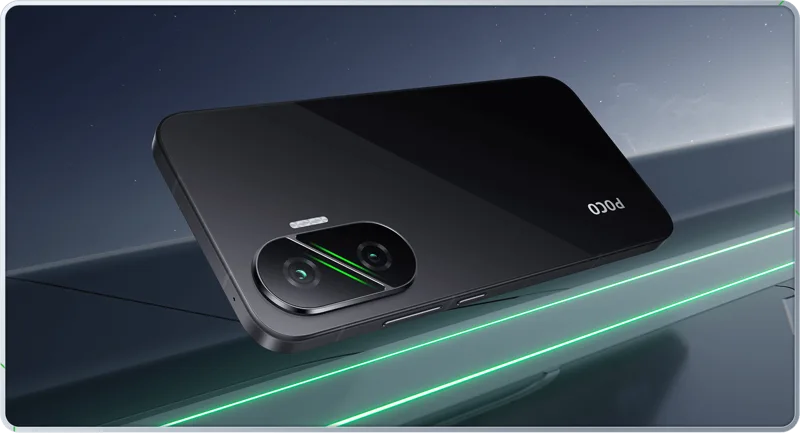
- Black, Silver
The POCO F7 is a performance-focused smartphone from Xiaomi's POCO sub-brand, introduced in June 2025. It combines a Snapdragon 8s Gen 4 chip, a 6.83-inch 1.5K AMOLED display with a 120Hz refresh rate, a 6,500 mAh battery with 90W wired charging and IP68 dust and water resistance in a body that weighs 215.7 g. This page is based on the published specifications and manufacturer information. It looks at where the F7 sits within POCO's range, its design and display, performance and cooling, the cameras, battery and charging, who it is for and the compromises that come with its priorities.
Place in the lineup
POCO's F series is the brand's line of performance phones, aimed at buyers who want a fast chip, a large battery and a good screen without paying flagship prices. The F7 is the standard model of its generation, positioned below the higher-end POCO F8 Pro. Across brands, it belongs to the broad group of fast Android phones that includes the OnePlus 13, although the two use different chips and sit in different tiers. For a side-by-side view of the numbers, see POCO F7 vs POCO F8 Pro, and the rankings show how it sits in the wider field.
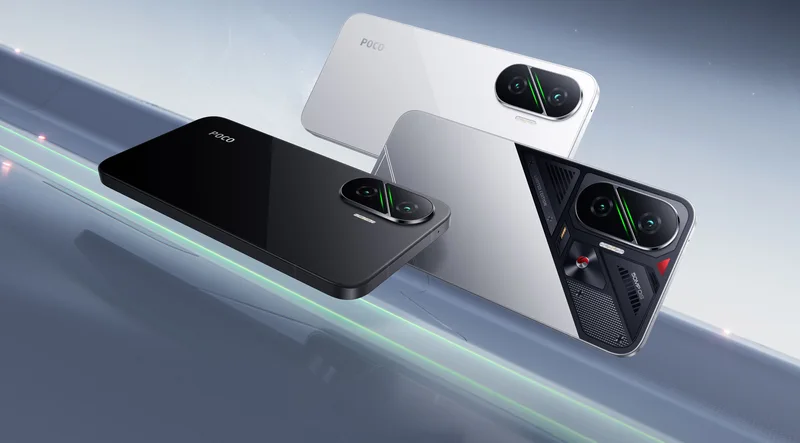
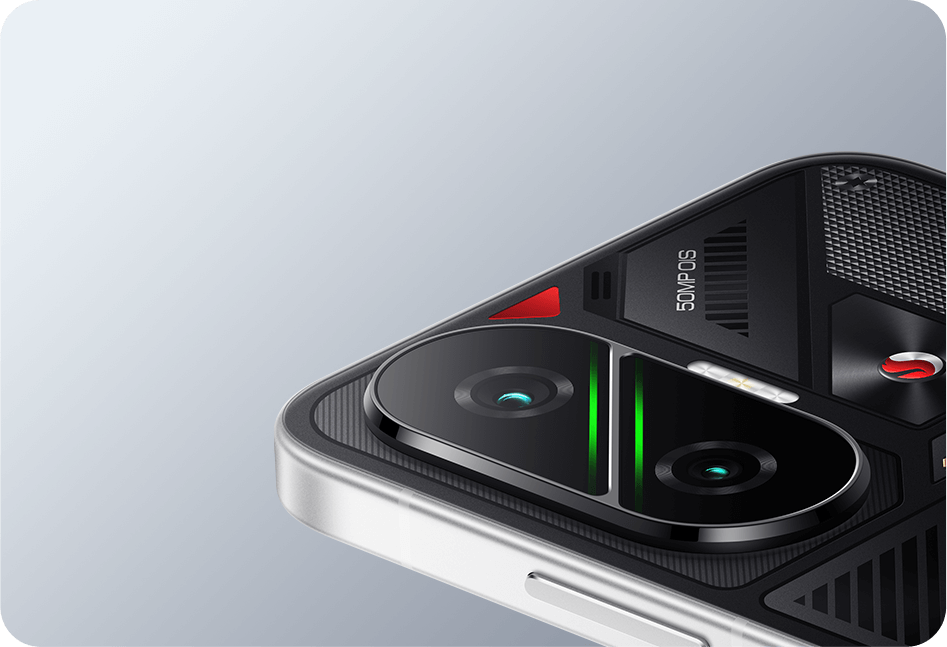
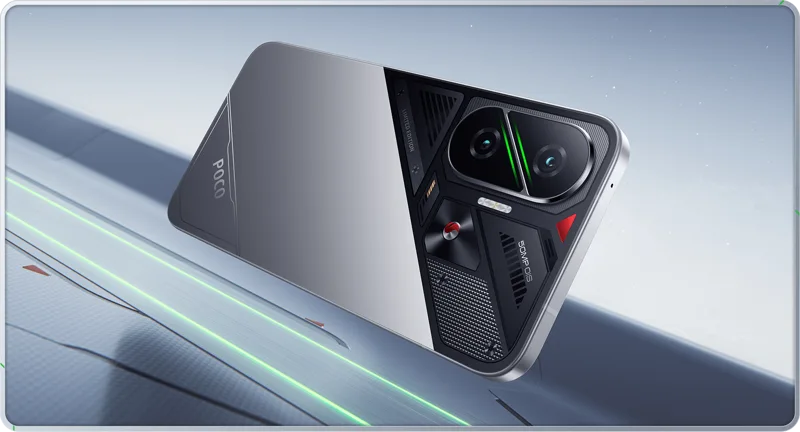
We found no official US price on the pages reviewed, so none is given here. The phone is sold in global markets, and local pricing and the choice of colours differ by country. The specification sheet lists Black and Silver finishes, and a limited edition with a transparent-style back panel also appears in the manufacturer's images.
Design and display
The F7 measures 163.1 x 77.9 x 8.2 mm and weighs 215.7 g, a weight that POCO notes was measured in its own labs. That is a substantial phone, in line with its large 6,500 mAh battery. The design language is described as an Edge design with angular lines, and the rear carries an oval camera island with a green accent. The in-box contents include a protective case, a USB-C cable and documentation; the power adapter may not be included in every market, and POCO tells buyers to ask the local seller.
The display is a 6.83-inch AMOLED panel with a resolution of 2772 x 1280 pixels (447 ppi) and a refresh rate of up to 120Hz. POCO lists a typical brightness of 700 nits, a high-brightness mode of 1,700 nits and a peak of 3,200 nits covering 25 percent of the screen area. Peak figures like this apply to small bright areas and not the whole panel, and the manufacturer notes that 3,200 nits is reached with a quarter of the display lit. The panel uses 3840Hz PWM dimming, which is a high-frequency setting that is easier on sensitive eyes, and it carries TÜV Rheinland certifications for low blue light, flicker-free and circadian-friendly use. It supports Dolby Vision and HDR10+, and Corning Gorilla Glass 7i covers the screen. Touch sampling goes up to 480Hz, with an instant rate of 2,560Hz in Game Turbo mode. POCO also says the bottom bezel measures 1.9 mm.
Performance and cooling
The Snapdragon 8s Gen 4 is built on TSMC's 4nm process and has an octa-core CPU that runs up to 3.21GHz, along with an Adreno 825 GPU and a Hexagon NPU. It is a step below the full Snapdragon 8 Elite but still a high-end platform. The F7 comes in two configurations: 12GB of RAM with 256GB or 512GB of storage. Memory is LPDDR5X and storage is UFS 4.1. As POCO notes, the available RAM and storage are lower than the totals because of the operating system and pre-installed software.
Cooling is a selling point. POCO describes a 6,000 mm² 3D dual-channel IceLoop system and an intelligent temperature-control scheme that uses 13 sensors and its own algorithm to read the phone's temperature and the surrounding environment, and to plan heat-conduction paths so the area you grip heats up less. These are manufacturer claims, and POCO's performance and temperature comparisons are with its own previous generation, the F6, from its internal labs. For gaming, the company points to features such as frame interpolation and super-resolution rendering, which currently support only Genshin Impact, as POCO itself states. Real-world sustained performance depends on settings and ambient temperature.
The phone runs Xiaomi HyperOS 2. The page lists AI tools, including writing assistance, speech-to-text with speaker recognition, AI search and image tools such as expansion and beautify features. Availability of HyperOS features, apps and services varies by region, software version and model, according to the manufacturer. The pages reviewed do not state a software update commitment, so no claim is made here about the number of years of updates.
Cameras
The rear camera uses a 50MP Sony IMX882 main sensor with an f/1.5 aperture, 1.6 μm super pixels (4-in-1 binning) and optical image stabilisation, paired with an 8MP ultrawide camera. There is no dedicated telephoto lens, so zoom depends on the main sensor. The front camera is 20MP. This is a conventional but sensible setup for the class: a stabilised main sensor handles most photos and video, and the ultrawide covers group shots and landscapes. We make no claims about image quality beyond the specifications, because sensor size and image processing decide the results and the best test is independent sample photos.
Battery and charging
The 6,500 mAh (typical) battery is the F7's headline feature. It is considerably larger than the roughly 5,000 mAh cells that are still common in this class. Charging is rated at 90W with POCO's HyperCharge technology, and the manufacturer says the adapter output is 90W, with actual power depending on the environment. The phone also supports up to 22.5W wired reverse charging, so it can top up other devices tested by POCO's labs. POCO says the phone is a new benchmark for battery life compared with the POCO F6, according to its own lab data. Wireless charging is not listed on the specifications page.
Who it is for
The POCO F7 is for people who want long battery life, a bright and smooth screen and high performance for gaming without paying for a flagship. The IP68 rating suits those who use their phone outdoors, and POCO states that it withstands static water up to 1.5 m deep for 30 minutes. It also suits buyers who prefer a big phone with a big battery over a compact one.
Compromises
- Size and weight. At 215.7 g and 8.2 mm, it is large and heavy.
- Camera hardware. No telephoto lens, and the 8MP ultrawide is modest.
- No wireless charging. The specifications list wired charging only.
- Software and regions. HyperOS features vary by region, no update policy appears on the reviewed pages, and no official US price was found.
- Chip tier. The Snapdragon 8s Gen 4 is below the top Snapdragon platform.
In short, the POCO F7 puts its money into battery, display and cooling, and it does that more convincingly than it covers cameras. For a direct look at its sibling, open the POCO F7 vs POCO F8 Pro comparison.
Where it ranks
Compare Xiaomi POCO F7 with similar devices
More from Xiaomi
Frequently asked questions
When was the Xiaomi POCO F7 released?
The Xiaomi POCO F7 was released on 2025-06-24, according to the manufacturer’s published information.
What are the main specs of the Xiaomi POCO F7?
Headline figures for the Xiaomi POCO F7: Battery: 6,500 mAh, Refresh rate: 120 Hz, Main camera: 50 MP, RAM: 12 GB. The full specification table is further up this page.
Is the Xiaomi POCO F7 worth buying?
That depends on your priorities. Use the editorial review on this page for our view, check the rankings above to see where the device stands on battery, display and camera, and compare it directly with similar models before you decide.


