Phones
OnePlus 13
OnePlus 13 combines the Snapdragon 8 Elite, a 6.82-inch 120Hz QHD+ LTPO display, Hasselblad-tuned triple 50MP cameras and a 6,000 mAh battery.
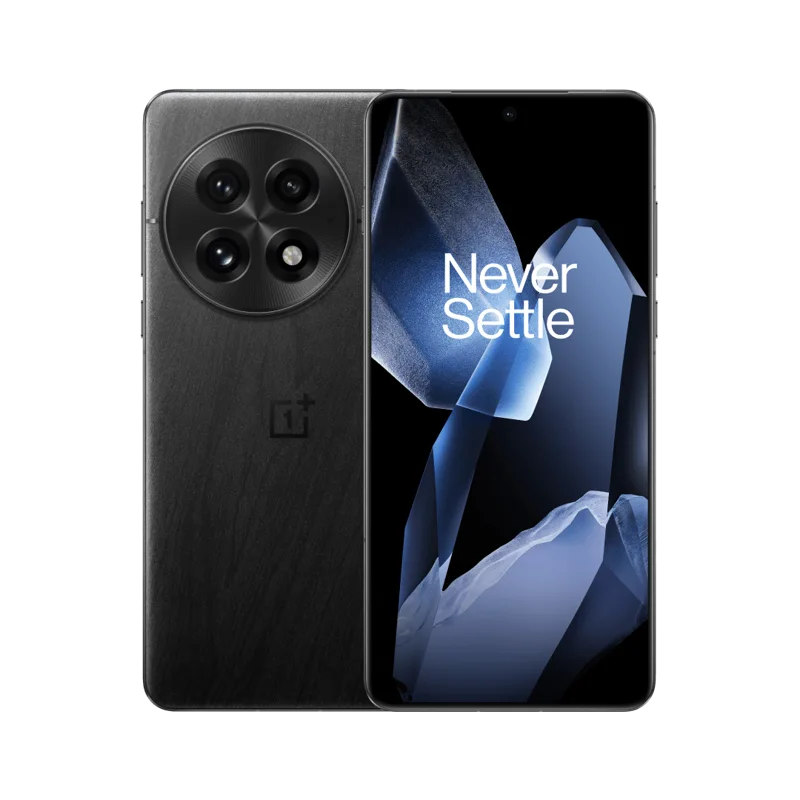
Key figures at a glance
Gallery
Specifications
- Display
- 6.82" LTPO AMOLED, 3168x1440 (510 ppi), 1-120Hz, 4500 nits peak, Ceramic Guard glass
- Chipset
- Snapdragon 8 Elite
- RAM
- 16GB
- Storage
- 256GB / 512GB
- Rear Camera
- 50MP main (Sony LYT-808) + 50MP ultrawide + 50MP periscope telephoto 3x, Hasselblad tuning
- Front Camera
- 32MP
- Battery
- 6,000 mAh, 100W wired (80W in North America), 50W wireless
- OS
- Android 15, OxygenOS 15
- Dimensions
- 162.9 x 76.5 x 8.5 mm, 213 g
- Water Resistance
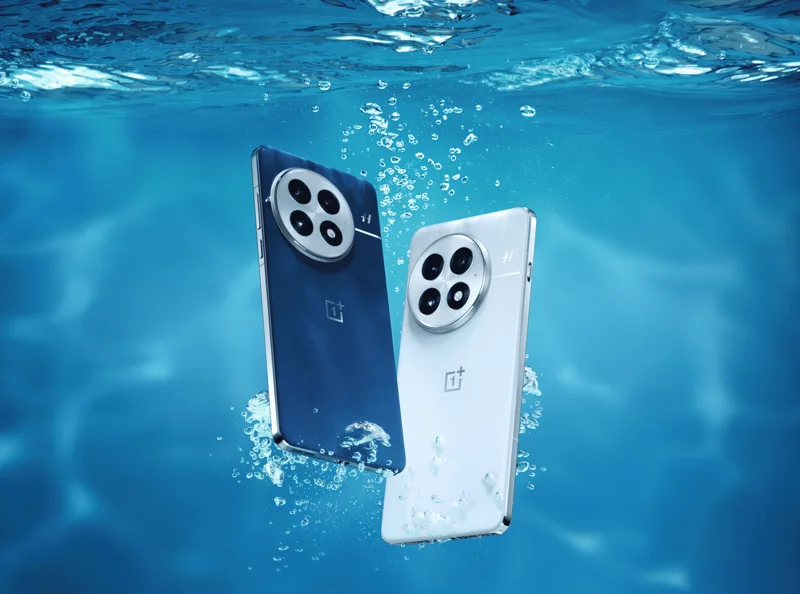
- IP68 / IP69
- Colors
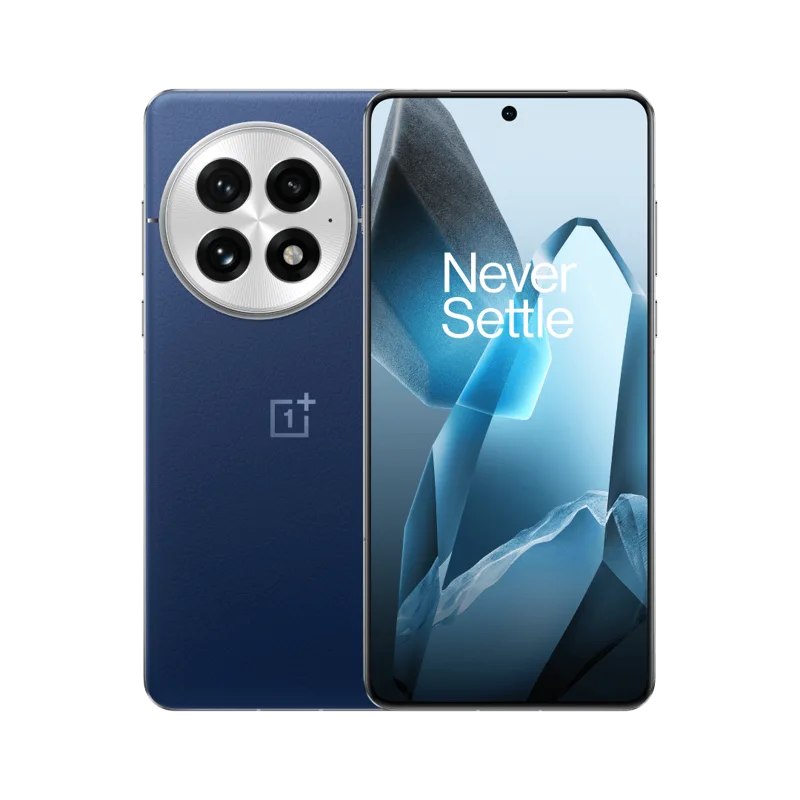
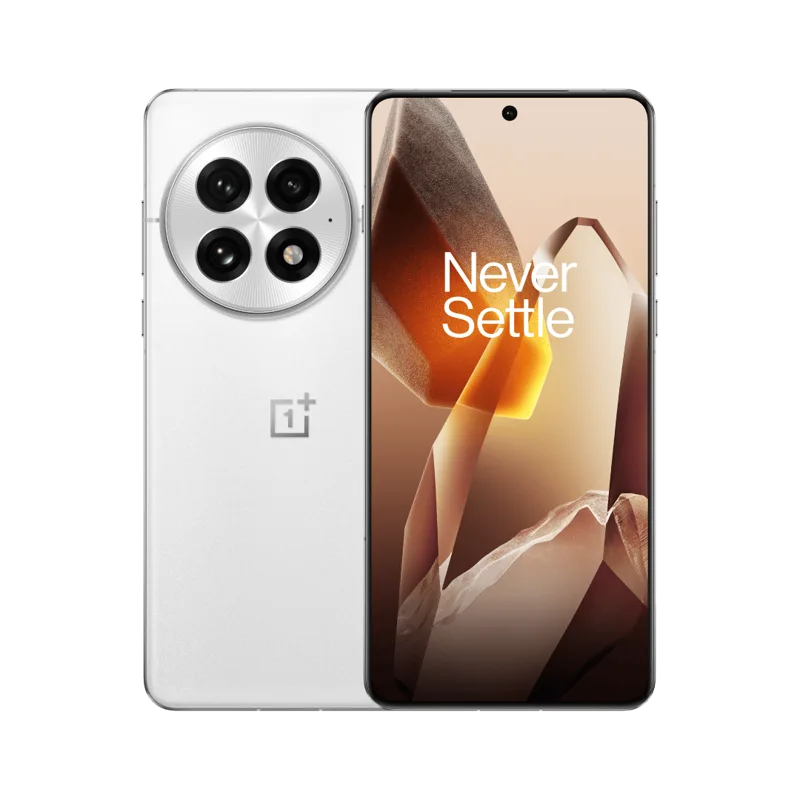
- Midnight Ocean, Arctic Dawn, Black Eclipse
The OnePlus 13 is the phone with which OnePlus returned to a no-compromise flagship formula at the start of 2025: a large 6.82-inch QHD+ LTPO display, the Snapdragon 8 Elite chip, three 50MP cameras tuned with Hasselblad and a 6,000 mAh battery. The company announced it globally on 7 January 2025 together with the cheaper OnePlus 13R. This page works from the published specifications and manufacturer information to explain how the phone is built, what it does well and where it makes you accept trade-offs, and it points to the newer OnePlus 15 for readers who are deciding between generations.
Place in the lineup
The OnePlus 13 sat at the top of the range until the OnePlus 15 arrived in November 2025. It was offered in two memory configurations, 12GB RAM with 256GB storage and 16GB RAM with 512GB storage, in three colours: Midnight Ocean, Arctic Dawn and Black Eclipse. The official US store listed the base model at $899.99. Pricing in other markets differed, and the launch press release itself did not publish prices. The OnePlus 13R, announced alongside it, uses the older Snapdragon 8 Gen 3 and a flat 6.78-inch display, so it is a separate, lower-cost proposition and is not covered here.
Among rivals, the natural comparison points are the Galaxy S25 Ultra, which uses the same Snapdragon 8 Elite family, and the Pixel 9. The side-by-side numbers for the first pairing are in the OnePlus 13 vs Galaxy S25 Ultra comparison.
Design and display
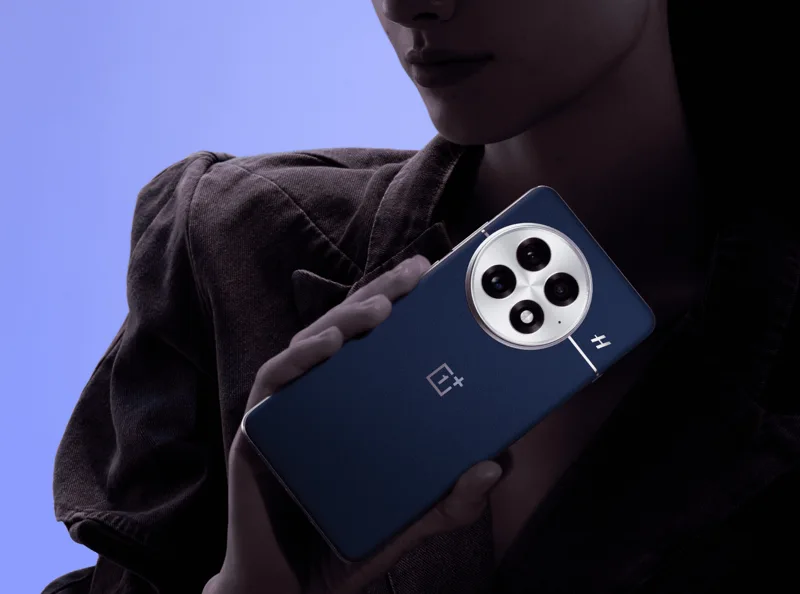
The phone measures 162.9 x 76.5 mm. The thickness depends on the finish: 8.5 mm for Arctic Dawn and Black Eclipse, 8.9 mm for the Midnight Ocean version. Weight follows the same split, 213 g for the two thinner finishes and 210 g for Midnight Ocean. OnePlus lists IP68 and IP69 ratings in its launch announcement, so the phone is built to withstand immersion and hot, high-pressure water jets under test conditions. The back features a large circular camera module with Hasselblad branding, a look that is quite different from the square module of the later OnePlus 15.
The screen is a 6.82-inch panel at 3168 x 1440 pixels, about 510 pixels per inch, with a 19.8:9 aspect ratio. It uses LTPO 4.1 technology that varies the refresh rate between 1 and 120Hz, supports 10-bit colour and covers 100 percent of the DCI-P3 gamut. OnePlus quotes a peak brightness of 4,500 nits and a high-brightness-mode figure of 1,600 nits; the two numbers describe different measurement modes, so they should not be compared directly with a rival's single brightness figure. The cover glass is listed as Ceramic Guard. A sharper panel than the OnePlus 15's is one of the real advantages of this older model: its pixel density is higher, which shows on small text and fine detail. HDR support includes Dolby Vision, HDR10+ and HDR Vivid.
Performance and software
Under the hood is the Snapdragon 8 Elite with Qualcomm's Oryon CPU cores at up to 4.32GHz and an Adreno 830 GPU. Memory is LPDDR5X and storage is UFS 4.0. OnePlus fits dual Cryo-Velocity vapour chambers to move heat away from the chip, which it presents as a way to hold performance during long sessions. That is a manufacturer claim, and sustained results will vary with the game, case and ambient temperature.
The phone launched with OxygenOS 15 based on Android 15. The software package includes features such as Intelligent Search, AI Notes, AI Translation covering more than 20 languages and an AI Reflection Eraser for photos. Connectivity includes Wi-Fi 7, Bluetooth 5.4 with a long list of audio codecs including LDAC and aptX HD, NFC, eSIM alongside a dual nano-SIM tray, and a USB 3.2 Gen 1 Type-C port. An ultrasonic fingerprint sensor sits under the display, there is an infrared remote, and the classic alert slider is retained, which many longtime OnePlus users value.
Camera
The rear camera is a triple 50MP system. The main camera uses Sony's LYT-808 sensor, a 1/1.4-inch type with 1.12 micron pixels, behind an f/1.6 lens equivalent to 23 mm, with optical and electronic stabilisation. The telephoto is a Sony LYT-600 at 1/1.95 inch with an f/2.6 lens equivalent to 73 mm, giving 3x optical zoom with stabilisation, and OnePlus quotes up to 120x digital zoom. The ultra-wide is a 50MP Samsung S5KJN5 with an f/2.0 lens equivalent to 15 mm, a 120-degree field of view and autofocus. All three are tuned with Hasselblad, so the colour style is shaped by that partnership.
The phone records 8K video at 30 frames per second and 4K at up to 60 frames per second, with Dolby Vision recording on the rear and front cameras. Slow motion goes to 1080p at 240 frames per second and 720p at 480. The front camera is a 32MP Sony IMX615 with an f/2.4 lens and a 90-degree field of view; it has fixed focus rather than autofocus, which matters for selfies taken at arm's length or closer. No independent measurements are cited here, so judgments about image quality should come from review testing rather than from the spec sheet.
Battery and charging
The 6,000 mAh figure refers to a dual-cell design of two 3,000 mAh cells, which OnePlus describes as typical capacity; the rated value is a little lower at 5,840 mAh. Charging is quick: the global specification lists 100W SUPERVOOC wired charging, while in North America the figure is 80W, with up to 100W possible using OnePlus's dual-port adapter. Wireless charging runs at 50W with the company's AIRVOOC charger, and the launch material cites roughly 75 minutes for a full charge with the AIRVOOC magnetic charger. The box includes a USB-A to USB-C cable, but the global sheet lists no charger, so check what your market ships.
Who it is for
The OnePlus 13 suits buyers who want a sharp, bright display, strong sustained performance and quick charging, and who value the alert slider and Hasselblad colour tuning. It is a particularly good choice now that the OnePlus 15 is on sale, because older flagships tend to get cheaper while the hardware remains strong. If you want the biggest battery or the highest gaming refresh rate, look at the OnePlus 15 instead. To see where the phone sits across the market, open the rankings.
Compromises
- Telephoto reach: 3x optical zoom is useful, but longer zoom relies on digital processing.
- Fixed-focus selfie camera: the front camera has no autofocus.
- Weight and size: at 210 to 213 g and with a 6.82-inch screen, it is a large phone.
- Regional charging speed: North American versions charge at 80W rather than 100W.
- Superseded: it has been replaced by the OnePlus 15, which offers a bigger battery and a newer chip.
In short, the OnePlus 13 remains a well-rounded flagship whose main weaknesses are age and a front camera without autofocus.
Where it ranks
Compare OnePlus 13 with similar devices
More from OnePlus
Frequently asked questions
When was the OnePlus 13 released?
The OnePlus 13 was released on 2025-01-10, according to the manufacturer’s published information.
How much does the OnePlus 13 cost?
The estimated range for the OnePlus 13 is $809 to $989 in US dollars, based on the launch list price. Actual prices vary by country, retailer and storage option.
What are the main specs of the OnePlus 13?
Headline figures for the OnePlus 13: Battery: 6,000 mAh, Refresh rate: 120 Hz, Main camera: 50 MP, RAM: 16 GB. The full specification table is further up this page.
Is the OnePlus 13 worth buying?
That depends on your priorities. Use the editorial review on this page for our view, check the rankings above to see where the device stands on battery, display and camera, and compare it directly with similar models before you decide.


