Phones
Google Pixel 9
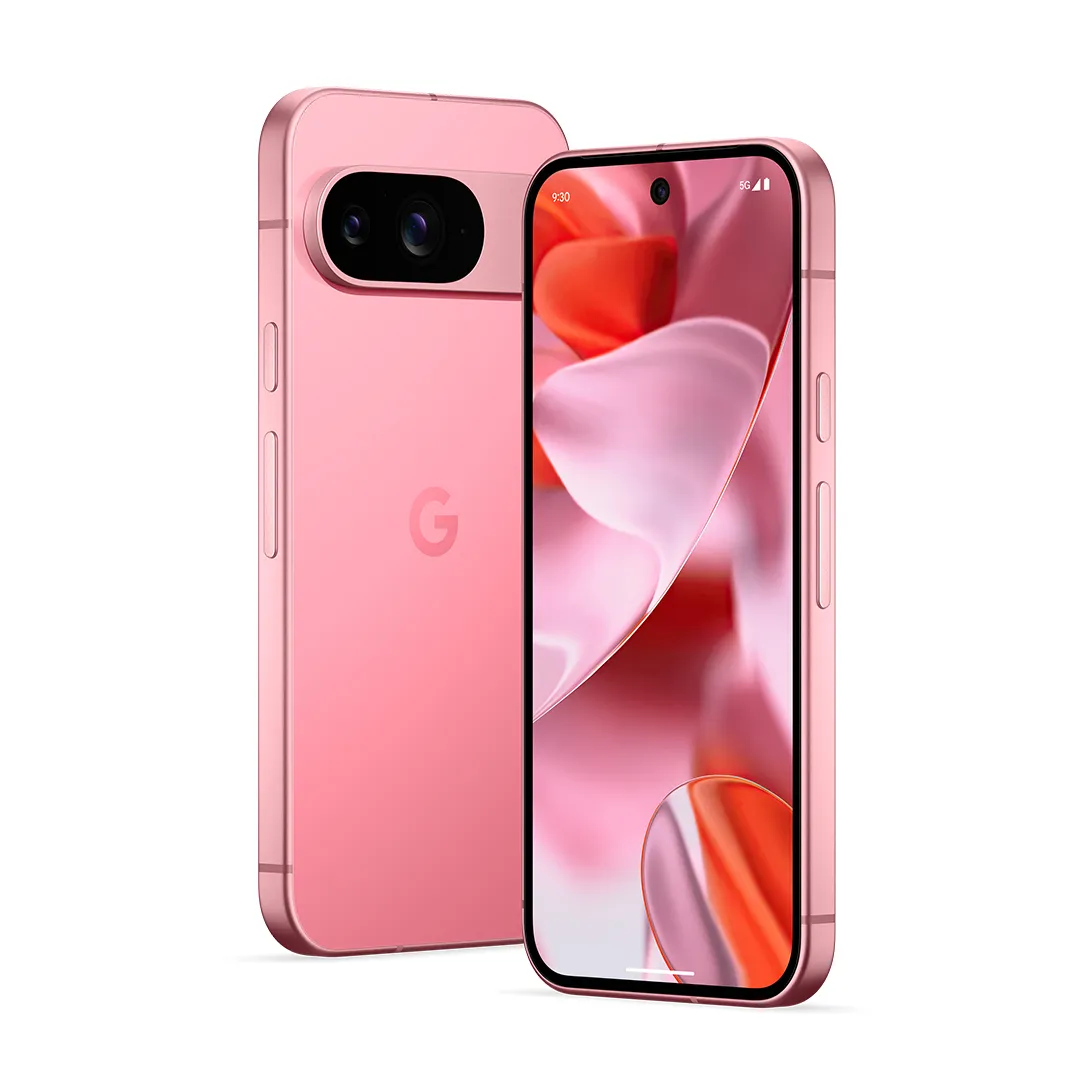
The standard Pixel of 2024 gets flat edges, a floating camera bar, a Tensor G4 chip and a much larger memory pool for on-device Gemini features.
Key figures at a glance
Gallery
Specifications
- Display
- 6.3" OLED, 2424x1080, 60-120Hz
- Chipset
- Google Tensor G4
- RAM
- 12GB
- Storage
- 128GB / 256GB
- Rear Camera
- 50MP main + 48MP ultrawide
- Front Camera
- 10.5MP ultrawide
- Battery
- 4,700 mAh, 27W wired, 15W wireless
- OS
- Android 14 (launch), upgradable to Android 17
The Pixel 9 is the base model of Google's 2024 phone family, and it is the one that shows most clearly what the company wanted this generation to be about. The hardware was redrawn with flat edges and a new camera bar, the memory was raised to 12 GB, and the software was rebuilt around Gemini, the assistant that replaced the older Google Assistant as the default voice on Pixel phones. This page walks through what the phone actually contains, what changed compared with the year before, and who is likely to be happy with it.
Launch and timing
Google announced the Pixel 9, the Pixel 9 Pro and the larger Pixel 9 Pro XL on 13 August 2024 at its yearly Made by Google event, together with the foldable Pixel 9 Pro Fold and the Pixel Watch 3. That date was unusually early: for years the Pixel launch had trailed the September iPhone event, and here it came first. The Pixel 9 and the Pro XL went on sale on 22 August 2024, while the smaller Pro followed on 4 September, the same day as the Fold. Pre-orders opened on the day of the announcement in 32 countries. A cheaper sibling, the Pixel 9a, joined the family later, and the range was replaced in August 2025 by the Pixel 10.
Design and build
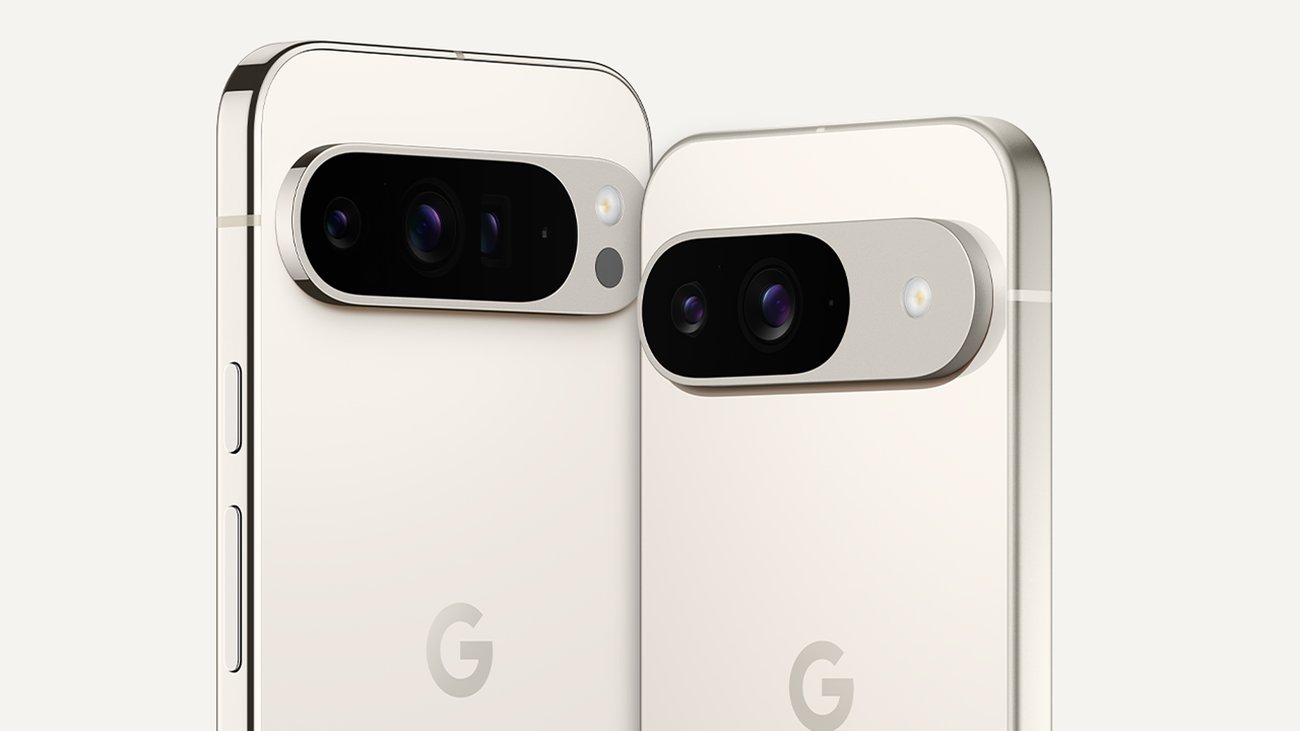
Since the Pixel 6 the brand has been recognisable by a horizontal camera visor across the back. The Pixel 9 keeps that idea but turns the visor into a free-floating oval and, more importantly, flattens the frame: the sides are no longer curved, which gives the phone a squarer, more tool-like silhouette. The body measures 152.8 x 72 x 8.5 mm and weighs 198 g, so it sits in the comfortable one-hand category. Both the front and the back use Gorilla Glass Victus 2, and the phone is rated IP68 for dust and water. The base model came in four colours: Peony, Wintergreen, Porcelain and Obsidian. There is a Nano SIM slot plus eSIM support.
Display
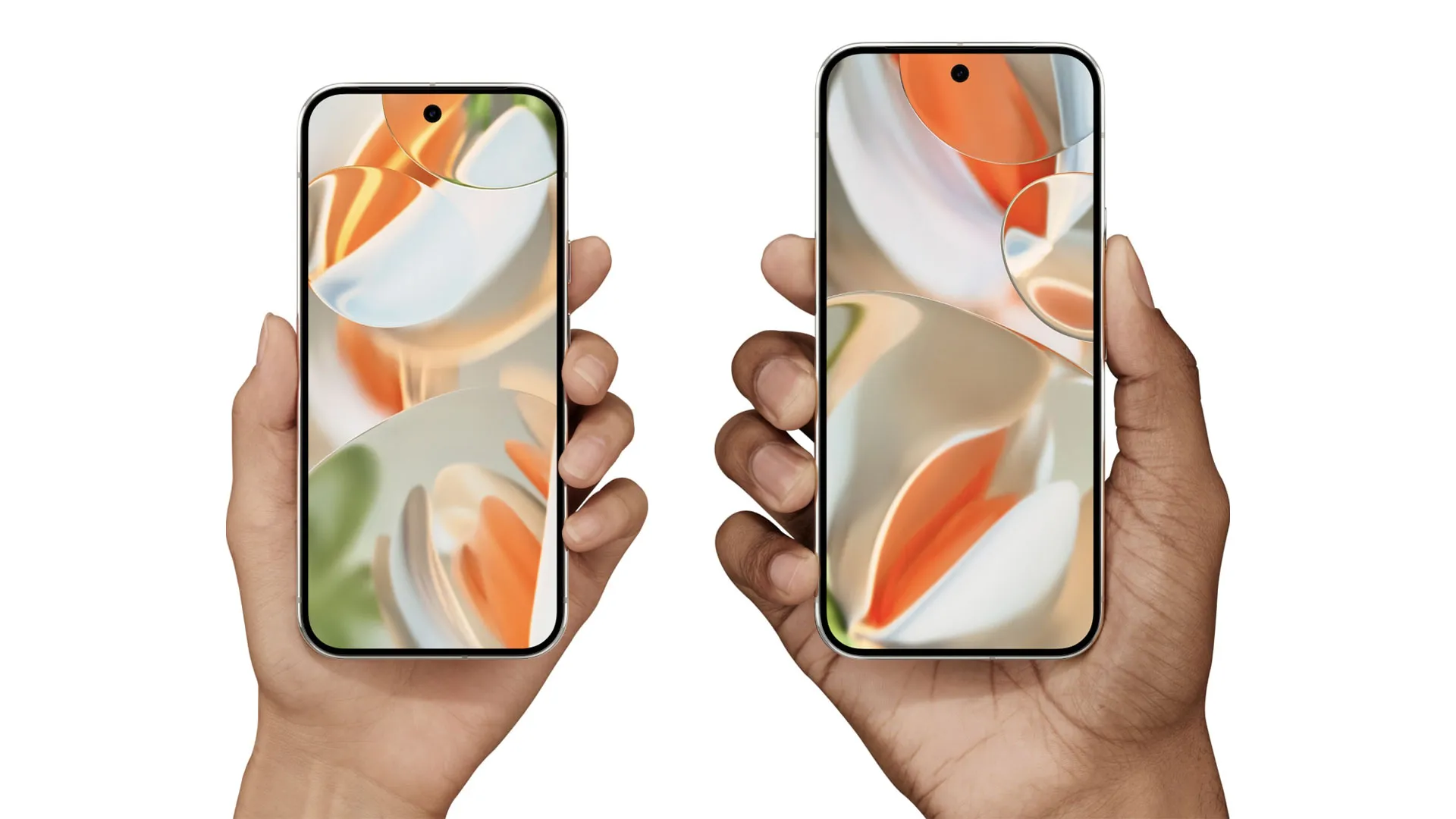
The screen is a 6.3-inch OLED panel with a 2424 x 1080 pixel resolution, which works out to 422 pixels per inch, in the tall 20:9 shape. It adapts its refresh rate between 60 and 120 Hz and supports HDR. It is worth knowing that the Pro versions of this generation use a slightly different LTPO panel that can drop to 1 Hz, so the standard Pixel 9 is the one to look at if you are happy with a conventional adaptive display and would rather keep the budget down. For everyday reading, video and messaging the panel is sharp enough that the missing extra resolution is hard to notice.
Chip, memory and storage
Inside sits the fourth-generation Google Tensor chip, marketed as Tensor G4, with a Titan M2 security module beside it. The CPU is an eight-core design: one Cortex-X4 core at 3.1 GHz, three Cortex-A720 cores at 2.6 GHz and four Cortex-A520 cores at 1.9 GHz, paired with a Mali-G715 graphics unit. The modem is a Samsung Exynos 5400, which is also what allows the phone to talk to satellites for emergency messaging. Memory is 12 GB of LPDDR5X, a substantial jump that Google linked directly to running AI models locally, and storage is 128 GB or 256 GB of UFS 3.1. Tensor G4 is also the first chip to run Gemini Nano, the compact on-device version of the Gemini model, with support for more than text.
Independent testing at launch was mixed on raw speed. The chip was praised for its AI abilities, but some reviewers pointed to weak efficiency under heavy load and modest gains over the previous Tensor. Google's own product team said the chip was designed around the phone's intended use cases rather than a benchmark score. In practical terms that means the Pixel 9 is built to feel smooth in the camera, in translation, in the assistant and in daily apps rather than to top gaming charts.
Cameras
The rear system has two lenses. The main camera is a 50 MP unit with an f/1.68 aperture and an 82 degree field of view, and the ultrawide is a 48 MP unit with an f/1.7 aperture and a very wide 123 degree view. Video goes up to 4K at 24, 30 or 60 frames per second. The higher-priced Pixel 9 Pro models add a 5x telephoto lens and 8K video, so if you shoot a lot of distant subjects the base phone will ask you to crop. The front camera is a 10.5 MP ultrawide with an f/2.2 aperture and a 95 degree view, also capable of 4K video. Software features round out the package, such as Add Me, which lets the person holding the phone be added to a group shot afterwards, and a set of AI editing tools.
Battery and charging
The battery holds 4,700 mAh. Wired charging tops out at 27 W and wireless charging at 15 W using the Qi standard, and the phone can also charge accessories from its own battery through reverse wireless charging. Connectivity includes Wi-Fi 7, Bluetooth 5.3, NFC, a USB-C 3.2 port and dual-band satellite positioning.
Software and long-term support
Gemini is the centre of the software story. It sits where Google Assistant used to, and Google added Gemini Live, a conversational voice mode. Around it are Pixel Studio for generating images, Pixel Screenshots for searching and organising what you have captured, a new weather app and Call Notes, which summarises phone calls with processing done on the device. Emergency Satellite SOS was built with the network provider Skylo and with Garmin's dispatch centre, and Google made it free for the first two years.
The phone shipped with Android 14 rather than the newer release, most likely because of the early launch date, and received Android 15 through a Pixel Drop update on 15 October 2024. The promise is seven years of major system updates, running until 2031, which is the longest commitment in this segment and a genuine reason to consider the phone if you keep devices for many years. Privacy-focused users will also note that the GrapheneOS project began officially supporting the Pixel 9 family shortly after release.
Who it suits
The Pixel 9 fits people who want a compact, well-finished phone with a very long update horizon and an assistant that is integrated deeply into the system. It is a weaker fit for anyone who wants long-range optical zoom or the fastest possible gaming performance. If you are deciding within Google's own line, look at the Pixel 8 for the previous design, and use the Pixel 9 vs Pixel 10 table to see what the successor changed, notably a third rear camera and a new chip.
For wider context, browse all devices in our phones section, read our reviews for hands-on impressions, or check the FAQ to see how we gather and verify specifications.
Where it ranks
Compare Google Pixel 9 with similar devices
More from Google
Frequently asked questions
When was the Google Pixel 9 released?
The Google Pixel 9 was released on 2024-08-22, according to the manufacturer’s published information.
What are the main specs of the Google Pixel 9?
Headline figures for the Google Pixel 9: Battery: 4,700 mAh, Refresh rate: 120 Hz, Main camera: 50 MP, RAM: 12 GB. The full specification table is further up this page.
Is the Google Pixel 9 worth buying?
That depends on your priorities. Use the editorial review on this page for our view, check the rankings above to see where the device stands on battery, display and camera, and compare it directly with similar models before you decide.


