Phones
OPPO Reno11
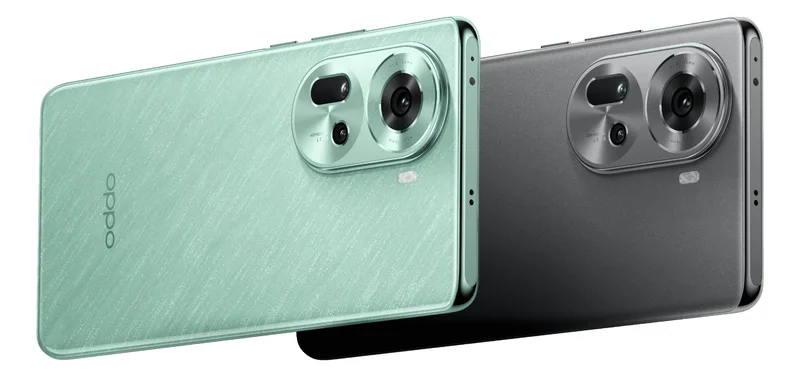
OPPO Reno11 puts a 32MP 2x portrait telephoto and a 50MP OIS main camera in a 7.99 mm, 182 g body with a 6.7-inch 120Hz curved AMOLED, Dimensity 7050 and 67W charging.
Key figures at a glance
Gallery

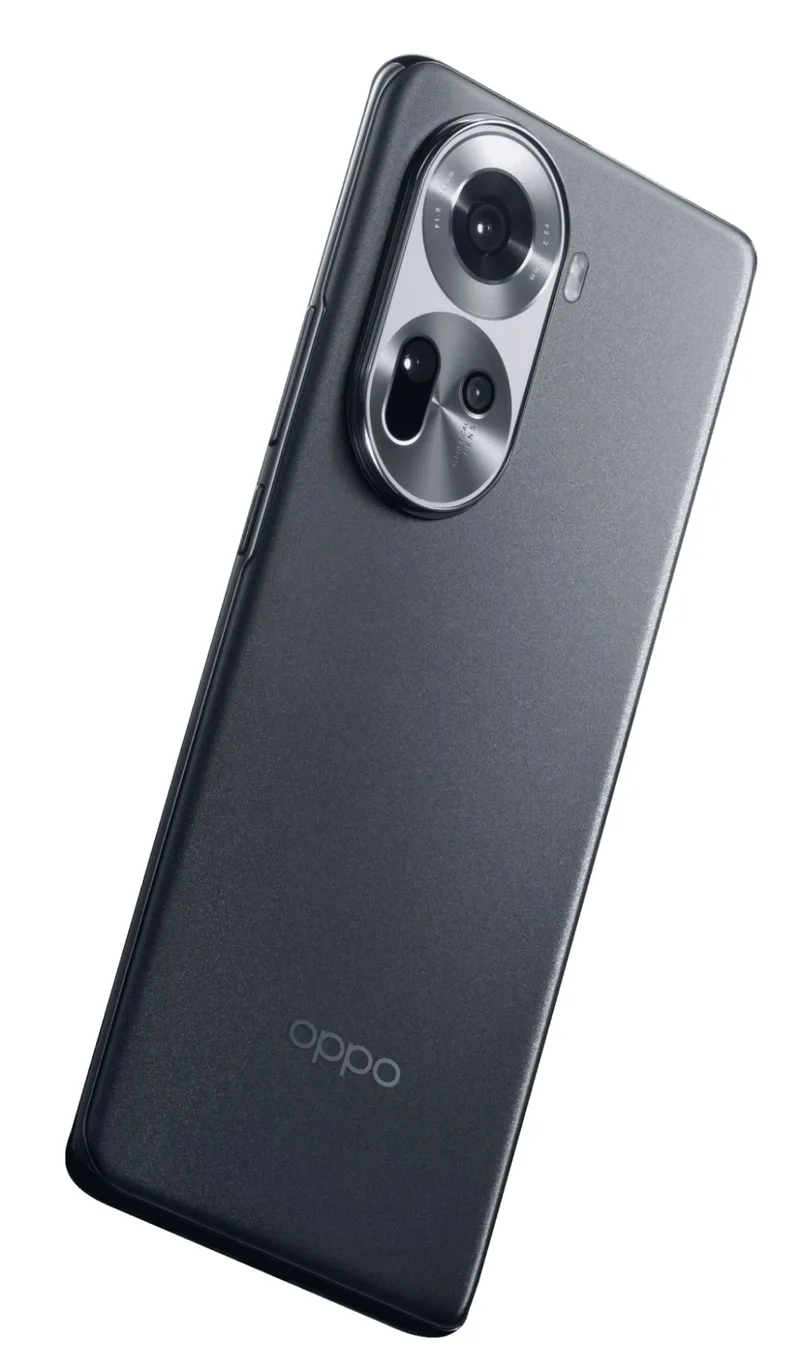
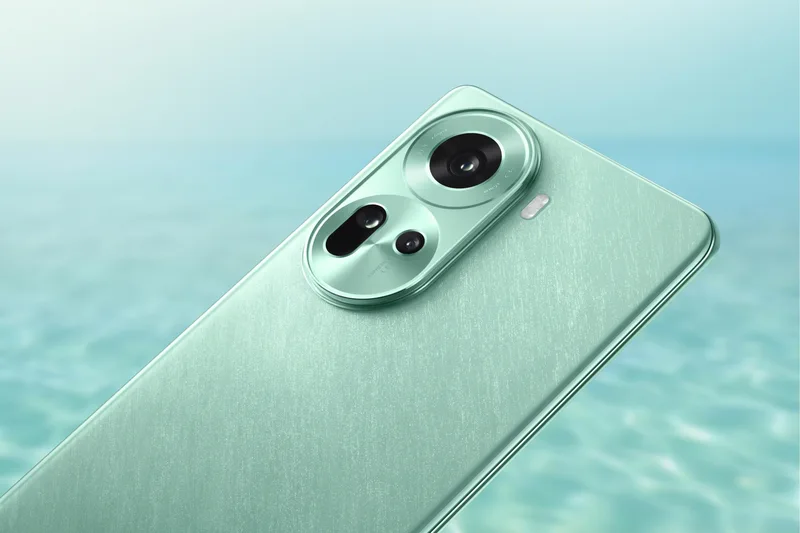
Specifications
- Display
- 6.7" 3D curved AMOLED, 2412x1080 (FHD+), 120Hz (60/90/120Hz), 800 nits HBM, 394 ppi, HDR10+
- Chipset
- MediaTek Dimensity 7050 (6nm, Mali-G68 MC4)
- RAM
- 12GB
- Storage
- 128GB / 256GB (UFS 2.2)
- RAM Expansion
- Up to 12GB of additional virtual RAM (RAM Expansion, uses storage)
- Rear Camera
- 50MP main (f/1.8, OIS) + 32MP telephoto (2x, f/2) + 8MP ultra-wide (112°)
- Front Camera
- 32MP (f/2.4)
- Battery
- 5,000 mAh (typical; 4,870 mAh rated), 67W SUPERVOOC wired (55W with 100-130V input)
- OS
- ColorOS 14
- Dimensions
- 162.4 x 74.3 x 7.99 mm (Rock Grey) / 8.04 mm (Wave Green), about 182 g
- Connectivity
- 5G, Wi-Fi 6, Bluetooth 5.3, NFC, dual nano-SIM, USB-C
- Other
- Dual stereo speakers, infrared remote control, fingerprint and face unlock, storage card support (as listed on the specs page)
The OPPO Reno11 5G is a slim, curved-screen mid-ranger that puts its weight behind portraits. OPPO calls it "The Portrait Expert" and backs that with an unusual hardware choice for its price class: a dedicated 32 MP telephoto camera for 2x portraits next to a 50 MP main camera with optical stabilisation. Around that sit a 6.7-inch 120 Hz AMOLED, a MediaTek Dimensity 7050 chip and a 5,000 mAh battery that charges at up to 67 W. The notes that follow are based on the published specifications and manufacturer information, not on independent measurements.
Place in the Reno lineup
OPPO launched the Reno11 series in India on 12 January 2024, with the Reno11 Pro 5G going on sale on 18 January and the standard Reno11 following on 25 January, according to the company's India press release. OPPO's other regional pages carry their own local dates, so the exact on-sale day differs by market. The standard model is the more affordable of the two. It shares the series' design language and portrait focus with the Pro version, but the two have separate specification sheets, so the figures below should not be mixed up with the Pro model's. The pages used for this overview do not state a US price for the Reno11.
The line continued with the OPPO Reno12 and the OPPO Reno12 Pro, and later with the OPPO Reno13. The page OPPO Reno11 vs OPPO Reno12 shows what changed in the next generation.
Design and display
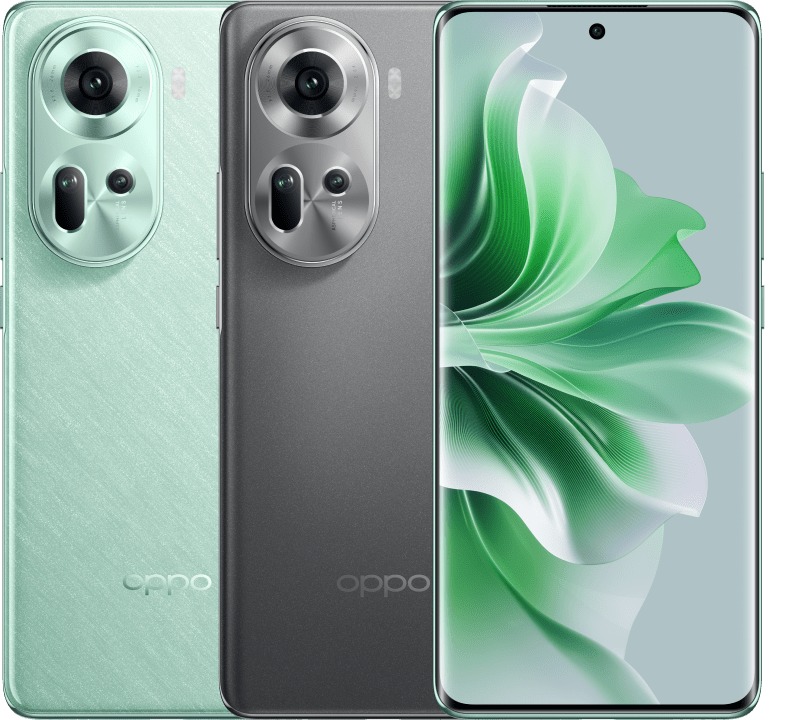
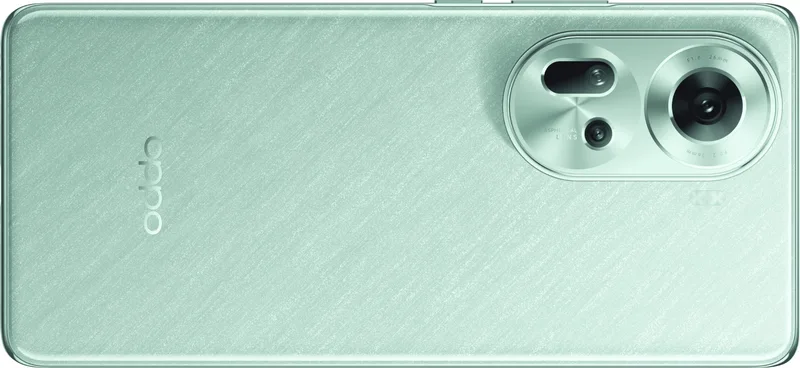
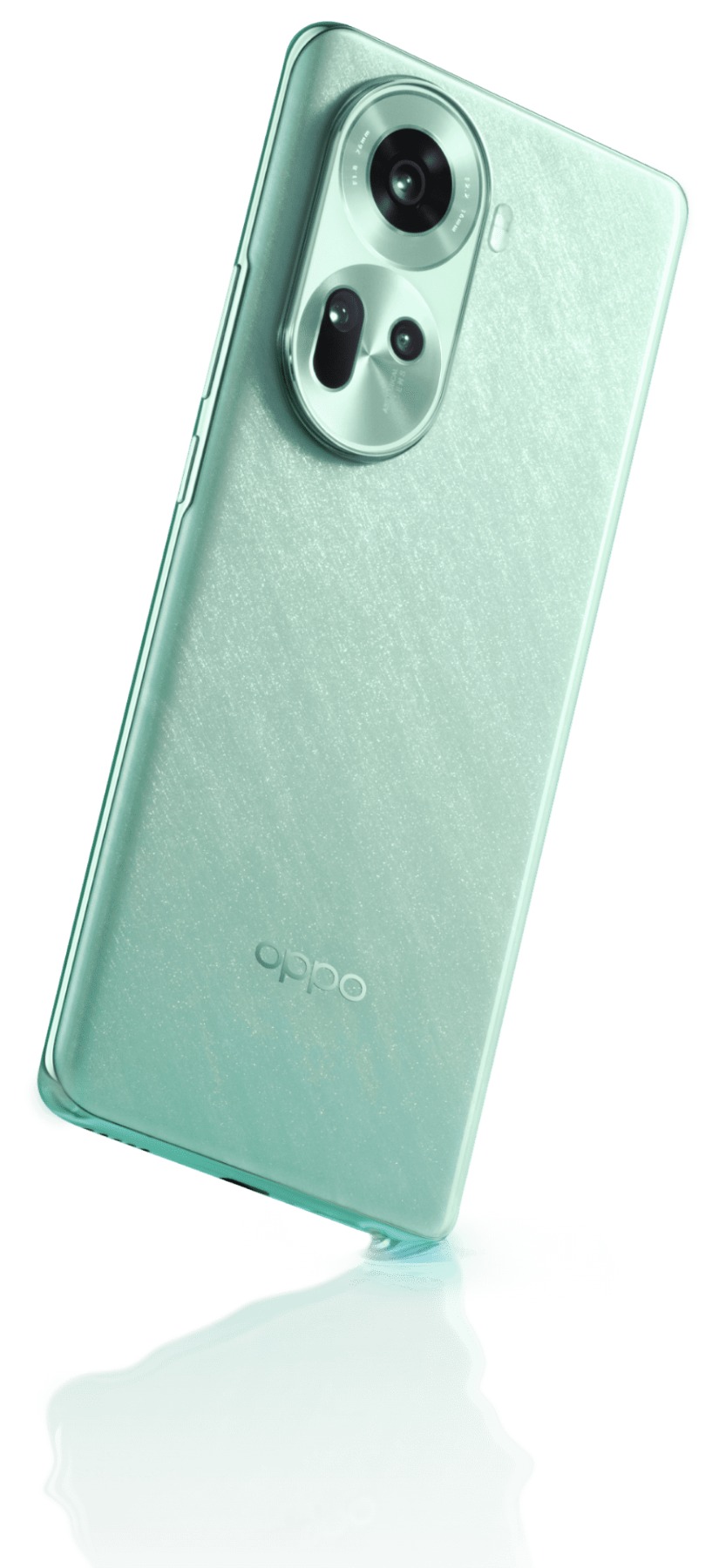
The body is where the Reno11 makes its first impression. It measures 162.4 x 74.3 mm, is 7.99 mm thick in Rock Grey (8.04 mm in Wave Green) and weighs about 182 g, according to OPPO's laboratory data. That is a light phone for a 6.7-inch screen, and the company stresses the "barely there" feel. The back panel of the Wave Green version carries a fine pattern that OPPO says is transferred from natural silk, while Rock Grey has a matte, smoother look. Both curve into the sides. The phone ships with a protective case in the box.
The display is a 6.7-inch 3D curved AMOLED with 2412 x 1080 pixels (394 ppi). The maximum refresh rate is 120 Hz, selectable at 60, 90 or 120 Hz, and the touch sampling rate peaks at 240 Hz. OPPO quotes up to 800 nits in high-brightness mode, 1.07 billion colours, HDR10+ certification, a 93% screen-to-body ratio and two colour modes: Vivid with 100% DCI-P3 coverage and Natural with 100% sRGB. The glass is AGC DT-Star2. The 800-nit figure is far below the 4,500-nit peak that OnePlus quotes for its flagship, and the resolution is full HD+, not QHD. The page does not list an ingress-protection (IP) rating, which is worth remembering for outdoor use.
Camera system
Three cameras sit on the back. The main one is a 50 MP sensor with an f/1.8 lens, a 79-degree field of view, autofocus and OIS. An 8 MP ultra-wide covers 112 degrees with a fixed-focus f/2.2 lens. The third is the feature that defines the phone: a 32 MP telephoto, based on a Sony IMX709 sensor according to the OPPO page, with an f/2 lens and autofocus. It is designed for 2x portrait framing, which gives a flattering, less distorted perspective for faces than a wide lens held close. OPPO also advertises a Portrait Expert Engine that adjusts exposure and white balance using input from portrait photographers, and a portrait mode in which the aperture of the blur can be adjusted.
At the front is a 32 MP selfie camera with an f/2.4 lens and 89-degree field of view, which can record up to 4K at 30 fps. The rear cameras record 4K at 30 fps and 1080p at 60 fps, with slow motion at 1080p up to 480 fps and 720p up to 960 fps, plus a dual-view video mode. On the software side OPPO highlights an AI Eraser that removes passers-by or clutter by drawing a circle around them, and a smart cut-out feature in the gallery.
Performance, memory and software
The MediaTek Dimensity 7050 is an eight-core 6 nm 5G chip with an ARM Mali-G68 MC4 graphics unit. It is a mid-range chip aimed at smooth everyday use and light gaming, not at frame-rate records. Memory options listed on the specs page are 8 GB + 128 GB, 8 GB + 256 GB and 12 GB + 256 GB. RAM is LPDDR4x at 4266 MHz and storage is UFS 2.2, which is a step behind the UFS 3.1 or 4.0 now common in more expensive phones. The "RAM Expansion" feature adds up to 12 GB of virtual RAM by borrowing storage space; it helps keep apps alive in the background but does not behave like physical memory.
The phone runs ColorOS 14. OPPO lists a Trinity Engine of optimisations, a 48-month "fluency protection" claim and a saving of up to 19 GB on the 256 GB version through compression. These come from OPPO's own tests, and the real experience will depend on updates and usage. Other software extras include a Smart Touch and File Dock for dragging content between apps, and infrared remote control for TVs and air conditioners.
Battery and charging
The Reno11 has a battery with 5,000 mAh typical capacity and 4,870 mAh rated capacity. Charging is up to 67 W with SUPERVOOC, which OPPO says reaches 100% in about 45 minutes. A footnote explains that the output is 67 W with 200-240 V mains input and 55 W with 100-130 V, so charging in North America would be a little slower. The charger is included. OPPO also claims that the battery keeps more than 80% of its capacity after four years of daily charging in its lab simulation. Whether this holds in real conditions is something only years of use can show.
Audio, connectivity and extras
The Reno11 has dual stereo speakers and an Ultra Volume mode that raises output up to 300%, with a note that it does not apply to earphones. Connectivity includes 5G, Wi-Fi 6, Bluetooth 5.3 with several high-quality codecs (aptX, aptX HD, LDAC and LHDC on supported earphones), NFC, dual nano-SIM, GPS and a USB-C port. Biometrics are a fingerprint sensor and face recognition. A feature called LinkBoost uses a 360-degree antenna design that OPPO says improves signal transmission and reception in weak-signal areas such as garages.
Who it is for
The Reno11 suits people who take many photos of people: friends, family, events, social content. A dedicated 2x portrait lens is more useful for that than a pile of megapixels. It also suits buyers who value a light, curved, good-looking phone and a fast charger over top benchmark results. Anyone who wants more raw power should look at the Pro model or at a flagship such as the OnePlus 12.
Compromises
- Modest chip and storage speed: Dimensity 7050 with LPDDR4x and UFS 2.2 favours everyday use over demanding games.
- Display brightness: 800 nits HBM and a full HD+ resolution are fine, but not class-leading.
- No stated IP rating: the specs page lists none.
- Secondary cameras: the ultra-wide is a fixed-focus 8 MP unit, and 4K video stops at 30 fps.
- Market availability: no US price is stated on the pages used here, and charging output is lower on 100-130 V mains.
To see how it fares against other phones, open the rankings.
Where it ranks
Compare OPPO Reno11 with similar devices
More from OPPO
Frequently asked questions
When was the OPPO Reno11 released?
The OPPO Reno11 was released on 2024-01-25, according to the manufacturer’s published information.
What are the main specs of the OPPO Reno11?
Headline figures for the OPPO Reno11: Battery: 5,000 mAh, Refresh rate: 120 Hz, Main camera: 50 MP, RAM: 12 GB. The full specification table is further up this page.
Is the OPPO Reno11 worth buying?
That depends on your priorities. Use the editorial review on this page for our view, check the rankings above to see where the device stands on battery, display and camera, and compare it directly with similar models before you decide.


