Phones
OPPO Find N5
OPPO Find N5 is a 4.21 mm-thin book-style foldable with an 8.12-inch inner screen, Snapdragon 8 Elite and 80W wired charging.
Key figures at a glance
Gallery


Specifications
- Display
- 8.12" inner AMOLED, 2480x2248, 120Hz, 2100 nits peak; 6.62" cover AMOLED, 2616x1140, 120Hz, 2450 nits peak
- Chipset
- Snapdragon 8 Elite
- RAM
- 16GB
- Storage
- 512GB
- Rear Camera
- 50MP main + 50MP telephoto + 8MP ultrawide
- Front Camera
- 8MP (inner and cover screens)
- Battery
- 5,600 mAh, 80W wired, 50W wireless
- OS
- ColorOS 15
- Dimensions
- Folded 160.87 x 74.42 x 8.93 mm, unfolded 4.21 mm thick, 229 g
- Colors
- Cosmic Black, Misty White
The OPPO Find N5 is a book-style foldable that makes thinness its main selling point. Unfolded, the body is just 4.21 mm thick, and closed it measures 8.93 mm, which puts it in the same range as many ordinary slab phones. Inside there is an 8.12-inch main screen, outside a 6.62-inch cover display, and the hardware is a Snapdragon 8 Elite with 16GB of RAM and 512GB of storage. This page works from the published specifications and manufacturer information to explain how the phone is built, who it suits and what it asks you to accept.
Place in the lineup
OPPO held the global launch of the Find N5 on 20 February 2025 at an event in Singapore, with the first sales reported to begin on 28 February 2025 in Singapore, Malaysia and Hong Kong, and more markets to follow. Coverage at the time said OPPO was not planning an official release in the United States, Canada or Europe, so availability is limited and import is the route for many buyers. OPPO's own spec page does not list a price, and any figures you see in media reports are regional rather than universal.
The foldable market is small, so the Find N5's direct rivals are Samsung's Galaxy Z Fold7 and Google's Pixel 10 Pro Fold, and you can see the numbers side by side in the OPPO Find N5 vs Galaxy Z Fold7 comparison. For non-folding OPPO flagships, the camera-focused OPPO Find X9 Pro is the sibling to look at, although it targets a different buyer.
Design and displays
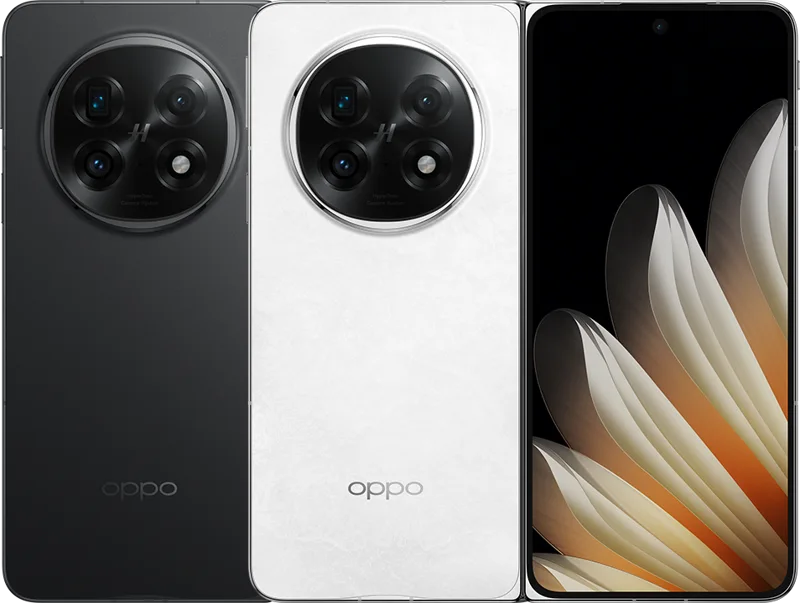
The folded dimensions are about 160.87 x 74.42 x 8.93 mm, and unfolded the phone is 160.87 x 146.58 mm and only 4.21 mm thick. Weight is about 229 g. That is heavier than a typical slab phone, which is the price of a hinge, two screens and a battery of this size. The phone comes in Cosmic Black and Misty White, and the rear carries a large circular camera module with Hasselblad branding.
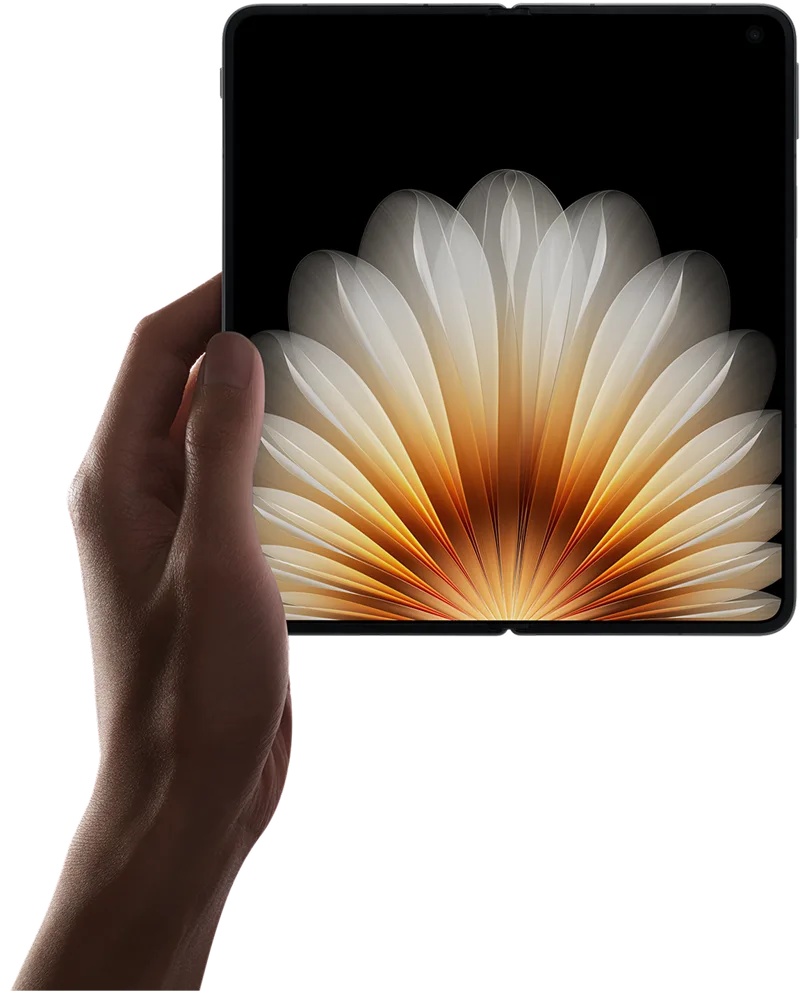
The inner screen is an 8.12-inch AMOLED with 2480 x 2248 pixels, about 412 pixels per inch, with a maximum refresh rate of 120Hz, 10-bit colour and a peak brightness of 2,100 nits. Its nearly square shape is good for reading, split-screen multitasking and viewing documents. The cover display is a 6.62-inch AMOLED with 2616 x 1140 pixels, about 431 pixels per inch, also at 120Hz and 10-bit, with a peak of 2,450 nits. That second screen is large enough to work as a normal phone when the device is closed. The crease is a physical fact of every foldable, and the spec sheet does not quantify it, so judge it with your own eyes before buying.
Performance and software
The chipset is the Snapdragon 8 Elite, the same platform used in many 2025 flagships such as the Galaxy S25 Ultra. Memory is 16GB of LPDDR5X and storage is 512GB of UFS 4.0. A single configuration keeps the buying decision simple but leaves no room for a cheaper variant. For a device meant to multitask on a big screen, 16GB is a sensible amount of memory.
OPPO's page lists ColorOS 15 (version 15.0.1) as the operating system. The spec sheet does not itemise software features for the large inner display, so check OPPO's software notes if split-screen behaviour matters to you. Connectivity covers Wi-Fi 7, Bluetooth 5.4, NFC, eSIM and USB-C with USB 3.1 Gen 2 speeds. Authentication is available by both fingerprint and face recognition.
Camera
The rear system has three cameras. The main camera is a 50MP sensor with an f/1.8 lens, optical image stabilisation and an 89-degree field of view. The telephoto camera is also 50MP, with an f/2.7 lens and optical stabilisation. The ultra-wide camera is 8MP with an f/2.2 lens and a 116-degree field of view, which is a clear step down in resolution from the other two. Rear video goes up to 4K at 60 frames per second, with HDR video supported.
There are two selfie cameras, one on the cover screen and one inside the main display, both 8MP with an f/2.4 lens and a 91-degree field of view; front video goes up to 4K at 30 frames per second. Both front cameras share the same modest resolution, which is low next to the 32MP to 50MP selfie cameras on many slab flagships. OPPO has partnered with Hasselblad on colour tuning, and without independent tests, we do not rate image quality here.
Battery and charging
The battery has a typical capacity of 5,600 mAh, with a rated capacity of 5,475 mAh. For a foldable that is large, and it is more notable when set against the 4.21 mm unfolded thickness. Wired charging reaches 80W with OPPO's SUPERVOOC technology, and wireless charging reaches 50W with AIRVOOC. The specification page also lists 33W PPS and 13.5W PD modes, which are the standards used by third-party chargers. OPPO does not state a full-charge time on the page. Real-world endurance for a foldable depends strongly on how much time you spend on the large inner screen, which uses more power than the cover display.
Living with a foldable
The numbers on the spec sheet hint at how the phone behaves day to day. The inner display is nearly square at 2480 x 2248 pixels, which means apps designed for tall phone screens will often be shown with extra space unless they adapt to the larger canvas. The cover screen at 2616 x 1140 pixels follows the proportions of a regular phone, so quick tasks such as messages, maps and calls can be done without unfolding. Both panels run up to 120Hz, so scrolling should feel equally smooth on each. The mix of 80W wired and 50W wireless charging helps offset the time you may spend on the bigger screen, though no charging time is stated by the manufacturer.
Who it is for
The Find N5 suits people who want a foldable that does not feel like one: someone who carries it daily, wants a phone-sized cover screen and does not want a thick, heavy device in a pocket. It is also a reasonable fit for readers, note-takers and multitaskers who will use the 8.12-inch screen for several hours a day. It is a less obvious choice for buyers who want a conventional phone, who need a warranty and local support in a market where OPPO does not officially sell it, or who put telephoto photography first.
Compromises
- Availability: official sales were limited to parts of Asia at launch, and the phone was reported not to be sold in the US, Canada or Europe.
- Ultra-wide camera: the 8MP sensor is modest next to the two 50MP cameras.
- Single configuration: only 16GB and 512GB are listed.
- Foldable trade-offs: a visible crease and a more complex mechanism than a slab phone are inherent to the form factor.
- Battery size: 5,600 mAh is large for a foldable but smaller than the 7,500 mAh in the OPPO Find X9 Pro.
Overall, the Find N5 is a refined, thin foldable whose main limits are regional availability and a modest ultra-wide. For where it stands against other devices, see the rankings.
Where it ranks
Compare OPPO Find N5 with similar devices
More from OPPO
Frequently asked questions
When was the OPPO Find N5 released?
The OPPO Find N5 was released on 2025-02-28, according to the manufacturer’s published information.
What are the main specs of the OPPO Find N5?
Headline figures for the OPPO Find N5: Battery: 5,600 mAh, Refresh rate: 120 Hz, Main camera: 50 MP, RAM: 16 GB. The full specification table is further up this page.
Is the OPPO Find N5 worth buying?
That depends on your priorities. Use the editorial review on this page for our view, check the rankings above to see where the device stands on battery, display and camera, and compare it directly with similar models before you decide.


