Phones
OPPO Reno15 F
The Reno15 F is OPPO's value model: a 6.57-inch 120Hz AMOLED, Snapdragon 6 Gen 1, a 7,000 mAh battery with 80W charging, a microSD slot, a 50MP selfie camera and IP69 protection.
Key figures at a glance
Gallery
Specifications
- Display
- 6.57" AMOLED, 2372x1080 (FHD+), up to 120Hz, 1400 nits peak (HBM), 1.07 billion colors (10-bit)
- Chipset
- Qualcomm Snapdragon 6 Gen 1 (4nm, 8-core)
- RAM
- 12GB
- Storage
- 128GB / 256GB / 512GB (UFS 3.1); microSD supported
- Rear Camera
- 50MP main (f/1.8, OIS) + 8MP ultrawide (f/2.2) + 2MP macro (f/2.4)
- Front Camera
- 50MP ultrawide selfie (f/2.0, autofocus, 100° field of view)
- Battery
- 7000 mAh (typical; 6830 mAh rated), 80W SUPERVOOC wired
- OS
- ColorOS 16
- Dimensions
- 158.18 x 74.93 x 8.14 mm, 195 g (Afterglow Pink and Twilight Blue); 8.27 mm, 202 g (Aurora Blue)
- Protection
- IP69 (also tested to IP68 and IP66)
- Connectivity
- Wi-Fi 5, Bluetooth 5.1, USB Type-C, dual nano-SIM; NFC depends on region
- Colors
- Aurora Blue, Afterglow Pink, Twilight Blue
The OPPO Reno15 F is the value model of OPPO's 2026 Reno15 family. It keeps the family's look, the 50MP selfie camera and the IP69 rating, and it goes further than its siblings on battery size, with a 7,000 mAh cell and 80W wired charging, plus a microSD slot that the pricier models do not have. In return it uses a more modest Snapdragon 6 Gen 1 chip, older LPDDR4X memory and a simpler rear camera set-up. This page is based on the published specifications and manufacturer information from OPPO's global site, and OPPO's own statements are marked as claims.
Where it sits in the lineup
OPPO's global Reno15 series has four members: the Reno15 Pro Max, the Reno15 Pro, the Reno15 and this Reno15 F. The F sits at the bottom. The OPPO Reno15 has a bigger screen, a faster chip, a 50MP telephoto lens and Wi-Fi 6, and the OPPO Reno15 Pro adds a 200MP main camera. The F gets the same design language and the same software generation, ColorOS 16, but with a clearly cheaper hardware bill. Compared with the Find line, for example the OPPO Find X9 Pro, it is a different category altogether. The manufacturer pages we reviewed do not state a price or US availability, so this page carries no price. The date of 8 January 2026 comes from wider rollout information and is not restated on the product page. Memory options are 8GB with 128GB or 256GB, and 12GB with 256GB or 512GB.
Design and durability
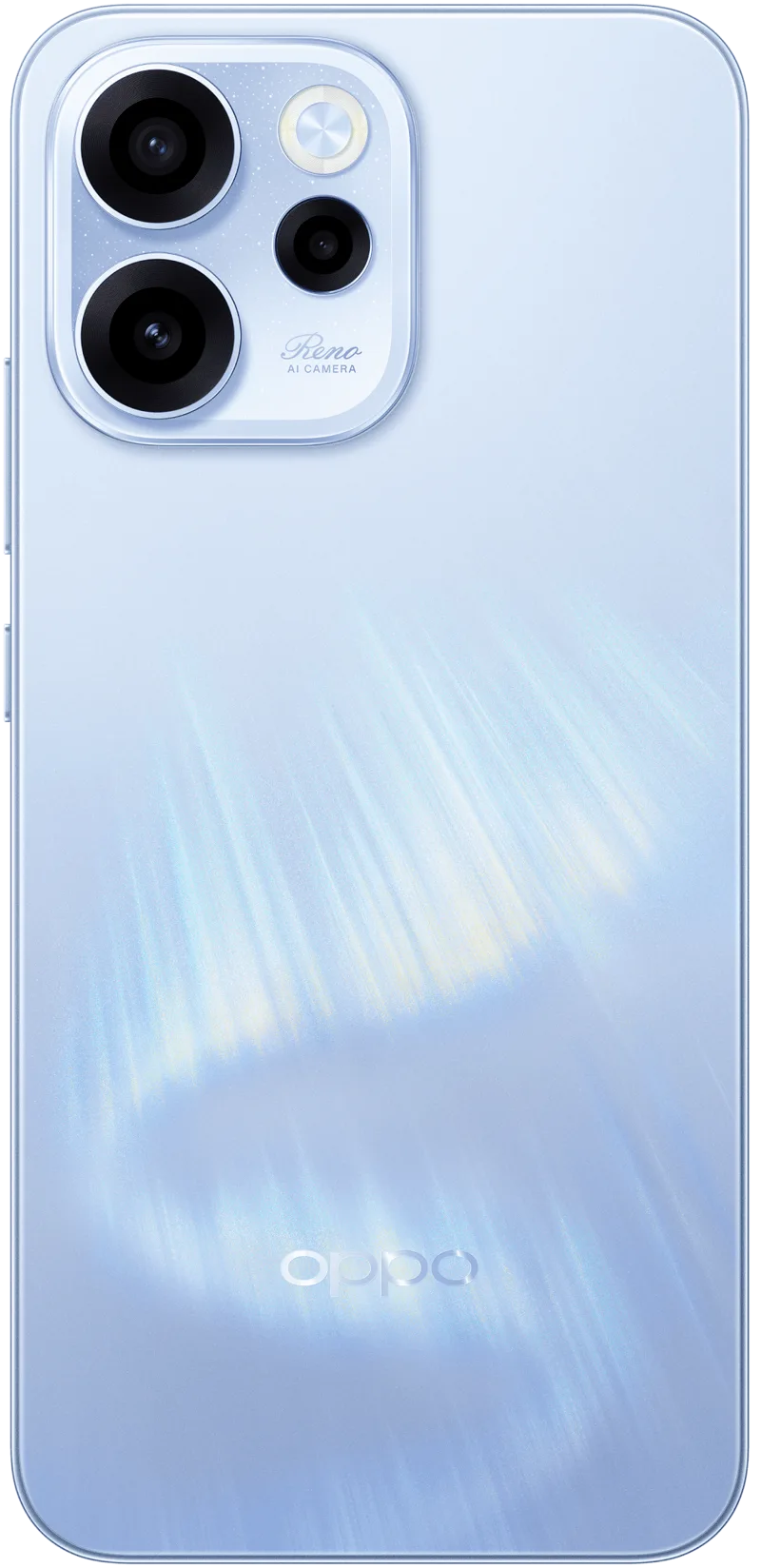
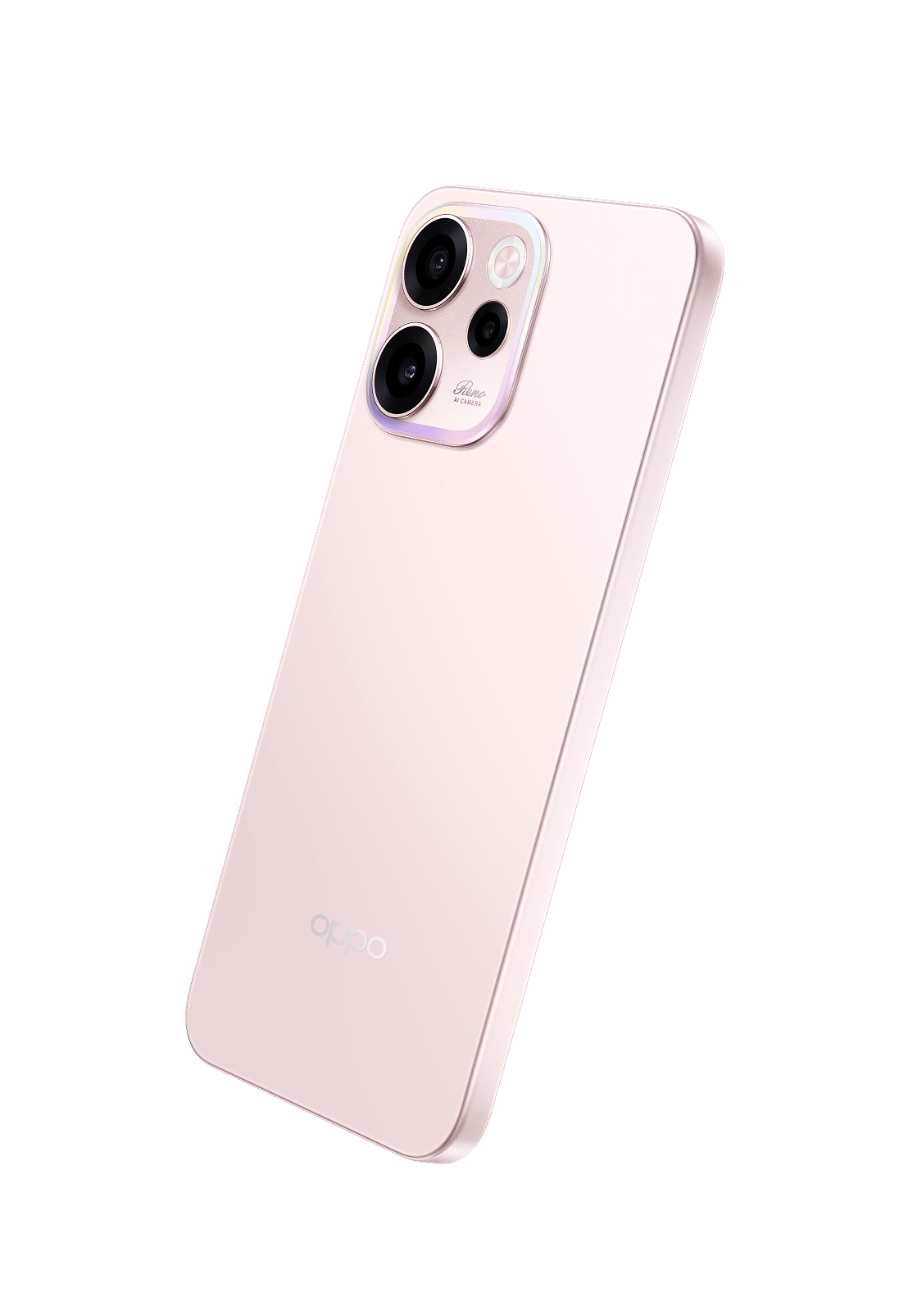
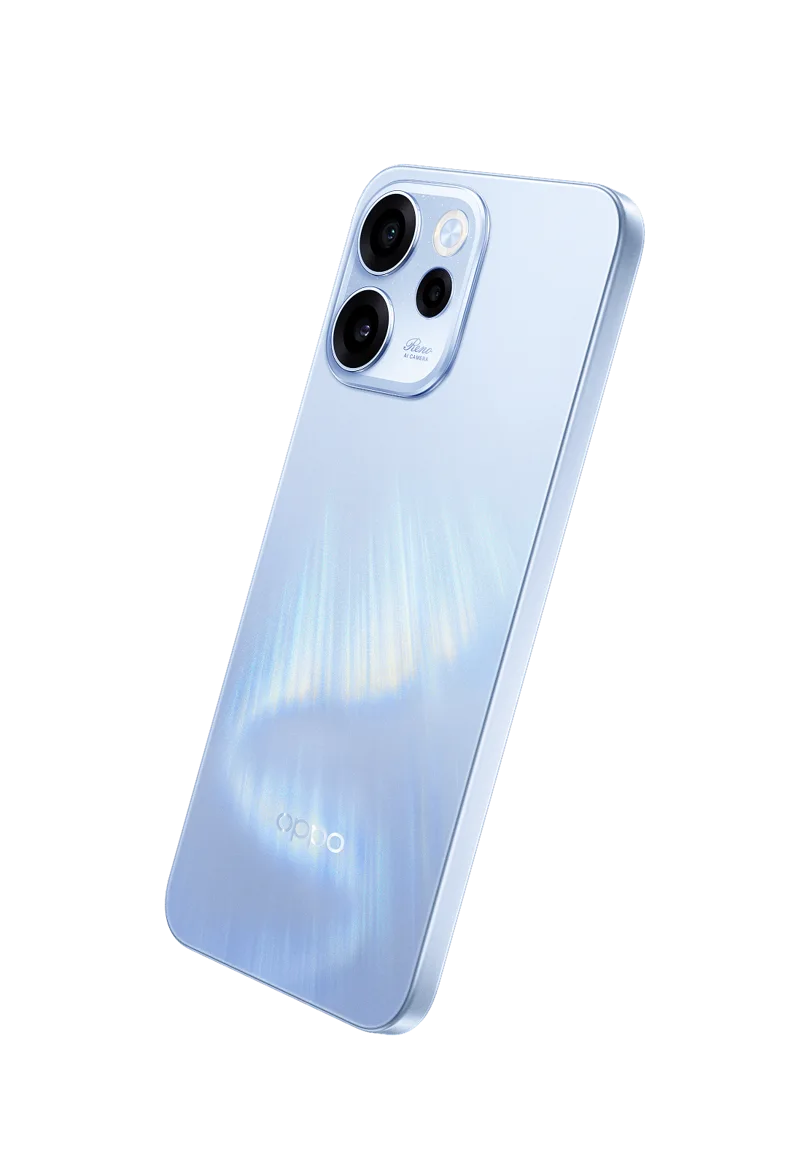
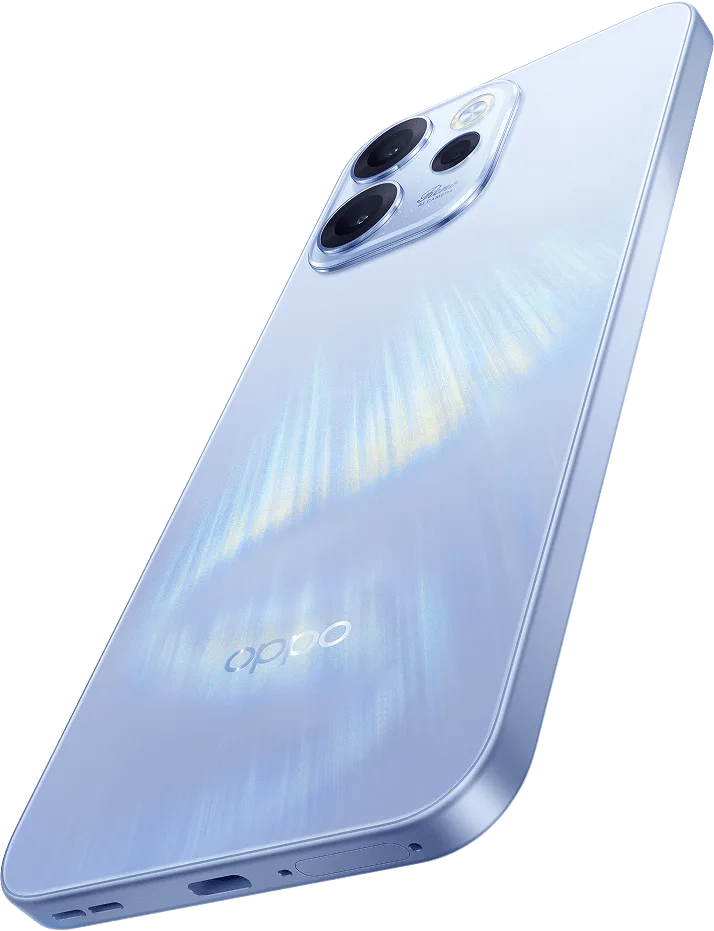
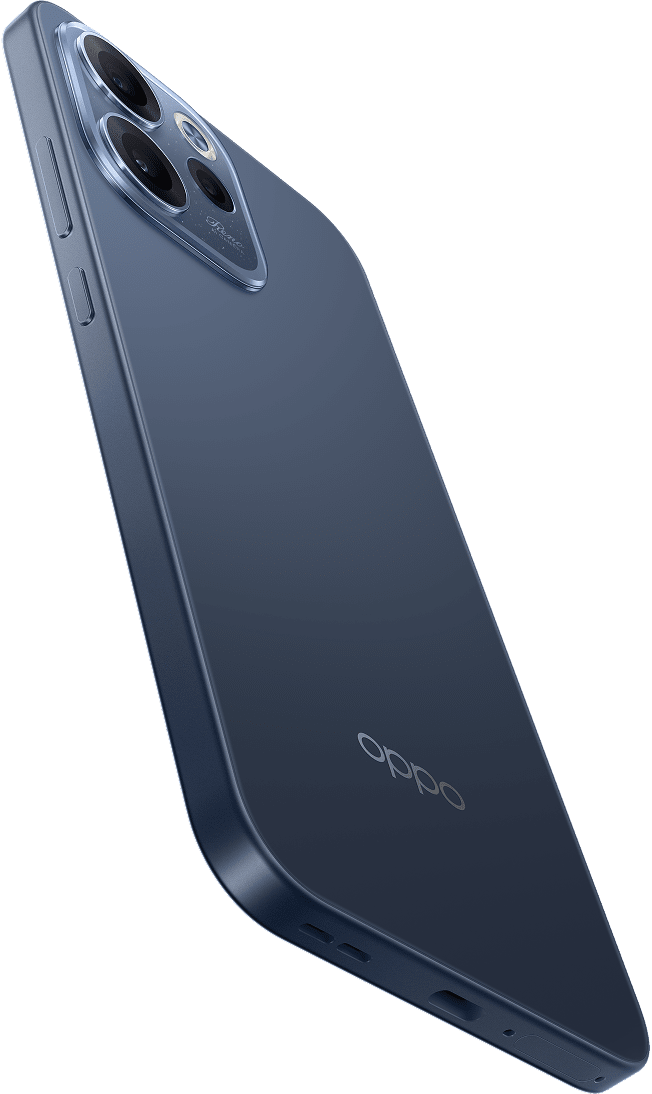
The phone is 158.18 mm tall and 74.93 mm wide. The thickness is 8.14 mm in Afterglow Pink and Twilight Blue and 8.27 mm in Aurora Blue, and the weight is about 195 g in the first two colours and 202 g in Aurora Blue. OPPO describes a one-piece sculpted glass back, thin bezels and an aerospace-grade aluminium frame. The Aurora Blue version carries the Dancing Aurora finish, a surface of millions of etched "OPPO Glow" textures, and every model has a square camera ring that OPPO calls the Dynamic Stellar Ring. According to OPPO, the Twilight Blue and Afterglow Pink editions use a "Velvet Glass-feel Panel" that feels like satin and resists scratches and smudges, and the Afterglow Pink edition alone has an effect called Aura Glow.
The phone carries an IP69 rating, and OPPO states that it was also tested to IP68 and IP66 under controlled laboratory conditions. As with every such rating, the company notes that ageing and usage can change real-world results, and you should not charge the phone while it is wet. A charger, a USB cable, a protective case and a SIM tool are listed in the box, although this can vary by market. Unlike the standard Reno15, the F supports a memory card, which is a practical plus for anyone who stores a lot of video and music locally.
Display
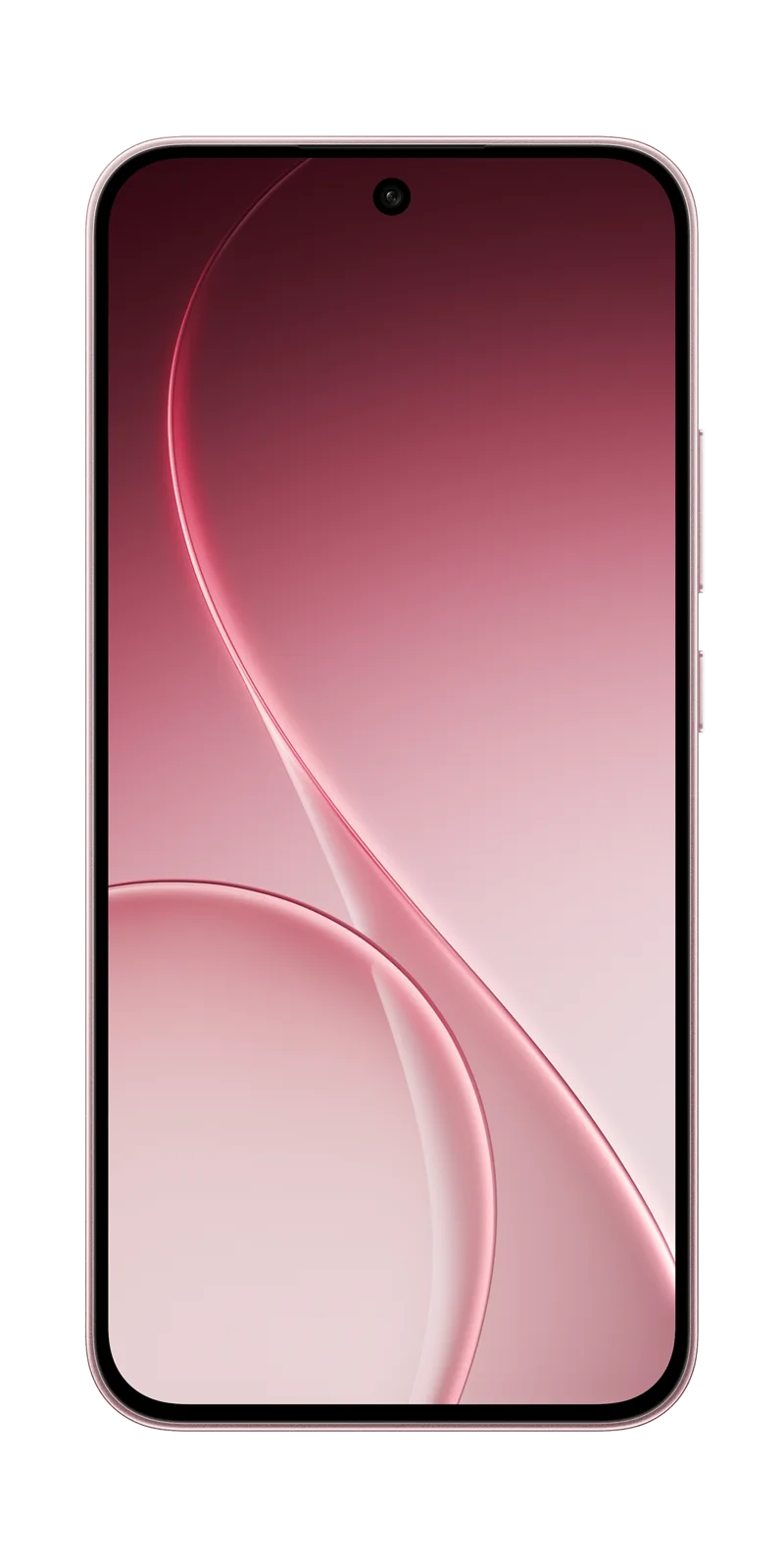
The screen is a 6.57-inch AMOLED panel with a resolution of 2372 x 1080 pixels and a density of 397 pixels per inch, and a screen-to-body ratio of 92.8 percent. It refreshes at up to 120Hz, with a touch sampling rate of up to 240Hz. OPPO lists 600 nits typical brightness, 1,400 nits in high-brightness mode, 10-bit colour with 1.07 billion colours and 100 percent DCI-P3 coverage in standard and natural modes. Unlike the Reno15, the F's page does not mention HDR10+ certification. The cover glass is listed as AGC DT-STAR D+ rather than Gorilla Glass. For everyday use the specifications look sound: a sharp enough, fast and bright panel for a phone in this class, with the weaker resolution of the Reno15's screen being the main difference.
Performance and software
The processor is the Qualcomm Snapdragon 6 Gen 1, built on a 4nm process with eight cores and an Adreno 710 GPU. OPPO claims improvements of 35 percent for the CPU and 30 percent for the GPU, and these are comparisons with an older chip from OPPO's own lab, not independent benchmarks. Memory is LPDDR4X and storage UFS 3.1, which is a good storage standard for the price. This is a chip that should handle messaging, social media, video and mainstream games without difficulty, but it is not meant for sustained high-end gaming. OPPO's own gaming claims describe 10 hours of smooth MOBA play and 10 hours of smooth shooter play at 25 degrees Celsius, based on its laboratory tests, aided by AI HyperBoost 2.0 and an AI gaming antenna.
The phone runs ColorOS 16 and OPPO advertises "5 Years On" smoothness, one year less than the six years advertised for the standard Reno15. The software page features the same AI tools as the rest of the series, such as AI Mind Space, AI Translate, the call translator and the AI eraser for motion photos. OPPO states that these AI functions might not be in the launch software, may arrive by update, may require an account and vary by country. Connectivity is more basic than on the other models: Wi-Fi 5, Bluetooth 5.1 with SBC, AAC, LDAC, aptX and aptX HD, a USB Type-C port, NFC depending on the region, and dual nano-SIM. OPPO's specification page lists no eSIM for this model and no infrared blaster, and it lists three different frequency-band versions, so check the band list against your carrier.
Camera
The rear camera has three lenses. The main camera is 50MP with an f/1.8 aperture, autofocus and two-axis optical stabilisation. It is joined by an 8MP ultrawide camera with a 112-degree field of view and a 2MP macro camera, the last of which is more of a spec-sheet item than a creative tool. There is no telephoto lens, which is the biggest difference from the Reno15. Video on the rear camera is limited to 4K at 30 frames per second, with 1080p at 60 and slow motion at 120 frames in 1080p and 240 in 720p, and the same limit of 4K at 30 applies to the front camera.
The front camera is the same 50MP ultrawide unit as on the more expensive models, with an f/2.0 aperture, autofocus and a 100-degree field of view, which is good for group selfies. OPPO's marketing promotes AI Portrait Glow, which analyses each photo and applies flash, rim, natural or studio lighting, and AI Flash Photography 2.0 for night portraits. Dual-view video and an underwater shooting mode are available. As always, these are manufacturer descriptions rather than independent results, and the sample photos on the product page were taken with models from the Reno15 series, not necessarily the F.
Battery and charging
The battery is the headline of the F: 7,000 mAh typical capacity (6,830 mAh rated), which is more than the 6,500 mAh of the standard Reno15 and the 6,200 mAh of the Reno15 Pro. Charging is up to 80W SUPERVOOC, with compatibility for 67W and lower SUPERVOOC chargers, 55W PPS, 13.5W PD and 13.5W QC. The product page for this model does not give a charging time or a runtime in hours, so no figures are quoted here. A larger battery combined with a modest chip and a 1080p-class screen is the combination that usually gives long endurance, but that remains an expectation from the specifications and not a measured result. The weight of 195 g is lower than that of the Reno15, which is notable given the larger cell, although the body is also thicker.
Who it is for
The Reno15 F is for buyers who want the look and the features that matter most, a big battery, water resistance, a good selfie camera and a long software promise, without paying for a faster chip or a telephoto lens. The microSD slot also makes it a sensible choice for people who need cheap extra storage. If you take many photos at a distance, or want the better ultrawide and the 3.5x zoom, the comparison of the Reno15 F against the Reno15 shows what the step up buys. For the wider market, see the rankings.
Compromises
The compromises are clear. The camera system lacks a telephoto lens, the ultrawide is 8MP and the 2MP macro adds little. The chip is of an earlier generation and the memory is LPDDR4X. Video recording is capped at 4K and 30 frames per second, and connectivity stops at Wi-Fi 5 and Bluetooth 5.1. There is no eSIM and no infrared remote on the specification page. The software promise is five years, not six. OPPO publishes no US price on the pages we reviewed, and the set of frequency bands, AI functions and the exact variant depend on the market. Most efficiency and gaming claims come from OPPO's own labs and have not been independently verified here.
Where it ranks
Compare OPPO Reno15 F with similar devices
More from OPPO
Frequently asked questions
When was the OPPO Reno15 F released?
The OPPO Reno15 F was released on 2026-01-08, according to the manufacturer’s published information.
What are the main specs of the OPPO Reno15 F?
Headline figures for the OPPO Reno15 F: Battery: 7,000 mAh, Refresh rate: 120 Hz, Main camera: 50 MP, RAM: 12 GB. The full specification table is further up this page.
Is the OPPO Reno15 F worth buying?
That depends on your priorities. Use the editorial review on this page for our view, check the rankings above to see where the device stands on battery, display and camera, and compare it directly with similar models before you decide.


