Phones
Xiaomi Redmi Note 13 Pro+
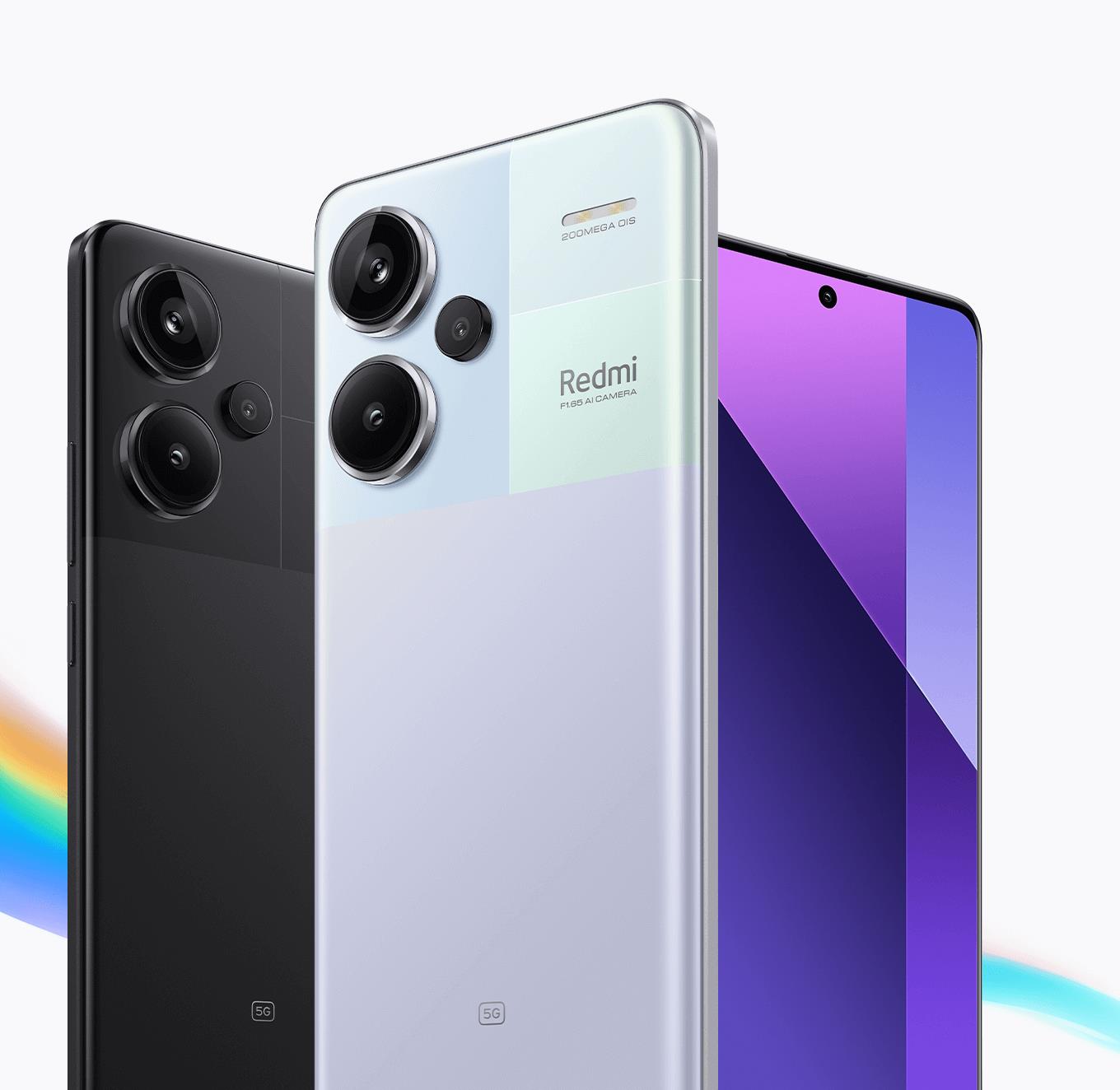
Xiaomi's Redmi Note 13 Pro+ 5G pairs a 200MP OIS main camera and a curved 120Hz AMOLED display with IP68 protection and 120W charging for its 5,000 mAh battery.
Key figures at a glance
Gallery
Specifications
- Display
- 6.67" CrystalRes AMOLED, curved, 2712x1220, up to 120Hz, 1800 nits peak, Gorilla Glass Victus
- Chipset
- MediaTek Dimensity 7200-Ultra (4nm)
- RAM
- 12GB
- Extended RAM
- Up to 12GB memory extension (software, uses storage)
- Storage
- 256GB / 512GB
- Rear Camera
- 200MP main (OIS, f/1.65, 1/1.4") + 8MP ultrawide + 2MP macro
- Front Camera
- 16MP
- Battery
- 5000 mAh (typ), 120W wired HyperCharge
- OS
- MIUI 14
- Body
- 161.4 x 74.2 x 8.9 mm, 204.5 g, IP68
- Connectivity
- 5G, Wi-Fi 6, Bluetooth 5.3, NFC (varies by market), dual SIM (nano SIM + nano SIM or eSIM)
The Redmi Note 13 Pro+ 5G is the top model of Xiaomi's 2024 Redmi Note 13 family, and it is built around three headline ideas: a 200-megapixel main camera with optical stabilisation, a curved 1.5K AMOLED display, and a 120W charger that Xiaomi says fills the 5,000 mAh battery in 19 minutes. It also brings IP68 dust and water resistance to the Redmi Note line for the first time, according to Xiaomi's own product page. This page is based on the published specifications and manufacturer information, and it tries to separate what the spec sheet actually promises from what the marketing language implies.
A flagship-style Redmi, with limits
Redmi is Xiaomi's value-focused brand, and the Note series is its most popular line. The Pro+ sits at the upper end of that line: it is where Xiaomi puts the features it would like to be compared with more expensive phones. Xiaomi's page calls the camera and the display flagship-level, and describes the processor as a flagship-level 4 nm chip. Those are manufacturer descriptions, and they should be read as marketing positioning. What the listed numbers show is a well-equipped upper-midrange phone rather than a top-tier flagship. For the generation that followed, see the Redmi Note 14 Pro+ and the Redmi Note 15 Pro+; the Note 13 Pro+ vs Note 14 Pro+ comparison is the quickest way to see what changed.
Design and durability
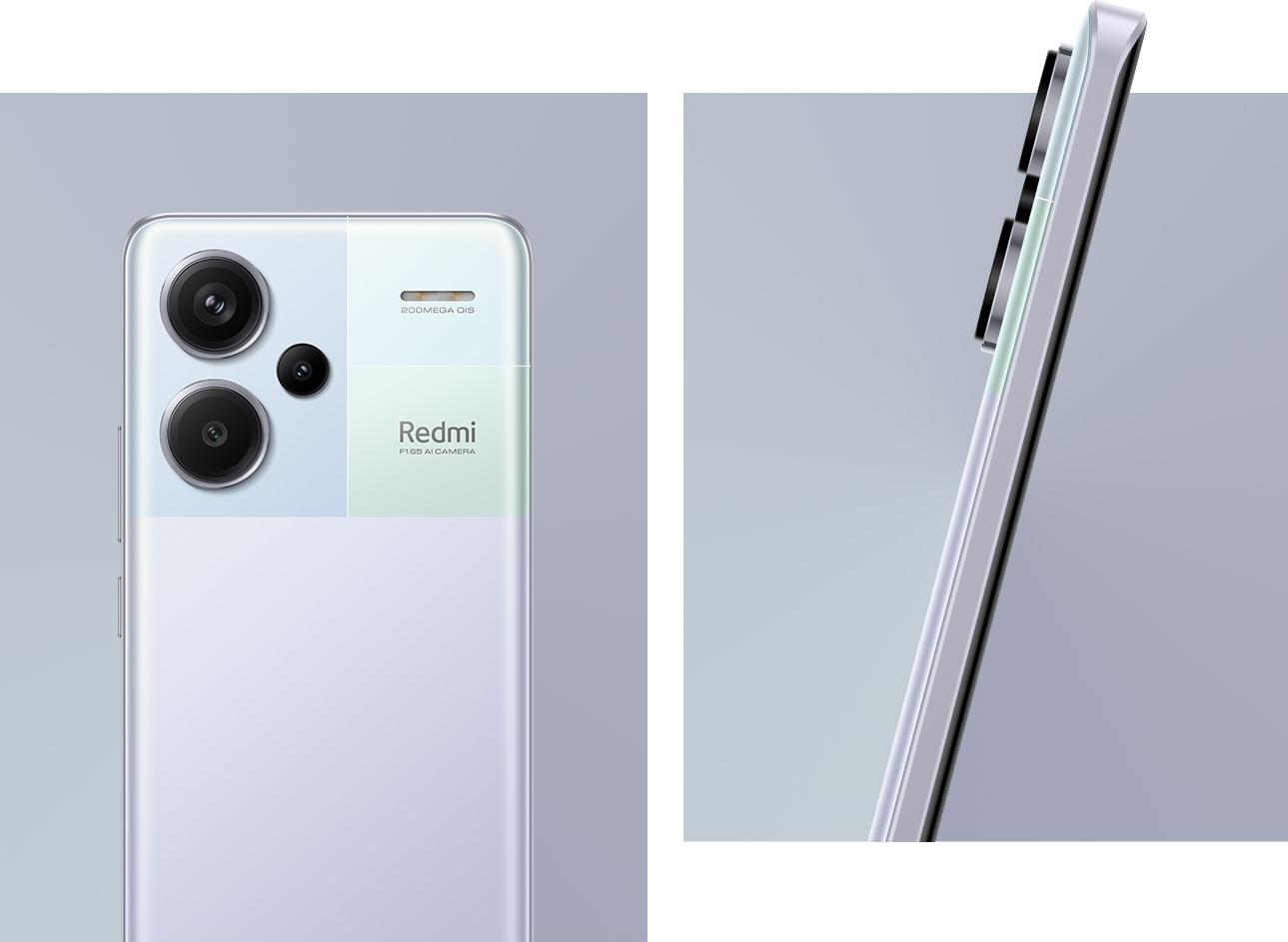
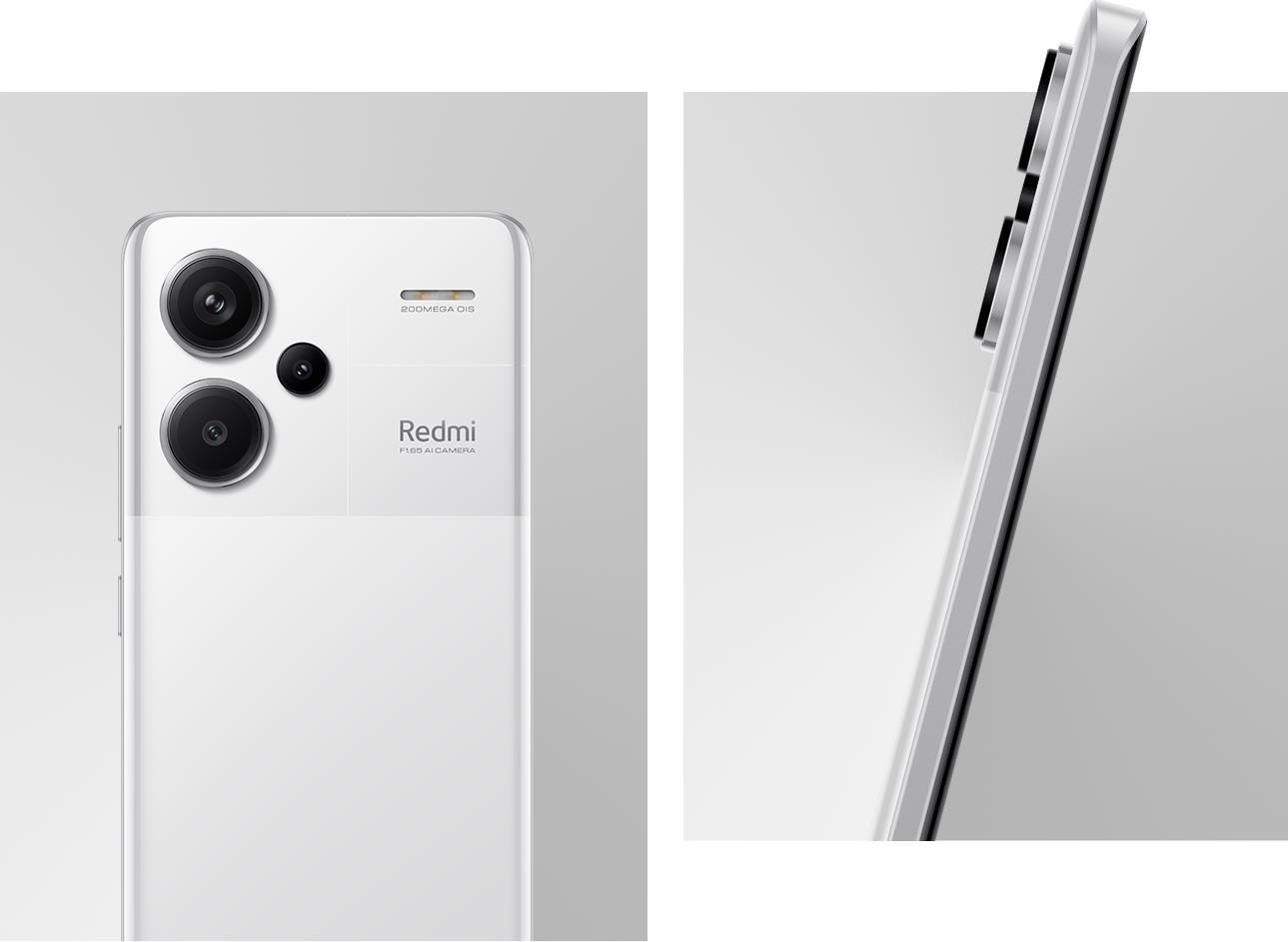
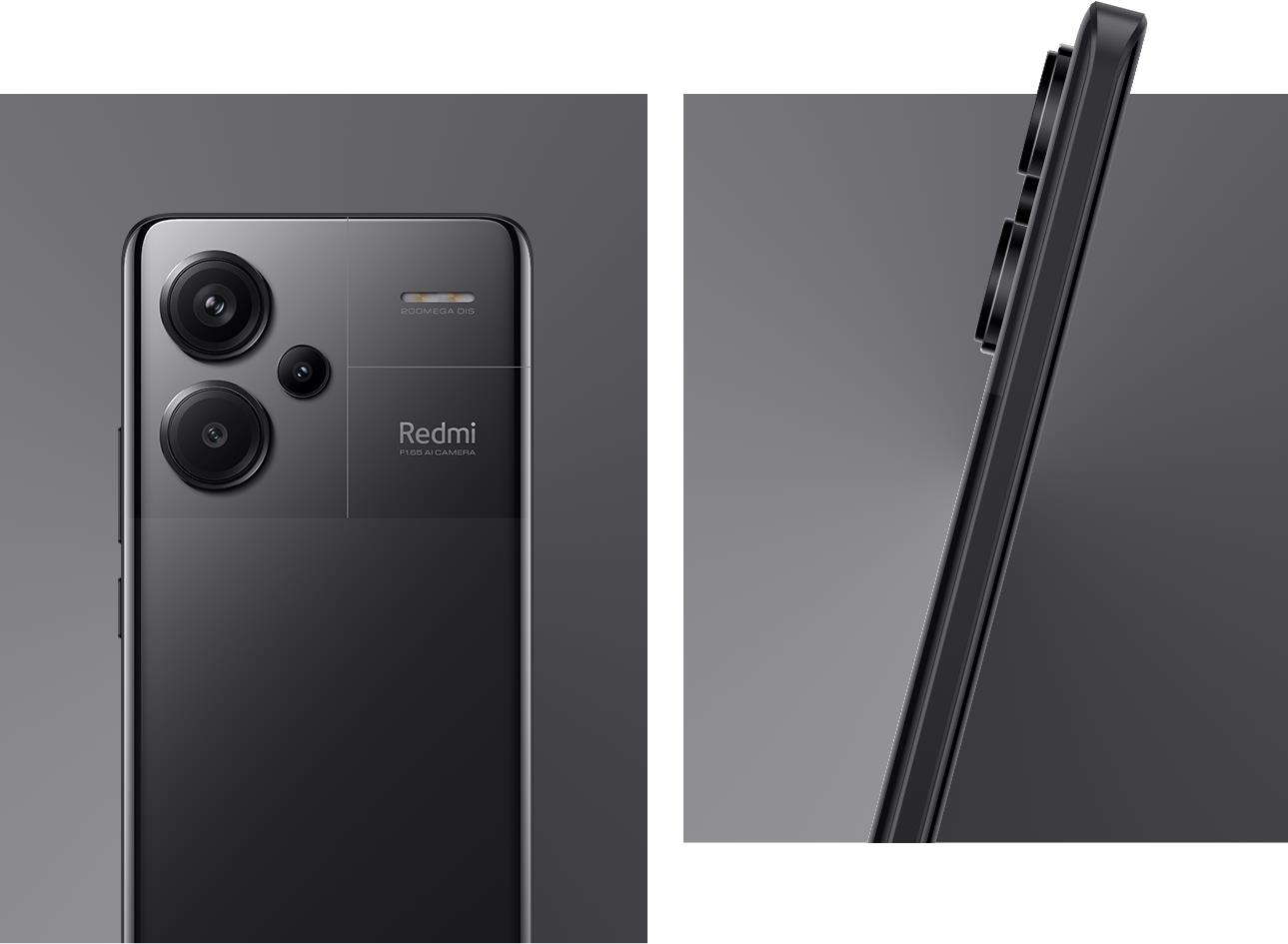
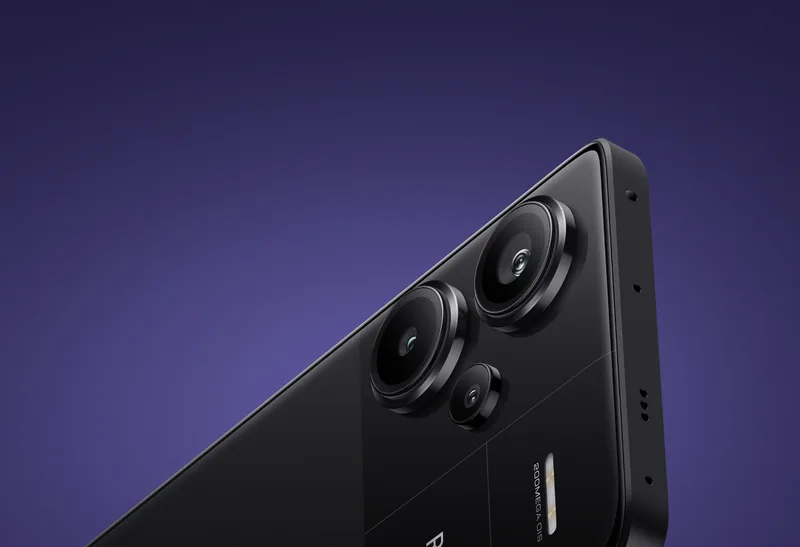
The phone is the first Redmi with a curved screen, according to Xiaomi, and it uses a dual-tone back with a camera module that has no separate decorative plate. The bottom bezel is listed at 2.37 mm. Three colours are shown on the specification page: Midnight Black, Moonlight White and Aurora Purple. The body measures 161.4 x 74.2 x 8.9 mm and weighs 204.5 g, figures Xiaomi labels as internal laboratory data, so individual units can differ slightly.
Durability is a real selling point here. The display is covered by Corning Gorilla Glass Victus, and the phone carries an IP68 rating. Xiaomi's footnote spells out the test conditions: static fresh water up to 1.5 metres for up to 30 minutes, under laboratory conditions, and it advises against beach or pool use and says liquid damage is not covered by the warranty. That is typical wording, but it is a reminder that IP68 is a lab rating, not a promise for every situation. Xiaomi adds a wet-touch feature that is meant to stop accidental inputs from water drops, and lists a long series of drop, roller and port tests carried out on every unit.
Display
The screen is a 6.67-inch AMOLED panel with a 2712 x 1220 resolution, about 446 pixels per inch. Xiaomi quotes a refresh rate of up to 120 Hz, a peak brightness of 1,800 nits, 12-bit colour depth, 100 percent DCI-P3 coverage, and support for Dolby Vision and HDR10+. The panel uses 1,920 Hz PWM dimming, which is the kind of figure that matters if flicker bothers you at low brightness, and it has TUV Rheinland certifications for low blue light, circadian friendliness and flicker-free operation. A touch sampling rate of 2,160 Hz is mentioned, but Xiaomi notes it is active in Game Mode only. The phone has dual speakers with Dolby Atmos support.
On paper this is one of the strongest displays in its price class, and the curved edges make the phone feel narrower than the 6.67-inch size suggests. The trade-off with a curved panel is that the edges can pick up reflections and are easier to trigger accidentally, which is why the wet-touch tuning matters.
Performance, memory and software
The processor is the MediaTek Dimensity 7200-Ultra, an octa-core 4 nm chip with two Cortex-A715 cores at up to 2.8 GHz and six Cortex-A510 cores at up to 2.0 GHz, paired with a Mali-G610 GPU. Xiaomi cites an AnTuTu score above 800,000, from its own laboratory, using AnTuTu version 10. That puts the phone in solid upper-midrange territory: it should handle everyday use and most games comfortably, but it is not aimed at the heaviest gaming. Cooling is a strength on paper, with a vapour-chamber heat sink of nearly 4,000 square millimetres and a large graphite area.
Two memory versions are listed: 8 GB with 256 GB of storage, and 12 GB with 512 GB, using LPDDR5 memory and UFS 3.1 storage. Xiaomi also describes a memory extension feature that can add up to 12 GB by borrowing storage space, which it says would arrive in an over-the-air update. Treat that as a software convenience and not as extra physical RAM. The specification page lists MIUI 14 as the operating system and does not state an Android version, so check the software shipping in your region.
Camera
The main camera is a 200-megapixel sensor of 1/1.4 inch with f/1.65 aperture, a seven-element lens, optical image stabilisation and electronic stabilisation working together. Xiaomi says it bins 16 pixels into one for a 2.24 micron effective pixel size, and that its in-sensor zoom offers up to 4x lossless zoom. The other two rear cameras are modest: an 8-megapixel ultrawide at f/2.2 and a 2-megapixel macro at f/2.4. The front camera is 16 megapixels at f/2.4.
Video recording goes up to 4K at 24 or 30 frames per second on the rear camera and 1080p at 30 or 60 on the front. In practice the 200 MP sensor is the point of the phone: expect the best results from the main camera, with the ultrawide and macro serving as supporting tools. Xiaomi also lists filters, frames, a pet beautify mode and AI tools such as Magic Cutout; these are software features that add convenience but do not change the hardware.
Battery and charging
The battery is rated at 5,000 mAh (typical), and the phone supports 120W wired HyperCharge through USB-C. Xiaomi states that a full charge takes 19 minutes with the 120W charger in the box, with the Boost charging speed option enabled and the screen off, and it adds that results come from its own lab. Its battery-life estimates include about 19 hours of video playback, 12 hours of gaming and 113 hours of music, although the company is clear that real results vary. The charger is included on the specification page, but Xiaomi notes that the power adapter is sold separately in certain regions, so check the box contents for your market. There is no wireless charging listed.
Connectivity and extras
The phone supports dual SIM (nano SIM plus nano SIM, or nano SIM plus eSIM), 5G where the carrier supports it, Wi-Fi 6, Bluetooth 5.3, NFC (which Xiaomi says varies by market) and multi-constellation navigation. It has an in-screen fingerprint sensor, an AI face unlock, an infrared blaster and an X-axis linear motor. A heart-rate reading through the fingerprint sensor is mentioned with the standard note that it is not a medical device. There is no headphone jack mentioned in the specification list.
Who it is for
The Redmi Note 13 Pro+ suits buyers who want a big, bright, durable phone with a strong main camera and very fast charging, and who do not need top-tier gaming performance. It is a good match for someone upgrading from an older mid-range phone who values screen quality and battery top-ups measured in minutes. If you want a major step up in processing power, wireless charging or a telephoto lens, look higher in the market, for example at Xiaomi 15T Pro or Xiaomi 15 Ultra.
Compromises to weigh
- Mid-range processor. Fast enough for most things, but not a gaming flagship.
- Weak secondary cameras. The 8 MP ultrawide and 2 MP macro are basic next to the main camera.
- No wireless charging is listed, and the charger may not be in the box in every market.
- Curved glass looks good but can be more prone to reflections and edge touches.
- Software version. The official page names MIUI 14 only, and memory extension arrives through an update.
Overall, the Pro+ gives you a lot of display, camera resolution and charging speed for the money. Compare it against the current phone rankings to see where it still holds up.
Where it ranks
Compare Xiaomi Redmi Note 13 Pro+ with similar devices
More from Xiaomi
Frequently asked questions
When was the Xiaomi Redmi Note 13 Pro+ released?
The Xiaomi Redmi Note 13 Pro+ was released on 2024-01-04, according to the manufacturer’s published information.
What are the main specs of the Xiaomi Redmi Note 13 Pro+?
Headline figures for the Xiaomi Redmi Note 13 Pro+: Battery: 5,000 mAh, Refresh rate: 120 Hz, Main camera: 200 MP, RAM: 12 GB. The full specification table is further up this page.
Is the Xiaomi Redmi Note 13 Pro+ worth buying?
That depends on your priorities. Use the editorial review on this page for our view, check the rankings above to see where the device stands on battery, display and camera, and compare it directly with similar models before you decide.


