Phones
Huawei Pura 70 Pro
The Pura 70 Pro keeps the 6.8-inch screen, Kirin 9010 and 100W charging of the Ultra but uses a fixed camera module with a 48MP macro telephoto.
Key figures at a glance
Gallery


Specifications
- Display
- 6.8" LTPO OLED, 2844 x 1260, adaptive 1-120Hz, 1440Hz PWM dimming
- Chipset
- Kirin 9010
- RAM
- 12GB
- Storage
- 512GB (no external memory support)
- Rear Camera
- 50MP main (f/1.4-f/4.0, OIS) + 12.5MP ultrawide + 48MP macro telephoto (3.5x optical)
- Front Camera
- 13MP, f/2.4, autofocus
- Battery
- 5,050 mAh (typ), 100W wired, 80W wireless
- OS
- EMUI 14.2
- Dimensions
- 162.6 x 75.1 x 8.4 mm
- Weight
- About 220 g
- Durability
- IP68 (2 m, 30 min)
- Colors
- White, Black
The Huawei Pura 70 Pro is the middle model of Huawei's 2024 Pura 70 trio, and it is easiest to understand as a deliberate compromise. It keeps the big 6.8-inch LTPO OLED screen, the Kirin 9010 processor and the 100W wired charging of the Ultra, but swaps the headline camera hardware for a more conventional triple-camera layout with a 48MP macro telephoto, and trims the memory to 12GB of RAM with 512GB of storage. It is based here on the published specifications and manufacturer information from Huawei's regional pages, with the caveats that follow.
The middle child of the Pura 70 family
A useful way to place the phone is to read it against its neighbours. Above it, the Huawei Pura 70 Ultra adds a 40MP ultrawide, a larger main camera sensor and 16GB of RAM, in a slightly heavier body. Below it, the Huawei Pura 70 shrinks the screen to 6.6 inches, uses the Kirin 9000S1 and a 5x telephoto, and cuts the charging speed. The Pro therefore offers the large-screen, big-battery experience without the premium of the top model. Later Huawei phones such as the Huawei Pura 80 Pro belong to a newer generation; this page is limited to the 2024 Pura 70 Pro.
Huawei's regional specification page does not show an on-sale date. The date stored for the series is 18 April 2024, which was supplied as the announcement date, so please confirm local availability separately.
Build, size and screen
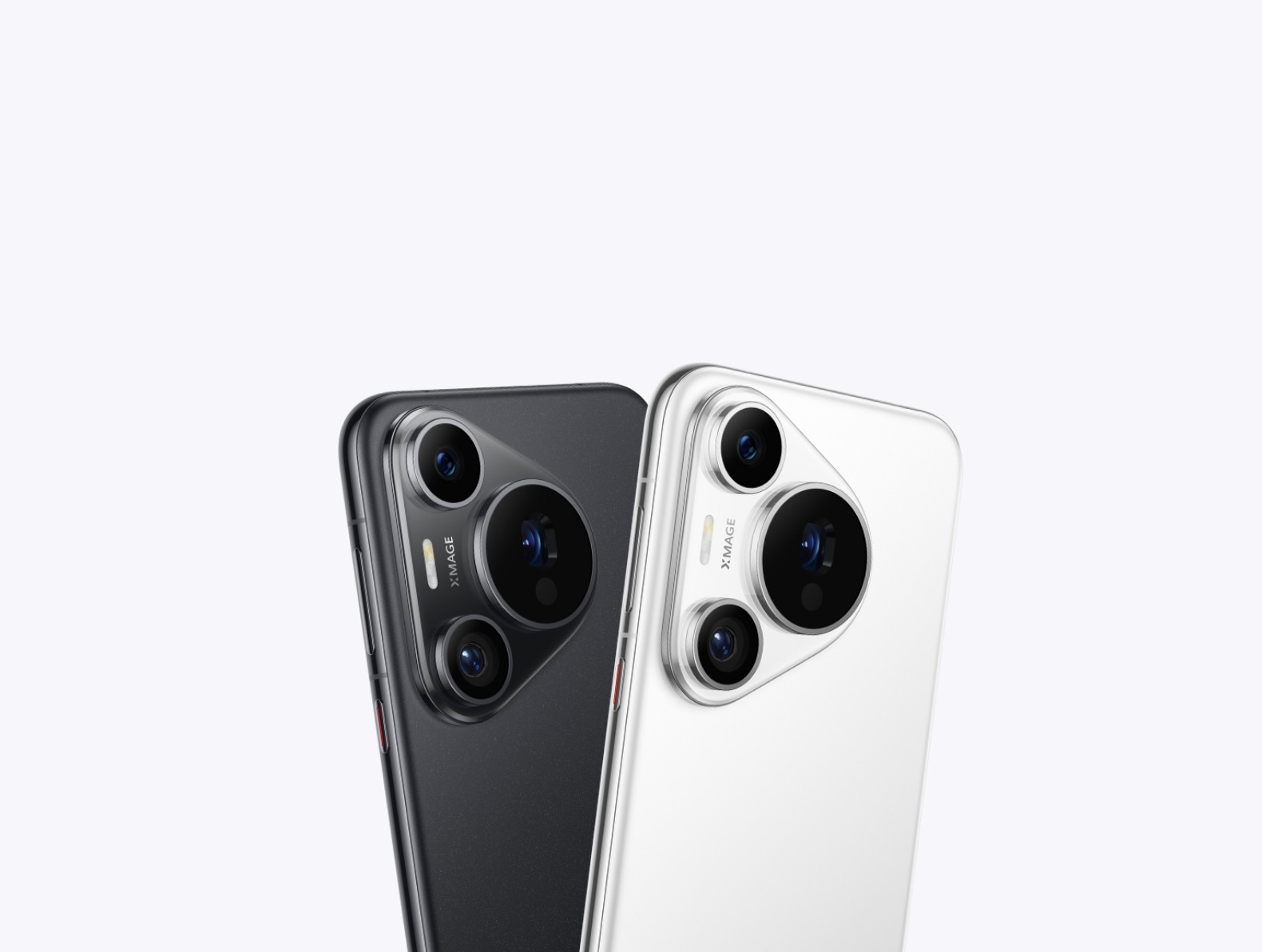
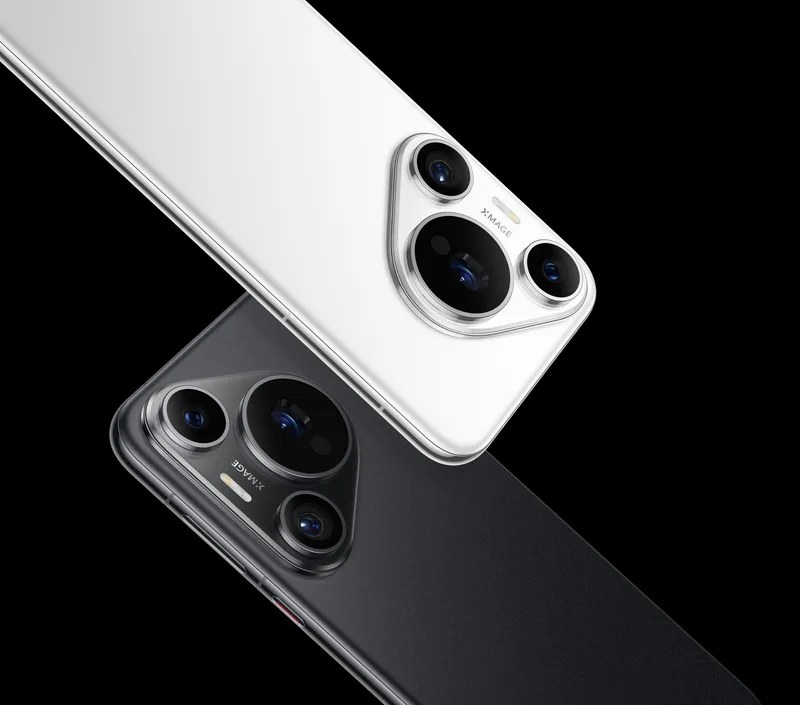
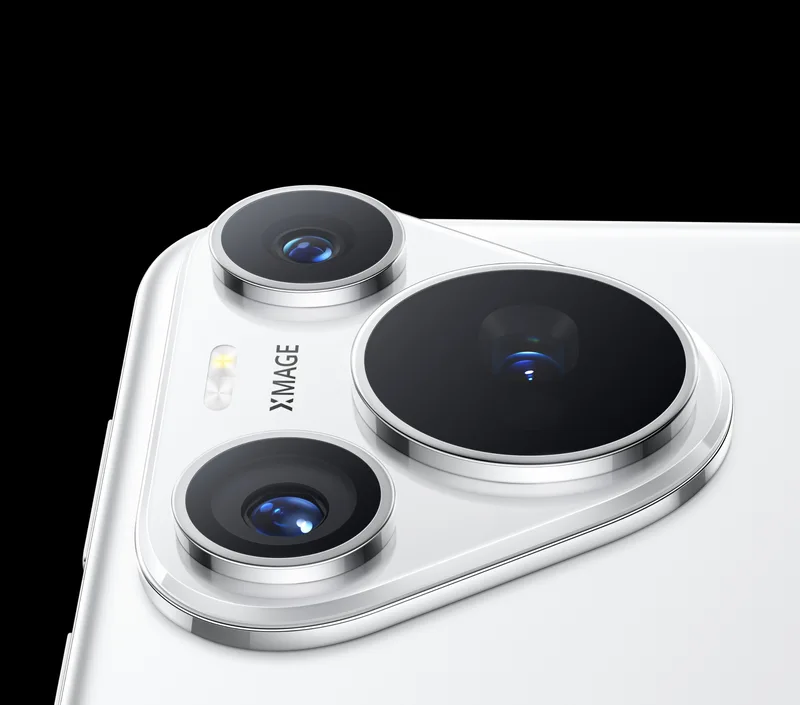
At 162.6 x 75.1 x 8.4 mm the Pro has the same footprint as the Ultra, and it is lighter at about 220 g with its battery. Two colours are listed, white and black. Huawei's images show a triangular camera plate on the back holding three round lenses, with a flash and an X-MAGE marking, and a polished metal-look frame. Like its siblings, the phone is rated IP68 for dust and water, with a test condition of up to 2 metres for 30 minutes in the laboratory. There is a single-SIM version and a dual-SIM version listed by model number.
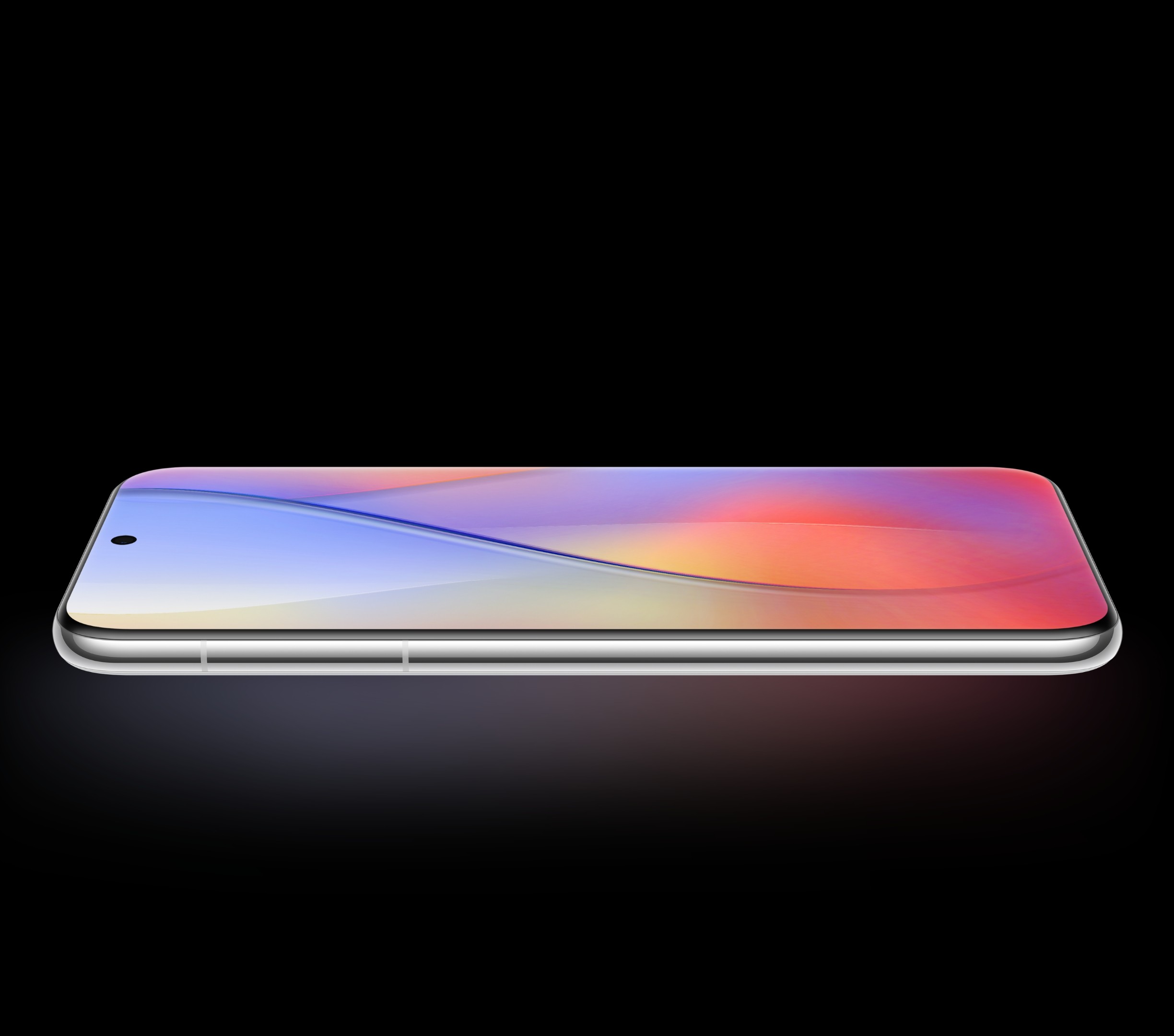
The display is a 6.8-inch LTPO OLED with rounded corners, 2844 x 1260 pixels at 460 pixels per inch, 1.07 billion colours and an adaptive 1 to 120Hz refresh rate. The sheet adds 1440Hz PWM dimming and up to 300Hz touch sampling. Notably absent is a brightness number, so outdoor visibility cannot be quantified from the page. For reading, scrolling and video the resolution and refresh rate are more than adequate, and the size suits people who want a large canvas rather than a compact phone.
Chip, memory and software
The processor is the octa-core Kirin 9010 with 12GB of RAM and 512GB of storage. Huawei states that external memory is not supported, so the storage you buy is the storage you keep. The operating system is listed as EMUI 14.2. Anyone who depends on particular third-party apps should check that they are available for Huawei phones in their country, because the app ecosystem differs from other Android phones, and that availability is not described on the specification page.
The regional page used for this review lists 4G LTE, 3G WCDMA and 2G GSM bands and does not mention 5G or satellite connectivity, so neither is claimed here. Wi-Fi is 802.11 a/b/g/n/ac/ax with 2x2 MIMO, Bluetooth is 5.2 with LDAC and L2HC among the codecs, and the USB-C port is USB 3.1 Gen 1 with a bundled cable limited to USB 2.0. NFC supports reading, writing and card emulation. Location uses GPS with L1 and L5 plus GLONASS, BeiDou, Galileo, QZSS and NavIC. A fingerprint sensor is listed along with gyroscope, compass, ambient light, proximity, laser, colour temperature, Hall and infrared sensors. Audio is stereo with Huawei Histen tuning, plus a USB-C earphone connection for digital headsets.
Cameras in detail
The rear camera arrangement is a triple set. This is how the sheet describes it:
- Main: 50MP, branded "Ultra Lighting", with an aperture that varies between f/1.4 and f/4.0 and optical stabilisation.
- Ultrawide: 12.5MP at f/2.2.
- Telephoto: 48MP "Ultra Lighting Macro Telephoto" at f/2.1 with optical stabilisation, 3.5x optical zoom at about 92.5 mm equivalent, and 100x digital zoom.
The telephoto lens doubles as a close-up lens, which is why Huawei puts "Macro" in its name. Compared with the Ultra, the main aperture opens wider at f/1.4, which lets in more light at the widest setting, while the sensor is not described with a 1-inch designation here, so the larger-sensor advantage belongs to the top model. Stills can be saved at up to 8192 x 6144 pixels, and video can be recorded at up to 4K. The front camera is 13MP at f/2.4 with autofocus and offers modes such as slow-motion selfie, portrait and eye-tracking-based focus. Huawei's published sample imagery for this phone, a dog shaking off water and mushrooms in close-up, is meant to show the telephoto and macro capability, though promotional samples are chosen by the manufacturer and are not a neutral test.
Battery and fast charging
The battery is a 5,050 mAh typical cell (4,950 mAh rated minimum), non-removable, a little below the Ultra's capacity and a little above the standard Pura 70's. Charging is the same headline as the Ultra: up to 100W with a compatible cable and charger, and up to 80W wirelessly with a dedicated charger and a 100W adapter sold separately. In practical terms, the main benefit is the short time to refill a battery of this size. Battery life figures in hours are not part of the published sheet, so day-to-day endurance will depend on screen brightness, how often the camera is used and the strength of the mobile signal.
Who should look at it
The Pro makes sense if you want the large screen and very fast charging of the top Pura, plus a telephoto that is useful for portraits and close-ups, but you do not need the largest-sensor main camera or 16GB of RAM. It also suits people who find the Ultra heavy; at about 220 g it is lighter, if still sizeable. To see how it stacks up against a rival flagship, the comparison Huawei Pura 70 Pro versus OPPO Find X9 Pro puts the numbers side by side, and the rankings page shows where it sits against the rest of the catalogue.
Trade-offs
- Size: a 6.8-inch screen and about 220 g are not for small hands or small pockets.
- No memory card slot: the page states external memory is not supported.
- Connectivity: 4G bands are listed and 5G is not, so check your variant.
- Ecosystem: EMUI 14.2 and Huawei's app environment need checking against the apps you use.
- Less camera hardware than the Ultra: a smaller ultrawide resolution and no larger-sensor main camera.
- Brightness unknown: no nits figure is given.
- No price: neither an official date nor an official price is stated on the page used.
All told, the Pura 70 Pro is the sensible choice within its family: strong where it counts, a notch lighter and simpler in camera hardware than the Ultra, and bigger and faster-charging than the base Pura 70. Its main questions are the same ones that apply to the whole series: connectivity and software environment in your region.
Where it ranks
Compare Huawei Pura 70 Pro with similar devices
More from Huawei
Frequently asked questions
When was the Huawei Pura 70 Pro released?
The Huawei Pura 70 Pro was released on 2024-04-18, according to the manufacturer’s published information.
What are the main specs of the Huawei Pura 70 Pro?
Headline figures for the Huawei Pura 70 Pro: Battery: 5,050 mAh, Refresh rate: 440 Hz, Main camera: 50 MP, RAM: 12 GB. The full specification table is further up this page.
Is the Huawei Pura 70 Pro worth buying?
That depends on your priorities. Use the editorial review on this page for our view, check the rankings above to see where the device stands on battery, display and camera, and compare it directly with similar models before you decide.


