Phones
Huawei Mate X6
A book-style foldable with a 7.93-inch inner and 6.45-inch cover OLED screen (both 1-120 Hz), a 50 MP variable-aperture camera with 4x telephoto, 66 W wired and 50 W wireless charging and IPX8.
Key figures at a glance
Gallery
Specifications
- Display
- Main: 7.93" OLED, 2440x2240, 1-120Hz LTPO, 1800 nits peak; Cover: 6.45" OLED, 2440x1080, 1-120Hz LTPO, 2500 nits peak
- RAM
- 12GB
- Storage
- 512GB
- Rear Camera
- 50MP main (f/1.4-f/4.0 adjustable aperture, OIS) + 40MP ultra-wide + 48MP telephoto macro (4x optical, OIS) + 1.5M-channel Ultra Chroma sensor
- Front Camera
- 8MP (cover and inner screen)
- Battery
- 5110 mAh (typical; rated 4990 mAh), 66W wired, 50W wireless
- OS
- EMUI 15.0
- Weight
- Approx. 239 g
- Dimensions
- Folded 156.6 x 73.78 x 9.85-9.9 mm; unfolded 144.04 mm wide, 4.6 mm thick
- Water Resistance
- IPX8
- Connectivity
- Wi-Fi 6 (802.11ax), Bluetooth 5.2, NFC, USB Type-C (USB 3.1 Gen 1)
- Colors
- Nebula Red, Black, Nebula Gray
The Huawei Mate X6 is a book-style foldable phone with a 7.93-inch inner screen, a 6.45-inch cover screen, a four-sensor rear camera system and a 5,110 mAh battery. Huawei positions it as a flagship that combines a slim folding body with serious camera hardware, wired and wireless fast charging and an IPX8 water-resistance rating. This page is based on the published specifications and manufacturer information from Huawei's global site. It covers where the phone sits among Huawei's foldables, how its two screens are specified, what the camera and battery claims actually say, and which trade-offs a buyer should weigh.
Place in the lineup
Huawei sells two broad families of folding phones: clamshells that fold vertically and book-style devices that open into a small tablet. The Mate X series is the book-style line, and the Mate X6 is the model covered here. A newer model in the same line is the Huawei Mate X7; the page Mate X6 vs Mate X7 lines up the specifications. Buyers deciding between a foldable and a conventional flagship can also look at the Huawei Mate 80 Pro, which follows the traditional slab form. Outside the brand, the main rivals in the book-style category are the Samsung Galaxy Z Fold7 and the HONOR Magic V6.
The manufacturer page we used does not state an on-sale date for the phone, so the date listed here is the approximate date from our catalogue, not a confirmed launch day. Huawei also does not publish a global US price, so none is listed. Availability and the exact configuration depend heavily on the market, and the specification page we used shows a 12 GB RAM and 512 GB storage model.
Design, build and durability
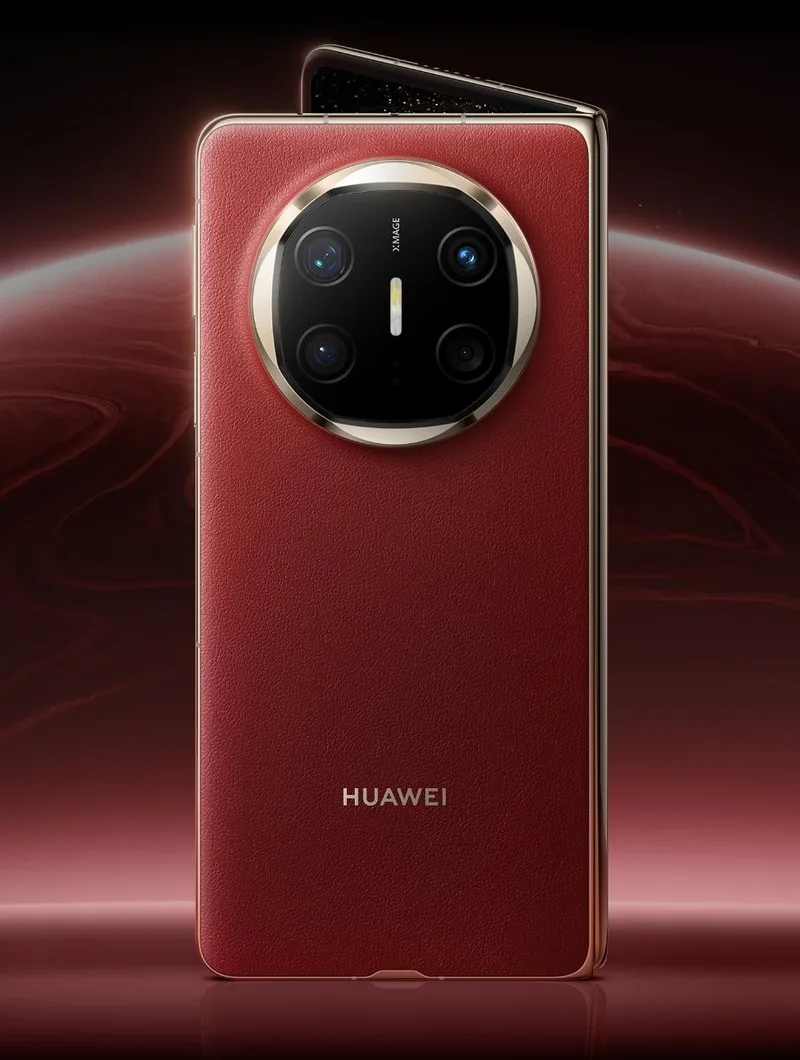
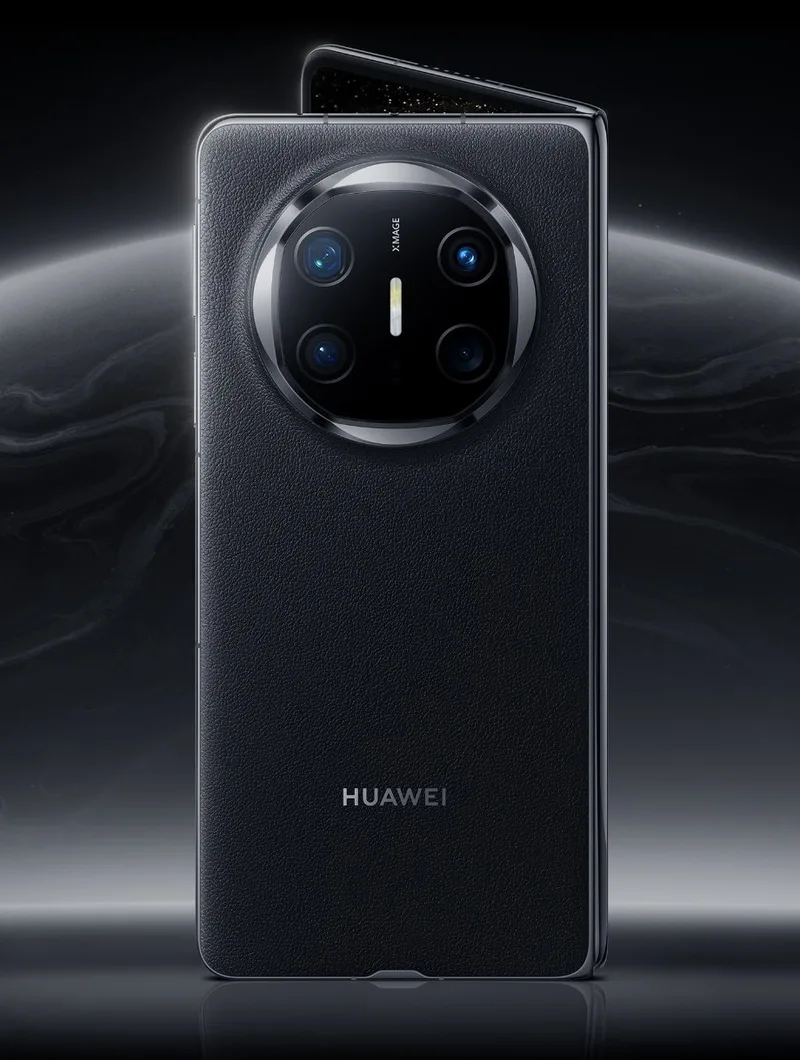
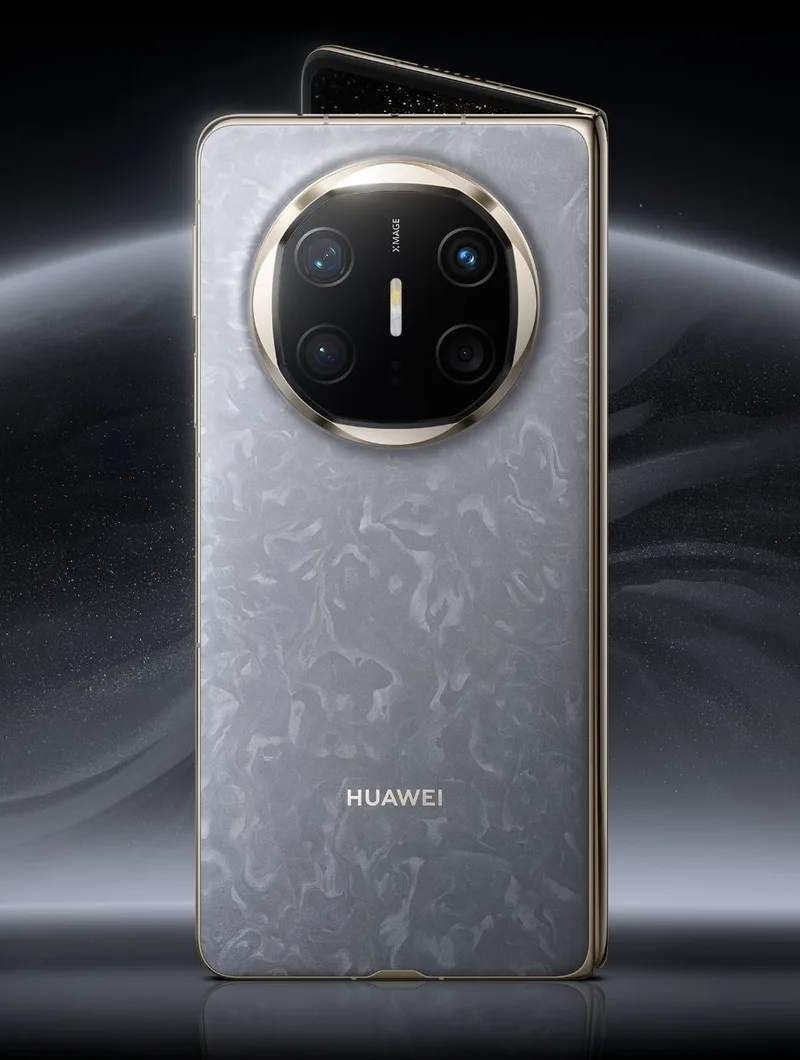
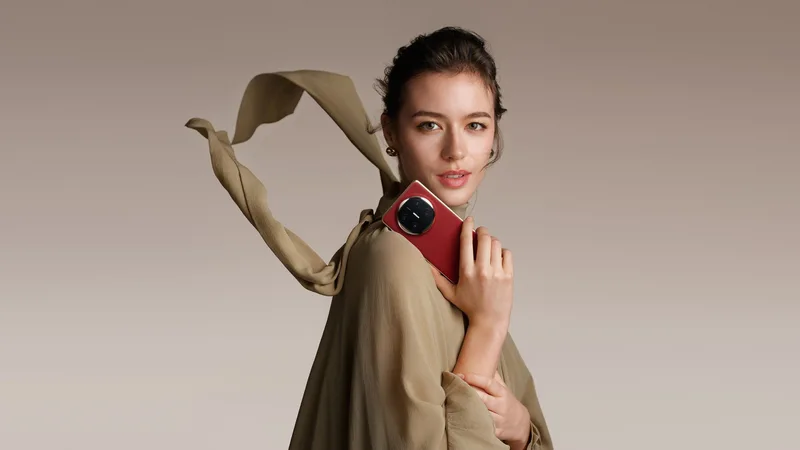
The Mate X6 measures 156.6 mm tall. Folded, it is 73.78 mm wide and 9.85 mm thick in the vegan fibre version or 9.9 mm in the vegan leather version. Unfolded, it is 144.04 mm wide and just 4.6 mm thick, a figure Huawei notes excludes the screen borders and, when folded, the camera module. It weighs approximately 239 g including the battery. That is heavy compared with a regular phone but typical for a foldable with a large battery. Three colours are offered: Nebula Red and Black in vegan leather, and Nebula Gray in vegan fibre. The official renders show a large circular camera module with a gold-coloured ring on the red and gray versions and a dark ring on the black one.
Huawei emphasises durability. It states that the second-generation Kunlun Glass improves drop resistance by 25 times compared with common glass, that the carbon-fibre plate beneath the inner screen has 380 GPa of extrusion resistance and improves stiffness by 65 percent, that the aviation-grade aluminium middle frame is 37 percent stronger than common 6-series aluminium, and that the hinge uses 1,900 MPa ultra-high-strength steel. All of these comparisons are Huawei's laboratory data against reference materials and are not independent measurements. The phone is rated IPX8 for water resistance under IEC 60529, meaning protection against static clean water at up to two metres for up to 30 minutes. Note that there is no dust-resistance rating (the dust digit is not given), which is common among foldables, and Huawei warns that liquid damage is not covered by the warranty and that the resistance can decrease over time.
The two displays
Both screens are OLED panels with an adaptive 1 to 120 Hz LTPO refresh rate and 1,440 Hz high-frequency PWM dimming, which Huawei presents as a low-light eye-comfort feature. The inner main screen measures 7.93 inches with a resolution of 2440 x 2240 pixels, about 417 ppi, and a claimed peak brightness of 1,800 nits. The outer cover screen measures 6.45 inches with 2440 x 1080 pixels, about 413 ppi, and a claimed 2,500 nits. Huawei notes that these diagonals are measured as standard rectangles and that the real viewing area is slightly smaller because of the rounded corners. Both support 1.07 billion colours and HDR Vivid.
The inner screen has an almost square aspect ratio, which suits reading, document work and showing several apps side by side. Huawei advertises live multitasking with up to three apps at once, with the proviso that this depends on app support. The outer screen is a proper phone-shaped display, wide enough for everyday use without unfolding. A crease is normal on every folding screen; Huawei itself says that a slight crease and a slight sound when folding are expected, and the hinge may move slightly when the phone is shaken. Huawei also cautions against removing the inner-screen protective film.
Performance and software
The specification page does not name the processor, so we do not state a chipset. It lists 12 GB of RAM and 512 GB of storage for the model documented, with no memory-card slot. The operating system is shown as EMUI 15.0. Huawei's own site lists its AppGallery store, Petal Maps and other Huawei Mobile Services alongside the phone, so the app and services ecosystem differs from a standard Google-based Android phone; check that the apps you rely on are available in your region. For the cooling system, Huawei describes a left-right distributed layout that separates heat sources, with graphene material rated at 2,000 W/m-K and a 3D liquid-cooling vapour chamber. These are design claims and we cannot confirm sustained-performance results from the published data.
Connectivity listed on the specification page includes Wi-Fi 802.11 a/b/g/n/ac/ax with 2 x 2 MIMO, Bluetooth 5.2, NFC with card emulation, USB Type-C with USB 3.1 Gen 1 support (the cable in the box supports USB 2.0 only), and dual-band GPS with several other satellite systems. The network section lists 4G LTE, 3G and 2G bands for the single and dual SIM versions; the page does not list 5G bands for this variant, so check your local model if 5G is essential to you.
Cameras
The rear system has three listed camera sensors plus a colour sensor. The main camera is 50 MP with an adjustable physical aperture from f/1.4 to f/4.0 (ten steps, according to Huawei), optical image stabilisation and an RYYB colour filter. The ultra-wide is 40 MP at f/2.2 with RYYB, and the telephoto macro is 48 MP at f/3.0 with OIS and RYYB, offering approximately 4x optical zoom, a 5 cm macro shooting range and up to 100x digital zoom. The fourth element is a 1.5 million spectral channel "Ultra Chroma" camera, which Huawei says helps colour accuracy rather than being a normal lens for photos. Focal lengths are given as 24 mm, 13 mm and 90 mm. Video goes up to 3840 x 2160 pixels.
The front cameras are 8 MP, with an f/2.4 lens on the cover screen and an f/2.2 lens on the inner screen. Huawei also promotes a rear-camera selfie mode that uses the cover screen as a preview, and a flex-stop mode that uses the hinge as a tripod. A telephoto lens with optical zoom and close-focus macro capability is a useful addition on a foldable. How the colour system and image processing perform against other flagships is something these specifications cannot show.
Battery and charging
The typical battery capacity is 5,110 mAh, with a rated capacity of 4,990 mAh; the battery is not removable. Charging is up to 66 W wired with Huawei SuperCharge and up to 50 W wireless, but both numbers require specific Huawei chargers, and the wireless stand or car charger and the power adapter must be bought separately in many markets. Whether a charger comes in the box depends on the market. A 5,000 mAh-class battery in a foldable of this thickness is a strong figure, but a large inner display and 120 Hz screens will draw power quickly when used unfolded for long stretches.
Who it is for, and the compromises
The Mate X6 suits buyers who want a foldable with a strong camera system, a big inner screen for reading and multitasking, fast wired and wireless charging, and water resistance, and who are comfortable with Huawei's software ecosystem. Its relatively compact folded form and the two good-quality screens are its main practical advantages.
The compromises are the weight of about 239 g, the folding-screen crease, no dust-resistance rating, no named chipset on the official specification page, no 5G bands listed for the documented variant, and an app and services ecosystem that differs from a standard Google-based Android phone. For comparison with other devices, see our rankings and the compare pages linked above.
Where it ranks
Compare Huawei Mate X6 with similar devices
More from Huawei
Frequently asked questions
When was the Huawei Mate X6 released?
The Huawei Mate X6 was released on 2024-12-01, according to the manufacturer’s published information.
What are the main specs of the Huawei Mate X6?
Headline figures for the Huawei Mate X6: Battery: 5,110 mAh, Refresh rate: 120 Hz, Main camera: 50 MP, RAM: 12 GB. The full specification table is further up this page.
Is the Huawei Mate X6 worth buying?
That depends on your priorities. Use the editorial review on this page for our view, check the rankings above to see where the device stands on battery, display and camera, and compare it directly with similar models before you decide.


