Phones
Huawei Pura 80 Ultra
Huawei's camera flagship: a 1-inch main sensor, a switchable 3.7x/9.4x dual telephoto, a 6.8-inch 120 Hz LTPO OLED, 5,170 mAh battery and 100 W charging.
Key figures at a glance
Gallery
Specifications
- Display
- 6.8-inch LTPO OLED, 1-120Hz adaptive refresh rate, 2848 x 1276 pixels (460 ppi), 1.07 billion colours, 1440 Hz PWM dimming, up to 300 Hz touch sampling, up to 3,000 nits peak brightness, 2nd-gen Crystal Armour Kunlun Glass
- RAM
- 16GB
- Storage
- 512GB (no external memory support)
- Rear Camera
- 50MP main (1-inch Ultra Lighting HDR sensor, F1.6-F4.0 adjustable aperture, OIS) + 40MP ultra-wide (F2.2) + 50MP telephoto (3.7x optical, F2.4, sensor-shift OIS) + 12.5MP telephoto (9.4x optical, F3.6, sensor-shift OIS) + 1.5M spectral channel Ultra Chroma camera
- Front Camera
- 13MP wide-angle (F2.0, autofocus)
- Video
- Up to 4K (3840 x 2160) recording on rear and front cameras
- Zoom
- 3.7x and 9.4x optical zoom (switchable dual telephoto), up to 100x digital zoom
- Battery
- 5,170 mAh (rated), 100W wired HUAWEI SuperCharge, 80W wireless HUAWEI SuperCharge (requires Huawei wireless charger stand or car charger plus the 100W adapter, sold separately)
- OS
- EMUI 15.0 (as listed on the global specification page)
- Connectivity
- Wi-Fi 7 (802.11 a/b/g/n/ac/ax/be, 2x2 MIMO), Bluetooth 5.2 (SBC, AAC, LDAC, L2HC), NFC, USB Type-C (USB 3.1 Gen 1), GPS L1+L5 / GLONASS / BeiDou / Galileo / QZSS / NavIC
- SIM
- Nano SIM + eSIM (single-SIM model) or Nano SIM + Nano SIM/eSIM (dual-SIM model); the global specification page lists 2G, 3G and 4G LTE bands
- Dimensions
- 163 x 76.1 x 8.3 mm
- Weight
- Approx. 233.5 g
- Durability
- IP68 and IP69 dust and water resistance
- Colors
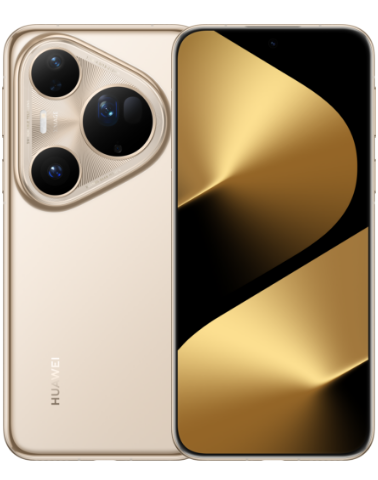
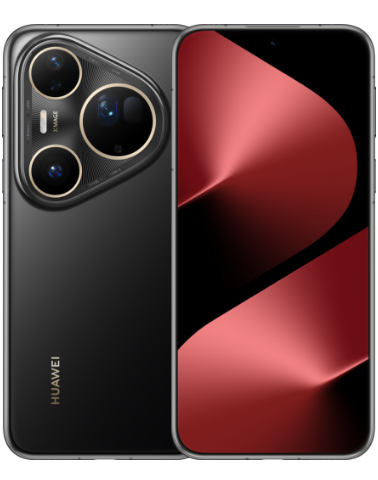
- Prestige Gold, Golden Black
- Sensors
- Fingerprint, gravity, gyroscope, compass, hall, barometer, ambient light, proximity, laser, colour temperature, gesture and infrared sensors
The HUAWEI Pura 80 Ultra is Huawei's camera-first flagship of 2025, and its main trick is a rear camera system that carries a 1-inch main sensor and two switchable telephoto lenses at once. It belongs to the Pura 80 family, which also includes the Pura 80 Pro and the standard Pura 80; the global product page lists the phone but does not print an on-sale date, so the date used here, 11 June 2025, is the launch date supplied for this entry and could not be verified as a retail date on an official page. No United States price is listed, so none is given here. This review is based on the published specifications and manufacturer information, and it looks at what the hardware offers and what you give up to own it.
Where it sits in the lineup
The Pura line is Huawei's photography and design series, running in parallel to the Mate range. Within the 2025 Pura 80 family, the Ultra is the top model, above the Huawei Pura 80 Pro and the standard Pura 80. Its signature is the pair of telephoto lenses, which Huawei calls the Switchable Dual Telephoto Camera, and the large 1-inch sensor. If you are choosing between Huawei flagships, the Huawei Mate 80 Pro is the other obvious candidate, with a different focus. Outside Huawei, the comparison set is the camera-heavy flagships from Xiaomi, OPPO and Samsung, such as the Xiaomi 15 Ultra.
Design and display
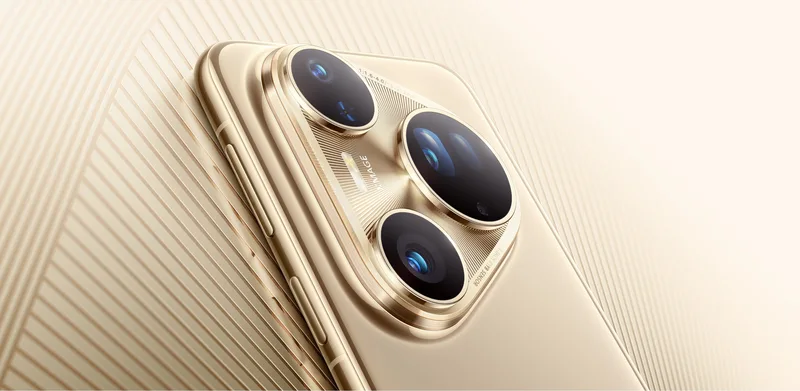
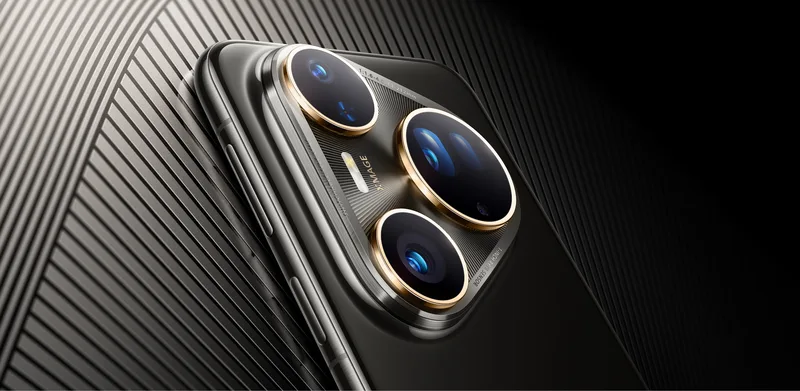
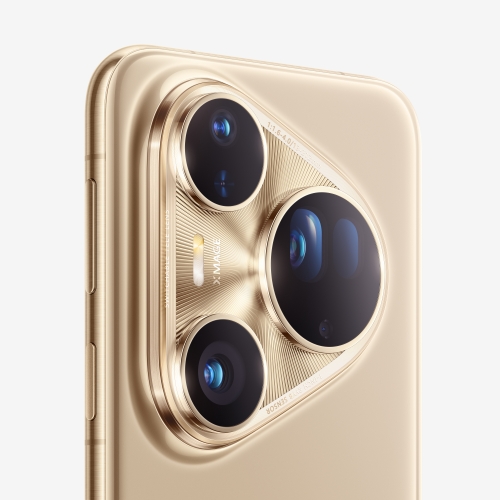
The rear is dominated by a triangular camera plate with a sunburst pattern, the XMAGE badge and a golden ring around the lenses. It comes in Prestige Gold and Golden Black; Huawei notes that the gold ring and badge are not made of real gold and that the Prestige Gold back uses golden glazed glass. The phone measures 163 x 76.1 x 8.3 mm and weighs about 233.5 g. Protection comes from 2nd-generation Crystal Armour Kunlun Glass, which Huawei says is 25 times tougher and 16 times more scratch-resistant than standard glass in its own comparison, and from IP68 and IP69 ratings for dust, immersion and high-pressure hot-water jets.
The display is a 6.8-inch LTPO OLED panel with 2848 x 1276 pixels (460 ppi), a 1-120 Hz adaptive refresh rate, 1,440 Hz PWM dimming and a touch sampling rate of up to 300 Hz. Huawei states a peak brightness of 3,000 nits and 1.07 billion colours. These numbers place it at the top end of current OLED phones on paper, although the brightness figure is a laboratory value and varies by content. The front camera is a 13 MP autofocus unit.
Camera system
The camera is the reason to consider this phone. The main sensor is a 50 MP 1-inch Ultra Lighting HDR camera with an aperture adjustable from F1.6 to F4.0 and optical stabilisation. Huawei claims a dynamic range of 16 EV, a 15x increase over the Pura 70 Ultra in its own tests. Alongside it sit a 40 MP ultra-wide camera (F2.2), a 50 MP telephoto with 3.7x optical zoom (F2.4, sensor-shift stabilisation) and a 12.5 MP telephoto with 9.4x optical zoom (F3.6, sensor-shift stabilisation). A 1.5M spectral channel Ultra Chroma camera supports colour accuracy. The two telephoto lenses work as a switchable pair, so the phone can cover 3.7x and 9.4x with optical hardware, and up to 100x digital zoom is available beyond that. Equivalent focal lengths quoted on the specification page are 13 mm, 22.5 mm, 83 mm and 212 mm.
Video recording tops out at 4K on the rear and front cameras. Capture modes include Night, Super Macro, High-res, Pro, Portrait, Master AI, Slow-Mo and Light painting, and images can be saved up to 8192 x 6144 pixels. The variable physical aperture is useful for balancing depth of field and light. As always, sample images on the official page are promotional, and real-world results depend on the user and the lighting.
Performance, software and connectivity
The global specification page lists 16 GB of RAM and 512 GB of storage with no external memory support, but it does not name the processor, and this review does not guess one. The software is listed as EMUI 15.0, with Huawei's own mobile services such as AppGallery and Petal Maps, so app availability needs checking before purchase; this applies to any recent Huawei phone outside China. Features include a Smart Controls button with configurable shortcuts, interactive lock-screen themes, AI noise cancellation on calls and an AI messaging function that hides notifications when someone looks at your screen.
Connectivity is strong on the listed items: Wi-Fi 7 (802.11be) with 2x2 MIMO, Bluetooth 5.2 with LDAC and L2HC, NFC with card emulation, USB-C 3.1 Gen 1 and multi-band positioning with GPS L1+L5, BeiDou, Galileo, QZSS and NavIC. There is a single Nano SIM plus eSIM in the single-SIM model, and Nano SIM plus Nano SIM or eSIM in the dual-SIM model. One point stands out: the global specification page lists 2G, 3G and 4G LTE bands only and does not list any 5G bands, so check network support for your country and carrier.
Battery and charging
The rated battery capacity is 5,170 mAh. Huawei supports up to 100 W wired SuperCharge with its dedicated charger and cable, and up to 80 W wireless with a Huawei wireless charger stand or car charger, which are sold separately and also require the 100 W adapter. Real charging speeds vary with temperature and accessories, and the box contents include a charger and a USB-C cable, depending on the market. Huawei does not publish a runtime in hours.
Who it is for
The Pura 80 Ultra is for photographers who want a phone with real optical reach at 3.7x and 9.4x, a big sensor in low light and a premium finish, and who can accept Huawei's software ecosystem. Concert and travel shooters will appreciate the optical zoom at two focal lengths. It is also a good fit for owners of Huawei wearables, because AI messaging integrates with them. For a direct look at how it stacks up against the cheaper sibling, see Pura 80 Ultra versus Pura 80 Pro, or open the rankings.
Compromises
- Weight and size. 233.5 g and 8.3 mm make it a large, weighty phone.
- Software ecosystem. EMUI with Huawei mobile services needs checking for the apps you rely on.
- No 5G bands listed on the global specification page.
- Chipset not named on the official page, so processor performance cannot be compared here.
- Wireless charging needs accessories that are sold separately.
- No US price listed. Availability depends on the market.
Bottom line
On the published specifications, the Pura 80 Ultra is one of the most ambitious camera phones of 2025: a 1-inch sensor, two optical telephotos, a bright 120 Hz LTPO display, IP68 and IP69 ratings and fast charging. Its weaknesses are practical rather than technical, namely the ecosystem, the missing 5G information and the weight. If you value the camera above everything else and your market supports the phone, it deserves a serious look.
Where it ranks
Compare Huawei Pura 80 Ultra with similar devices
More from Huawei
Frequently asked questions
When was the Huawei Pura 80 Ultra released?
The Huawei Pura 80 Ultra was released on 2025-06-11, according to the manufacturer’s published information.
What are the main specs of the Huawei Pura 80 Ultra?
Headline figures for the Huawei Pura 80 Ultra: Battery: 5,170 mAh, Refresh rate: 440 Hz, Main camera: 50 MP, RAM: 16 GB. The full specification table is further up this page.
Is the Huawei Pura 80 Ultra worth buying?
That depends on your priorities. Use the editorial review on this page for our view, check the rankings above to see where the device stands on battery, display and camera, and compare it directly with similar models before you decide.


