Phones
Huawei Pura 80 Pro
Huawei's camera-first flagship uses a 1-inch main sensor with variable aperture, a 4x telephoto and 100W wired plus 80W wireless charging, but runs without Google services.
Key figures at a glance
Gallery
Specifications
- Display
- 6.8" LTPO OLED, 2848x1276, 1-120Hz, 1440Hz PWM dimming
- RAM
- 12GB
- Storage
- 512GB (no card slot)
- Rear Camera
- 50MP main (1-inch sensor, variable aperture f/1.6-f/4.0, OIS) + 40MP ultrawide + 48MP telephoto macro (4x optical, OIS)
- Front Camera
- 13MP (autofocus)
- Battery
- 5,170 mAh (rated), 100W wired, 80W wireless (chargers sold separately)
- OS
- EMUI 15.0
- Dimensions
- 163 x 76.1 x 8.3 mm, about 219 g
- Durability
- IP68 and IP69
The HUAWEI Pura 80 Pro is the camera-focused flagship that Huawei took to international markets in July 2025, after a China launch the month before. It has a 1-inch main sensor with a variable aperture, a 4x telephoto camera, a 6.8-inch LTPO OLED screen and fast wired and wireless charging, but it runs Huawei's own software without Google's mobile services. This page is based on the published specifications and manufacturer information from Huawei's global product page, and it flags where details come from press coverage rather than from Huawei itself.
Place in the lineup
The Pura line is Huawei's fashion- and photography-led flagship family, separate from the Mate series that carries the brand's most technical devices. The international Pura 80 range was shown at an event in Dubai on 10 July 2025 and includes the Pura 80, the Pura 80 Pro and the Pura 80 Ultra. The Pro sits in the middle: it shares the design language of the Ultra, with a triangular camera module, but uses a different main camera setup. Models, sale dates, prices and software support differ from country to country, and Huawei does not sell its phones through US carriers, so there is no US list price. For a Western camera flagship to compare, the Xiaomi 15 Ultra is a natural point of reference, and the HUAWEI Pura 80 Pro vs. Xiaomi 15 Ultra page shows the two side by side.
The global specification page lists a single configuration of 12GB RAM and 512GB storage, with no card slot. SIM options are single SIM (nano-SIM plus eSIM) or dual SIM (two nano-SIMs, or nano-SIM plus eSIM), and the model number for the global version is LMR-LX9.
Design and display
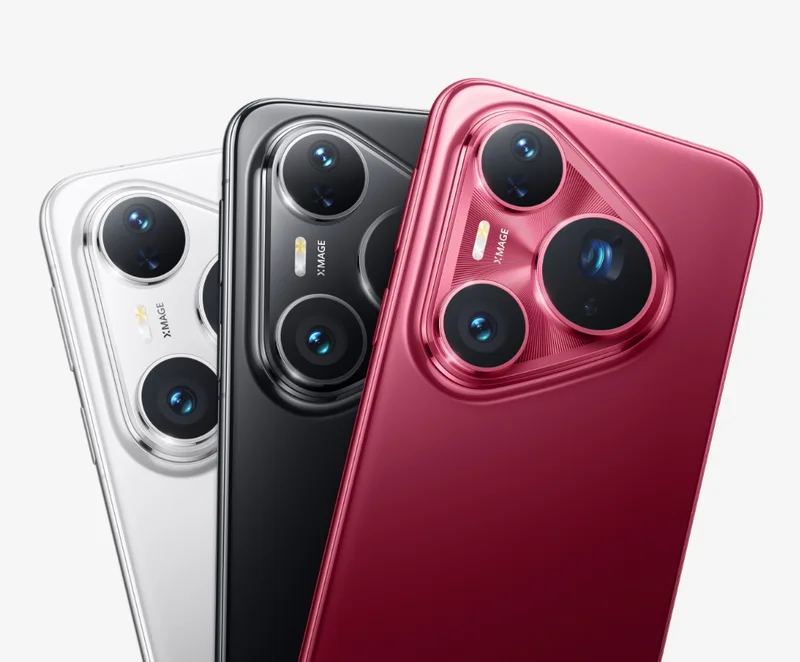
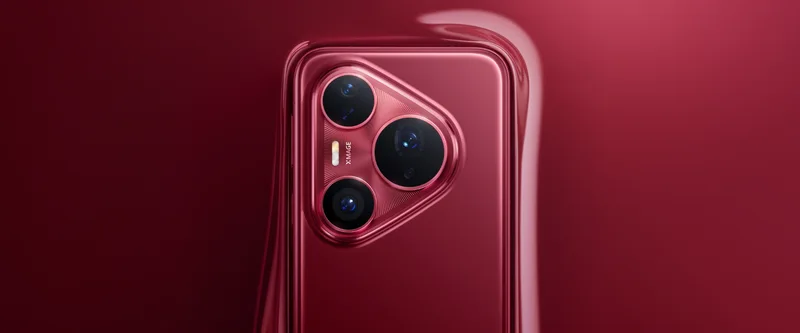
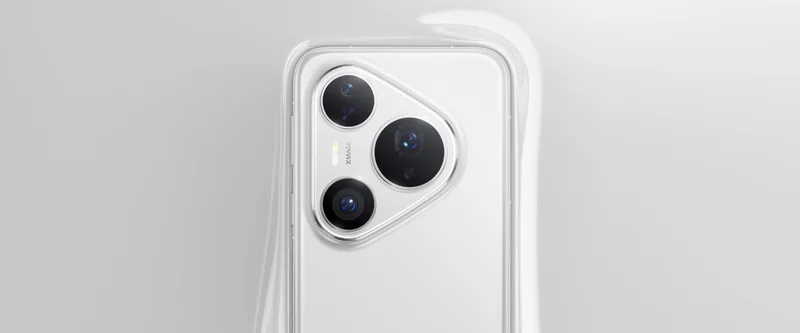
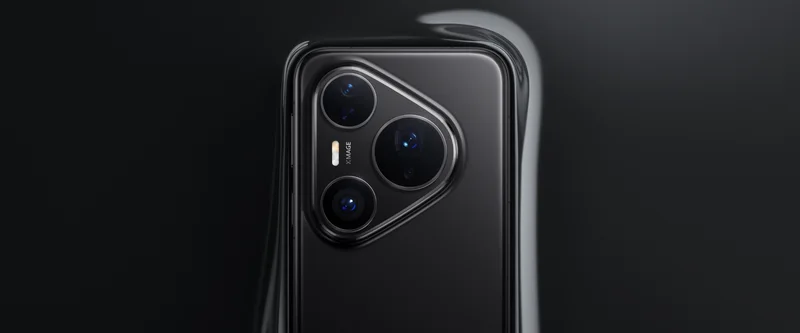
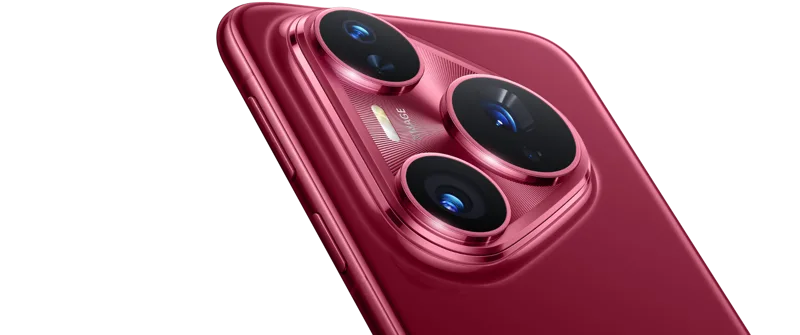
The phone measures 163 x 76.1 x 8.3 mm and weighs about 219 g with the battery. Its identifying feature is the triangular camera module on the back, which contains three lenses and a flash and carries the XMAGE name that Huawei uses for its camera branding. It is available in colours that include white, black and a red shade, and the finish differs by colour. Huawei rates the phone IP68 and IP69, covering water immersion and high-pressure jets, with the usual note that the protection can decline over time.
The display is a 6.8-inch LTPO OLED screen at 2848 x 1276 pixels, about 460 pixels per inch, with an adaptive refresh rate from 1 to 120Hz. Huawei lists 1,440Hz PWM dimming, which is meant to reduce flicker, and touch sampling up to 300Hz. The glass is described in news reports as second-generation Kunlun Glass, though the global specification page checked does not repeat the name, so treat the durability claims as marketing until independent drop tests exist. A 13MP front camera with autofocus and f/2.0 aperture sits in a small cutout, and it records video up to 4K.
Performance and software
Huawei's global specification page does not name the chipset. Press reports link the phone to the Kirin 9020, a processor made by Huawei's HiSilicon unit in China, but this is not stated on the global specification page, so the chip is left out of the specification table on this site. The phone has 12GB of RAM and 512GB of storage, and the software on the global model is listed as EMUI 15.0.
The software difference matters more than the chip. Global Huawei phones use Huawei Mobile Services and the AppGallery store rather than Google Mobile Services, so apps that depend on Google accounts, Play Store or Google Maps are not available in their normal form, and some banking or streaming apps need workarounds or their web versions. Many popular apps can be installed through Huawei's own channels, but the selection is smaller than on a standard Android phone. For some buyers this is a deal breaker, and for others, who use mainly local or web-based services, it is manageable. Check the app list for your country before buying.
Camera system
The camera is the reason the phone exists. The main sensor is a 50MP 1-inch-type unit with a variable aperture from f/1.6 to f/4.0 and optical stabilisation; the variable aperture lets the phone open wide in dim scenes and stop down for greater depth of field in bright ones. The ultrawide is a 40MP camera with an f/2.2 aperture. The telephoto is a 48MP unit with an f/2.1 aperture, optical stabilisation and a macro function, providing 4x optical zoom, and Huawei lists up to 100x digital zoom. There is also a 1.5MP multispectral colour sensor that helps with white balance and colour accuracy.
Photos are captured at up to 8192 x 6144 pixels, and video goes up to 4K. Huawei's camera tuning generally aims for natural but contrasty colours and strong portraits, and the combination of a large sensor and a competent telephoto makes the Pro a serious camera phone. Whether the results beat other 2025 flagships is a question for independent tests, because every maker's image processing has its own look, and Huawei's own comparison claims should be treated as claims.
Battery and charging
Huawei lists a rated battery capacity of 5,170 mAh for the global version. Reports from China mention a 5,700 mAh figure for the domestic model, so the number depends on the region, and the global value is the one used here. Wired charging goes up to 100W, and wireless charging up to 80W, though the wireless chargers are sold separately and the charger type affects the real speed. Huawei does not publish battery life in hours, and the large screen and bright display mean that endurance will depend on settings; independent battery tests will be more reliable than the capacity figure.
Connectivity and extras
The phone supports Wi-Fi 7 (802.11be), Bluetooth 5.2 with LDAC audio, NFC and a USB-C port that supports USB 3.1 Gen 1 with a compatible cable, although the cable in the box is USB 2.0. Positioning covers GPS, GLONASS, BeiDou, Galileo, QZSS and NavIC. There is a stereo speaker setup tuned with Huawei's Histen sound system, plus a long list of sensors including a laser and a colour temperature sensor. The box contains the phone, a charger, a USB-C cable, a quick-start guide and an eject tool, and in some markets a clear case.
Who it is for
The Pura 80 Pro is for people who put camera quality, design and fast charging first and can live without Google services. It suits users in regions where Huawei's ecosystem is well supported, and photographers who want a large sensor with variable aperture. It is less suitable for people who rely on Google apps, who need guaranteed US carrier support, or who want a long and clearly stated update commitment. For another premium device with different trade-offs, compare the HONOR Magic7 Pro, or open the phone rankings to see how the field looks.
Compromises
- No Google services. Apps, accounts and payments tied to Google are limited, and the app selection depends on Huawei's AppGallery.
- Chipset not listed on the global page. Huawei does not state it, and press reports are the source for any name.
- Battery differs by region. The global figure is 5,170 mAh, below the 5,700 mAh reported for the Chinese version.
- Wireless chargers extra. 80W wireless charging needs a separately sold charger.
- No US availability. There is no US list price or carrier support, and warranty and update terms depend on the country.
- Software maturity. The global version uses EMUI 15.0, and update promises are not stated on the page.
In summary, the Pura 80 Pro is a strong camera phone with a distinctive design and fast charging, but its software ecosystem limits who should buy it. Check app availability and warranty terms for your country first.
Where it ranks
Compare Huawei Pura 80 Pro with similar devices
More from Huawei
Frequently asked questions
When was the Huawei Pura 80 Pro released?
The Huawei Pura 80 Pro was released on 2025-07-10, according to the manufacturer’s published information.
What are the main specs of the Huawei Pura 80 Pro?
Headline figures for the Huawei Pura 80 Pro: Battery: 5,170 mAh, Refresh rate: 440 Hz, Main camera: 50 MP, RAM: 12 GB. The full specification table is further up this page.
Is the Huawei Pura 80 Pro worth buying?
That depends on your priorities. Use the editorial review on this page for our view, check the rankings above to see where the device stands on battery, display and camera, and compare it directly with similar models before you decide.


