Phones
Huawei Pura 70 Ultra
Huawei's 2024 camera flagship pairs a pop-out 1-inch main camera with a 3.5x macro telephoto, a 5,200 mAh battery and 100W wired charging.
Key figures at a glance
Gallery

Specifications
- Display
- 6.8" LTPO OLED, 2844 x 1260, adaptive 1-120Hz, 1440Hz PWM dimming
- Chipset
- Kirin 9010
- RAM
- 16GB
- Storage
- 512GB (no external memory support)
- Rear Camera
- 50MP main (1-inch, f/1.6-f/4.0, OIS) + 40MP ultrawide + 50MP macro telephoto (3.5x optical)
- Front Camera
- 13MP, f/2.4, autofocus
- Battery
- 5,200 mAh (typ), 100W wired, 80W wireless
- OS
- EMUI 14.2
- Dimensions
- 162.6 x 75.1 x 8.4 mm
- Weight
- About 226 g
- Durability
- IP68 (2 m, 30 min)
- Colors
- Green, Brown, Black
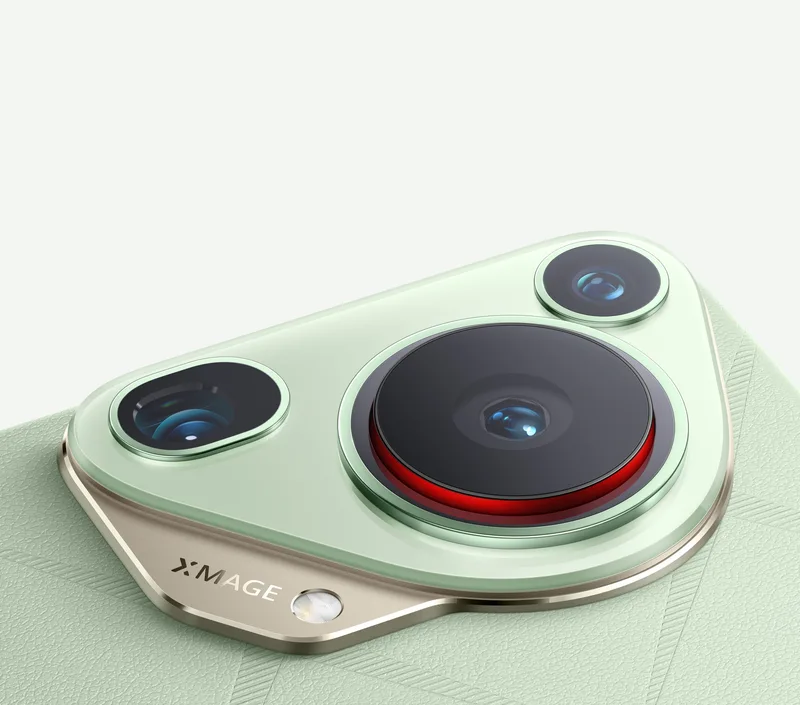
The Huawei Pura 70 Ultra is the phone Huawei built when it wanted to make a statement about cameras. Its defining feature is a rear camera built around a large round main module: Huawei calls the main unit an "Ultra Lighting Pop-out" camera and pairs a 1-inch-type 50MP sensor with a 40MP ultrawide and a 50MP macro telephoto lens. Around that sit a 6.8-inch LTPO OLED screen, the Kirin 9010 processor, 16GB of RAM, 512GB of storage and a 5,200 mAh battery with 100W wired and 80W wireless charging. This article is based on the published specifications and manufacturer information, and it focuses on what is actually listed rather than on marketing adjectives.
Where it fits in the Pura 70 range
Huawei renamed its long-running P series to Pura, and the Pura 70 generation has three members that share a visual language but differ in what they offer: the Pura 70, the Pura 70 Pro and this Ultra at the top. The Ultra is the largest, the heaviest and the only one with the Pop-out lens and a 16GB memory option on its specification sheet. If you are weighing the family, the Huawei Pura 70 Pro is the closest sibling, with a similar screen and charging but a different camera hardware set, and the Huawei Pura 70 is the compact entry. The line has since moved on, and the later Huawei Pura 80 Ultra is the generation that followed this one; this page is only about the 70 series.
The regional pages used for this review do not state a retail launch date. The date recorded for the series is 18 April 2024, which is the announcement date that was supplied, so treat the exact on-sale date in your country as something to confirm locally.
Design and display
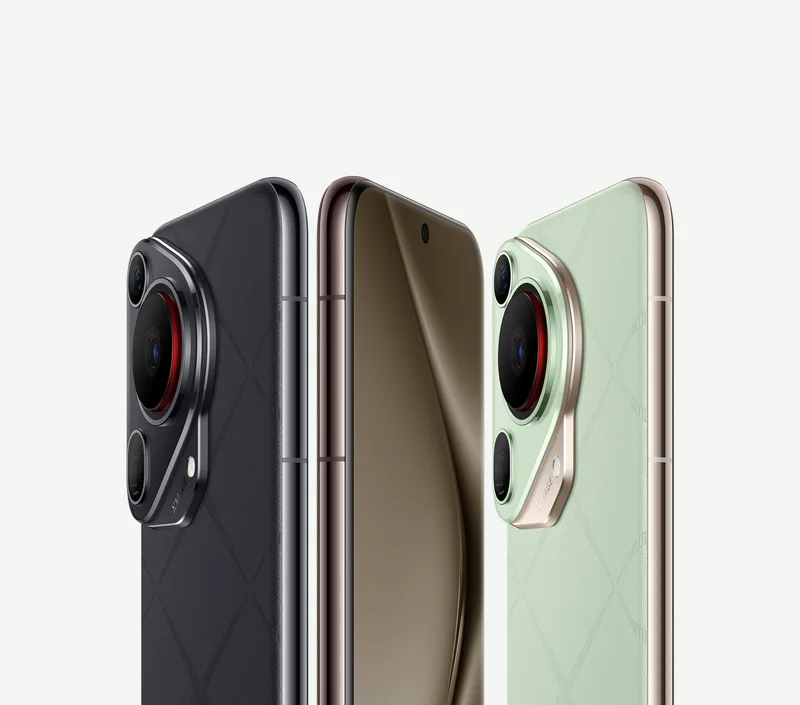
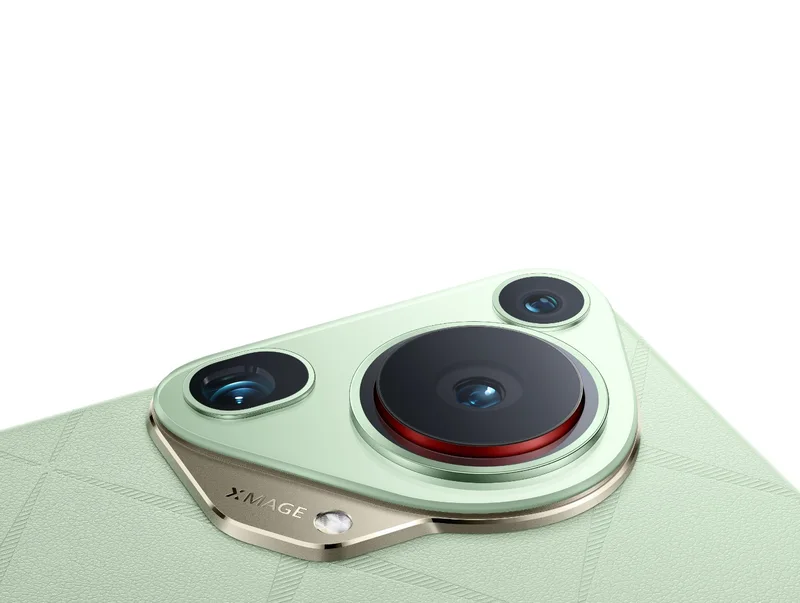
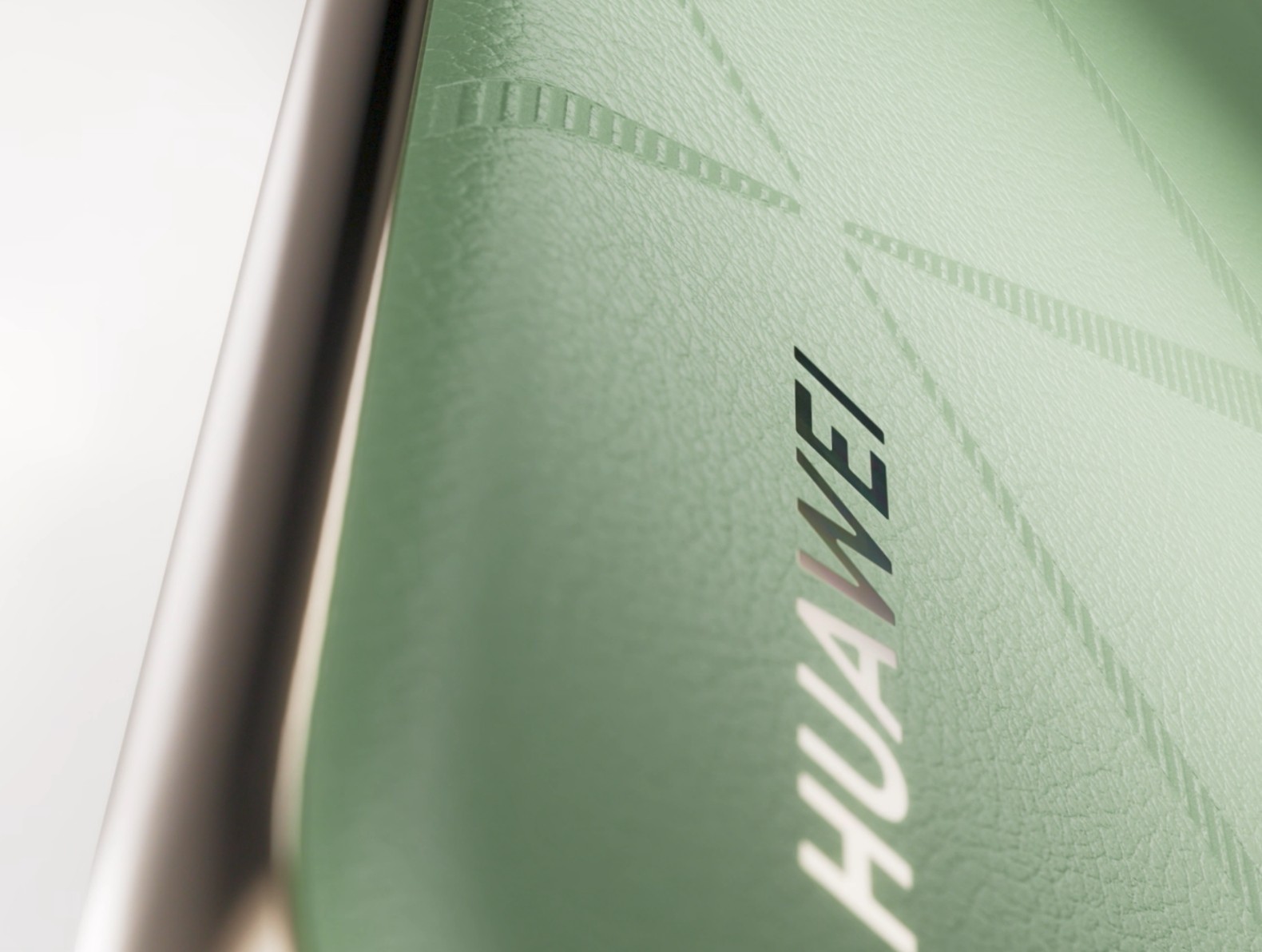
The Ultra measures 162.6 x 75.1 x 8.4 mm and weighs about 226 g including the battery, which makes it a heavy phone. The listed colours are Green, Brown and Black. Huawei's images show a textured, leather-effect back on the green and brown versions with a metal-coloured frame, and a red accent ring around the main lens. The camera island is not a conventional bump: the large round main module is the one Huawei names "Pop-out", and the product images show it standing proud of a triangular plate. How the mechanism behaves in use is not described on the specification page, so this review does not go beyond the name. What the sheet does state is IP68 dust and water protection (up to 2 metres for 30 minutes in laboratory conditions), which is worth noting for a phone with a moving camera part.
The screen is a 6.8-inch LTPO OLED, listed as 6.77 inches when measured as a plain rectangle because of the rounded corners. Resolution is 2844 x 1260, about 460 pixels per inch, with 1.07 billion colours and an adaptive refresh rate from 1 to 120Hz. Huawei lists 1440Hz PWM dimming, which is a high-frequency approach meant to be gentler on sensitive eyes at low brightness, and touch sampling up to 300Hz. The page gives no brightness figure in nits, so peak brightness is not something this review can quantify. The manufacturer page says nothing about the exact curvature of the glass, so none is asserted here.
Processor, memory and software
The processor is the octa-core Kirin 9010, supported by 16GB of RAM and 512GB of storage. Storage is fixed, because the page states that external memory is not supported. The software is listed as EMUI 14.2, and no other version name appears on the specification page. Huawei's own ecosystem of apps and services is a real consideration for anyone coming from another platform, and it is worth checking that the specific apps you rely on, such as banking or messaging, are available for the phone in your region before buying.
Connectivity is where the page needs careful reading. The Saudi Arabia page used here lists 4G LTE, 3G WCDMA and 2G GSM bands for a dual-SIM phone and does not list 5G, so this review does not claim 5G support. Wi-Fi covers 802.11 a/b/g/n/ac/ax on 2.4 and 5GHz with 2x2 MIMO; Bluetooth is 5.2 with several audio codecs, including LDAC and Huawei's L2HC; and USB-C is rated USB 3.1 Gen 1, although the included cable only supports USB 2.0 speeds. NFC supports reading, writing and card emulation. Positioning covers GPS with L1 and L5 bands, GLONASS, BeiDou, Galileo, QZSS and NavIC. There is a fingerprint sensor, but no face-unlock sensor is listed, and audio comes from stereo speakers with Huawei's Histen tuning, while the USB-C port supports digital earphones.
Camera
The camera is the reason to look at this phone. Here is the rear set as listed:
- Main: 50MP with a 1-inch-type sensor, a variable aperture from f/1.6 to f/4.0, and sensor-shift optical stabilisation.
- Ultrawide: 40MP at f/2.2.
- Telephoto: 50MP "Ultra Lighting Macro Telephoto" at f/2.1 with optical stabilisation, giving 3.5x optical zoom (about 90 mm equivalent), with up to 100x digital zoom.
- Focus and flash: phase and contrast autofocus with an LED flash.
The adjustable aperture is the technically interesting part. A variable aperture lets the lens open wide to f/1.6 for low light and shallow depth of field, then close down toward f/4.0 for more depth in bright scenes, which is something most phone cameras do not offer. Photos can be saved at up to 8192 x 6144 pixels, and video is listed up to 3840 x 2160. The front camera is 13MP at f/2.4 with autofocus. The page names a very long list of shooting modes, including night, macro, portrait, time-lapse, panorama and a professional mode. Huawei's regional promotional images also show a first place in the DXOMARK camera ranking, a third-party test the company cites; it is a point in the phone's favour but is not something this review can verify, and rankings change as newer devices arrive.
Battery and charging
The battery is rated at 5,200 mAh typical (5,100 mAh rated minimum), non-removable. Huawei lists SuperCharge up to 100W by wire and up to 80W wirelessly, with the usual caveat that you need the matching cable and charger for wired charging, and a dedicated wireless charger plus a 100W adapter, sold separately, for the wireless speed. The box contents vary by market and may include a charger. The page does not list reverse wireless charging. A big battery in a heavy body is the sensible arrangement, and the combination of capacity and very high charging power is one of the strongest practical features, but real-world endurance depends heavily on how often you use the camera system and the 120Hz display, and the manufacturer provides no hour-by-hour figures on the sheet.
Who it is for
The Pura 70 Ultra is a phone for people who see the camera as the main purchase criterion and who are willing to accept weight and a premium price in return. It also suits those who want a manual-feeling, adjustable-aperture lens on a phone, and who value fast charging. For a direct look at the main rival in the camera-phone segment, the comparison Huawei Pura 70 Ultra versus Xiaomi 15 Ultra lines up the numbers side by side, and the rankings page shows where it lands on the site's score system.
Compromises to weigh
- Weight: about 226 g, which is substantial.
- No expandable storage: the page says external memory is not supported.
- Connectivity listing: the regional page lists 4G and no 5G, so check your own variant and market.
- Software ecosystem: EMUI 14.2 and Huawei's own app environment may not suit every user; verify the apps you need.
- Complex camera module: a pop-out design adds mechanical complexity, and long-term wear is not something a specification sheet can answer.
- Missing figures: no peak brightness figure is given on the page, and no official price or date accompanies it.
In summary, the Pura 70 Ultra is a specialist: a large, heavy, camera-led phone with exceptional charging power. If photography is your top priority and you are comfortable with the ecosystem, it is among the most distinctive phones in its class; if you want a light, general-purpose phone, the Pura 70 below it is the more practical choice.
Where it ranks
Compare Huawei Pura 70 Ultra with similar devices
More from Huawei
Frequently asked questions
When was the Huawei Pura 70 Ultra released?
The Huawei Pura 70 Ultra was released on 2024-04-18, according to the manufacturer’s published information.
What are the main specs of the Huawei Pura 70 Ultra?
Headline figures for the Huawei Pura 70 Ultra: Battery: 5,200 mAh, Refresh rate: 440 Hz, Main camera: 50 MP, RAM: 16 GB. The full specification table is further up this page.
Is the Huawei Pura 70 Ultra worth buying?
That depends on your priorities. Use the editorial review on this page for our view, check the rankings above to see where the device stands on battery, display and camera, and compare it directly with similar models before you decide.


