Phones
Xiaomi Redmi Note 15
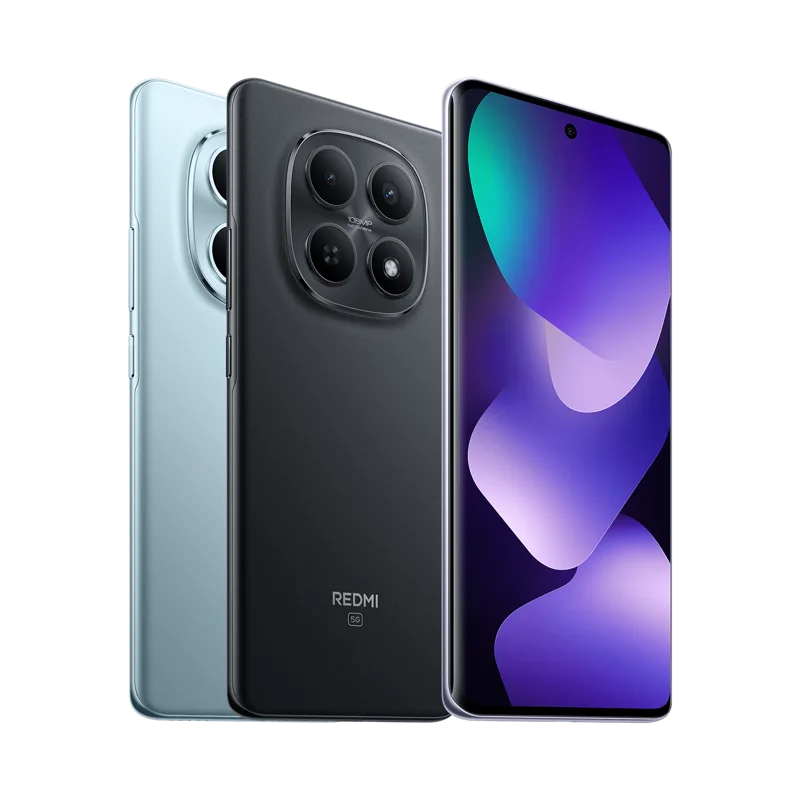
The entry Redmi Note 15 is a slim 178 g phone with a 108MP stabilised camera, 5,520 mAh battery, 120Hz AMOLED screen and a microSD slot, but IP66 only and no charger in the box.
Key figures at a glance
Gallery


Specifications
- Display
- 6.67" AMOLED, 2392x1080, up to 120Hz, 3200 nits peak
- Chipset
- Snapdragon 6 Gen 3 (4nm)
- RAM
- 12GB
- Storage
- 128GB / 256GB / 512GB, microSD up to 1TB
- Rear Camera
- 108MP main (f/1.7, 1/1.67", OIS) + 8MP ultrawide
- Front Camera
- 20MP
- Battery
- 5520 mAh, 45W wired (charger not included)
- OS
- Xiaomi HyperOS 2
- Dimensions
- 164 x 75.42 x 7.35 mm, 178 g
- Protection
- IP66
The Xiaomi Redmi Note 15 is the entry point of the 5G Redmi Note 15 family and the model that most buyers will see first, because it is the one built to hit the lowest price. Xiaomi does not try to match its bigger siblings on everything. It gives this phone a slimmer, lighter body of 7.35 mm and 178 g, a 108MP camera with optical stabilisation, a 5,520 mAh silicon-carbon battery and a Snapdragon 6 Gen 3 chip, and it keeps a microSD slot that the Pro models do without. This page is based on the published specifications and manufacturer information, and it labels Xiaomi's statements as claims.
Place in the lineup
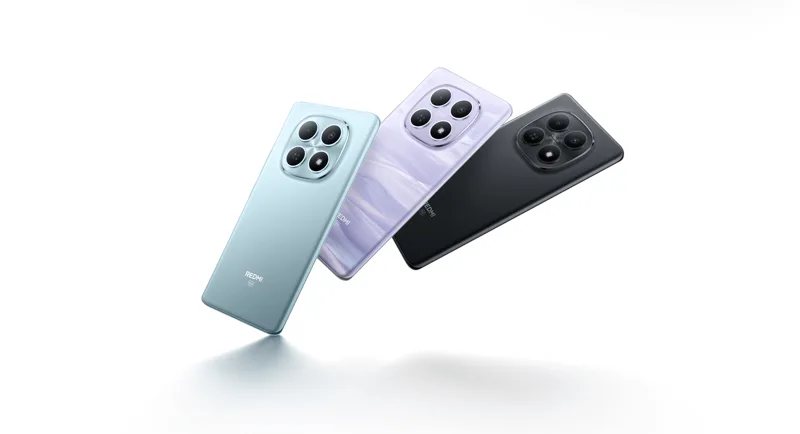
Above this phone sit the Redmi Note 15 Pro and the Redmi Note 15 Pro+, both of which move to a larger 6.83-inch screen, a 200MP main camera, a bigger battery and the IP69K water and dust rating. The base model gives up those upgrades but is easier to hold: it measures 164 x 75.42 x 7.35 mm, narrower and thinner than either Pro, and weighs 178 g, about 30 g less than they do. It comes in Black, Glacier Blue and Mist Purple. Xiaomi's pages list four memory and storage versions: 6GB with 128GB, 8GB with 256GB, 8GB with 512GB and 12GB with 512GB, though availability depends on the region. The manufacturer pages we reviewed state no US price and no US availability, so this page carries no price. To see the numbers against a rival from the same group, open the Redmi Note 15 vs POCO X8 page.
Design and durability
The Redmi Note 15 has a curved front and back that Xiaomi says make the phone more comfortable in the hand, together with a symmetrical camera decoration on the back. Its thickness is 7.35 mm in Black and Glacier Blue and 7.40 mm in Mist Purple. The front uses a higher-durability glass, and Xiaomi says the phone survived 1.7-metre face-down drops onto marble in its own laboratory, which is a more modest figure than the 2.5 metres claimed for the Pro models. The company also describes more than 50 quality tests, including 210,000 power-button presses, 100,000 volume-button presses and 30,000 USB-port insertions, along with thermal shock tests between minus 40 and 70 degrees Celsius. These are manufacturer claims from its internal labs, not independent results.
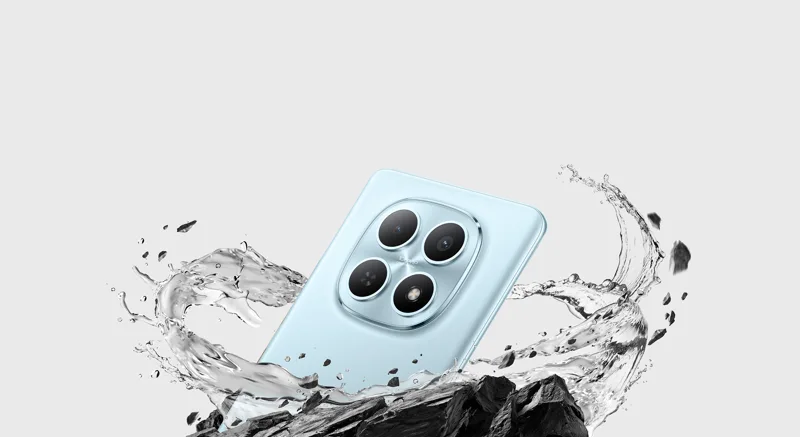
The ingress protection is IP66. That rating covers dust and strong jets of water, but unlike the IP68 and IP69K ratings of the Pro models it does not cover immersion, so the phone should not be dropped in a pool or a bath. Xiaomi notes the usual limits: the warranty does not cover liquid damage, and the protection can weaken with wear. The Wet Touch 2.0 software is meant to keep the screen responsive when your fingers are wet or oily.
Display
The AMOLED panel has a resolution of 2392 x 1080 pixels and a refresh rate of up to 120Hz. A small inconsistency appears on the manufacturer pages: the specification table lists a 6.67-inch diagonal, while the overview text mentions 6.77 inches, so we use the specification table figure and suggest checking the box or retailer listing if the exact size matters to you. Xiaomi quotes a peak brightness of 3,200 nits and 800 nits as the typical figure, a 12-bit colour depth, DCI-P3 coverage, 3,840Hz PWM dimming, 16,000-step automatic brightness control and a 92 percent screen-to-body ratio. The touch sampling rate is 240Hz, and the page also mentions a 2,560Hz rate in the overview. The three TÜV Rheinland certificates for low blue light, circadian friendliness and flicker-free operation are included. Unlike the Pro models, the specification table does not list HDR10+ or Dolby Vision.
Performance and software
The Snapdragon 6 Gen 3 is a 4nm chip with an octa-core CPU clocked at up to 2.4GHz and an Adreno graphics unit. It is a step below the Snapdragon 7s Gen 4 of the Pro+, and Xiaomi positions it for everyday tasks, video and casual gaming rather than heavy 3D titles. Memory is LPDDR4X and storage is UFS 2.2, the same older standards used by the Pro models, and the 12GB variant can use memory extension to show up to 24GB, though that borrows from storage rather than adding physical RAM. A hybrid slot takes either a second nano SIM or a microSD card for expansion up to 1TB, so dual SIM and card storage cannot be used together on the same slot, and the manufacturer notes that card compatibility may vary.
The phone runs Xiaomi HyperOS 2, and the product page promises six years of security updates. The page does not state an Android version, so this page does not either. Google Gemini is integrated, and Xiaomi lists AI tools such as AI Erase, AI Beautify and AI Remove Reflection, whose availability varies by region. The connectivity list is more modest than on the Pro models: Bluetooth 5.1 and Wi-Fi 802.11a/b/g/n/ac (Wi-Fi 5), without Wi-Fi 6. It does include NFC, an infrared blaster, an in-screen fingerprint sensor and AI face unlock, and the dual speakers support Dolby Atmos with a 300 percent volume boost claim, measured against its own volume scale.
Camera
The rear camera has a 108MP main sensor of 1/1.67-inch size, with an f/1.7 aperture and optical image stabilisation, plus an 8MP ultrawide with f/2.2. By default the sensor bins pixels, and Xiaomi's Ultra HD mode produces the full-resolution image. Like its siblings, the phone has no dedicated telephoto camera; Xiaomi describes four focal lengths from one lens, from 24mm to 72mm equivalent, and calls the 3x setting "optical-level", which means the quality comes from cropping the high-resolution sensor and software processing. Rear video goes up to 4K at 30 frames per second, and the 20MP front camera records 1080p at 30 frames per second. As elsewhere, you should look at independent photo samples before judging the image quality.
Battery and charging
The 5,520 mAh silicon-carbon battery is large for a phone this thin. Xiaomi quotes up to 1.58 days of use, up to 21 hours of video playback and up to 10 hours of video recording in its own tests, and claims that the battery retains more than 80 percent of its capacity after 1,600 cycles, a calculated figure that it describes as a five-year battery life. Charging is 45W, but the charger is not included in the box, so a buyer who does not already own a suitable 45W PD charger should budget for one. The phone can also charge other devices by cable at up to 18W. Xiaomi publishes charge-time figures for this phone, but the labels on the page are ambiguous, so we do not repeat them here.
Who it is for
The Redmi Note 15 is for buyers who want a bright AMOLED screen, long battery life and a slim, light body at the lowest price in the family. It suits first-time smartphone owners, people who want a compact-feeling phone among large screens, and anyone who values a microSD slot for photos and video. It is also a reasonable choice for a secondary or work phone.
Compromises
The trade-offs are plain: a processor from the entry tier, older memory and storage standards, IP66 instead of full immersion protection, Wi-Fi 5 and Bluetooth 5.1 instead of the newer versions, no telephoto lens and no charger in the box. The headline numbers for battery life, drops and brightness all come from Xiaomi's laboratories, and no US price is available on the manufacturer pages. For a broader comparison, open the phone rankings.
Where it ranks
Compare Xiaomi Redmi Note 15 with similar devices
More from Xiaomi
Frequently asked questions
When was the Xiaomi Redmi Note 15 released?
The Xiaomi Redmi Note 15 was released on 2026-01-15, according to the manufacturer’s published information.
What are the main specs of the Xiaomi Redmi Note 15?
Headline figures for the Xiaomi Redmi Note 15: Battery: 5,520 mAh, Refresh rate: 120 Hz, Main camera: 108 MP, RAM: 12 GB. The full specification table is further up this page.
Is the Xiaomi Redmi Note 15 worth buying?
That depends on your priorities. Use the editorial review on this page for our view, check the rankings above to see where the device stands on battery, display and camera, and compare it directly with similar models before you decide.


