Phones
Xiaomi Redmi 15 5G
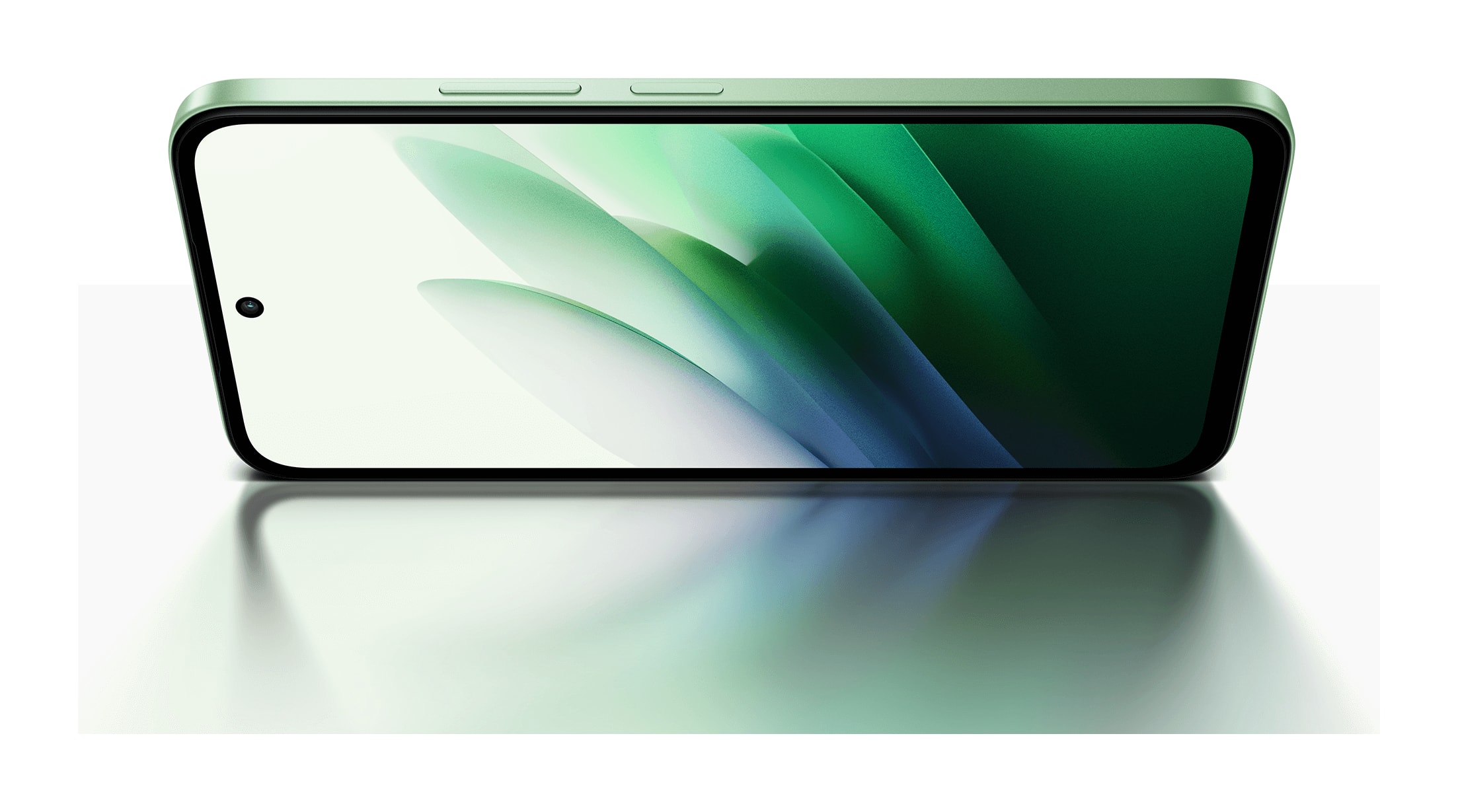
The Redmi 15 5G pairs a 6.9-inch display with a 144Hz option, a Snapdragon 6s Gen 3 chip and a 7000 mAh battery with 33W charging in an IP64-rated body.
Key figures at a glance
Gallery
Specifications
- Display
- 6.9" FHD+ DotDisplay, 2340x1080, 374 ppi, up to 144Hz (supported apps), 700 nits typical / 850 nits HBM
- Chipset
- Qualcomm Snapdragon 6s Gen 3 (6nm, octa-core CPU up to 2.3GHz, Adreno GPU)
- RAM
- 8GB
- Storage
- 128GB / 256GB (microSD up to 2TB)
- Rear Camera
- 50MP main (f/1.8) + auxiliary lens
- Front Camera
- 8MP (f/2.0)
- Battery
- 7000 mAh (typ), 33W wired charging (no adapter in the box), 18W wired reverse charging
- OS
- Xiaomi HyperOS 2
- Dimensions
- 169.48 x 80.45 x 8.40 mm, 217 g
- Durability
- IP64 dust and splash resistance
- Memory
- 4GB + 128GB or 8GB + 256GB (LPDDR4X, UFS 2.2); memory extension up to 16GB RAM on the 8GB version; configurations vary by region
- Connectivity
- 5G, Wi-Fi 2.4GHz / 5GHz, Bluetooth 5.1, NFC (market dependent), IR blaster, hybrid SIM slot
- Colors
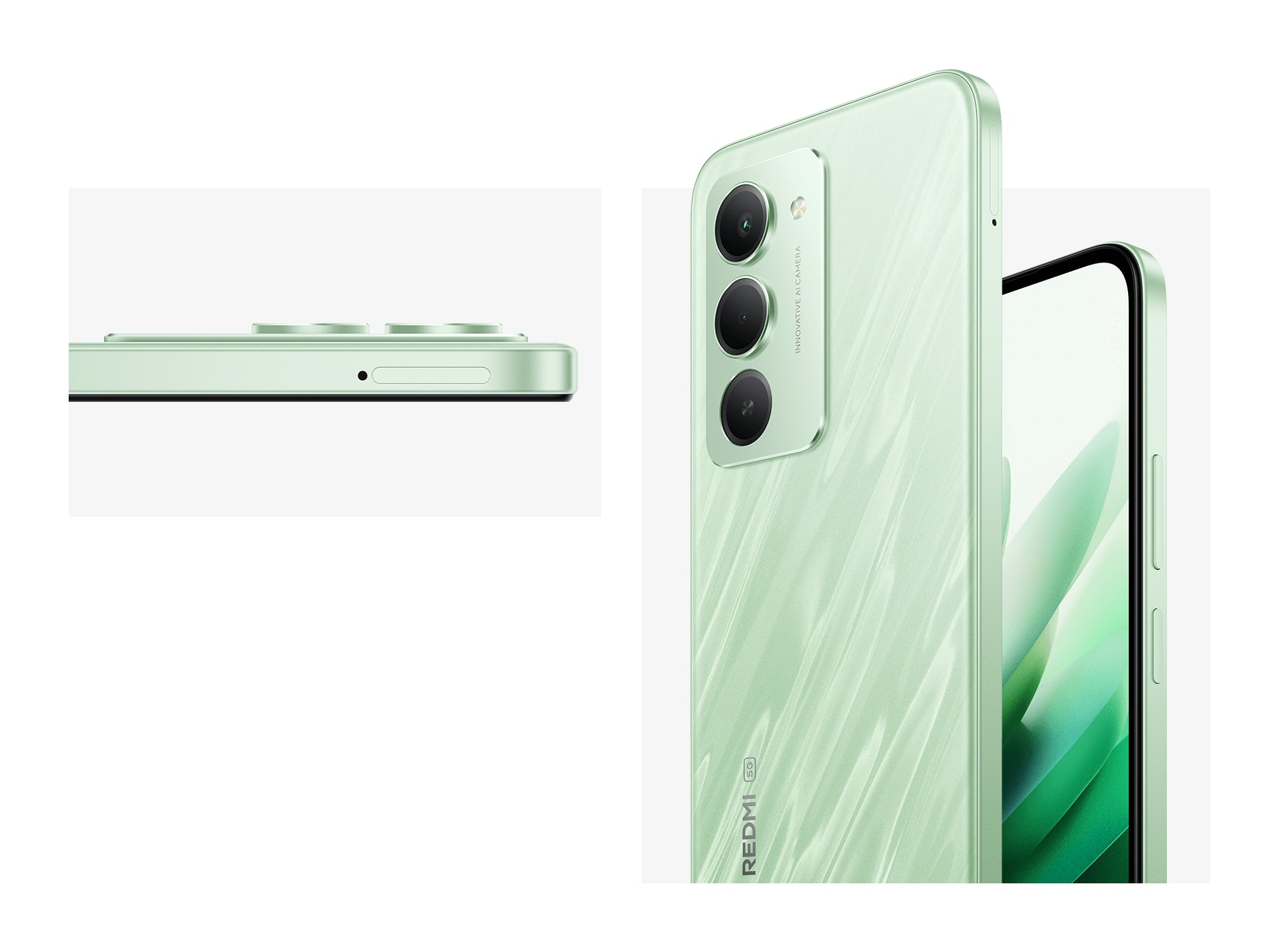
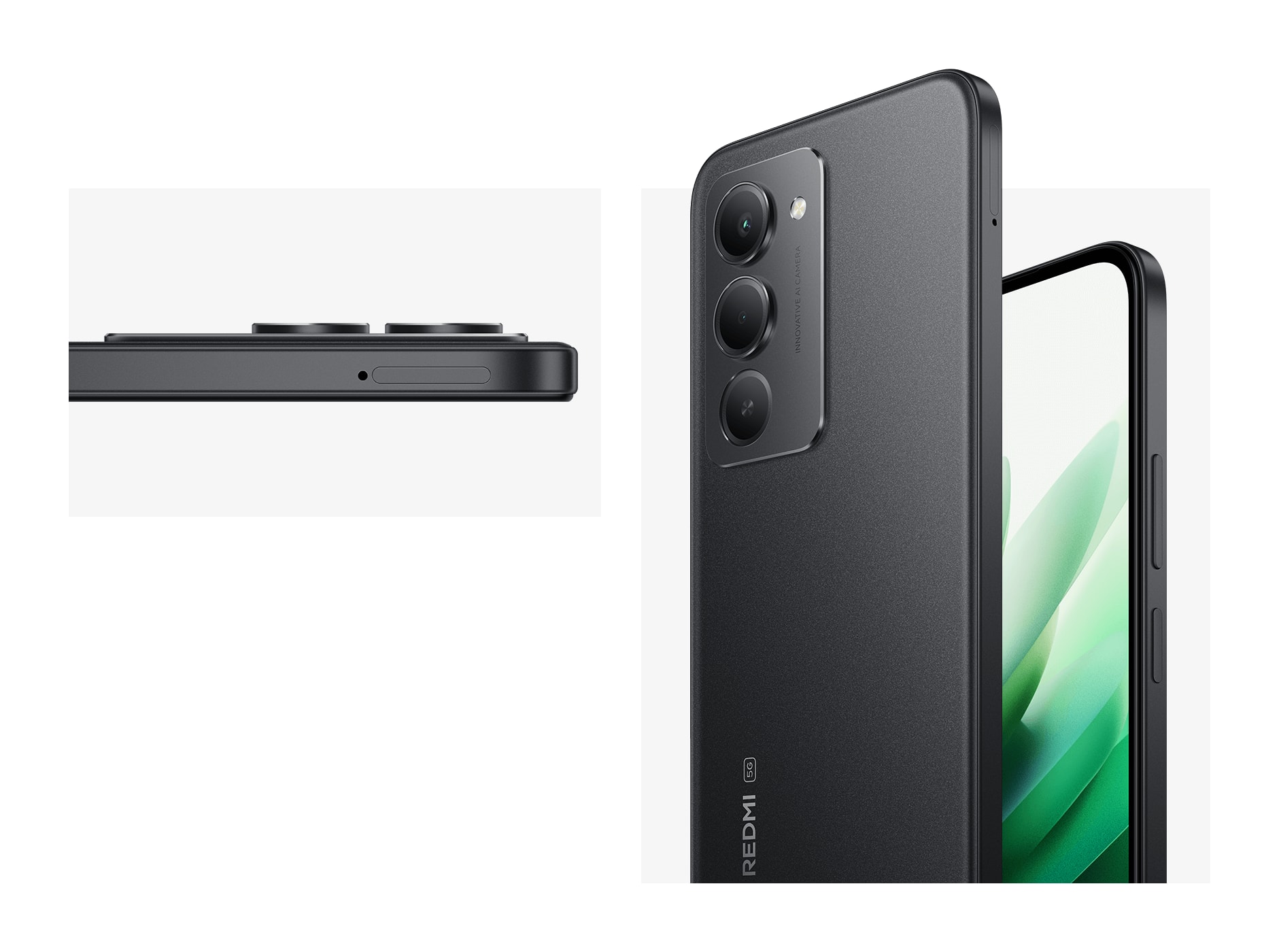
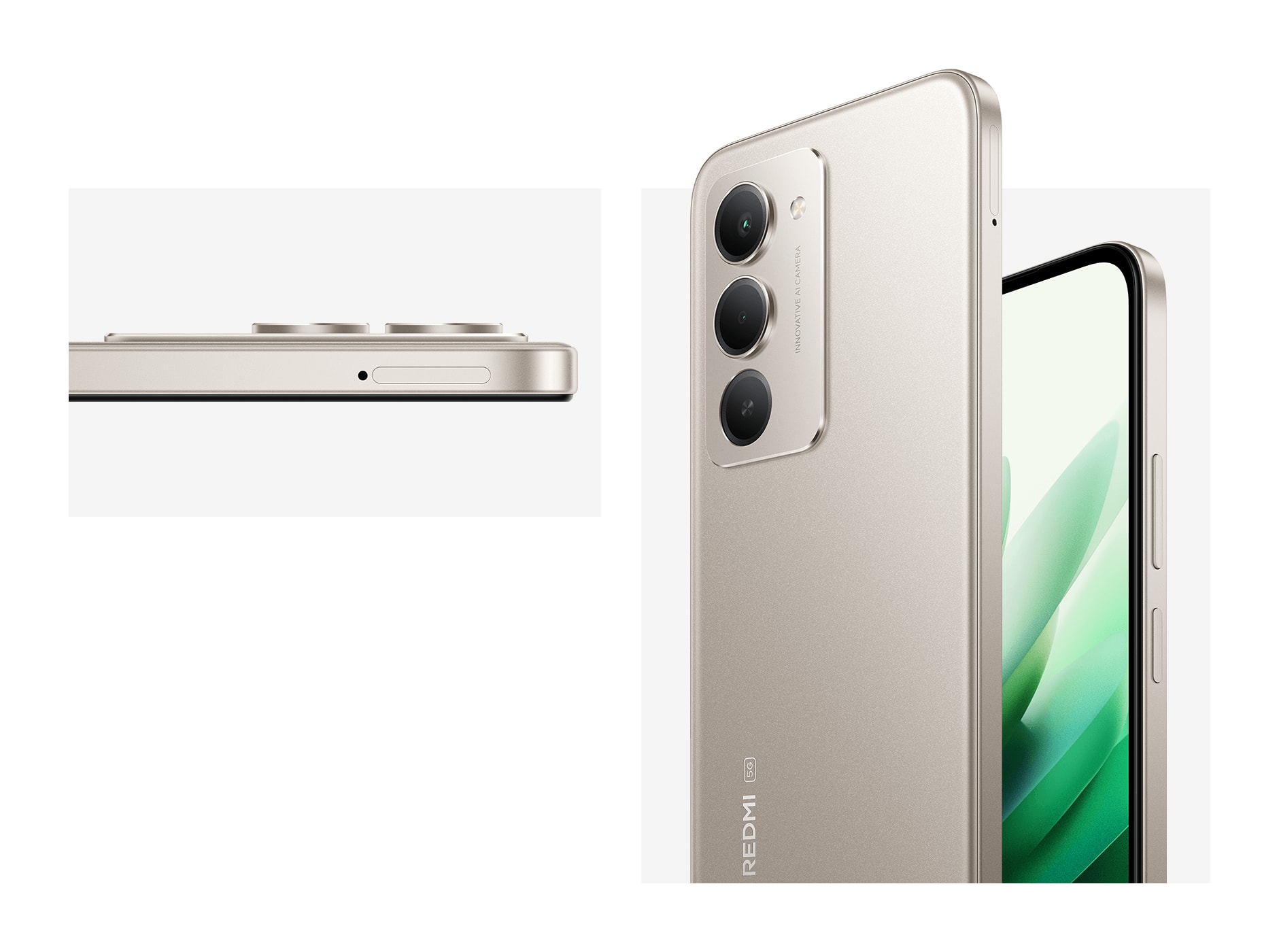
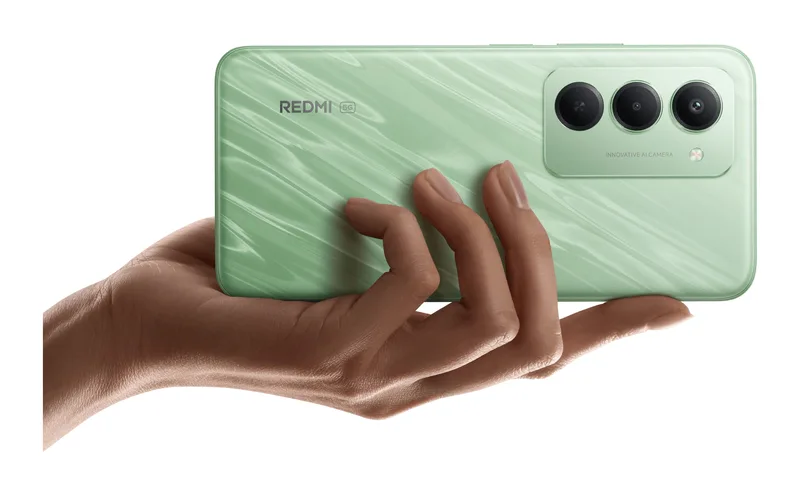
- Ripple Green, Titan Gray, Midnight Black
The Redmi 15 5G is Xiaomi's attempt to make a very large phone with very long endurance at an entry-level price tier. Its headline numbers are a 6.9-inch display that can refresh at up to 144Hz in supported apps, a 7000 mAh silicon-carbon battery, a Snapdragon 6s Gen 3 processor and an IP64 rating. This page is based on the published specifications and manufacturer information, and it looks at what the phone offers, where its limits are and which kind of buyer it suits.
Where the Redmi 15 5G fits
Redmi is the value-focused sub-brand of Xiaomi, and the 15 series sits near the bottom of its numbered lineup. If you want more camera and display quality you would normally look at the Redmi Note 15, while the plain Redmi 15 is the sibling to check if you do not need 5G branding. The 5G model uses a Qualcomm chip instead of the cheaper silicon found in some budget phones, and the official specification lists configurations of 4GB RAM with 128GB storage and 8GB RAM with 256GB storage, noting that availability differs between regions. No US price is published on the global page used here, so none is quoted. If you want to see how the phone lines up against its closest relative, the Redmi 15 5G versus Redmi Note 15 comparison puts the numbers side by side.
Design and display
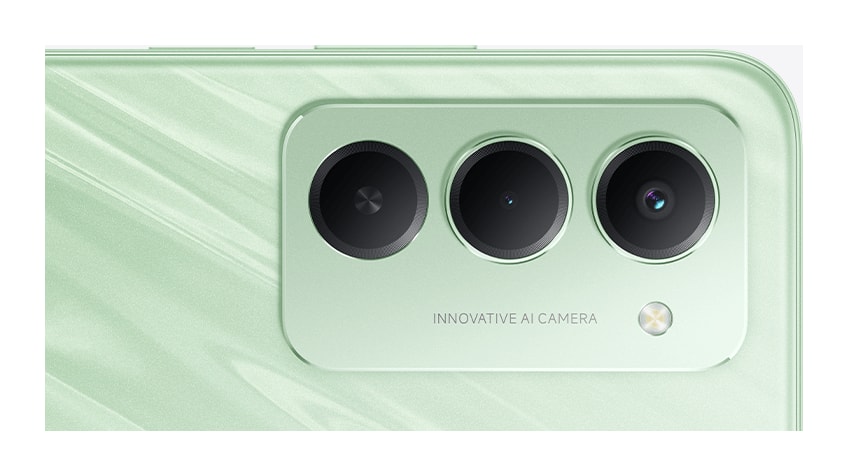
The body measures 169.48 x 80.45 x 8.40 mm and weighs 217 g, so this is a big and fairly heavy phone by any standard. Xiaomi describes a "quad-curved" back cover in which every edge has the same curvature, and an aluminium-alloy trim around the camera module. Three colours are listed: Ripple Green, Titan Gray and Midnight Black. Xiaomi adds a footnote that "Titan Gray" is only a colour name and does not mean the phone contains titanium. The company also lists IP64, which means protection against dust and splashes, but not against immersion. In practice that covers rain and a wet hand, not a drop in the sink.
The screen is the other main selling point. It is a 6.9-inch FHD+ panel with a resolution of 2340 x 1080 and a pixel density of 374 ppi. Xiaomi states a refresh rate of up to 144Hz with AdaptiveSync, and the footnote makes clear that 144Hz applies to supported apps rather than everything on screen. Brightness is given as 700 nits typical and 850 nits in high brightness mode, with a 1400:1 contrast ratio and 85% NTSC colour coverage. Those figures describe a bright enough panel for normal use, but Xiaomi describes it only as a "DotDisplay" and does not call it OLED or AMOLED, so do not expect the contrast or peak brightness of more expensive phones. Touch sampling is stated as up to 288Hz, and the display carries three TÜV Rheinland certifications for low blue light, flicker-free behaviour and circadian-friendly use. Xiaomi also advertises "Wet Touch Technology 2.0" for operating the screen with damp fingers.
Performance and software
The processor is the Qualcomm Snapdragon 6s Gen 3, built on a 6nm process with an octa-core Kryo CPU that peaks at 2.3GHz and an Adreno GPU. Xiaomi quotes an AnTuTu score above 490,000 and attributes it to its own labs, so treat that as a manufacturer claim rather than an independent result. In practical terms this is a chip aimed at everyday tasks: messaging, social media, video, navigation and casual games. It is not meant for sustained high-end gaming, and the 144Hz option is more about smooth scrolling than about running demanding games at that frame rate.
Memory is LPDDR4X with UFS 2.2 storage. The 8GB version supports memory extension that borrows storage space to act as extra RAM, up to a total of 16GB according to Xiaomi, and the company warns that this uses up the corresponding amount of storage. The phone has a hybrid SIM tray that accepts either a second SIM or a microSD card, with expansion advertised up to 2TB, which is a real advantage if you shoot many videos or carry offline media. The phone runs Xiaomi HyperOS 2, and Xiaomi promises a "48-month like-new software experience" based on its own ageing test. That statement describes a performance test and should not be read as a four-year update guarantee, because the global page does not list a specific number of Android or security updates. The software also includes Google's Gemini assistant overlay and Circle to Search, plus Xiaomi's interconnectivity features for sharing a clipboard or syncing calls with other Xiaomi devices.
Camera
The rear setup is described as a 50MP AI dual camera system. The main sensor has an f/1.8 aperture and a five-element lens, and the second element is listed only as an "auxiliary lens" without a megapixel count, so it should not be counted as a true second camera with its own focal length. Video recording tops out at 1080p at 30 frames per second, with 720p also available. There is no 4K video mode on the official specification sheet. The front camera is 8MP with an f/2.0 aperture, and it also records 1080p at 30 fps. Xiaomi adds software features such as AI Erase and AI Sky, but it notes that AI Erase and Dynamic Shots are limited to the 8GB RAM version. This is a competent camera setup for social sharing and daylight photos, yet buyers who care about low-light results, zoom or stabilised video will find stronger hardware in the pricier lines.
Battery and charging
Battery life is the reason this phone exists. The capacity is 7000 mAh (typical), using what Xiaomi calls its Surge battery with a silicon-carbon anode. Xiaomi claims about 2.26 days of light daily use, up to 25 hours of video playback, up to 108 hours of music playback and up to 30 hours of reading, all measured in its own laboratory. It also says the battery keeps at least 80% of its capacity after 1,600 full charge cycles and that a special chip helps the phone work at -20 degrees Celsius. These are laboratory figures, and real results depend on screen brightness, refresh rate and signal quality.
Charging is the weaker half of the story. The phone supports 33W wired charging, and the box does not contain a power adapter, so a compatible 33W USB PD charger has to be bought separately or reused. A battery of this size will take a long time to fill at 33W. On the plus side, the phone supports 18W wired reverse charging, so it can top up earbuds or another phone in an emergency. There is no wireless charging.
Who it is for
The Redmi 15 5G suits people who value stamina, screen size and expandable storage more than camera quality or raw speed. Students, commuters and anyone who is away from a charger for long stretches will appreciate the battery. Video watchers get a large screen with a smooth scrolling option, and the microSD slot helps people who store lots of media. It is also a sensible secondary phone or a first smartphone, because the software is familiar and the price tier is low. If you compare it with something like the Galaxy A56, you will see the trade-off clearly: Samsung offers an AMOLED display and a more elaborate camera setup, whereas this Redmi offers a much bigger battery and a larger screen.
Compromises to know about
- The display is rated at 700 nits typical brightness and is not described as OLED, so outdoor visibility and contrast are likely to trail OLED rivals.
- The second rear camera is only an auxiliary lens, and video stops at 1080p at 30 fps.
- The body is large and heavy at 217 g and 8.40 mm thick, which does not suit small hands.
- Charging is limited to 33W, with no adapter in the box and no wireless charging.
- Bluetooth 5.1 and Wi-Fi on the 2.4GHz and 5GHz bands only, with no mention of newer Wi-Fi standards.
- Several features, such as AI Erase and Dynamic Shots, are restricted to the 8GB version, and the available configurations change from region to region.
Overall, the Redmi 15 5G is a focused device: it chases battery capacity and screen size and accepts compromises elsewhere. For a wider view of how phones in this price tier perform on published specifications, the phone rankings are a useful next stop.
Where it ranks
Compare Xiaomi Redmi 15 5G with similar devices
More from Xiaomi
Frequently asked questions
When was the Xiaomi Redmi 15 5G released?
The Xiaomi Redmi 15 5G was released on 2025-08-20, according to the manufacturer’s published information.
What are the main specs of the Xiaomi Redmi 15 5G?
Headline figures for the Xiaomi Redmi 15 5G: Battery: 7,000 mAh, Refresh rate: 144 Hz, Main camera: 50 MP, RAM: 8 GB. The full specification table is further up this page.
Is the Xiaomi Redmi 15 5G worth buying?
That depends on your priorities. Use the editorial review on this page for our view, check the rankings above to see where the device stands on battery, display and camera, and compare it directly with similar models before you decide.


