Phones
vivo X100
vivo's X100 pairs the Dimensity 9300 with a 50MP main camera, a 64MP periscope telephoto, a 206 g body and a 5,000 mAh-equivalent battery with 120W wired charging (Indonesian specs).
Key figures at a glance
Gallery
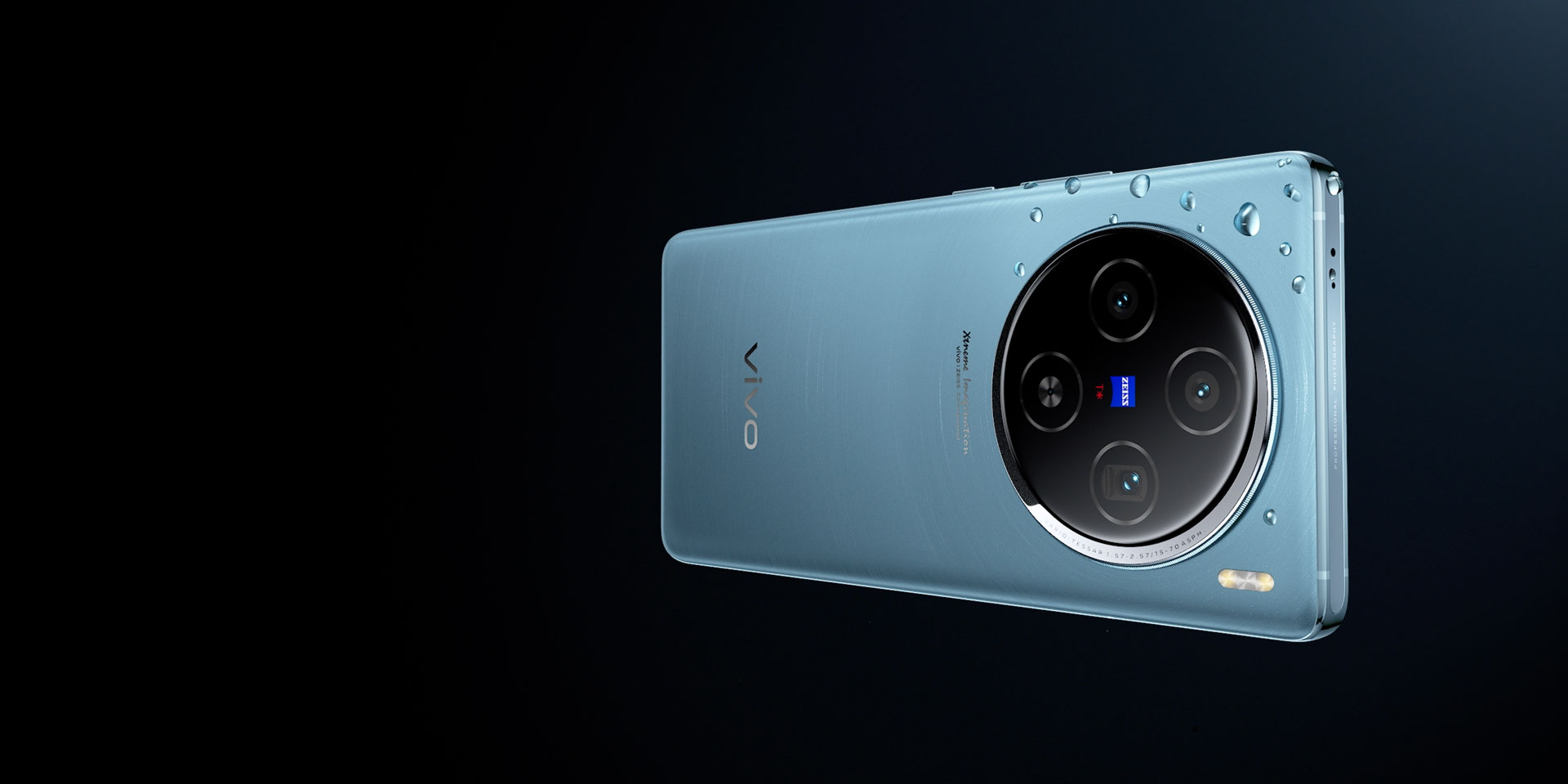
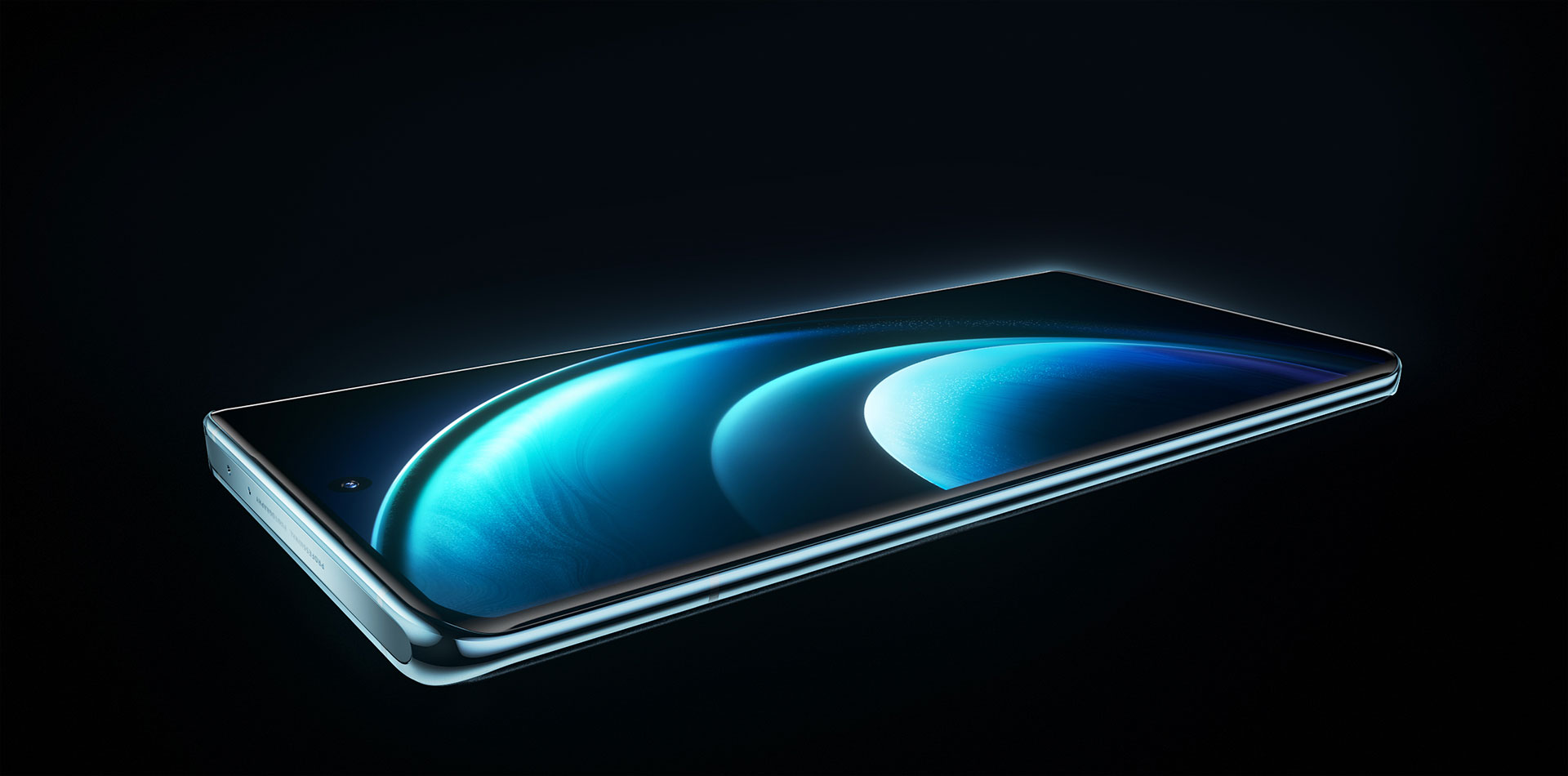
Specifications
- Display
- 6.78" AMOLED (8T LTPO), 2800x1260, up to 120Hz, 3000 nits local peak, 100% DCI-P3
- Chipset
- MediaTek Dimensity 9300 (4nm) + vivo V2 imaging chip
- RAM
- 12GB
- Extended RAM
- 12GB (software, uses storage)
- Storage
- 256GB
- Rear Camera
- 50MP main (1/1.49" IMX920, f/1.57, OIS) + 50MP ultrawide (f/2.0) + 64MP periscope telephoto (f/2.57, OIS, 100x digital zoom)
- Front Camera
- 32MP
- Battery
- 5,000 mAh equivalent (dual-cell, 2 x 2,500 mAh typical), 120W wired FlashCharge
- OS
- Funtouch OS 14, Android 14
- Body
- 164.05 x 75.19 x 8.49 mm, 206 g, glass back, IP68
- Connectivity
- 5G, Wi-Fi 7, Bluetooth 5.4, NFC, USB-C (USB 2.0), dual nano SIM
The vivo X100 is the standard model of vivo's X100 pair, and it is the one that tries to be a complete flagship without the bulk of its bigger sibling. It keeps the Dimensity 9300 processor, a 6.78-inch 120 Hz AMOLED screen and a ZEISS-branded camera system, but it trims weight, uses a 64-megapixel periscope telephoto, and charges faster over a cable than the Pro does. This page is based on the specifications and overview published on vivo's Indonesian product pages, so regional details such as memory size and band support may differ in other markets.
The short version
On the Indonesian specification page the X100 is listed with 12 GB of RAM and 256 GB of storage (LPDDR5X memory and UFS 4.0 storage), a 5,000 mAh equivalent dual-cell battery with 120W FlashCharge, a 50-megapixel main camera, a 50-megapixel ultrawide and a 64-megapixel telephoto, and a 32-megapixel selfie camera. It weighs 206 g, measures 164.05 x 75.19 x 8.49 mm, and comes in Asteroid Black and Startrail Blue. The same page lists an Indonesian price of Rp11,999,000; vivo did not give a US price on the pages used here, so none is quoted for the United States. The operating system is Funtouch OS 14 on Android 14.
How it differs from the Pro
If you are choosing between the two, the useful question is what you lose by picking the standard model. The vivo X100 Pro has a larger main sensor, a 50-megapixel ZEISS APO telephoto, vivo's newer V3 imaging chip, a battery of 5,400 mAh equivalent and wireless charging. The X100 uses a different main sensor, a periscope telephoto with a higher pixel count, the earlier V2 chip, and a smaller battery that charges at a higher wired wattage. It is also about 19 g lighter and 0.4 mm thinner. For readers who want the older and newer generation side by side, the X100 vs X200 comparison shows how the line moved on, and the vivo X200 page covers its successor.
Look and feel
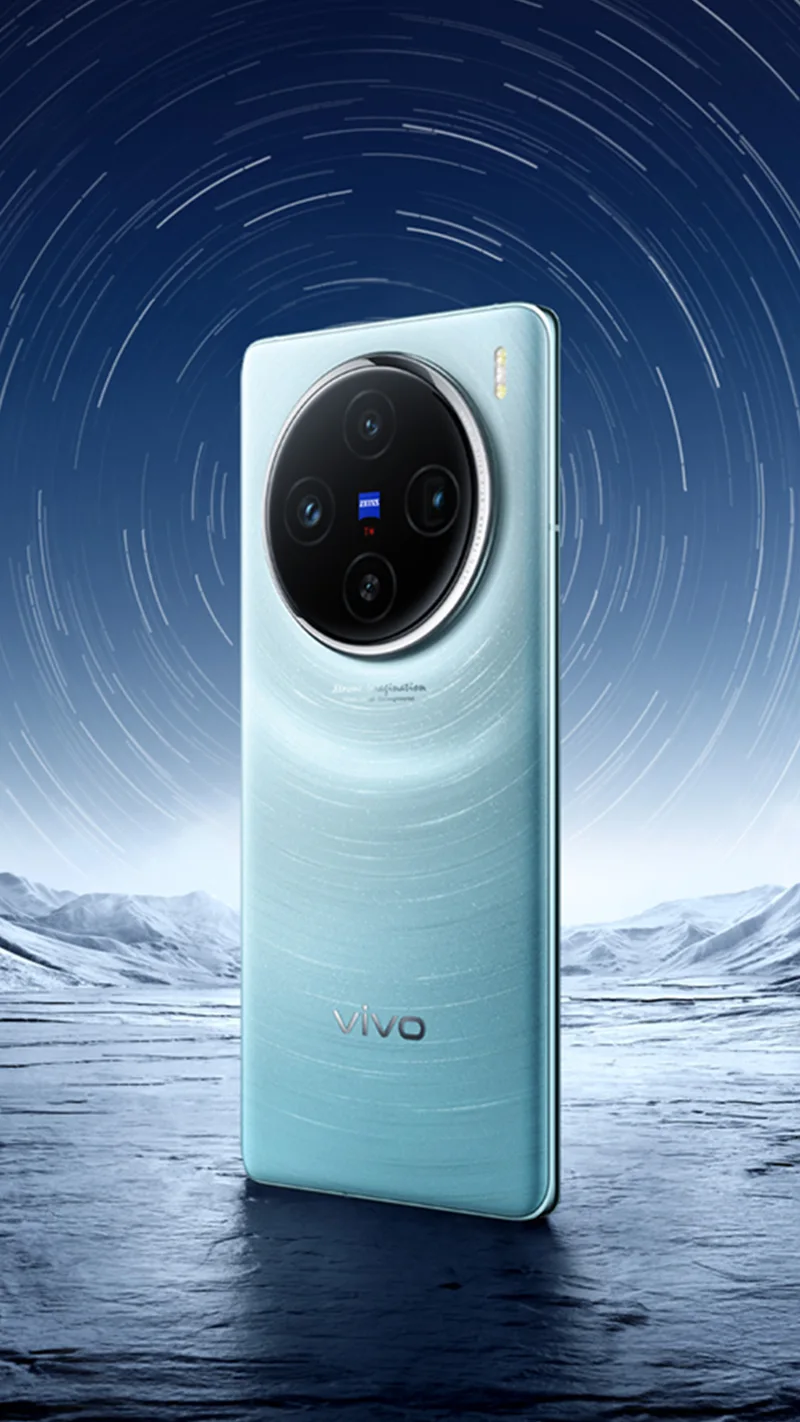
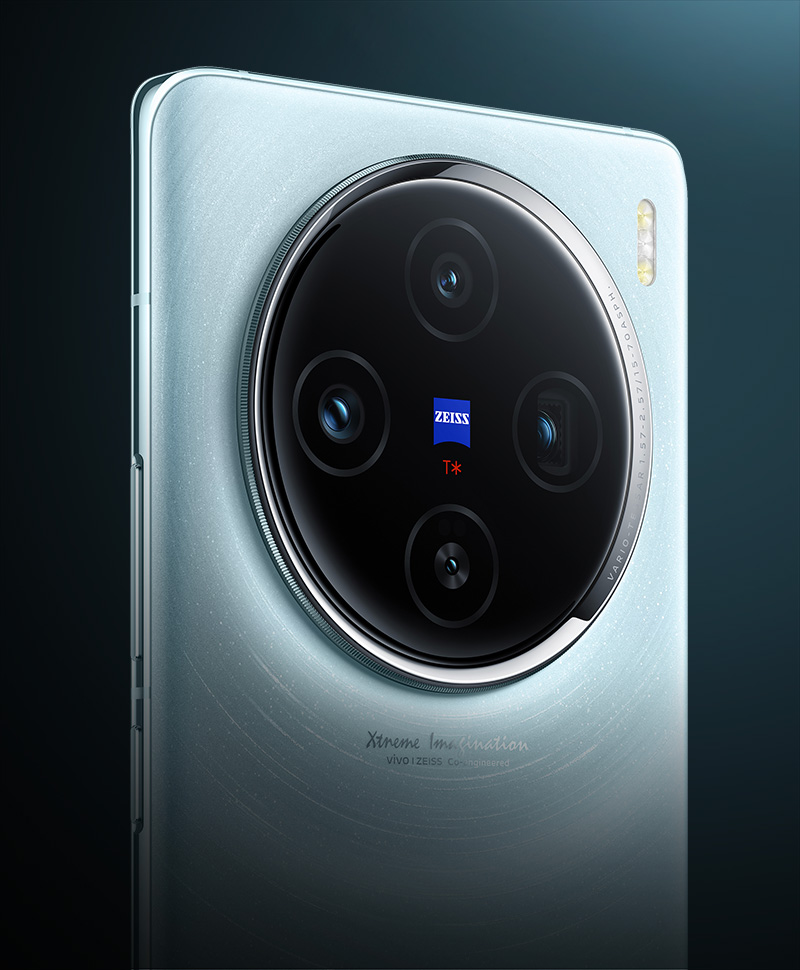
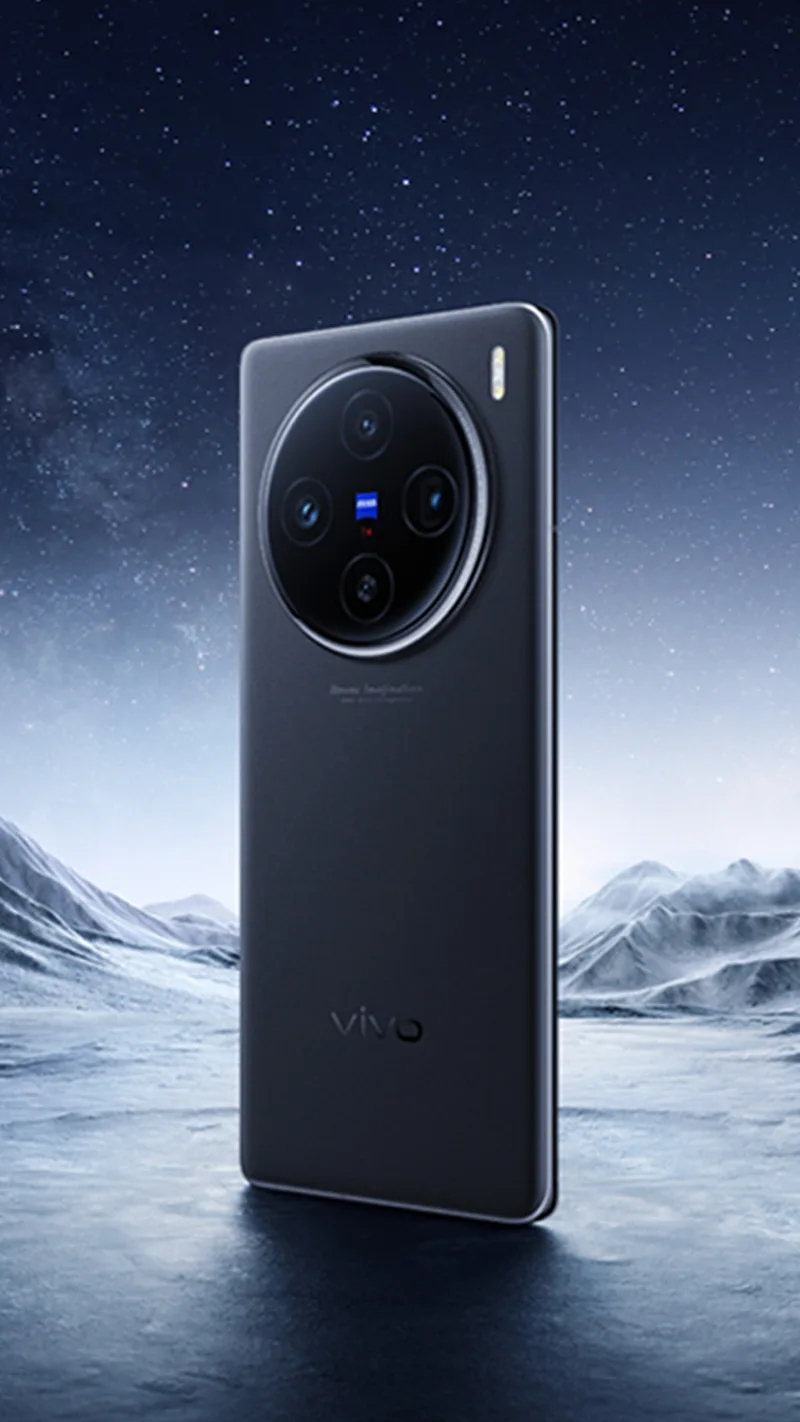
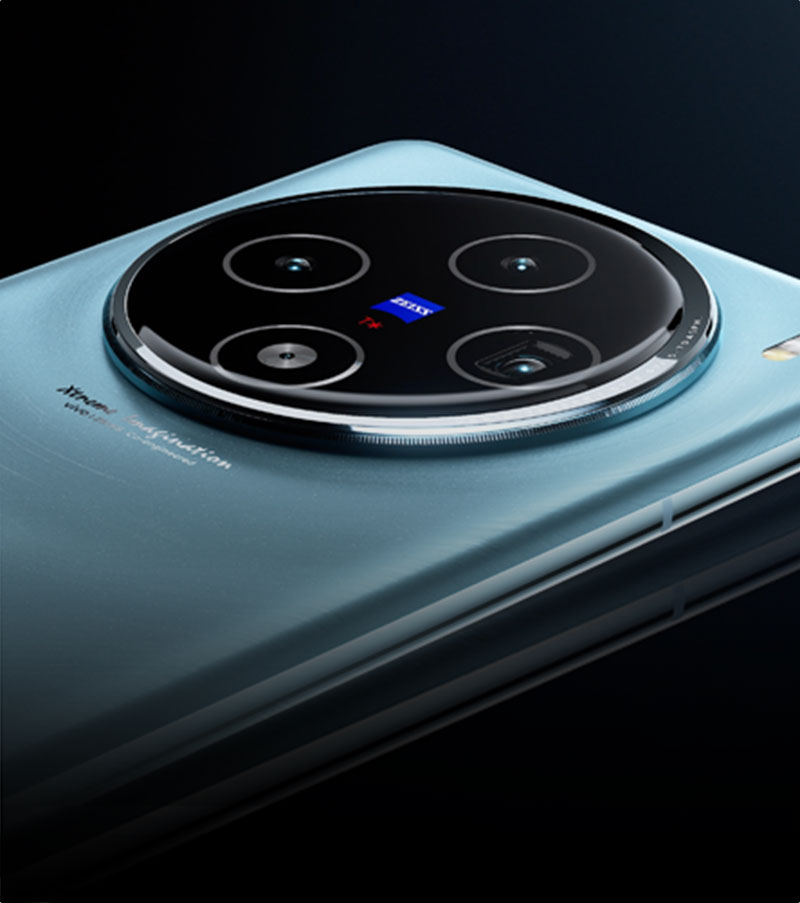
vivo calls the design Moon Halo, which in practice means a large round camera ring on the back, a sunburst-style texture in the glass, and a frame that the company describes as mirror-finished stainless steel. The lens cover over the cameras is cut from a single piece of 2.5D glass, and vivo mentions a micro and nano lithography process for the back finish. The blue version in the official images has a rippled, almost watery pattern, while the black one is darker with a subtle sheen. The back is glass and the phone carries an IP68 rating, tested in static fresh water to 1.5 metres for up to 30 minutes in laboratory conditions; as usual, vivo says the protection is not permanent and that liquid damage is not covered by the warranty. An in-display optical fingerprint sensor is used for unlocking.
Screen
The panel is an AMOLED display measuring 6.78 inches, with a resolution of 2800 x 1260 (about 452 pixels per inch) and a refresh rate of up to 120 Hz. vivo lists a peak brightness of 3,000 nits, 100 percent DCI-P3 coverage, 105 percent NTSC saturation, 2,160 Hz PWM dimming, and an 8T LTPO backplane that adjusts the refresh rate dynamically. SGS certifications for low blue light and low flicker are mentioned. The brightness figure is a local peak from vivo's lab, so average outdoor brightness will be lower.
Cameras in detail
The main camera is a 50-megapixel unit with a 1/1.49-inch sensor (vivo names it the IMX920 with a bionic spectrum module), f/1.57 aperture, a 23 mm equivalent focal length and optical stabilisation. vivo adds that the stabilisation passed the CIPA 4.5 level test, which is a standard rating for how many stops of shake the system can compensate for. A footnote also says the physical sensor size is 1/1.49 inch while the actual imaging area is 1/1.56 inch, so the effective sensor is a bit smaller than the headline figure. The ultrawide is a 50-megapixel 1/2.76-inch camera at f/2.0.
The third camera is the standout: a 64-megapixel telephoto of 1/2 inch at f/2.57 with a periscope structure, optical stabilisation and 100x digital zoom. A periscope design folds the light path sideways inside the body, which lets a longer focal length fit in a thin phone and gives a larger light-gathering structure. vivo shows zoom steps of 0.6x, 1x, 2x, 7x, 10x and 20x on its page. It also lists a multifocal portrait mode (24, 35, 50, 85 and 100 mm), a Telephoto Sunshot mode for sunrises and sunsets, a telephoto macro mode, 4K cinematic portrait video in a 2.39:1 frame with five presets, and an AR planetarium mode. Because vivo puts these claims in its own marketing, they should be taken as intent and not as test results. The selfie camera is 32 megapixels at f/2.0.
Processor, memory and the V2 chip
The processor is MediaTek's Dimensity 9300 at 4 nm, with a CPU layout of one core at 3.25 GHz, three at 2.85 GHz and four at 2.0 GHz. The memory option on the Indonesian page is 12 GB plus 256 GB; vivo also describes an extended RAM feature that adds up to another 12 GB by using part of the storage, which is a software feature and not extra physical memory. The vivo V2 chip sits alongside it. vivo states that the V2 has an AI accelerator with an efficiency of up to 16.3 TOPS per watt and a large on-chip memory pool equal to about 45 MB, mainly to speed up image processing and the game frame interpolation feature. vivo cites an AnTuTu score above 2.21 million for the 12 GB and 256 GB version in its own lab, tested in a low-temperature room.
Battery and charging
The battery is a dual-cell design with a typical capacity of 2,500 mAh at 7.82 V, which vivo expresses as an equivalent 5,000 mAh at 3.91 V (rated capacity 4,880 mAh equivalent). Charging is 120W FlashCharge through the supplied charger, and vivo claims 50 percent in 11 minutes from 1 percent under laboratory conditions. A zero-power fast start feature is promoted too, showing the logo within four seconds when the phone is plugged in after the battery is fully drained. The specification page does not list wireless charging.
Connectivity and practical notes
The phone has dual nano SIM slots, 5G with the band list shown for Indonesia, Wi-Fi 7, Bluetooth 5.4, NFC, a USB-C port at USB 2.0 speed, an infrared blaster, a linear motor and location support for several satellite systems. The Indonesian page does not list an eSIM, unlike the Indian page of the Pro, and notes that 5G service depends on local carriers.
Who should choose it
The X100 is the better pick for people who want a flagship camera and chip in a lighter body, who value the longer telephoto reach of a periscope lens, and who prefer the faster wired charging to wireless charging. It is also the easier phone to hold. If you want the most capable main camera and wireless charging, the Pro is the more complete package. Against other brands, compare it with Samsung's Galaxy S25 through the X100 vs Galaxy S25 comparison, or check the phone rankings.
Compromises to weigh
- No wireless charging is listed on the specification page.
- USB 2.0 speed on the Indonesian listing limits wired data transfers.
- Regional differences. Memory, bands and SIM options on this page apply to the Indonesian listing and may differ elsewhere.
- Marketing claims. Zoom steps, night modes and benchmark numbers come from vivo and were not independently measured here.
- Older chip for imaging. It uses the V2, not the newer V3 of the Pro.
Where it ranks
Compare vivo X100 with similar devices
More from vivo
Frequently asked questions
When was the vivo X100 released?
The manufacturer’s release date for the vivo X100 is not stated in the information we have.
What are the main specs of the vivo X100?
Headline figures for the vivo X100: Battery: 5,000 mAh, Refresh rate: 120 Hz, Main camera: 50 MP, RAM: 12 GB. The full specification table is further up this page.
Is the vivo X100 worth buying?
That depends on your priorities. Use the editorial review on this page for our view, check the rankings above to see where the device stands on battery, display and camera, and compare it directly with similar models before you decide.


