Phones
Xiaomi Redmi A5
Xiaomi's entry-level 4G phone puts a 6.88-inch 120Hz screen, a 5,200 mAh battery, a headphone jack and Android 15 Go Edition on a UNISOC T7250 with 3GB or 4GB of RAM.
Key figures at a glance
Gallery
Specifications
- Display
- 6.88" display, 1640x720 (260 ppi), up to 120Hz, 450 nits typical, 240Hz touch sampling
- Chipset
- UNISOC T7250 (12nm, octa-core up to 1.8GHz)
- RAM
- 4GB
- Storage
- 64GB / 128GB, microSD slot (3GB+64GB or 4GB+128GB; memory extension up to 8GB)
- Rear Camera
- 32MP main (f/2.0) + auxiliary lens, 1080p video
- Front Camera
- 8MP (f/2.0)
- Battery
- 5,200 mAh (typical), 15W wired charging, USB Type-C
- OS
- Android 15 (Go Edition)
- Dimensions
- 171.7 x 77.8 x 8.26 mm, 193 g
- Connectivity
- 4G LTE, dual SIM plus microSD, Wi-Fi 2.4/5GHz, Bluetooth 5.2, FM radio, 3.5mm headphone jack
- Security
- Side fingerprint sensor, AI face unlock
- Colors
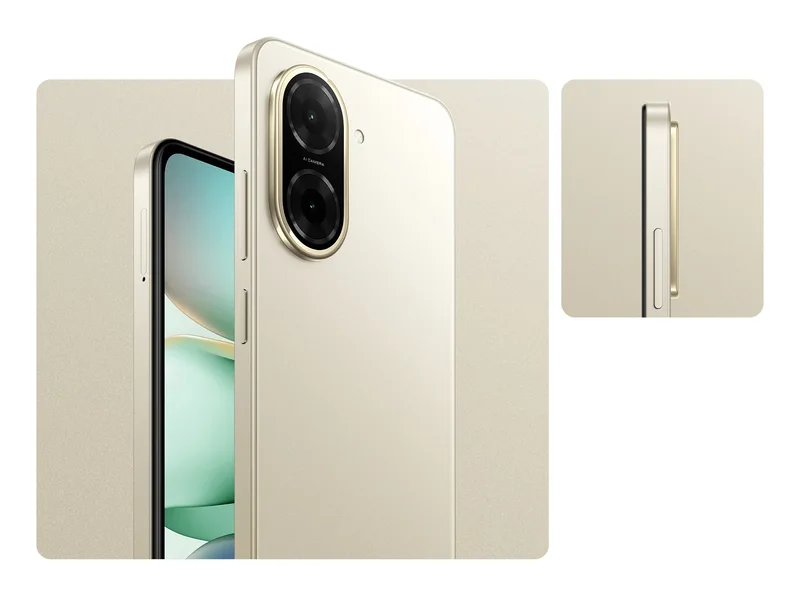
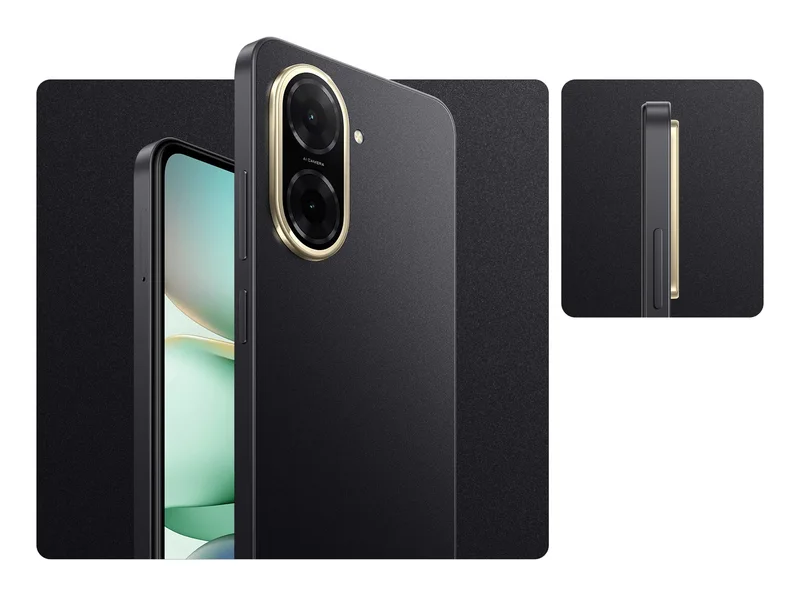
- Ocean Blue, Lake Green, Sandy Gold, Midnight Black
The Xiaomi Redmi A5 is an entry-level 4G smartphone built around a very large 6.88-inch screen, a 5200mAh battery and a UNISOC T7250 processor, and it runs Android 15 (Go Edition). It is a phone for people who want a big display, long battery life and a headphone jack at the lowest end of Xiaomi's range, not for people who want speed, 5G or a premium camera. This page is based on the published specifications and manufacturer information from Xiaomi's global product and specification pages, and it marks Xiaomi's statements as claims, because many of the figures on those pages come from Xiaomi's own internal lab tests.
Place in the lineup
The Redmi A series is Xiaomi's budget line, and the A5 is the successor to the Redmi A3. Xiaomi compares the new model with the A3 throughout its marketing: it claims 83 percent more performance, a larger camera sensor that collects 18 percent more light, and a bigger and faster screen. All of those comparisons are Xiaomi's own lab numbers, so treat them as directional rather than as independent measurements. Xiaomi's other Redmi models in this database, such as the Redmi 15C and the Redmi 15, sit in the same broad price-conscious part of the catalogue, so they are the natural places to look if the A5 feels too basic. You can set the cheapest model against its bigger sibling in a Redmi A5 vs. Redmi 15C comparison, and compare it with Samsung's budget line through the Galaxy A17.
Xiaomi's pages do not print a launch date or a price for the Redmi A5. The date used here (6 March 2025) is the date from the editorial plan for this entry, and it should be treated as approximate. The configurations also depend on the region, because Xiaomi notes that available variants differ between markets.
Design and display
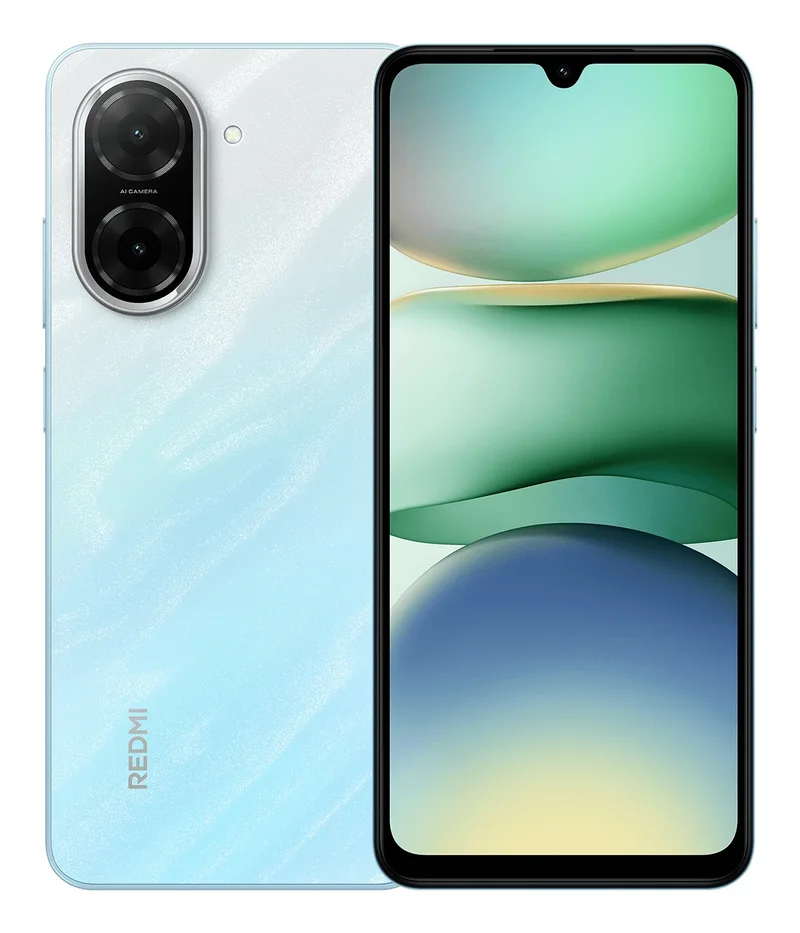
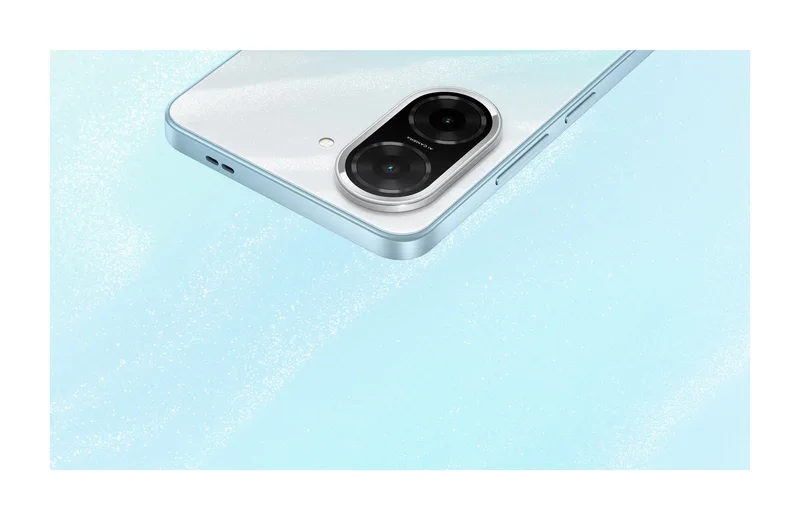
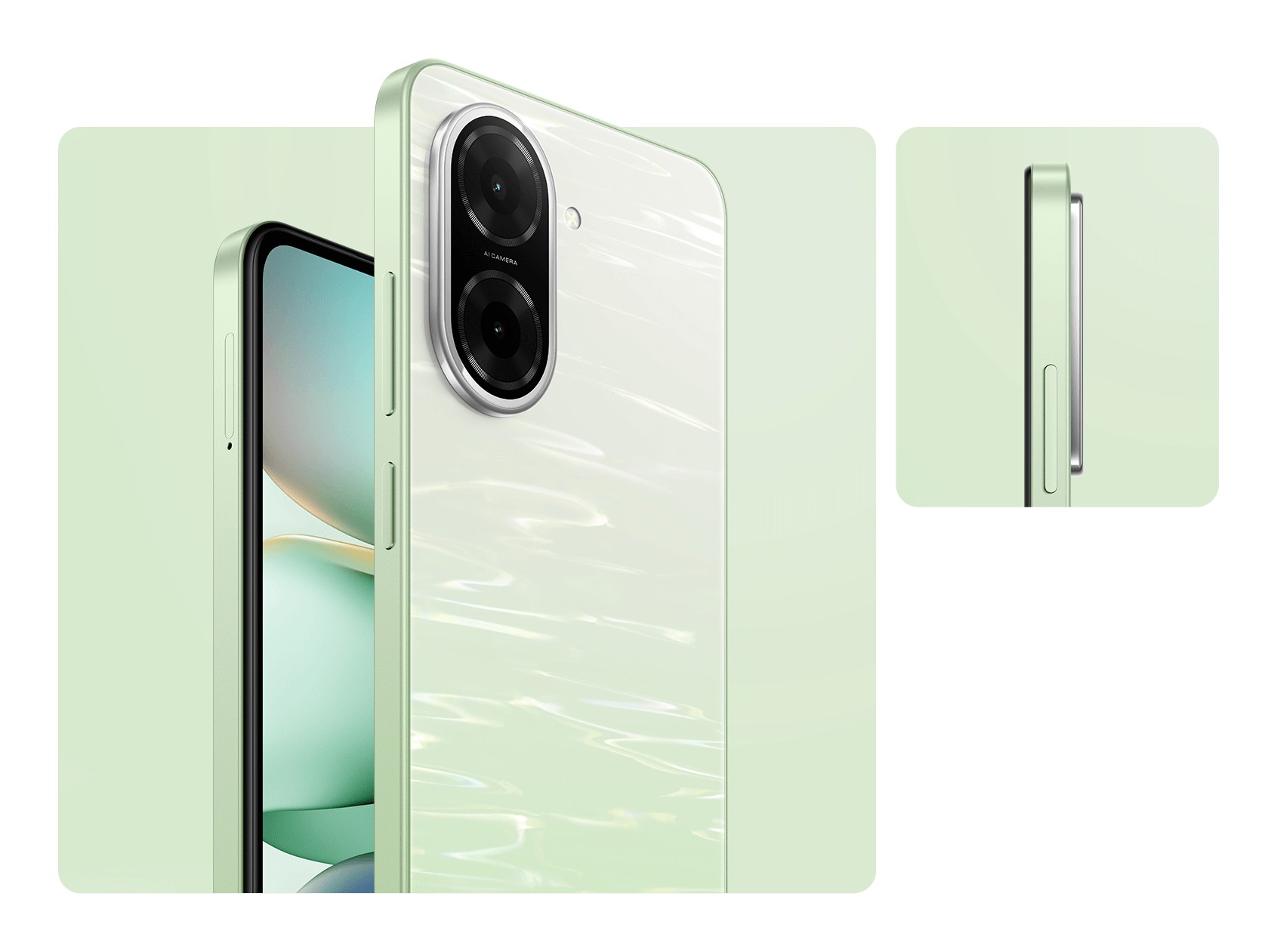
Xiaomi describes the design as a refreshed language with a flat frame and a highlighted camera decoration. The body measures 171.7 x 77.8 x 8.26 mm and weighs 193 g, according to the specification page, which also says that these numbers come from Xiaomi's internal labs and may vary. Four colours are listed: Ocean Blue, Lake Green, Sandy Gold and Midnight Black. A side-mounted fingerprint sensor handles unlocking, and an AI face unlock is offered as an alternative. The page does not state an ingress-protection rating, so buyers should not assume any water or dust resistance.
The screen is the main selling point. It is a 6.88-inch panel with a resolution of 1640 x 720 pixels, which works out to about 260 pixels per inch, and Xiaomi lists a typical brightness of 450 nits, a contrast ratio of 1500:1, 8-bit colour depth and 70 percent NTSC colour coverage. The refresh rate can rise to 120Hz, and Xiaomi adds that the 120Hz rate can be used for supported apps, which means that not everything will necessarily run at that rate. Touch sampling goes up to 240Hz, and the page mentions a wet-touch feature for use with damp hands.
The resolution is the obvious trade-off. At 260 pixels per inch on a screen this size, text and fine detail will look softer than on the Full HD panels found on more expensive phones, even though the high refresh rate helps scrolling feel smooth. For eye comfort, Xiaomi lists three certifications from TÜV Rheinland: low blue light (through a software solution), flicker free and circadian friendly. It also notes that the circadian feature may arrive through an over-the-air update rather than at launch, and it mentions DC dimming. The screen-to-body ratio is given as 90 percent.
Performance, memory and software
The processor is the UNISOC T7250, built on a 12nm process with an octa-core CPU that runs at up to 1.8GHz. Xiaomi states an AnTuTu score of more than 260,000 and describes the chip as delivering higher performance with lower power consumption than its predecessor. For context, that figure belongs firmly to the entry-level class: this is a phone for messaging, calls, browsing, video and light apps, and it should not be bought for demanding 3D games.
Memory comes in two options on the specification page: 3GB of RAM with 64GB of storage, or 4GB of RAM with 128GB of storage. The memory type is LPDDR4X for RAM and eMMC 5.1 for storage, which is slower than the UFS storage used in more expensive phones. Xiaomi supports memory extension, which borrows storage space to act as extra RAM: 3GB can be extended up to 6GB and 4GB up to 8GB. The page is careful to say that the extra RAM uses a matching amount of storage and that the feature only works when there is enough free space. In practice that is a convenience for multitasking on a small base, not a substitute for physical memory. A microSD card slot is available alongside two SIM slots, which helps because 64GB fills up quickly.
The operating system is Android 15 (Go Edition). Go Edition is Google's lighter version of Android, designed for devices with limited memory, and it suits the hardware. Xiaomi also claims a 36-month like-new software experience, based on its own software-ageing test, meaning that the phone is tuned to avoid slowing down noticeably over three years of regular use. The page does not state a number of guaranteed Android upgrades or a security-patch period, so buyers who care about long support should check this before purchasing.
Camera
The rear camera is described as an AI dual-camera system with a 32MP main sensor (a 4P lens at f/2.0) and an auxiliary lens, and the specification page does not give the resolution of that second lens. Xiaomi claims that the larger sensor captures 18 percent more light than the Redmi A3, which should help in dim conditions, and the camera includes HDR, an Ultra HD mode and a night mode. Video recording is limited to 1080p or 720p at 30 frames per second, so there is no 4K video. The front camera is an 8MP unit with a 4P lens at f/2.0 and a fill light, with HDR, portrait, time-lapse and night modes, and it records 1080p video at 30 frames per second. A new camera watermark option is mentioned as well.
In short, the camera is good enough for social media, document photos and video calls in reasonable light, but one should not expect the detail, dynamic range or low-light quality of a mid-range phone. There is no optical image stabilisation or telephoto lens mentioned anywhere on Xiaomi's pages.
Battery and charging
The battery is a 5200mAh cell (typical value), and it is paired with 15W wired charging over USB Type-C. Xiaomi's lab-based claims include 1.45 days of battery life, up to 20.7 hours of video playback, up to 14.24 hours of reading and up to 9.14 hours of gaming, and it states that the battery should last more than 1,000 charge cycles. Those numbers come from Xiaomi's own tests, but a 5200mAh capacity combined with a low-power 12nm processor and a 720p-class screen is a sensible recipe for endurance. The trade-off is the charging speed: 15W is slow for a battery this large, and the specification page notes that the power adapter is sold separately in certain regions, so the box contents may differ from country to country. The generic package list on the page includes an adapter, a USB Type-C cable, a SIM tool, a protective case and the usual paperwork, with the note that contents vary by region.
Connectivity and extras
The Redmi A5 is a 4G phone. Xiaomi lists LTE TDD and FDD bands, 3G and 2G fallbacks, dual SIM plus a microSD slot, dual-band Wi-Fi (2.4GHz and 5GHz), Bluetooth 5.2 with AAC and SBC support, and satellite navigation with GPS, GLONASS, Galileo and BDS. There is no 5G, and the pages do not mention NFC, so contactless payments should not be assumed. On the plus side, the phone keeps a 3.5mm headphone jack with FM radio support, a feature that many newer phones have dropped, and Xiaomi highlights the durability tests behind the USB port, the headphone jack and the rollers (10,000 USB cycles, 5,000 headphone-jack cycles and 300 roller tests).
Who it is for
The Redmi A5 fits a few clear buyers: first-time smartphone users, parents who need a low-cost phone for a child, people who want a secondary or backup device, and anyone who values a very large screen, a big battery, a headphone jack and expandable storage over performance. It is also a sensible choice for markets where 4G is still the dominant network and where price matters more than features.
Compromises
- Entry-level processor: the UNISOC T7250 is built for basic tasks, and 3GB or 4GB of RAM leaves little headroom for heavy multitasking.
- Low-resolution screen: 1640 x 720 pixels at 6.88 inches gives soft text compared with Full HD displays, and the 120Hz rate works only in supported apps.
- Slow charging: 15W is modest for a 5200mAh battery, and the charger may not be included in every region.
- Basic camera: a single 32MP main sensor with an unspecified auxiliary lens, no 4K video and no stabilisation mentioned.
- No 5G and no stated NFC: connectivity is limited to 4G, which may matter for future-proofing.
- Software support not stated: Xiaomi's pages give no number of OS upgrades or security-update years.
Taken together, the Redmi A5 is a straightforward budget phone that puts its resources into the screen size and battery. If you are comparing it with other inexpensive models, look at the update policy, the charger situation and the local price before deciding, and check the rankings page to see how it sits next to other phones on the database.
Where it ranks
Compare Xiaomi Redmi A5 with similar devices
More from Xiaomi
Frequently asked questions
When was the Xiaomi Redmi A5 released?
The Xiaomi Redmi A5 was released on 2025-03-06, according to the manufacturer’s published information.
What are the main specs of the Xiaomi Redmi A5?
Headline figures for the Xiaomi Redmi A5: Battery: 5,200 mAh, Refresh rate: 240 Hz, Main camera: 32 MP, RAM: 4 GB. The full specification table is further up this page.
Is the Xiaomi Redmi A5 worth buying?
That depends on your priorities. Use the editorial review on this page for our view, check the rankings above to see where the device stands on battery, display and camera, and compare it directly with similar models before you decide.


