Phones
Xiaomi 14T
The standard 2024 T-series model uses the Dimensity 8300-Ultra, a 144Hz AMOLED, a 5,000 mAh battery, 67W charging and a Leica camera with a 50mm telephoto.
Key figures at a glance
Gallery
Specifications
- Display
- 6.67" flat AMOLED, 2712x1220, 446 ppi, up to 144Hz, 4,000 nits peak brightness
- Chipset
- MediaTek Dimensity 8300-Ultra (4nm)
- RAM
- 12GB
- Extended RAM
- 8GB / 16GB Ultra Space (storage used as virtual memory)
- Storage
- 256GB / 512GB
- Rear Camera
- 50MP main (Sony IMX906, 1/1.56", f/1.7, OIS) + 50MP telephoto (50mm equivalent, f/1.9) + 12MP ultrawide (120 degrees)
- Front Camera
- 32MP
- Battery
- 5,000 mAh (typ), 67W wired
- OS
- Xiaomi HyperOS
- Dimensions
- 160.5 x 75.1 x 7.80 mm (glass) or 7.95 mm (PU leather), 195 g (glass) or 193 g (PU leather)
- Water resistance
- IP68
- Video
- 4K up to 60 fps
- Connectivity
- Wi-Fi 6E, Bluetooth 5.4, NFC, dual SIM (nano SIM and eSIM), IR blaster
The Xiaomi 14T is the standard model of Xiaomi's 2024 T series. Where the Pro version chases the fastest chip and the quickest charging, the 14T aims for a balanced package: the same 6.67-inch flat AMOLED screen with a 144Hz ceiling, a MediaTek Dimensity 8300-Ultra processor, a 5,000 mAh battery with 67W wired charging, and a Leica-branded camera set built around a 50MP main sensor and a 50mm telephoto. It went on sale at the end of September 2024. The review below is a specification-and-information review based on the published specifications and manufacturer information, so every performance figure is a claim by Xiaomi unless stated otherwise.
What you get for choosing the standard T
The T series exists to give Xiaomi buyers flagship-style features at a lower price than the numbered phones. Within the 2024 pair, the 14T gives up a few things in exchange for a lower cost: it uses a less powerful chip, a smaller main sensor, a shorter-range telephoto lens than the Xiaomi 14T Pro, and charges more slowly, with no wireless charging listed on Xiaomi's specification page. It keeps the display, the 5,000 mAh battery capacity, the 12MP ultrawide camera, the 32MP selfie camera and the IP68 rating of the Pro. In practice that means the screen, the endurance and the basic camera set are shared, and the difference lies in speed and in the main camera.
No US list price was published for the phone, because the T series is sold through Xiaomi's own channels outside the American carrier market. For a quick spec comparison with another mid-priced flagship-style phone, the Xiaomi 14T vs Pixel 9a page lines up the numbers, and the overall order of phones is on the rankings page.
Build quality and the lemon-fibre finish
The phone is 160.5 mm tall and 75.1 mm wide. Its thickness depends on the back: 7.80 mm with the glass version and 7.95 mm with the PU leather version, with weights of 195 g and 193 g respectively. That makes it about 14 grams lighter than the Pro and noticeably slimmer. The frame is a 6M13 aluminium alloy, according to Xiaomi, and the screen's chin bezel is quoted at 1.9 mm. Xiaomi says device rigidity improved by 26 percent in its own laboratory tests.
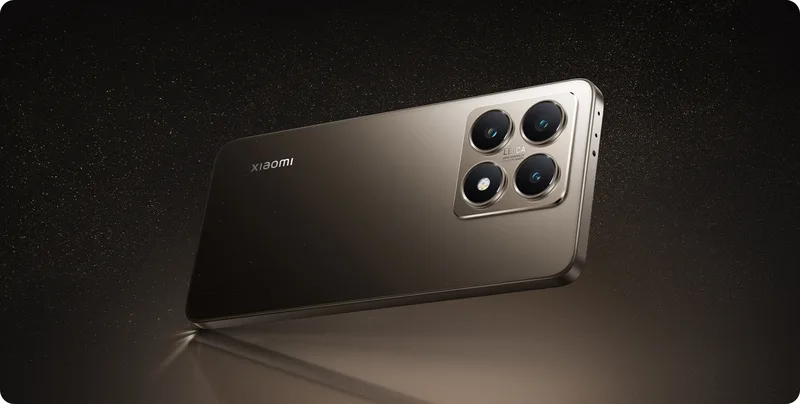
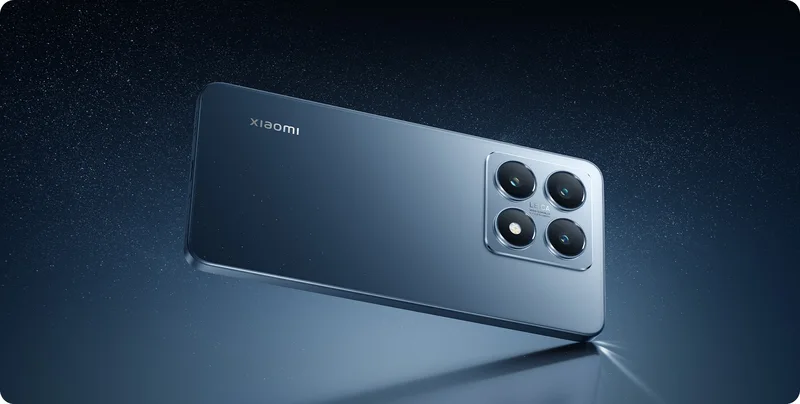
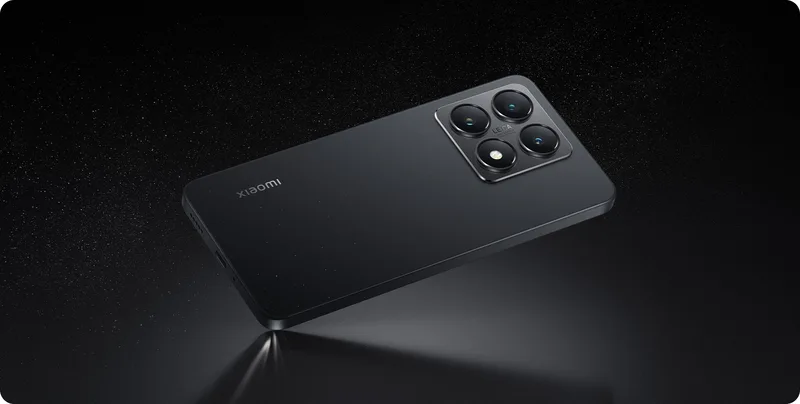
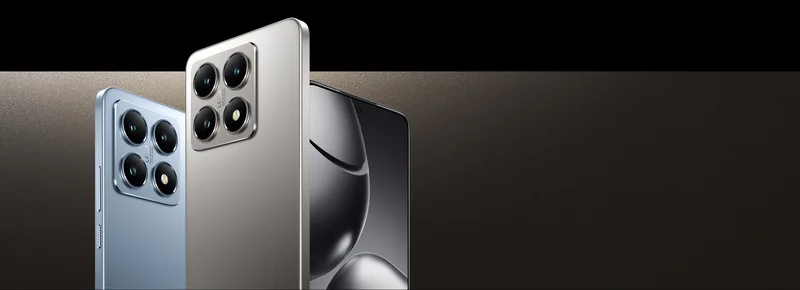
The colour range is where the 14T stands apart. Titan Gray, Titan Black and Titan Blue use glass backs, while Lemon Green uses a PU leather back that Xiaomi describes as made from recycled fabric and bio-based materials, including lemon fibre; the company states the base is 100 percent recycled fabric and 50 percent bio-based. Those are manufacturer descriptions of the material composition. The IP68 rating is the same as on the Pro, tested in static fresh water to 2 metres for 30 minutes in laboratory conditions.
Screen
The panel is a flat AMOLED with 2712 x 1220 pixels at 446 ppi, a refresh rate of up to 144Hz, a touch sampling rate of up to 480Hz and a peak brightness of 4,000 nits. Xiaomi lists 68 billion colours, DCI-P3, HDR10+, Dolby Vision, PWM dimming up to 3,840 Hz and TÜV Rheinland certificates for low blue light, flicker-free viewing and circadian friendliness. As with every adaptive-rate screen, the 144Hz figure applies only to supported games and interface scenes, and the actual rate shifts with content. The phone's display spec is identical to the Pro, which is a strong selling point at this tier.
Processor, memory and cooling
The processor is the MediaTek Dimensity 8300-Ultra, made on a 4nm process. Xiaomi lists one Cortex-A715 core at up to 3.35GHz, three more A715 cores at up to 3.2GHz and four Cortex-A510 cores at up to 2.2GHz, with an Arm Mali-G615 MC6 graphics unit and the MediaTek NPU 780. Xiaomi quotes MediaTek's figures of 20 percent more CPU performance, 30 percent better CPU efficiency, 60 percent more graphics performance and 55 percent better graphics efficiency, plus a 330 percent AI gain, without naming the exact comparison chip on its page. Treat them as vendor claims.
Memory is 12GB of LPDDR5X with UFS 4.0 storage. The storage options are 256GB and 512GB; the 1TB option belongs to the Pro only. Xiaomi's Ultra Space feature uses 8GB or 16GB of the storage as virtual memory, which should not be confused with physical RAM. The phone uses a cooling system that Xiaomi calls IceLoop; the more elaborate 3D IceLoop belongs to the Pro. The software is Xiaomi HyperOS, with Google Gemini and Circle to Search with Google among the listed AI features, alongside Xiaomi's own AI Interpreter, AI Notes, AI Recorder, AI Captions, AI Film and AI image editing. Availability can differ by region.
Cameras
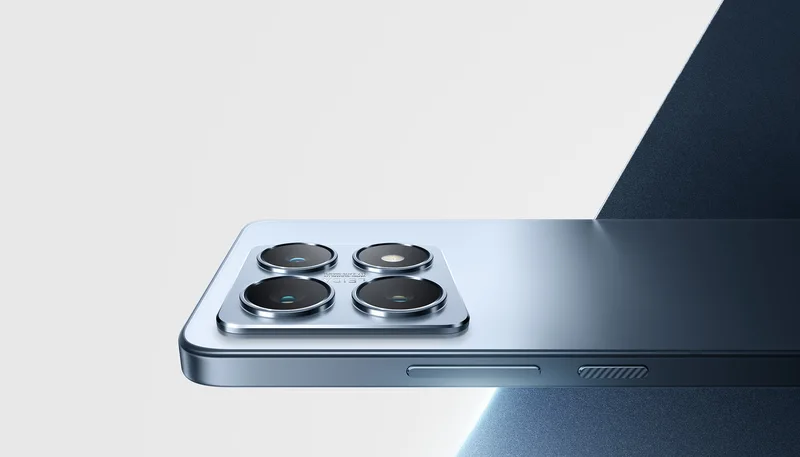
On the back, the main camera is a Sony IMX906 sensor with 50MP, a 1/1.56-inch size, 2.0 micron pixels after binning, an f/1.7 aperture, optical stabilisation and a six-plus-one element lens in a 23mm equivalent. The telephoto is a 50MP camera with an f/1.9 aperture and a 50mm equivalent focal length, so it works as a short portrait lens, and the ultrawide is a 12MP camera at 15mm equivalent with a 120 degree field of view. Xiaomi lists digital zoom up to 20x, two Leica colour styles, the same master-lens portrait looks as the Pro and a night mode across all three cameras.
Video is limited to 4K at up to 60 frames per second with HDR10+ recording, slow motion up to 960 frames per second at reduced resolution, a log format and a Director mode. There is no 8K recording, unlike on the Pro. The selfie camera is a 32MP unit with an f/2.0 aperture and an 80.8 degree field of view, recording 4K video at 30 frames per second.
Battery and charging
The battery is rated 5,000 mAh (typical). Xiaomi quotes up to 15 hours of continuous use and says the battery keeps 80 percent of its capacity after as many as 1,600 charge cycles. Charging is 67W over a wire; Xiaomi says a full charge takes about 45 minutes in its tests. A charger is not supplied, and Xiaomi says to use its 67W adapter or better, which is sold separately. The port is USB-C, with PD 3.0, PD 2.0 and Mi-FC 2.0 support. The specification page lists no wireless charging.
Connectivity
The 14T supports Wi-Fi 6E (subject to regional availability), Bluetooth 5.4, NFC, an infrared blaster, dual stereo speakers with Dolby Atmos and Hi-Res certification, and dual SIM including eSIM combinations. Positioning covers GPS on L1 and L5 plus Galileo, GLONASS, BeiDou and NavIC. Biometrics are an in-screen fingerprint sensor and face unlock.
Who it suits, and where it falls short
This is the phone for people who want the Pro's screen and battery size without paying for the faster chip, the bigger sensor and the 120W charging. It also appeals to buyers who prefer a lighter handset or the green leather finish. The compromises are straightforward:
- Slower charging, no wireless. 67W wired charging is fast by most standards, but the Pro charges faster and adds wireless.
- Smaller main sensor. At 1/1.56 inch, it is smaller than the Pro's 1/1.31-inch unit, which can matter in dim light.
- No 8K and no 1TB option. Those are reserved for the Pro.
- Charger not included. The adapter must be bought separately.
- Vendor figures. Charging times, battery life and chip gains are from Xiaomi's laboratory and will vary in daily use.
Where it ranks
Compare Xiaomi 14T with similar devices
More from Xiaomi
Frequently asked questions
When was the Xiaomi 14T released?
The Xiaomi 14T was released on 2024-09-26, according to the manufacturer’s published information.
What are the main specs of the Xiaomi 14T?
Headline figures for the Xiaomi 14T: Battery: 5,000 mAh, Refresh rate: 144 Hz, Main camera: 50 MP, RAM: 12 GB. The full specification table is further up this page.
Is the Xiaomi 14T worth buying?
That depends on your priorities. Use the editorial review on this page for our view, check the rankings above to see where the device stands on battery, display and camera, and compare it directly with similar models before you decide.


