Phones
vivo X Fold5
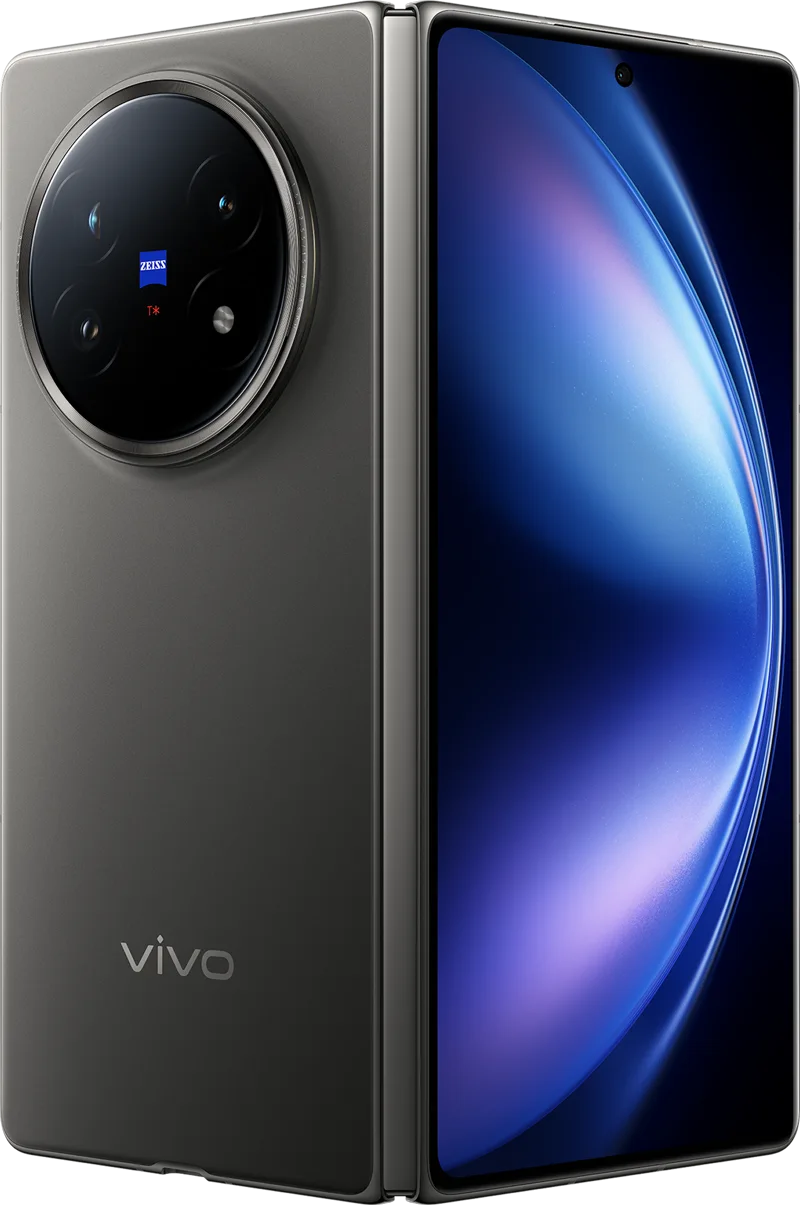
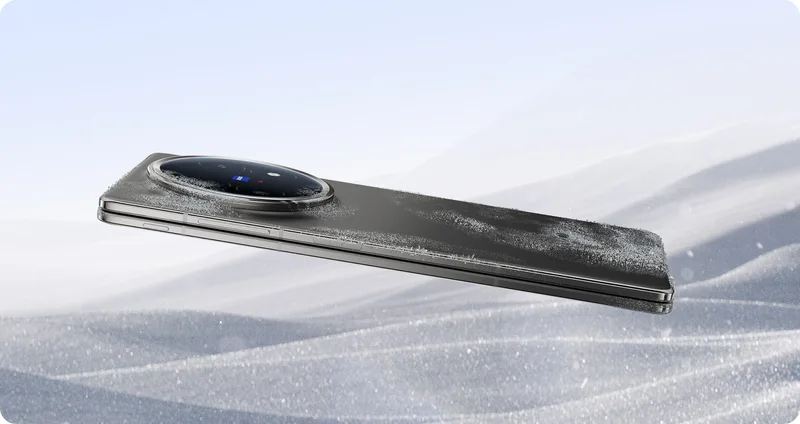
vivo's 2025 book-style foldable pairs an 8.03-inch inner screen and a 6.53-inch cover display, both 120Hz, with a Snapdragon 8 Gen 3, three 50MP rear cameras and a 6,000 mAh battery in a 217 g body.
Key figures at a glance
Gallery
Specifications
- Display
- 8.03" inner LTPO AMOLED, 2480x2200, 120Hz, 4,500 nits peak local brightness; 6.53" cover screen, 2748x1172, 120Hz
- Chipset
- Snapdragon 8 Gen 3 (4nm), Adreno 750
- RAM
- 16GB
- Storage
- 512GB
- Rear Camera
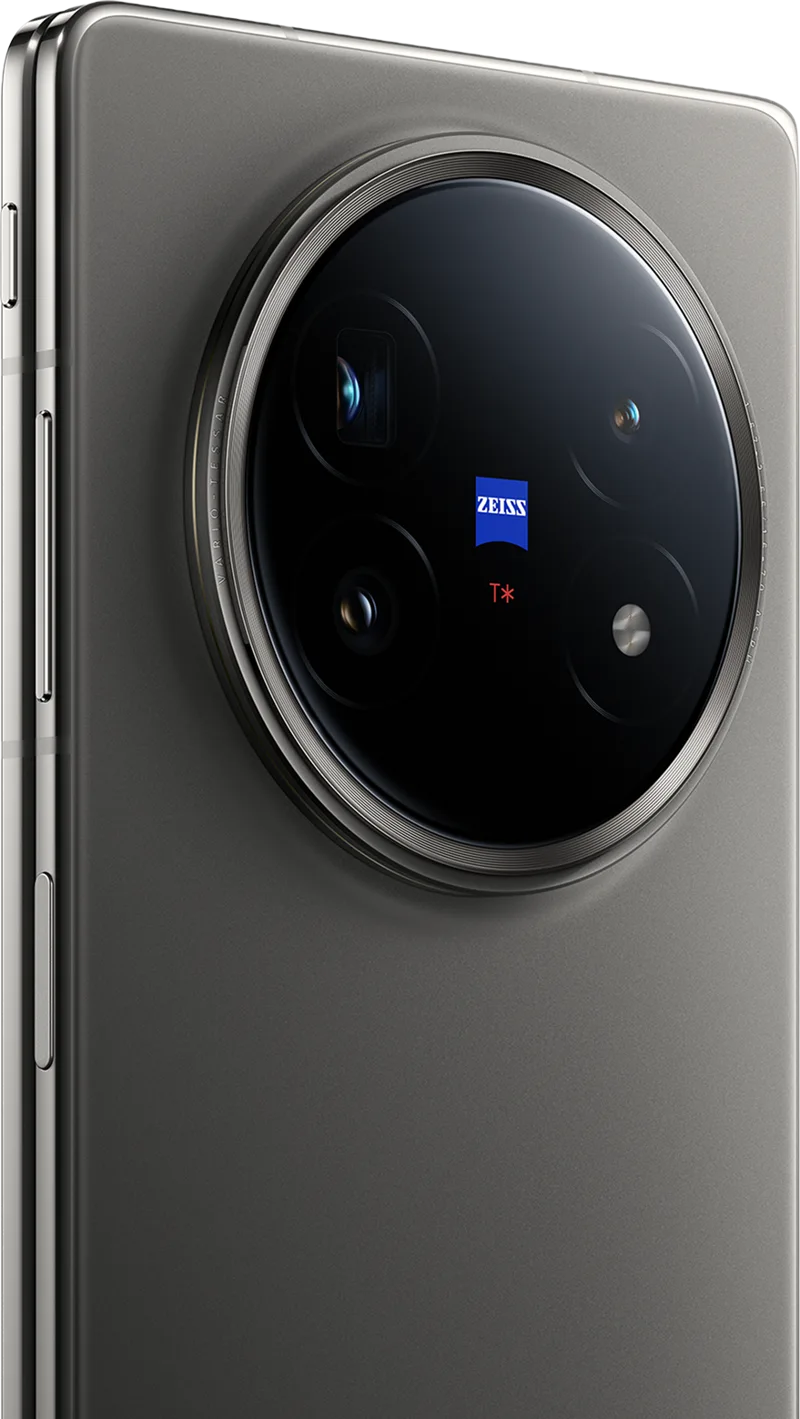
- 50MP main (1/1.56", OIS) + 50MP telephoto (3x optical, OIS, ZEISS) + 50MP ultrawide (120°)
- Front Camera
- 20MP (cover screen) + 20MP (inner screen)
- Battery
- 6,000 mAh (typical; 5,815 mAh rated), 80W wired, 40W wireless
- OS
- Funtouch OS 15, based on Android 15
- Dimensions
- 9.2 mm folded / 4.3 mm unfolded, 217 g (Titanium Gray); 9.7 mm folded / 4.55 mm unfolded, 226 g (Feather White)
- Durability
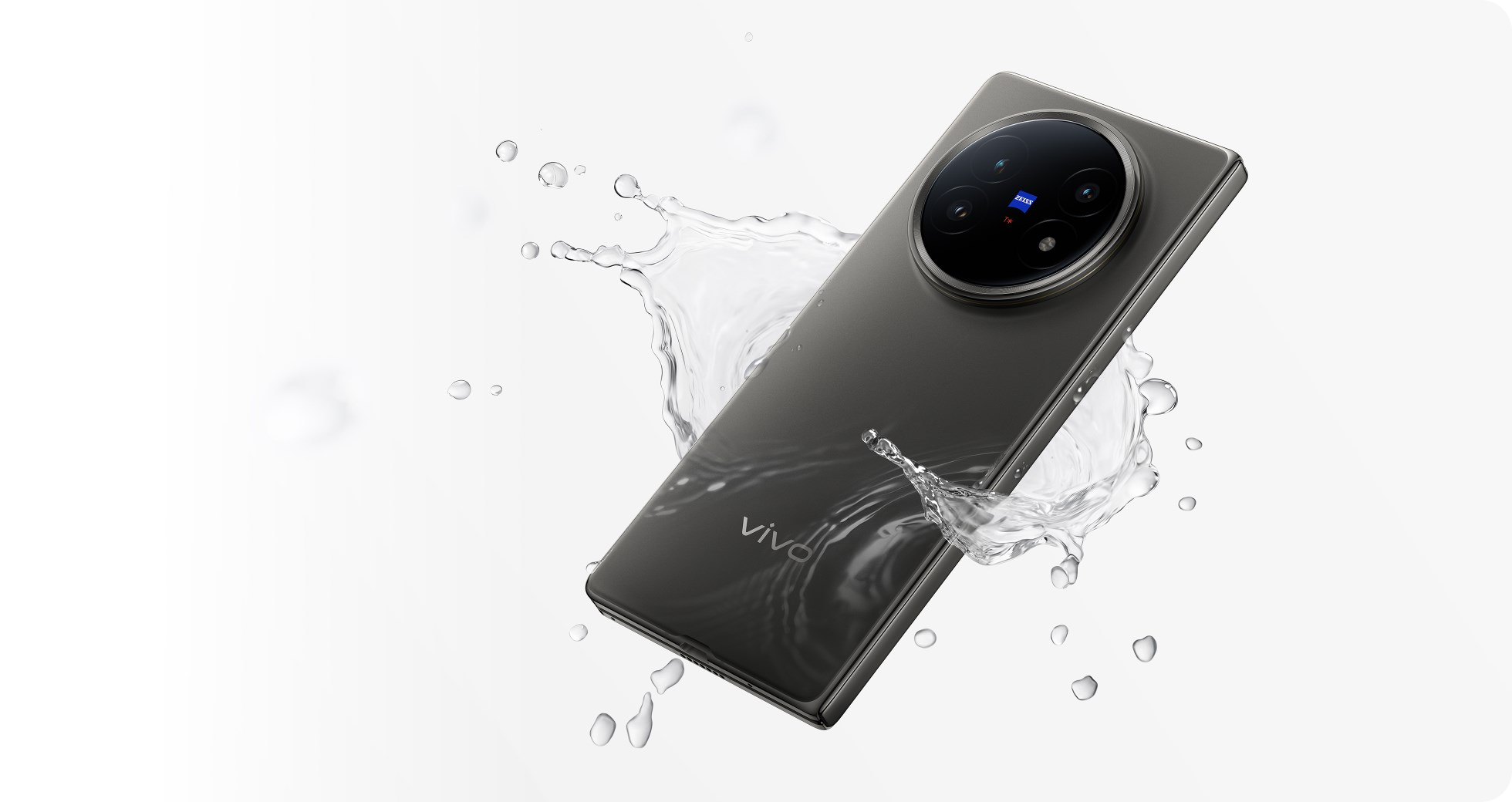
- IPX8 and IPX9 water resistance, IP5X dust resistance
- Colors
- Titanium Gray, Feather White
The vivo X Fold5 is a book-style foldable phone that vivo introduced in mid-2025 as the successor to its earlier X Fold models. It opens into an 8.03-inch inner display, keeps a 6.53-inch cover screen for use while closed, and fits a Snapdragon 8 Gen 3 chip, three 50MP rear cameras and a battery that vivo rates at 6,000 mAh into a body that weighs 217 g in the grey version. This page is based on the published specifications and manufacturer information. It looks at where the phone sits among its rivals, the design and the two displays, performance and software, the camera system, battery and charging, and the compromises that come with a foldable.
Place in the lineup
vivo sells the X Fold5 as its flagship foldable, positioned above the company's regular slab phones and aimed at buyers who want a larger screen without carrying a tablet. Its closest competitors in the book-style category are Samsung's Galaxy Z Fold7, OPPO's Find N5 and HONOR's Magic V5, and the Google equivalent is the Pixel 10 Pro Fold. All of these chase the same goal of a thin, light folding body, and the X Fold5 competes on that front with a stated thickness of 9.2 mm when folded and 4.3 mm when unfolded in the Titanium Gray finish.
The chipset is the one clear difference in generation. The X Fold5 uses the Snapdragon 8 Gen 3 rather than a newer Snapdragon 8 Elite, which is the platform in OPPO's Find N5. That is not a verdict on everyday speed, since the 8 Gen 3 remains a capable high-end chip, but it is worth knowing when you compare specification sheets. For a side-by-side view of the numbers, the vivo X Fold5 vs Galaxy Z Fold7 page lines up the two phones, and the rankings show how foldables and slab phones stack up on the same measures.
Design and displays
The headline design figure is weight and thickness. vivo lists 217 g and 9.2 mm folded for the Titanium Gray model, and 226 g and 9.7 mm folded for Feather White, with the unfolded thickness given as 4.3 mm and 4.55 mm respectively. The difference between the two colours is vivo's own, and it is a reminder that finish and construction change the numbers. Those figures are low for a phone with a 6,000 mAh battery, although as with all foldables the thin unfolded profile comes alongside a thick folded stack.
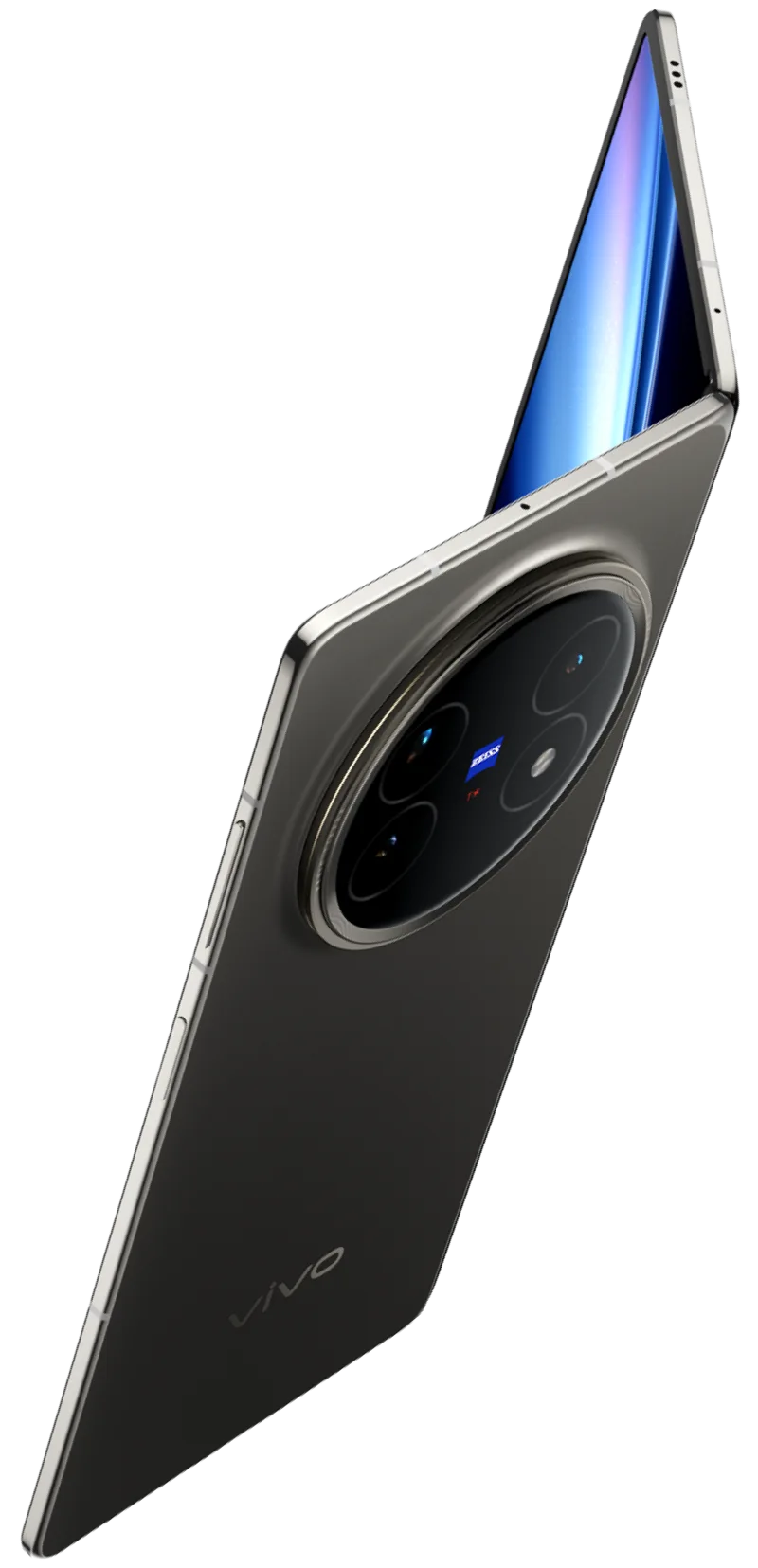
The hinge is described as a rotating-sliding design with a carbon fibre support structure, and vivo rates it for 600,000 folds. That is a manufacturer claim and not an independent result, but it gives a sense of the intended lifespan: at a hundred folds a day, it would correspond to well over a decade of use. For protection, the phone carries IPX8 and IPX9 water resistance and an IP5X dust rating. The dust figure is a step below the IP6X rating common on slab phones, and water ratings are laboratory results that do not cover wear on seals over time or damage from drops, so treat the numbers as a guide to splashes and brief immersion rather than a guarantee against fine sand.
The inner display measures 8.03 inches with a 2480 x 2200 resolution, close to square, which suits reading, split-screen work and video in letterboxed formats. The cover screen is 6.53 inches at 2748 x 1172, a tall and narrow shape that behaves like a normal phone. Both panels run at up to 120Hz with LTPO 8T adaptive refresh, and vivo quotes a peak local brightness of 4,500 nits for the two screens, with support for 1.07 billion colours. Peak brightness figures apply to small highlights on the screen and not the whole panel, so everyday outdoor readability depends on the sustained value, which the manufacturer does not publish on the page.
Performance and software
The Snapdragon 8 Gen 3 is built on a 4 nm process with a 1+5+2 core layout, led by an Arm Cortex-X4 prime core at up to 3.3 GHz, and paired with an Adreno 750 graphics processor. vivo's specifications list LPDDR5X memory and UFS 4.1 storage, and the only configuration on the official spec sheet is 16GB of RAM with 512GB of storage, with no expansion slot for either. That is a generous base for a foldable, since multitasking in a large inner window is the main reason to buy one.
The software depends on region. The global and Indian specification pages list Funtouch OS 15 on Android 15, while the product page for some markets mentions OriginOS and integration of Google's Gemini assistant. vivo promotes a set of AI office tools for the large screen, such as writing and document helpers and a call assistant, and a smart-office area aimed at people who work in two windows at once. Which of these features you get, and in which language, can differ by market, so check the version sold locally. The pages we reviewed do not state a software update commitment, so we make no claim about how many years of Android or security updates the phone will receive.
Camera system
All three rear cameras use 50MP sensors, which is unusual: many rivals pair one big main camera with weaker secondary ones. The main camera is a 1/1.56-inch sensor with an f/1.57 aperture, a 23 mm equivalent focal length and optical image stabilisation. The telephoto camera is a ZEISS-branded 1/1.95-inch sensor at f/2.55 with a 70 mm equivalent focal length, 3x optical zoom and OIS, and vivo says it can focus as close as 15 cm for macro shots and reach up to 100x with its HyperZoom processing. The ultrawide camera uses a 1/2.76-inch sensor at f/2.05 with a 120-degree field of view and a 15 mm equivalent focal length.
Two front cameras are listed, both 20MP: one on the cover screen and one in the inner display. That means video calls and selfies work in both postures, although neither is likely to match the main camera for quality. A real advantage of foldables is that you can use the better rear cameras for selfies by looking at the cover screen, and the X Fold5 supports this with its dual-display preview feature, which shows a preview on the outer screen for the person being photographed. The ZEISS partnership shapes the colour tuning and several portrait focal-length styles. As ever, these are manufacturer claims, and image quality in low light and for moving subjects is best judged from independent samples.
Battery and charging
vivo describes the battery as 6,000 mAh, made from two cells of 3,275 mAh and 2,725 mAh typical capacity, with a measured minimum value of 5,815 mAh. The gap between the typical figure and the rated minimum is worth noting. The company says 80W FlashCharge wired charging is supported, and the Indian specification page also lists wireless charging at up to 40W. For comparison, OPPO's Find N5 lists a 5,600 mAh battery with 80W wired and 50W wireless charging, so the X Fold5 is slightly bigger and slightly slower on wireless. We did not find an official charging time or battery-life test on the pages, so no runtime is claimed here.
Foldables put two screens, a modem and a more complex mechanical stack in a thin body, and the large inner display uses far more power than a typical phone panel when used at full brightness. A 6,000 mAh cell is therefore a welcome sign rather than a guarantee of two-day use. The adaptive 120Hz refresh rate, which can fall to low rates on static content, helps in practice.
Who it is for
The vivo X Fold5 suits people who want a foldable that is as light and thin as the segment allows and who value camera hardware. Three 50MP cameras, a 3x telephoto with macro ability and a big battery are reasons to consider it over a competitor that puts more weight on software features. It also suits users who want a large, nearly square canvas for reading, notes and multitasking and who are comfortable with a phone that costs more than a regular flagship.
Compromises
- Older chipset. The Snapdragon 8 Gen 3 is no longer the newest platform, so benchmark leaders from the next generation can be faster.
- Dust rating. IP5X is lower than the dust protection of most slab phones, even though the water ratings are high.
- Regional differences. Software, AI features and available colours depend on the market, and the pages we reviewed gave no US price or update policy.
- Foldable trade-offs. A visible crease, a thick folded body compared with a slab phone and a high price are common to the category and apply here as well.
In short, the X Fold5 is a camera-focused foldable with a large battery for its size, a light body and strong memory. If you are weighing it against Samsung's alternative, start with the comparison page and check which features are available in your region before deciding.
Where it ranks
Compare vivo X Fold5 with similar devices
More from vivo
Frequently asked questions
When was the vivo X Fold5 released?
The vivo X Fold5 was released on 2025-06-25, according to the manufacturer’s published information.
What are the main specs of the vivo X Fold5?
Headline figures for the vivo X Fold5: Battery: 6,000 mAh, Refresh rate: 120 Hz, Main camera: 50 MP, RAM: 16 GB. The full specification table is further up this page.
Is the vivo X Fold5 worth buying?
That depends on your priorities. Use the editorial review on this page for our view, check the rankings above to see where the device stands on battery, display and camera, and compare it directly with similar models before you decide.


