Phones
vivo V40e
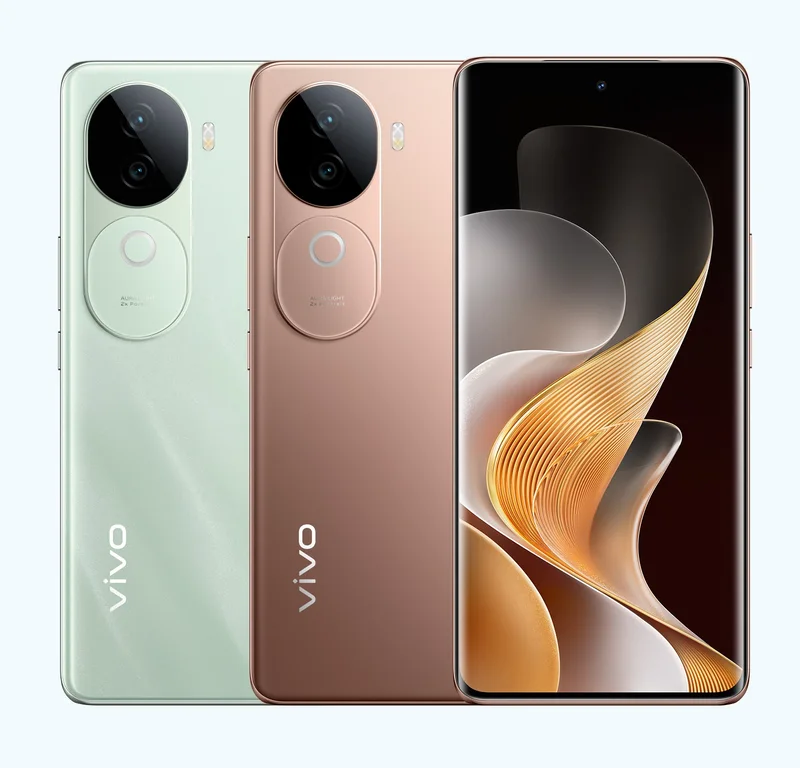
vivo's 2024 V-series model pairs a 6.77-inch curved 120Hz AMOLED and Dimensity 7300 with a 5,500 mAh battery, 80W charging and 50MP cameras front and rear (Sony IMX882 main with OIS).
Key figures at a glance
Gallery
Specifications
- Display
- 6.77" AMOLED, 3D curved, 2392 x 1080, 387 ppi, 120Hz (vivo notes 120Hz is only available in specific games), P3 color gamut, 1.07 billion colors, 93.3% screen-to-body ratio, 8,000,000:1 contrast
- Chipset
- MediaTek Dimensity 7300 (4 nm, octa-core: 4 x 2.5 GHz + 4 x 2.0 GHz)
- RAM
- 8GB
- Extended RAM
- 8GB software-based extended RAM
- Storage
- 128GB / 256GB (UFS 2.2), no expandable storage
- Rear Camera
- 50MP main (Sony IMX882, f/1.79, OIS, 79 degree FOV) + 8MP ultrawide (f/2.2, 116 degree FOV), 4K video with hybrid OIS+EIS stabilisation, dual-colour-temperature fill light (Aura Light)
- Front Camera
- 50MP autofocus group selfie camera (f/2.0, 92 degree FOV), 4K video
- Battery
- 5,500 mAh typical (5,390 mAh rated), 80W FlashCharge, Li-ion
- OS
- Funtouch OS 14, Android 14
- Dimensions
- 163.72 x 75 x 7.49 mm, 183 g, plastic composite back
- Biometrics
- In-display optical fingerprint sensor
- Connectivity
- 5G dual SIM (2 nano SIMs), Wi-Fi 2.4/5 GHz, Bluetooth 5.4, USB 2.0 (OTG supported), GPS/BeiDou/GLONASS/Galileo/QZSS; no NFC, no FM radio
- Audio
- Closed-box dual stereo speakers
- Colors
- Royal Bronze, Mint Green (India page)
The vivo V40e is a portrait-focused mid-range phone from vivo's V series, a line that has long been built around slim bodies, large batteries and selfie and portrait photography. The 2024 model keeps that formula: a 6.77-inch curved AMOLED screen, a MediaTek Dimensity 7300 chip, a 5,500 mAh battery with 80W charging, and 50MP cameras on both the front and the back. This review is based on the published specifications and manufacturer information, so vivo's statements are marked as claims and not as measured results. The specification details come from vivo's India product and parameter pages; other markets may differ.
Where the V40e fits in vivo's lineup
vivo's V series sits between the budget Y line and the flagship X series. Inside the V family, the V40e is the more affordable sibling, with a plastic composite back and a mid-range chip. Its successors continue the story: the vivo V50e carries the "e" idea forward, the vivo V50 is the main model of the following generation, and the vivo V60 follows after that. If you are weighing a V40e against one of those newer phones, the comparison page V40e versus V50 shows the specification differences side by side, and the rankings page shows where the V40e lands across all phones based on its published data.
Design and display
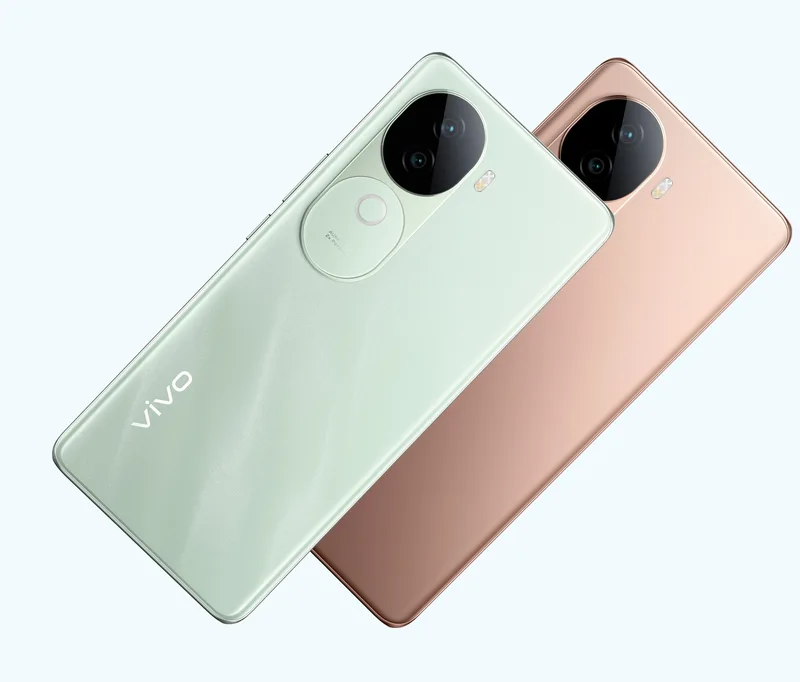
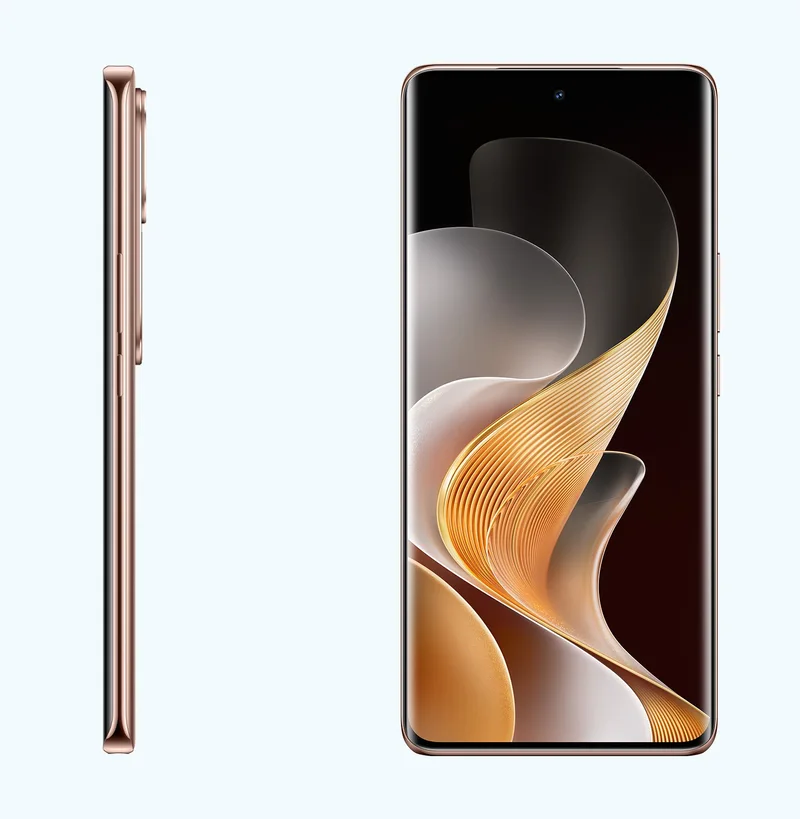
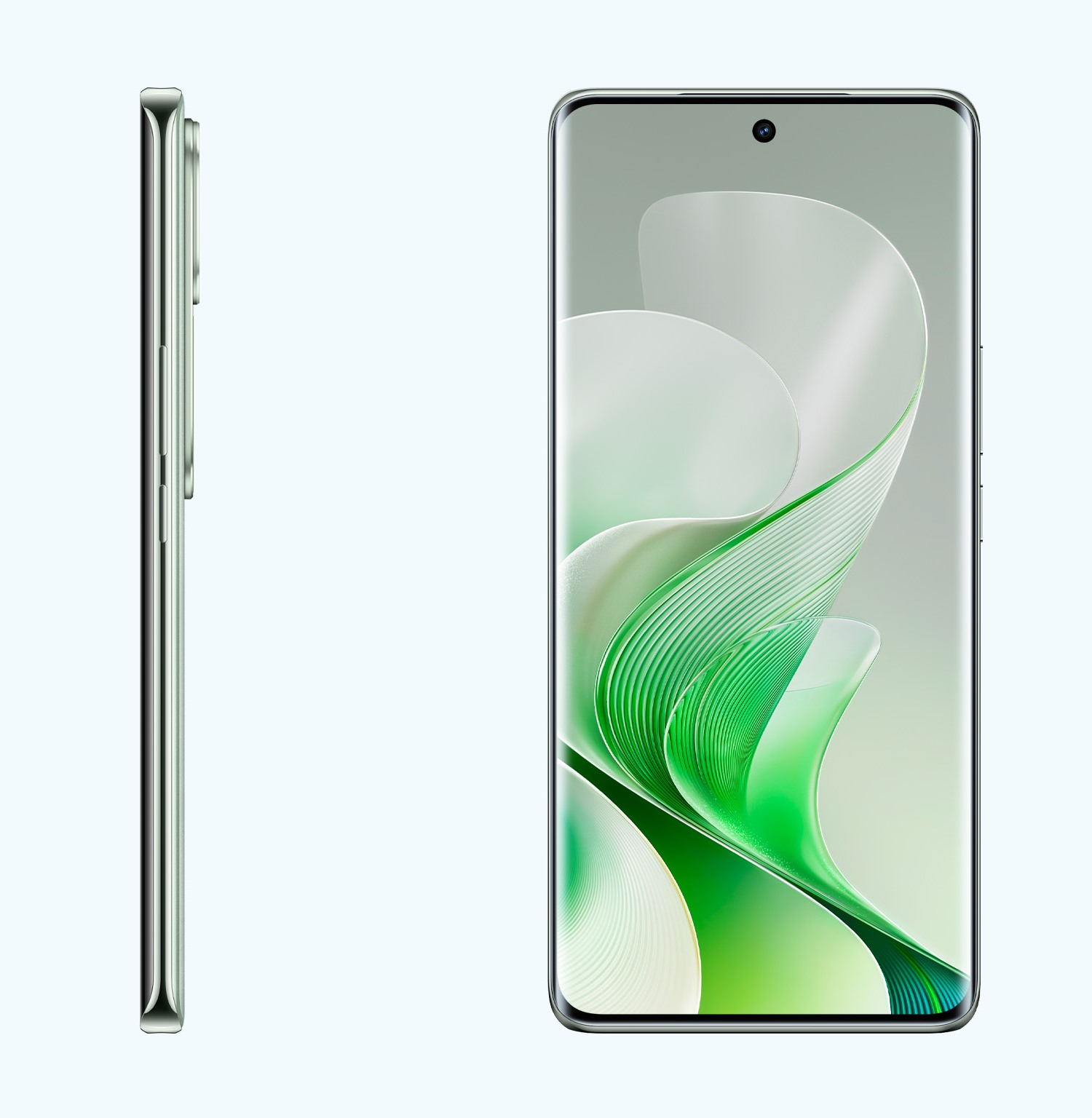
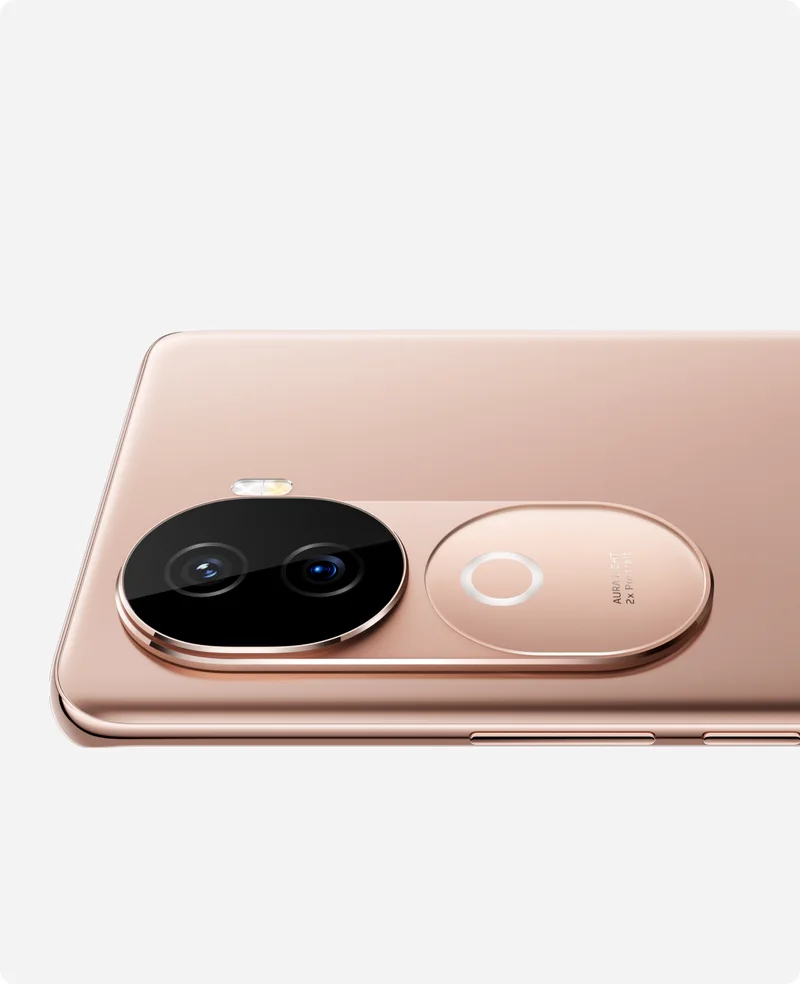
vivo describes the V40e as an ultra-slim phone: 7.49 mm thick and 183 g according to the parameter page, with a 3D curved display and a camera module built around an oval "Infinity Eye" ring with a ring-shaped Aura Light panel below it. The back is a plastic composite sheet, not glass, which helps explain the low weight. The India page lists two colours, Royal Bronze and Mint Green; colour names can differ by market.
The display is a 6.77-inch AMOLED panel with a resolution of 2392 x 1080 pixels, about 387 ppi, P3 colour gamut and 1.07 billion colours. vivo quotes a 93.3% screen-to-body ratio and an 8,000,000:1 contrast ratio, and it lists SGS low blue light certification. The refresh rate is given as 120Hz, but vivo's own footnote says that 120Hz is only available in specific games, so you should not assume a fully adaptive 120Hz experience in everyday scrolling. The parameter page lists local peak brightness as "not supported", meaning vivo does not publish a peak-brightness number for this model, so bright-sunlight behaviour is something to check in independent testing. An in-display optical fingerprint sensor handles biometrics; the page does not mention a face-unlock specification.
Performance and software
The V40e uses the MediaTek Dimensity 7300, an octa-core chip built on a 4 nm process with four cores at up to 2.5 GHz and four at up to 2.0 GHz. vivo claims lower power consumption than the Dimensity 7050 based on MediaTek lab data. In practice this class of chip is aimed at smooth everyday use, social apps, video and casual to moderate gaming rather than sustained high-end 3D titles.
Memory comes as 8GB of LPDDR4X RAM with 128GB or 256GB of UFS 2.2 storage; the parameter page states that expandable storage is not supported. vivo also offers 8GB of extended RAM, which is realised by software, using part of the storage as virtual memory, and vivo itself notes this in the footnotes. The physical RAM figure is therefore 8GB, and extended RAM should be seen as a convenience for keeping more apps alive and not as a replacement for real memory. UFS 2.2 is an older storage standard than the UFS 3.x and 4.0 found in pricier phones, so app installs and large file copies will not be class-leading.
The software is Funtouch OS 14 based on Android 14. The India page does not state a software-update promise for this model, so we do not repeat any figure here. Features that vivo highlights include AI Eraser for removing objects from photos, an AI Photo Enhancer, a Vlog Movie Creator mode, and a Dynamic Light effect, where the ring on the back glows for calls, messages and photo countdowns.
Camera
The rear setup has a 50MP main camera using the Sony IMX882 sensor with an f/1.79 aperture and optical image stabilisation, plus an 8MP ultrawide camera with a 116 degree field of view and f/2.2 aperture. No telephoto lens is listed; instead, vivo offers a 2x professional portrait mode and a dual-colour-temperature fill light called Aura Light that can be adjusted between 1900K and 5000K. vivo says Aura Light, together with its HD portrait algorithm, improves night and low-light portraits. As always with manufacturer claims of this kind, how natural the results look is a matter of tuning and is best judged from independent sample photos.
Video recording goes up to 4K on both the rear and the front camera. The rear main camera combines OIS and electronic stabilisation, which vivo markets as Ultra-Stable mode; the footnotes say this mode is available only on the rear camera. The front camera is a 50MP autofocus unit with an f/2.0 aperture and a 92 degree field of view, designed for group selfies. A 50MP autofocus selfie camera is unusual in this segment and is probably the phone's most distinctive hardware point alongside its battery.
The camera app offers night, portrait, pano, slow motion, time-lapse, document and pro modes on the rear, and dual-view and live photo modes on both sides. The parameter page lists video playback support for common formats such as MP4, MKV and WEBM, and recording in MP4.
Battery and charging
The battery has a typical capacity of 5,500 mAh and a rated capacity of 5,390 mAh. vivo states that this is the slimmest phone in the 5,500 mAh battery category in India according to internal research as of August 27, 2024, which is a marketing comparison and not an industry standard. Charging runs at up to 80W with the charger in the box; vivo's lab claim is that five seconds of charging is enough to wake a fully drained phone. The company also quotes about 98 hours of music playback and about 20 hours of YouTube playback, both from internal tests under specific conditions, such as a screen brightness of 150 nits, so real-life figures will vary. For comparison, the V40e has no wireless charging listed.
Connectivity, audio and durability
The phone supports 5G with two nano SIM slots, Wi-Fi on 2.4 and 5 GHz, Bluetooth 5.4, GPS with BeiDou, GLONASS, Galileo and QZSS, and a USB 2.0 port with OTG. The parameter page lists NFC as not supported, which matters in markets where contactless phone payments are common, and FM radio is not supported either. Audio comes from closed-box dual stereo speakers; vivo claims up to 300% maximum volume.
vivo describes extensive durability testing, including more than 100 drops from one metre and tests for temperature, humidity, button presses and torsion. The pages we reviewed do not state an IP dust or water resistance rating for the V40e, so assume no formal water resistance and treat splash protection as unconfirmed.
Who it is for
The V40e makes the most sense for people who care more about selfies, group photos and portraits than about raw speed: the 50MP autofocus front camera, the Aura Light fill light and the curved AMOLED screen are its strengths, along with a large battery in a body that weighs only 183 g. It also suits users who want fast charging at 80W without paying for a flagship.
Compromises to know about
- No NFC and no formal water-resistance rating on the published pages.
- 120Hz only in specific games, according to vivo's own footnote, plus no published peak brightness.
- Older UFS 2.2 storage and LPDDR4X memory, and no expandable storage.
- No telephoto camera is listed; the 2x professional portrait mode is vivo's answer for portraits.
- Plastic composite back instead of glass or metal, and USB 2.0 transfer speeds.
- Extended RAM is software-based; the real memory is 8GB.
Overall, the vivo V40e is a well-specified portrait and battery phone for the price class, with a few clear omissions. Check the V50e page if you prefer a newer model in the same family, and use the rankings to see how its published numbers compare with the wider market.
Where it ranks
Compare vivo V40e with similar devices
More from vivo
Frequently asked questions
When was the vivo V40e released?
The vivo V40e was released on 2024-09-26, according to the manufacturer’s published information.
What are the main specs of the vivo V40e?
Headline figures for the vivo V40e: Battery: 5,500 mAh, Refresh rate: 120 Hz, Main camera: 50 MP, RAM: 8 GB. The full specification table is further up this page.
Is the vivo V40e worth buying?
That depends on your priorities. Use the editorial review on this page for our view, check the rankings above to see where the device stands on battery, display and camera, and compare it directly with similar models before you decide.


