Phones
OPPO Reno14 F
The OPPO Reno14 F targets everyday buyers with a 6.57-inch 120Hz AMOLED, Snapdragon 6 Gen 1, a 32MP front camera, microSD support and a 6000 mAh battery with 45W charging.
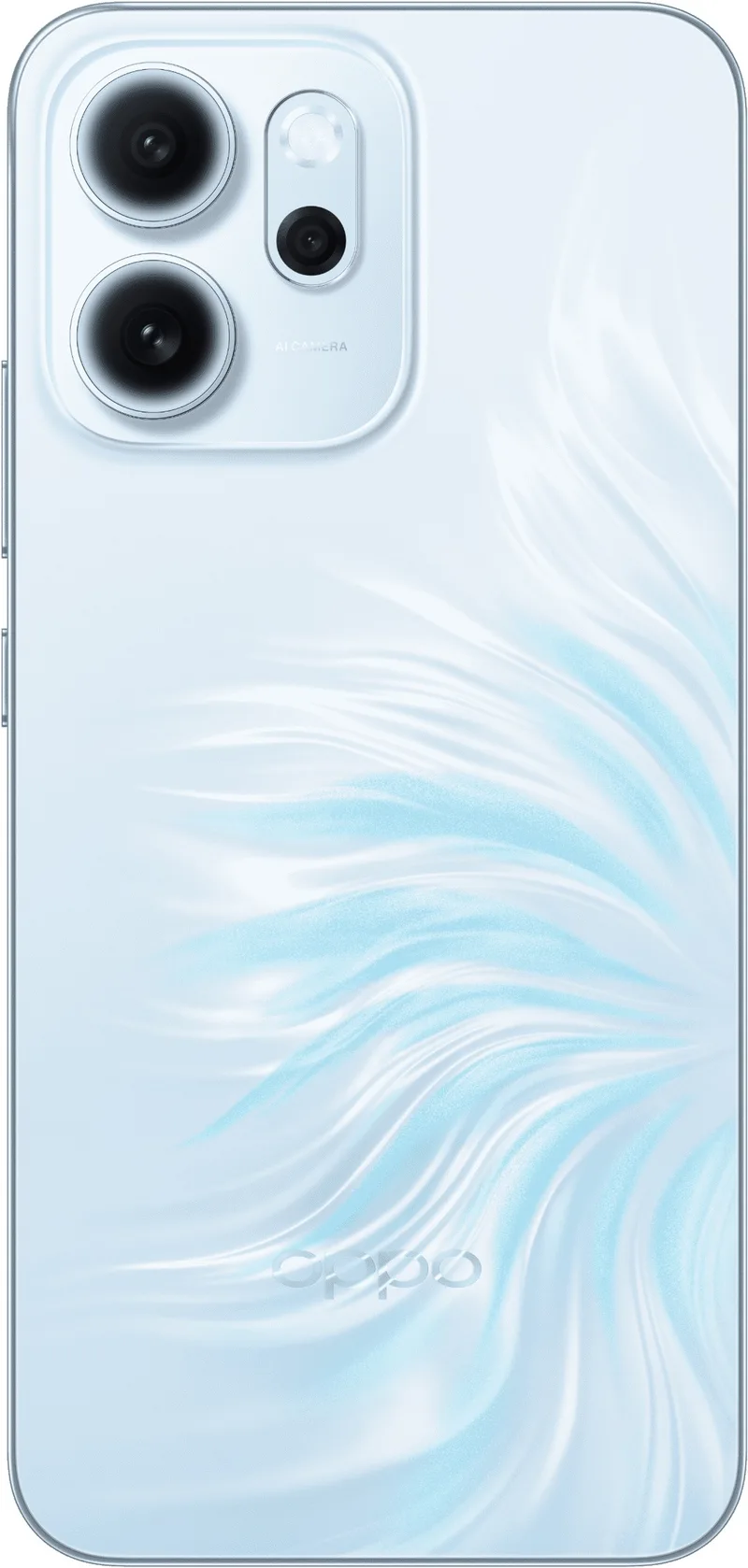
Key figures at a glance
Gallery
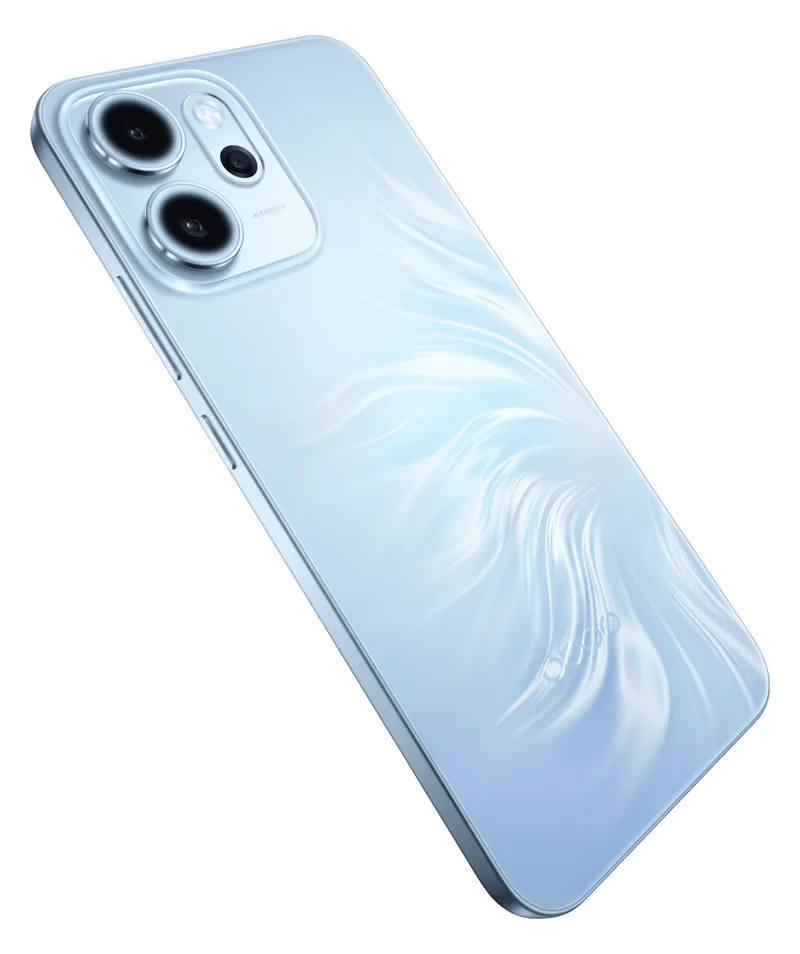



Specifications
- Display
- 6.57" AMOLED (flexible), 2372 x 1080, up to 120Hz (60/90/120Hz), 1400 nits peak (HBM, typical), AGC Dragontrail DT-STAR D+
- Chipset
- Qualcomm Snapdragon 6 Gen 1
- RAM
- 12GB
- Storage
- 256GB / 512GB (UFS 3.1, microSD supported)
- Rear Camera
- 50MP main (f/1.8, OIS) + 8MP ultra-wide (f/2.2) + 2MP macro (f/2.4)
- Front Camera
- 32MP (f/2.0, autofocus)
- Battery
- 6000 mAh (typical), 45W SUPERVOOC wired
- OS
- ColorOS 15.0
- Dimensions
- 158.12 x 74.97 x 7.69 mm (Glossy Pink) to 7.78 mm (Opal Blue), about 180 g
- Protection
- IP69 water and dust resistance
- Connectivity
- Wi-Fi 5, Bluetooth 5.1, NFC, USB Type-C
The OPPO Reno14 F is the practical member of the Reno14 trio. It leaves out the telephoto lens, the flagship-adjacent Dimensity chip and the 80W charger of its siblings, and in return it keeps a bright 6.57-inch 120Hz AMOLED panel, a 6000 mAh battery, a 32MP selfie camera, IP69 resistance and, unusually, a microSD slot. This article is based on the specifications and product page OPPO publishes on its global site. Statements from the manufacturer are reported as such, and there are no independent measurements behind them.
A ledger rather than a verdict
Mid-range phones are about trade-offs, so it is easiest to read this one as a ledger of what is gained and what is given up compared with the OPPO Reno14 and the OPPO Reno14 Pro.
Given up: the 3.5x telephoto lens, a better ultra-wide, the faster MediaTek platform, 80W charging and, compared with the Pro, wireless charging. The F has three rear cameras on paper, but only one of them is a real workhorse: a 50MP main camera with f/1.8 and optical stabilisation. The other two are an 8MP ultra-wide (f/2.2) and a 2MP macro (f/2.4).
Gained: a brighter screen on paper (OPPO lists 1400 nits in high-brightness mode, against 1200 on the other two), memory card support, up to 512GB of storage on top of that slot, and a lighter body at about 180 g. OPPO places the F as the simpler model of the series, but the pages we consulted do not list a price, so we cannot say by how much.
One further difference worth noting is the glass: the F uses AGC Dragontrail DT-STAR D+ on the front rather than Gorilla Glass 7i.
Display
The screen is a flexible AMOLED of 6.57 inches with a resolution of 2372 x 1080 pixels. The refresh rate reaches 120Hz, with 60, 90 and 120Hz modes, and touch sampling reaches 240Hz. OPPO gives a typical brightness of 600 nits and a peak of 1400 nits in high-brightness mode, a screen-to-body ratio of 93.04 percent and 1.07 billion colours. A Splash Touch mode for wet fingers and a glove mode are included in OPPO's feature list. HDR10+ certification is not listed for this model, which is a small difference from the other two.
Chip, memory and software
The Qualcomm Snapdragon 6 Gen 1 is an eight-core platform for everyday use. OPPO's marketing talks about 35 percent more CPU and 30 percent more GPU performance, but the baseline is not named, so those percentages are a direction rather than a comparison you can rely on. Memory comes in 8GB or 12GB of LPDDR4X, which is the older and slower standard, with UFS 3.1 storage of 256GB or 512GB and a microSD slot for expansion. Three configurations are listed: 8GB with 256GB, 12GB with 256GB and 12GB with 512GB.
The phone runs ColorOS 15.0 with Google Gemini and OPPO's AI tools: AI Recompose, AI Perfect Shot, AI Style Transfer, AI Translate, VoiceScribe and AI Call Summary, plus BeaconLink 2.0 for offline messages and O+ Connect for sharing with Apple devices. OPPO notes that part of the AI feature list may arrive after launch through updates and may vary by country.
Gaming is not the focus, but OPPO still lists an ultra-thin dual-drive cooling system with a 4290 mm² vapour chamber and 9130 mm² of graphite, AI HyperBoost 2.0 frame control and AI LinkBoost 3.0 for network switching. The company says a MOBA game holds a stable frame rate for about ten hours at 25 degrees and eight hours at 35 degrees in its own test. Those figures are the manufacturer's, and they suggest comfort for casual gaming rather than sustained heavy play.
Camera: where the price shows
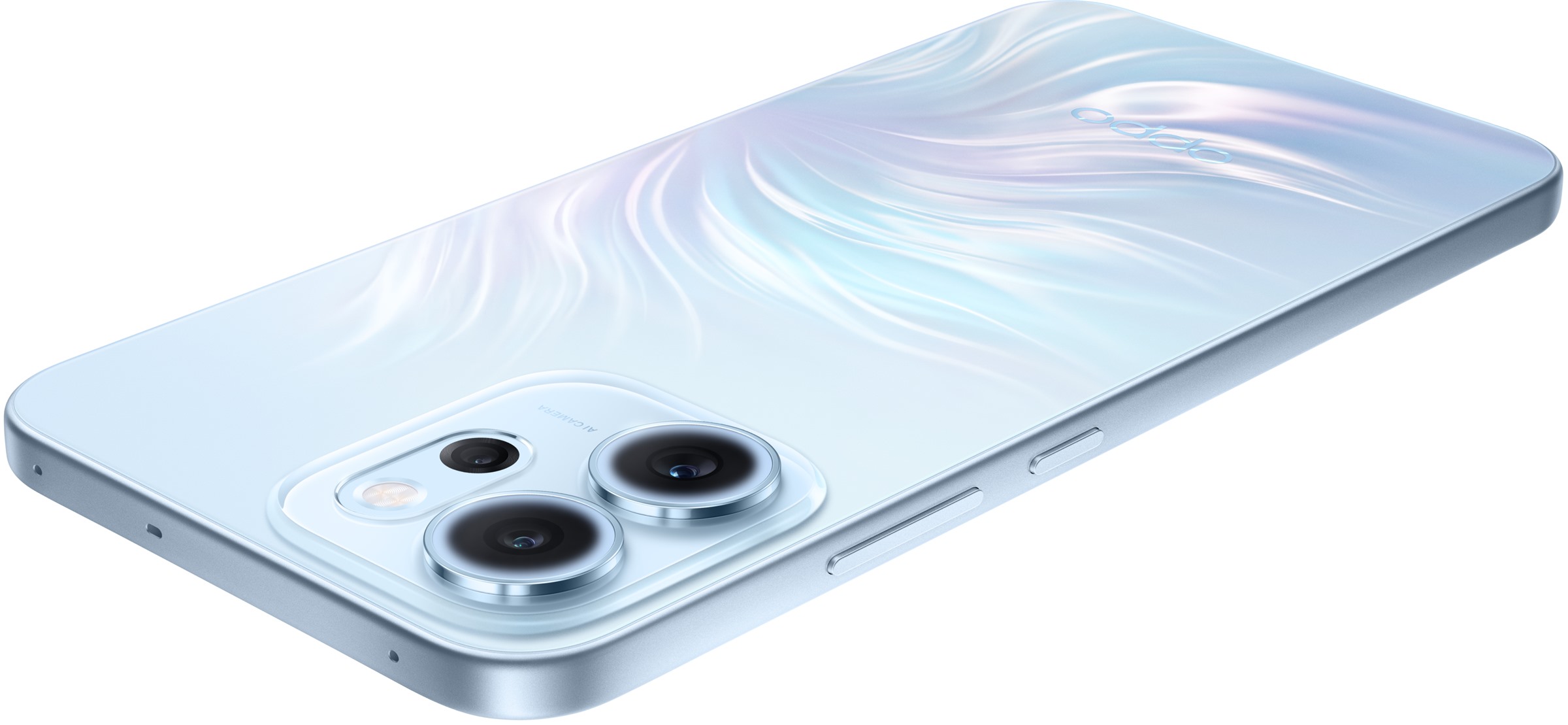
The 50MP main camera uses a Sony IMX882 sensor, according to OPPO, and is the one to judge the phone by. OPPO's headline feature is the flash. The company says the flash is 100 percent brighter than that of the Reno13 F 5G, and it pairs it with AI Flash Motion Photo for evening shots. In plain terms, this is a phone for people who photograph friends in restaurants and parties, not for people who want a zoom lens.
The 8MP ultra-wide has a 112 degree field of view; the 2MP macro has 89 degrees. A 2MP macro sensor produces limited detail and is generally a checklist item rather than a creative tool. The 32MP front camera, with f/2.0 and autofocus, is a better selfie sensor than that of many rivals at a similar level, although video is more restricted: the front camera records up to 1080p at 30 fps, and OPPO lists no 4K option for it. Still, the company advertises 4K recording for the rear camera and lists Underwater, Dual-view video, Time-lapse and Slow-mo modes.
Battery and charging
The battery is 6000 mAh typical (5830 mAh rated), and OPPO gives 2.24 days of use in its own usage model. Charging is 45W SUPERVOOC, with compatibility for 33W; OPPO says a full charge from 1 to 100 percent takes about 79 minutes and that ten minutes of charging provide about 7.4 hours of calls. That is nearly half an hour slower than the 80W models, so this is the most tangible price of the cheaper tier. There is no wireless charging.
Build and durability
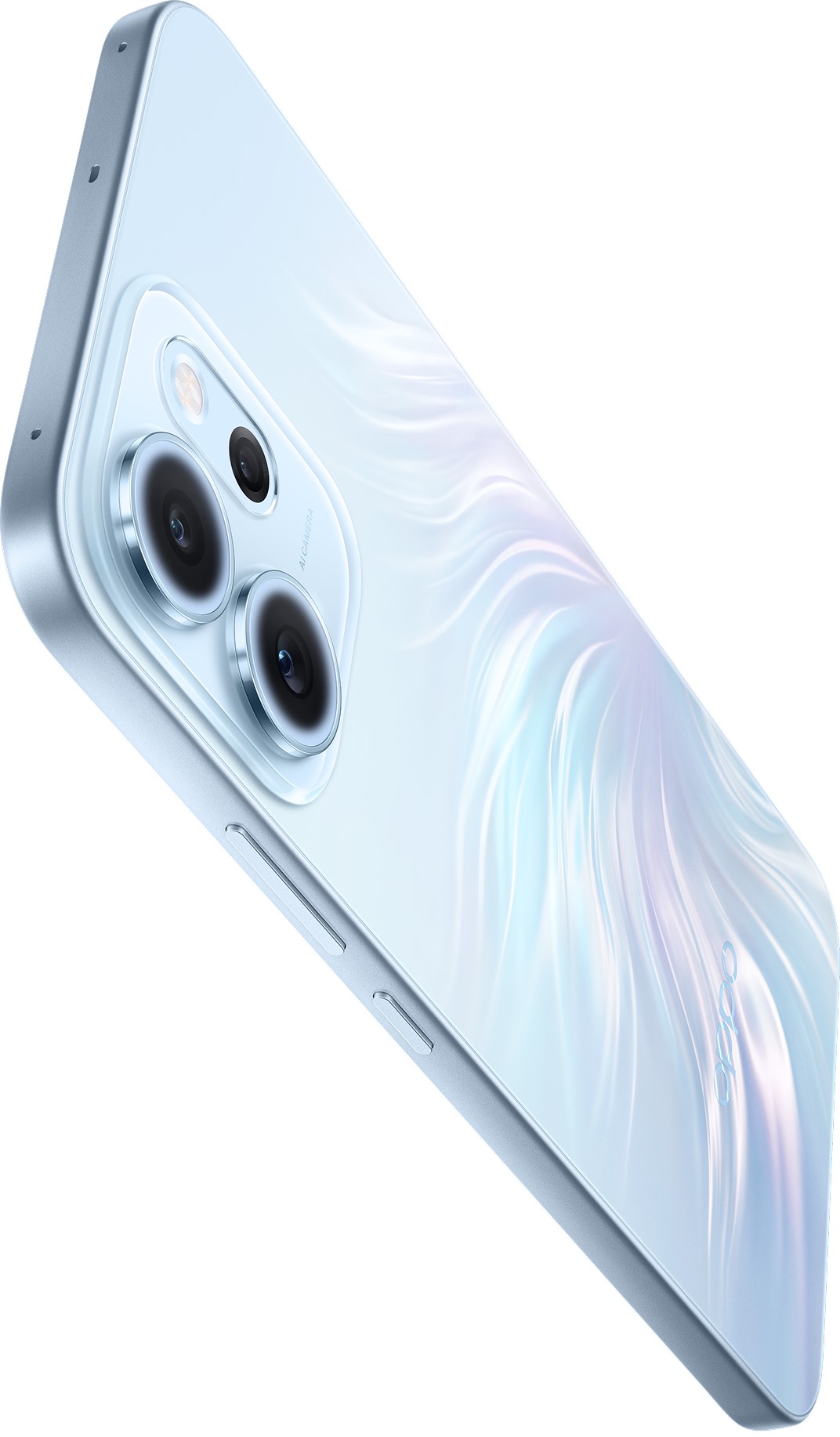
The phone is 158.12 mm tall and 74.97 mm wide, with thickness of 7.69 mm in Glossy Pink, 7.74 mm in Luminous Green and 7.78 mm in Opal Blue, and it weighs about 180 g, lighter than both siblings. OPPO states IP69 water and dust resistance and presents underwater photo and 4K video modes. As with the other two, the manufacturer's own advice is to treat water resistance as a laboratory rating and not to expect it to last forever. The three colours are Opal Blue, Luminous Green and Glossy Pink.
Connectivity
This is where the F shows its tier most plainly. It has Wi-Fi 5 (802.11ac) rather than Wi-Fi 6E, Bluetooth 5.1 and a single-stream Wi-Fi design. NFC and a USB-C port are present, and the SIM tray accepts dual SIMs. If you rely on fast Wi-Fi at home, you will notice the difference compared with the other two.
Who should buy it
The Reno14 F fits people who want a good-looking phone with a bright screen, a big battery and a flash they can lean on for night shots, without spending on a telephoto lens or the fastest charging. The microSD slot makes it attractive for those who keep many photos and videos. Anyone who needs fast gaming, zoom photography or very quick charging should look at the standard Reno14 or at a rival, for example in the OPPO Reno14 F vs Galaxy A56 comparison, and the rankings show where it stands overall. As noted above, this page carries no price because the pages we consulted list none.
Where it ranks
Compare OPPO Reno14 F with similar devices
More from OPPO
Frequently asked questions
When was the OPPO Reno14 F released?
The OPPO Reno14 F was released on 2025-07-01, according to the manufacturer’s published information.
What are the main specs of the OPPO Reno14 F?
Headline figures for the OPPO Reno14 F: Battery: 6,000 mAh, Refresh rate: 120 Hz, Main camera: 50 MP, RAM: 12 GB. The full specification table is further up this page.
Is the OPPO Reno14 F worth buying?
That depends on your priorities. Use the editorial review on this page for our view, check the rankings above to see where the device stands on battery, display and camera, and compare it directly with similar models before you decide.


