Phones
OPPO Reno14
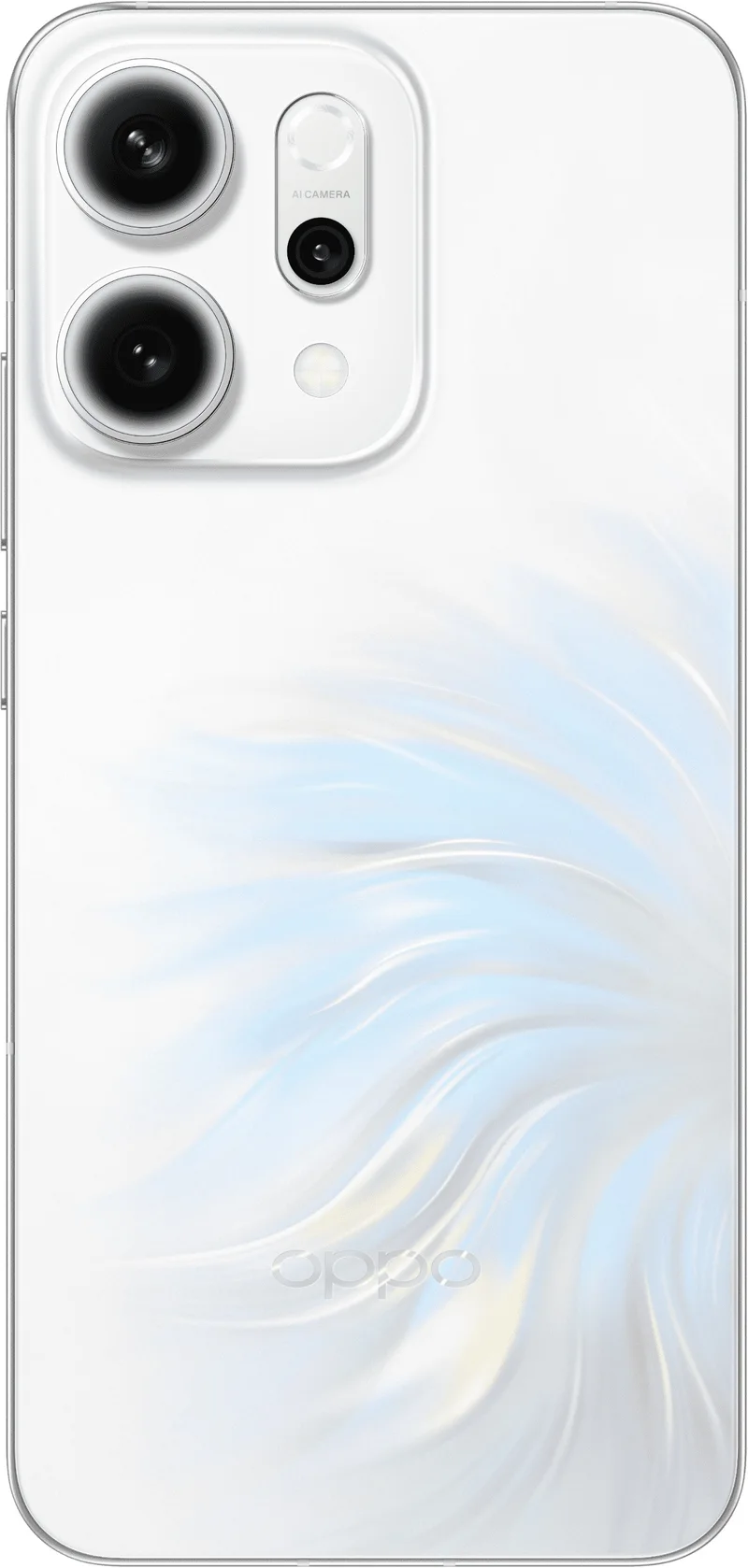
The OPPO Reno14 is the slimmer 6.59-inch sibling: Dimensity 8350, a 50MP main camera plus a 50MP 3.5x telephoto, a 6000 mAh battery and 80W wired charging at 187 g.
Key figures at a glance
Gallery


Specifications
- Display
- 6.59" AMOLED (flexible), 1256 x 2760, up to 120Hz (60/90/120Hz), 1200 nits peak (HBM, typical), Gorilla Glass 7i
- Chipset
- MediaTek Dimensity 8350 (4nm)
- RAM
- 12GB
- Storage
- 256GB / 512GB (UFS 3.1, no card slot)
- Rear Camera
- 50MP main (f/1.8, OIS) + 50MP 3.5x telephoto (f/2.8, OIS) + 8MP ultra-wide (f/2.2, autofocus)
- Front Camera
- 50MP (f/2.0, autofocus)
- Battery
- 6000 mAh (typical), 80W SUPERVOOC wired
- OS
- ColorOS 15.0
- Dimensions
- 157.90 x 74.73 x 7.42 mm, about 187 g
- Protection
- IP69 water and dust resistance
- Connectivity
- Wi-Fi 6E, Bluetooth 5.4, NFC (region dependent), USB Type-C
If the OPPO Reno14 Pro is the maximalist of the family, the OPPO Reno14 is the one that tries to stay pleasant to hold. At about 187 g and 7.42 mm thick, with a 6.59-inch 120Hz AMOLED screen, it keeps a 50MP main camera and a 50MP 3.5x telephoto while moving to the MediaTek Dimensity 8350 and a 6000 mAh battery. This article is based on OPPO's published global specifications and product page and treats the company's statements as claims, not as results of independent testing.
The case for the lighter Reno
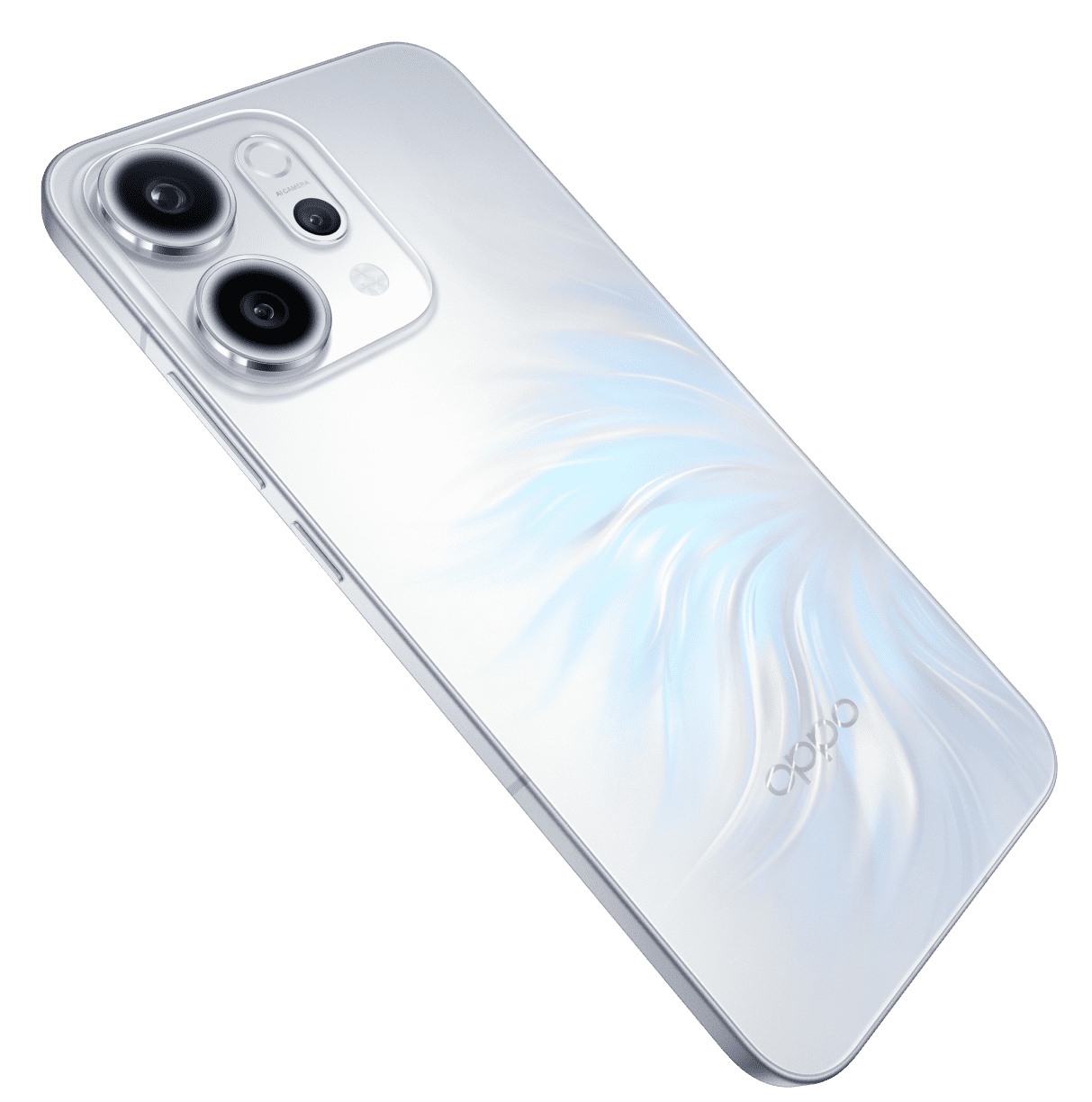
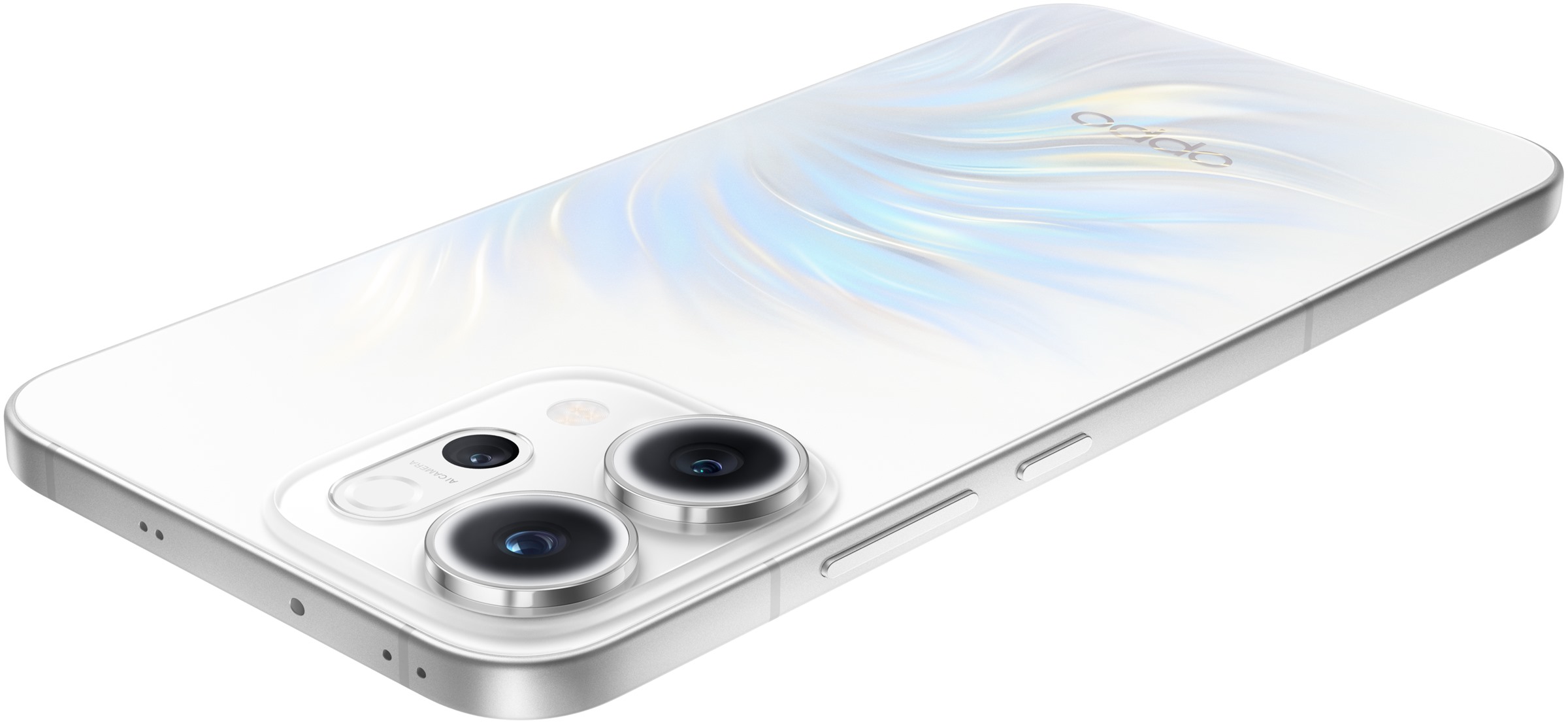
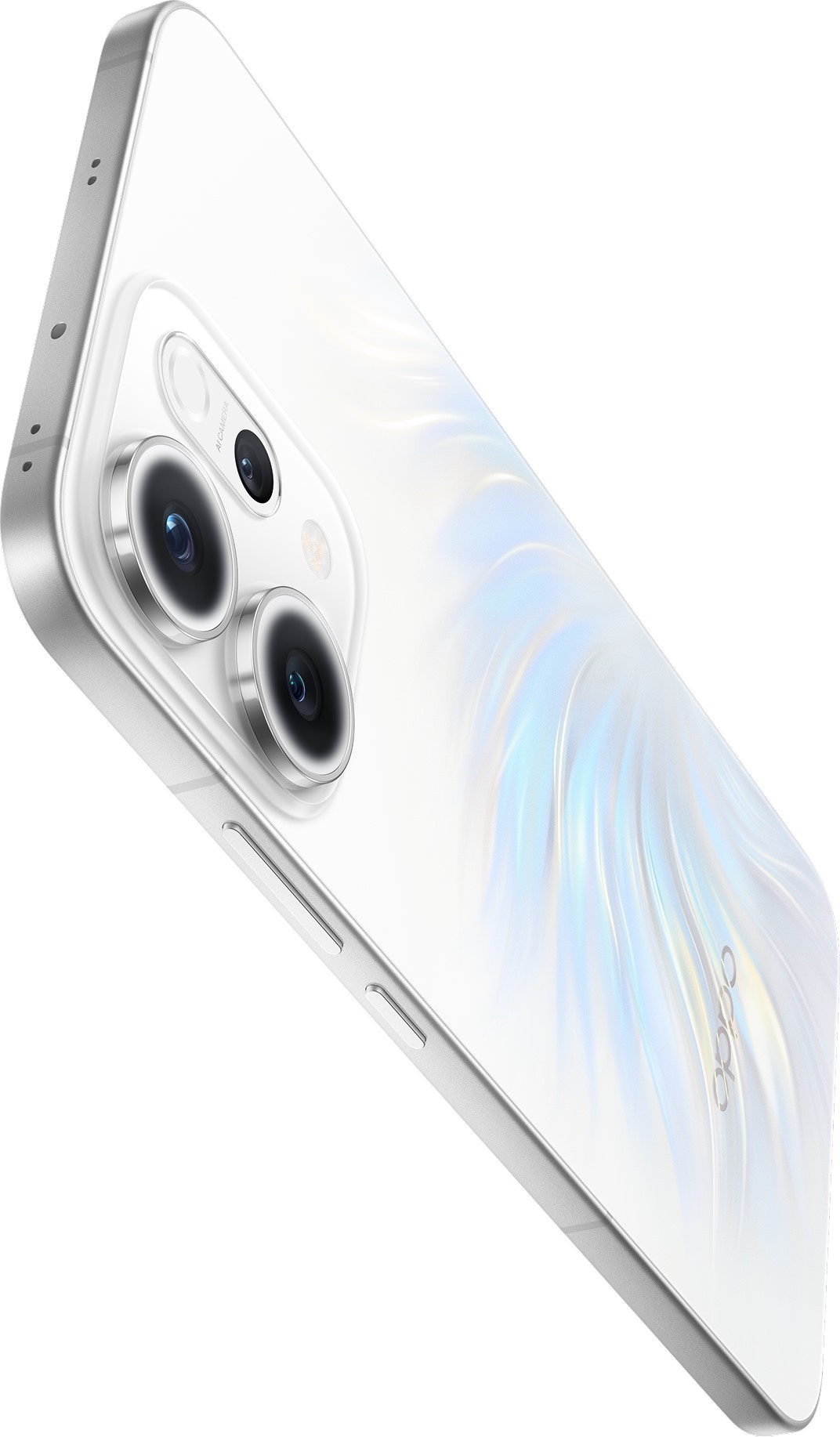
Phones keep growing, and most buyers notice the weight in the first week. OPPO's specification page lists the Reno14 at 157.90 mm high, 74.73 mm wide and 7.42 mm thick, at about 187 g. The Pro is 163.35 x 76.98 mm and about 201 g. Fourteen grams and a few millimetres sound minor on a spec sheet, but they decide whether a phone slips easily into a jeans pocket or a small bag. OPPO markets the Reno14 as an ultra-slim phone that is pocket-friendly, and it ships in two colours, Opal White and Luminous Green. The white one uses what the company calls an Iridescent Glow Process; the green one carries a ring-shaped highlight that OPPO names Luminous Loop.
The back is a single piece of sculpted glass with a matte velvet finish, according to OPPO, framed by an aerospace-grade aluminium alloy. As with all such descriptions, they are the maker's wording rather than a lab result. What can be checked on paper is the glass on the front: Gorilla Glass 7i, the same as on the Pro.
The spec sheet in plain language
Screen: a flexible AMOLED, 6.59 inches, 1256 x 2760 pixels, with a refresh rate of up to 120Hz in 60, 90 and 120Hz modes and touch sampling of up to 240Hz. Brightness is listed as 600 nits typical and 1200 nits in high-brightness mode. OPPO also lists HDR10+ certification, 1.07 billion colours and a Splash Touch mode for wet fingers.
Chip and memory: MediaTek Dimensity 8350 on a 4nm process with eight cores, 12GB of LPDDR5X RAM and UFS 3.1 storage in 256GB or 512GB. There is no memory card slot. OPPO's marketing claims 20 percent better multi-core CPU peak performance, 60 percent more GPU peak performance and a 230 percent better overall NPU experience; the comparison baseline is not stated on the page, so we use those numbers only to show the direction of travel.
Cameras: a 50MP main camera (f/1.8, optical stabilisation, a Sony IMX882 sensor according to OPPO), a 50MP telephoto (f/2.8, stabilised, 3.5x optical zoom) and an 8MP ultra-wide (f/2.2, autofocus). The front camera is 50MP at f/2.0 with autofocus.
Battery: 6000 mAh typical (5840 mAh rated), 80W SUPERVOOC wired charging. The specification page lists no wireless charging for this model.
Software and connectivity: ColorOS 15.0, Wi-Fi 6E, Bluetooth 5.4 with LDAC and LHDC 5.0, USB-C, dual SIM and NFC (which OPPO says depends on the region).
A day with it, as an illustration
The following is not a test report; it is a walk through how the published numbers might play out.
Morning. OPPO claims about 2.25 days of use on a charge in its own usage model and a 1 to 100 percent charge in 48 minutes. If those claims hold in your hands, a quick top-up while you shower covers a large part of a day. The company also states that a ten-minute charge gives about 12.8 hours of call time, which is a more practical figure than a full charge time.
Midday. The 6.59-inch panel with HDR10+ is large enough for video, yet the phone is narrow enough to type with one hand. The Splash Touch and glove modes are useful in rain or winter.
Evening. Here the telephoto matters. Many phones at this price skip a dedicated tele lens; the Reno14 keeps a 50MP one with 3.5x zoom, which suits portraits and street shots. OPPO's triple flash design and AI Flash Motion Photo are aimed at dim restaurants and parties. The ultra-wide is the weak point: at 8MP it is far less detailed than the Pro's 50MP lens, which matters for landscapes and architecture.
Reno14 versus Reno14 Pro, point by point
- Size and weight: 6.59 inches and 187 g, against 6.83 inches and 201 g on the Pro.
- Chip: Dimensity 8350 against Dimensity 8450. OPPO's cooling description shows smaller areas as well: a 4700 mm² vapour chamber and 16596 mm² of graphite, against 5300 and 18755 mm² on the Pro.
- Ultra-wide: 8MP against 50MP.
- Battery: 6000 mAh against 6200 mAh, both with 80W wired charging, and wireless charging listed only for the Pro.
The main camera and the telephoto are the same on paper, which is the good news for photographers on a tighter budget.
Gaming and cooling
OPPO makes more of gaming than the chip tier would suggest. The Reno14 page speaks of three hours of 120 frames per second in a MOBA title and three hours at 60 frames per second in a shooter, plus about ten hours of stable frame rate at 25 degrees and about eight hours at 35 degrees, all in the company's own tests. The cooling system with a 4700 mm² vapour chamber is meant to keep the temperature of the casing under control. Treat these as best-case claims and do not expect flagship-level sustained performance from a mid-range chip.
Software and everyday intelligence
ColorOS 15.0 comes with Google Gemini and a package of OPPO AI tools. The photo tools include AI Recompose, AI Perfect Shot and AI Style Transfer; communication tools include AI Translate, VoiceScribe and AI Call Summary; and BeaconLink 2.0 offers messages without Wi-Fi or a mobile signal. OPPO adds that some features may be delivered by an update after launch and may differ by region, so check what is available in your market before relying on any of them.
Water and dust
OPPO states IP69 water and dust resistance and presents underwater photos and 4K video as a use case. That is a strong claim for a phone at this level, but remember the usual caveat: resistance ratings are laboratory results for fresh water and degrade over time, and the manufacturer's own advice for underwater shooting on this series is to use a professional waterproof case and stay within two metres.
Verdict
The Reno14 is for people who want OPPO's camera-first feature set without the bulk. It trades the ultra-wide quality, a small amount of battery and the wireless charging of the Pro for a lighter body. If you shoot many wide landscapes or want wireless charging, choose the Pro; if you value handling and the telephoto, this is the more balanced pick. The OPPO Reno14 F is a different class altogether, with a Snapdragon 6 Gen 1 and no telephoto lens.
For outside reference, compare it directly with OPPO Reno14 vs Galaxy S25, and see the rankings for how it scores on battery and camera. The pages we consulted do not state a price, so none is given here.
Where it ranks
Compare OPPO Reno14 with similar devices
More from OPPO
Frequently asked questions
When was the OPPO Reno14 released?
The OPPO Reno14 was released on 2025-07-01, according to the manufacturer’s published information.
What are the main specs of the OPPO Reno14?
Headline figures for the OPPO Reno14: Battery: 6,000 mAh, Refresh rate: 120 Hz, Main camera: 50 MP, RAM: 12 GB. The full specification table is further up this page.
Is the OPPO Reno14 worth buying?
That depends on your priorities. Use the editorial review on this page for our view, check the rankings above to see where the device stands on battery, display and camera, and compare it directly with similar models before you decide.


