Phones
HMD Fusion
A 5G, Snapdragon 4 Gen 2 budget phone with a 108MP camera, user-replaceable screen and battery, and a six-pin connector for swappable Smart Outfits, announced from 199 pounds / 249 euros.
Key figures at a glance
Gallery
Specifications
- Display
- 6.56" HD+ (720x1612), 20:9, 90Hz, 600 nits peak
- Chipset
- Snapdragon 4 Gen 2 (Qualcomm SM4450)
- RAM
- 6GB
- Extended RAM
- virtual extension of 4-12GB depending on variant
- Storage
- 128GB, microSD up to 1TB
- Rear Camera
- 108MP main + 2MP depth
- Front Camera
- 50MP
- Battery
- 5,000 mAh, 33W wired (no charger in box)
- OS
- Android 14, 2 OS upgrades, 3 years of security updates
- Weight
- 202.5 g
- Dimensions
- 164.15 x 75.5 x 8.32 mm
- Water Resistance
- IP54
- Colors
- Noir (transparent Casual Outfit included)
The HMD Fusion is a budget 5G phone built around one unusual idea: a six-pin connector on the back that lets you attach interchangeable "Smart Outfits" which change what the phone can do. HMD unveiled it on 5 September 2024 with a starting price of 199 pounds or 249 euros, and sales were to begin shortly afterwards through its own online store. This page is based on the published specifications and manufacturer information from HMD's international pages. HMD gave no US dollar price in the material we reviewed, so none is listed here.
Place in the lineup
HMD positions the Fusion as a modular phone rather than a spec-sheet leader. In the numbers it is an entry-level device: a Snapdragon 4 Gen 2 chip, a 720p-class screen and a 128GB base storage. Its identity comes from the way it can be reconfigured. HMD says the phone shares its Gen 2 repairability approach with the HMD Pulse and the Skyline, so if repairable design matters to you, the HMD Pulse page is a natural next read, along with the HMD Crest and HMD Aura pages for other models in the brand's range. HMD stated that the Fusion would be sold from its own site, and its international product page notes that the device is not available in some European countries, so check regional availability before you plan a purchase.
Design and display
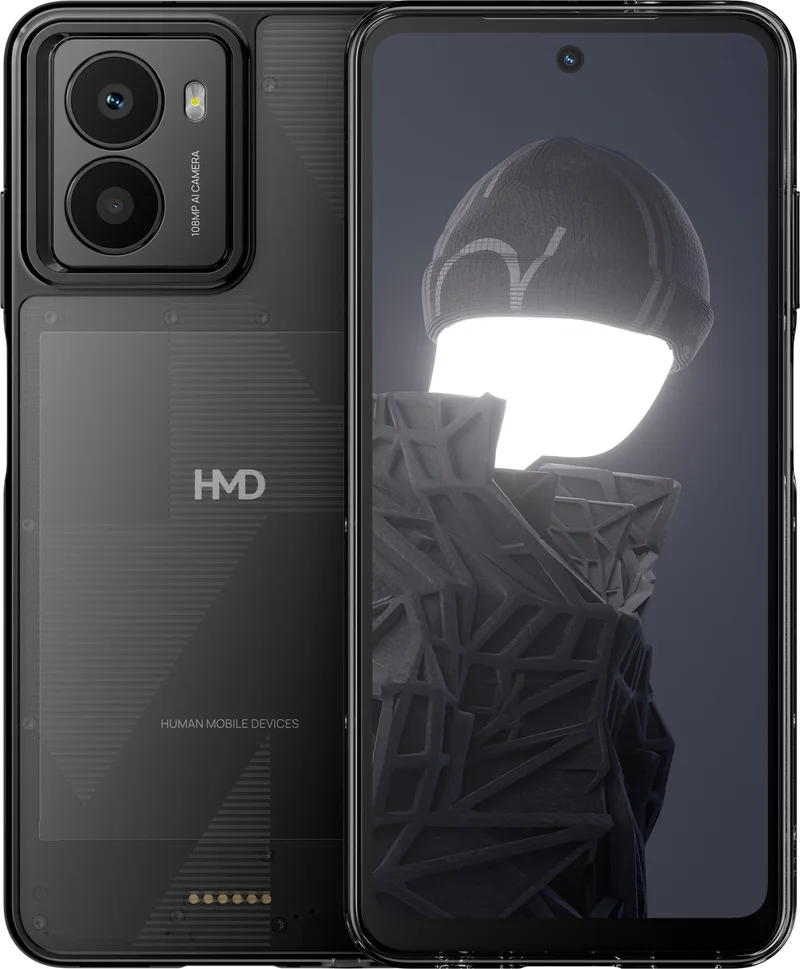
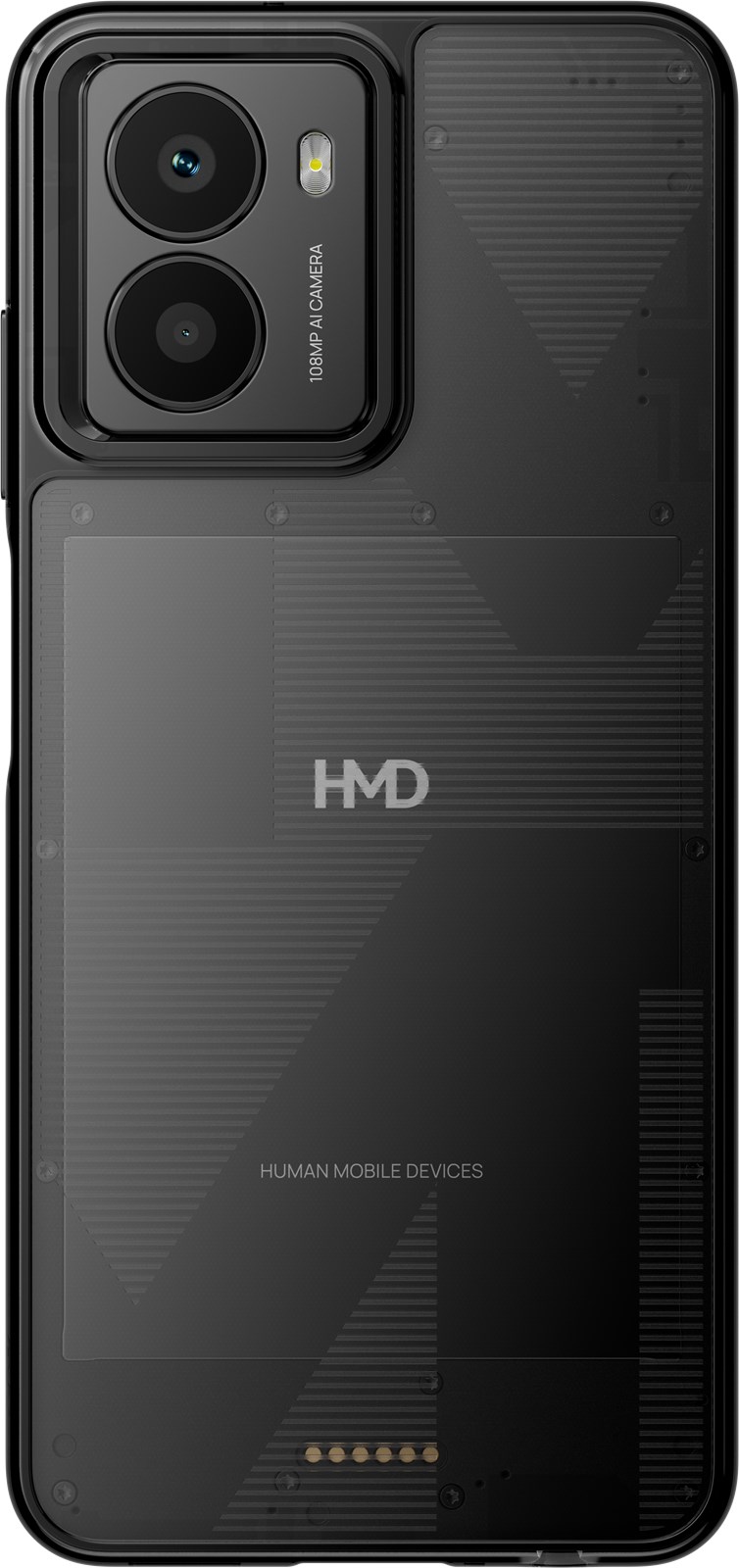
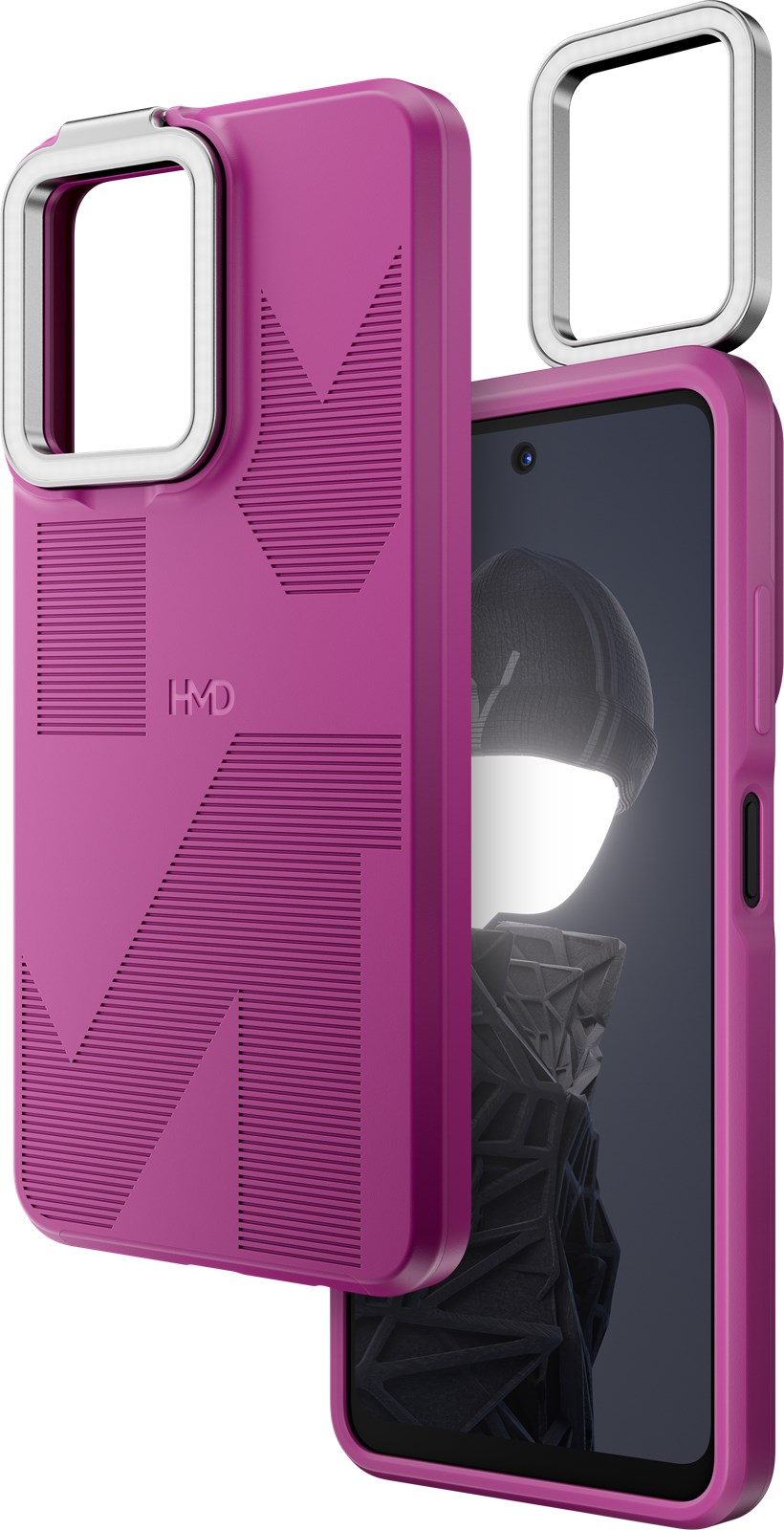
HMD describes a slim casing of stainless-steel-reinforced plastic with an industrial, grunge-inspired look. The phone is 164.15 mm tall, 75.5 mm wide and 8.32 mm thick, and weighs 202.5 g. A transparent Casual Outfit is included in the box, so even the standard package shows the phone's back pattern through a clear shell. The base phone is listed in one colour, Noir, and the outfits bring the colour. The IP54 rating means protection against dust ingress and splashing water, but not heavy rain or immersion.
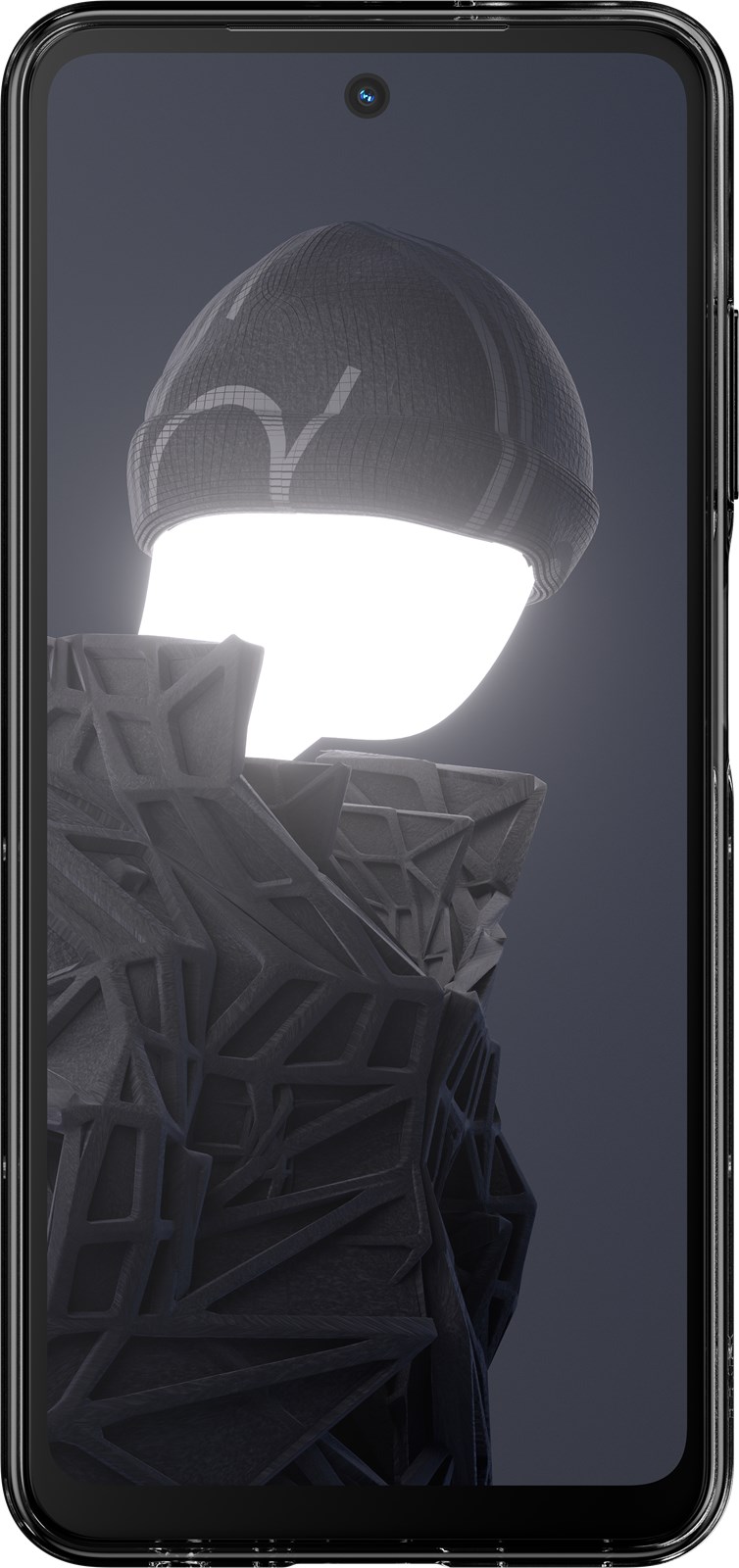
The screen is a 6.56-inch panel in a 20:9 ratio with a resolution of 720 x 1612, which HMD calls HD+. It refreshes at 90Hz and reaches 600 nits at peak brightness. HMD does not state the panel type in the pages we reviewed, so we do not name one. At this resolution text is clearly less sharp than on a 1080p phone, which is the clearest compromise on the spec sheet. The 90Hz refresh rate helps scrolling feel smooth, and 600 nits is acceptable for indoors and shade but may be a limit in strong sun. A fingerprint sensor is built into the power key on the side, and face unlock is also supported.
Smart Outfits and repairability
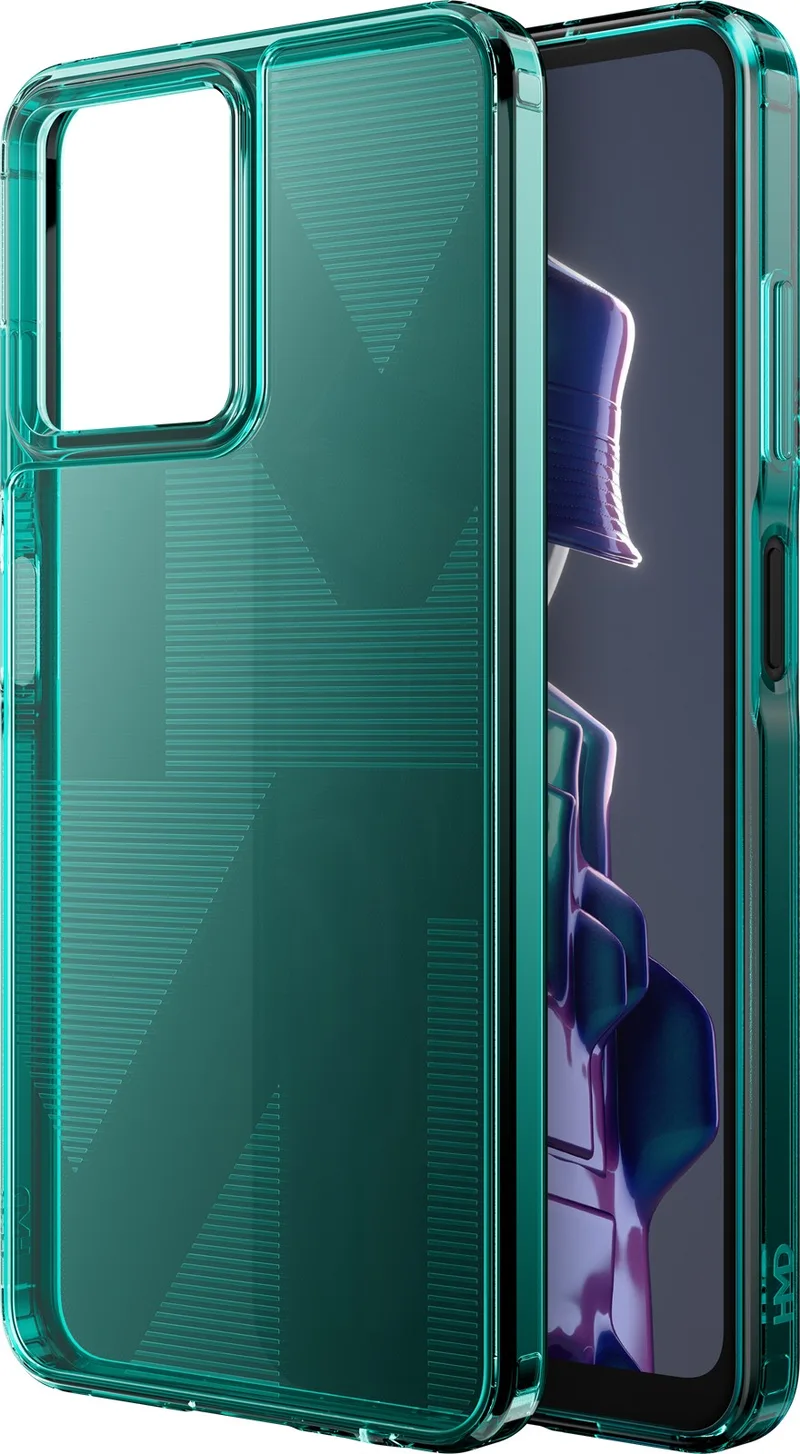
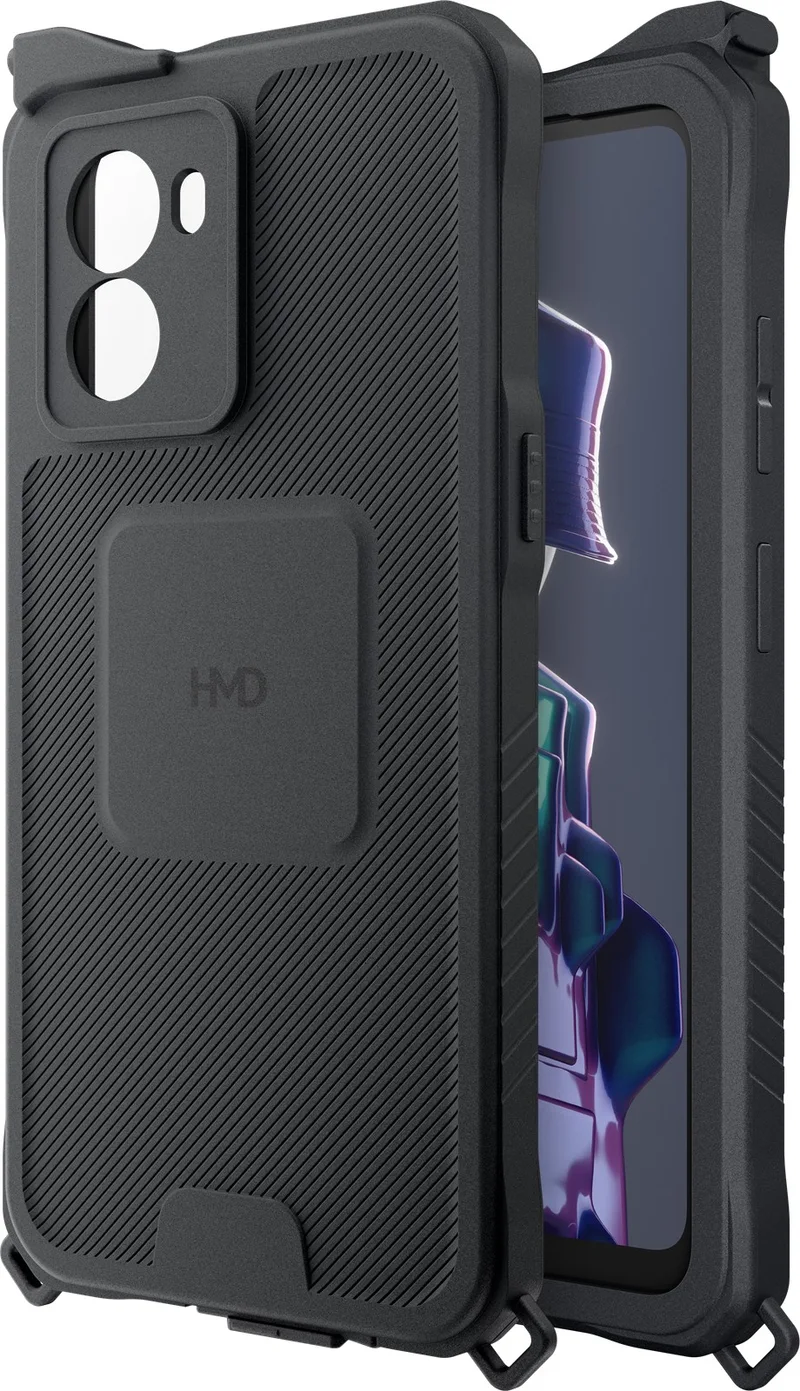
The Smart Outfits are the reason the Fusion exists. According to HMD, they attach through six pins and can change both hardware and software, unlocking new interfaces. They are sold separately, and HMD's pages say they would arrive later in 2024. The Casual Outfit is a protective case with colours such as cyan, pink and blue. The Flashy Outfit adds a ring light around the camera lens for front and rear cameras and takes its power through the pins, so it needs no separate charging. The Rugged Outfit is a heavy-duty case that HMD says is IP68-rated under lab conditions, meaning fresh water to 1.5 metres for 30 minutes, with a note that the rating may decline with wear, and it adds magnetic wireless charging and an emergency button. The Gaming Outfit attaches a controller. A Wireless outfit was also announced without detailed specifications. HMD describes the connector as two-way, and it offers an open-source software and hardware kit so third parties can build accessories. Whether outside makers take part is an open question that only time can answer.
Repairability is the second theme. HMD says screens and batteries can be replaced by the owner using an iFixit repair kit in select markets, and its product page says the screen is user-replaceable. That matters because the budget price class rarely offers a repair path of this kind. The battery is a 5,000 mAh unit, and HMD says the phone has the same Gen 2 repair design as the Pulse and Skyline. Check whether kits are sold in your country before you count on this.
Performance and software
The Fusion uses the Qualcomm SM4450, better known as the Snapdragon 4 Gen 2, an octa-core 5G chip. It has 6GB of RAM, plus a virtual extension of 4 to 12GB depending on variant. The virtual part uses storage and is not physical memory, so the RAM figure on this page is 6GB. Storage is 128GB, and a microSD card up to 1TB can be added. This is enough for everyday use: messaging, browsing, video and casual games. It is not intended for demanding gaming, although a Gaming Outfit exists for those who want a physical controller.
The phone runs Android 14 and HMD promises two OS upgrades, counted from the global launch date, and three years of security updates, monthly for two years and then quarterly for one. This is a clear commitment, shorter than the longest ones from the biggest brands but clearer than many in the budget class. Connectivity includes 5G on sub-6 GHz bands, 4G, a nano SIM plus an eSIM, Bluetooth 5.1, Wi-Fi that HMD lists as 802.11ax-ready, NFC, GPS with several satellite systems and a USB Type-C port at USB 2.0 speed. Audio supports aptX Adaptive and OZO Audio playback and recording. HMD also announced a Detox Mode, with app and contact blocking, that was planned to arrive before the end of 2024.
Camera
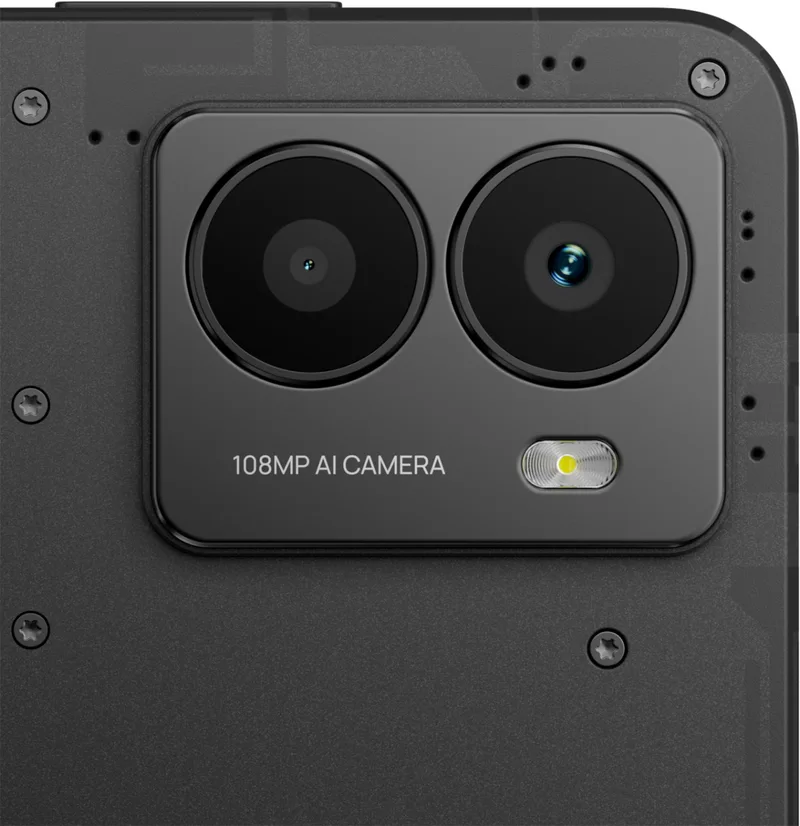
The rear camera is a 108MP main sensor with autofocus and electronic image stabilisation that HMD calls Smart EIS, together with a 2MP depth sensor and an LED flash. HMD lists no ultrawide or telephoto lens, and a depth sensor is normally used only for background effects, so in practice the phone has one real camera. The front camera is 50MP with fixed focus and offers Selfie Gestures and Selfie Slow-Mo. A resolution figure of 108MP says little about image quality, and pixel-binned shots at lower resolution are usually the practical default, but HMD does not give details here and we have no independent test results to report. The Flashy Outfit is aimed at people who care most about selfies and video calls.
Battery and charging
The battery is 5,000 mAh. HMD quotes battery life of up to 65 hours under its own test conditions, which is a manufacturer claim that depends on how the test is set up. Wired charging is 33W with support for PD and QC, and HMD states that no wall charger is included in the box; the package has a USB Type-C cable, a quick start guide, a SIM pin and the transparent Casual Outfit. You will therefore need a compatible charger to reach the 33W rate.
Who it is for
The Fusion suits tinkerers and people who like the idea of a phone that adapts: someone who wants a camera ring light on some days and a rugged case on others, or who cares about fixing their own phone. It is less convincing for buyers who want the best screen or the fastest chip for the money. For another phone with the same chip family but a sharper display and faster charging, see the vivo V40 Lite. For a quirkier and costlier alternative, compare it with the Nothing Phone (3a) in the Fusion vs Nothing Phone (3a) table. The rankings page shows how phones compare in general.
Compromises
- Screen resolution: 720 x 1612 pixels is soft for text and fine detail.
- Outfits cost extra: The Smart Outfits that define the phone are sold separately, apart from the Casual Outfit in the box.
- No charger in the box: The 33W rate needs a separately bought charger.
- Water protection: IP54 is basic, and the stronger IP68 claim applies only with the Rugged Outfit.
- Single real camera: HMD lists only a 108MP main camera and a 2MP depth sensor.
- Availability: HMD's international page says the device is not available in some European countries.
In summary, the HMD Fusion is not about raw specifications. It offers an ordinary budget core, a clear update promise and a repair path, plus an experimental accessory system. If that mix appeals to you, it is a distinctive choice; if not, the specification sheet will look modest next to rivals.
Where it ranks
Compare HMD Fusion with similar devices
More from HMD
Frequently asked questions
When was the HMD Fusion released?
The HMD Fusion was released on 2024-09-05, according to the manufacturer’s published information.
What are the main specs of the HMD Fusion?
Headline figures for the HMD Fusion: Battery: 5,000 mAh, Refresh rate: 90 Hz, Main camera: 108 MP, RAM: 6 GB. The full specification table is further up this page.
Is the HMD Fusion worth buying?
That depends on your priorities. Use the editorial review on this page for our view, check the rankings above to see where the device stands on battery, display and camera, and compare it directly with similar models before you decide.


