Phones
HMD Crest
HMD Crest is a 5G mid-range phone with a 6.67-inch OLED screen, Unisoc T760, 6GB RAM, 50MP front and rear cameras and 33W charging, sold with a charger and case in the box.
Key figures at a glance
Gallery
Specifications
- Display
- 6.67" rigid OLED, FHD+ (2400x1080), 20:9
- Chipset
- Unisoc T760 (5G)
- RAM
- 6GB
- Virtual RAM
- Up to 8GB (memory extension)
- Storage
- 128GB, microSD up to 256GB
- Rear Camera
- 50MP main + 2MP depth, LED flash
- Front Camera
- 50MP
- Battery
- 5,000 mAh, 33W wired
- OS
- Android 14, 2 years of quarterly security updates
- Connectivity
- 5G, dual nano SIM, Bluetooth 5.0, Wi-Fi 5, USB-C, 3.5 mm jack
- Water/Dust Resistance
- IP52
- Dimensions
- 163.86 x 76.42 x 8.41 mm, 205 g
The HMD Crest (marketed by the company as the Crest 5G) is the step up in HMD’s family: the only one of the four with a 5G modem, an OLED screen, a Full HD+ resolution and a charger in the box. Where the Pulse models are built around a 4G processor and an HD+ panel, the Crest uses the Unisoc T760, a 6.67-inch rigid OLED display and 33W charging, while keeping the 5,000 mAh battery, the headphone jack and the do-it-yourself repair idea. HMD sells it on 50MP cameras front and back and hands-free selfies. This overview relies on the published specifications and manufacturer information.
Where the Crest sits
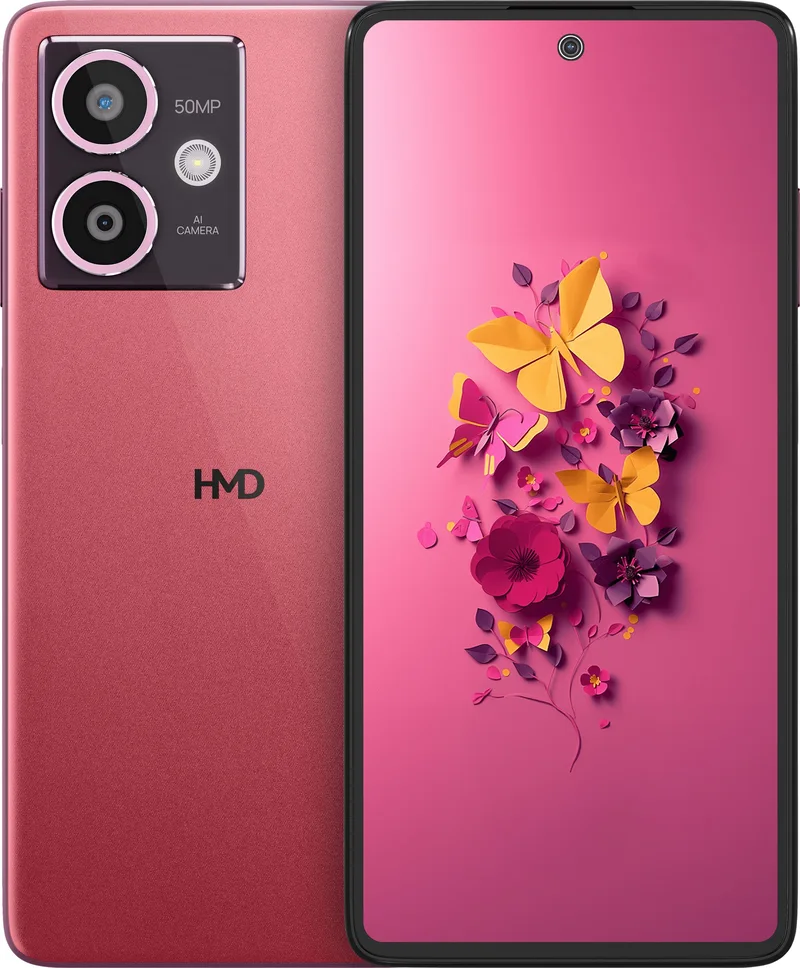
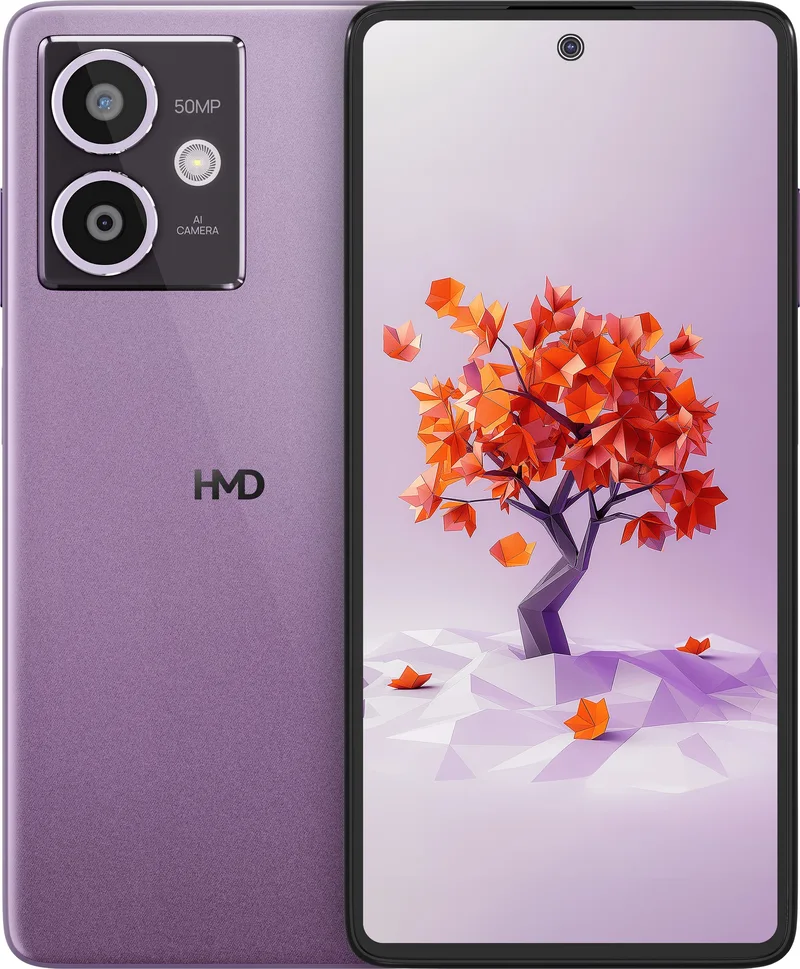
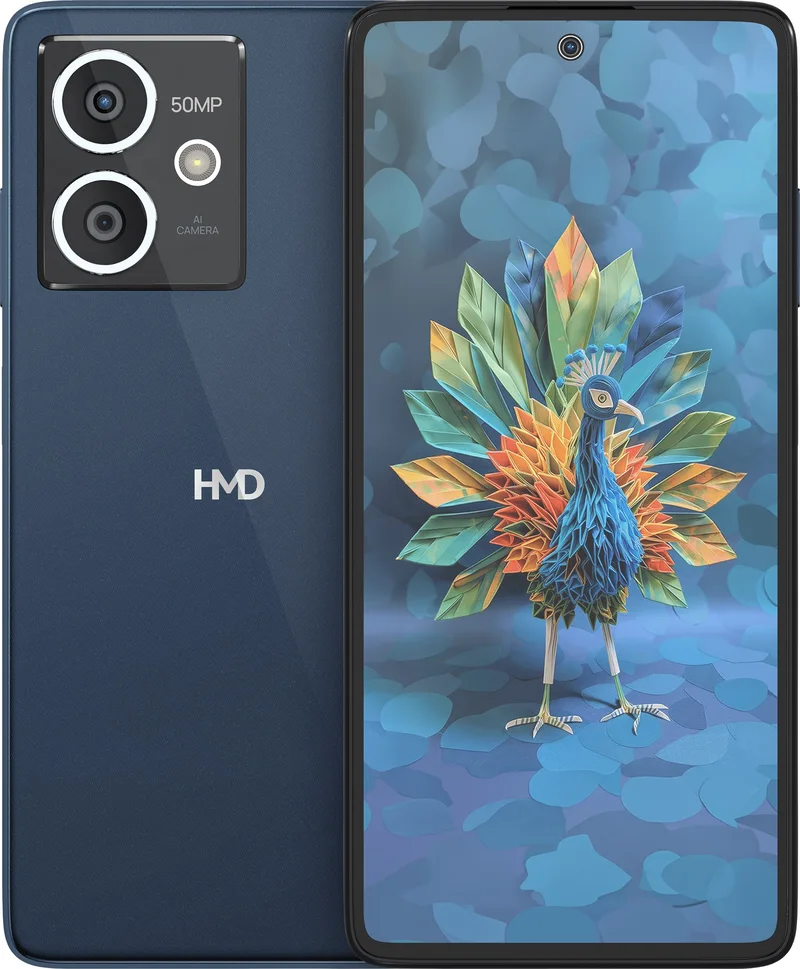
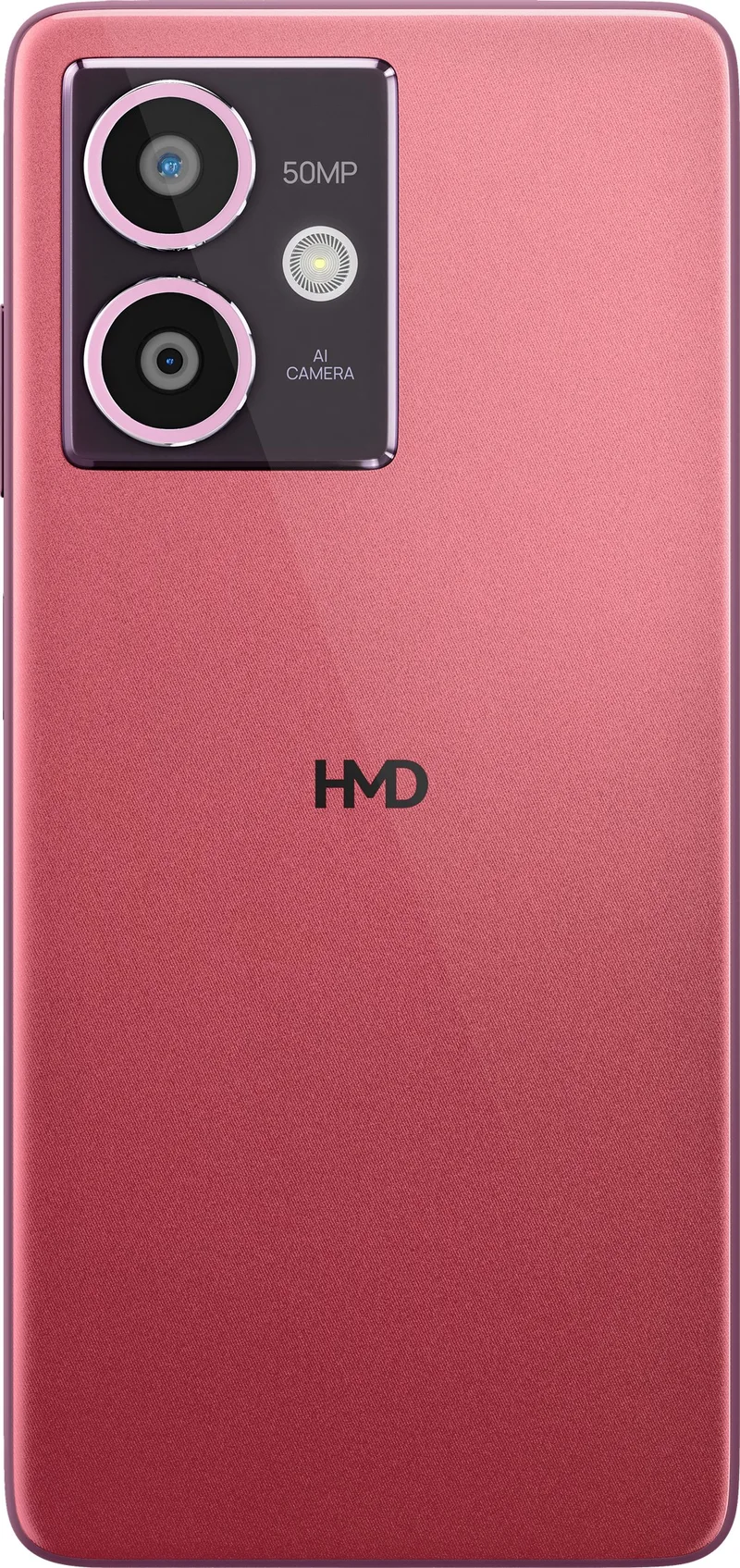
The Crest is the most complete model in the range. The Pulse and Pulse+ share a 163 mm body and 4GB of RAM, and the Pulse Pro raises that to 6GB with a 50MP selfie camera, but all three remain 4G devices on the same HD+ display. The Crest breaks from them in several ways at once: a larger 6.67-inch screen, a different processor, 5G, OLED, a 33W charger and a slightly bigger, heavier body at 163.86 x 76.42 x 8.41 mm and 205 g. It comes in Royal Pink, Lush Lilac and Midnight Blue.
HMD states that availability varies by country and that the device is not offered in Germany, France, Italy, the Netherlands or Belgium. Its overview page uses the name Crest 5G.
Display and design
The screen is the Crest’s defining hardware change. HMD lists a rigid OLED panel of 6.67 inches with a resolution of 2400 x 1080 (FHD+) in a 20:9 ratio. OLED technology lights each pixel individually, which normally gives deeper blacks and stronger contrast than typical LCD panels, and the sharper resolution makes text and video look noticeably crisper than the 1612 x 720 panels of the Pulse trio. HMD pitches it as a display to admire your shots on. The product specification does not state a refresh rate or a brightness figure, so neither is assumed here; people for whom 90Hz or 120Hz scrolling is essential should check the retail listing for their region before buying.
The back is a coloured panel with a large square camera island carrying two lenses and a flash, labelled 50MP and AI camera, and the HMD logo sits in the middle. The weight of 205 g makes it the heaviest of the family, though not unusual for a 6.67-inch phone with a 5,000 mAh battery. IP52 protection is claimed, so splashes from above are tolerated but submersion is not. HMD says the Crest can be repaired at home, with battery swaps, charging-port replacement and even display replacement possible with a toolkit and a short tutorial.
The box contents are more generous than on the Pulse range: a charger, a jelly case, a screen protector, a USB-C cable, a quick start guide, a safety booklet, a user guide and a SIM pin. Including a case and a screen protector is a useful gesture on a phone whose repair story depends on keeping the screen intact.
Performance and 5G
The Unisoc T760 is a 5G-capable processor, and paired with 6GB of RAM it should give a smoother experience than the T606 devices in the family. HMD also lists memory extension of up to 6 to 8GB of virtual memory, taken from storage; as with its siblings, a footnote explains that this feature needs spare storage and can be disabled permanently when 90 percent of its usage limit is reached. Storage is 128GB with a microSD slot for cards up to 256GB, though HMD points out that the pre-installed software consumes a significant portion of the capacity.
The phone supports 5G NR bands n1, n3, n28, n40 and n78, plus 4G LTE bands 1, 3, 5, 8, 28, 40 and 41, and legacy 3G and 2G. A dual Nano SIM tray allows two lines at once. The five 5G bands are enough for the common mid-band deployments in many regions, but HMD warns that 5G coverage is limited and may not be supported by a given operator, and that actual speed depends on the network and other factors. People who rely on a specific carrier’s 5G band should compare it against the list before choosing this model.
Software is Android 14. The Crest’s page lists quarterly security updates for two years, which is shorter than the three years promised for the Pulse trio, and it does not mention a number of operating-system upgrades. That is the most important policy difference in the family and a clear downside for those who keep phones for many years. Biometrics consist of a side fingerprint sensor and face unlock. Sensors include an accelerometer, ambient light sensor, e-compass and, unusually among the family, a gyroscope.
The spec list does not mention NFC for the Crest, unlike the Pulse models. Buyers who rely on contactless payments should therefore verify this on the regional product page before assuming it exists.
Cameras
The Crest carries a 50MP main camera with a 2MP depth sensor on the back, and a 50MP front camera. HMD’s tagline is about capturing hands-free selfies, and the feature list includes selfie gestures, slow-motion selfies, night selfie, AI super portrait, skin-tone optimization, tone control, Super Night, tripod mode, FlashShot and AI HDR. The sentence the company uses, bringing rear-camera quality to selfies, is a marketing claim that rests on the front sensor having the same resolution as the rear one; resolution alone does not guarantee identical image quality.
The 2MP depth sensor assists portrait effects. It is not a wide-angle or telephoto camera, so versatility is limited to the main lens and digital cropping. No independent test footage is available here, and the manufacturer does not list video specifications, so no claims about stabilisation or maximum resolution are made.
Battery and charging
The 5,000 mAh battery is rated by HMD for up to 44 hours of use under its real-life test, lower than the 59 hours quoted for the Pulse phones. That gap is plausible given the larger, sharper screen and 5G radio. Charging, by contrast, is a clear improvement: 33W support and a charger in the box, so that the phone can be topped up considerably faster than the 10W and 20W Pulse models. HMD states that the battery maintains at least 80 percent of its original capacity after 800 full charging cycles, which, if borne out, suggests a long battery life before replacement is needed. Note that the spec sheet for the Crest does not carry the QuickFix label for the battery, although the company describes the phone as designed for self-repair.
Who the Crest is for
This phone suits buyers who want a modern network standard, a better screen and quicker charging without moving into the mid-range price class of the big brands. Content-focused users who watch video, read and photograph will appreciate the OLED panel. Those who value a charger and a protective case in the box will also find it convenient. It is a reasonable pick for people in 5G-covered areas who do not need the fastest chip.
It is less convincing for buyers who plan to keep a phone beyond two years of security updates, who depend on NFC payments or who need a confirmed high refresh rate. For comparison with a much stronger mid-range handset, see HMD Crest vs Galaxy A57. For another phone with a strong repair focus, the Fairphone 6 is worth reading about, and the rankings place all of these devices on a common scale.
Compromises
- Two years of security updates: shorter than the Pulse range’s three years, with no stated OS upgrade commitment.
- Refresh rate and brightness not stated: the specification is silent on both.
- No NFC listed: unlike the Pulse models.
- Heavier: 205 g, the weightiest of the four.
- Entry-level 5G chip: adequate for daily use, not for demanding games.
- Shorter claimed battery life: 44 hours against 59 on the Pulse models.
- Limited sale regions: not available in Germany, France, Italy, the Netherlands or Belgium.
The Crest gives HMD’s range a more current face: OLED, 5G and fast charging in a repair-minded body. Its weaker update promise and missing details on refresh rate and NFC are the points to check before buying.
Where it ranks
Compare HMD Crest with similar devices
More from HMD
Frequently asked questions
When was the HMD Crest released?
The HMD Crest was released on 2024-10-01, according to the manufacturer’s published information.
What are the main specs of the HMD Crest?
Headline figures for the HMD Crest: Battery: 5,000 mAh, Main camera: 50 MP, RAM: 6 GB. The full specification table is further up this page.
Is the HMD Crest worth buying?
That depends on your priorities. Use the editorial review on this page for our view, check the rankings above to see where the device stands on battery, display and camera, and compare it directly with similar models before you decide.


