Phones
Fairphone Gen. 6
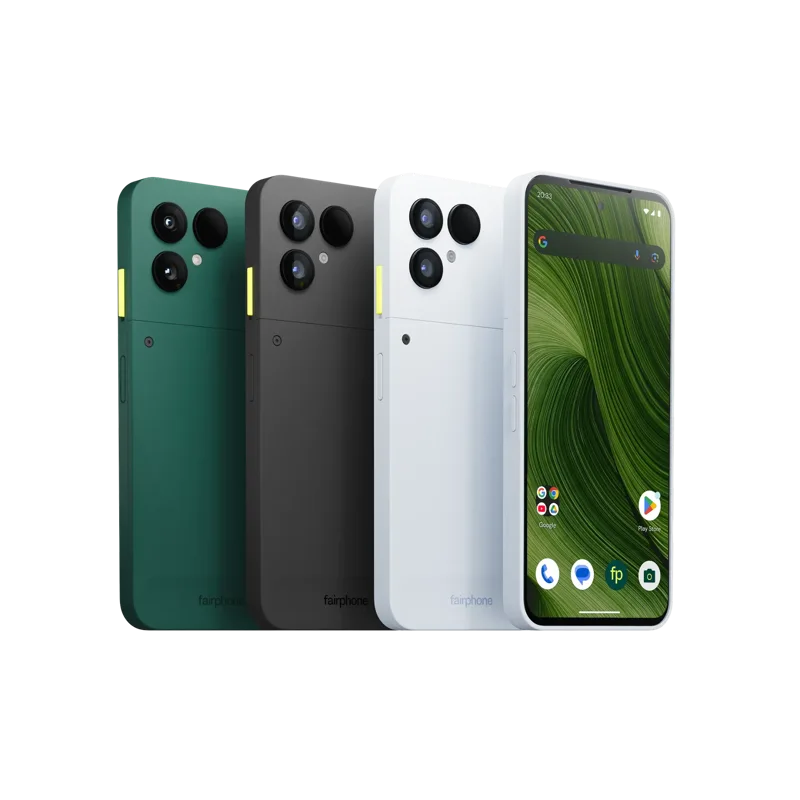
Fairphone's 2025 repairable phone has a removable 4,415 mAh battery, a 6.31-inch 120Hz AMOLED screen, a Snapdragon 7s Gen 3 chip and a stated six major Android updates, with support until 2033.
Key figures at a glance
Gallery
Specifications
- Display
- 6.31" LTPO AMOLED, 1116x2484, 431 ppi, 10-120Hz adaptive
- Chipset
- Snapdragon 7s Gen 3
- RAM
- 8GB
- Storage
- 256GB UFS 3.1, microSD up to 2TB
- Rear Camera
- 50MP main (f/1.88, OIS) + 13MP ultrawide (120°)
- Front Camera
- 32MP (f/2.0)
- Battery
- 4,415 mAh removable, 27W wired (30W peak), no wireless charging
- OS
- Android 15 at launch; six major Android updates and software support until 2033
- Dimensions
- 156.57 x 73.28 x 9.6 mm, 193 g
- Durability
- IP55 splash and dust resistance
- Colors
- Cloud White, Forest Green, Horizon Black
The Fairphone (Gen. 6) is the sixth-generation smartphone from the Dutch company Fairphone, announced on 25 June 2025 and described in its launch material as now available for sale. It continues the brand's approach of building a phone that owners can repair themselves: a removable battery, a modular body with parts that can be swapped with a single screwdriver, and a long stated software-support period. This page is based on the published specifications and manufacturer information. It covers where the phone sits among Fairphone's own models and rivals, the design and display, performance and software, the cameras, battery and charging, who it suits, and the compromises that come with its priorities.
Place in the lineup
Fairphone sells a small range, and the Gen. 6 is its current mainstream model. In the European launch material the recommended price was €599. Later, the company added a Fairphone (Gen. 6+) variant with 12GB of RAM and a newer Snapdragon 7s Gen 4 chip at €649, which shares everything else with the base model: the same display, cameras, battery and body. This page covers the base Gen. 6 with 8GB of RAM and the Snapdragon 7s Gen 3.
In the broader market, the Fairphone competes less on raw speed than on ownership: how long you can keep it, how easily you can fix it and how it is made. In terms of price positioning it sits among upper-mid-range phones such as the Galaxy A56, the Pixel 9a and the Nothing Phone (3a), which usually offer faster chips or better cameras for a similar budget. To see the numbers next to each other, open Fairphone (Gen. 6) vs Galaxy A56, or browse the rankings for the overall field.
Design, repairability and display
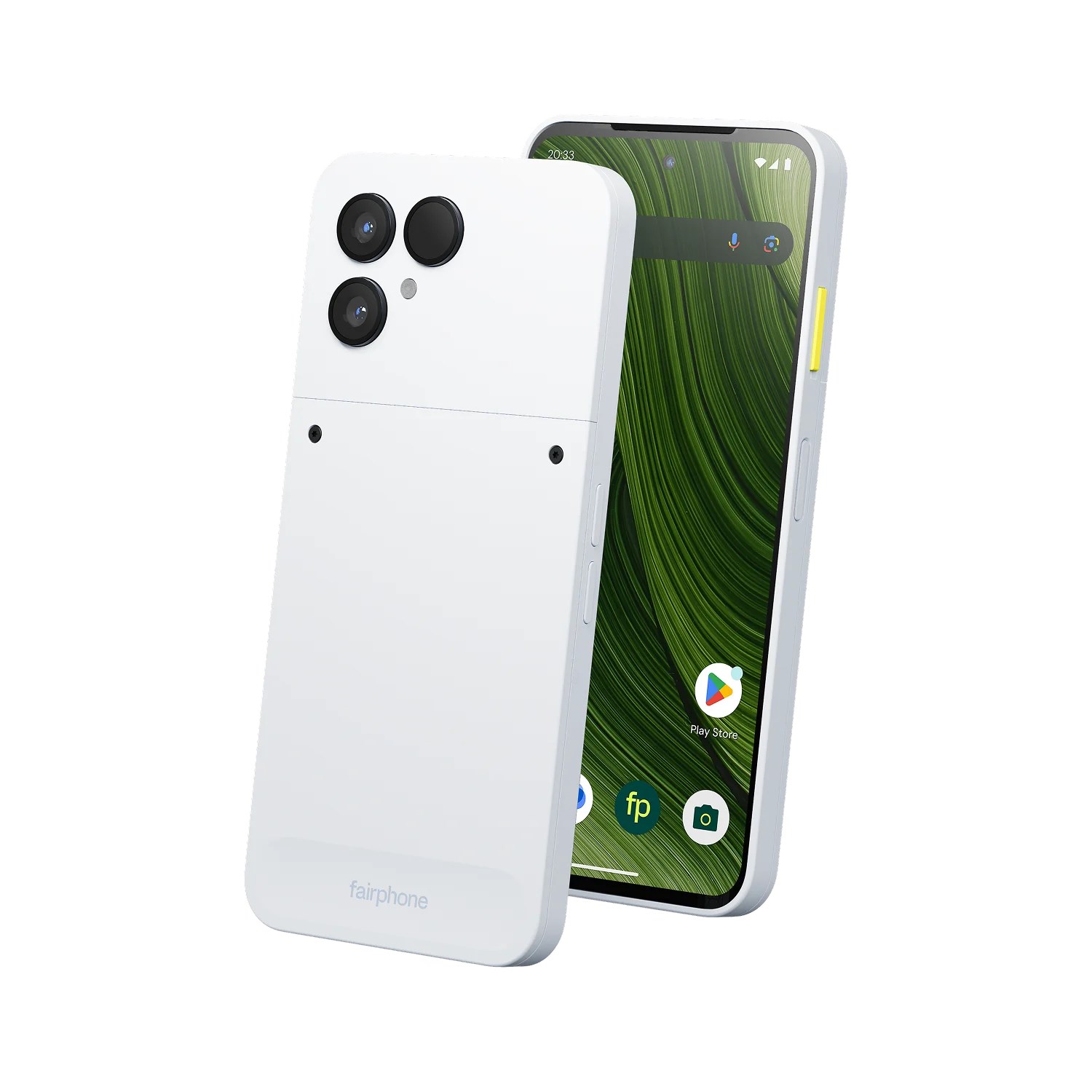
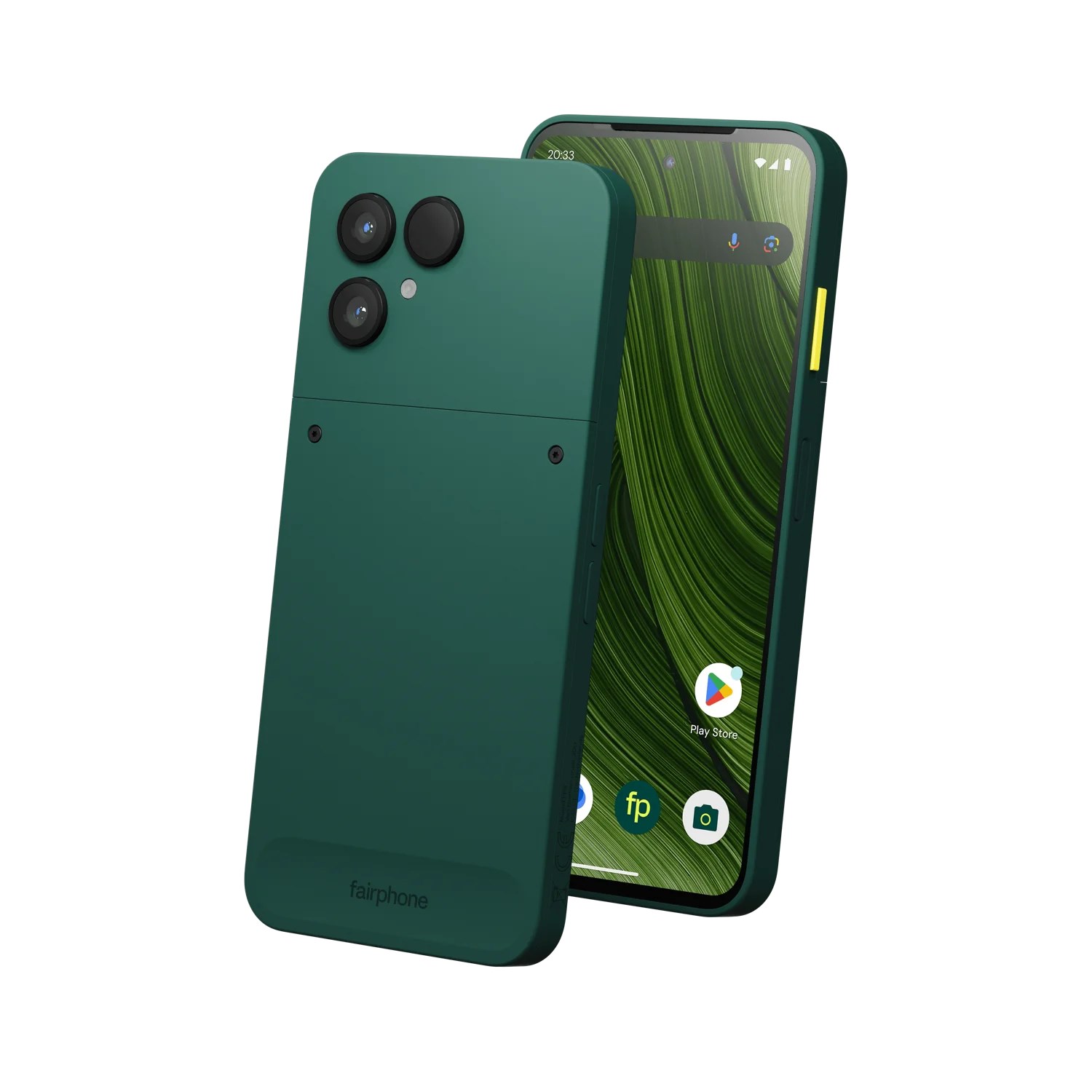
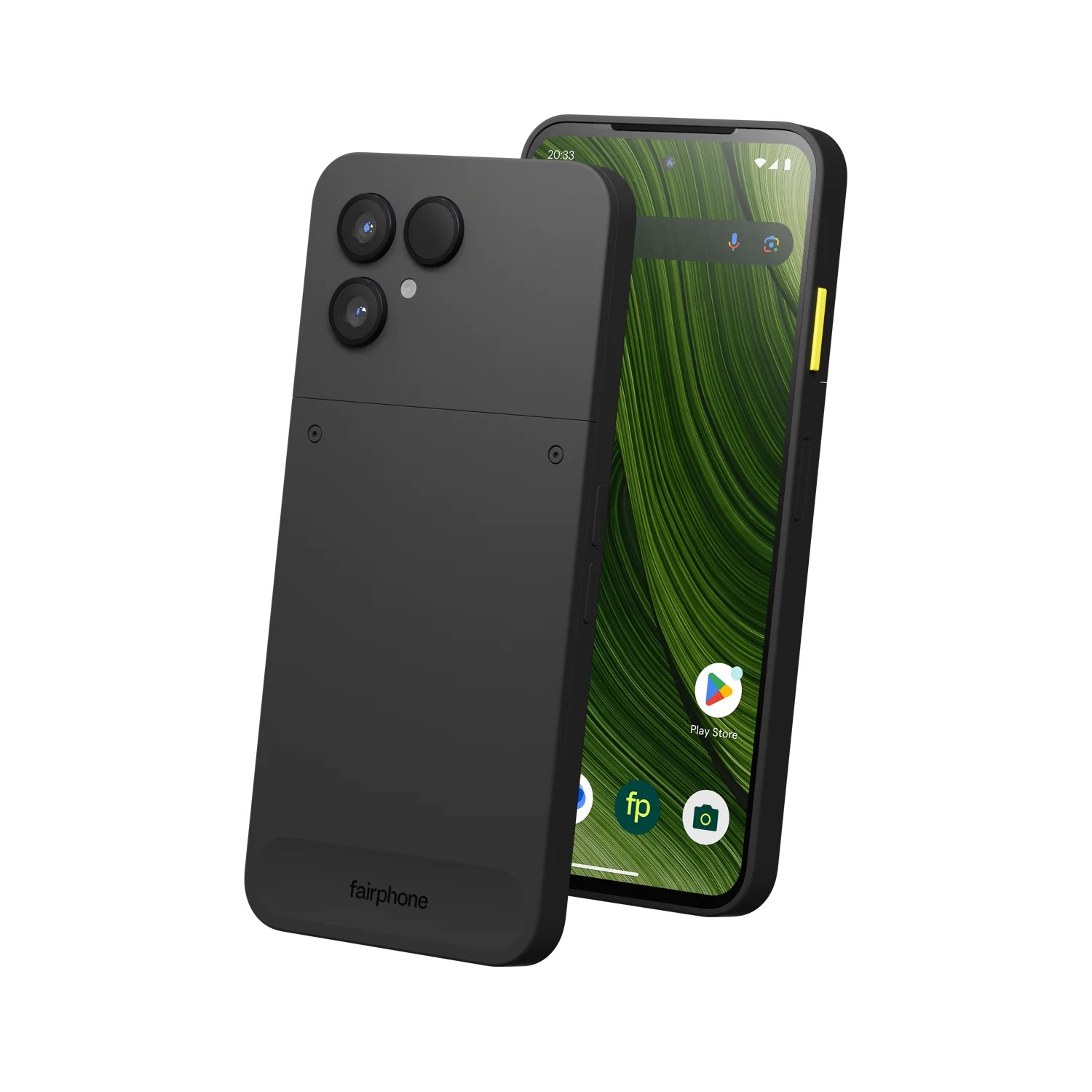
The Gen. 6 measures 156.57 x 73.28 x 9.6 mm and weighs 193 g, which makes it noticeably thicker than most phones in its class. The extra thickness is part of the trade: a removable battery, replaceable modules and a sturdy frame need room. Fairphone says twelve parts can be swapped by the owner with a single screwdriver, and it says that more than 50 percent of the phone by weight is made from fair or recycled materials, up from 42 percent in the Fairphone 5. These are the company's own figures and not an independent audit, but they define the phone's identity.
It comes in Cloud White, Forest Green and Horizon Black, and dust and splash protection is rated IP55. That rating means protection against dust ingress to a limited degree and against water jets, and it falls short of the IP67 or IP68 ratings that many mainstream phones claim for submersion. In practice, rain and splashes are fine, but you should not plan on swimming with it. The IP rating also depends on the back cover and modules being fitted correctly, which is a consideration for a phone designed to be opened.
The screen is a 6.31-inch LTPO AMOLED panel with a resolution of 1116 x 2484 pixels (431 ppi) and an adaptive refresh rate of 10 to 120Hz. LTPO technology lets the panel drop to low rates on static content, which helps battery life, and the 120Hz ceiling gives smooth scrolling. Fairphone's page lists an in-power-button fingerprint reader, a barometer, a compass and a Hall sensor in the sensor set. The page does not state a peak brightness figure, so outdoor visibility is not quantified here.
Performance and software
The Gen. 6 uses the Snapdragon 7s Gen 3 with 8GB of LPDDR5 memory and 256GB of UFS 3.1 storage, and a microSD slot accepts cards up to 2TB. The chip belongs to the upper-mid-range tier, which handles social apps, navigation, photos, video and most games at moderate settings without trouble but will not match flagship processors in heavy gaming or in sustained workloads. The storage expansion is a practical benefit that few current phones still offer.
Software is where Fairphone puts a lot of weight. The phone was introduced with Android 15, and the company promises six major Android updates and software support until 2033. That is long by Android standards, and it fits the repairable hardware. Fairphone also describes a simplified mode, called Moments in its launch story, which can be switched on to reduce distractions. As with every support promise, what matters is how it is carried out, so it is sensible to check the company's update history over time rather than rely on the commitment alone.
Cameras
The rear setup has two cameras: a 50MP main camera with an f/1.88 aperture and optical image stabilisation, and a 13MP ultrawide camera with a 120-degree field of view. There is no dedicated telephoto lens, so zoom beyond the main camera's native view relies on cropping. The front camera is 32MP at f/2.0. On paper this is a conventional two-camera layout, and the specifications do not include details such as sensor size or video modes, so we make no claims about image quality. Buyers who care mostly about photography will want to look at independent samples before choosing, because the rivals in this price range often carry a telephoto camera and more advanced image processing.
Battery and charging
The battery is a 4,415 mAh lithium-ion cell that the owner can remove and replace. Wired charging is rated at 27W, with a 30W peak, and wireless charging is not supported. The capacity is moderate by current standards, since many phones in this class pack 5,000 mAh or more, but the removable design means a worn-out cell can be replaced instead of retiring the phone, which matters over a six-year support period. Fairphone does not publish a battery-life figure on the page, so the practical runtime of the phone has to be judged from independent testing. The lack of wireless charging is a small inconvenience that follows from the modular design.
Who it is for
The Gen. 6 is for people who keep their phones for many years, who like to repair or replace parts themselves and who value ethical sourcing and recycled materials. It suits users who rely on a microSD card, who want a long update promise and who accept a thicker body. It also suits those who would like to reduce electronic waste: with a battery, screen and camera modules designed to be replaced, the phone can in principle outlast a normal upgrade cycle.
Compromises
- Performance per euro. The Snapdragon 7s Gen 3 is solid but not fast, and rivals at a similar price often offer quicker chips.
- Cameras. No telephoto lens and a standard two-camera layout limit versatility.
- Water protection. IP55 is lower than the IP67 or IP68 of many mainstream phones.
- Size and charging. It is thick at 9.6 mm, charges at up to 27W wired and has no wireless charging.
- Price. The European list price was €599; we found no official US price on the pages reviewed.
Overall, the Fairphone (Gen. 6) is a considered choice rather than a spec-sheet winner. If repairability and longevity matter more to you than benchmark scores, it is one of the few phones built around those goals. If not, compare it directly with the Galaxy A56 before deciding.
Where it ranks
Compare Fairphone Gen. 6 with similar devices
Frequently asked questions
When was the Fairphone Gen. 6 released?
The Fairphone Gen. 6 was released on 2025-06-25, according to the manufacturer’s published information.
What are the main specs of the Fairphone Gen. 6?
Headline figures for the Fairphone Gen. 6: Battery: 4,415 mAh, Refresh rate: 120 Hz, Main camera: 50 MP, RAM: 8 GB. The full specification table is further up this page.
Is the Fairphone Gen. 6 worth buying?
That depends on your priorities. Use the editorial review on this page for our view, check the rankings above to see where the device stands on battery, display and camera, and compare it directly with similar models before you decide.


