Phones
ASUS Zenfone 12 Ultra
ASUS's quiet flagship pairs the Snapdragon 8 Elite with a gimbal-stabilised 50MP camera, a 6.78-inch 120Hz AMOLED, a 3.5mm jack and an equivalent 5,500 mAh battery.

Key figures at a glance
Gallery
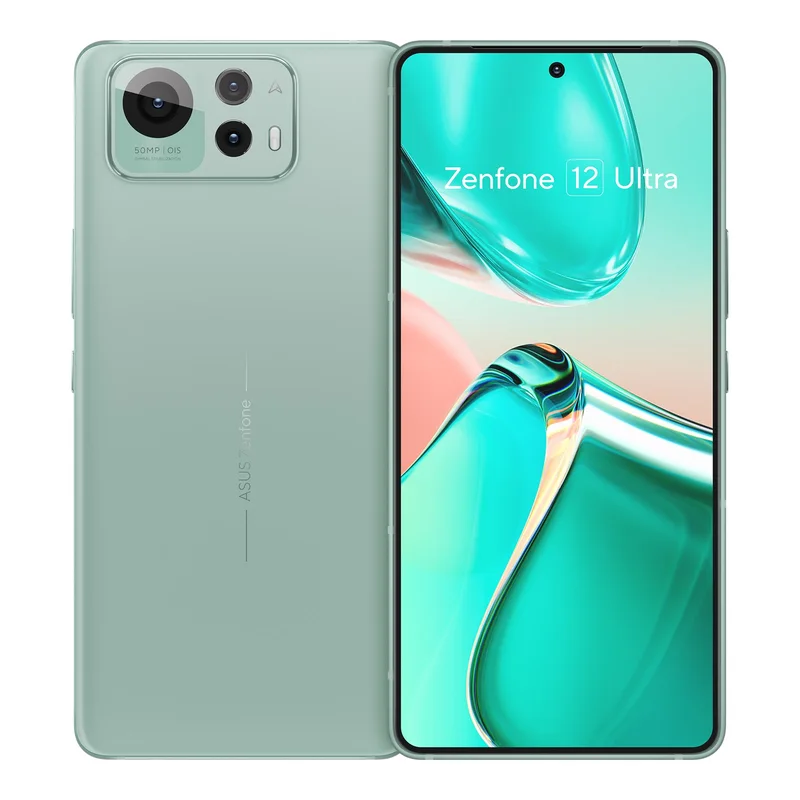
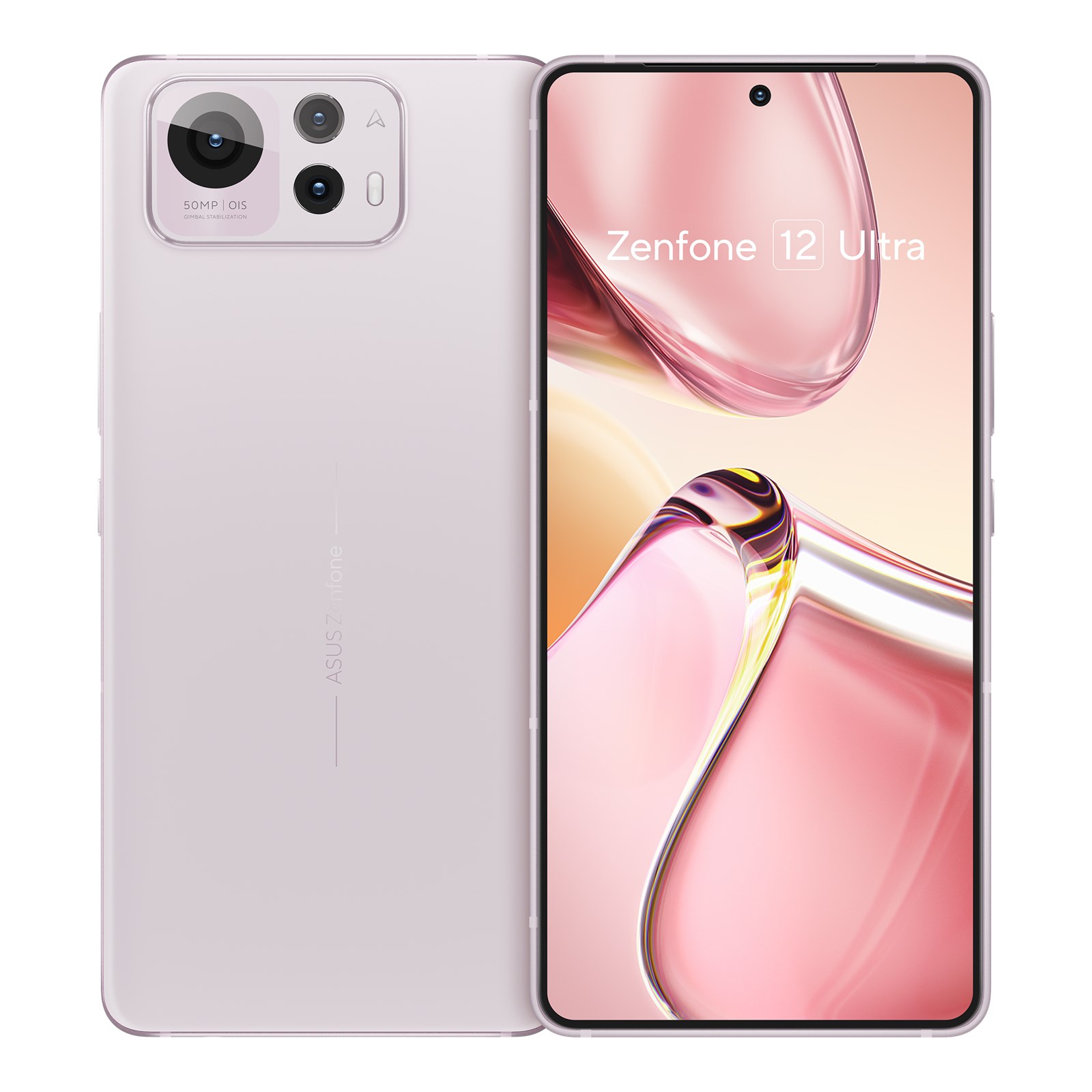
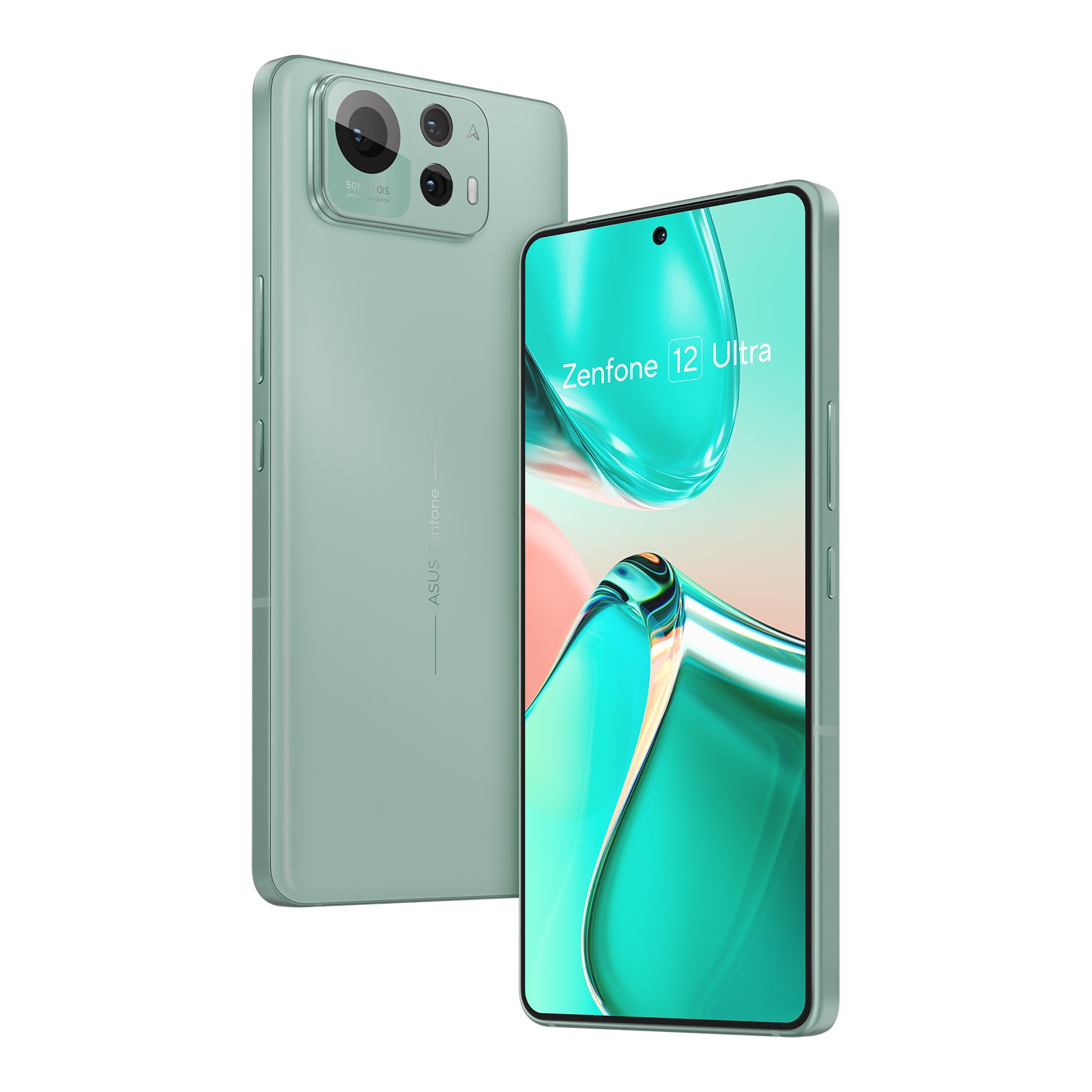
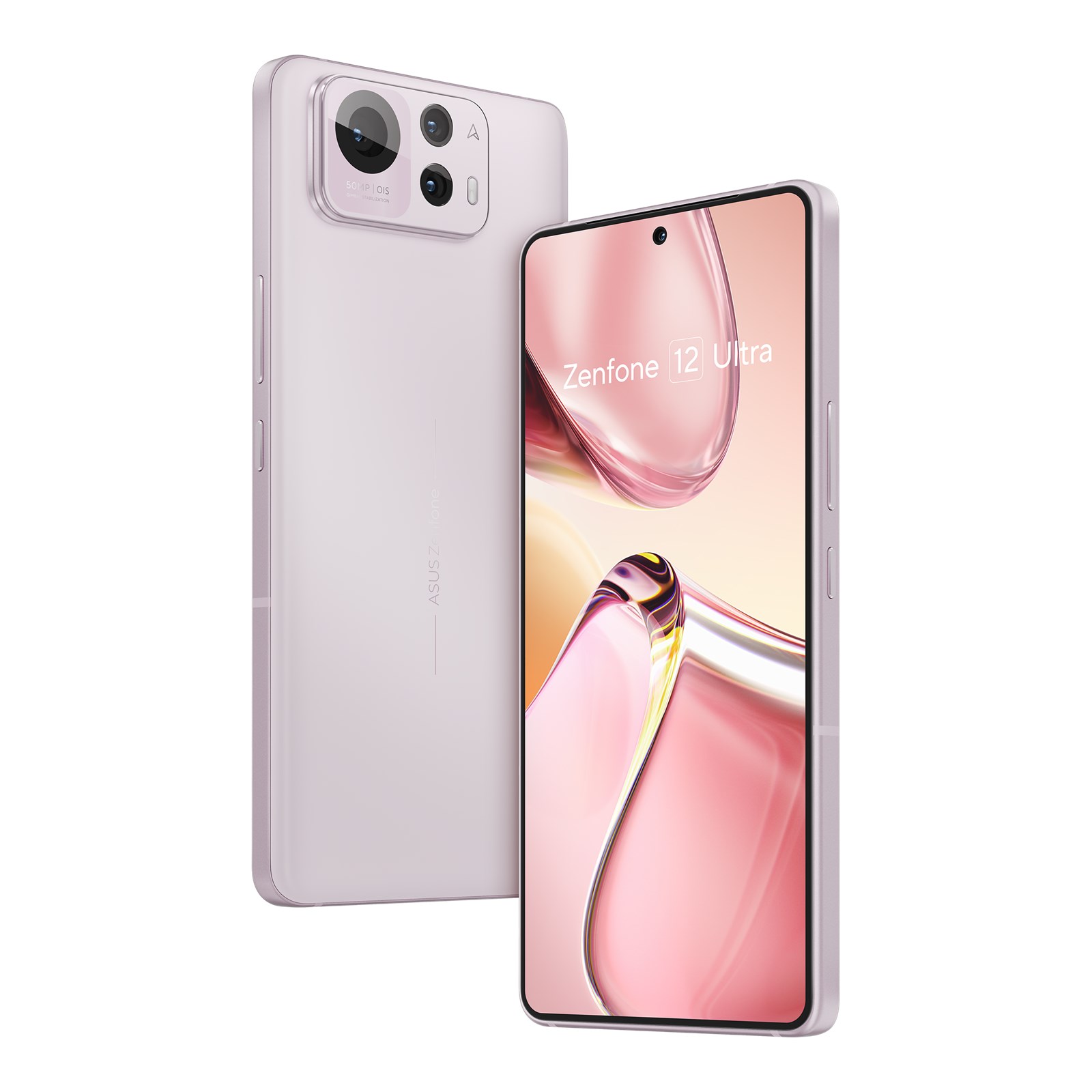
Specifications
- Display
- 6.78" Samsung E6 flexible AMOLED, 2400x1080, LTPO 1-120Hz (up to 144Hz for gaming only), 1,600 nits HBM / 2,500 nits peak
- Chipset
- Snapdragon 8 Elite (3nm)
- RAM
- 12GB / 16GB
- Storage
- 256GB / 512GB
- Rear Camera
- 50MP main + 13MP ultrawide + 32MP telephoto 3x
- Front Camera
- 32MP
- Battery
- 5,500 mAh (equivalent, typical), 65W wired, 15W wireless
- OS
- Android 15
- Weight
- 220 g
- Dimensions
- 163.8 x 77.0 x 8.9 mm
- Water Resistance
- IP68
- Glass
- Corning Gorilla Glass Victus 2
The ASUS Zenfone 12 Ultra is the company's flagship for people who want a conventional, pocketable-ish phone rather than a gaming brick. It pairs the Snapdragon 8 Elite with a 6.78-inch LTPO AMOLED screen, a three-camera system built around a gimbal-stabilised 50MP main sensor, and a battery that ASUS rates at an equivalent 5,500 mAh. This page is based on the published specifications and manufacturer information, and it tries to separate what ASUS states from what you should verify before buying.
Where it sits in the ASUS lineup
ASUS runs two Android phone families side by side. The ROG Phone line is built around gaming: huge batteries, shoulder triggers, a loud design language. The Zenfone line is the "everyday flagship" branch, and the Ultra is its top model. If you are comparing it with the gaming sibling, the ROG Phone 9 Pro shares the same Qualcomm chip family but trades subtlety for cooling, an accessory ecosystem and a rear display; the Zenfone gives up those extras in exchange for a calmer look and a more balanced camera set.
ASUS positions the Ultra against the big-screen flagships from Samsung, Xiaomi and OnePlus. A side-by-side with the Galaxy S25 Ultra is the obvious one, because both use the same processor generation and both aim at buyers who want a large, bright display and a long-zoom-capable camera system. The ASUS answer to the Samsung stylus-and-200MP story is much simpler: three cameras, a 3.5mm headphone jack and a calmer design.
Design, materials and display
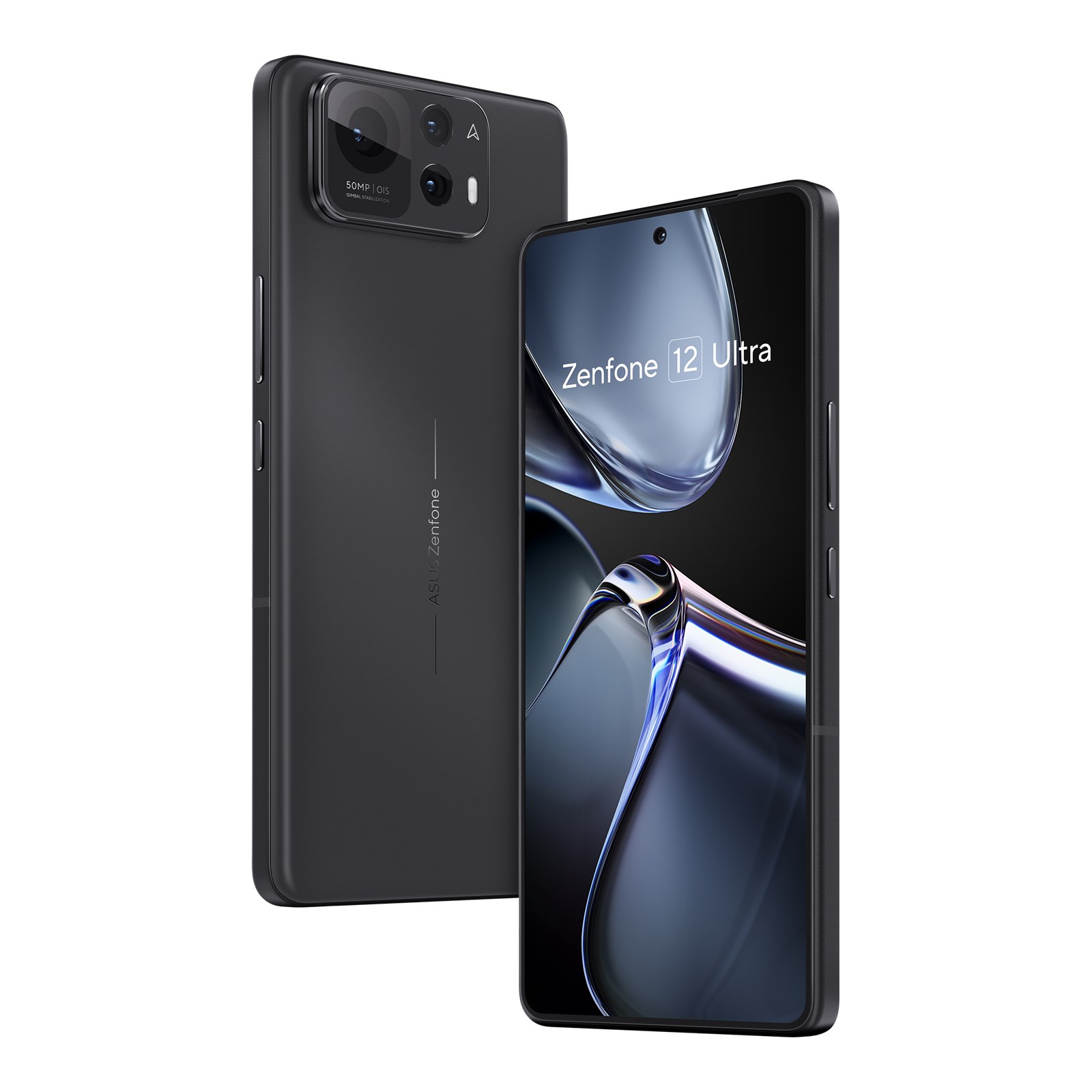
The body measures 163.8 x 77.0 x 8.9 mm and weighs 220 g, with an IP68 rating. ASUS describes a silky matte glass back, ultra-narrow bezels and rounded corners, and offers three colours: Sakura White (a pale pink), Ebony Black and Sage Green. The frame is stated to be 100% recycled aluminium, and the page claims 22% recycled glass in the screen, plus FSC-certified packaging. The design also picked up a Red Dot award according to the company's own page. In the official renders the camera island is a large rounded square in the upper left, and ASUS prints "50MP | OIS | Gimbal Stabilization" on it, which tells you how much weight the company puts on that module.
The display is a 6.78-inch Samsung E6 flexible AMOLED panel at 2400 x 1080 pixels. It is LTPO, with a variable refresh rate from 1 to 120 Hz and, for games only, up to 144 Hz. ASUS quotes 1,600 nits in high-brightness mode and 2,500 nits peak, 107% DCI-P3 coverage and always-on display support that drops down to 1 Hz. The glass is Corning Gorilla Glass Victus 2, and glove touch is supported. These are manufacturer figures, so treat the 2,500-nit number as a short peak under HDR content rather than something you will see on a white web page in sunlight.
Audio hardware is a distinguishing point in this price tier: dual stereo speakers with multiple magnets, Dirac Virtuo spatial processing for headphones, and a real 3.5mm jack that ASUS says supports Hi-Res output up to 384 kHz / 32-bit. Wireless audio goes up to aptX Lossless over Bluetooth 5.4.
Performance, memory and software
The chipset is the Qualcomm Snapdragon 8 Elite (3nm) with Adreno 830 graphics. ASUS lists LPDDR5X memory in 12GB and 16GB versions and UFS 4.0 storage in 256GB and 512GB. There is no microSD slot listed. The company says the Elite's NPU is 40% faster and more efficient than its predecessor's, and it uses that headroom for on-device features: a Meta Llama 3 8B model for summarising articles and documents, AI Transcript 2.0 that separates speakers, AI Noise Cancellation for calls, and a call translator that works inside messaging apps. Several of these are labelled beta on the ASUS page, and some need a software update or a language-pack download, so availability will differ by region and firmware.
The phone ships with Android 15 and ASUS's fairly light ZenUI skin, together with Google's Circle to Search. Practical extras include a Smart Key, Edge tools, twin apps, call recording and floating windows. Connectivity is thorough: Wi-Fi 7 (subject to regional rules), Bluetooth 5.4, NFC, dual nano-SIM plus eSIM, and an extensive list of 5G bands. As always with ASUS phones, check the band list against your carrier, since the company notes that compatibility varies by region.
The thermal story is less prominent here than on a gaming phone. ASUS does not market vapour-chamber specs on the Ultra page, so sustained-load behaviour is something to check in independent reviews rather than assume from the chip name.
Camera system
The main camera is a 50MP Sony Lytia 700 on a 1/1.56-inch sensor, with an f/1.9 lens and a hardware gimbal that ASUS calls the 6-Axis Hybrid Gimbal Stabilizer 4.0. According to the company, the compensation range is plus or minus 5 degrees, which it says is a 66% improvement over the Zenfone 11 Ultra, and it is combined with the HyperSteady electronic stabilisation algorithm. This is the headline feature: the pitch is steadier video and sharper night shots without a separate gimbal.
The second camera is a 13MP ultrawide with a 120-degree field of view and a freeform lens. The third is a 32MP telephoto with OIS and true 3x optical zoom (about 65 mm equivalent). ASUS adds AI HyperClarity, which uses RAW data to improve results at 10x to 30x. Video tops out at 8K at 30 fps from the main camera, 4K at up to 60 fps, and HDR10+ recording in 4K for the main and ultrawide cameras. Software features include AI Tracking (keeping a moving subject centred), AI Portrait Video with bokeh lights, AI Unblur, AI Magic Fill, AI Panning Shot and Photo Vibe presets with names like Rich & Warm.
The front camera is described as 32MP with an RGBW sensor and 1.4 micron output through pixel binning. In practice, a 3x telephoto is a sensible middle ground for portraits, but anyone expecting 5x or 10x optical zoom, as on some rivals, will rely on cropping and processing instead.
Battery and charging
ASUS quotes an equivalent 5,500 mAh capacity, achieved by two cells of 2,750 mAh each. Wired charging works with 65W chargers over QC5.0 or PD 3.0, and wireless charging goes up to 15W on the Qi 1.3 standard. The box, according to the specification page, contains the cable, a protective case and paperwork but does not list a charger, so budget for a suitable 65W adapter. ASUS lab tests claim around 22.6 hours of social media scrolling, 21.1 hours of streaming and 14.1 hours of web browsing; these are manufacturer measurements under defined conditions and will differ in daily use. The 65W rate is moderate by current Chinese-brand standards, but quicker than the 45W of Samsung's big model, and the presence of wireless charging is a plus.
Who it is for
The Zenfone 12 Ultra fits someone who wants flagship speed, a bright screen and strong video stabilisation in a clean-looking phone, and who values the headphone jack and eSIM flexibility. It also suits users who prefer a lighter software skin and don't want the gaming styling of the ROG line. Compared with the OnePlus 13, you give up some charging speed and gain a gimbal and a headphone jack; against the Xiaomi 15 Ultra, you lose long-range optical zoom but keep a simpler design. You can see a broader comparison on the rankings page.
Compromises to weigh
- No charger in the box as listed, and 65W is not the fastest available.
- 3x telephoto only; there is no longer periscope lens, so distant subjects depend on AI processing.
- Beta AI tools and regional restrictions on Wi-Fi 7 and 5G bands mean the feature set you get may differ from the page.
- Software support terms are not stated on the specification page, so check the update promise for your market.
- Large body at 220 g and 8.9 mm is not small even if the design is calm.
In short, the Zenfone 12 Ultra is a well-specified, quiet flagship whose real selling points are stabilised video, audio hardware and a clean design. Whether those outweigh the faster charging and longer zoom of its rivals depends on how you shoot and listen.
Where it ranks
Compare ASUS Zenfone 12 Ultra with similar devices
More from ASUS
Frequently asked questions
When was the ASUS Zenfone 12 Ultra released?
The ASUS Zenfone 12 Ultra was released on 2025-02-06, according to the manufacturer’s published information.
What are the main specs of the ASUS Zenfone 12 Ultra?
Headline figures for the ASUS Zenfone 12 Ultra: Battery: 5,500 mAh, Refresh rate: 144 Hz, Main camera: 50 MP, RAM: 16 GB. The full specification table is further up this page.
Is the ASUS Zenfone 12 Ultra worth buying?
That depends on your priorities. Use the editorial review on this page for our view, check the rankings above to see where the device stands on battery, display and camera, and compare it directly with similar models before you decide.


