Phones
ASUS Zenfone 11 Ultra
ASUS's 2024 flagship pairs the Snapdragon 8 Gen 3 with a gimbal-stabilised 50MP camera, a 6.78-inch 120Hz AMOLED, a 3.5mm jack and an equivalent 5,500 mAh battery.

Key figures at a glance
Gallery
Specifications
- Display
- 6.78" Samsung flexible AMOLED, 2400x1080, LTPO 1-120Hz (up to 144Hz for gaming only), 1,600 nits HBM / 2,500 nits peak
- Chipset
- Qualcomm Snapdragon 8 Gen 3 (SM8650)
- RAM
- 16GB
- Storage
- 256GB / 512GB (UFS 4.0)
- Rear Camera
- 50MP main (Sony IMX890, gimbal OIS) + 13MP ultrawide + 32MP telephoto 3x (OIS)
- Front Camera
- 32MP (RGBW, 8MP binned output)
- Battery
- 5,500 mAh (equivalent, typical), 65W wired, 15W wireless (Qi 1.3)
- OS
- Android 14
- Weight
- 225 g
- Dimensions
- 163.8 x 76.8 x 8.9 mm
- Water Resistance
- IP68
- Glass
- Corning Gorilla Glass Victus 2
- Audio
- Multi-magnet dual stereo speakers, 3.5mm headphone jack
- Connectivity
- Wi-Fi 7, Bluetooth 5.4, NFC, dual Nano SIM, 5G
The ASUS Zenfone 11 Ultra is the 2024 flagship of ASUS's everyday-phone line: a large 6.78-inch AMOLED phone built on the Snapdragon 8 Gen 3, with up to 16GB of RAM, a three-camera system led by a gimbal-stabilised 50MP sensor, stereo speakers, a 3.5mm headphone jack and a battery that ASUS rates at an equivalent 5,500 mAh. This page is based on the published specifications and manufacturer information. We mark what ASUS states as ASUS's claim, and we note the points that the official spec page leaves open, so that you know what to confirm before you buy.
Where it sits in the ASUS lineup
ASUS runs two Android phone families. The ROG Phone range is built for gaming: big cooling hardware, extra triggers and an assertive design. The Zenfone range is the "normal flagship" branch, and the Ultra is its top model. The ASUS positioning is clear from the official page: this is a phone for people who want strong hardware and a good camera without a gaming aesthetic. If gaming is the priority, the ROG Phone 9 is the more extreme choice. The Zenfone 11 Ultra also has a successor, the Zenfone 12 Ultra, which moves to a newer Snapdragon generation; if you can find both at a sensible price, that page shows what changed.
Because the official page does not state an on-sale date or a US list price, we leave both open rather than estimate them. ASUS notes that products and specifications vary by region, and the page lists separate network band sets for a worldwide version and a US version, so check your local model before ordering.
Design and display
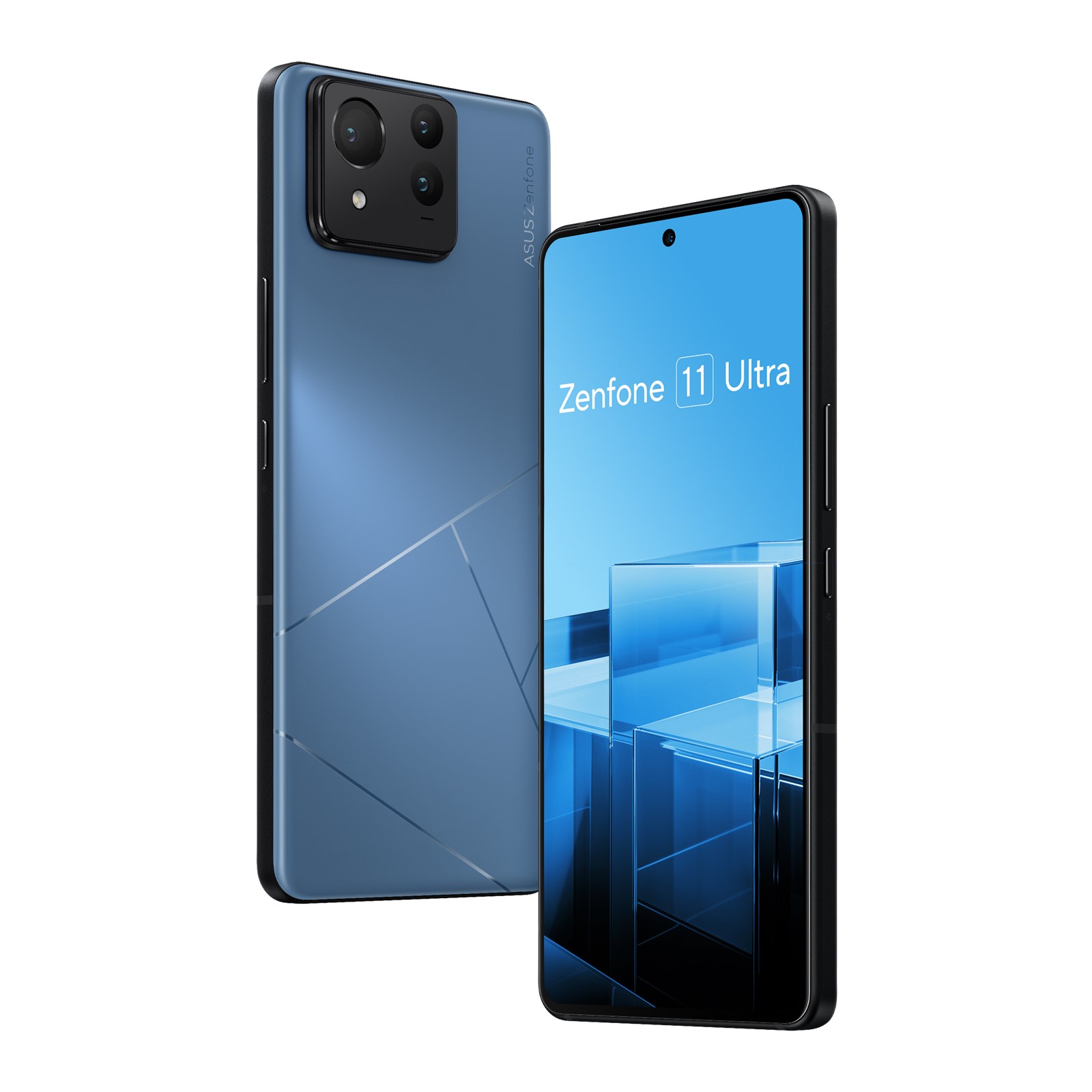
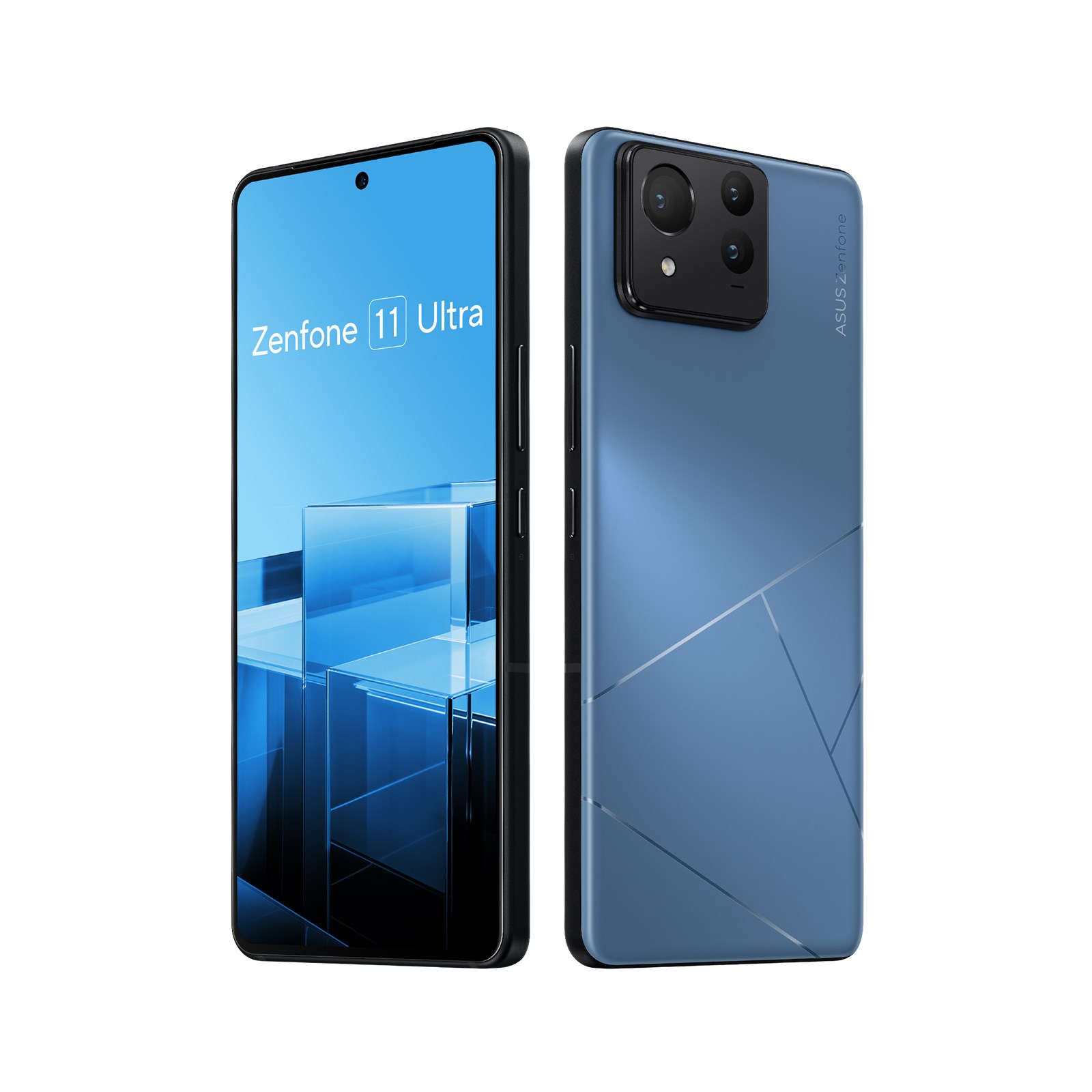
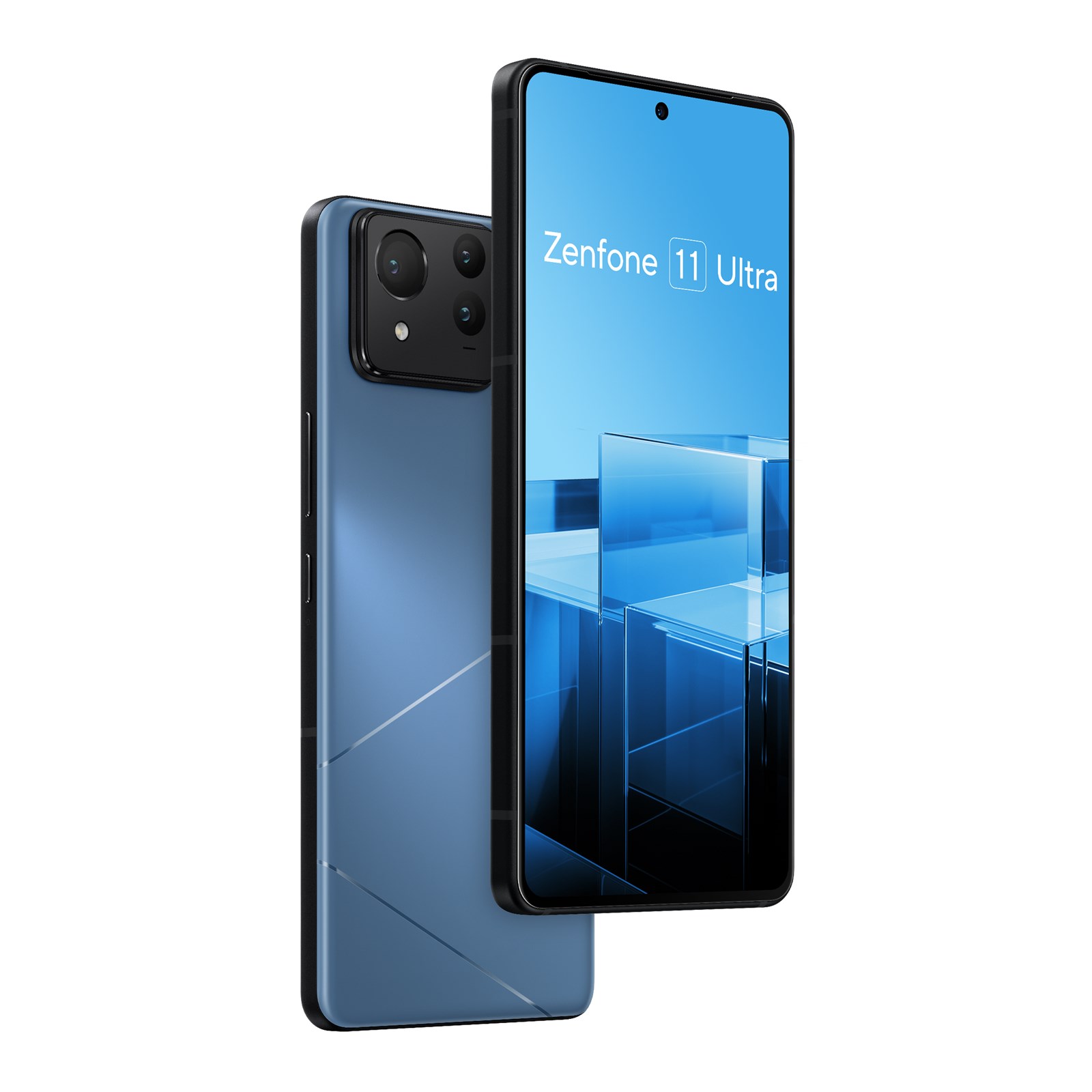
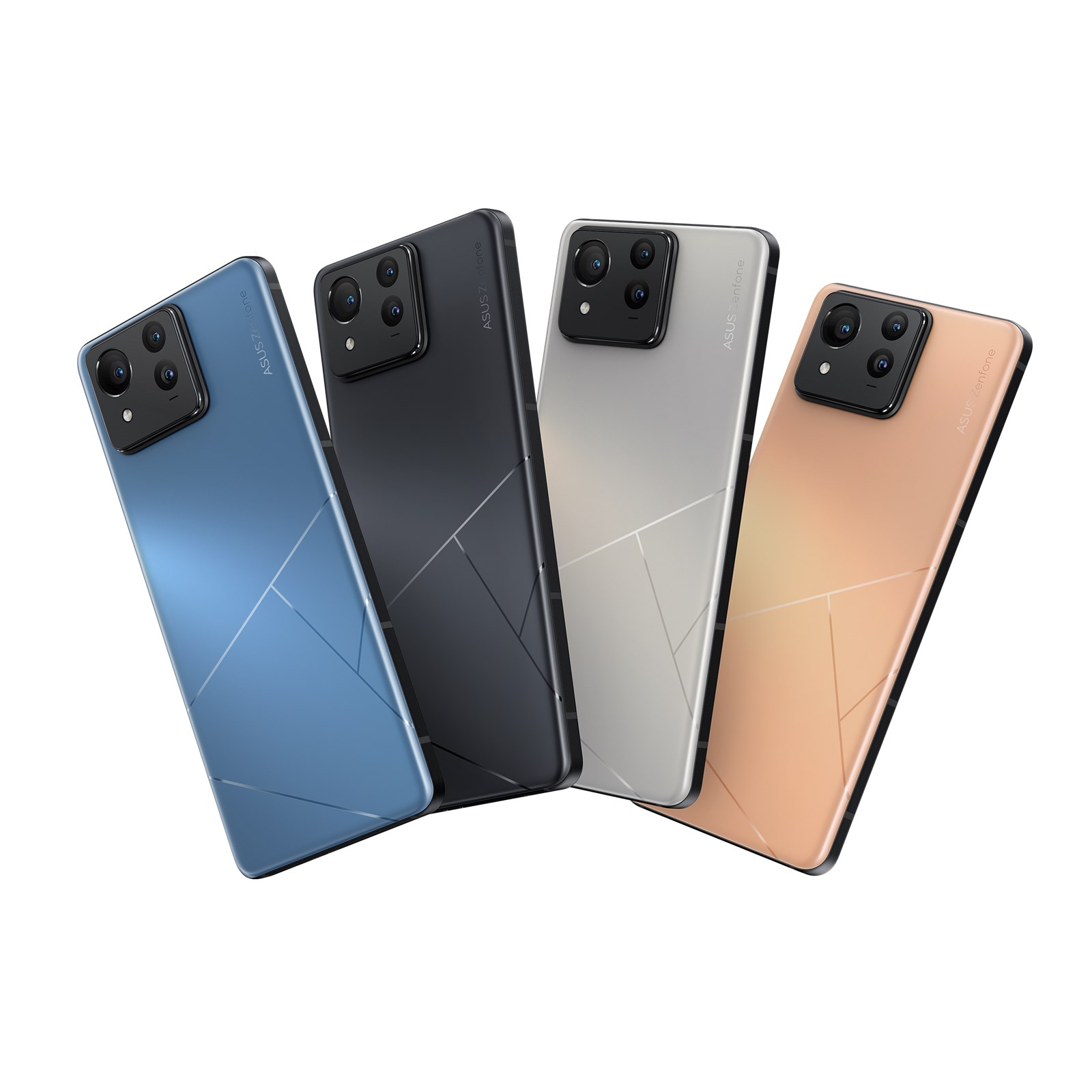
The Zenfone 11 Ultra measures 163.8 x 76.8 x 8.9 mm and weighs 225 g, with an IP68 rating and a Corning Gorilla Glass Victus 2 front. ASUS describes a glossy-matte finish with an "A" monogram on the back and offers five colours: Verdure Green, Skyline Blue, Eternal Black, Misty Grey and Desert Sand. In the official renders the camera sits in a large rounded-square island at the top left of the back, with fine geometric lines etched across the rest of the panel. The company also states that the frame is made of 100% recycled aluminium and that the front glass includes 22% recycled material. It is a large and fairly heavy phone, so one-handed use will not suit everyone.
The screen is a 6.78-inch Samsung flexible AMOLED panel at 2400 x 1080 pixels. It is LTPO, so the refresh rate adapts between 1Hz and 120Hz, and ASUS says 144Hz can be switched on only inside the Game Genie overlay while playing games. Brightness is listed as 1,600 nits in high-brightness mode and 2,500 nits peak. ASUS claims 107% DCI-P3 coverage with a Delta E below 1, supports HDR10, and states a 94% screen-to-body ratio. The panel supports glove touch, and the always-on display can drop to 1Hz to save power. On paper this is a top-tier display; as always, peak brightness figures apply to small areas under specific conditions, so the daily outdoor experience will depend on the panel's behaviour in real light.
Performance, memory and software
Inside is the Qualcomm Snapdragon 8 Gen 3, with LPDDR5X memory in 12GB or 16GB and UFS 4.0 storage in 256GB or 512GB. ASUS quotes a 30% faster CPU and a 25% faster GPU compared with the Snapdragon 8 Gen 2, citing Qualcomm and its own data; treat these as manufacturer comparisons, not independent test results. For everyday use the hardware class is more than enough, and for gaming it sits in the top group of 2024 Android chips. There is no microSD slot mentioned on the spec page, so choose the storage size with care.
The phone ships with Android 14. The official page we used does not state an update policy, so we do not quote a promise of OS versions or security patch years. If long-term support matters to you, confirm it with ASUS for your region. Connectivity is modern: Wi-Fi 7 (subject to local regulation), Bluetooth 5.4 with aptX Adaptive and aptX Lossless, NFC, dual Nano SIM with 5G, and GNSS covering GPS, Glonass, Galileo, BeiDou, QZSS and NavIC.
Camera
The main camera is a 50MP Sony IMX890 sensor with a 1/1.56-inch size, a quad-Bayer layout, an f/1.9 aperture and what ASUS calls a 6-axis hybrid gimbal stabiliser 3.0, a combination of optical stabilisation and a physical gimbal mechanism intended to make video steadier. A 13MP ultrawide camera with a 120-degree field of view and a free-form lens sits next to a 32MP telephoto with 3x optical zoom and optical stabilisation, whose binned output is 8MP. The front camera is a 32MP RGBW sensor producing 8MP photos after pixel binning. The official page also describes 2x lossless zoom from the main camera.
For video, the spec page lists 8K recording at 24 frames per second on the main camera, 4K at 30 or 60 frames per second, HDR10+ for 4K on the main and ultrawide cameras, and slow motion up to 480fps at 720p. Stabilised video is the headline: if you shoot a lot of handheld footage, a gimbal approach is a distinctive reason to consider this phone over rivals with ordinary optical stabilisation. Photo quality in challenging light is something we cannot judge from specifications, and ASUS gives no independent scores on the page.
Battery and charging
The battery is listed as an equivalent 5,500 mAh (typical), which ASUS explains as two cells of 2,750 mAh. Wired charging is compatible with 65W chargers using QC 5.0 and PD 3.0, and wireless charging reaches up to 15W on the Qi 1.3 standard; ASUS recommends a pad that supports the EPP protocol for best results. A USB-C cable and a phone case come in the box, but the page does not state that a charger is included, so budget for one if you need it. The company promotes its HyperCharge branding, but the page lists compatible chargers rather than a full charge time, so we do not quote one.
Audio
The phone uses multi-magnet dual stereo speakers that ASUS says are 25.2% larger than the previous model's, based on its lab data. The 3.5mm jack supports Hi-Res Audio up to 384kHz and 32-bit, and the software includes Dirac Virtuo for headphone spatial sound and AudioWizard profiles. For listeners who still use wired headphones, this is one of the few big flagships that keeps the analogue connector.
Who it is for, and the compromises
The Zenfone 11 Ultra suits buyers who want a top-end Android phone with a large bright screen, strong performance, stabilised video, wireless charging and a headphone jack, and who are not looking for a stylus or a very long-range telephoto. It is also a reasonable alternative for people who find big-brand flagships too similar to each other. The trade-offs are those you would expect: a heavy, wide body; a telephoto limited to 3x; no microSD; no stated update promise on the official page; and wired charging at 65W rather than the faster speeds of some rivals. Our comparison with the Zenfone 12 Ultra and the comparison with the Galaxy S25 Ultra show how it stacks up against a newer sibling and a Samsung flagship, and the rankings page places it among the other phones we cover.
In short, the Zenfone 11 Ultra is a capable, slightly unconventional flagship: not the loudest on spec-sheet marketing, but with a coherent set of features and a few rare ones. Confirm the regional version, the RAM and storage option and the update policy before you decide.
Where it ranks
Compare ASUS Zenfone 11 Ultra with similar devices
More from ASUS
Frequently asked questions
When was the ASUS Zenfone 11 Ultra released?
The manufacturer’s release date for the ASUS Zenfone 11 Ultra is not stated in the information we have.
What are the main specs of the ASUS Zenfone 11 Ultra?
Headline figures for the ASUS Zenfone 11 Ultra: Battery: 5,500 mAh, Refresh rate: 144 Hz, Main camera: 50 MP, RAM: 16 GB. The full specification table is further up this page.
Is the ASUS Zenfone 11 Ultra worth buying?
That depends on your priorities. Use the editorial review on this page for our view, check the rankings above to see where the device stands on battery, display and camera, and compare it directly with similar models before you decide.


