Phones
ASUS ROG Phone 9
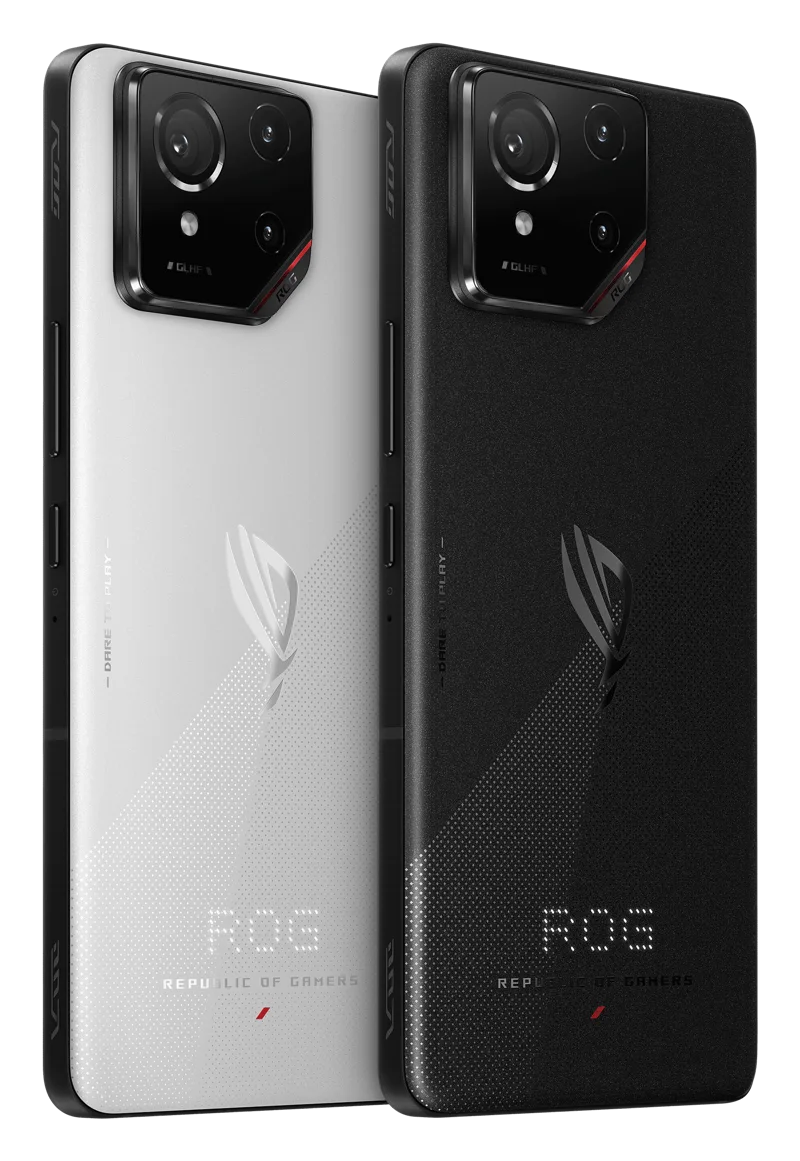
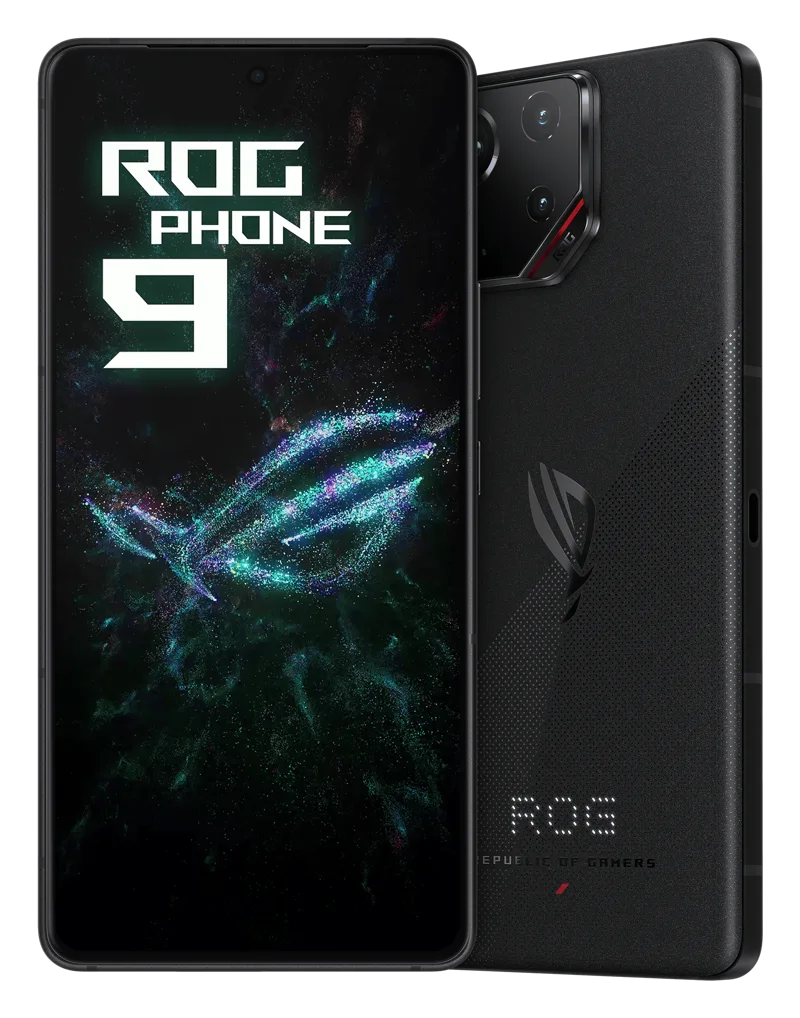
The standard ROG Phone 9 has a Snapdragon 8 Elite, a 6.78-inch AMOLED up to 185Hz in games, a 5,800 mAh battery and a headphone jack, without the Pro's rear AniMe Vision display.
Key figures at a glance
Gallery
Specifications
- Display
- 6.78" Samsung Flexible AMOLED, 2400x1080, LTPO 1-120Hz (up to 165Hz in settings, 185Hz in Game Genie), 2,500 nits peak, HDR10
- Chipset
- Snapdragon 8 Elite (3nm)
- RAM
- 16GB
- RAM options
- 12GB / 16GB LPDDR5X
- Storage
- 256GB / 512GB UFS 4.0
- Rear Camera
- 50MP main (Sony Lytia 700, gimbal OIS) + 13MP ultrawide + 5MP macro
- Front Camera
- 32MP
- Battery
- 5,800 mAh (typical), 65W wired, 15W wireless
- OS
- Android 15
- Weight
- 227 g
- Dimensions
- 163.8 x 77 x 8.9 mm
- Water Resistance
- IP68
- Glass
- Corning Gorilla Glass Victus 2
- Connectivity
- Wi-Fi 7, Bluetooth 5.4, NFC, 3.5mm headphone jack, dual SIM
- Colors
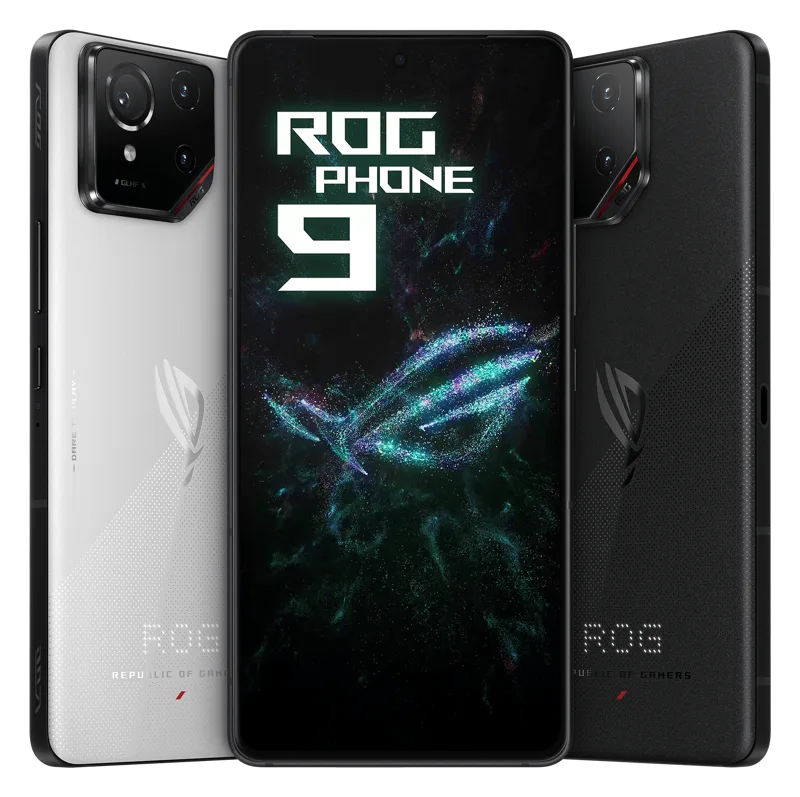
- Storm White, Phantom Black
The ASUS ROG Phone 9 is the standard model of ASUS's 2024 gaming phone generation, and it is easy to confuse with its more expensive sibling, the ROG Phone 9 Pro. Both use the Snapdragon 8 Elite chip, the same 6.78-inch AMOLED screen and the same 5,800 mAh battery. The plain ROG Phone 9 offers 12GB or 16GB of memory, a triple rear camera without a telephoto lens and a back panel without the Pro's light display, but it keeps the 3.5mm headphone jack, the IP68 rating and the gaming features that define the line. This page is based on the published specifications and manufacturer information and explains what you get, and what you give up, by choosing the non-Pro model.
The standard model next to the Pro
ASUS launched the ROG Phone 9 family in November 2024. The range has two parts: the ROG Phone 9, covered here, and the ROG Phone 9 Pro, which adds a larger memory ceiling, a 3x telephoto camera and the AniMe Vision dot-matrix display on the back. On ASUS's specification page the standard ROG Phone 9 appears in two memory configurations, 12GB of RAM with 256GB of storage and 16GB of RAM with 512GB, and in two colours, Storm White and Phantom Black. The weight is 227 g and the body measures 163.8 x 77 x 8.9 mm, the same figures as the Pro.
The choice between the two is largely a question of priorities. The standard phone gives you the same processor, battery and screen as the Pro, but with fewer camera options and fewer memory choices. Compared with a general flagship such as the OnePlus 13, which uses the same chip, the ROG Phone 9 is heavier and thicker, but it offers a faster screen option and gaming controls. The ROG Phone 9 vs OnePlus 13 comparison shows how the two differ.
Display and design
The display is a 6.78-inch Samsung flexible AMOLED panel with 2400 x 1080 resolution. It is an LTPO panel that can vary its refresh rate between 1Hz and 120Hz, with a setting that raises it to 165Hz in the system menu and up to 185Hz inside ASUS's Game Genie overlay for supported games. ASUS lists a peak brightness of 2,500 nits, a high-brightness mode of 1,600 nits, HDR10 support and wide colour coverage: 107.37 percent of DCI-P3, according to the sheet. The company also reports a touch sampling rate of 720Hz and says that colour accuracy has a Delta-E value below 1, both of which are manufacturer figures. The cover glass is Corning Gorilla Glass Victus 2, and the screen supports glove touch.
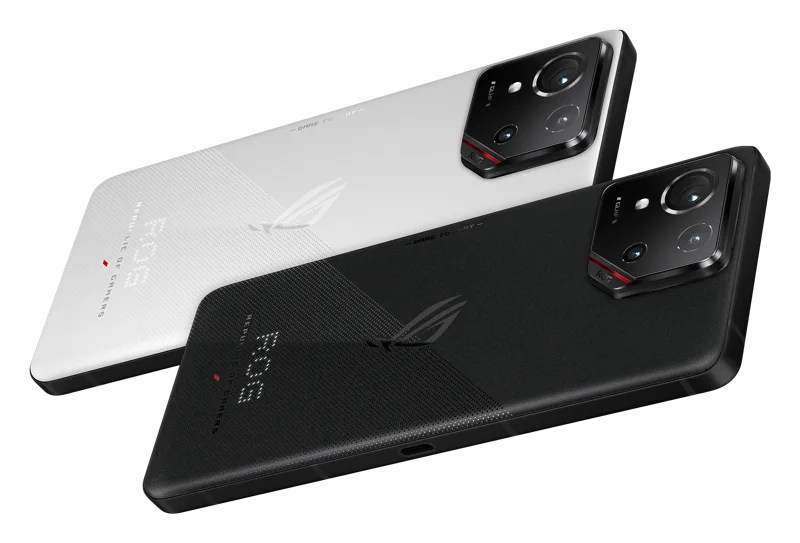
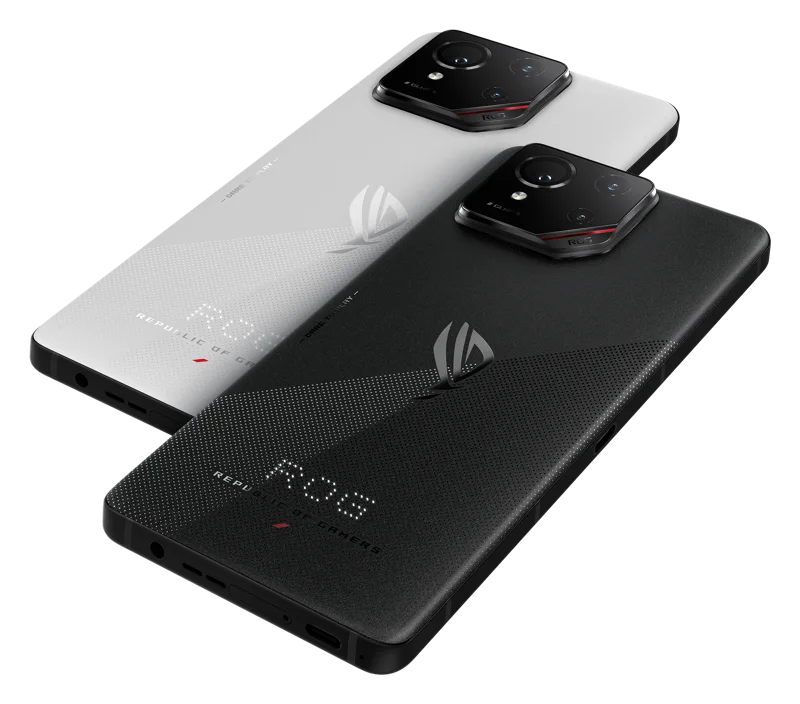
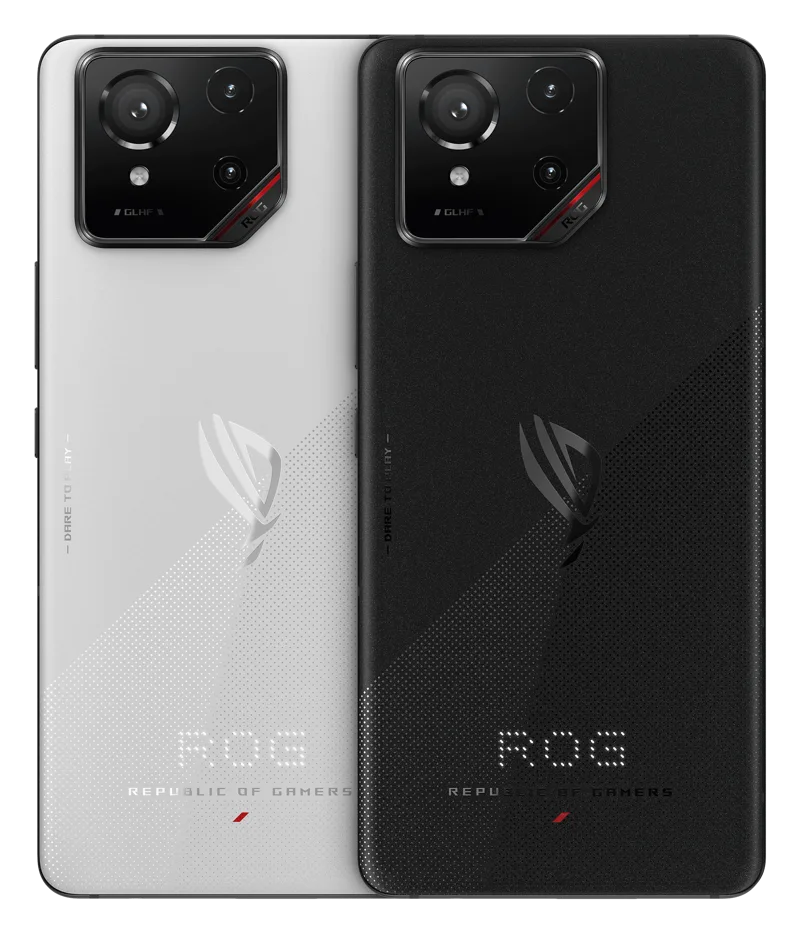
A refresh rate of 185Hz is only useful in games that support it, and the 165Hz setting depends on the content too, so the rate is better regarded as an option for competitive players than as an everyday gain. For daily use the adaptive 1 to 120Hz range is what matters, because it saves power when the screen shows static content. The back of the phone has a printed ROG logo with a dotted texture, not the animated light display of the Pro. That makes the standard model quieter in appearance, although it still looks like a gaming phone, with angular camera housing and red accents.
ASUS gives the phone an IP68 rating and states in a footnote that it was tested at a depth of 1.5 metres for 30 minutes. A water-resistance rating on a gaming phone is not common, so this adds a measure of everyday safety. The phone has two stereo speakers, a 3.5mm headphone jack and Dirac Virtuo spatial audio, and it supports Hi-Res audio at up to 384kHz and 32 bit. A headphone jack is now rare in flagship phones, and for people who use wired earphones or an external DAC it is a genuine reason to choose this line.
Performance, memory and software
The Snapdragon 8 Elite runs at up to 4.3GHz and is paired with an Adreno 830 graphics processor. ASUS states that the chip's CPU is about 45 percent faster than the Snapdragon 8 Gen 3, the NPU about 40 percent faster and the GPU about 40 percent faster. These are claims from the manufacturer, but the chip is among the fastest available for Android in this generation, and the memory is LPDDR5X with UFS 4.0 storage. The standard model has up to 16GB of RAM, a smaller ceiling than the 24GB of the Pro Edition, but for gaming and daily use 12GB or 16GB is already more than most software uses.
The phone runs Android 15. ASUS states that the series receives two major operating-system updates and five years of security updates. The software includes Game Genie, ASUS's overlay for performance modes, screen recording, macros and refresh-rate control, and ASUS lists AirTriggers, touch-sensitive shoulder controls, among the sensors and as a Game Genie feature that can be mapped to in-game actions. The phone also supports Wi-Fi 7, Bluetooth 5.4 with aptX Adaptive and aptX Lossless, NFC and a long list of satellite navigation systems, along with dual SIM and 5G. The set of supported bands differs between the global, US and Chinese versions.
Camera
The camera is the clearest compromise of the standard model. The main camera is a 50MP Sony Lytia 700 sensor of 1/1.56 inch with an f/1.9 aperture and gimbal-style optical stabilisation. It is joined by a 13MP ultrawide camera with a 120-degree field of view and a 5MP macro camera. There is no telephoto lens, so the ROG Phone 9 relies on digital zoom, whereas the Pro has a 3x optical telephoto. The front camera has 32MP. Video recording goes up to 8K at 30 frames per second, 4K at 30 or 60, and slow motion up to 480 frames per second at 720p, with electronic stabilisation on three axes.
For social media, travel photos and casual snapshots, the main sensor is capable. But the phone is not designed to compete with the camera systems of Samsung, Google or Apple, and ASUS positions the camera as a secondary feature. A buyer who wants a gaming phone and a very good camera together should look at the Pro or choose a more camera-focused flagship.
Battery and charging
The battery has a typical capacity of 5,800 mAh and ASUS says that it is designed to keep more than 80 percent of its capacity after at least 1,000 charge cycles. The company's laboratory tests quote at least 4.5 hours of heavy gaming, 22.1 hours of video streaming and 23.4 hours of social media scrolling, all of which depend on settings and should be taken as manufacturer figures. Wired charging is 65W with the included adapter, and ASUS says that its HyperCharge system reaches 100 percent in about 46 minutes with specific ASUS chargers. Wireless charging is up to 15W using the Qi 1.3 standard. The box contains a clear case, a USB-C cable, a SIM tool and a 65W adapter.
Who it is for
The standard ROG Phone 9 suits mobile gamers who want the top Android chip, a fast screen, shoulder triggers, a large battery and a headphone jack, but who do not need the Pro's extra memory, telephoto camera and rear display. It also suits people who want long battery life and water resistance in a robust body.
Compromises
It is heavy at 227 g and thick at 8.9 mm. The camera is simpler than on mainstream flagships, with no telephoto. The operating-system update promise is two major versions. ASUS does not list a US price on the specification page, and the band support differs by region, so check compatibility with your carrier. Overall, the phone makes sense for players who value performance and endurance above everything else, and the rankings show how it compares with other phones.
Where it ranks
Compare ASUS ROG Phone 9 with similar devices
More from ASUS
Frequently asked questions
When was the ASUS ROG Phone 9 released?
The ASUS ROG Phone 9 was released on 2024-11-19, according to the manufacturer’s published information.
What are the main specs of the ASUS ROG Phone 9?
Headline figures for the ASUS ROG Phone 9: Battery: 5,800 mAh, Refresh rate: 185 Hz, Main camera: 50 MP, RAM: 16 GB. The full specification table is further up this page.
Is the ASUS ROG Phone 9 worth buying?
That depends on your priorities. Use the editorial review on this page for our view, check the rankings above to see where the device stands on battery, display and camera, and compare it directly with similar models before you decide.


