Phones
ASUS ROG Phone 8 Pro
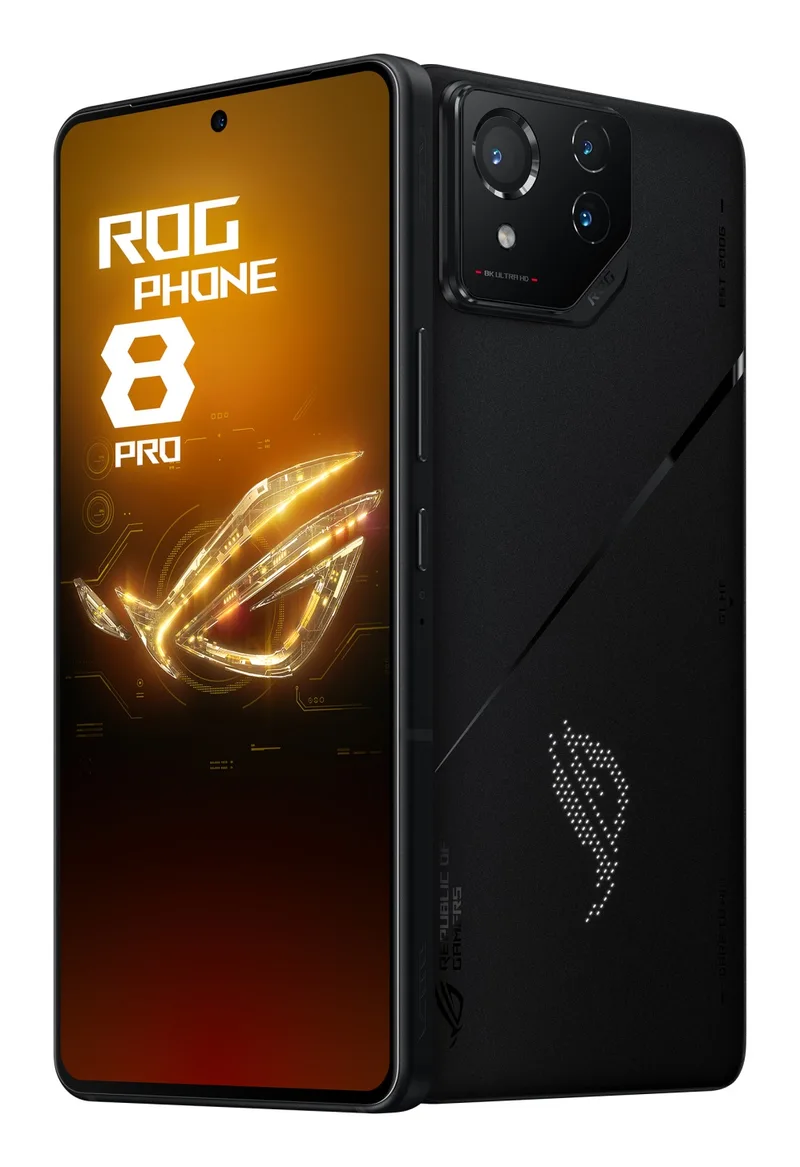
ASUS's ROG Phone 8 Pro pairs a Snapdragon 8 Gen 3, a 165Hz LTPO AMOLED, IP68 and a 3x telephoto with the AniMe Vision mini-LED rear display.
Key figures at a glance
Gallery
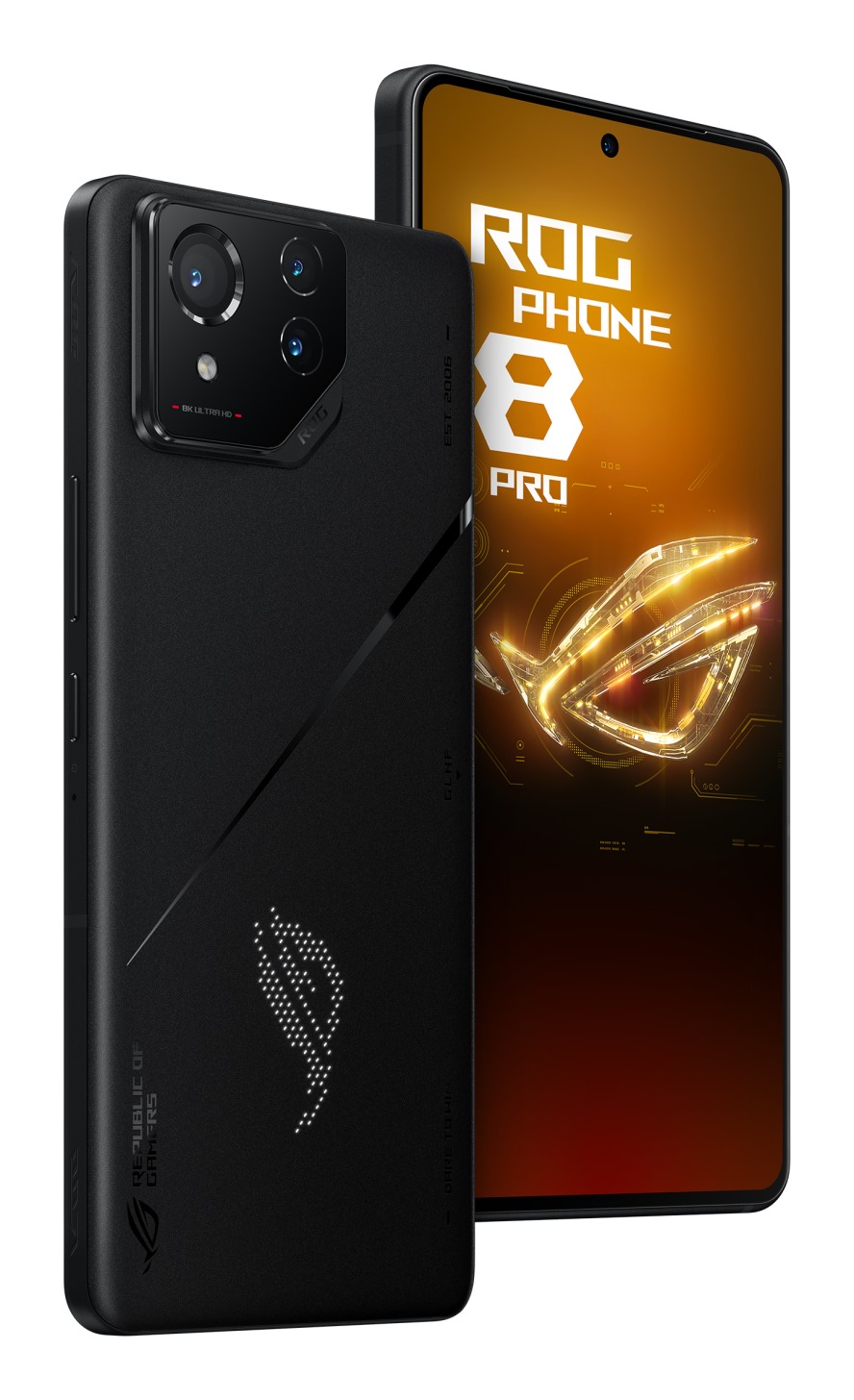
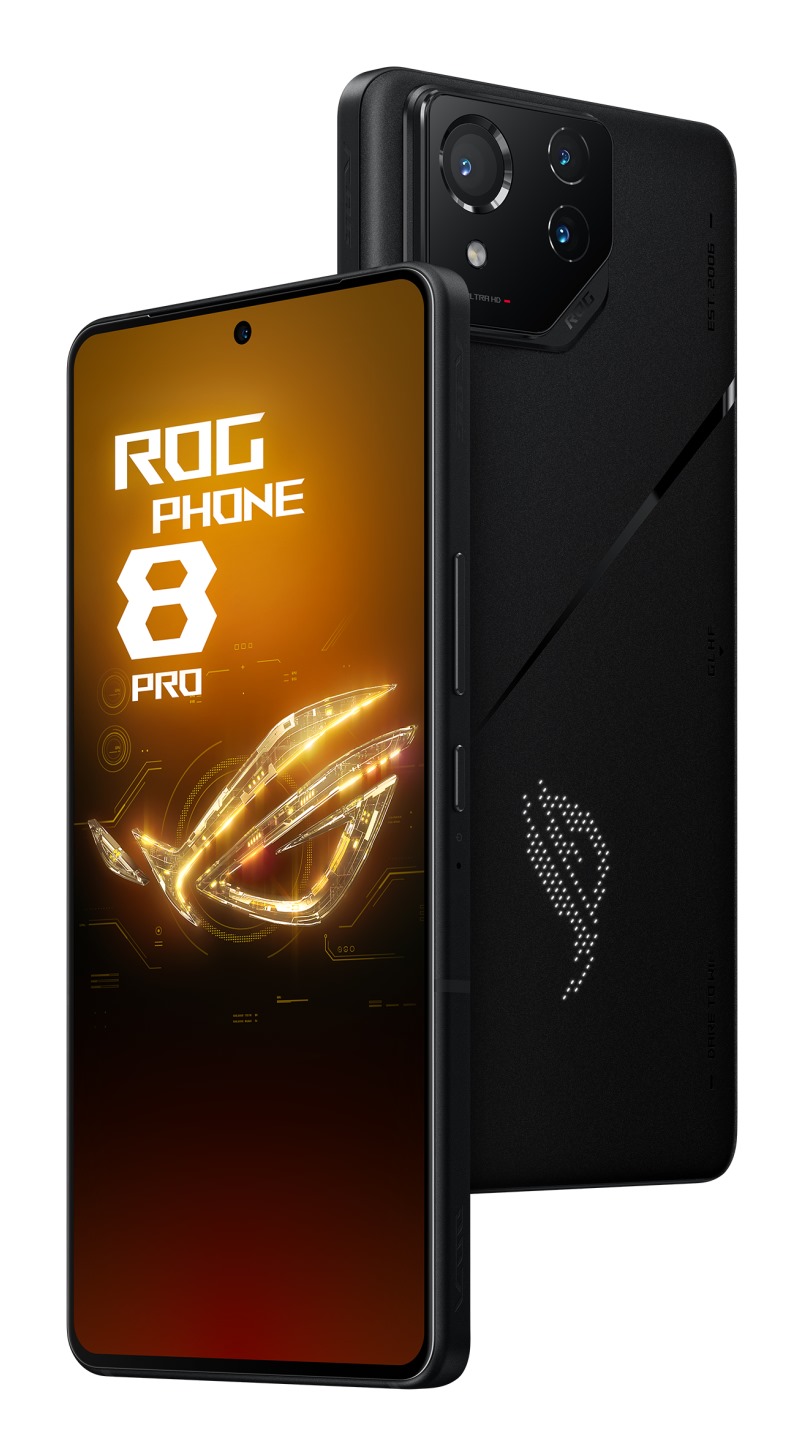
Specifications
- Display
- 6.78" Samsung flexible AMOLED (E6), 2400x1080, LTPO 1-120Hz, up to 165Hz, 720Hz touch sampling, 1,600 nits HBM / 2,500 nits peak, Gorilla Glass Victus 2
- Chipset
- Qualcomm Snapdragon 8 Gen 3 (octa-core up to 3.3GHz, Adreno 750)
- RAM
- 24GB
- Memory Options
- 16GB + 512GB / 24GB + 1TB (Pro Edition), LPDDR5X + UFS 4.0
- Storage
- 512GB / 1TB
- Rear Camera
- 50MP main (Sony IMX890, 1/1.56", f/1.9, 6-axis hybrid gimbal OIS) + 13MP ultrawide (120°) + 32MP telephoto (3x optical, OIS)
- Front Camera
- 32MP RGBW (90° field of view)
- Battery
- 5,500 mAh (equivalent, 2 x 2,750 mAh typical), 65W wired, 15W Qi wireless
- OS
- Android 14 with ROG UI
- Weight
- 225 g
- Dimensions
- 163.8 x 76.8 x 8.9 mm
- Water Resistance
- IP68
- Rear Display
- AniMe Vision mini-LED, 341 elements
- Connectivity
- Wi-Fi 7 ready (region dependent), NFC, dual SIM 5G, 3.5mm headphone jack
The ASUS ROG Phone 8 Pro is the flagship of ASUS's 2024 gaming-phone line, and it is the version that tries hardest to be a normal premium phone as well. It combines the Snapdragon 8 Gen 3, a 165Hz LTPO AMOLED screen, a telephoto camera, IP68 protection and wireless charging with a rear mini-LED display called AniMe Vision, which the regular ROG Phone 8 does not have. This is a specification-and-information based review: it draws on ASUS's global product pages, its specification page and its January 2024 press release, and it labels the maker's performance numbers as claims.
What "Pro" means in the ROG Phone 8 series
ASUS announced the ROG Phone 8 series on 9 January 2024. The series has three ways to buy: the ROG Phone 8, the ROG Phone 8 Pro and the ROG Phone 8 Pro Edition. The Pro models share one finish, Phantom Black, and add the AniMe Vision rear display. ASUS's specification page shows the Pro with 16GB of RAM and 512GB of storage, and the Pro Edition with 24GB and 1TB, and says the Pro Edition box contains the AeroActive Cooler X clip-on fan and a bundled Aero Case, while the 16GB/512GB Pro ships with a clear case instead. The generation that followed is the ROG Phone 9 family, including the ROG Phone 9 Pro, which moves to a newer chip; anyone comparing generations can use the table ROG Phone 8 Pro vs ROG Phone 9 Pro. Nothing on this page applies to the 9 series, whose specifications differ.
AniMe Vision and the look of the phone
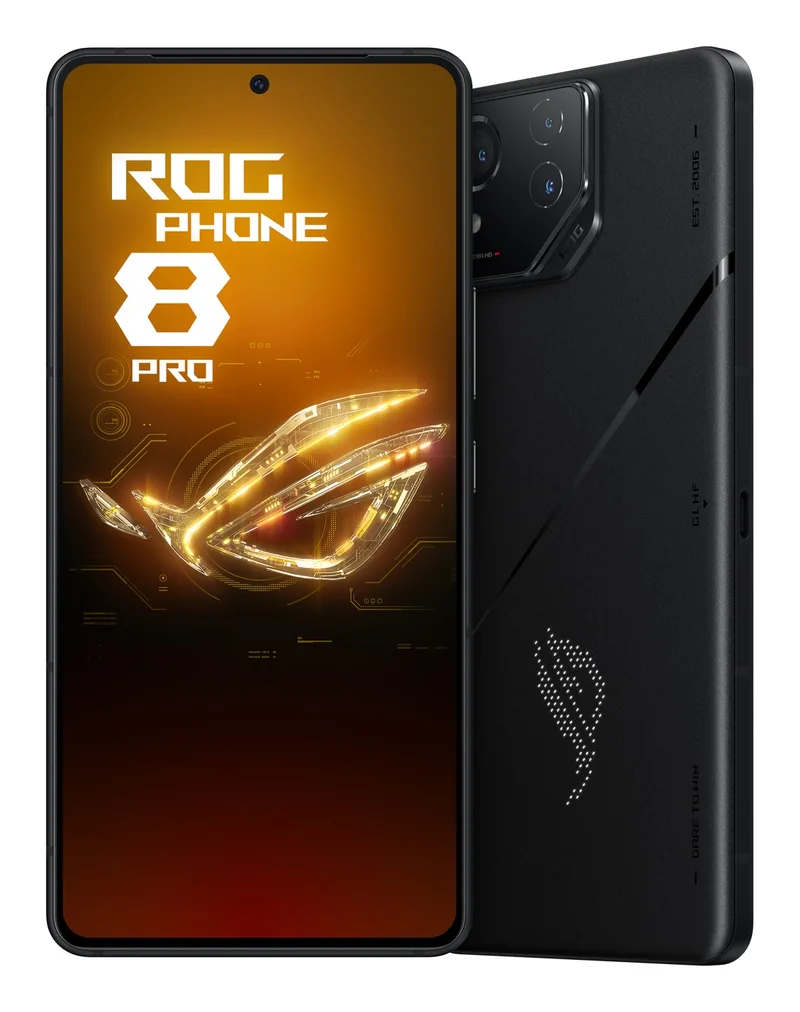
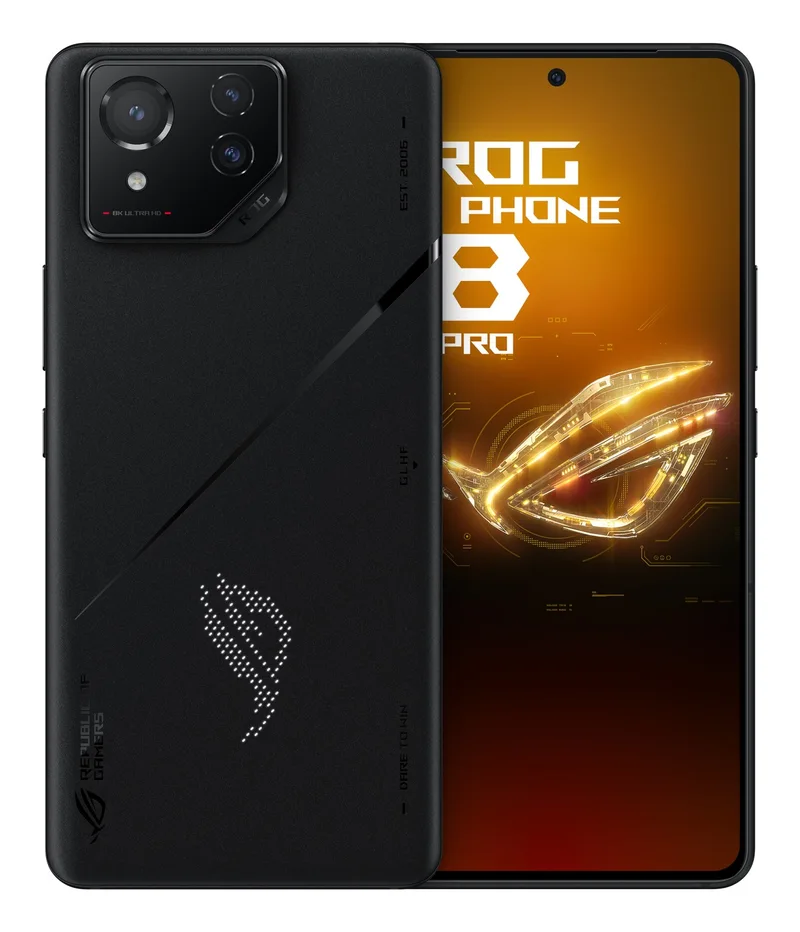
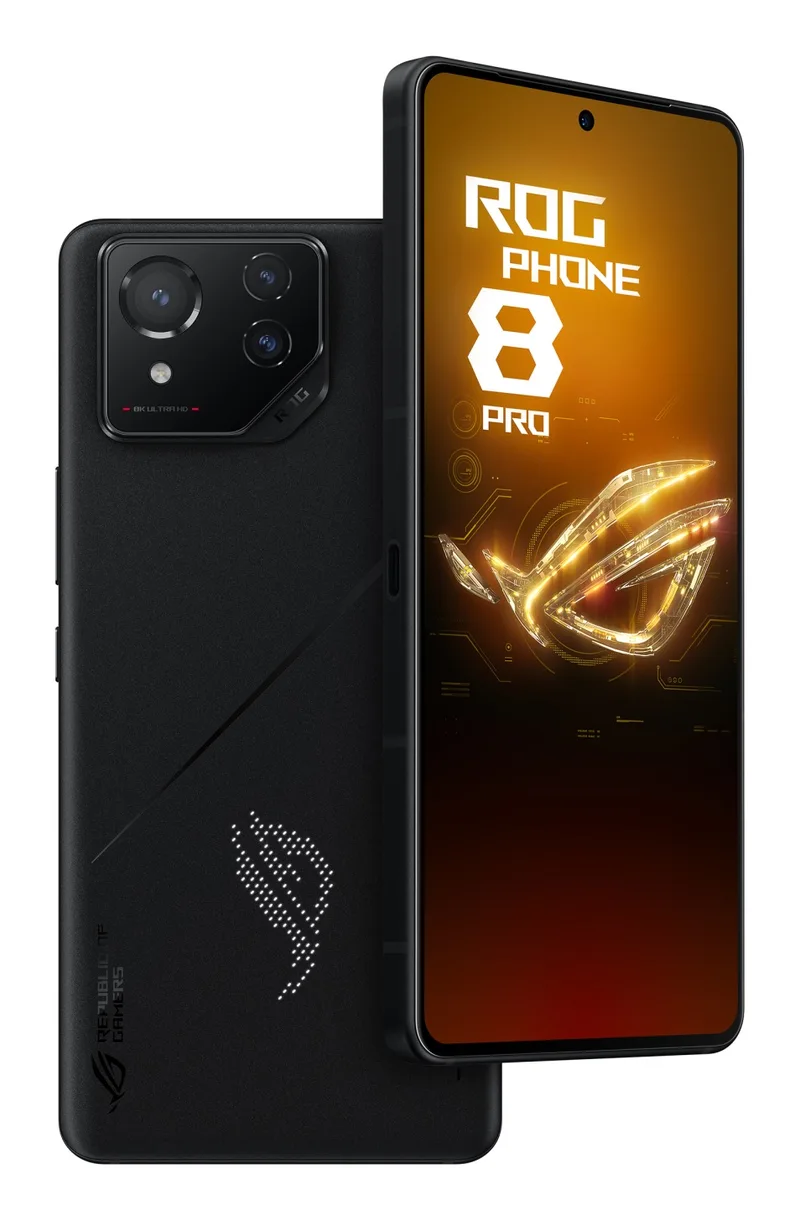
The 8 series is a clear break from the loud styling of earlier ROG phones. ASUS says the body is up to 15% thinner than the previous generation, and the measured size is 163.8 x 76.8 x 8.9 mm at 225 g. The Pro's party trick sits on the back: AniMe Vision is a programmable mini-LED panel with 341 elements that can show preset or custom animations and stays invisible when switched off. ASUS also describes a hidden effect that unlocks when two ROG Phone 8 Pro or Pro Edition phones touch back to back. It is decoration, not a function you need, but it is the main reason to choose the Pro over the standard model on looks alone.
ASUS calls the series the first IP68-rated gaming phone. The specification page lists IP68, although the footnote beneath the page mentions an IP65/68 rating tested under IEC 60529, so it is best read as splash- and dust-proof with the usual caution that sealing can degrade over time. The phone has a 3.5 mm headphone jack, which is rare in this class.
Display: 165Hz and 2,500 nits
The 6.78-inch panel is a Samsung flexible AMOLED (the E6 generation) at 2400 x 1080 pixels, protected by Gorilla Glass Victus 2. It is an LTPO panel that varies its refresh rate between 1 and 120Hz and can be set as high as 165Hz for supported games; ASUS quotes a 720Hz touch sampling rate, 1,600 nits in high-brightness mode and 2,500 nits peak, HDR10 support, a Delta-E below 1 colour-accuracy claim and a 94% display-to-body ratio. The colour gamut figures are listed as 107.37% DCI-P3. ASUS says the screen can drop to 1Hz for the always-on display. Peak numbers like 2,500 nits apply to small highlight areas, so full-screen brightness in sunlight will be lower.
Performance, cooling and the Pro Edition bundle
The chip is the Snapdragon 8 Gen 3 at up to 3.3GHz with an Adreno 750 GPU, paired with LPDDR5X memory at 8,533 Mbps and UFS 4.0 storage. ASUS states the CPU is 30% faster and the GPU 25% faster than the Snapdragon 8 Gen 2 used the year before, a manufacturer comparison. Cooling is a core part of the design: GameCool 8 includes a Rapid-Cooling Conductor placed between the processor and the back cover, a vapour chamber, graphite sheets and boron nitride, and ASUS claims a 22% improvement in thermal efficiency over the ROG Phone 7.
The clip-on AeroActive Cooler X is the extra. ASUS's press release says it is 29% smaller than its predecessor with 1.2 times the thermal efficiency and can cut the back-cover temperature by as much as 26 degrees Celsius; its design also adds two physical shoulder buttons. It is sold separately except in the Pro Edition box. Beyond the cooler, the phone has AirTrigger touch-sensitive shoulder controls and supports the plug-in ROG Tessen controller. Memory is the biggest difference inside the Pro line: 16GB and 512GB, or 24GB and 1TB for the Pro Edition. Few apps can use 24GB, so the larger tier is more about headroom and storage than speed.
Camera
The rear camera system is a three-lens setup: a 50MP Sony IMX890 main sensor (1/1.56-inch, f/1.9) with a 6-axis hybrid gimbal stabiliser, a 13MP ultra-wide camera with a 120-degree view and a free-form lens, and a 32MP telephoto with 3x optical zoom and optical stabilisation, which ASUS calls a first for the series. The telephoto bins its pixels to an 8MP output. Video goes up to 8K at 24 frames per second, with 4K at 30 or 60 frames per second on the main camera and HDR10+ recording. The front camera is a 32MP RGBW sensor with a 90-degree field of view.
The camera is a major step for a ROG phone and removes the old complaint that gaming phones skimp on photos. ASUS also lists Light Trail mode, Quick Shot and OZO Audio for wind-noise reduction. Rivals in this price class from phone-first brands still tend to lead in processing refinement, so treat the camera as capable, not class-leading.
Battery and charging
The battery is a dual-cell design of equivalent 5,500 mAh capacity (the typical capacity of each of the two cells is 2,750 mAh). Charging is 65W wired (ASUS claims 0 to 100% in 39 minutes with a compatible charger) and 15W wireless over Qi 1.3. ASUS's own test figures claim at least 3.4 hours of heavy gaming, 23 hours of video streaming and 17 hours of social-media scrolling; they come from its lab and vary with settings.
Software and gaming features
The phone runs Android 14 with ROG UI. Gaming extras include X Sense 2.0, X Capture for recording highlights, Background mode for auto-battle games, a text-grabbing tool that copies in-game dialogue, vibration mapping for on-screen buttons and a Semantic Search tool in the gallery. ASUS also lists Snapdragon Seamless for linking with Snapdragon X Elite PCs and Microsoft Phone Link. Connectivity covers Wi-Fi 7 (subject to regional rules), NFC, dual SIM and aptX Adaptive and Lossless.
Who the ROG Phone 8 Pro is for
- Gamers who want it all: the strongest chip of its year, a 165Hz screen, shoulder triggers and an optional cooler.
- Buyers who want a gaming phone without the gaming look: Phantom Black, a slimmer body and IP68 make it easier to live with.
- Collectors and enthusiasts: AniMe Vision and the 24GB/1TB Pro Edition bundle are the headline extras.
Compromises to weigh
The Pro is heavy at 225 g and relatively thick at 8.9 mm. The Pro line has only one colour, and AniMe Vision is purely cosmetic. Android 14 is the software the specification page lists, and the pages reviewed do not state an update schedule. ASUS also does not publish a US price on the pages consulted here, so none is quoted. Anyone who does not need the rear display or the larger memory tiers can save by choosing the standard model. For a gaming-phone alternative with a different philosophy, compare it with OnePlus 13 in the phone rankings.
Where it ranks
Compare ASUS ROG Phone 8 Pro with similar devices
More from ASUS
Frequently asked questions
When was the ASUS ROG Phone 8 Pro released?
The ASUS ROG Phone 8 Pro was released on 2024-01-09, according to the manufacturer’s published information.
What are the main specs of the ASUS ROG Phone 8 Pro?
Headline figures for the ASUS ROG Phone 8 Pro: Battery: 5,500 mAh, Refresh rate: 720 Hz, Main camera: 50 MP, RAM: 24 GB. The full specification table is further up this page.
Is the ASUS ROG Phone 8 Pro worth buying?
That depends on your priorities. Use the editorial review on this page for our view, check the rankings above to see where the device stands on battery, display and camera, and compare it directly with similar models before you decide.


