Phones
ASUS ROG Phone 8
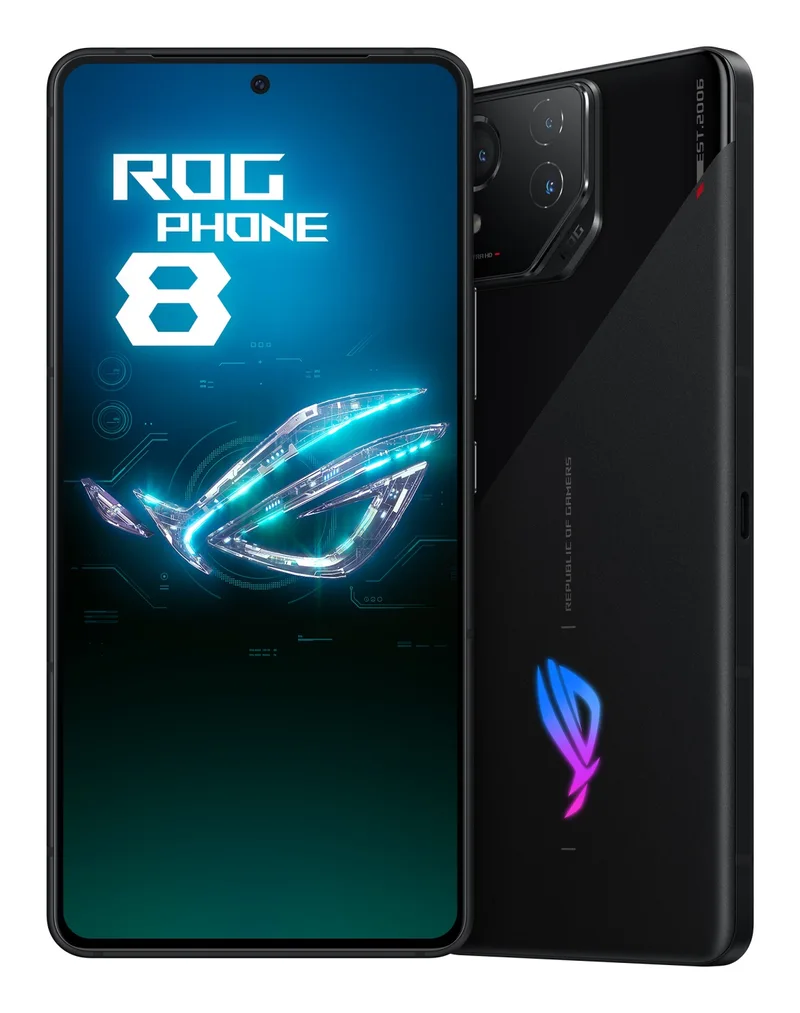
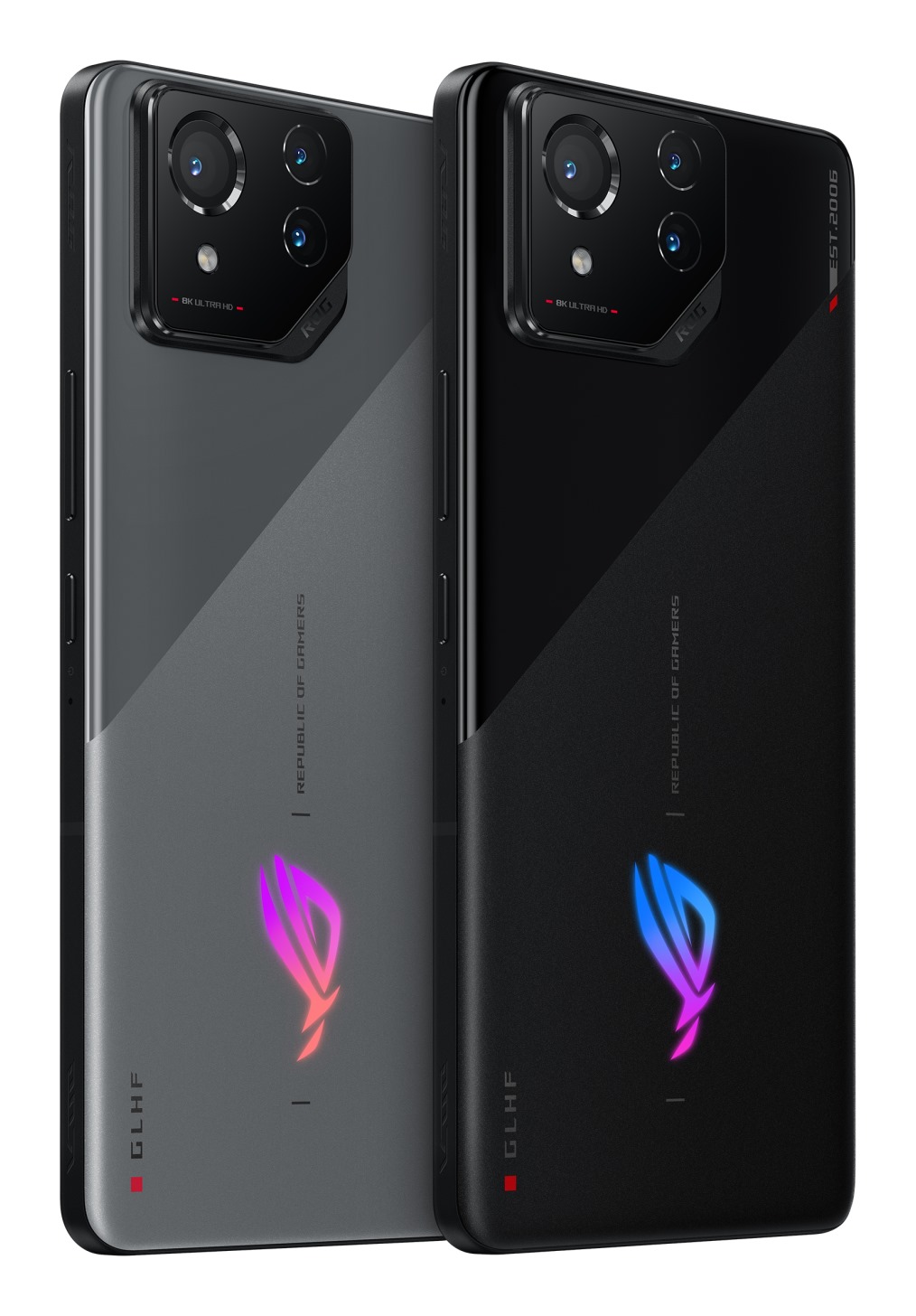
The standard ASUS ROG Phone 8 keeps the Snapdragon 8 Gen 3, 165Hz LTPO AMOLED, 3x telephoto, IP68 and 65W charging, but swaps the Pro's rear display for an Aura RGB logo.
Key figures at a glance
Gallery
Specifications
- Display
- 6.78" Samsung flexible AMOLED (E6), 2400x1080, LTPO 1-120Hz, up to 165Hz, 720Hz touch sampling, 1,600 nits HBM / 2,500 nits peak, Gorilla Glass Victus 2
- Chipset
- Qualcomm Snapdragon 8 Gen 3 (octa-core up to 3.3GHz, Adreno 750)
- RAM
- 16GB
- Memory Options
- 12GB + 256GB / 16GB + 256GB (LPDDR5X + UFS 4.0)
- Storage
- 256GB
- Rear Camera
- 50MP main (Sony IMX890, 1/1.56", f/1.9, 6-axis hybrid gimbal OIS) + 13MP ultrawide (120°) + 32MP telephoto (3x optical, OIS)
- Front Camera
- 32MP RGBW (90° field of view)
- Battery
- 5,500 mAh (equivalent, 2 x 2,750 mAh typical), 65W wired, 15W Qi wireless
- OS
- Android 14 with ROG UI
- Weight
- 225 g
- Dimensions
- 163.8 x 76.8 x 8.9 mm
- Water Resistance
- IP68
- Rear Lighting
- Aura RGB logo
- Colours
- Rebel Grey, Phantom Black
- Connectivity
- Wi-Fi 7 ready (region dependent), NFC, dual SIM 5G, 3.5mm headphone jack
Not every gamer wants the most expensive version of a gaming phone, and the standard ASUS ROG Phone 8 is aimed at exactly those buyers. It carries the same Snapdragon 8 Gen 3 processor, the same 6.78-inch 165Hz screen and the same 50MP-plus-telephoto camera system as the Pro models, but it drops the rear mini-LED display, ships with less memory and comes in two colours instead of one. This page is a specification-and-information based review built from ASUS's global product page, its specification page and its January 2024 press release. Where ASUS gives its own test results, they are marked as claims, and gaps in the published information are stated plainly.
The entry point to the 8 series
The ROG Phone 8 series was announced on 9 January 2024. The standard model is the starting point, and the step up is the ROG Phone 8 Pro, which adds the AniMe Vision rear display, larger memory tiers and the Phantom Black finish only. The newer generation is the ROG Phone 9 family, including the ROG Phone 9, which uses a more recent chip than the one described here, so any figure on this page belongs to the 8 series only. To see how the standard model has aged against its successor, the table ROG Phone 8 vs ROG Phone 9 sets them side by side. ASUS lists two memory configurations for the standard model: 12GB of RAM with 256GB of storage, and 16GB of RAM with 256GB of storage.
Looks: Aura RGB and two colours
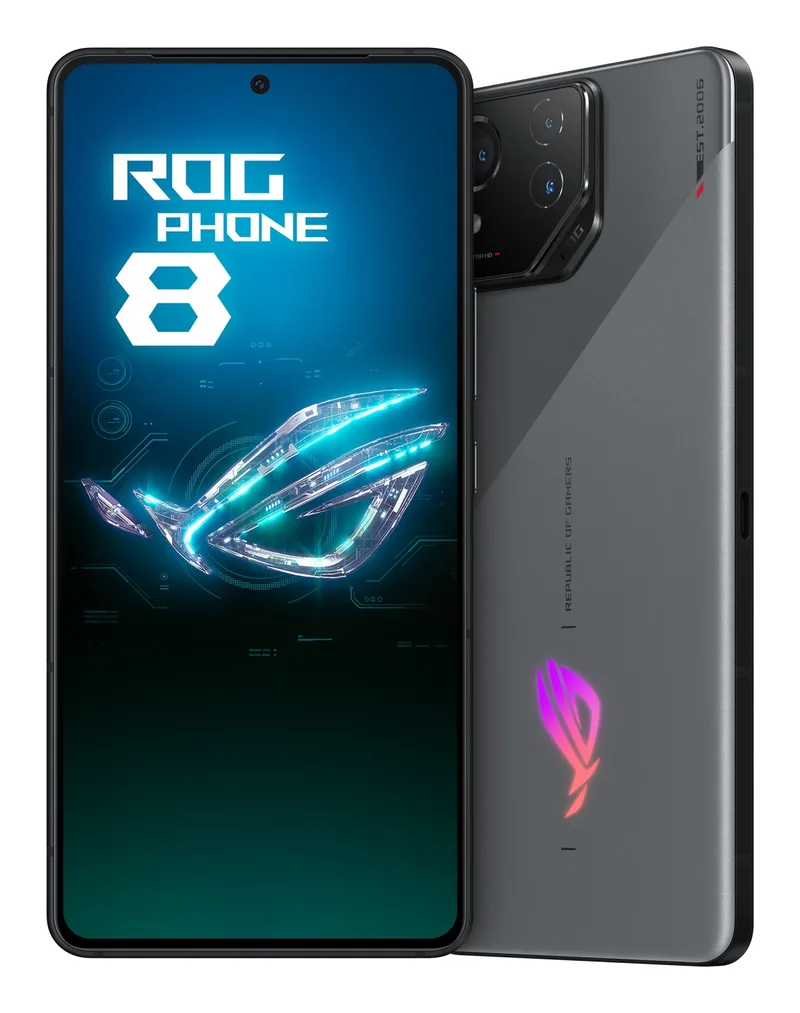
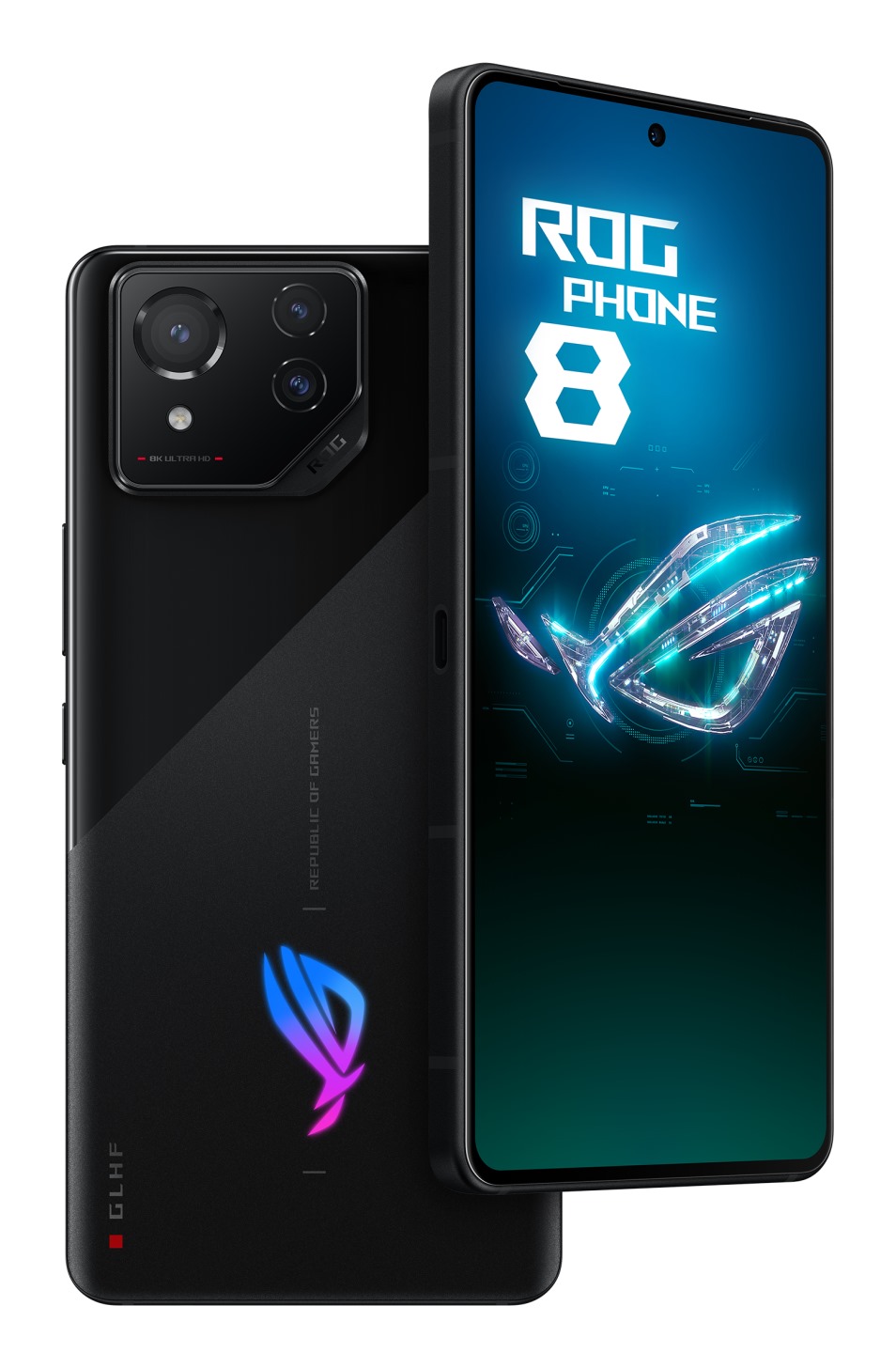
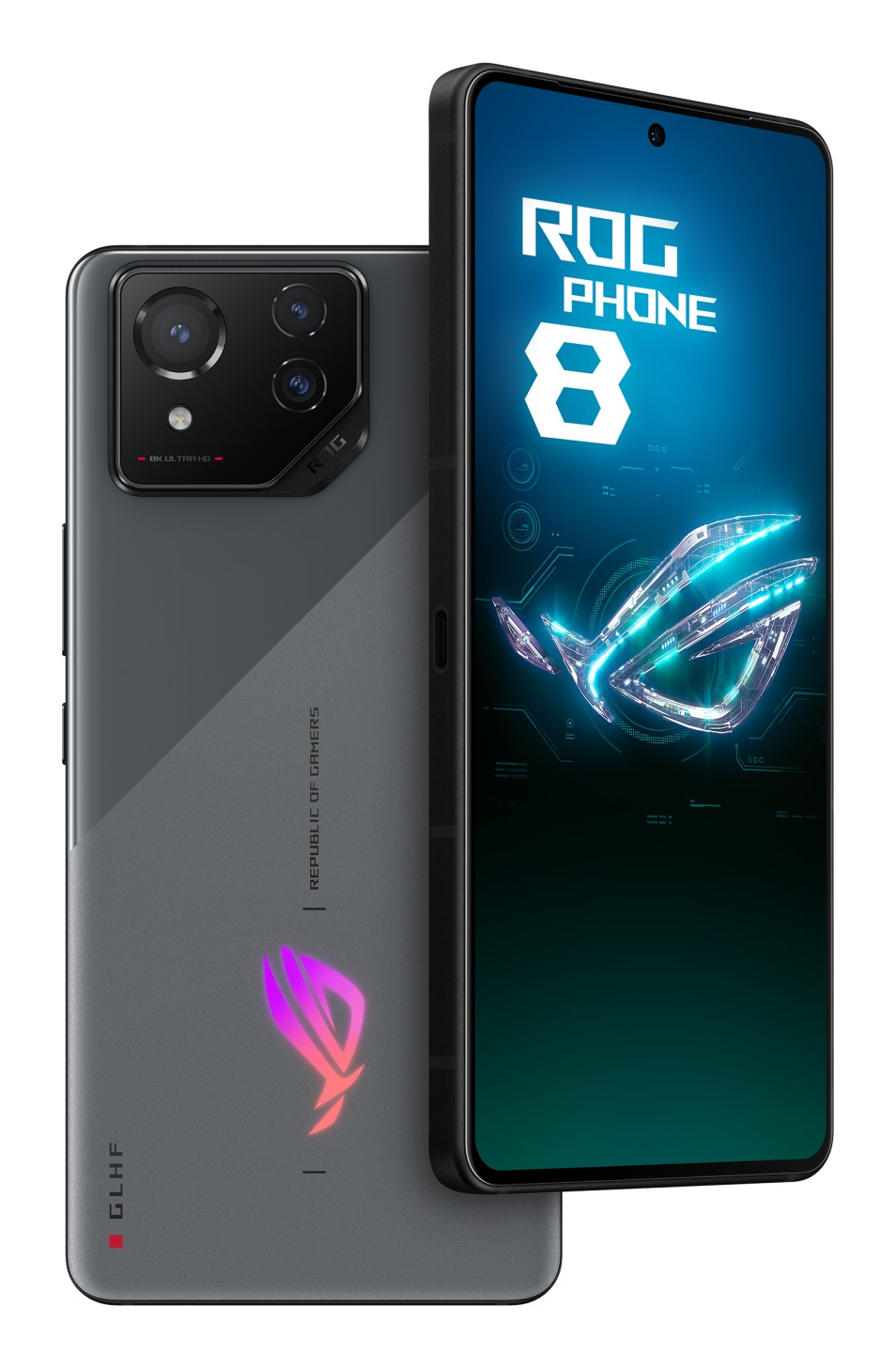
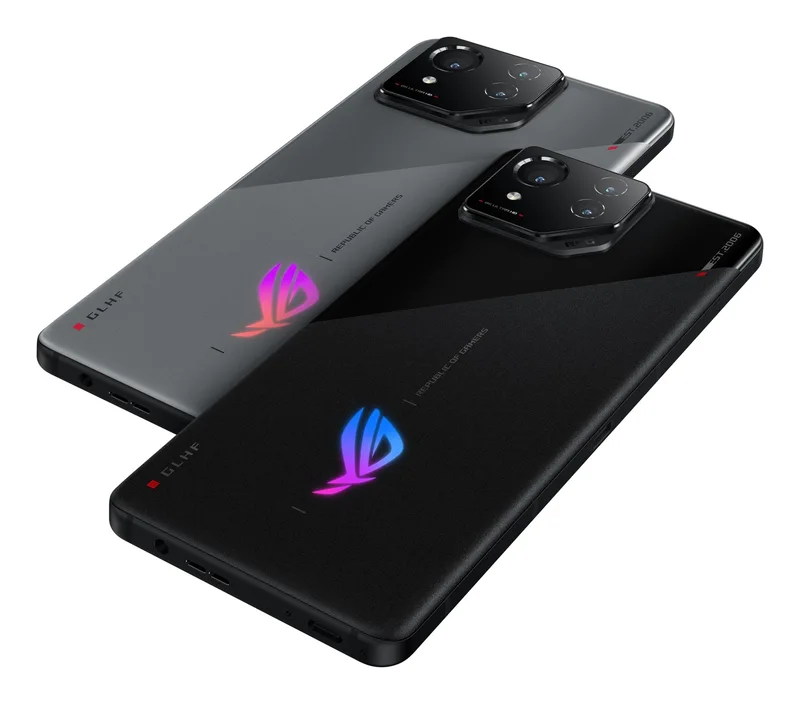
Where the Pro has a dotted mini-LED matrix on its back, the standard ROG Phone 8 has the Aura RGB logo, the ROG "Fearless Eye" emblem that lights up in solid colours or preset lighting patterns that the owner can set. It is a simpler and arguably more elegant touch. ASUS offers two finishes, Rebel Grey and Phantom Black. The dimensions are 163.8 x 76.8 x 8.9 mm and the weight is 225 g, the same as the Pro, so the standard model is not lighter in the hand despite the simpler back.
ASUS says the whole series is up to 15% thinner than the ROG Phone 7 and describes the redesign as the biggest in the line's history. Gone is the aggressive "gamer" aesthetic of earlier generations, replaced by a plainer slab with slimmer bezels. The series is described as the first IP68-rated gaming phone; the specification page lists IP68, but a footnote cites IP65/68 testing under IEC 60529, so it is a dust-and-water-resistance rating with the usual caveat that sealing can age. The 3.5 mm headphone jack stays.
What the standard model shares with the Pro
A buyer comparing the two should know how much is identical. Both use a Samsung flexible E6 AMOLED panel at 2400 x 1080 pixels with Gorilla Glass Victus 2, an LTPO refresh range of 1 to 120Hz that can be raised to 165Hz, 720Hz touch sampling, 1,600 nits in high-brightness mode and 2,500 nits at peak. Both run Android 14 with ROG UI, include the same 5,500 mAh-equivalent battery, accept 65W wired and 15W wireless charging, and offer the same AirTrigger shoulder controls. In other words, the money saved by choosing the standard model does not buy a worse screen, a worse chip or a slower charger.
Display and everyday use
The screen is the same quality as on the Pro, which makes it one of the best parts of the cheaper phone. ASUS quotes a Delta-E below 1 colour-accuracy claim, 107.37% DCI-P3 coverage, HDR10 support, a 94% screen-to-body ratio and an always-on display that can drop to 1Hz. The adaptive range is useful in daily life: ASUS describes the display dropping to 30Hz for films and to under 10Hz for still images to save power, then rising to 120Hz in games. A 165Hz mode is available only in supported titles, and many popular games cap at lower rates, so check your own library before counting on it.
Performance and cooling
The processor is the Snapdragon 8 Gen 3 at up to 3.3GHz with an Adreno 750 GPU. ASUS describes a CPU that is 30% faster and a GPU that is 25% faster than the previous Snapdragon 8 Gen 2, comparing it with its own earlier phones. RAM is LPDDR5X at 8,533 Mbps and storage is UFS 4.0. The GameCool 8 cooling design uses a vapour chamber, graphite and a Rapid-Cooling Conductor, and ASUS claims a 22% efficiency gain against the ROG Phone 7. The clip-on AeroActive Cooler X fits this phone as well but is not in the box, and ASUS says it is sold separately. The standard model ships with a clear case in the box.
The memory difference is the practical question. Twelve gigabytes is ample for any current game; sixteen adds headroom for heavy multitasking; and 256GB is the only storage size listed, which fills quickly for people who record gameplay. The Pro's 512GB and 1TB options are the real reason to step up, because there is no memory card slot mentioned in the published specifications.
Camera
The camera is a major change from the ROG Phone 7 generation, which ASUS says now includes a telephoto lens for the first time. The rear has a 50MP Sony IMX890 main sensor (1/1.56-inch, f/1.9) with a gimbal-style 6-axis hybrid stabiliser, a 13MP ultra-wide at 120 degrees and a 32MP telephoto with 3x optical zoom and optical stabilisation, which outputs 8MP photos by pixel binning. The front camera is a 32MP RGBW sensor with a 90-degree field of view. Video reaches 8K at 24 frames per second and 4K at up to 60 on the main camera. ASUS highlights Light Trail mode, Quick Shot with a double press of the volume key, and OZO Audio for recording with wind-noise reduction.
The published specification page also shows a 5MP macro entry in its table, but ASUS's own press release and feature page describe a tri-camera system, so the macro line is best treated as unclear.
Battery and charging
The battery is an equivalent 5,500 mAh made of two 2,750 mAh cells. ASUS says 65W wired charging, with a compatible charger, takes the phone from empty to full in 39 minutes, while wireless charging tops out at 15W on Qi 1.3. Its own lab claims at least 3.4 hours of heavy gaming, 23 hours of video streaming and 17 hours of social scrolling. A charger is included in the box in most regions, with a 30W version in India.
Who the ROG Phone 8 is for
- Gamers who care about performance, not extras: everything that affects frame rates is the same as on the Pro.
- People who prefer a quieter design: Rebel Grey or Phantom Black with a single glowing logo is more restrained than a dot-matrix display.
- Buyers who want a flagship-class phone that also games: the telephoto, wireless charging and IP68 are rare in this niche.
Compromises to weigh
The standard model has no AniMe Vision, no 512GB or 1TB option and no bundled cooler, and it is as heavy as the Pro. Software support is not described on the pages reviewed beyond Android 14 at launch, and ASUS's pages do not state a US price here, so none is quoted. For a rival with a different identity, the OnePlus 13 is worth a look, and the full phone rankings put it in context.
Where it ranks
Compare ASUS ROG Phone 8 with similar devices
More from ASUS
Frequently asked questions
When was the ASUS ROG Phone 8 released?
The ASUS ROG Phone 8 was released on 2024-01-09, according to the manufacturer’s published information.
What are the main specs of the ASUS ROG Phone 8?
Headline figures for the ASUS ROG Phone 8: Battery: 5,500 mAh, Refresh rate: 720 Hz, Main camera: 50 MP, RAM: 16 GB. The full specification table is further up this page.
Is the ASUS ROG Phone 8 worth buying?
That depends on your priorities. Use the editorial review on this page for our view, check the rankings above to see where the device stands on battery, display and camera, and compare it directly with similar models before you decide.


