Smartwatches
Huawei WATCH 5
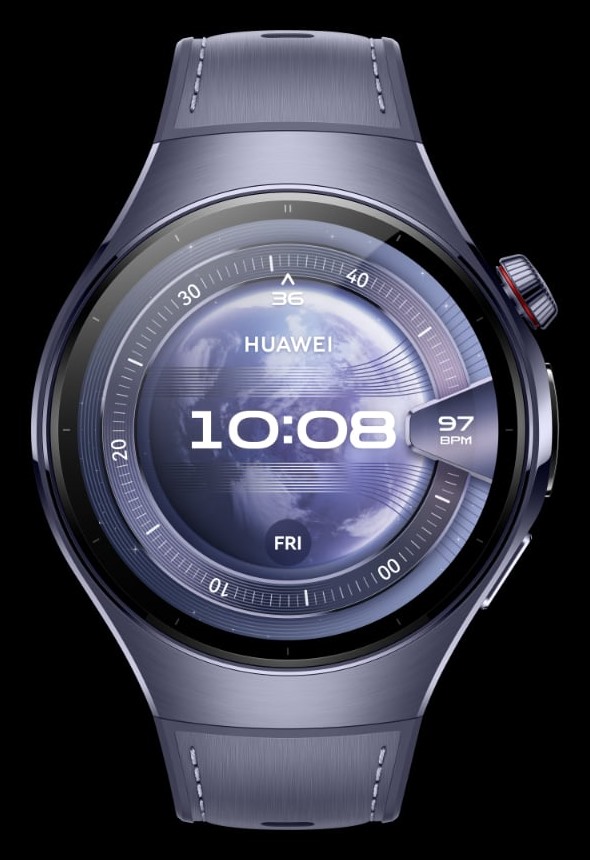
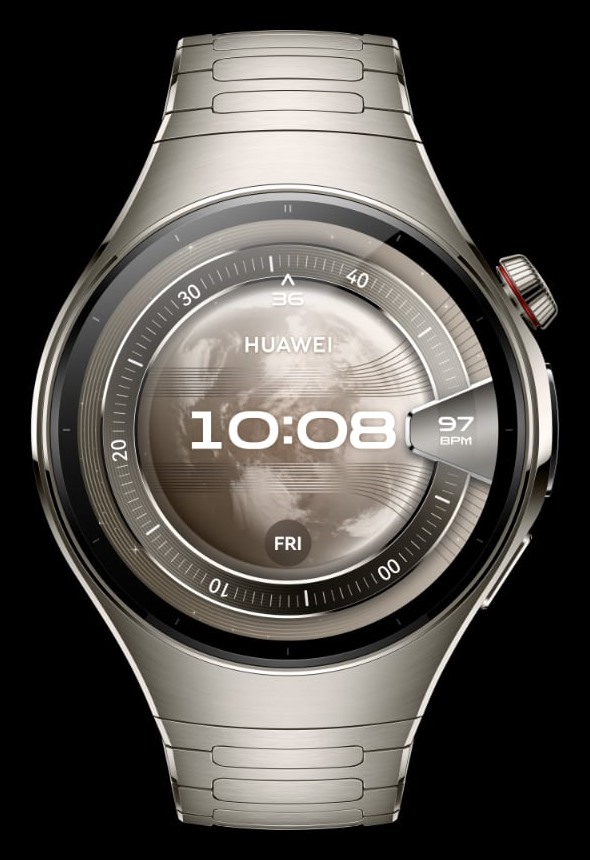
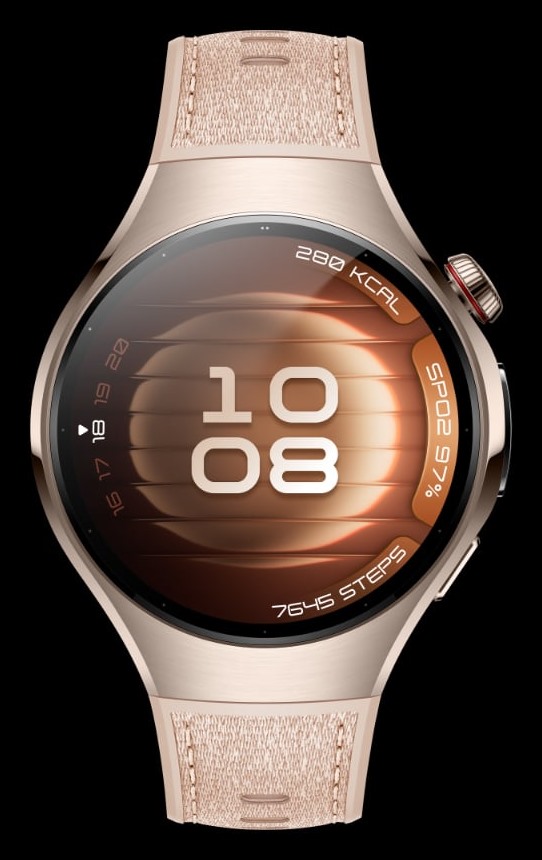
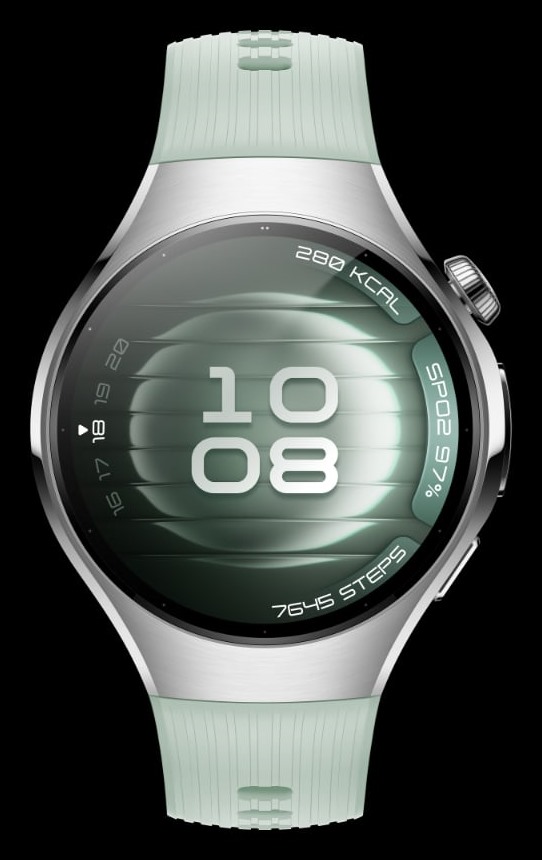
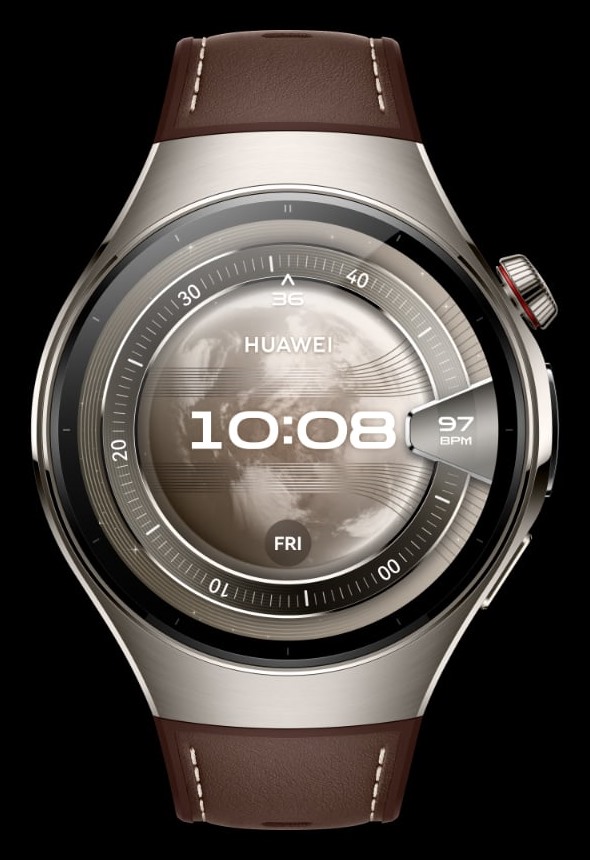
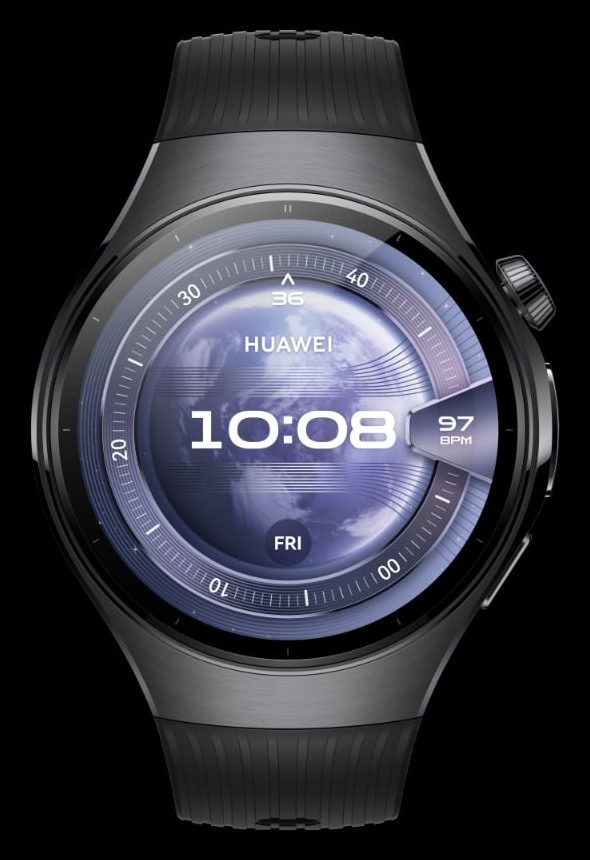
The HUAWEI WATCH 5 comes in 42 mm and 46 mm with a 3000-nit LTPO AMOLED screen, an X-TAP health module, eSIM and up to 11 days of battery life in saver mode.
Key figures at a glance
Gallery
Specifications
- Display
- 1.5" (46 mm) or 1.38" (42 mm) LTPO 2.0 AMOLED, 466 x 466, 3000 nits peak, spherical sapphire glass
- Sizes
- 46 mm (46 x 46.7 x 11.3 mm) and 42 mm (42 x 42.5 x 10.5 mm)
- Case
- 46 mm: aerospace-grade titanium or 316L stainless steel front case; 42 mm: 904L or 316L stainless steel front case; ceramic or fibre-reinforced composite rear
- Weight
- 46 mm: about 58 g (titanium) or 63 g (steel); 42 mm: about 51 g (Beige, Sand gold) or 48 g (White, Green, Black), without strap
- Battery
- Up to 11 days (46 mm, battery saver mode); up to 4.5 days typical in standard mode with an Android phone (42 mm: up to 7 days / 3 days). Wireless charging, 15 minutes for about a day of use (Huawei lab claim)
- Sensors
- X-TAP module (ECG, PPG, tactile sensor), optical heart rate 6.0, body temperature, SpO2, barometer, depth, compass, gyroscope, accelerometer, ambient light
- Water resistance
- 5 ATM and IP69
- Connectivity
- eSIM (LTE) cellular, Wi-Fi 6, Bluetooth 5.2, NFC, dual-band GNSS (L1 + L5)
- Compatibility
- Android 9.0 or later, iOS 13.0 or later (Huawei Health app)
The HUAWEI WATCH 5 is a premium round smartwatch that Huawei released in May 2025 in two case sizes, 42 mm and 46 mm. It combines a bright LTPO AMOLED screen, a case in titanium or stainless steel, a new health module called X-TAP and multi-day battery life, with support for both Android and iPhone. This page is based on the published specification sheet and the product page from the manufacturer. It looks at the two sizes, the materials, the health tools, the endurance figures and the compromises, so you can decide whether it fits your wrist and your phone.
Place in the lineup
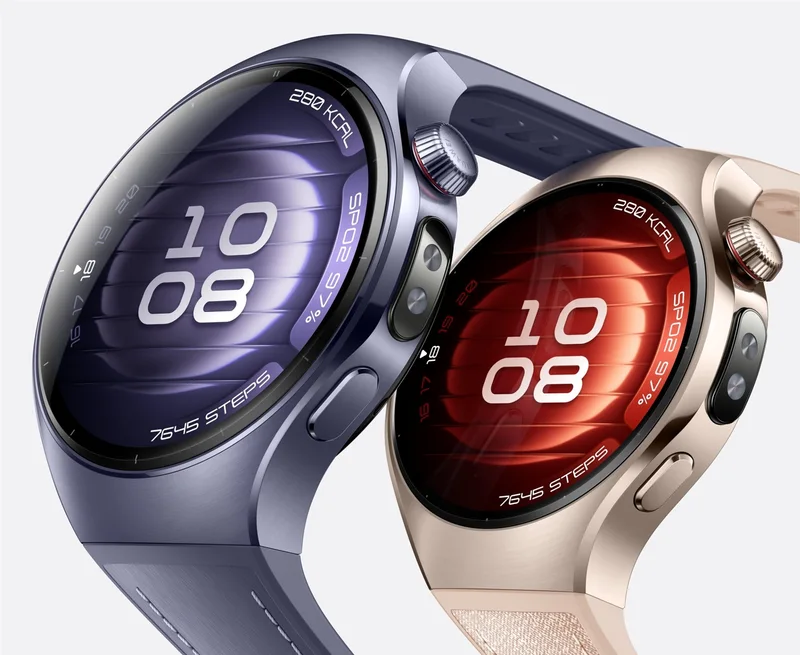
The WATCH 5 continues Huawei's "WATCH" line of fashion-and-health watches, which is separate from the sport-focused GT series and from the more medical-themed D series. If you are choosing within the brand, the HUAWEI WATCH GT 7 comes from the sport-oriented GT line, the HUAWEI WATCH D3 belongs to the health-focused D series, and the later HUAWEI WATCH 6 continues the same family. Huawei's page gives May 15, 2025 as the release date; it does not show a price, and no official US price is listed here. The watch is offered in two sizes with five colours each: 46 mm in Purple, Silver, Brown, Blue and Black, and 42 mm in Beige, Sand Gold, White, Green and Black.
Design, sizes and materials
The 46 mm model measures 46 x 46.7 x 11.3 mm, and the 42 mm model 42 x 42.5 x 10.5 mm. The weights, excluding the strap, depend on the material: about 58 g for the titanium 46 mm versions and 63 g for the steel ones, and about 51 g for the Beige and Sand Gold 42 mm watches against 48 g for the White, Green and Black ones. The cases differ by colour. Purple, Silver and Brown 46 mm watches have an aerospace-grade titanium front case with a ceramic back, while the Blue and Black ones use 316L stainless steel with a fibre-reinforced composite rear. In the 42 mm range, Beige and Sand Gold use 904L stainless steel with a ceramic back, and White, Green and Black use 316L steel with the composite rear. Straps are composite, titanium or fluoroelastomer, depending on the colour. Suggested wrist sizes are 140 to 210 mm for the 46 mm model and 120 to 190 mm for the 42 mm model, with a smaller range for Beige. The control scheme is a rotating crown, a second button and the X-TAP sensor.
Water resistance is rated 5 ATM under ISO 22810:2010 (up to 50 metres of static water pressure for 10 minutes, in Huawei's test), and the watch also carries an IP69 rating for dust and high-temperature water jets. Huawei's notes remind users not to wear it in hot showers, saunas or hot springs, and that water resistance is not permanent and can decline with wear.
Display
The screen is an LTPO 2.0 AMOLED panel at 466 x 466 pixels in both sizes. That means 310 pixels per inch on the 1.5-inch 46 mm model and 338 on the 1.38-inch 42 mm model. Huawei states a peak brightness of 3000 nits, a 1.8 mm slim bezel and a spherical sapphire glass cover. LTPO technology lets the refresh rate drop when the display is static, which helps battery life with the always-on option. A peak figure of 3000 nits is a laboratory number for small areas, but in practice a bright AMOLED makes the watch readable in direct sun. Huawei says the glass is sapphire; that is the best scratch-resistant material available for a watch face, but it is not shatterproof.
Health and fitness features
The new element is the X-TAP module, which combines an ECG electrode, an optical sensor and a ten-level tactile sensor, and which Huawei uses for quick measurements by pressing a finger on the module. The sensor list also includes optical heart rate 6.0, body temperature, a barometer, a depth sensor, a compass, a gyroscope, an accelerometer and an ambient light sensor. The watch measures fingertip blood oxygen (Huawei adds that this is not intended for medical use), takes ECG readings through its ECG app, tracks heart rate variability and offers a "Health Glance" check that summarises 11 indicators in about a minute. Huawei also describes a positioning system called Sunflower, which it says is 35 percent more accurate than on the WATCH 4, with dual-band GNSS (L1 and L5) support for GPS, GLONASS, Galileo, BeiDou and QZSS. More than 100 workout modes are available, and NPU-powered gesture controls help with simple actions. These are Huawei's claims, and any health measurements should be seen as wellness information and not as a diagnosis.
Software and connectivity
The watch works with Android 9.0 or later and iOS 13.0 or later through the Huawei Health app. The third-party app catalogue is the Watch AppGallery, which has fewer apps than the stores of Apple or Google, so if you want a wide range of apps, this is not the strongest platform. Connectivity includes eSIM-based cellular calling and navigation (where the operator supports it), Wi-Fi 6 on the 2.4 and 5GHz bands, Bluetooth 5.2, and NFC for payments. A speaker and microphone allow calls. Several features, particularly those linked to payments and cellular service, depend on the country and the operator.
Battery life and charging
Huawei quotes up to 4.5 days of typical use for the 46 mm model in standard mode with an Android phone (3 days with the always-on display), and up to 3 days for the 42 mm watch (2 days with the always-on display). With an iPhone, the figures are 3 days and 2 days for the 46 mm model, and 2 and 1.5 days for the 42 mm. A battery saver mode extends the maximum to 11 days for the 46 mm and 7 days for the 42 mm, with typical use of 7 and 5 days. These numbers come from the manufacturer's laboratory tests with specific conditions, such as two hours of LTE connection a day, so real results can be lower, particularly with heavy cellular use. The watch charges wirelessly on the included 2nd-generation Wireless SuperCharger, and Huawei says 15 minutes gives a full day of use, with the charger needing 5 to 10 V and 2 A at most.
Who it is for
The WATCH 5 suits users who want an elegant watch that also tracks health and sport, and who value several days of battery life over a large app store. The two sizes make it a good option for smaller wrists as well as larger ones. It also suits iPhone owners who are happy to give up Apple-specific integration, such as the very close messaging and payment experience of the Apple Watch Series 10; the page HUAWEI WATCH 5 vs Apple Watch Series 10 lines up the main differences. For a more outdoor or training-oriented choice, the Garmin Forerunner 970 is a different kind of product.
Compromises
The smaller app ecosystem is the main one, along with the usual issues of a closed platform. Some health functions depend on the region and on local approval. The specifications give no storage figure, no processor details and no price in the pages consulted. Huawei's endurance figures are measured under specific conditions, and the 11-day maximum applies only to the 46 mm watch in battery saver mode. The weight and thickness of the steel versions are noticeably higher than the titanium ones. These are the trade-offs of a premium, health-oriented watch with a distinctive design. For more watches in the ranking, see the rankings.
Where it ranks
Compare Huawei WATCH 5 with similar devices
More from Huawei
Frequently asked questions
When was the Huawei WATCH 5 released?
The Huawei WATCH 5 was released on 2025-05-15, according to the manufacturer’s published information.
What are the main specs of the Huawei WATCH 5?
Headline figures for the Huawei WATCH 5: Battery life: 11 days. The full specification table is further up this page.
Is the Huawei WATCH 5 worth buying?
That depends on your priorities. Use the editorial review on this page for our view, check the rankings above to see where the device stands on battery, display and camera, and compare it directly with similar models before you decide.