Smartwatches
Huawei Watch GT 7
Huawei's Watch GT 7 comes in 46 mm and 41 mm steel cases with a 3,000-nit AMOLED display, up to 21 days of claimed battery life, dual-band GPS and new skiing and cycling modes.
Key figures at a glance
Gallery

Specifications
- Size
- 46 mm: 46 x 46 x 10.95 mm, about 51.3 g (strap excluded); 41 mm: 41.3 x 41.3 x 9.99 mm, about 36.5 g
- Display
- 46 mm: 1.47-inch AMOLED, 466x466, 317 ppi; 41 mm: 1.32-inch AMOLED, 466x466, 352 ppi; up to 3,000 nits peak (Huawei lab figure)
- Case
- Stainless steel; EasyCross fluoroelastomer or composite leather straps
- Battery
- 46 mm: up to 21 days (light use), up to 12 days typical, up to 7 days with always-on display, up to 51 hours trail running mode; 41 mm: up to 14 days light, up to 7 days typical, up to 5 days always-on, up to 32 hours trail running; wireless charging (Huawei lab tests)
- Durability
- 5 ATM, IP69
- Sensors
- Optical heart rate, temperature, barometer, accelerometer, gyroscope, magnetometer, ambient light
- Positioning
- Dual-band GPS (L1+L5), GLONASS, BeiDou, Galileo, QZSS, NavIC; Sunflower Positioning System
- Connectivity
- Bluetooth 6.0, NFC, speaker and microphone for Bluetooth calls
- Sports
- 110+ workout modes, new skiing and cycling modes, 3,000+ ski resort maps
- OS
- Huawei watch software with the Huawei Health app; works with Android 9.0+ and iOS 13.0+
- Colors
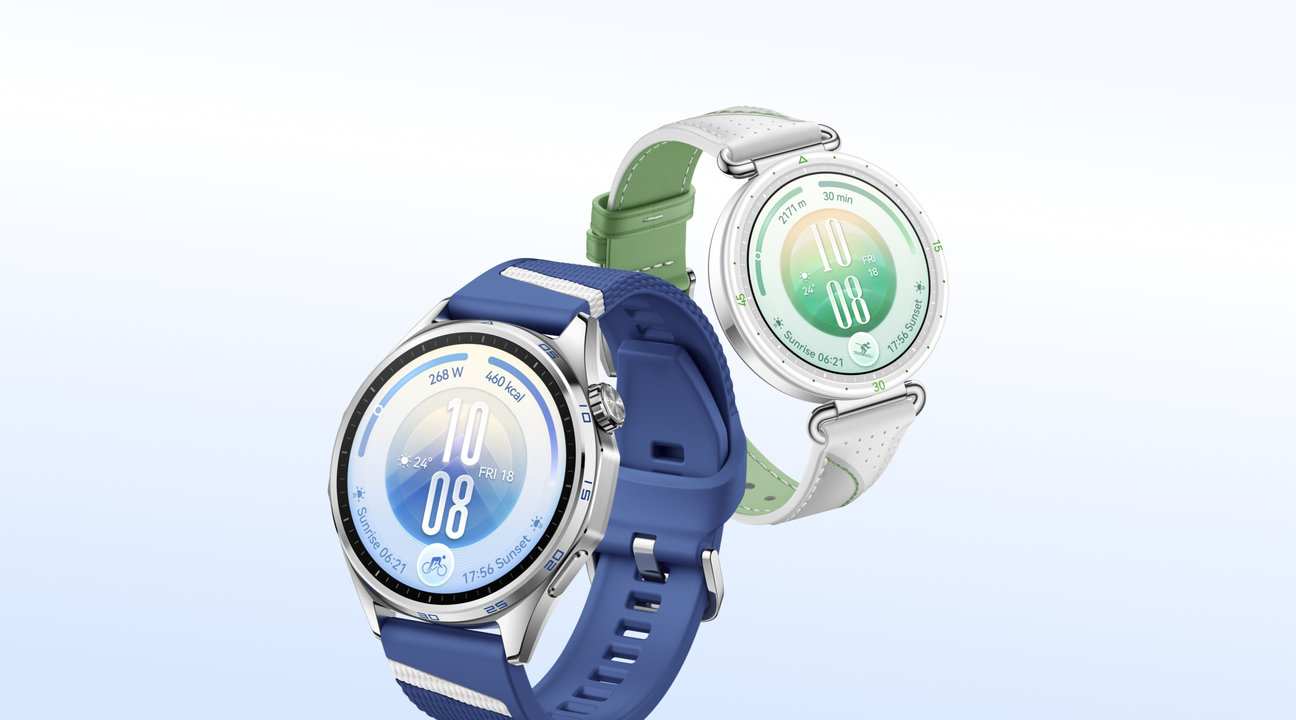
- 46 mm: Blue, Yellow, Black, Grey; 41 mm: Blue, Pink, White and Green, Grey
The Huawei Watch GT 7 is the standard model of Huawei's seventh-generation GT sports and lifestyle watch family. It comes in two sizes, a 46 mm and a 41 mm stainless-steel case, with a round AMOLED screen, dual-band satellite positioning and a battery that Huawei rates at up to 21 days in light use on the larger version. The new selling points this generation are skiing and cycling modes, a daily Physical Readiness Score and a tuck-under EasyCross strap. This page is a specification-and-information review based on the published specifications and manufacturer information, covering the lineup, hardware, sports and health features, battery claims and trade-offs.
Place in the lineup
The GT 7 sits below the Huawei Watch GT 7 Pro, which shares the platform but adds a titanium frame with a nano-tech ceramic bezel, sapphire glass, an ECG sensor and a depth sensor for freediving. The GT 7 is the choice for people who want the sports features and long battery life in a lighter steel case and, in the 41 mm version, a smaller size that suits slimmer wrists. Huawei introduced the family in early September 2026. The company's global product pages did not list a price, so none is given here, and no United States price is stated. Availability, colours and straps differ between markets.
Design and display
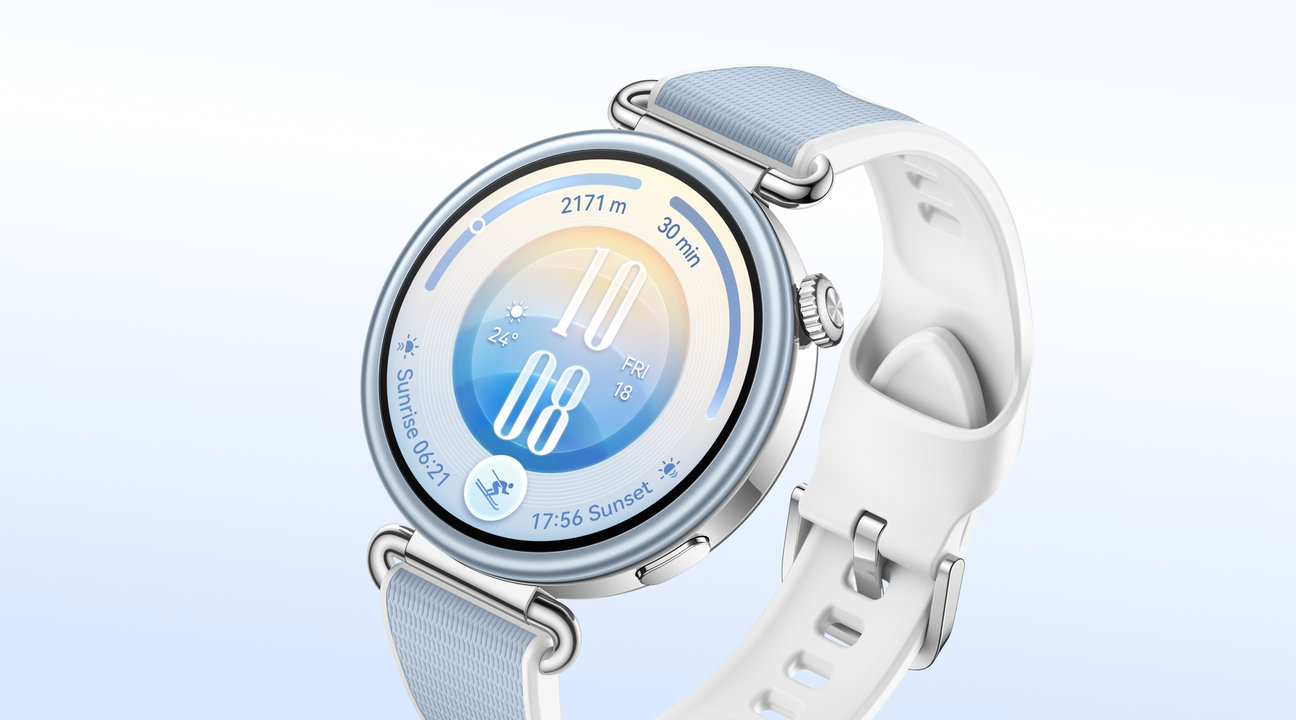
The 46 mm model measures 46 x 46 x 10.95 mm and weighs about 51.3 grams without the strap, with a recommended wrist size of 140 to 210 mm. The 41 mm model measures 41.3 x 41.3 x 9.99 mm, weighs about 36.5 to 37.6 grams depending on colour, and fits wrists of 120 to 180 mm. Both use a stainless-steel case with a rotating crown (called the home button) and a side button.
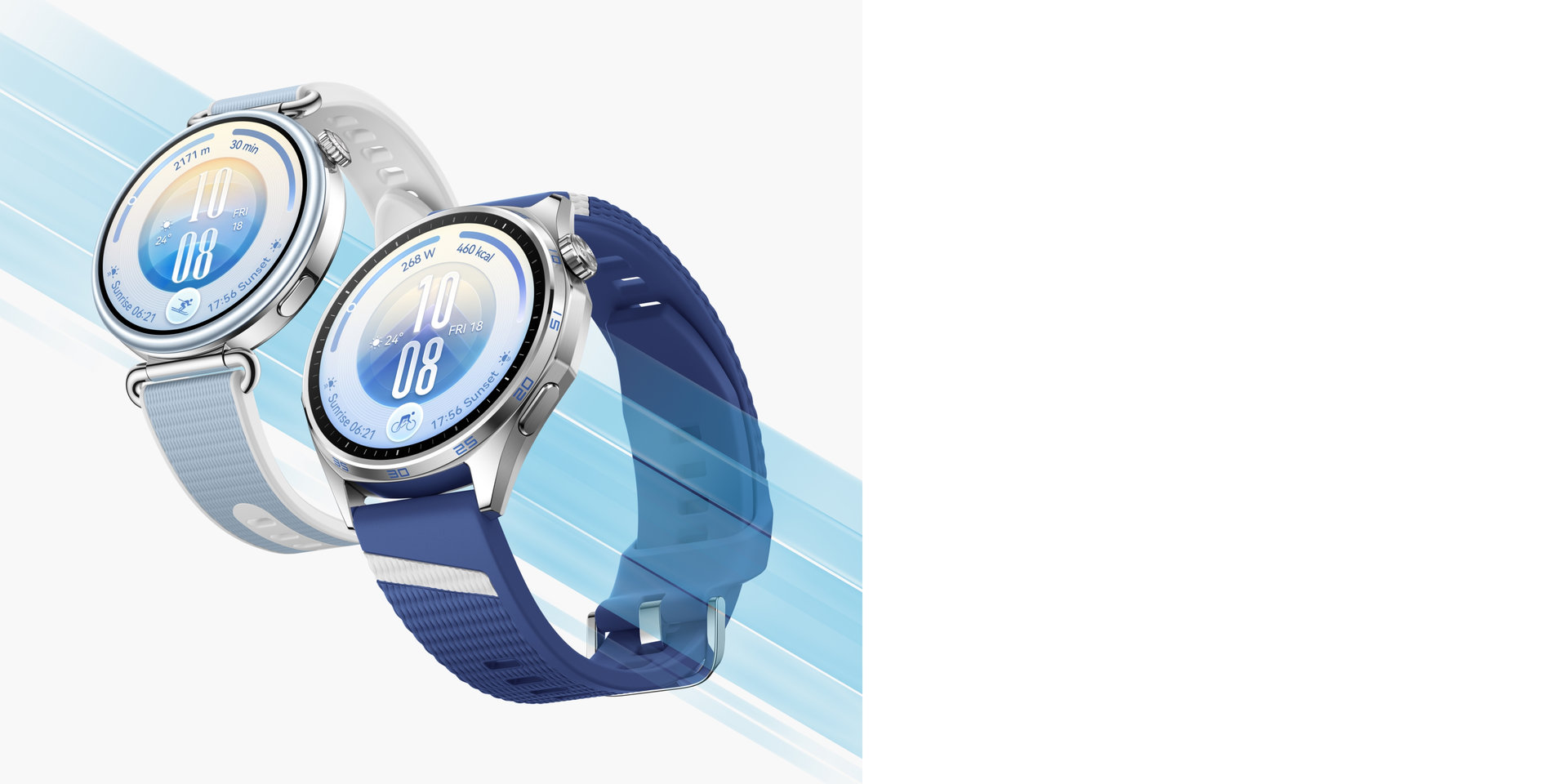
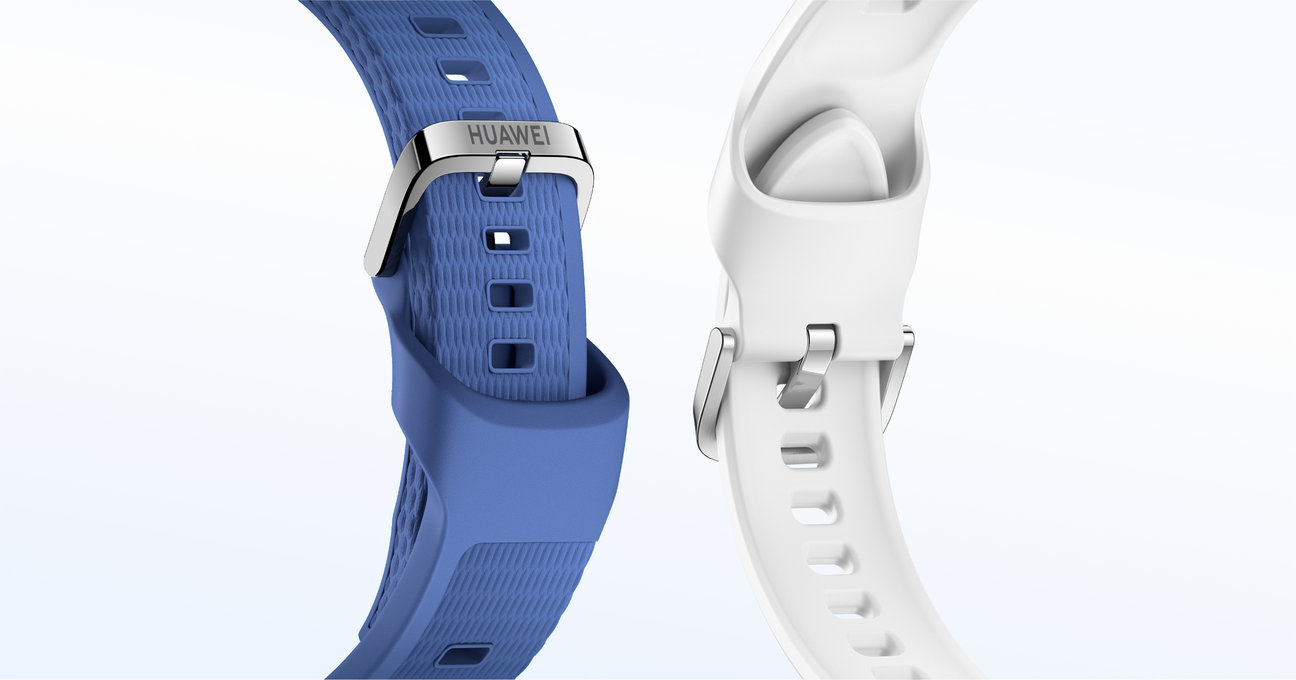
Huawei lists AMOLED screens at the same 466 x 466 resolution in both sizes: 1.47 inches at 317 pixels per inch on the 46 mm model, and 1.32 inches at 352 pixels per inch on the 41 mm. Peak brightness is stated as 3,000 nits, which Huawei says is reached at 30 percent average picture level in its labs, so it applies to small bright areas rather than a full white screen. Strap options include blue, yellow and black EasyCross fluoroelastomer straps and a grey composite-leather strap on the 46 mm, and blue and pink EasyCross, a white-and-green composite-leather and a grey composite-leather on the 41 mm. The EasyCross design tucks the strap end under so that it does not catch on clothing, and Huawei notes it is only on the fluoroelastomer strap. The case carries 5 ATM and IP69 ratings. Huawei says the watch can be worn for shallow-water activity such as pool or coastal swimming, but advises against diving, hot showers and saunas.
Sports and navigation
This is the main focus. The new skiing mode covers indoor and outdoor snow sports and records turns, turn frequency, G-force (Huawei's term for the load felt in a turn), speed, descent and run counts, and separates lift and rest time automatically. Huawei says its ski resort maps cover more than 3,000 resorts in 59 countries, shown with slope names, difficulty grades and lift stations, with maps downloaded in advance through the Huawei Health app. Huawei also states that its Sunflower Positioning System and AI-XDR algorithm give a 20 percent gain in route precision for high-speed snow sports compared with the GT 6 series. These are manufacturer figures from Huawei's own lab data.
For cycling, Huawei lists climb planning from routes synced by the Health app, real-time terrain alerts with distance, elevation gain and grade, sharp-turn alerts, climb analytics, AI-powered workout analysis and connection to a smart trainer using the FTMS protocol. Only certain trainers are named as compatible, and some of these functions arrive by update and are limited to some regions. Running gets offline maps and metrics such as ground contact time balance, vertical oscillation and running power, and third-party apps can add stats for activities such as pickleball and badminton. In total the watch offers more than 110 workout modes. Positioning uses dual-band GPS (L1 and L5) together with GLONASS, BeiDou, Galileo, QZSS and NavIC.
Health features
The health suite is broad. The new Physical Readiness Score uses sleep, heart rate, HRV, activity and stress, after the watch has been worn continuously for three days and nights, to give a daily number between 0 and 100 with guidance on whether to train or recover. The watch also offers pulse-wave arrhythmia analysis for possible atrial fibrillation and premature beats using the optical sensor, an upgraded TruSleep 5.0 sleep algorithm, HRV monitoring, an emotional-wellbeing app that tracks 12 emotions, a health community feature for sharing data with family members, women's health predictions and a diabetes risk study. The diabetes study needs the Huawei Research app, is limited to some markets and, according to Huawei, is not suitable for people under legal adult age or those with certain conditions. Huawei states plainly that the watch is not a medical device and that results are for reference only. Notably, the sensor list for the GT 7 does not include an ECG sensor; that is reserved for the Pro.
Daily-use extras include Bluetooth calling through the paired phone, a speaker and microphone, voice notes, temperature and UV readouts, NFC, and guided mini-workouts that target 10 body areas with 30 animated movements. Huawei bundles a three-month trial of its Huawei Health+ membership with purchase. The watch works with Android 9.0 or later and iOS 13.0 or later through the Huawei Health app, although feature availability can depend on the phone.
Battery and charging
Battery life is Huawei's headline number, and it depends on size. On the 46 mm model the company claims up to 21 days in light use, up to 12 days in typical use, up to 7 days with the always-on display and up to 51 hours in trail-running mode. On the 41 mm model the figures are up to 14 days, 7 days, 5 days and 32 hours. These are results from Huawei laboratory tests with defined settings: for example, light use assumes 90 minutes of exercise a week and 200 screen activations a day, so heavy GPS and screen use will give shorter times. Charging is wireless through a cradle supplied in the box; Huawei does not list a charging time for the GT 7 on its specification page.
Who it is for
The GT 7 suits people who want a multi-sport watch with a long battery life that works with both iPhone and Android, and who value skiing and cycling data as well as running. The two sizes make it more flexible than watches that come in one case. It is a good fit for runners, cyclists and winter-sport fans who dislike charging often. Anyone who wants more advanced features can compare it to the Garmin Forerunner 970 through Huawei Watch GT 7 vs Garmin Forerunner 970, or to a smart-first watch such as the Galaxy Watch8.
Compromises
- No ECG or depth sensor: those arrive on the Pro version.
- Steel case, no sapphire claim: the specification page does not mention sapphire glass for the GT 7.
- Not a full smartwatch: Huawei's own watch software with apps from its own store is more limited than Wear OS or watchOS.
- Features by update and market: ski maps, AI analysis and diabetes risk study are limited by region or arrive later.
- Battery numbers are lab claims: real use, especially with always-on display and heavy GPS, will be lower.
- Not a medical device: health readings are for reference only.
In summary, the Huawei Watch GT 7 combines two case sizes, a bright AMOLED screen, long claimed battery life and a rich sports set that now includes skiing and cycling. Its limits are the missing premium sensors and the narrower app ecosystem. To see how it ranks against other wearables, visit the rankings page.
Where it ranks
Compare Huawei Watch GT 7 with similar devices
More from Huawei
Frequently asked questions
When was the Huawei Watch GT 7 released?
The Huawei Watch GT 7 was released on 2026-09-02, according to the manufacturer’s published information.
What are the main specs of the Huawei Watch GT 7?
Headline figures for the Huawei Watch GT 7: Battery life: 21 days. The full specification table is further up this page.
Is the Huawei Watch GT 7 worth buying?
That depends on your priorities. Use the editorial review on this page for our view, check the rankings above to see where the device stands on battery, display and camera, and compare it directly with similar models before you decide.