Phones
Google Pixel 9 Pro XL
The largest non-folding Pixel 9 combines a 6.8-inch display and a 5,060 mAh battery with the same 16 GB of RAM, triple camera and seven-year update promise as the smaller Pro.
Key figures at a glance
Gallery
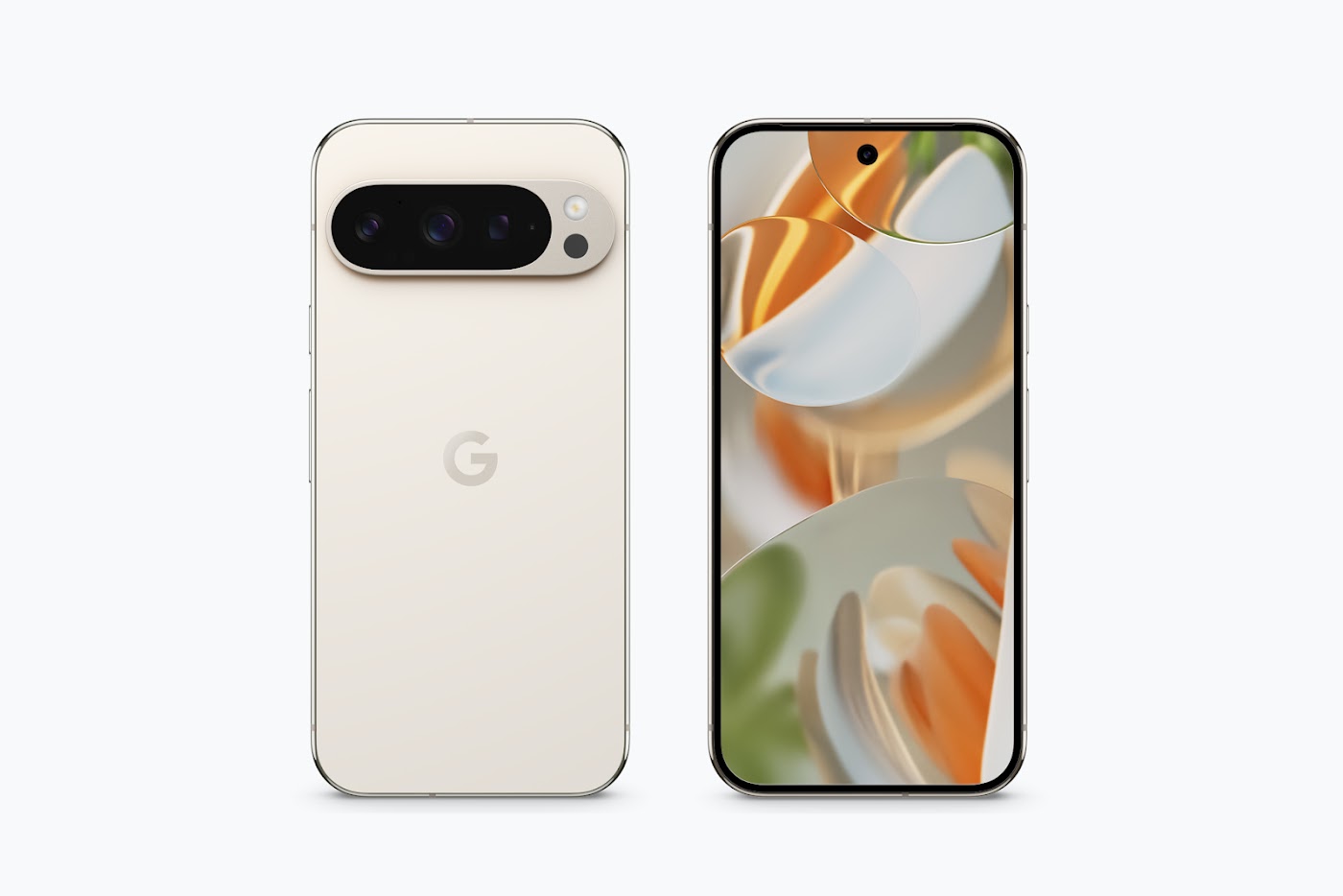
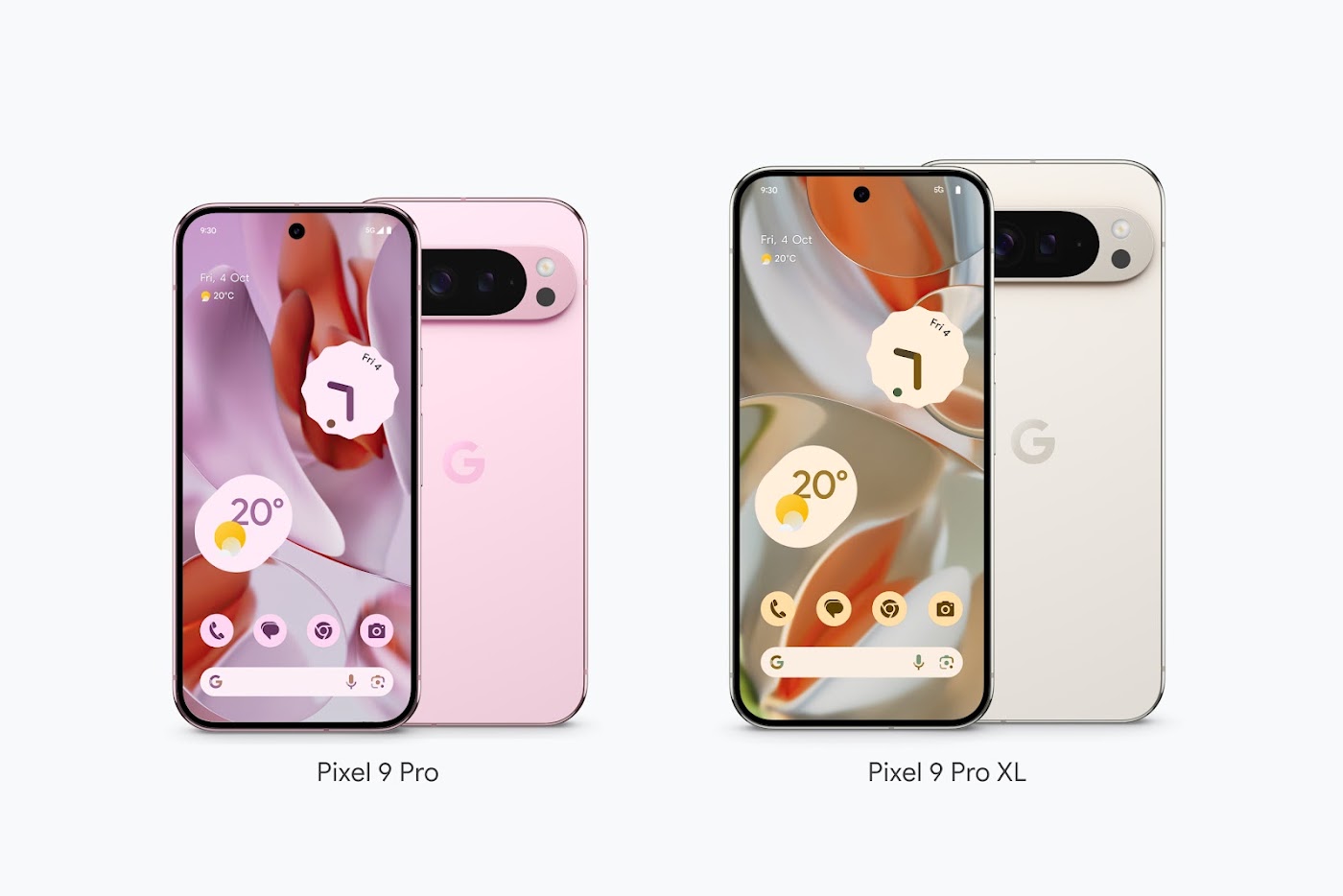
Specifications
- Display
- 6.8" Super Actua LTPO OLED, 1344x2992, 1-120Hz, up to 3000 nits peak
- Chipset
- Google Tensor G4
- RAM
- 16GB
- Storage
- 128GB / 256GB / 512GB / 1TB
- Rear Camera
- 50MP main + 48MP ultrawide + 48MP telephoto 5x
- Front Camera
- 42MP
- Battery
- 5,060 mAh, wired and Qi wireless charging
- OS
- Android 14, 7 years of OS, security and Pixel Drop updates
The Google Pixel 9 Pro XL is the largest non-folding phone in Google's 2024 lineup and the one that carries the biggest battery. It has a 6.8-inch Super Actua display, 16 GB of RAM, the Google Tensor G4 chip and a triple rear camera with a 5x telephoto. It was also the first Pixel 9 model to go on sale. This page is based on the published specifications and manufacturer information, and it covers where the phone fits in the range, what the large body buys you, how the software and cameras work, and where the trade-offs lie.
Place in the lineup
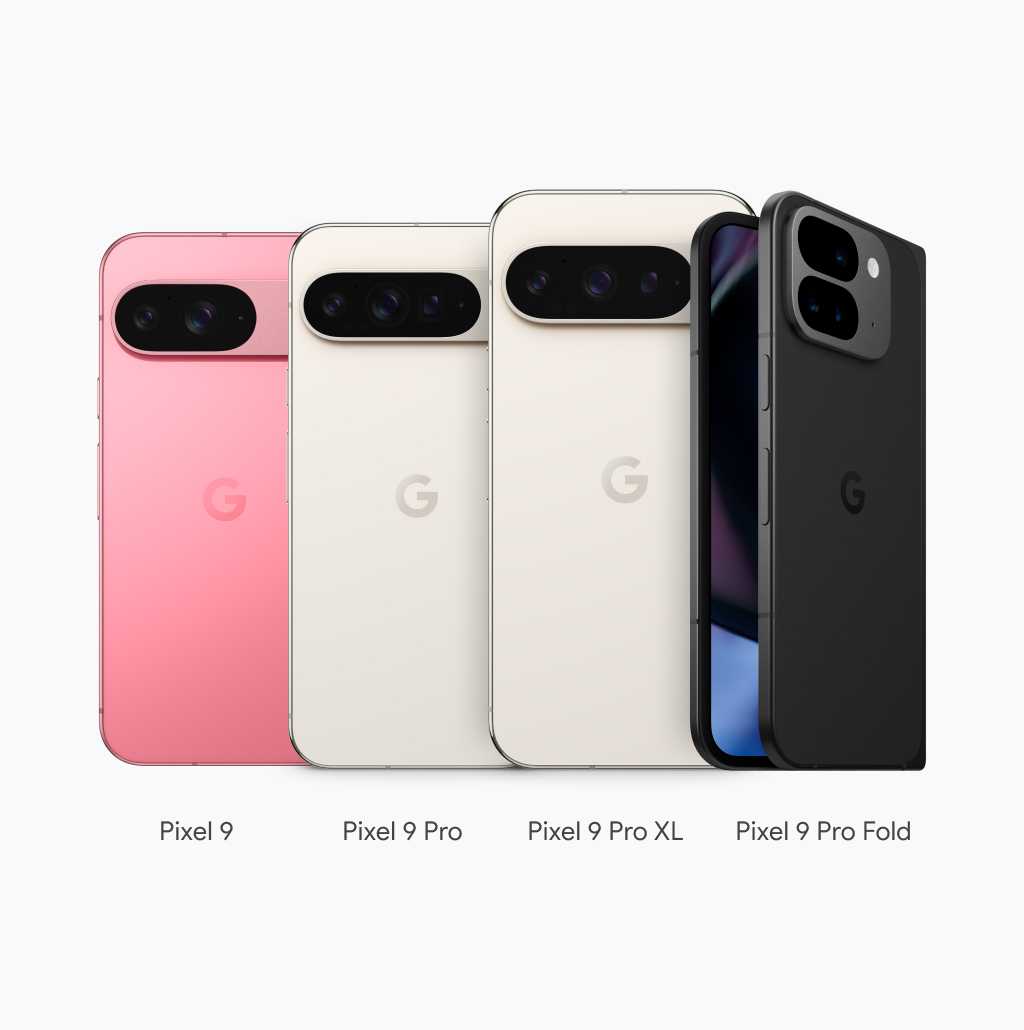
Google announced the Pixel 9 family in August 2024: the Pixel 9, the Pixel 9 Pro, the Pixel 9 Pro XL and the foldable Pixel 9 Pro Fold. The Pro XL went on sale on 22 August 2024, a couple of weeks before the smaller Pro, and Google priced it at 1,099 dollars in the US. The Pro cost 999 dollars and the standard Pixel 9 cost 799 dollars. All three share the same Tensor G4 processor and the same seven-year update promise, so the differences come down to screen size, memory, cameras and battery.
The XL is not a different phone from the Pro in the way that earlier large Pixels sometimes were; it is the same hardware in a bigger shell. The cameras, the 16 GB of RAM and the 3,000-nit peak brightness are identical. What changes is the 6.8-inch panel, the larger battery and a weight that Google gives as 221 grams, against 199 grams for the Pro. If you are weighing the size, the Pixel 9 Pro XL vs Pixel 9 comparison lays out how far apart the top and bottom of the family are, and you can look at the Pixel 10 Pro to see where Google went next.
Design and display
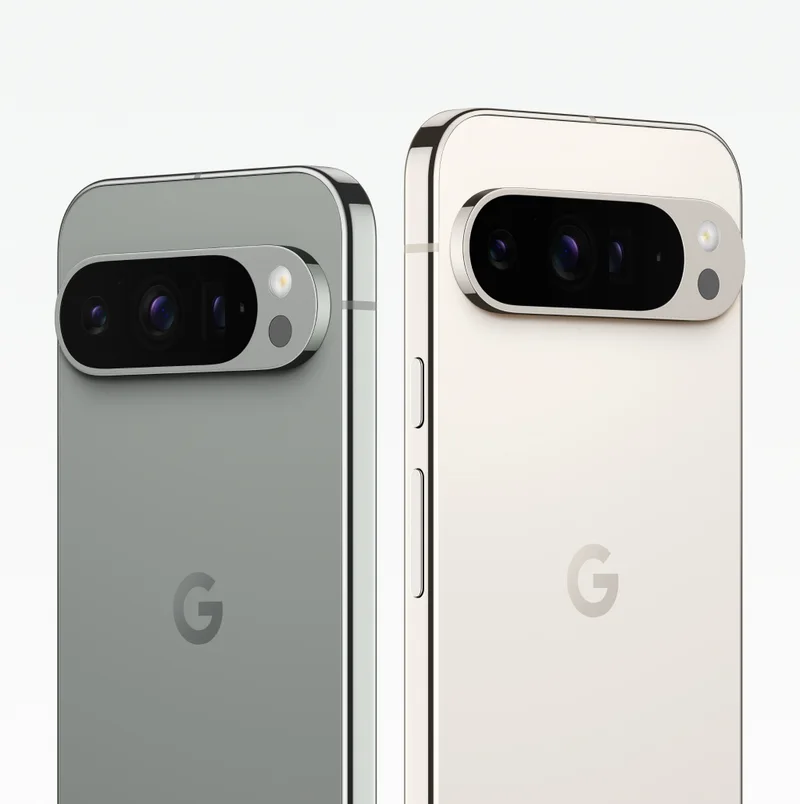
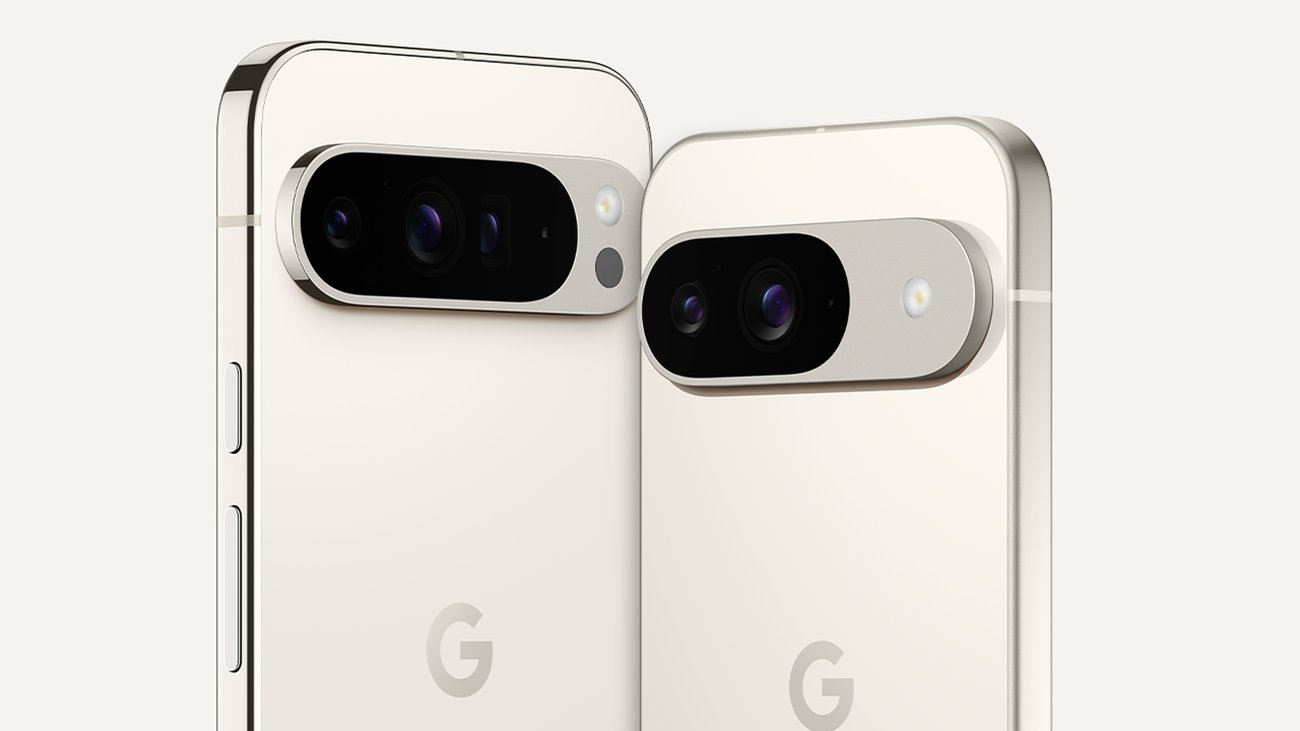
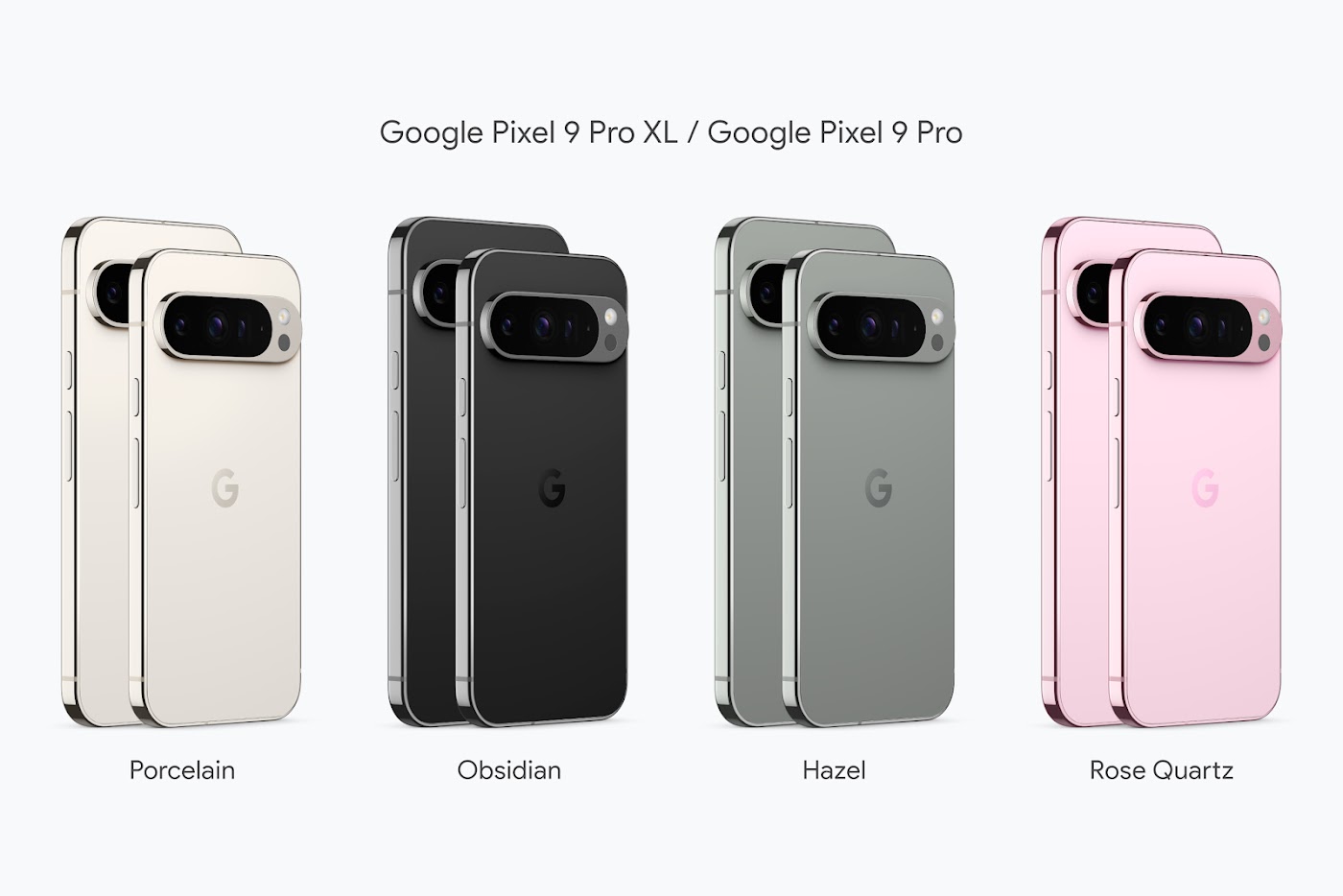
The Pixel 9 generation dropped the full-width camera bar in favour of a pill-shaped island that sits on a flat back, with flat edges and a polished metal frame. The XL is available in Porcelain, Obsidian, Hazel and Rose Quartz. It is rated IP68 for water and dust resistance and, per Google, uses Corning Gorilla Glass Victus 2 front and back. A phone of this size is not small, and some users will find it tall; others will welcome the extra room for video, reading and split-screen apps.
The display is a 6.8-inch Super Actua LTPO OLED with a resolution of 1344 by 2992 pixels and an adaptive refresh rate that runs from 1 up to 120 Hz. Google states a peak brightness of up to 3,000 nits, the same figure as the smaller Pro and well above the 2,700 nits of the base Pixel 9. At this size the extra pixels keep text and photos sharp. The big screen is also the part of the XL that most clearly separates it from the Pro in daily use: more content fits on screen, the keyboard is roomier and the phone doubles as a small media device, though one-handed use becomes harder.
Performance and software
The Tensor G4 is built for on-device machine learning rather than for topping benchmark charts. It works with the Titan M2 security chip, and with 16 GB of RAM Google says there is room to keep large language models resident while apps stay open. Storage options start at 128 GB and go up to 1 TB, with no card slot. Day-to-day speed is smooth, but sustained gaming is not where this chip shines compared with the fastest Snapdragon phones.
The phone shipped with Android 14, and Google commits to seven years of OS upgrades, security updates and Pixel Drops, which is a long window for a phone that costs this much. Gemini is the built-in assistant, including Gemini Live conversations, and Google included a year of Gemini Advanced with the Pro models at launch. Additional features Google promotes are Call Assist, Pixel Screenshots and satellite SOS, with the latter available at no extra cost for the first two years on Pixel according to Google. As with every AI feature set, the exact lineup varies by country and language, and some functions need an account or an adult user.
Cameras
The rear system is a 50 MP main camera, a 48 MP ultrawide camera with Macro Focus and a 48 MP telephoto camera with 5x optical zoom. According to Google, Super Res Zoom reaches about 30x for photos and about 20x for video. The front camera is a 42 MP unit with autofocus, which is a major upgrade over the 10.5 MP front camera on the base phone. A larger body can mean a slightly bigger camera island proportionally, but the optical hardware is the same as the smaller Pro.
Google's approach to image quality is heavily computational: the phone combines several exposures, applies tuned noise reduction and tone mapping, and uses the Real Tone programme to aim for accurate skin tones. Features like Add Me, Best Take, Magic Editor and Video Boost sit on top of that. These are manufacturer claims about the processing, and real results vary with light and subject. A practical point is that the 5x telephoto gives portraits and distant subjects a cleaner look than digital cropping on the main sensor, which is the advantage the Pro line has over the regular Pixel 9.
Battery and charging
This is where the XL stands out. Its battery has a rated capacity of 5,060 mAh, compared with 4,700 mAh on the Pro and the standard Pixel 9. Google's own comparison table lists that figure explicitly, and it is the main practical reason many people pick the XL over the smaller Pro. Together with the efficient screen and chip, it leads to stronger endurance for heavy use, such as video, navigation and tethering, and Google also offers Extreme Battery Saver for long days. The phone charges over USB-C and supports Qi wireless charging. A charger is not included, so factor that in if you do not already own a fast one.
Who it is for
The Pixel 9 Pro XL suits people who want the best of Google's 2024 hardware: a large high-brightness screen, a telephoto camera and the biggest battery in the family. It fits heavy video and navigation users, travellers who want long endurance, and buyers who read and browse a lot on the phone. It also suits those who plan to keep the device for years, since the seven-year update window is among the longest on Android. If you prefer an Apple phone of similar size, see the iPhone 16, and for a rival Android flagship with a large screen, the Galaxy S25+ is a useful reference point.
Compromises
- Size and weight: At 221 grams and 6.8 inches it is a large phone, and one-handed use is difficult.
- Price: 1,099 dollars at launch in the US makes it the most expensive of the non-folding Pixel 9 models.
- Charging: Google's charging speeds trail the fastest Android rivals, and no charger comes in the box.
- Gaming performance: Tensor G4 prioritises efficiency and AI work over raw graphics performance.
- AI availability: Many AI features depend on region, language and account type.
In short, the Pixel 9 Pro XL is the Pixel 9 generation without the size compromise: the same cameras as the Pro, plus a larger display and a larger battery. If you would rather have something easier to hold, the Pixel 9 Pro keeps nearly everything else, and the rankings page shows how it compares across the wider market.
Where it ranks
Compare Google Pixel 9 Pro XL with similar devices
More from Google
Frequently asked questions
When was the Google Pixel 9 Pro XL released?
The Google Pixel 9 Pro XL was released on 2024-08-22, according to the manufacturer’s published information.
How much does the Google Pixel 9 Pro XL cost?
The estimated range for the Google Pixel 9 Pro XL is $989 to $1209 in US dollars, based on the launch list price. Actual prices vary by country, retailer and storage option.
What are the main specs of the Google Pixel 9 Pro XL?
Headline figures for the Google Pixel 9 Pro XL: Battery: 5,060 mAh, Refresh rate: 120 Hz, Main camera: 50 MP, RAM: 16 GB. The full specification table is further up this page.
Is the Google Pixel 9 Pro XL worth buying?
That depends on your priorities. Use the editorial review on this page for our view, check the rankings above to see where the device stands on battery, display and camera, and compare it directly with similar models before you decide.


