Phones
Apple iPhone 16
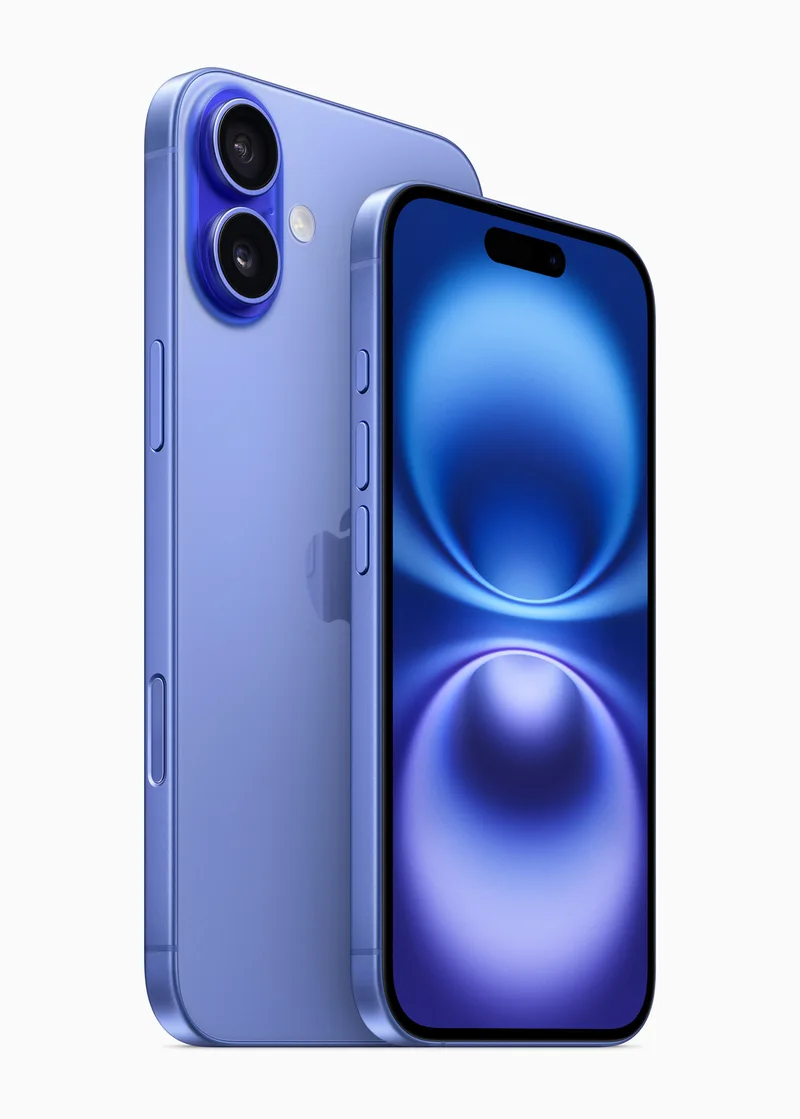
Apple's 2024 standard iPhone brings the A18 chip, a vertical camera layout, the Action button and the new Camera Control key to the mainstream model.
Key figures at a glance
Gallery
Specifications
- Display
- 6.1" Super Retina XDR OLED, 2556x1179, 60Hz
- Chipset
- Apple A18
- RAM
- 8GB
- Storage
- 128GB / 256GB / 512GB
- Rear Camera
- 48MP Fusion main + 12MP ultrawide
- Front Camera
- 12MP
- Battery
- 3,561 mAh (13.84 Wh), 25W MagSafe with 30W adapter
- OS
- iOS 18 (supports iOS 26)
The iPhone 16 is the standard model of Apple's 2024 line-up, sold next to the larger iPhone 16 Plus and the higher-priced Pro models. For years the base iPhone was the one that received last year's Pro features later; this generation closed much of that gap by adding the Action button, a new physical Camera Control key and a chip built with on-device artificial intelligence in mind. Below you will find what changed, how the phone is built, and what its real limits are.
Announcement and pricing
Apple unveiled the iPhone 16 and the iPhone 16 Plus at an event at Apple Park in Cupertino on 9 September 2024. It was the first iPhone launch announced on a Monday since the iPhone 4, and the phones went on sale on 20 September 2024 after pre-orders opened on 13 September. The iPhone 16 started at 799 US dollars and the Plus at 899. When the successor, the iPhone 17, arrived, the iPhone 16 was cut to 699 dollars, and on 9 September 2026 it returned to its original 799 dollars, at which point the Plus was discontinued and the standard iPhone 16 stayed on sale with 128 GB of storage only. Apple also stopped putting its stickers in the box for environmental reasons, though they can be requested at an Apple Store.
Design
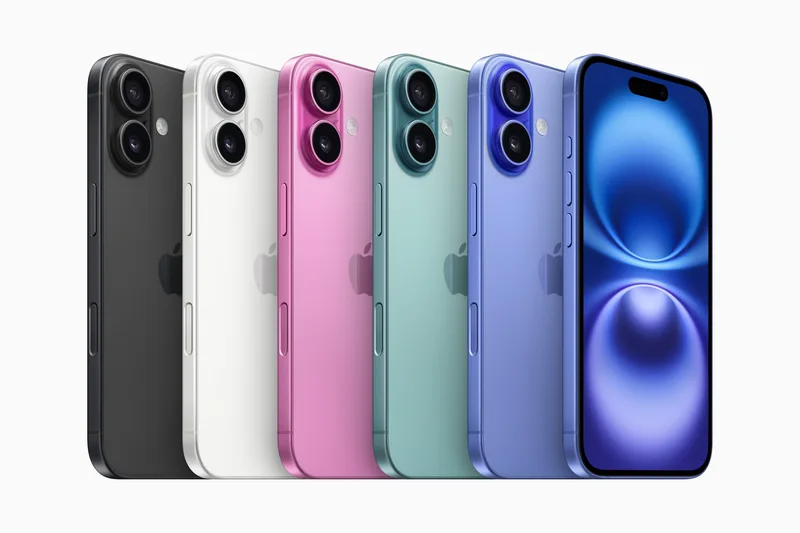
The body is built around a recycled aluminium substructure with a flat frame and rounded contours, echoing the iPhone 15 it replaces. The back is colour-infused glass on the coloured versions, while the white and black models use standard treatment. Five colours are offered: Ultramarine, Teal, Pink, White and Black. The most visible change is the camera layout: the two lenses are now stacked vertically in a pill-shaped module, as they were on the iPhone 11 and iPhone 12, instead of the diagonal arrangement of the three previous generations. Apple explained that the vertical layout allows spatial video capture, which records video that can be viewed with depth on compatible headsets. The phone measures 147.6 x 71.6 x 7.8 mm, weighs 170 g and is rated IP68, meaning it survives up to 6 metres of water for 30 minutes.
Display
The screen keeps the size of its predecessor: a 6.1-inch Super Retina XDR OLED with 2556 x 1179 pixels, or about 460 pixels per inch, with slim, even borders. Its refresh rate stays at 60 Hz, and brightness is controlled by pulse-width modulation, so it is not classed as flicker-free. This is the trade-off of the standard iPhone: the smooth 120 Hz adaptive display is reserved for the Pro line. For most everyday use, such as reading and video, the panel looks excellent, but people who scroll a lot and value fluidity will notice the difference on a side-by-side basis.
A18 chip and performance
The phone is powered by the Apple A18, a chip optimised for generative artificial intelligence, with a Neural Engine that Apple says is twice as fast as the previous one. Independent measurements put the processor about 30 percent faster than the A16 used two generations earlier, and graphics about 40 percent faster. Memory is 8 GB of LPDDR5X, and storage options are 128, 256 and 512 GB of NVMe flash. Apple also reworked the thermal design: the main logic board was reorganised to centralise chip placement, and the recycled-aluminium substructure spreads heat so that, according to Apple, sustained performance in gaming is up to 30 percent higher. The modem is a Qualcomm Snapdragon X71 5G, and all models support Wi-Fi 7. The international model takes a Nano SIM and an eSIM, the US model is eSIM only, and the model for mainland China has no eSIM at all.
Cameras and the two new controls
The rear system pairs a 48 MP Fusion main camera (f/1.6, 26 mm equivalent) with a 12 MP ultrawide camera (f/2.2, 13 mm) that has a wider aperture and autofocus for close-ups. The main sensor uses 2 micrometre pixels, quad-pixel focus and sensor-shift stabilisation, and supports 24 MP and 48 MP high-resolution photos. Photographic Styles were improved, allowing real-time adjustment of tone and colour. The front camera is a 12 MP unit (f/1.9) with autofocus.
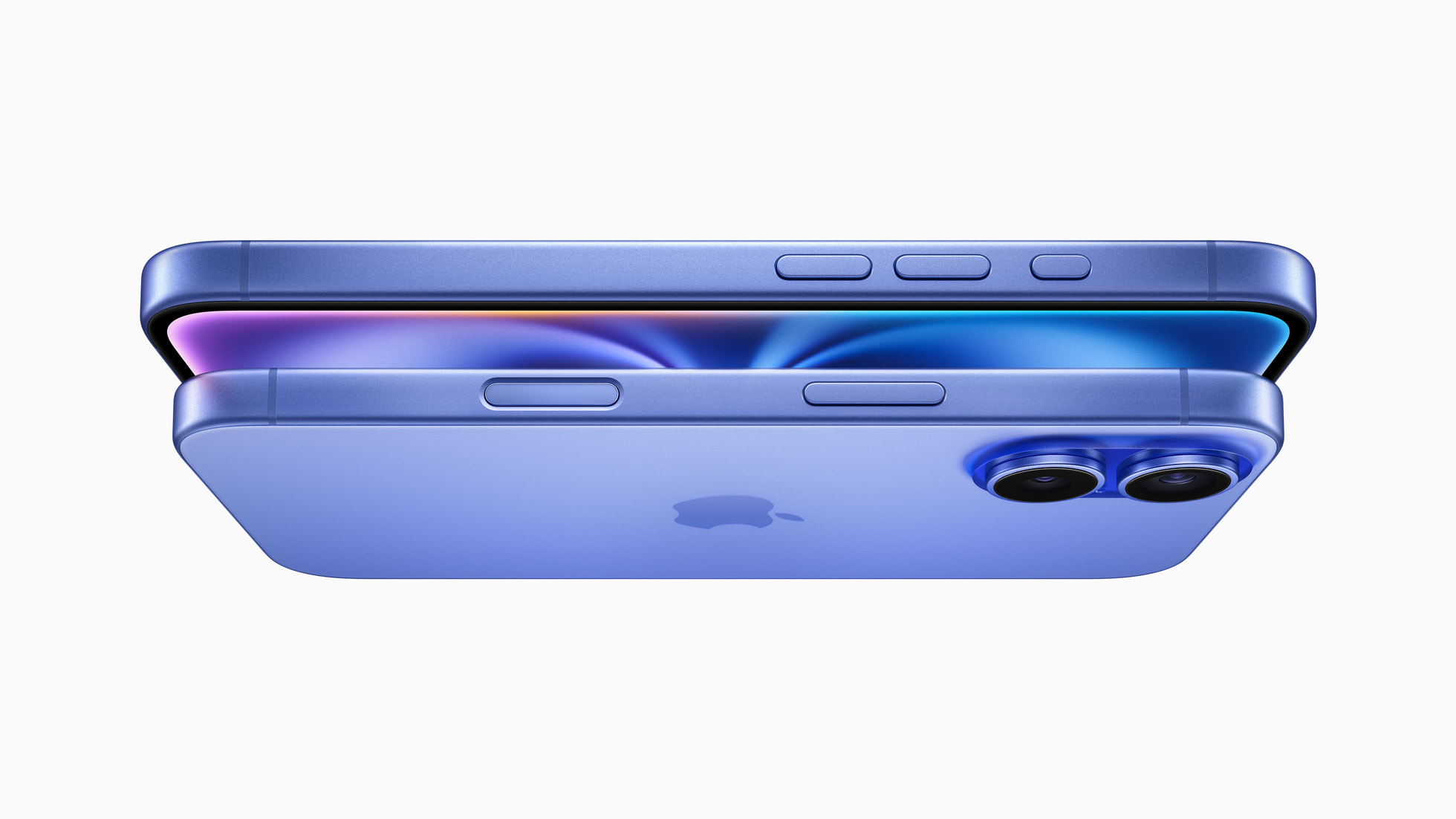
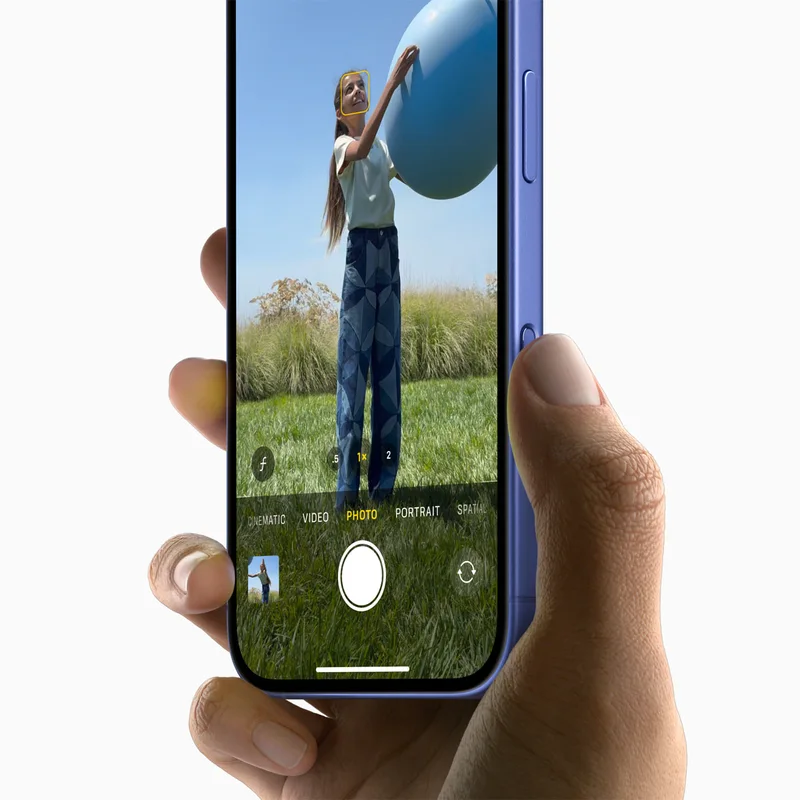
Two physical controls change how you use the phone. The Action button, first seen on the iPhone 15 Pro, replaces the old mute switch; by default it toggles silent mode, but it can be set to open the camera, switch a Focus mode and more. Camera Control, a new button on the right edge, distinguishes light presses from hard presses: one press opens the camera, a light double press brings up menus for zoom or tone, a hard press takes a photo, and holding it starts a video. It can also be assigned to other camera-using apps such as Magnifier or a code scanner.
Battery and charging
The battery is 13.84 Wh, about 3,561 mAh, and Apple rates video playback at up to 22 hours and audio playback at up to 80 hours. Wireless charging supports MagSafe and Qi2, and with the refreshed MagSafe charger and a 30 W adapter the phone charges at up to 25 W. Wired charging uses USB-C, though data transfer over the port is limited to USB 2.0 speed of 480 Mbit/s, which a reviewer specifically criticised. Connectivity also includes Bluetooth 5.3, ultra-wideband, Thread and NFC, and Emergency SOS, Messages and Find My via satellite.
Software
The iPhone 16 launched with iOS 18. Apple announced Apple Intelligence alongside the phone, but its features arrived after release, which meant that early buyers waited for them. Later updates added the option to open Visual Intelligence from the Action button, from the Lock Screen or from Control Center, as well as by long-pressing Camera Control. All iPhone 16 models are compatible with iOS 26, released in September 2025. iOS 18 also added recovery tools that let you restore the firmware wirelessly using another iPhone.
What reviewers said and who should buy it
Reviews were largely positive. Commentators liked the refreshed look and vibrant colours, and one review that scored the phone 8 out of 10 praised the camera, performance and battery life while criticising the 60 Hz screen and slow USB speed. Another observation was that the base iPhone no longer feels like a downgrade next to the Pro, because the Action button, Camera Control and the A18 chip make the difference smaller than before. The larger Plus model also drew praise for lasting longer than the biggest Pro while weighing less. In Indonesia, sales were blocked from October 2024 over local-content rules and resumed after the ban was lifted in February 2025, with sales starting again in April 2025.
The iPhone 16 suits people who want a simple, durable phone with several years of software ahead and a good all-round camera. If you want a faster screen or longer zoom you will need to look higher up the range. To place it against its neighbours, open iPhone 15 vs iPhone 16 or iPhone 16 vs iPhone 17 Pro, see the newer iPhone 17 Pro page, and browse the whole phones category. Our reviews carry hands-on impressions.
Where it ranks
Compare Apple iPhone 16 with similar devices
More from Apple
Frequently asked questions
When was the Apple iPhone 16 released?
The Apple iPhone 16 was released on 2024-09-20, according to the manufacturer’s published information.
How much does the Apple iPhone 16 cost?
The estimated range for the Apple iPhone 16 is $719 to $879 in US dollars, based on the launch list price. Actual prices vary by country, retailer and storage option.
What are the main specs of the Apple iPhone 16?
Headline figures for the Apple iPhone 16: Battery: 3,561 mAh, Refresh rate: 60 Hz, Main camera: 48 MP, RAM: 8 GB. The full specification table is further up this page.
Is the Apple iPhone 16 worth buying?
That depends on your priorities. Use the editorial review on this page for our view, check the rankings above to see where the device stands on battery, display and camera, and compare it directly with similar models before you decide.


