Phones
Apple iPhone Air
Apple's thinnest iPhone is 5.6 mm of titanium and Ceramic Shield with a single 48MP camera, an eSIM-only design and the new A19 Pro, N1 and C1X chips.
Key figures at a glance
Gallery
Specifications
- Display
- 6.5" Super Retina XDR (OLED), ProMotion up to 120Hz, Always-On, up to 3000 nits peak outdoor brightness
- Chipset
- Apple A19 Pro (6-core CPU, 5-core GPU) with Apple N1 wireless and C1X modem
- Storage
- 256GB / 512GB / 1TB
- Rear Camera
- 48MP Fusion Main (28mm and 35mm crops, 2x optical-quality telephoto)
- Front Camera
- 18MP Center Stage, square sensor
- Battery
- All-day battery life (capacity not stated by Apple); MagSafe Battery accessory available
- Body
- Grade 5 titanium frame, 5.6mm thin, Ceramic Shield 2 front and Ceramic Shield back
- OS
- iOS 26
The iPhone Air is the most unusual iPhone of Apple's September 2025 line-up. Instead of adding another camera lens or a bigger battery, Apple used the new model to answer a different question: how thin and light can an iPhone become before it stops feeling like a full iPhone? The company's own answer is 5.6 millimetres, a titanium frame, a 6.5-inch display and a design in which nearly every internal component was rearranged to make room for the battery. This page collects what Apple has published about the phone, explains the design decisions behind it and points out where the thin approach involves compromises you should weigh yourself.
Launch and positioning
Apple introduced the iPhone Air on 9 September 2025. Pre-orders opened on Friday 12 September in more than 63 countries and regions, including France, Germany, the United Kingdom, the United States and Japan, and the first shipments and store availability began on Friday 19 September. Another 22 countries and regions followed on 26 September. In the United States the phone started at 999 dollars for the 256GB version, with 512GB and 1TB options above it. Apple describes it as a brand-new member of the iPhone family for people who want pro-level performance in the lightest possible body, and in Apple's own trade-in text it sits beside the iPhone 17 Pro. If you are new to this generation, our iPhone 17 Pro page covers the more conventional high-end model, while the iPhone 16 page describes the phone that preceded both.
A 5.6 mm titanium body
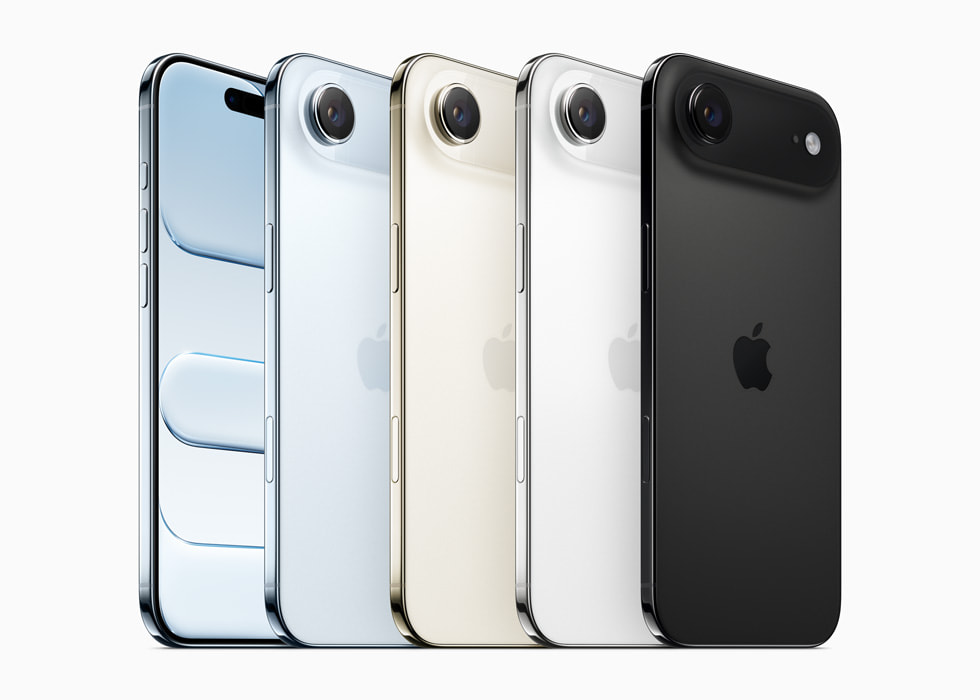
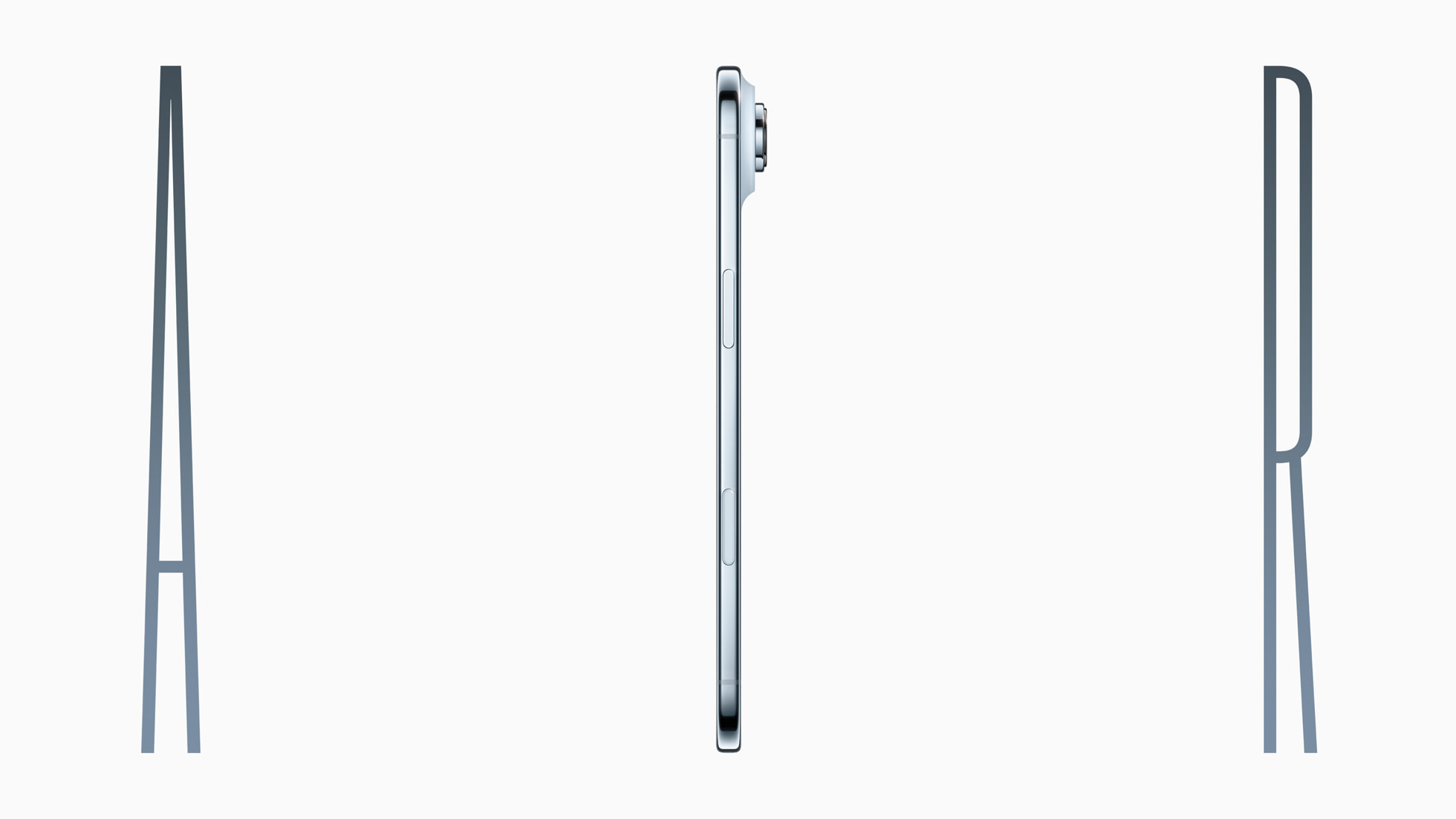
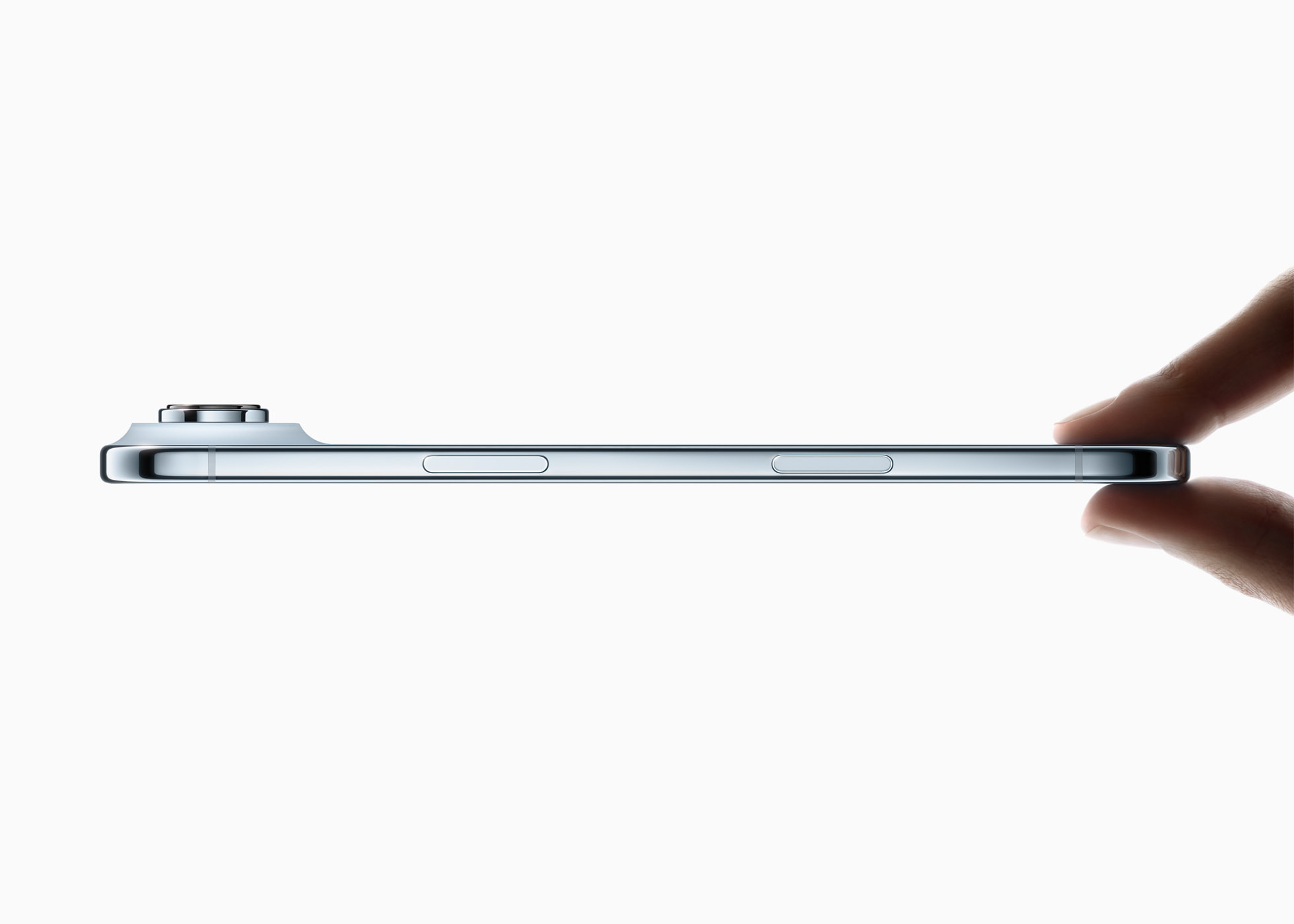
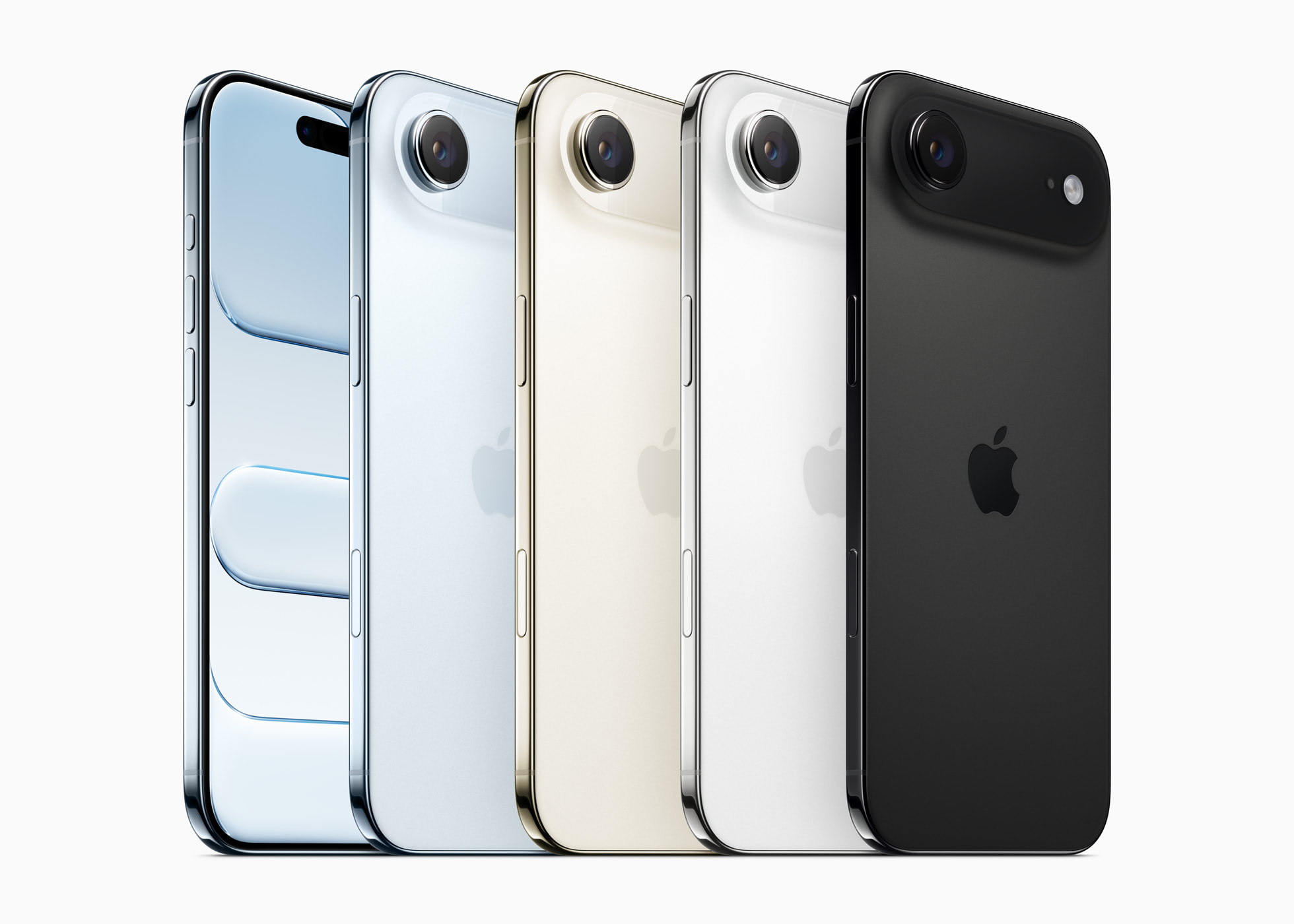
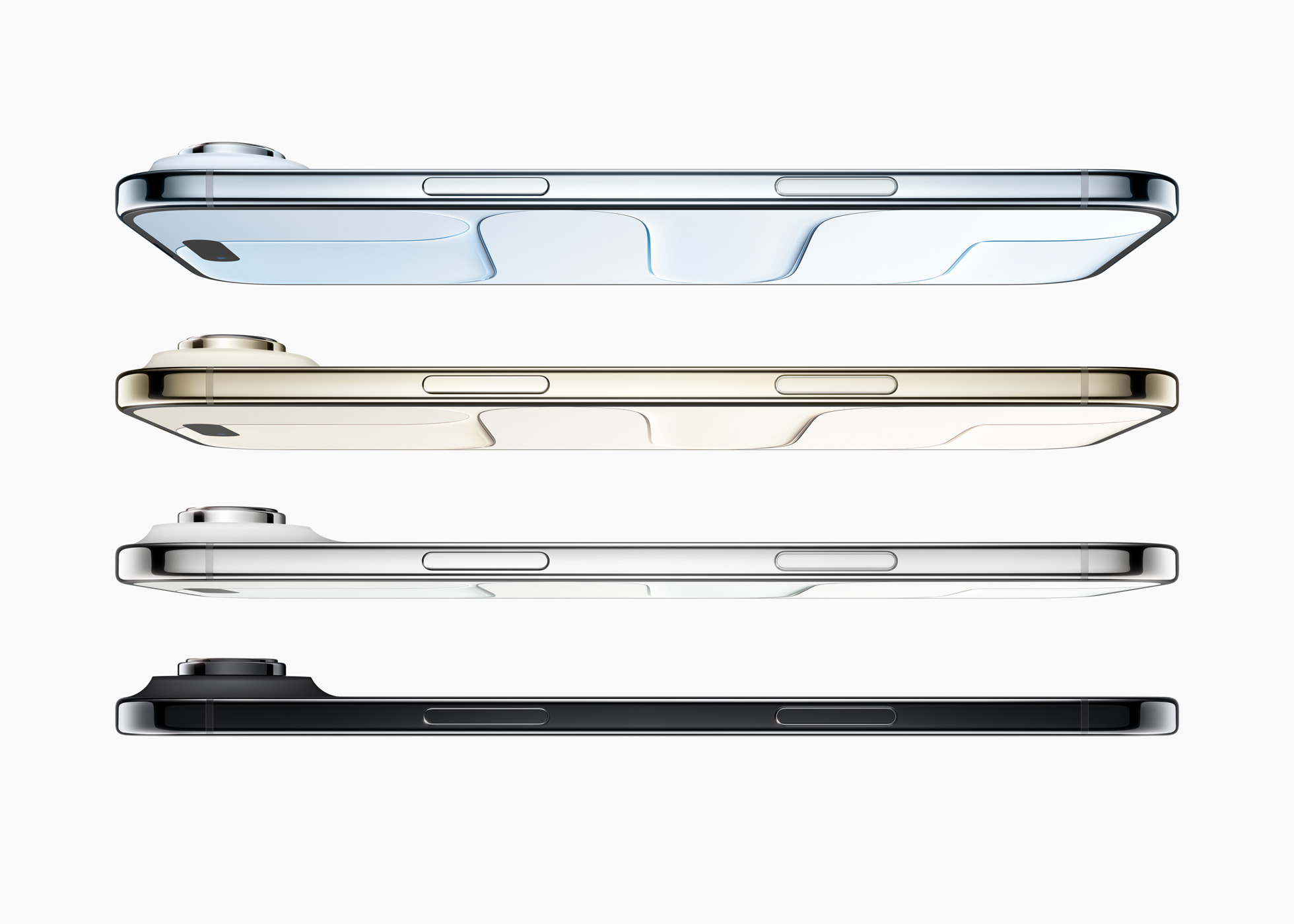
The headline number is thickness. At 5.6 mm the iPhone Air is the thinnest iPhone Apple has made, and it keeps the Action button and Camera Control that Apple has been adding to recent models. The frame is grade 5 titanium with a mirror-like, high-gloss finish, and on the back there is a raised plateau that Apple mills on both sides. That plateau houses the camera, the speaker and the Apple silicon, which lets the rest of the body stay thin while the volume underneath it goes to the battery. Four finishes are offered: space black, cloud white, light gold and sky blue.
Durability is the obvious worry with a phone this slim, and Apple addresses it in three ways. The front cover uses Ceramic Shield 2, which Apple says is tougher than any smartphone glass or glass-ceramic and offers three times better scratch resistance than the previous front cover, together with an anti-reflective treatment. For the first time the back of an iPhone is also covered by Ceramic Shield, including the plateau, and Apple quotes four times better resistance to cracks than the back glass of earlier models. Finally, the titanium frame is said to exceed Apple's bend-strength requirements. Apple's conclusion is that the iPhone Air is more durable than any earlier iPhone. These are manufacturer statements from the launch announcement, not independent drop tests, so treat them as Apple's claims.
Display
The screen is a 6.5-inch Super Retina XDR OLED with ProMotion, meaning an adaptive refresh rate of up to 120Hz. The Always-On display drops down to 1Hz when nothing is changing, which saves energy. Apple gives peak outdoor brightness as 3000 nits, the highest ever on an iPhone, along with twice the outdoor contrast. For a phone that is likely to be used mainly for reading, messaging and video, that is a sensible place to spend the space budget, because the display is what you look at all day.
One camera on the back, a new one on the front
The iPhone Air has a single rear camera, but Apple positions it as more versatile than that suggests. The 48MP Fusion Main camera uses a custom lens and a large 2.0 micrometre quad-pixel sensor with sensor-shift optical stabilisation, and Apple says it covers the equivalent of four lenses: the main view, the popular 28mm and 35mm framings, and a 2x telephoto that keeps optical-quality detail by cropping the sensor. Photos are captured at 24MP by default, with 48MP available for extra detail. A new image pipeline records depth automatically so you can turn a photo into a portrait later in the Photos app and adjust focus after the fact, and the latest Photographic Styles include a new Bright style. Video goes up to 4K at 60 frames per second in Dolby Vision, with Action mode, Spatial Audio, Audio Mix and wind-noise reduction.
The front camera is the more novel part. Apple calls it Center Stage, and it uses the first square selfie sensor on an iPhone, at up to 18MP. Because the sensor is square, you can take portrait or landscape selfies without rotating the phone, and for group shots the software can widen the field of view or turn from portrait to landscape automatically. It also supports ultra-stabilised 4K HDR video and Dual Capture, which records from the front and rear cameras at once. The trade-off is plain: there is no ultra-wide lens and no long telephoto, so anyone who shoots wide landscapes or distant subjects will want to compare it against the iPhone Air vs iPhone 17 Pro table before deciding.
Apple silicon: A19 Pro, N1 and C1X
Apple credits the design to its own chips. The A19 Pro has a new 6-core CPU and a 5-core GPU with a Neural Accelerator in every GPU core, which Apple says gives up to three times the peak GPU compute of the previous generation for on-device AI models. The N1 is an Apple-designed wireless chip that provides Wi-Fi 7, Bluetooth 6 and Thread, and Apple says it improves Personal Hotspot and AirDrop reliability. The C1X is Apple's second-generation in-house cellular modem. Apple says it is up to twice as fast as the C1 and uses 30 percent less energy than the modem in the iPhone 16 Pro for the same cellular technologies, which is why it is called the most power-efficient modem in an iPhone. Together the three chips make the Air the most power-efficient iPhone Apple has built, according to the company.
Battery, eSIM and software
Apple does not publish a milliamp-hour figure in the announcement. It promises all-day battery life, attributing it to the efficient silicon, the internal architecture that maximises battery volume and software optimisation. iOS 26 adds Adaptive Power Mode, which learns your typical consumption and conserves power when it predicts you might run low. For people who need more, Apple made a thin MagSafe Battery accessory that clips to the back and, combined with the phone, is quoted at up to 40 hours of video playback. The phone is also eSIM-only, which saves internal space and can be more secure because an eSIM cannot be removed if the phone is lost or stolen. Apple says more than 500 carriers support eSIM. If you rely on a physical SIM card, for example when swapping SIMs abroad, this matters more than any benchmark.
The phone ships with iOS 26, which brings the Liquid Glass design, Live Translation in Messages, FaceTime and Phone, improved visual intelligence and call-screening tools. Apple Intelligence was available in beta at launch in English, French, German, Italian, Brazilian Portuguese, Spanish, simplified Chinese, Japanese and Korean, with more languages promised by the end of 2025.
Accessories and environment
Apple launched a dedicated accessory set: an ultra-thin translucent Case with MagSafe in frost and shadow, a polycarbonate Bumper in four matching colours, a Crossbody Strap made from recycled yarn in ten colours and the MagSafe Battery. US prices at launch were 49 dollars for the case, 39 dollars for the bumper, 59 dollars for the strap and 99 dollars for the battery. On the environmental side Apple says the phone contains 35 percent recycled content, including 80 percent recycled titanium and fully recycled cobalt in the battery, and that its titanium USB-C port is 3D-printed with 33 percent less material than forging would need.
Who it suits
Based on Apple's own specification, the iPhone Air suits someone who values weight, thickness and a large screen above having several rear lenses, and who is comfortable with an eSIM. If you want a full camera set, browse the phones section for other options, and read our reviews for hands-on impressions as they are published. Anyone wanting a lower entry price inside the same generation should also look at the iPhone 16e, which Apple announced earlier in 2025.
Where it ranks
Compare Apple iPhone Air with similar devices
More from Apple
Frequently asked questions
When was the Apple iPhone Air released?
The Apple iPhone Air was released on 2025-09-19, according to the manufacturer’s published information.
How much does the Apple iPhone Air cost?
The estimated range for the Apple iPhone Air is $899 to $1099 in US dollars, based on the launch list price. Actual prices vary by country, retailer and storage option.
What are the main specs of the Apple iPhone Air?
Headline figures for the Apple iPhone Air: Refresh rate: 120 Hz, Main camera: 48 MP. The full specification table is further up this page.
Is the Apple iPhone Air worth buying?
That depends on your priorities. Use the editorial review on this page for our view, check the rankings above to see where the device stands on battery, display and camera, and compare it directly with similar models before you decide.


