Phones
Apple iPhone 15 Pro Max
The biggest 2023 iPhone: 6.7-inch ProMotion OLED, titanium frame, A17 Pro and the first 5x tetraprism telephoto on an iPhone, with up to 29 hours of rated video, from $1,199.
Key figures at a glance
Gallery
Specifications
- Display
- 6.7" Super Retina XDR OLED, 2796x1290, 1-120Hz ProMotion, Always-On, 2000 nits peak outdoor
- Chipset
- Apple A17 Pro (3nm, 6-core CPU, 6-core GPU, 16-core Neural Engine)
- Storage
- 256GB / 512GB / 1TB
- Rear Camera
- 48MP main (24mm f/1.78) + 12MP ultrawide + 12MP 5x telephoto (120mm f/2.8, tetraprism)
- Front Camera
- 12MP TrueDepth, f/1.9, autofocus
- Battery
- Up to 29 hours video playback (Apple claim; capacity not stated), 15W MagSafe and Qi2, 50% in about 30 minutes with 20W adapter
- Body
- 159.9 x 76.7 x 8.25 mm, 221 g, titanium, IP68
- Connectivity
- USB-C (USB 3, 10Gb/s), Wi-Fi 6E, Bluetooth 5.3, 5G, second-generation Ultra Wideband
- OS
- iOS 17 at launch (Apple Intelligence supported on later iOS)
The iPhone 15 Pro Max was the flagship of Apple's 2023 range and the only model that year with a 5x telephoto camera. It shares the titanium frame, the A17 Pro chip and the USB-C port with the smaller iPhone 15 Pro, but adds a 6.7-inch display, the longest battery rating in the family and the first tetraprism zoom lens fitted to an iPhone. This page is based on the published specifications and manufacturer information, and it looks at what the largest 2023 Pro offers, what it costs in size and weight, and who should still consider it.
Place in the lineup
Apple announced the iPhone 15 Pro and iPhone 15 Pro Max on 12 September 2023, opened pre-orders on 15 September and began sales on 22 September 2023. The Pro Max started at $1,199 in the United States, and unlike its smaller sibling it no longer offered a 128GB base: storage begins at 256GB and goes to 512GB and 1TB. That pricing put it $200 above the iPhone 15 Pro and $300 above the 6.7-inch iPhone 15 Plus.
The model was replaced in 2024 by the iPhone 16 Pro Max, which grew the screen slightly and added Camera Control, and in 2025 by the iPhone 17 Pro Max. The page iPhone 15 Pro Max vs. iPhone 16 Pro Max puts the two generations next to each other. Because Apple supports its phones for several years, the 15 Pro Max remains relevant mainly as a second-hand or discounted large phone.
Design and display
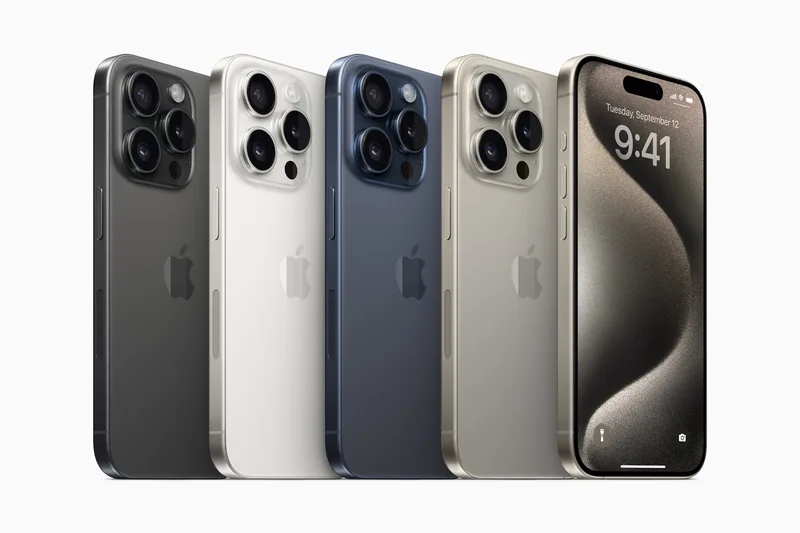
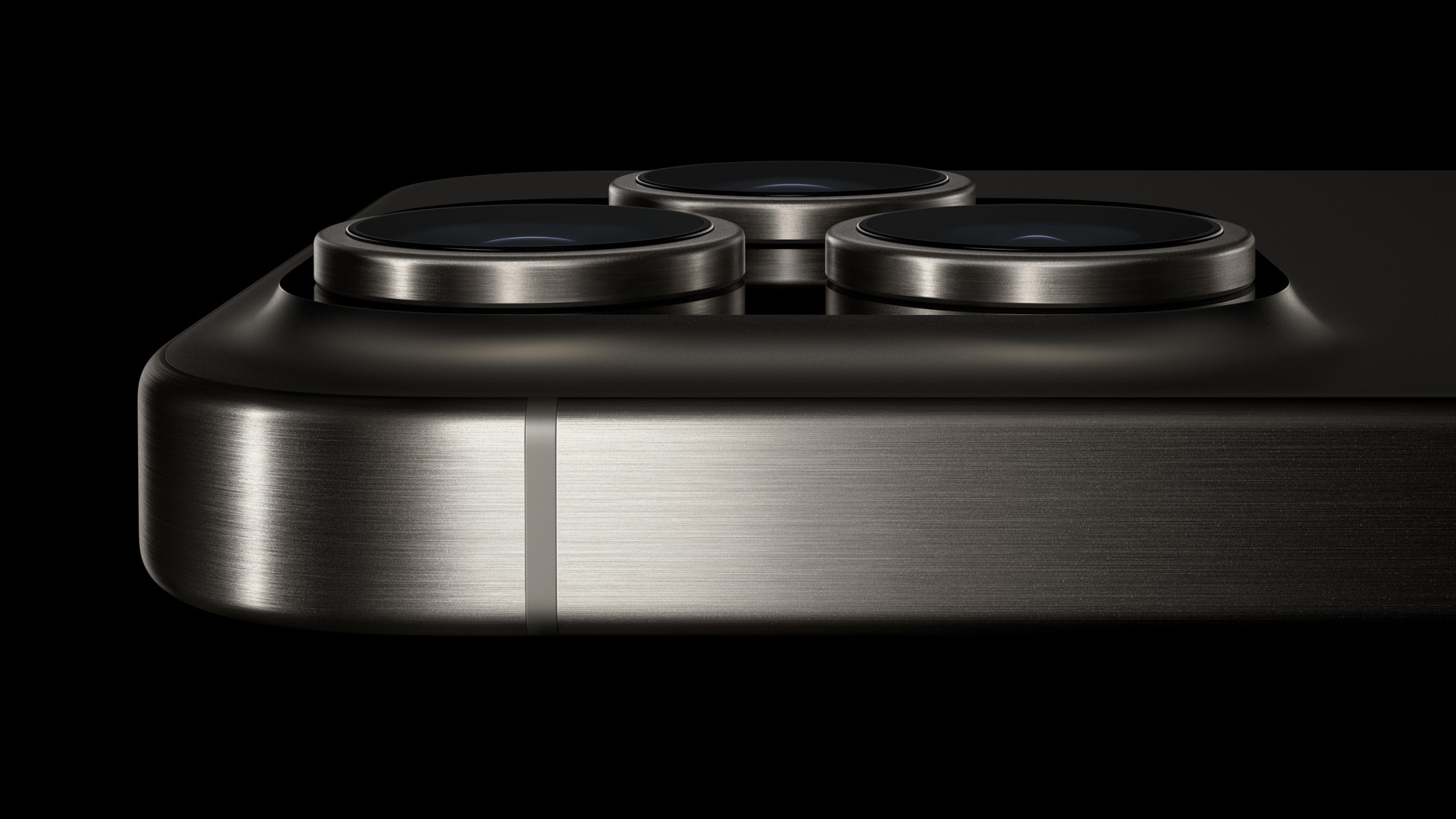
The Pro Max measures 159.9 x 76.7 x 8.25 mm and weighs 221 grams. That is lighter than the stainless steel Pro Max it replaced, yet it is still one of the heavier phones Apple sold, and one-handed use is difficult. The frame is titanium over a recycled aluminum substructure, the front is protected by Ceramic Shield, the back is textured matte glass, and the phone is rated IP68 for up to six meters for 30 minutes. It came in black, white, blue and natural titanium.
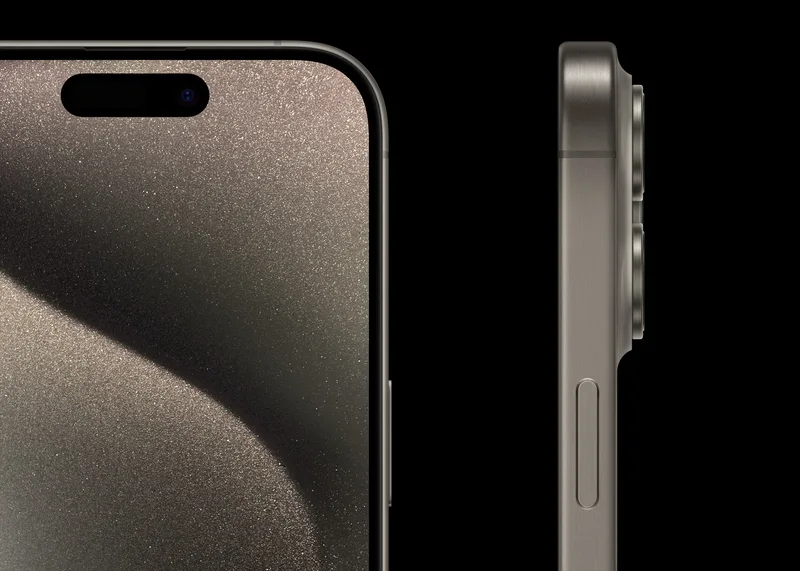
The display is a 6.7-inch Super Retina XDR OLED with 2796 x 1290 pixels at 460 ppi. It supports ProMotion up to 120Hz, Always-On, HDR, True Tone and wide color. Apple lists 1,000 nits typical, 1,600 nits peak for HDR and 2,000 nits peak outdoors, the same figures as the 6.1-inch Pro. The extra size mainly helps when watching video, editing photos and reading maps, and the Dynamic Island works the same way on both sizes. The Action button replaces the old ring and silent switch and can be set to start the camera, the flashlight, Voice Memos, a Focus mode, a translation or a Shortcut.
Performance, connectivity and software
Inside is the A17 Pro, which Apple called the first 3-nanometer chip in a phone. It has a 6-core CPU (two performance and four efficiency cores), a 6-core GPU with hardware ray tracing and a 16-core Neural Engine. Apple claims up to 10 percent faster CPU work and up to 20 percent faster graphics than the A16-based generation; these are manufacturer claims. The company does not publish RAM on its specification page, so it is not listed here.
The USB-C port supports USB 3 transfer speeds of up to 10Gb/s with a suitable cable, plus video out at up to 4K and 60 frames per second. Other listed features are Wi-Fi 6E, Bluetooth 5.3, 5G including mmWave bands, the second-generation Ultra Wideband chip, Thread networking and Emergency SOS and Roadside Assistance via satellite. The phone launched with iOS 17, and Apple's current specification page marks it as compatible with Apple Intelligence on newer software, something the standard iPhone 15 models do not offer.
Camera
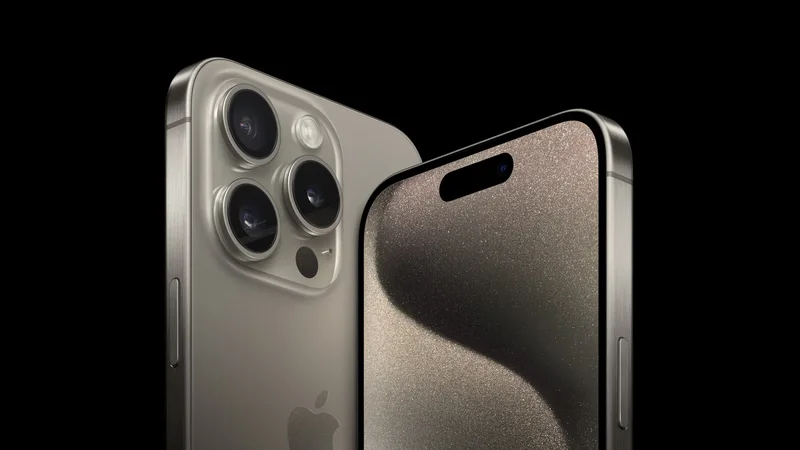
The 48MP main camera uses a 24 mm equivalent lens at f/1.78 with second-generation sensor-shift stabilization and saves 24MP images by default. The 12MP ultrawide camera has a 13 mm lens at f/2.2. The headline feature is the 12MP 5x telephoto at 120 mm and f/2.8, built with a tetraprism design and a combined stabilization and autofocus module that moves the sensor in three dimensions. Apple states the sensor is 25 percent larger than before and describes the aperture as the largest of any smartphone at that optical range. Together with the 2x crop from the main sensor, the phone covers ultrawide to 5x with optical-quality steps, and Apple lists a 10x optical zoom range and digital zoom up to 25x.
In practice a 120 mm view is useful for stage events, wildlife, architecture details and portraits that need more compression, but a long lens needs light. Apple relies on Night mode and the Photonic Engine for dim scenes, and a small prism lens will not match a larger camera in difficult conditions. Video options include 4K at 60 frames per second, Dolby Vision HDR, Cinematic mode, Action mode, ProRes recording to external storage, Log encoding and ACES support. The front camera is a 12MP TrueDepth unit with f/1.9 aperture and autofocus.
Battery and charging
Apple does not give a capacity in mAh. It rates the Pro Max at up to 29 hours of video playback, 25 hours of streamed video and 95 hours of audio playback, the highest numbers in the 2023 range and a clear step above the 23 hours claimed for the smaller Pro. As always, these are results from Apple's tests. A 20W or higher adapter should reach roughly 50 percent in about 30 minutes, and wireless charging runs at up to 15W through MagSafe and Qi2.
Who it is for
The Pro Max is meant for people who want the longest Apple battery rating of its generation, the biggest screen and the longest zoom lens, and who accept the size. It suits travelers, hobby photographers who shoot events from a distance, and anyone who watches a lot of video or plays long gaming sessions.
It also makes sense for people who rarely charge during the day: the rated runtime leaves more headroom for navigation, hotspot use and video calls, although real results depend on signal strength, brightness and apps. Storage matters here too. Since the base model already has 256GB, heavy 48MP and ProRes shooters should look at the 512GB or 1TB versions, because Apple's own file formats take a lot of space and there is no memory card slot. If your priority is the lowest weight in a Pro phone, the iPhone 15 Pro is the more comfortable choice.
Compromises
The size and 221 gram weight are the obvious costs, and the starting price is $1,199. The 5x lens is excellent for distance but weaker in low light, and the Pro Max still has no Camera Control button. Anyone considering a non-Pro large phone should read about the iPhone 15 Plus, which gives up ProMotion, the titanium frame and the telephoto, and use the rankings to compare the Pro Max with newer flagships.
Where it ranks
Compare Apple iPhone 15 Pro Max with similar devices
More from Apple
Frequently asked questions
When was the Apple iPhone 15 Pro Max released?
The Apple iPhone 15 Pro Max was released on 2023-09-22, according to the manufacturer’s published information.
How much does the Apple iPhone 15 Pro Max cost?
The estimated range for the Apple iPhone 15 Pro Max is $1079 to $1319 in US dollars, based on the launch list price. Actual prices vary by country, retailer and storage option.
What are the main specs of the Apple iPhone 15 Pro Max?
Headline figures for the Apple iPhone 15 Pro Max: Refresh rate: 120 Hz, Main camera: 48 MP. The full specification table is further up this page.
Is the Apple iPhone 15 Pro Max worth buying?
That depends on your priorities. Use the editorial review on this page for our view, check the rankings above to see where the device stands on battery, display and camera, and compare it directly with similar models before you decide.


