Phones
Apple iPhone 15 Plus
The large standard iPhone of 2023: 6.7-inch OLED with Dynamic Island, A16 Bionic, 48MP main camera, USB-C and up to 26 hours of rated video, from $899.
Key figures at a glance
Gallery
Specifications
- Display
- 6.7" Super Retina XDR OLED, 2796x1290, 60Hz, Dynamic Island, 2000 nits peak outdoor
- Chipset
- Apple A16 Bionic (6-core CPU, 5-core GPU, 16-core Neural Engine)
- Storage
- 128GB / 256GB / 512GB
- Rear Camera
- 48MP main (26mm f/1.6, 2x telephoto crop) + 12MP ultrawide
- Front Camera
- 12MP TrueDepth, f/1.9, autofocus
- Battery
- Up to 26 hours video playback (Apple claim; capacity not stated), 15W MagSafe and Qi2, 50% in about 30 minutes with 20W adapter
- Body
- 160.9 x 77.8 x 7.80 mm, 201 g, aluminum with color-infused glass back, IP68
- Connectivity
- USB-C, Bluetooth 5.3, 5G, second-generation Ultra Wideband
- OS
- iOS 17 at launch
The iPhone 15 Plus is the large-screen version of Apple's standard 2023 iPhone. It brings a 6.7-inch OLED display, the Dynamic Island, a 48MP main camera and a USB-C port to the cheaper side of the range, and it uses the A16 Bionic chip that powered the previous Pro models. Apple rates it at up to 26 hours of video playback. This page is based on the published specifications and manufacturer information, and it explains how the Plus differs from the Pro phones, what it improved over the iPhone 14 Plus and what a buyer gives up by choosing it.
Place in the lineup
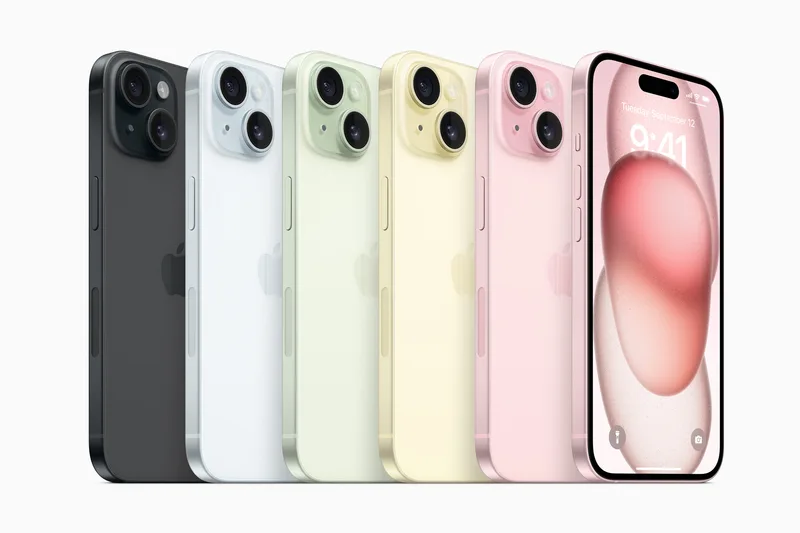
Apple unveiled the iPhone 15 and iPhone 15 Plus on 12 September 2023, opened pre-orders on 15 September and began sales on 22 September 2023. In the United States the iPhone 15 started at $799 and the Plus at $899, both with 128GB, and both were offered in black, blue, green, yellow and pink. The Plus therefore sat $100 above the iPhone 15, and below the Pro line, where the iPhone 15 Pro Max was the other 6.7-inch option at $1,199.
In 2024 the model was followed by the iPhone 16 Plus, with a newer chip and a Camera Control button, and the page iPhone 15 Plus vs. iPhone 16 Plus compares the two. In 2025 Apple changed direction by enlarging the regular iPhone 17 and adding the thin iPhone Air, so the Plus name was retired. The 15 Plus is now one of the last of the big, non-Pro, flat-edged iPhones.
Design and display
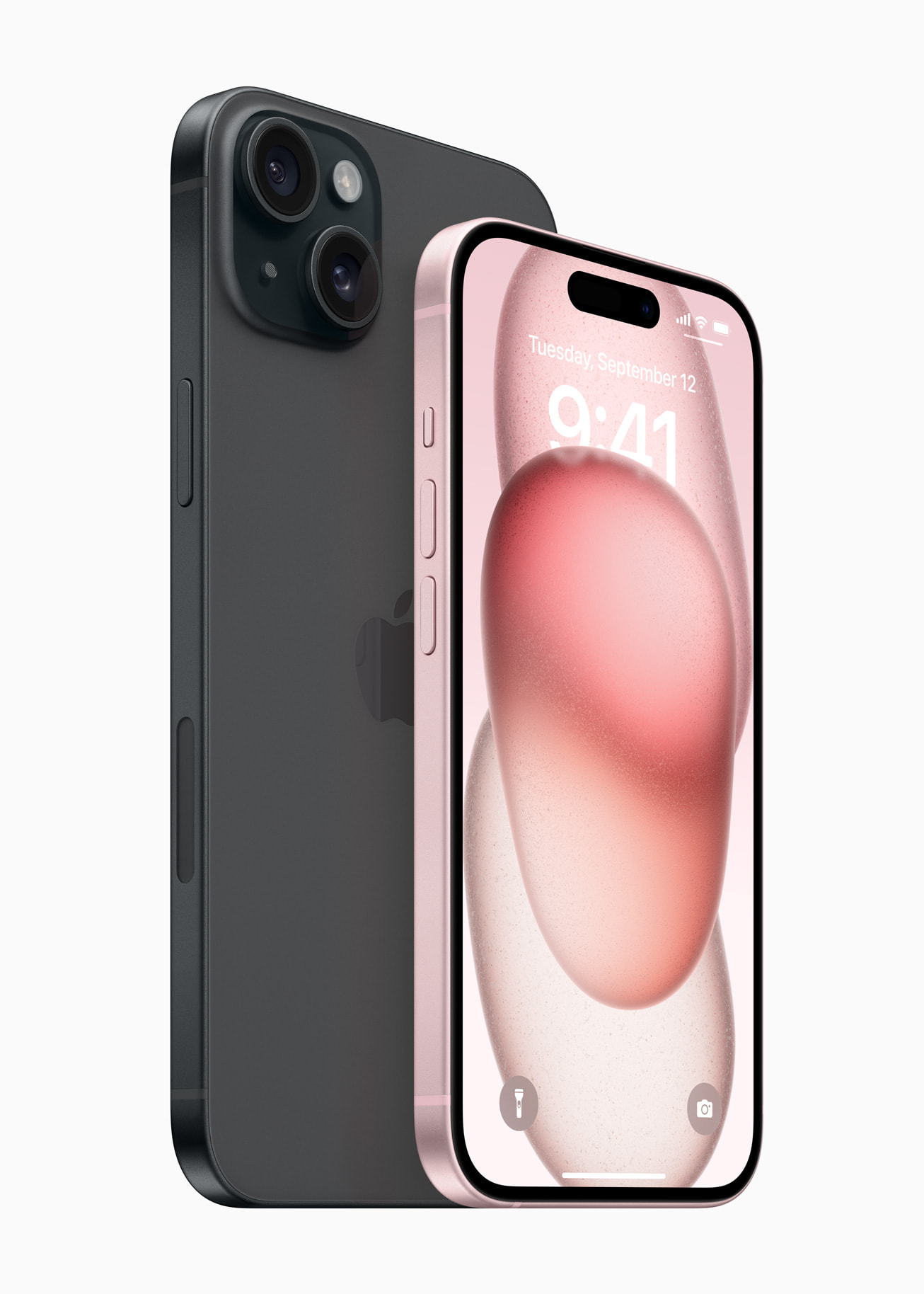
The Plus measures 160.9 x 77.8 x 7.80 mm and weighs 201 grams. Its frame is aerospace-grade aluminum with a contoured edge, the front uses Ceramic Shield, and the back is glass that Apple describes as color-infused, with a textured matte finish created by etching. The phone is rated IP68 for up to six meters of depth and 30 minutes. The five colors are softer pastels than the saturated tones of earlier generations, and Apple says the color runs through the glass rather than sitting on top of it. Apple also says the internal design improves the ease and affordability of repairs, though the price of a repair still depends on the service route and the country.
The screen is a 6.7-inch Super Retina XDR OLED at 2796 x 1290 pixels and 460 ppi, with a Dynamic Island instead of the notch used on the 14 Plus. Apple lists 1,000 nits typical brightness, 1,600 nits peak for HDR and 2,000 nits peak outdoors, which is twice the outdoor figure of the previous generation. What the display does not have is ProMotion: the adaptive 120Hz refresh rate and the Always-On mode stay exclusive to the Pro models, so the Plus runs at 60Hz. Most users will not notice this when reading text or watching video, but scrolling feels less fluid than on a Pro phone.
Performance, connectivity and software
The A16 Bionic has a 6-core CPU with two performance and four efficiency cores, a 5-core GPU and a 16-core Neural Engine that Apple says performs nearly 17 trillion operations per second. It is a capable chip that handles games, video editing and everyday multitasking without trouble. Apple does not publish the RAM, and this page does not list it. The software shipped with iOS 17. Apple's current specification page for the iPhone 15 and 15 Plus does not list Apple Intelligence, which makes this a point to check if those features matter to you, since the Pro models are the ones included.
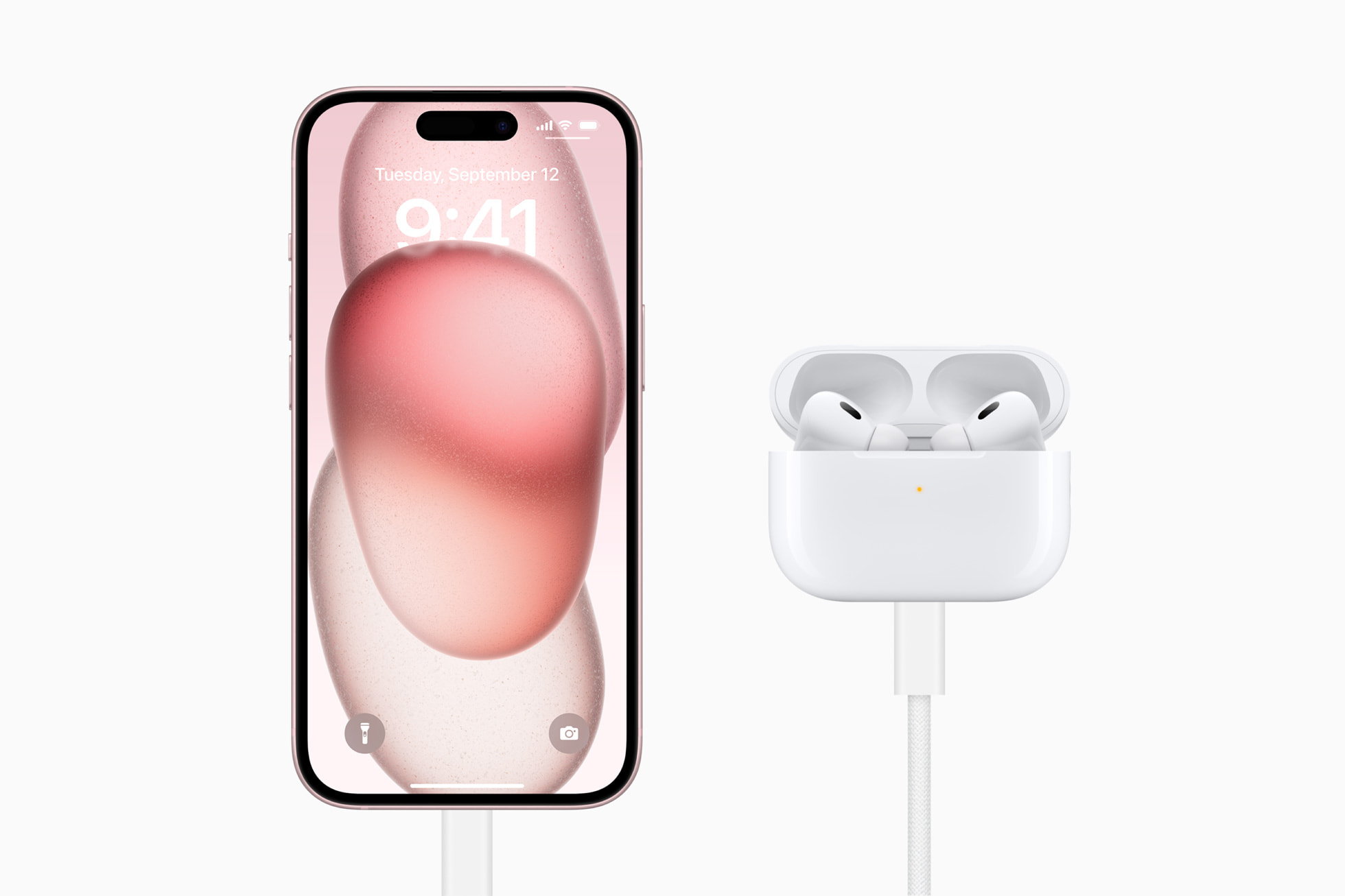
The USB-C port replaced Lightning on the whole 2023 line, which means the same cable can charge the phone, a Mac, an iPad and the updated AirPods Pro, and the phone can in turn charge AirPods or an Apple Watch. The Plus uses the standard-speed port, while the USB 3 speeds are limited to the Pro models. Bluetooth 5.3, 5G, the second-generation Ultra Wideband chip for Precision Finding, Crash Detection, Emergency SOS via satellite and Roadside Assistance via satellite are also on the list. Apple lists eSIM only for the models sold in the United States.
Camera
The big change from the iPhone 14 Plus is the 48MP main camera, a 26 mm equivalent lens at f/1.6 with sensor-shift stabilization. By default it saves 24MP photos, and it can use a central crop of the sensor to provide a 2x view at 12MP, giving three optical-quality zoom levels (0.5x, 1x and 2x) from two physical cameras. The second camera is a 12MP ultrawide at f/2.4 with a 120 degree field of view. Apple lists digital zoom up to 10x, next-generation portraits with Focus and Depth Control, Night mode and Smart HDR 5.
The front camera is a 12MP TrueDepth unit with f/1.9 aperture and autofocus. Video goes up to 4K at 60 frames per second with Dolby Vision HDR, plus Cinematic mode and Action mode. What the Plus lacks is any telephoto lens beyond the 2x crop, as well as ProRAW and ProRes capture, which remain on the Pro phones. For family photos, travel snapshots and social video, the camera is more than adequate.
Battery and charging
Apple does not state a capacity in mAh. It rates the phone at up to 26 hours of video playback, 20 hours of streamed video and 100 hours of audio playback, which is six hours above the 20 hours of the smaller iPhone 15 and the best figure among the non-Pro models of that year. These are results from Apple's own tests. Charging is through USB-C, and a 20W or higher adapter can bring the phone to about 50 percent in around 30 minutes. Wireless charging works through MagSafe and Qi2 at up to 15W, and through Qi at up to 7.5W.
Who it is for
The iPhone 15 Plus suits people who want a large screen and excellent battery life without paying Pro prices. It is a sensible choice for video watchers, readers, and anyone who prefers a big display for maps and messages. It also works for people moving from an older Lightning iPhone who want a modern USB-C phone with a good camera and several years of software support.
Compromises
The main drawbacks are the 60Hz display, the lack of a telephoto lens, the aluminum frame instead of titanium and the absence of Apple Intelligence on the specification page. The phone is large and weighs 201 grams, so people with small hands may prefer the iPhone 15. Those who can stretch the budget get a lot more with the iPhone 15 Pro Max, and the rankings show how the 15 Plus compares with newer phones.
Where it ranks
Compare Apple iPhone 15 Plus with similar devices
More from Apple
Frequently asked questions
When was the Apple iPhone 15 Plus released?
The Apple iPhone 15 Plus was released on 2023-09-22, according to the manufacturer’s published information.
How much does the Apple iPhone 15 Plus cost?
The estimated range for the Apple iPhone 15 Plus is $809 to $989 in US dollars, based on the launch list price. Actual prices vary by country, retailer and storage option.
What are the main specs of the Apple iPhone 15 Plus?
Headline figures for the Apple iPhone 15 Plus: Refresh rate: 60 Hz, Main camera: 48 MP. The full specification table is further up this page.
Is the Apple iPhone 15 Plus worth buying?
That depends on your priorities. Use the editorial review on this page for our view, check the rankings above to see where the device stands on battery, display and camera, and compare it directly with similar models before you decide.


