Phones
Apple iPhone 16 Plus
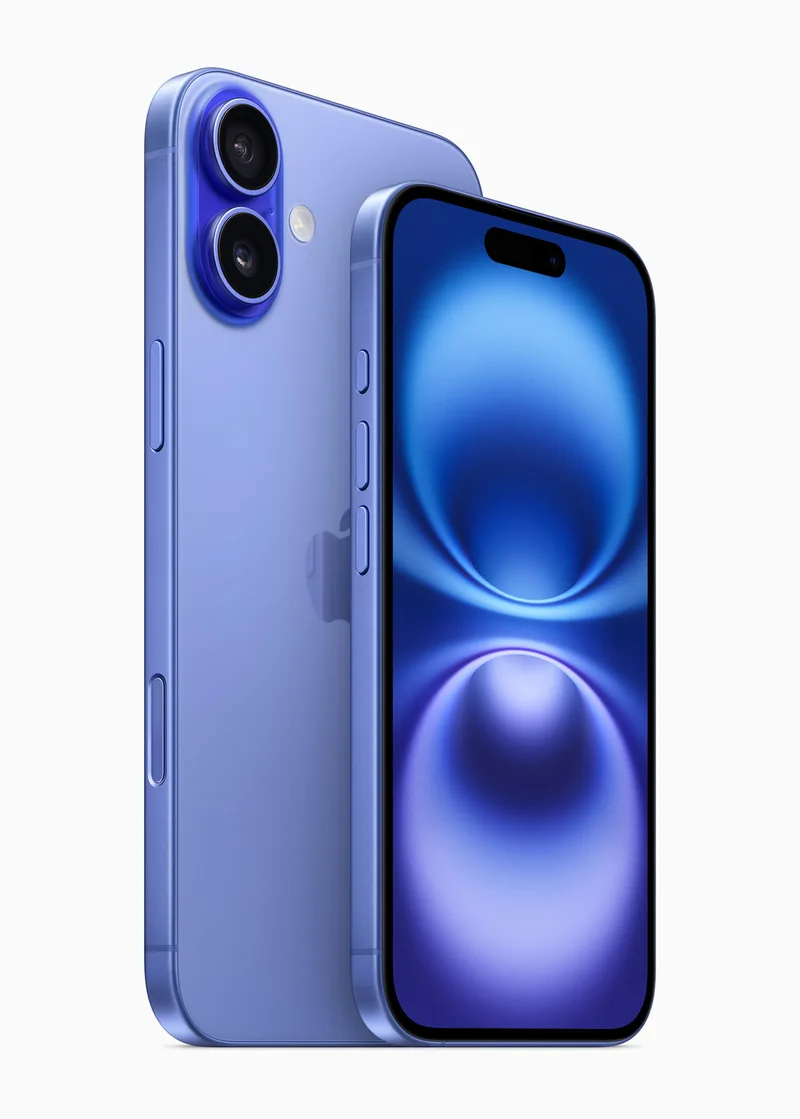
The large-screen standard iPhone of 2024: 6.7-inch OLED, A18 chip, 48MP Fusion camera, Camera Control and up to 27 hours of rated video playback, from $899.
Key figures at a glance
Gallery
Specifications
- Display
- 6.7" Super Retina XDR OLED, 2796x1290, 60Hz, 2000 nits peak outdoor
- Chipset
- Apple A18 (6-core CPU, 5-core GPU, 16-core Neural Engine)
- Storage
- 128GB / 256GB / 512GB
- Rear Camera
- 48MP main (Fusion, 26mm f/1.6, 2x telephoto crop) + 12MP ultrawide
- Front Camera
- 12MP TrueDepth, f/1.9
- Battery
- Up to 27 hours video playback (Apple claim; capacity not stated), 25W MagSafe and Qi2, 50% in about 30 minutes with 20W adapter
- Body
- 77.8 x 160.9 x 7.80 mm, 199 g, IP68
- OS
- iOS 18
The iPhone 16 Plus is the big-screen version of Apple's standard 2024 iPhone. It shares the A18 chip, the 48MP Fusion camera, and the new Camera Control button of the iPhone 16, but stretches the display to 6.7 inches and fits a larger battery, which Apple rates at up to 27 hours of video playback. This page is based on the published specifications and manufacturer information, and it explains who the phone is for, how it differs from the Pro models and what you give up by choosing the cheaper large iPhone.
Place in the lineup
Apple unveiled the iPhone 16 and iPhone 16 Plus on 9 September 2024. Pre-orders opened on 13 September and sales began on 20 September 2024. In the United States the iPhone 16 started at $799 and the Plus at $899, each with 128GB. The Plus is therefore the cheapest way into a large iPhone, sitting $100 above the iPhone 16 and $100 below the iPhone 16 Pro and its larger sibling, the iPhone 16 Pro Max.
In 2025 Apple changed the strategy: the regular iPhone 17 grew to a 6.3-inch screen with a 120Hz display, and the ultra-thin iPhone Air took over the large-and-light slot. That makes the Plus a model of one generation only, and buyers who want a big non-Pro screen now compare it with the Air. The iPhone 16 Plus vs iPhone Air page shows the specifications side by side.
Design and display
The phone measures 77.8 x 160.9 x 7.80 mm and weighs 199 grams. Apple lists a 6.7-inch all-screen Super Retina XDR OLED display with 2796 x 1290 pixels at 460 ppi. Brightness is given as 1,000 nits typical, 1,600 nits peak HDR and 2,000 nits peak outdoor, with a 1 nit minimum and a 2,000,000:1 typical contrast ratio. Measured as a standard rectangle, the diagonal is 6.69 inches. Apple reserves the adaptive ProMotion refresh rate for the Pro models, so the Plus runs at a conventional 60Hz, a point that matters for scrolling smoothness and one that Apple's own tech-spec page leaves unstated.
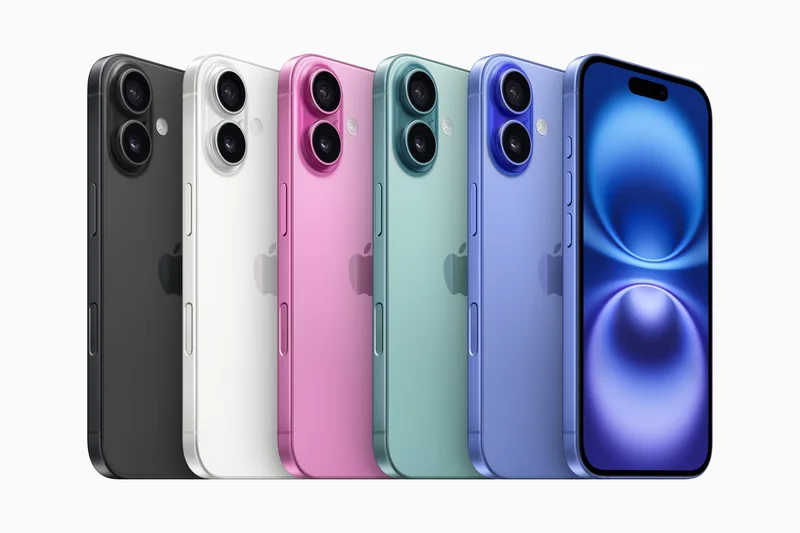
Protection is IP68, tested to 6 metres for up to 30 minutes, and Apple notes that the resistance can decrease with normal wear. Colours are black, white, pink, teal and ultramarine. At 199 grams it weighs exactly the same as the smaller iPhone 16 Pro despite the larger screen, and at 7.80 mm it is slimmer than the 8.25 mm Pro models.
Performance and software
Inside sits the A18, built on Apple's second-generation 3nm process. Apple lists a 6-core CPU with two performance and four efficiency cores, a 5-core GPU with hardware-accelerated ray tracing and a 16-core Neural Engine. Apple does not publish the memory size, so no figure is quoted here. The chip is designed for Apple Intelligence, which arrived in beta with iOS 18.1 after the phone launched with iOS 18.
Wi-Fi 7 with 2x2 MIMO and Bluetooth 5.3 are listed. The USB-C port charges the phone and supports DisplayPort, but data transfer is limited to USB 2 speeds of up to 480Mb/s, unlike the USB 3 speeds up to 10Gb/s on the Pro models. That distinction is small for most people but visible when moving large video files. The phone uses eSIM only in the United States, according to Apple's listing, with two active eSIMs.
Camera system
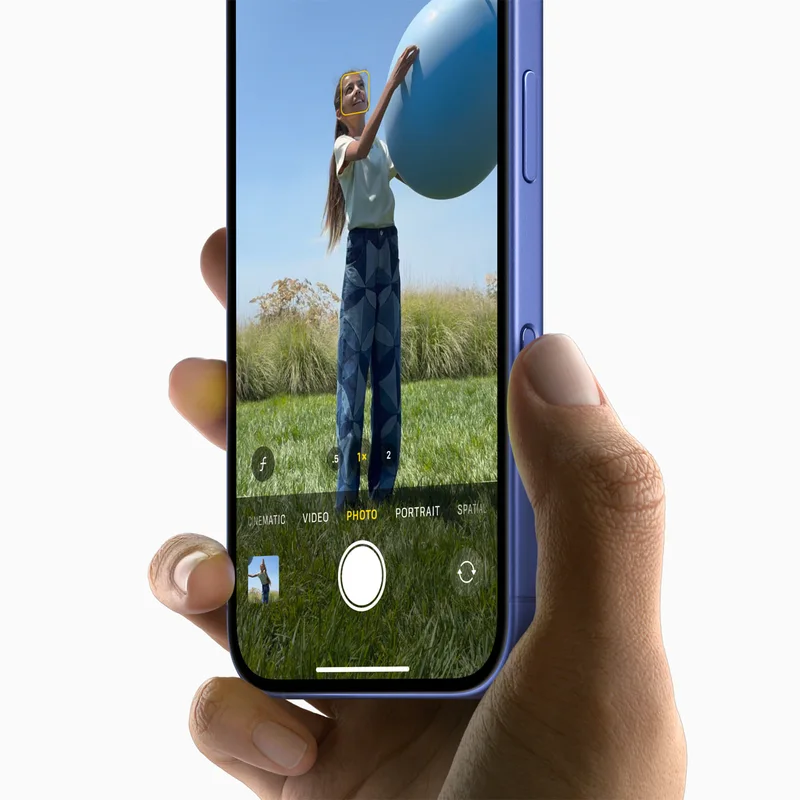
The rear camera has two lenses. The 48MP Fusion main camera has a 26 mm focal length and an f/1.6 aperture, and its large sensor also provides a 12MP 2x telephoto option at 52 mm. The 12MP Ultra Wide offers 13 mm at f/2.2 with a 120 degree field of view and, new for the standard line, autofocus that enables macro photography. Optical zoom covers 0.5x to 2x, a 4x optical range in Apple's wording, with digital zoom up to 10x. The front camera is a 12MP TrueDepth unit at f/1.9.
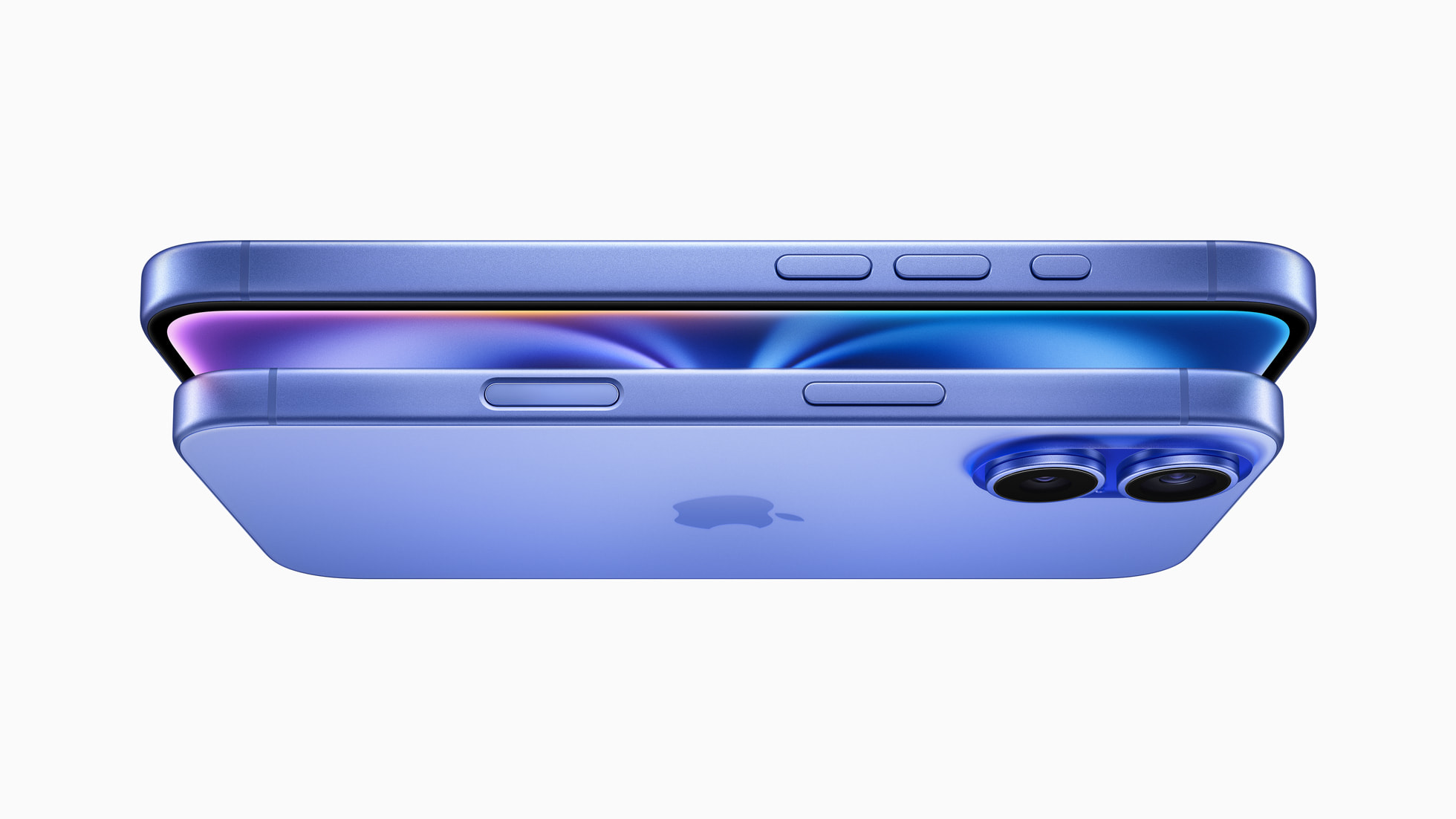
Video can be recorded in 4K Dolby Vision at 24, 25, 30 or 60 frames per second, with Cinematic mode up to 4K at 30 fps and Action mode up to 2.8K at 60 fps. The Camera Control button on the right edge, touch sensitive and able to slide for zoom or exposure, is shared with the Pro models, as are Photographic Styles and spatial photo and video capture. What is missing is the 5x telephoto lens, 4K at 120 fps and ProRes recording, all of which stay with the Pro line.
Battery and charging
Apple does not give the capacity in milliampere-hours. Its figures are up to 27 hours of video playback, up to 24 hours of streamed video and up to 100 hours of audio playback. Fast charging reaches about 50 percent in roughly 30 minutes with a 20W or higher USB-C adapter, or with a 30W or higher adapter on a MagSafe charger. Wireless charging is rated at up to 25W with both MagSafe and Qi2. The power adapter is not in the box.
These are manufacturer tests. In practice, brightness, 5G reception and camera use will change the result, but the large body gives the Plus a clear endurance advantage over the 6.1-inch iPhone 16, whose video playback is rated at 22 hours. The Pro Max reaches 33 hours.
Who it is for
The Plus suits people who want a large screen and long battery life but do not need a telephoto lens, a 120Hz display or titanium. It is a sensible choice for streaming, reading and navigation, and for anyone upgrading from an older Plus or Max model who wants a familiar size. Those who value photography should look at the Pro line, and those on a tight budget can compare the cheaper iPhone 16e or the older iPhone 15. The phone rankings place all of these models next to each other.
Storage runs from 128GB to 512GB. The 128GB entry level is enough for many users who rely on cloud storage, but people who record a lot of 4K video should choose 256GB.
Compromises
The main trade-off is the screen refresh rate: 60Hz on a 6.7-inch panel looks less fluid than the Pro models' ProMotion, and there is no always-on mode. There is no telephoto camera beyond the 2x crop, and USB data transfer stays at USB 2 speed. Charging is moderate, and the charger must be purchased separately. The price of $899 for 128GB is also not cheap for a non-Pro phone, particularly once the next generation arrived with a 120Hz display on the smaller iPhone 17.
On balance, the iPhone 16 Plus is a straightforward large phone: a modern chip, a good main camera, strong battery life and the new Camera Control, with most of the compromises sitting in the display and the telephoto department.
Where it ranks
Compare Apple iPhone 16 Plus with similar devices
More from Apple
Frequently asked questions
When was the Apple iPhone 16 Plus released?
The Apple iPhone 16 Plus was released on 2024-09-20, according to the manufacturer’s published information.
How much does the Apple iPhone 16 Plus cost?
The estimated range for the Apple iPhone 16 Plus is $809 to $989 in US dollars, based on the launch list price. Actual prices vary by country, retailer and storage option.
What are the main specs of the Apple iPhone 16 Plus?
Headline figures for the Apple iPhone 16 Plus: Refresh rate: 60 Hz, Main camera: 48 MP. The full specification table is further up this page.
Is the Apple iPhone 16 Plus worth buying?
That depends on your priorities. Use the editorial review on this page for our view, check the rankings above to see where the device stands on battery, display and camera, and compare it directly with similar models before you decide.


