Phones
Apple iPhone 16 Pro
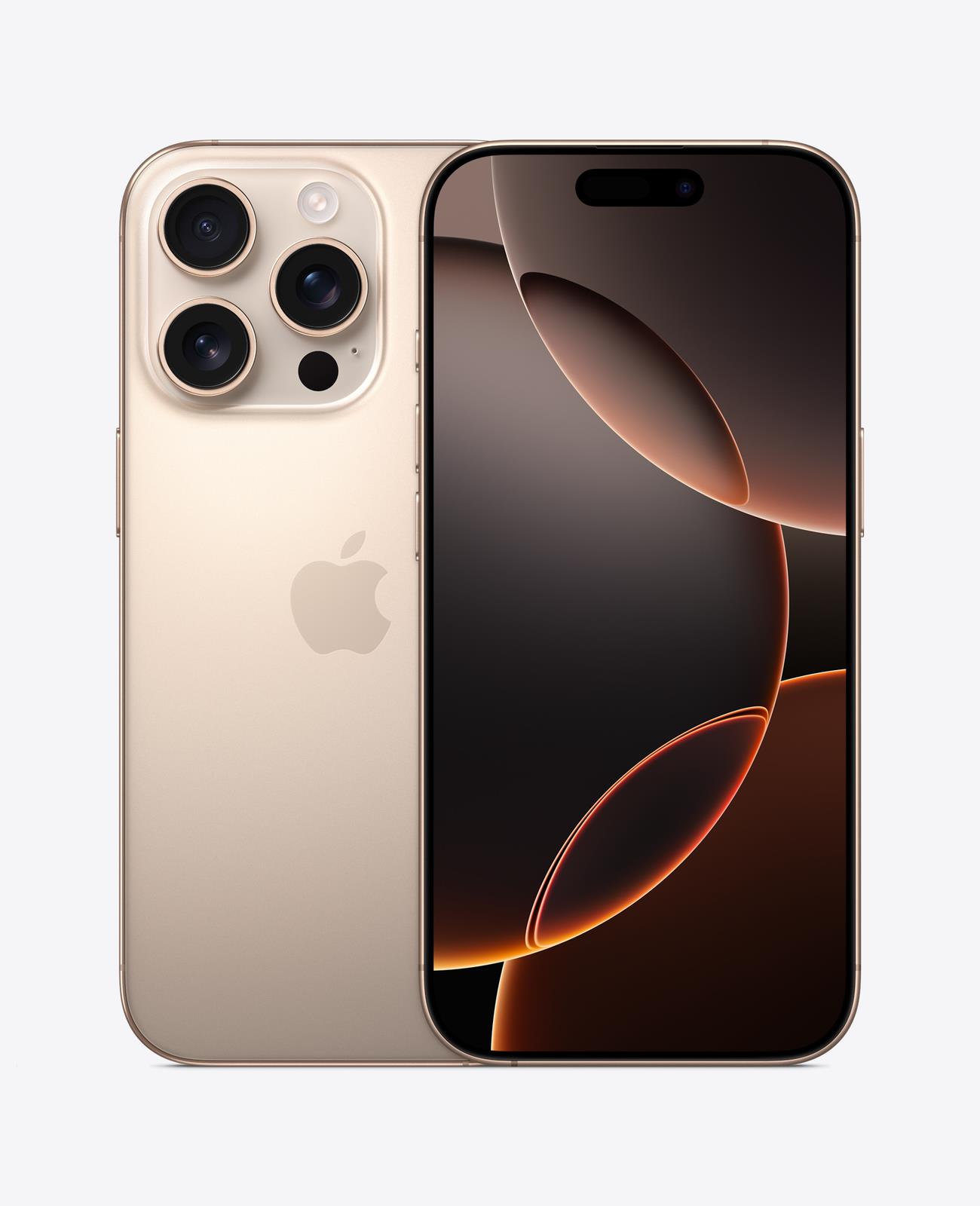
Apple's compact 2024 Pro model: 6.3-inch 120Hz OLED, A18 Pro chip, titanium frame, 48MP Fusion and Ultra Wide cameras, 5x telephoto and the new Camera Control button, from $999.
Key figures at a glance
Gallery


Specifications
- Display
- 6.3" Super Retina XDR OLED, 2622x1206, ProMotion up to 120Hz, Always-On, 2000 nits peak outdoor
- Chipset
- Apple A18 Pro (6-core CPU, 6-core GPU, 16-core Neural Engine)
- Storage
- 128GB / 256GB / 512GB / 1TB
- Rear Camera
- 48MP main (Fusion, 24mm f/1.78) + 48MP ultrawide + 12MP telephoto 5x
- Front Camera
- 12MP, f/1.9
- Battery
- Up to 27 hours video playback (Apple claim; capacity not stated), 25W MagSafe, 50% in about 30 minutes with 20W adapter
- Body
- Titanium frame, Ceramic Shield front, 199 g, IP68
- OS
- iOS 18
The iPhone 16 Pro is the compact member of Apple's 2024 Pro pair. It keeps a titanium frame and a matte glass back, adds a taller 6.3-inch screen than its predecessor, and introduces the A18 Pro chip, a new 48MP Ultra Wide camera and a dedicated Camera Control button. This page is based on the published specifications and manufacturer information, and it walks through where the phone sits in Apple's range, what changed, and which compromises come with the Pro price.
Place in the lineup
Apple announced the iPhone 16 Pro and iPhone 16 Pro Max on 9 September 2024, opened pre-orders on 13 September and began sales on 20 September 2024 in more than 58 countries and regions. The U.S. starting price was $999 for the 128GB model, with the larger sibling starting at $1,199. The family sits above the standard iPhone 16 and the 16 Plus, and the two Pro models share nearly everything except screen size and battery. If you want the biggest screen and longest runtime, the larger model is covered on the iPhone 16 Pro Max page.
A year later Apple replaced the line with the iPhone 17 Pro, so the 16 Pro now matters mostly for buyers weighing a discounted or used unit against newer hardware. A side-by-side look is available in the iPhone 16 Pro vs iPhone 17 Pro comparison.
Design and display
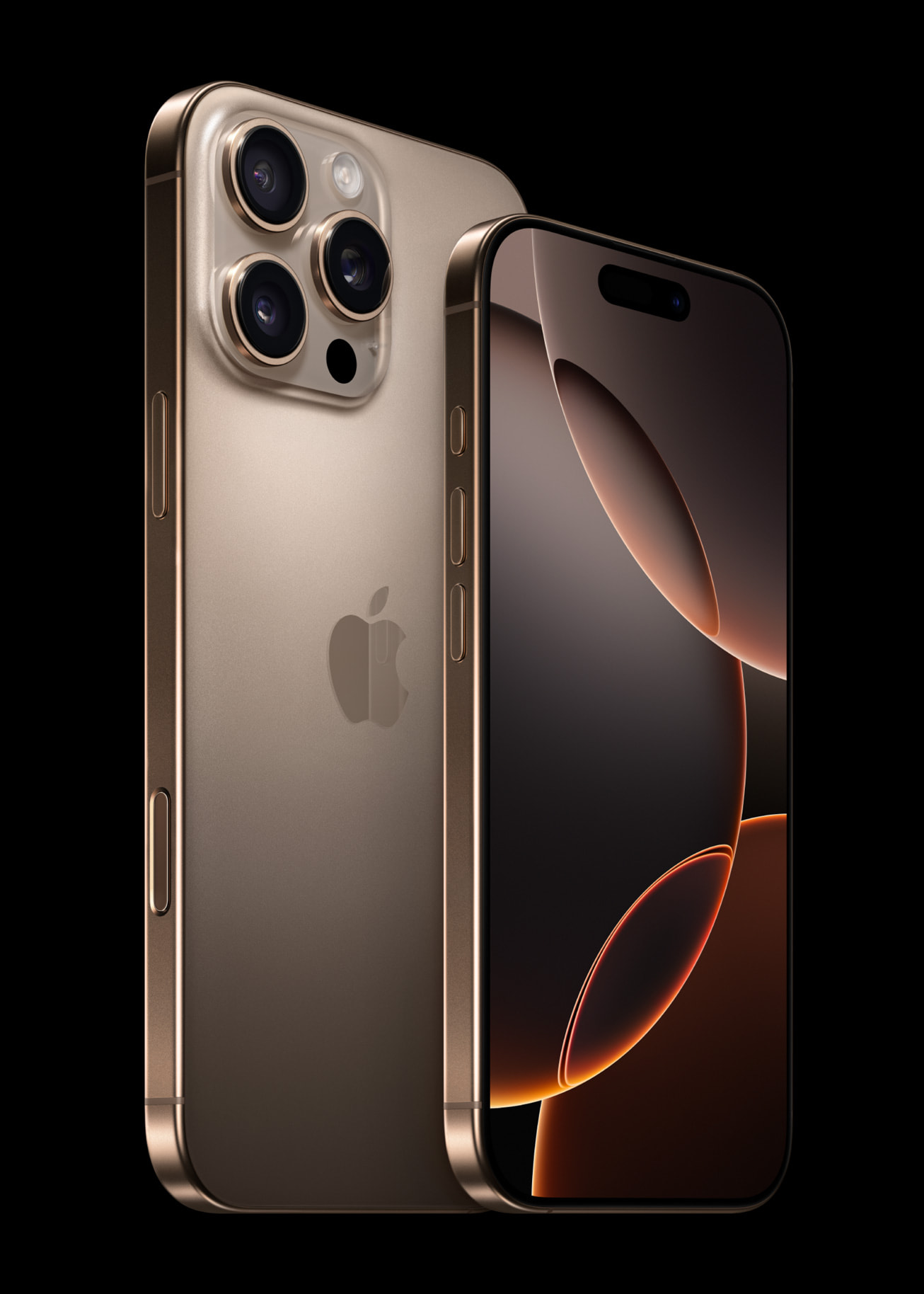
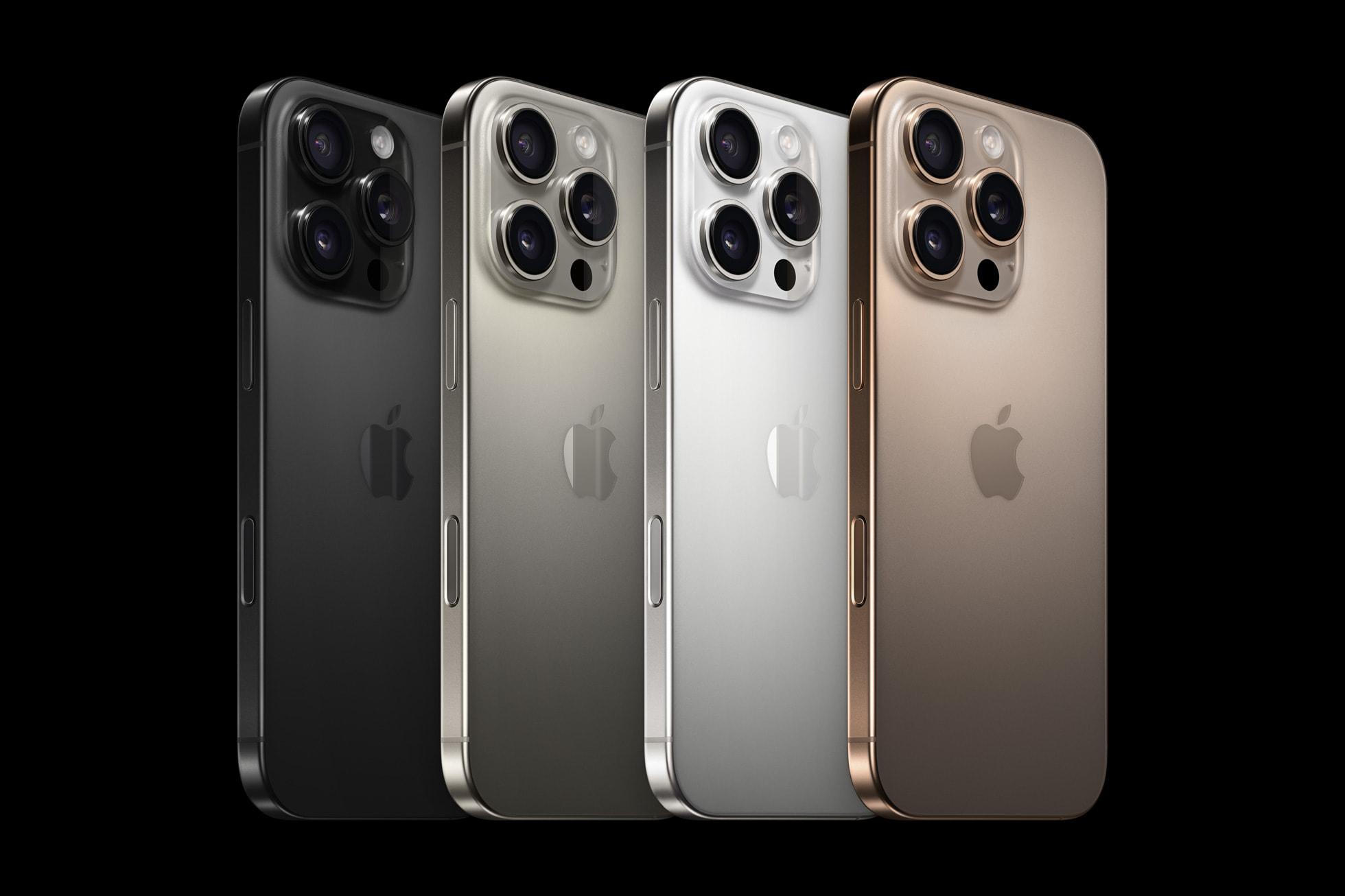
The phone measures 71.5 x 149.6 x 8.25 mm and weighs 199 grams. Apple describes a titanium design with a Ceramic Shield front and a textured matte glass back, and the rating is IP68 (up to 6 metres for 30 minutes under IEC 60529). Four finishes are offered: black titanium, white titanium, natural titanium and desert titanium. The desert tone is the new one, a warm sand shade that Apple used in its launch imagery.
The screen is a 6.3-inch all-screen OLED with 2622 x 1206 pixels at 460 ppi. Apple lists ProMotion with an adaptive refresh rate up to 120Hz, an Always-On mode, 1,000 nits typical brightness, 1,600 nits peak HDR brightness and 2,000 nits peak outdoor brightness, with a 1 nit minimum. The 2,000,000:1 typical contrast figure is Apple's. Measured as a standard rectangle the panel is 6.27 inches diagonally, a detail worth knowing when you compare it to marketing numbers from other makers. Compared with the 6.1-inch iPhone 15 Pro, the screen grows by 0.2 inches while Apple points to thinner borders.
Performance and software
The A18 Pro is built on a second-generation 3nm process. Apple lists a 6-core CPU with two performance and four efficiency cores, a 6-core GPU with hardware-accelerated ray tracing, and a 16-core Neural Engine. Apple does not publish the amount of memory, and this page therefore avoids quoting a RAM figure. What the company does state is that the chip was designed for Apple Intelligence, the on-device and cloud features that arrived in beta with iOS 18.1.
The phone shipped with iOS 18, a free update that reached older iPhones on 16 September 2024. USB-C carries charging, DisplayPort and USB 3 transfer speeds up to 10Gb/s when paired with a suitable cable, which matters for people who offload large ProRes or 4K 120 fps clips. Wi-Fi 7 with 2x2 MIMO and Bluetooth 5.3 are listed.
Camera system
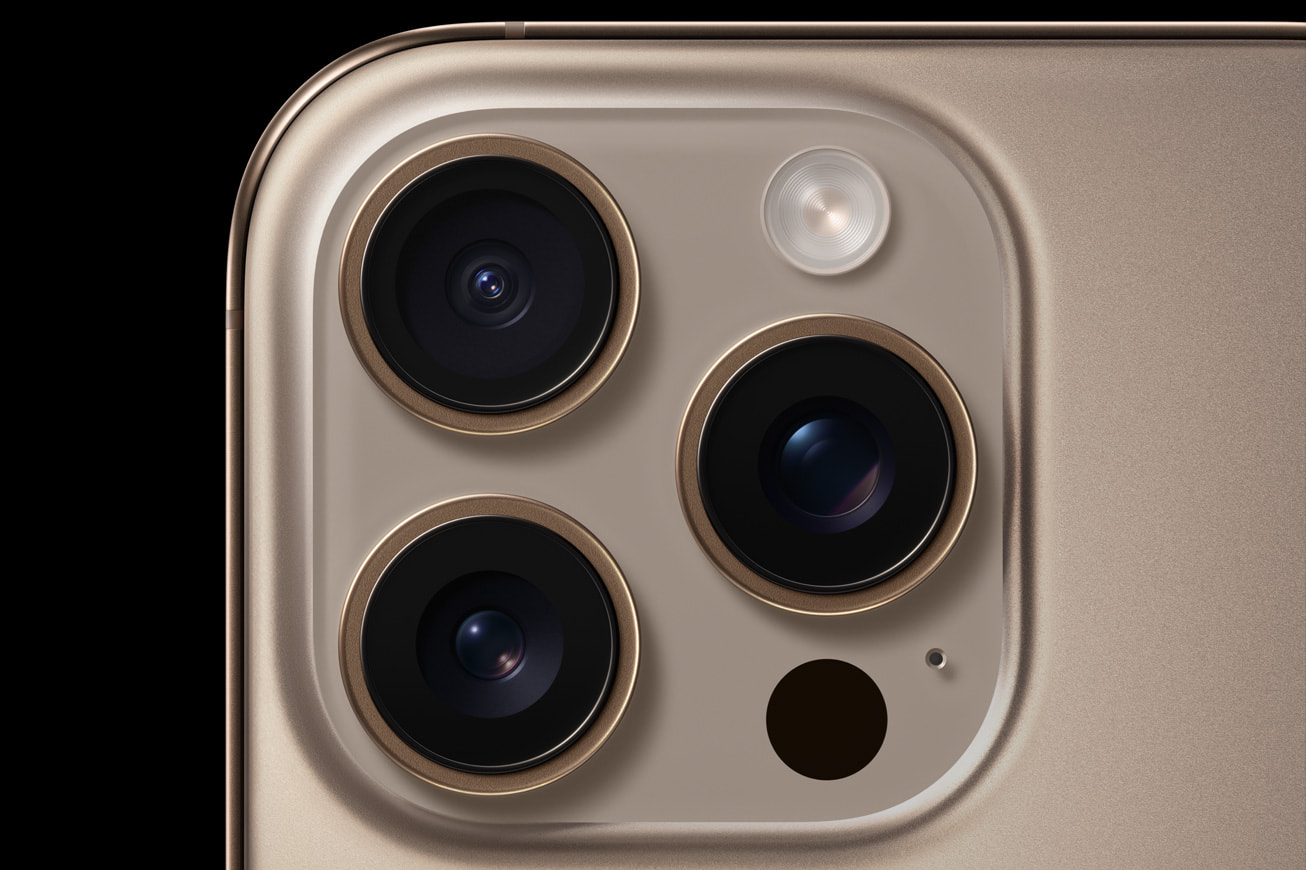
Three rear cameras make up the system. The 48MP Fusion main camera has a 24 mm equivalent focal length and an f/1.78 aperture, the new 48MP Ultra Wide is 13 mm at f/2.2 with a 120 degree field of view and autofocus for macro shots, and the 12MP telephoto offers 5x zoom at 120 mm and f/2.8 with a tetraprism design. Apple adds a 2x mode that crops from the main sensor, so the optical-quality range runs from 0.5x to 5x with a 2x step in between, and digital zoom reaches 25x.
Video tops out at 4K Dolby Vision at up to 120 fps, and ProRes at 4K 120 fps is possible with external recording. The front camera is a 12MP unit at f/1.9. The new Camera Control button on the right edge handles zoom, exposure, depth, styles and tone through a touch-sensitive surface. Photographic Styles were reworked, and spatial photos and video are supported. Apple describes the main sensor as a quad-pixel design, which it ties to the 48MP Fusion approach.
Battery and charging
Apple does not publish the battery capacity in milliampere-hours. Its stated runtime is up to 27 hours of video playback, up to 22 hours of streamed video and up to 85 hours of audio playback. Wired charging reaches about 50 percent in around 30 minutes with a 20W or higher USB-C adapter, and the same figure applies with a 30W adapter on the MagSafe charger. MagSafe wireless charging is rated up to 25W, Qi2 up to 15W and basic Qi up to 7.5W. The power adapter is not in the box.
These are Apple's laboratory figures, and real results depend on screen brightness, 5G reception and how much of the camera you use. Apple calls the battery life a big step up from the previous generation but gives no percentage that could be checked, so treat the claim with caution.
Who it is for
The phone suits people who want a one-hand-friendly Pro with the fast chip, the telephoto lens and the 120Hz display, without moving to the largest body. It is a stronger photo tool than the standard iPhone 16 thanks to the 5x lens and ProRes video, and it gets the always-on screen and brighter outdoor mode. For long trips or heavy video, the Pro Max's extra hours are a better match. Buyers who care mainly about price and battery life can look at the cheaper iPhone 16e or the previous iPhone 15.
Storage options run from 128GB to 1TB, with the entry model being the only one to carry the 128GB tier. Those who record lots of 4K 120 fps video should lean to 256GB or more, because high-frame-rate Dolby Vision files grow quickly. The rankings page, phone rankings, shows how the phone stacks up against the rest of the catalogue.
Compromises
The Pro price is the main one: $999 at launch buys 128GB, and each storage step costs more. There is no charger in the box, and charging speeds are modest next to many Android phones that quote 45W or more. The telephoto sensor is 12MP rather than 48MP, which means the 5x lens gives lower resolution for cropping than the main and Ultra Wide cameras. Apple's own Apple Intelligence features were not all available on day one and arrived over later iOS updates, so early buyers waited for them. Finally, repairs on titanium and glass remain costly outside coverage plans.
Overall, the iPhone 16 Pro is a polished, conservative update: a larger screen, a faster chip, a better Ultra Wide and a new hardware control, wrapped in the same durable titanium design. Its weak points are price and charging speed, not capability.
Where it ranks
Compare Apple iPhone 16 Pro with similar devices
More from Apple
Frequently asked questions
When was the Apple iPhone 16 Pro released?
The Apple iPhone 16 Pro was released on 2024-09-20, according to the manufacturer’s published information.
How much does the Apple iPhone 16 Pro cost?
The estimated range for the Apple iPhone 16 Pro is $899 to $1099 in US dollars, based on the launch list price. Actual prices vary by country, retailer and storage option.
What are the main specs of the Apple iPhone 16 Pro?
Headline figures for the Apple iPhone 16 Pro: Refresh rate: 120 Hz, Main camera: 48 MP. The full specification table is further up this page.
Is the Apple iPhone 16 Pro worth buying?
That depends on your priorities. Use the editorial review on this page for our view, check the rankings above to see where the device stands on battery, display and camera, and compare it directly with similar models before you decide.


