Phones
Apple iPhone 15 Pro
Apple's first titanium iPhone: 6.1-inch ProMotion OLED, A17 Pro chip, Action button, USB-C with USB 3 speeds and a 3x telephoto, launched at $999.
Key figures at a glance
Gallery
Specifications
- Display
- 6.1" Super Retina XDR OLED, 2556x1179, 1-120Hz ProMotion, Always-On, 2000 nits peak outdoor
- Chipset
- Apple A17 Pro (3nm, 6-core CPU, 6-core GPU, 16-core Neural Engine)
- Storage
- 128GB / 256GB / 512GB / 1TB
- Rear Camera
- 48MP main (24mm f/1.78) + 12MP ultrawide + 12MP 3x telephoto (77mm f/2.8)
- Front Camera
- 12MP TrueDepth, f/1.9, autofocus
- Battery
- Up to 23 hours video playback (Apple claim; capacity not stated), 15W MagSafe and Qi2, 50% in about 30 minutes with 20W adapter
- Body
- 146.6 x 70.6 x 8.25 mm, 187 g, titanium, IP68
- Connectivity
- USB-C (USB 3, 10Gb/s), Wi-Fi 6E, Bluetooth 5.3, 5G, second-generation Ultra Wideband
- OS
- iOS 17 at launch (Apple Intelligence supported on later iOS)
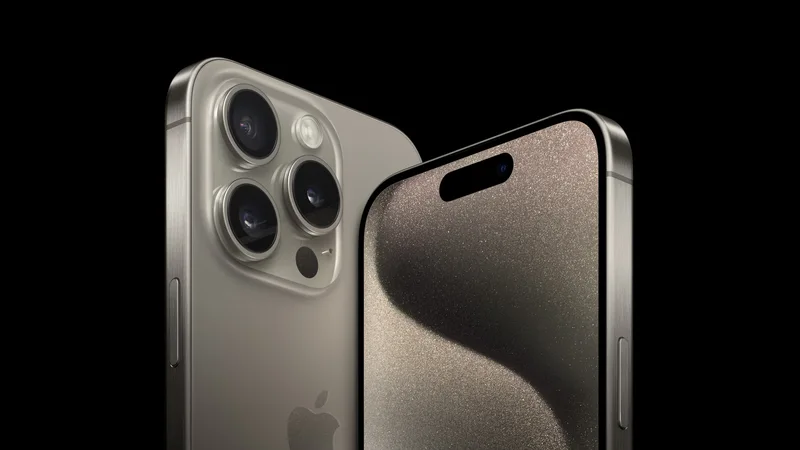
The iPhone 15 Pro is the model that moved Apple's Pro line from stainless steel to titanium. It pairs a 6.1-inch ProMotion OLED screen with the A17 Pro chip, replaces the mute switch with a programmable Action button, and swaps Lightning for a USB-C port that can reach USB 3 speeds. This page is based on the published specifications and manufacturer information. It explains where the phone sits in the range, what changed compared with the iPhone 14 Pro, and which trade-offs remain for a buyer who is considering the compact Pro today.
Place in the lineup
Apple introduced the iPhone 15 Pro and iPhone 15 Pro Max on 12 September 2023. Pre-orders opened on 15 September and the phones reached stores on 22 September 2023. In the United States the iPhone 15 Pro kept the $999 starting price with 128GB of storage, while the larger iPhone 15 Pro Max moved to $1,199 with 256GB as its smallest option. Both sat above the aluminum iPhone 15 and iPhone 15 Plus, which launched the same day.
A year later Apple replaced the pair with the iPhone 16 Pro and iPhone 16 Pro Max, which kept the titanium idea but stretched the screens and added a Camera Control button. The side-by-side iPhone 15 Pro vs. iPhone 16 Pro page shows how much was carried over. For many people the 15 Pro is now a used or discounted purchase, so the question is less about launch pricing and more about what the hardware still offers.
Design and display
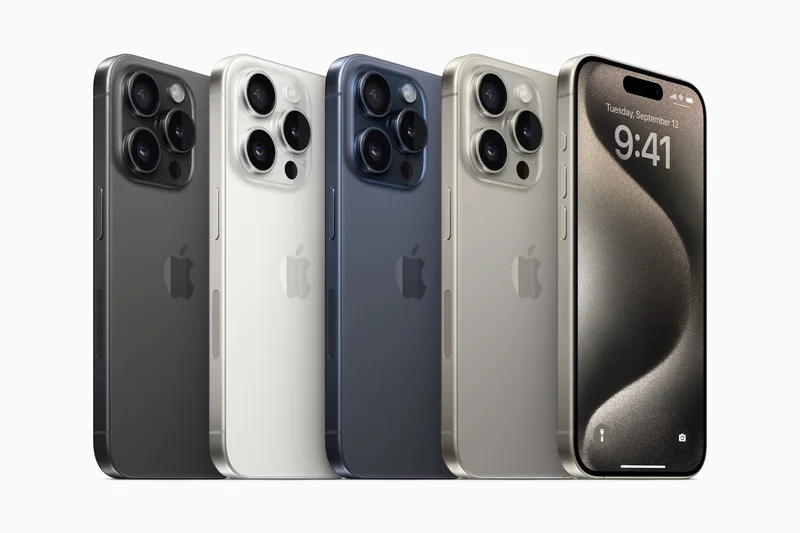
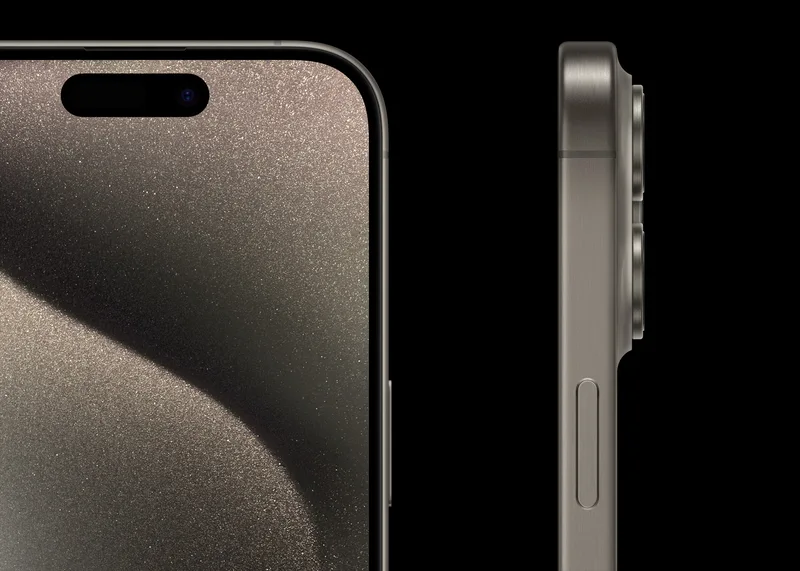
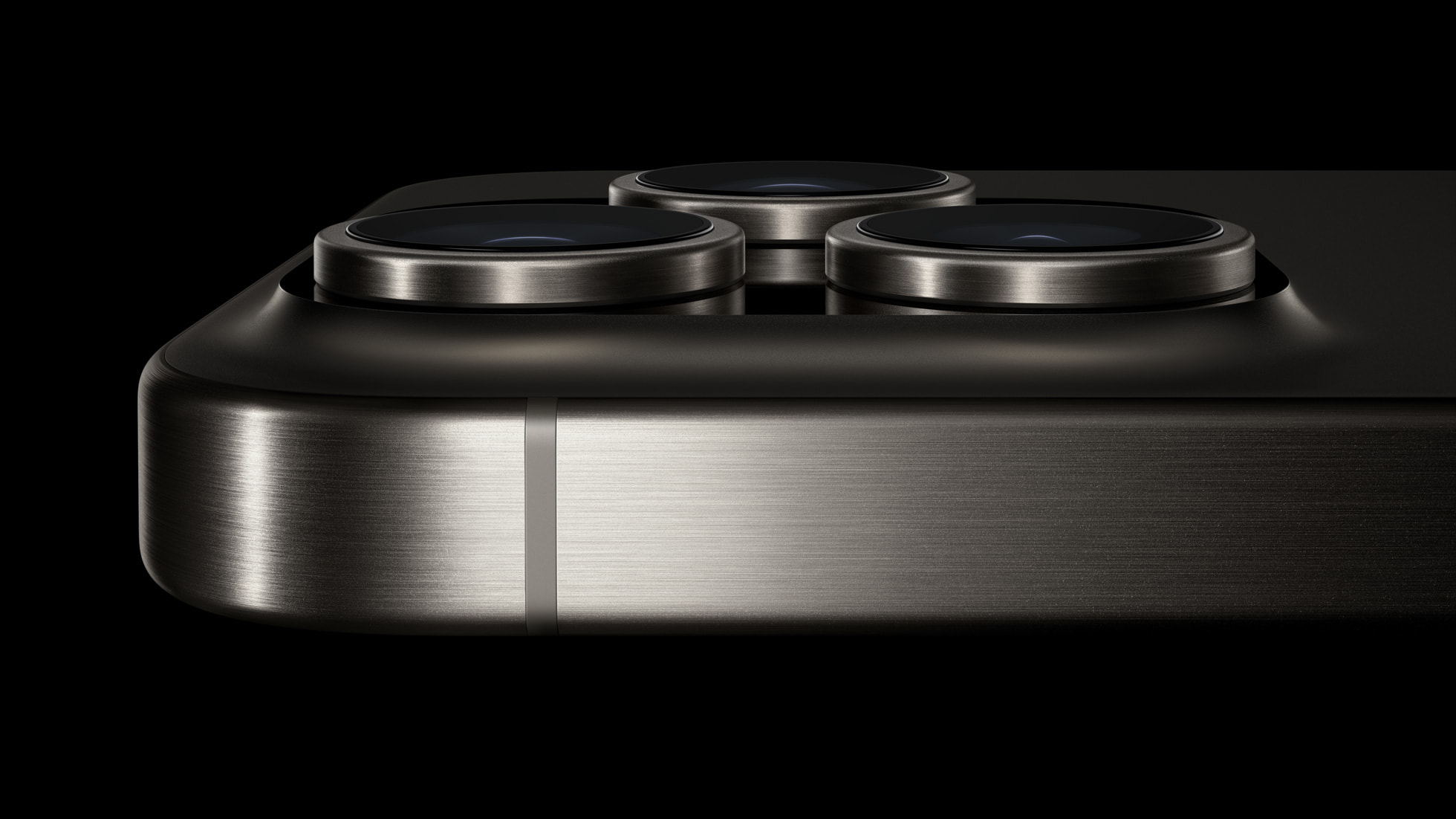
Apple calls the titanium frame a first for iPhone and describes it as the lightest Pro design the company had made. The phone measures 146.6 x 70.6 x 8.25 mm and weighs 187 grams, noticeably lighter than the steel model it replaced. Apple states that the titanium bands wrap a substructure of recycled aluminum, a construction that also makes it easier to replace the back glass. The front uses the Ceramic Shield cover, the back is textured matte glass, and the rating is IP68, which Apple defines as water resistance to six meters for up to 30 minutes. The finishes are black, white, blue and natural titanium.
The screen is a 6.1-inch Super Retina XDR OLED with 2556 x 1179 pixels at 460 ppi. It supports ProMotion with adaptive refresh rates up to 120Hz and an Always-On mode, which is what keeps the lock screen and the StandBy view readable while the phone is idle on a desk. Apple lists 1,000 nits typical brightness, 1,600 nits peak for HDR content and 2,000 nits peak outdoors. The borders are the thinnest Apple had shipped at that point, and the Dynamic Island remains the home for alerts and Live Activities.
The new Action button sits where the ring and silent switch used to be. By default it still toggles silent mode, but a long press can be assigned to the camera, flashlight, Voice Memos, a Focus mode, translation, Magnifier or a Shortcut. It is a small change on paper, but it is one of the few hardware features that regular owners use daily.
Performance, connectivity and software
The A17 Pro was described by Apple as the first 3-nanometer chip in a smartphone. It has a 6-core CPU with two performance and four efficiency cores, a redesigned 6-core GPU with hardware-accelerated ray tracing, and a 16-core Neural Engine. Apple claims the CPU is up to 10 percent faster than the previous generation and the GPU up to 20 percent faster, figures that should be read as manufacturer claims rather than independent benchmarks. Apple does not publish the amount of RAM in its specification page, so this page does not list it either.
The USB-C port is the practical highlight. With a USB 3 cable the phone supports data transfer up to 10Gb/s, which Apple compares with USB 2 speeds on the standard iPhone 15, and it can output video to an external display at up to 4K and 60 frames per second. Wi-Fi 6E, Bluetooth 5.3, 5G with mmWave bands in supported markets and a second-generation Ultra Wideband chip complete the connectivity list. The phone shipped with iOS 17, and Apple's current specification page lists the iPhone 15 Pro among the models that support Apple Intelligence on newer iOS versions, which is a real advantage over the non-Pro iPhone 15.
Camera
The main camera is a 48MP sensor with a 24 mm equivalent lens at f/1.78 and second-generation sensor-shift stabilization. By default it saves 24MP images, which Apple positions as a balance between detail and file size, and it can save full 48MP files when asked. There is a 12MP ultrawide camera (13 mm, f/2.2) and a 12MP 3x telephoto (77 mm, f/2.8) with optical stabilization. Because the main sensor can crop to a 2x view at 12MP, Apple describes the system as the equivalent of seven pro lenses. Compared with the 5x telephoto on the Pro Max, the 3x lens is the more modest option, though it suits portraits and street photography well.
Next-generation portraits let the phone capture depth data without switching to portrait mode and change the focus point afterward. Night mode works across the lenses, and Apple lists ProRAW, Log encoding, ProRes recording up to 4K at 60 frames per second to external storage, and spatial video at 1080p for the Vision Pro. The front camera is a 12MP TrueDepth unit with f/1.9 and autofocus.
Battery and charging
Apple does not state a milliampere-hour capacity. It rates the phone at up to 23 hours of video playback, 20 hours of streamed video and 75 hours of audio. That is a claim measured under Apple's own test conditions, and the smaller Pro is a step behind the Pro Max, which is rated for up to 29 hours. Charging works through USB-C, with a 20W or stronger adapter bringing the battery to about 50 percent in around 30 minutes according to Apple. Wireless charging is available through MagSafe and Qi2 at up to 15W, and Qi at up to 7.5W.
Who it is for
The iPhone 15 Pro suits people who want a compact phone with a 120Hz display, a telephoto lens and a durable frame, and who do not need the biggest screen. It is a good fit for photographers who shoot video and transfer large files, because the USB 3 port and external recording support make a real workflow difference. It also suits buyers who want access to Apple Intelligence features without moving to a newer model.
Compromises
The 3x telephoto is shorter than the 5x lens that Apple later put on its larger Pro models, and the battery rating is lower than the Pro Max. There is also no Camera Control button, which only arrived with the iPhone 16 generation. At launch the price left a $200 gap to the non-Pro iPhone 15, which gives up ProMotion, the telephoto, the titanium frame and the faster port. For a direct look at that gap, see iPhone 15 Pro vs. iPhone 15, or browse the overall phone rankings to see where the model lands among newer devices.
Where it ranks
Compare Apple iPhone 15 Pro with similar devices
More from Apple
Frequently asked questions
When was the Apple iPhone 15 Pro released?
The Apple iPhone 15 Pro was released on 2023-09-22, according to the manufacturer’s published information.
How much does the Apple iPhone 15 Pro cost?
The estimated range for the Apple iPhone 15 Pro is $899 to $1099 in US dollars, based on the launch list price. Actual prices vary by country, retailer and storage option.
What are the main specs of the Apple iPhone 15 Pro?
Headline figures for the Apple iPhone 15 Pro: Refresh rate: 120 Hz, Main camera: 48 MP. The full specification table is further up this page.
Is the Apple iPhone 15 Pro worth buying?
That depends on your priorities. Use the editorial review on this page for our view, check the rankings above to see where the device stands on battery, display and camera, and compare it directly with similar models before you decide.


