Phones
Infinix Hot 40 Pro
A budget 4G phone with a 6.78-inch 120Hz screen, Helio G99, a 108MP main camera and 33W charging, listed by Infinix with 8GB of RAM.
Key figures at a glance
Gallery
Specifications
- Display
- 6.78" FHD+ IPS LTPS LCD, 1080x2460, 60/90/120Hz, 500 nits peak, up to 240Hz touch sampling, 85% NTSC
- Chipset
- MediaTek Helio G99 (6nm), octa-core up to 2.2GHz, Mali-G57 MC2
- RAM
- 8GB
- Storage
- 128GB / 256GB
- Rear Camera
- 108MP main (f/1.75, autofocus) + 2MP macro (f/2.4) + AI lens (f/2.0), quad flash
- Front Camera
- 32MP (f/2.2, fixed focus), dual front flash
- Battery
- 5,000 mAh (typical), 33W wired charging
- OS
- XOS 13.5
- Extended RAM
- Infinix lists the RAM as "8GB (up to 16GB)"; the 16GB figure is an extended-RAM total, not additional physical memory
- Memory
- LPDDR4X RAM with UFS 2.2 storage; microSD up to 1TB
- Video
- Up to 2K at 30fps, 1080p at 60fps
- Dimensions
- 168.6 x 76.6 x 8.25 mm, 199 g (model X6837)
- Connectivity
- 4G LTE (no 5G), dual nano-SIM + microSD, Wi-Fi 802.11 a/b/g/n/ac, Bluetooth, NFC, GPS, FM radio, OTG, 3.5mm headphone jack; USB port listed as Micro-USB / Type-C
- Audio
- DTS, Hi-Res Audio, Widevine L1
- Security
- Fingerprint sensor
- Colors
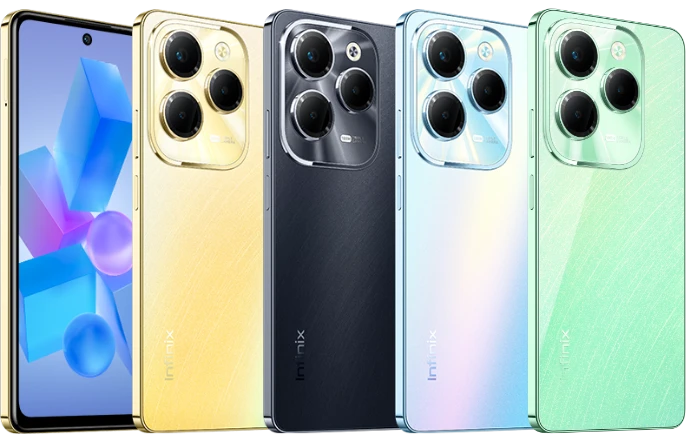
- Palm Blue, Horizon Gold, Starlit Black, Starfall Green
The Infinix Hot 40 Pro is the more ambitious of the two phones that headlined the Hot 40 family. It keeps the large 6.78-inch screen and the 5,000 mAh battery that define the series, but it pairs them with a faster MediaTek Helio G99 chip, a 120Hz-capable display and a 108MP main camera. It is a 4G-only handset aimed at buyers who want a big, smooth-looking phone for video, social media and casual gaming without paying for 5G or a premium brand. This review is based on the published specifications and the manufacturer's own information, and it flags where Infinix's wording is a marketing claim rather than a measured result.
Where it sits in the lineup
Infinix builds its Hot line for price-sensitive markets, and the Hot 40 Pro was the upper model of its generation, sold alongside the plainer Hot 40. The two share a body size and a battery, so the choice between them comes down to three things: the processor, the refresh-rate ceiling and the main camera. The Pro uses the Helio G99 where the standard model has a Helio G88, and Infinix lists 120Hz for the Pro against 90Hz for the other. The generation that followed is represented by the Hot 50, and if you are deciding whether an older Pro is still worth a look, the Hot 40 Pro vs Hot 50 comparison lays the numbers side by side.
One practical note about dates and prices: no official page we could consult states a launch date or a United States price for this model, and Infinix prices vary widely by country and retailer. Those details are therefore left out rather than guessed.
Design and display
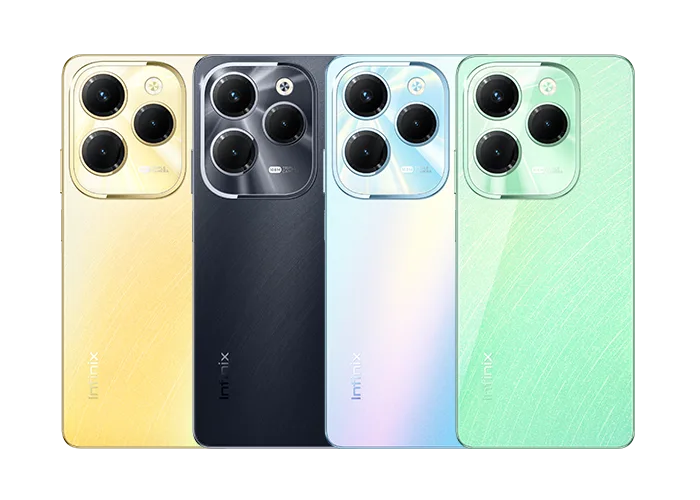
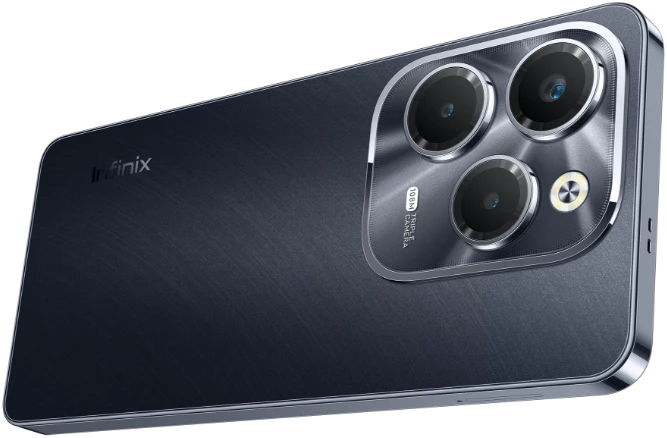
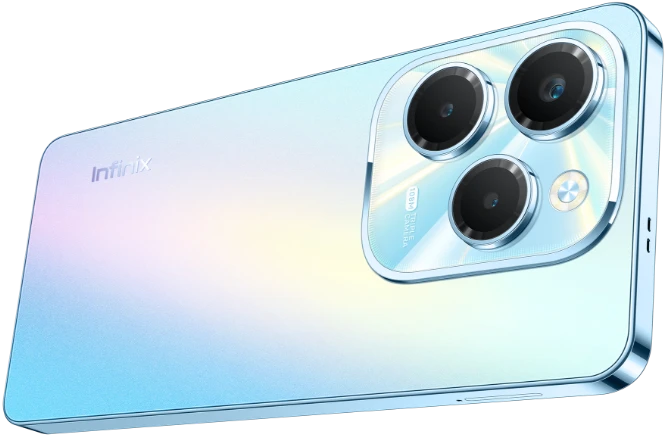
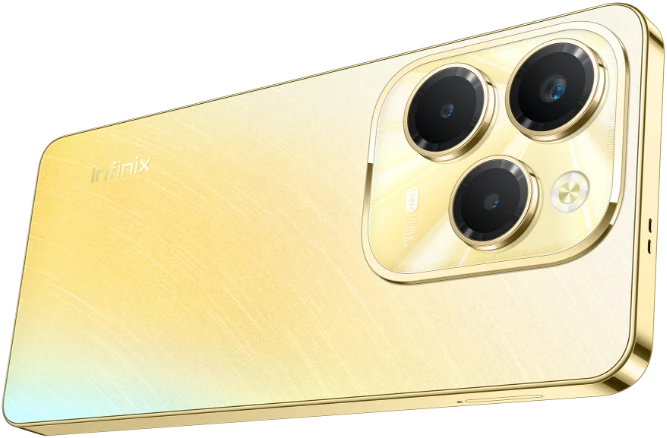
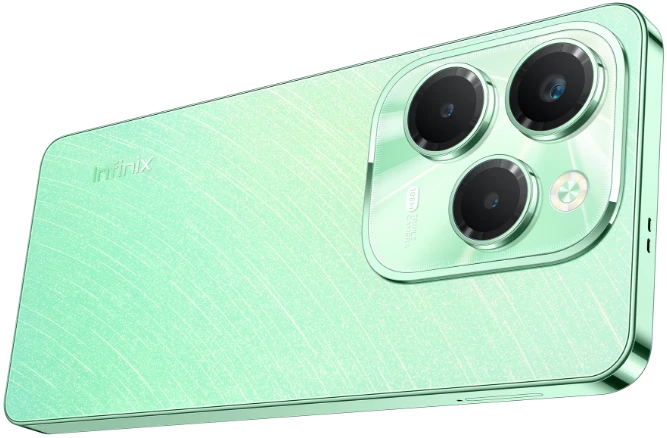
The Infinix specification sheet lists the Hot 40 Pro at 168.6 x 76.6 x 8.25 mm and 199 g. That is a sizeable, fairly heavy phone, a consequence of the big panel and the large cell inside. Infinix offers four colours: Palm Blue, Horizon Gold, Starlit Black and Starfall Green. In the manufacturer's images the blue and gold versions use a shifting gradient finish, while the black version has a finer brushed look. All of them carry a large, rounded camera module with three openings and a fourth element for the flash.
The display is a 6.78-inch IPS LCD with a Full HD+ resolution of 1080 x 2460 pixels. Infinix gives the screen-to-body ratio as 90.7 percent and the peak brightness as 500 nits. The refresh rate can be 60, 90 or 120Hz, and touch sampling reaches 240Hz, a figure that matters mostly in fast games where input lag is noticeable. Infinix markets this as a "Super-Touch" display and adds a software feature called Magic Ring to the pitch, without explaining on the spec page exactly what it does. The colour gamut is quoted as 85 percent NTSC. Because this is an LCD and not an OLED, black levels and outdoor contrast will not match what you get from the AMOLED screens that Samsung uses in its budget range, but the high refresh rate is a genuine advantage at this tier.
Performance and software
The chipset is the MediaTek Helio G99, built on a 6nm process, with an octa-core CPU that Infinix says runs up to 2.2GHz and a Mali-G57 MC2 graphics unit. Infinix pairs it with 8GB of LPDDR4X memory and UFS 2.2 storage in 128GB or 256GB sizes, and a microSD slot accepts cards up to 1TB. The spec page also says the RAM can go "up to 16GB". That extra capacity is an extended-RAM feature, which borrows part of the storage as swap space; the physical memory remains 8GB, and borrowed storage is slower than real RAM, so treat it as a convenience rather than a doubling of performance.
In practical terms, a Helio G99 phone is normally comfortable with messaging, browsing, streaming and navigation, and it handles mainstream 3D games at moderate settings. It is not a flagship gaming platform, and Infinix's description of an "XBOOST gaming engine" and "Ultra-Speed Processor" should be read as marketing language. The software is XOS 13.5. Infinix does not state the Android base version or an update schedule on the page we reviewed, so anyone who cares about long-term security patches should check that with the seller before buying.
Camera
The headline is the 108MP main camera with an f/1.75 aperture and autofocus, accompanied by a 2MP macro lens and an AI lens, with a quad flash arrangement around the module. Infinix lists video recording at up to 2K and 30 frames per second, or 1080p at 60 frames per second. A 32MP front camera with an f/2.2 aperture and its own dual flash handles selfies and video calls.
A high megapixel count does not automatically mean better photos; sensors of this class usually combine pixels for the final image, and output quality depends heavily on the sensor size, lens and tuning, none of which the spec sheet quantifies. The 2MP macro camera is the sort of addition that adds a line on the box more than real flexibility, and the absence of an ultrawide lens is a notable gap compared with competitors that include one. There is also no optical stabilisation listed, so low-light handheld shots will depend on the software and on how steady your hands are. In good light, expect a pleasant, detailed daylight camera; in the evening, expect compromises.
Battery and charging
The battery is rated at 5,000 mAh (typical) and charging is listed at 33W. A phone with this combination of an efficient 6nm chip and a very large cell is usually good for a full day of mixed use and often more, although a 120Hz setting will cost some endurance compared with 60Hz, and Infinix does not publish a standard runtime test. The 33W rate is moderate by current standards but a clear step up from the 18W that older budget phones used, and it should cut a full charge to a time that is practical for overnight and top-up use. The page lists the charge output as 10V 3.3A, and whether a charger is included in the box depends on the market.
Connectivity and extras
The phone supports 2G, 3G and 4G only, with a broad list of LTE bands, so it is not suited to someone who needs 5G. It has dual nano-SIM slots plus a separate microSD slot, Wi-Fi 802.11 a/b/g/n/ac, Bluetooth, NFC, GPS, FM radio, OTG support and a 3.5mm headphone jack. The USB port is listed as "Micro-USB / Type-C" on the specification page, which is ambiguous; check the exact variant at the point of purchase if a USB-C cable is important to you. Audio features include DTS and Hi-Res Audio branding and Widevine L1, the latter being the level that allows HD streaming on major video services. A fingerprint sensor handles unlocking.
Who it is for
The Hot 40 Pro suits a student, a first-time smartphone user or a secondary-phone buyer who wants a big, fluid screen and a long-lasting battery for a modest outlay. It is also a reasonable choice in regions where 4G coverage is the norm and 5G networks are limited. Compared with Samsung's Galaxy A16, it offers a higher refresh rate and a much larger megapixel count on paper, while the Samsung offers an AMOLED panel and a long software-support promise.
Compromises
- No 5G, which limits its future-proofing in countries that are rolling out new networks.
- An LCD panel with 500 nits of peak brightness, which is dimmer in strong sunlight than AMOLED rivals.
- No ultrawide camera and no listed optical stabilisation; the 2MP macro adds little in practice.
- Extended RAM is a software convenience, not extra physical memory.
- The software update policy is not stated on the page reviewed, and the USB port description is ambiguous.
If those trade-offs are acceptable, the Hot 40 Pro is a practical, large-screen phone with a clear step up in performance over the standard Hot 40. To see how it stacks up against other devices, visit the phone rankings or the Hot 40 Pro vs Hot 40 comparison.
Where it ranks
Compare Infinix Hot 40 Pro with similar devices
More from Infinix
Frequently asked questions
When was the Infinix Hot 40 Pro released?
The manufacturer’s release date for the Infinix Hot 40 Pro is not stated in the information we have.
What are the main specs of the Infinix Hot 40 Pro?
Headline figures for the Infinix Hot 40 Pro: Battery: 5,000 mAh, Refresh rate: 240 Hz, Main camera: 108 MP, RAM: 8 GB. The full specification table is further up this page.
Is the Infinix Hot 40 Pro worth buying?
That depends on your priorities. Use the editorial review on this page for our view, check the rankings above to see where the device stands on battery, display and camera, and compare it directly with similar models before you decide.


