Phones
Infinix Smart 9
The Infinix Smart 9 is an entry-level phone with a Helio G81 chip, a 5,000 mAh battery, 64GB or 128GB of storage, 4GB of RAM with up to 4GB virtual, microSD support and a 3.5mm headphone jack.
Key figures at a glance
Gallery
Specifications
- Display
- 6.6" IPS LCD, 720x1612, 60/90Hz refresh rate, up to 180Hz touch sampling, 500 nits peak brightness, 89.72% screen-to-body ratio
- Chipset
- MediaTek Helio G81, octa-core (2x Cortex-A75 + 6x Cortex-A55 at 1.6 GHz)
- RAM
- 4GB
- Extended RAM
- Up to 8GB with virtual RAM (3GB variant: up to 6GB)
- Storage
- 64GB / 128GB, microSD up to 2TB
- Rear Camera
- 13MP main + AI lens, f/1.85 + f/2.0, quad flash
- Front Camera
- 8MP, f/2.0, front flash
- Battery
- 5,000 mAh (typ), 10W charging (5V/2A), USB-C
- OS
- Android T Go (as listed on the spec page)
- Audio
- Dual speakers with DTS, 3.5mm headphone jack, FM radio
- Connectivity
- Dual nano-SIM + microSD, Wi-Fi 802.11 a/b/g/n/ac, Bluetooth, GPS, OTG, no NFC
- Sensors
- Fingerprint, accelerometer, e-compass, light and proximity sensors
- Colors
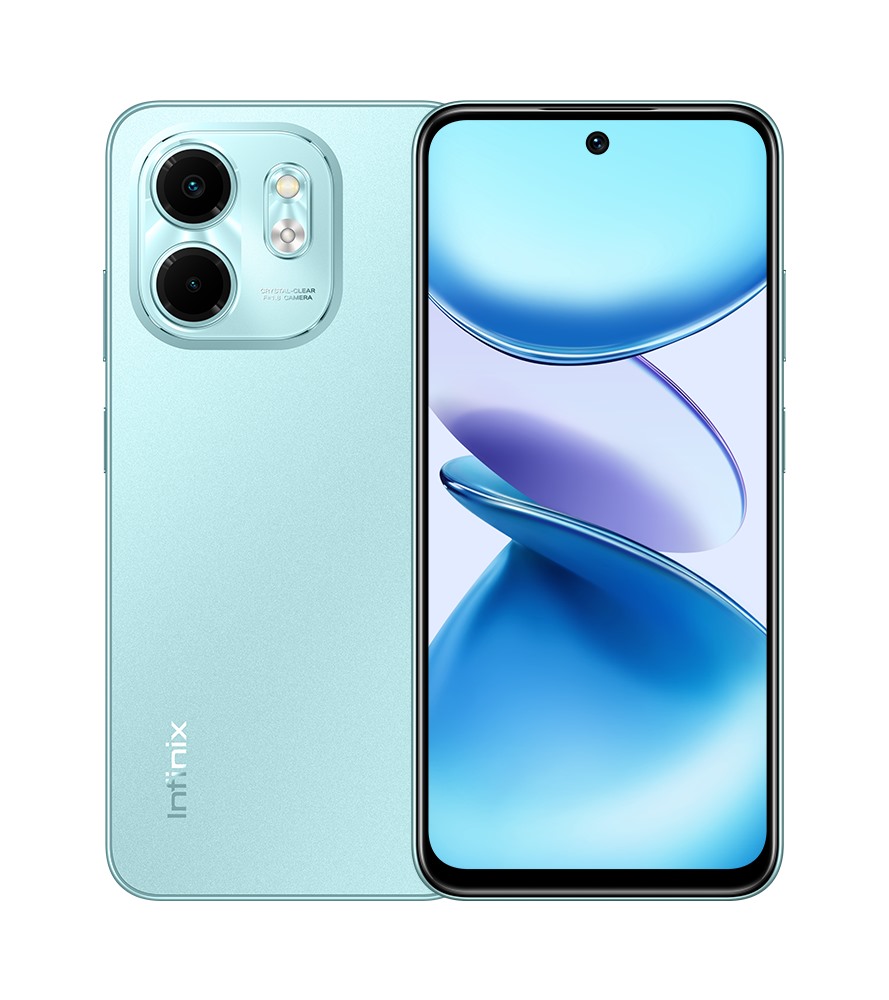
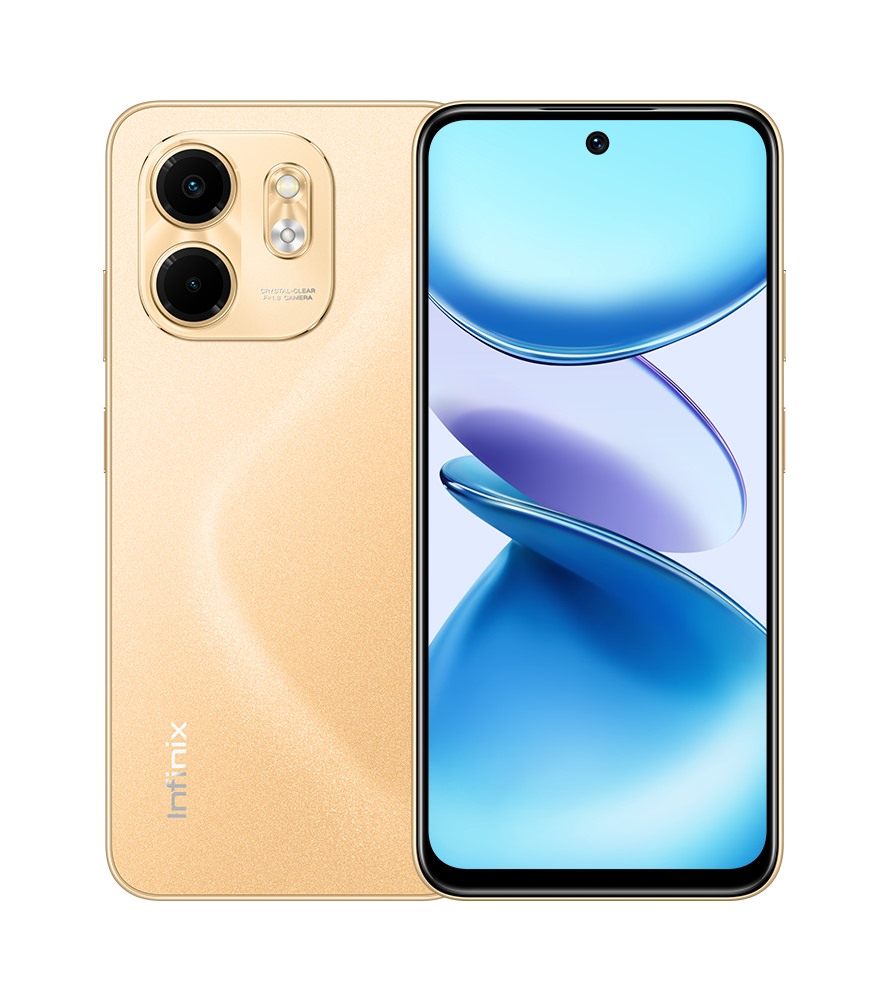
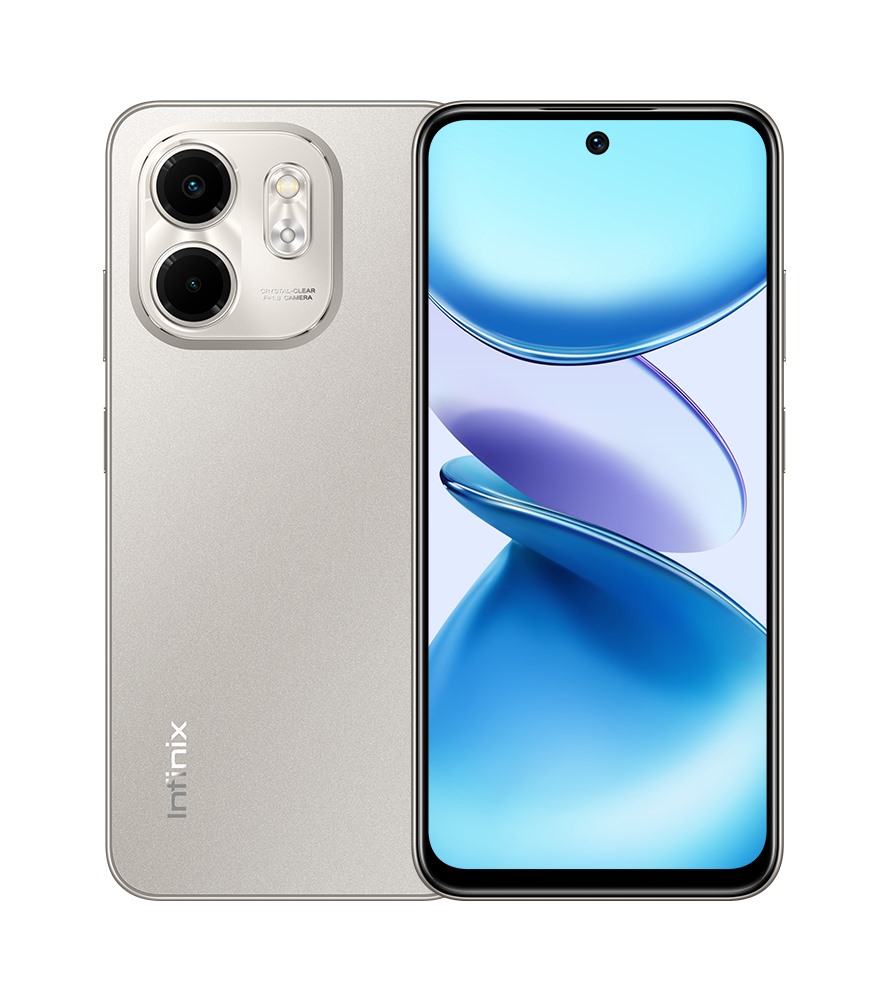
- Timber Black, Shiny Gold, Crystal Green, Galaxy White
- Note
- The page headline for the same phone lists a 6.7-inch 120Hz display, while the detailed spec table lists 6.6-inch 60/90Hz; the spec table values are used above
The Infinix Smart 9 is an entry-level Android phone from Infinix, aimed at buyers who want a big battery, a headphone jack and expandable storage at a low price. It sits at the very bottom of the brand's catalogue. This page is a specification-and-information review based on the published specifications and manufacturer information. All performance, battery and durability statements below are the manufacturer's claims, not measurements made here. One thing to know before reading further: Infinix's own page for the phone contradicts itself on the display. The headline list speaks of a 6.7-inch screen at 120Hz, while the detailed specification table lists a 6.6-inch screen with a 60/90Hz refresh rate. This review follows the detailed table and flags the difference where it matters. The sections below cover the place in the lineup, design and display, performance and memory, cameras, battery and charging, who the phone is for and the compromises.
Place in the lineup
The Smart name is used by Infinix for its simplest phones, and the Smart 9 is a basic handset best read as a replacement for an old budget phone or a first smartphone. If you want more performance, the Infinix Hot 60 Pro is a step up, and the Infinix Note 50 Pro is a higher tier again. In the same price class you can also look at another budget phone, the TCL 50 SE, which offers a larger and sharper screen. The spec page gives no launch price, and the pages do not state an official release date, so the date used on this site is the announcement period of November 2024 and should be treated as approximate. Prices differ by country, so check local listings.
Design and display
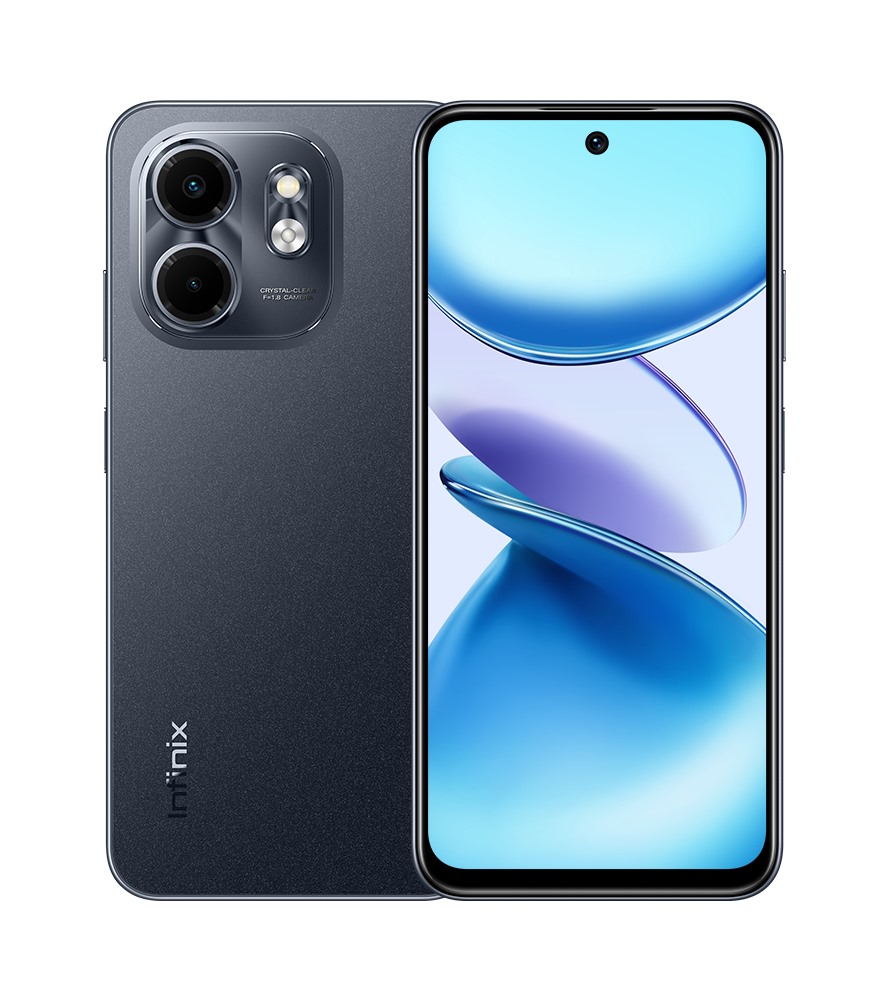
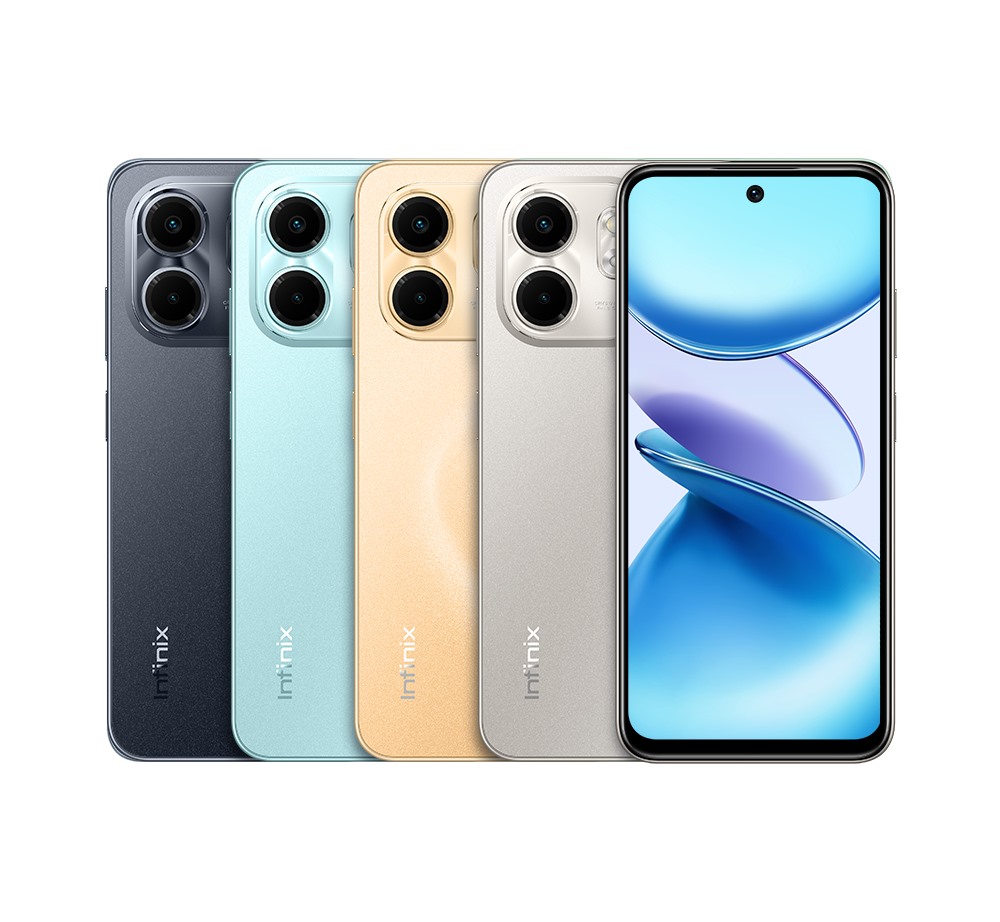
The official images show a phone with a flat back, a square camera island in the top left and a flat front display with a small hole for the selfie camera. The back comes in four finishes, listed as Timber Black, Shiny Gold, Crystal Green and Galaxy White. The renders show a black version, a pale green version, a champagne gold version and a light silver-white version. The spec table gives a model number of X6525, while the image files and a dimension drawing on the page use the code X6532, so the page mixes two internal references. The table lists dimensions of 163.60 x 75.60 x 8.5 mm and 188 g, but the dimension drawing shows 165.7 x 77.1 x 8.35 mm. Because the sources disagree, this review does not rely on either set of measurements. The manufacturer says the phone is certified for drop resistance, though the page does not name the test or the standard.
In the specification table the screen is an IPS LCD with a 6.6-inch diagonal, a resolution of 720x1612 pixels, a 60/90Hz refresh rate, up to 180Hz touch sampling and 500 nits of peak brightness (typical), with a screen-to-body ratio of 89.72%. A 720p panel at this size is not sharp by modern standards, with a pixel density that most people will see as slightly soft on small text, but it is normal for this price band. The brightness is adequate indoors and may be hard to read in direct sunlight. The headline claim of 120Hz does not match the table, and the table value of 90Hz maximum is the safer expectation. The page also advertises a feature called "Dynamic Bar" without describing it, and lists a minimum brightness of 1 nit with 4,069 brightness levels for comfortable use in the dark.
Performance, memory and software
The headline specification names a MediaTek Helio G81 processor. The detailed table calls it an octa-core "gaming processor" with two Cortex-A75 cores and six Cortex-A55 cores, all listed at 1.6 GHz. The GPU entry in the table reads "2.0GHz", which looks like a clock figure and does not name the graphics part, so no GPU model is stated here. Infinix also claims "48-month fluency", a smoothness promise that is based on its own testing and is not independently verified. For this class of chip, everyday tasks such as messaging, browsing, video and light games should be fine, while demanding 3D games will need lower settings.
The memory options are listed as 64GB or 128GB of storage and 3GB or 4GB of LPDDR4X RAM. The table adds "up to 6GB" and "up to 8GB" figures, which come from a virtual RAM feature that borrows part of the storage to extend memory. This review treats the physical RAM as 4GB for the larger variant and mentions the extension separately, since virtual RAM does not behave like real memory and is slower. A microSD slot accepts cards up to 2TB, which is generous and useful at the 64GB level. The phone takes two nano SIM cards plus a microSD card in dedicated trays. For software, the table lists "Android T Go". The page does not give a number, so this review reports it as written. The Go edition of Android is a lighter version made for low-memory devices, which suits the hardware but can limit some features. No update policy is published on the page.
Cameras
The rear camera is a 13MP sensor with an "AI lens", which in most phones of this class is a secondary sensor with limited use. Apertures are listed as f/1.85 and f/2.0, and the page mentions a rear four-flash setup and a front flash. Photo scene modes include short video, AI Cam, beauty, super night, portrait, slow motion, time-lapse, AR shot and documents. Video can be recorded at up to 4K at 30 frames per second, with 1080p at 60 or 30fps and 720p at 30fps also listed. A 13MP main sensor will produce usable daylight pictures, and low-light results from a sensor of this kind are normally limited. The front camera is 8MP at f/2.0, which is fine for video calls. Some details are not given on the page, such as sensor size, stabilisation or autofocus type, so none are stated here.
Battery, charging and connectivity
The battery is rated at 5,000 mAh (typical), the figure the headline also highlights as long-lasting. Charging is limited to 10W at 5V/2A through a USB-C port, and the page notes that different voltage inputs may change the output in some regions. A 5,000 mAh cell with a modest 720p screen and an efficient chip generally lasts well, but 10W charging means a full charge takes a long time, probably several hours, though the page does not give a charging time. The phone also supports OTG, so it can power small accessories.
Connectivity is basic. The phone supports 2G, 3G and 4G only, without 5G, and the page lists the bands for each. It has Wi-Fi 802.11 a/b/g/n/ac, Bluetooth, GPS, FM radio and a 3.5mm headphone jack. NFC is explicitly marked as not available, so contactless payments are not possible. A fingerprint sensor is listed, and the gyroscope is provided by software rather than a hardware sensor. Audio comes from dual speakers with DTS processing; the manufacturer claims 300% ultra volume, a relative figure whose reference is not stated. A "5m LED flashlight" claim is also listed, again without a test method.
Who it is for
- First-time smartphone buyers or people replacing an old phone on a very small budget.
- Users who value battery life, a headphone jack, FM radio and microSD expansion over speed.
- Households that need a simple second phone or a backup device.
- Buyers in markets where 4G is the norm and 5G is not yet needed.
Compromises
- No 5G and no NFC.
- A 720p IPS screen with modest brightness, and conflicting official information about its size and refresh rate.
- Slow 10W charging.
- Entry-level processor and a Go edition of Android, with no published update policy.
- A basic camera system with a secondary "AI lens" of limited use.
- Inconsistent model codes and dimensions across the official page.
In short, the Infinix Smart 9 is a basic phone built around a large battery and practical extras such as a headphone jack and microSD. It does the simple things at a low price, and it should not be expected to compete with mid-range devices. For a direct look at how it stacks up against another affordable phone, see the comparison with the Galaxy A56, or browse all devices on the rankings page.
Where it ranks
Compare Infinix Smart 9 with similar devices
More from Infinix
Frequently asked questions
When was the Infinix Smart 9 released?
The Infinix Smart 9 was released on 2024-11-01, according to the manufacturer’s published information.
What are the main specs of the Infinix Smart 9?
Headline figures for the Infinix Smart 9: Battery: 5,000 mAh, Refresh rate: 180 Hz, Main camera: 13 MP, RAM: 4 GB. The full specification table is further up this page.
Is the Infinix Smart 9 worth buying?
That depends on your priorities. Use the editorial review on this page for our view, check the rankings above to see where the device stands on battery, display and camera, and compare it directly with similar models before you decide.


